Intake Moisture Adjustment Formulas in Flax Scutching Mill Mass Balance
Intake moisture adjustment formulas normalize raw flax straw weights to twelve percent commercial regain to maintain mass balance integrity across scutching audits.


Scale
Gross weighbridge measurements register water alongside dry plant material during delivery. Flax straw arrives from Normandy, Pas-de-Calais, and Flanders in compressed round bales loaded onto flatbed trailers. A tractor pulling twenty-five gross tonnes of damp straw delivers tonnes of unretted cellular moisture when autumn rains saturate swathes before collection.
Because water carries no tensile strength, the commercial asset traded across the scutching mill gate is pure dry cellulose, yet payment settlements and transaction records log total vehicle weight. When mill intake operators omit moisture corrections, they build administrative distortion directly into every downstream mass balance calculation.
A moisture deviation of four percent on a forty-tonne trailer introduces sixteen hundred kilograms of unrecorded water mass directly into scutching mass records.
Agricultural intake protocols establish commercial reference moisture content at twelve percent wet basis, corresponding to a standard commercial regain of thirteen point seventy-nine percent dry basis under ISO 6741. Inbound dew-retted straw routinely fluctuates between nine percent during hot August harvest periods and twenty-two percent following prolonged ground retting under damp maritime conditions. Because cell wall pectins absorb atmospheric moisture rapidly, receiving scales that log raw gate weight without recording moisture content force the accounting ledger to treat pure water as raw bast fiber straw.

Moisture Determination on Inbound Straw Bales
Electronic pin resistance sensors register electrical conductivity across the outer layers of compressed flax straw. Field testing demonstrates that external bale probe readings underestimate internal core dampness by two to five percentage points when precipitation falls shortly before baling. Coring drills extracting radial plugs provide composite samples for forced-air oven desiccation at one hundred and five degrees Celsius.
Production managers compute intake moisture fractions by weighing samples before and after heating until the mass stabilizes.
| Inbound Condition | Intake Moisture (Wet Basis) | Gross Intake Weight (kg) | Dry Matter Mass (kg) | Normalized Weight at 12 Percent (kg) | Mass Balance Adjustment (kg) |
|---|---|---|---|---|---|
| Severely Desiccated | 9.0% | 10,000 | 9,100 | 10,341 | +341 |
| Field Optimal | 11.5% | 10,000 | 8,850 | 10,057 | +57 |
| Contract Reference | 12.0% | 10,000 | 8,800 | 10,000 | 0 |
| Elevated Autumn | 15.0% | 10,000 | 8,500 | 9,659 | -341 |
| Saturated Swathe | 18.5% | 10,000 | 8,150 | 9,261 | -739 |
| Rejection Threshold | 22.0% | 10,000 | 7,800 | 8,864 | -1,136 |
Running damp stems through breaking flutes causes technical line blockages, uneven decortication, and bacterial mould formation in storage sheds. While weighbridge tickets establish gross mass, accepting damp straw at scale values without moisture normalization leaves spinning mills absorbing unrecoverable yield deficits and miscalculated duties on imported water.

Formula
Standardized equations normalize raw gate tonnage into dry cellulose equivalents. The mass balance reconciliation across a scutching facility separates water mass from physical plant matter before allocating fiber fractions. Textile standards distinguish between moisture content calculated on total moist weight and moisture regain calculated on absolute dry mass.
Failure to identify which base an intake ticket utilizes produces mathematical errors exceeding two percent on total processed volume.
European Flax Chain of Custody Standard Section 4.2 obligates mills to adjust raw agricultural inputs to commercial moisture equivalents before computing certificate transaction volumes.
Moisture content wet basis computes the ratio of water mass to gross moist material mass. Moisture regain dry basis divides the evaporated water mass by the final anhydrous residue mass. The formulas operate through exact mathematical conversions:
- Wet Basis Moisture Content calculates the percentage of water within total gross delivery weight using the formula MC = ((M_gross – M_dry) / M_gross) multiplied by one hundred.
- Dry Basis Moisture Regain expresses the absorbed water as a direct percentage of dried vegetable matter through MR = ((M_gross – M_dry) / M_dry) multiplied by one hundred.
- Commercial Weight Adjustment converts variable intake consignments into standardized twelve percent moisture billing weights using M_normalized = M_gross multiplied by ((100 – MC_intake) / (100 – MC_commercial)).
- Dry Matter Quantification isolates absolute anhydrous plant substance via M_dry = M_gross multiplied by (1 – (MC_intake / 100)).

Where Do Latent Moisture Shifts Distort Lot Reconciliation?
Spinning mills tracking fiber consumption detect phantom shortfalls during inventory checks when agricultural intake records ignore baseline dampness. A scutching line processing forty tonnes of dew-retted straw delivered at sixteen point five percent moisture accepts thirty-three point four tonnes of dry matter. Standard commercial normalization to twelve percent moisture yields thirty-seven point ninety-five tonnes of billing straw, whereas uncorrected records register forty tonnes.
When the mill produces six tonnes of long line flax filasse, an unadjusted calculation logs a fifteen point zero percent extraction yield. Because dry matter determines true spinning yield, the moisture-adjusted calculation yields fifteen point eighty-one percent.
Standard Desorption Calculations in Mass Balance
Trading contracts align settlement weights with commercial regain values specified by the International Linen and Hemp Confederation. Consider a processing batch of eighty thousand kilograms of retted straw received at fifteen point five percent moisture content. Drying ovens determine that the lot contains sixty-seven thousand six hundred kilograms of anhydrous biomass.
The scutching mill applies the commercial adjustment formula to establish certified intake volume.
The calculation sets M_normalized equal to eighty thousand multiplied by eighty-four point five divided by eighty-eight point zero, generating seventy-six thousand eight hundred and eighteen kilograms of commercial intake straw. The scutching process releases three thousand one hundred and eighty-two kilograms of excess water vapor into processing plant filters and exhaust ducts. Uncorrected accounting sheets retain those three thousand kilograms as missing agricultural matter, falsely flagging production shrinkage.
The standardized intake clause under European Flax Technical Appendix C fixes commercial moisture regain at thirteen point seventy-nine percent, reallocating billing adjustments directly to the farm intake credit slip.

Turbine
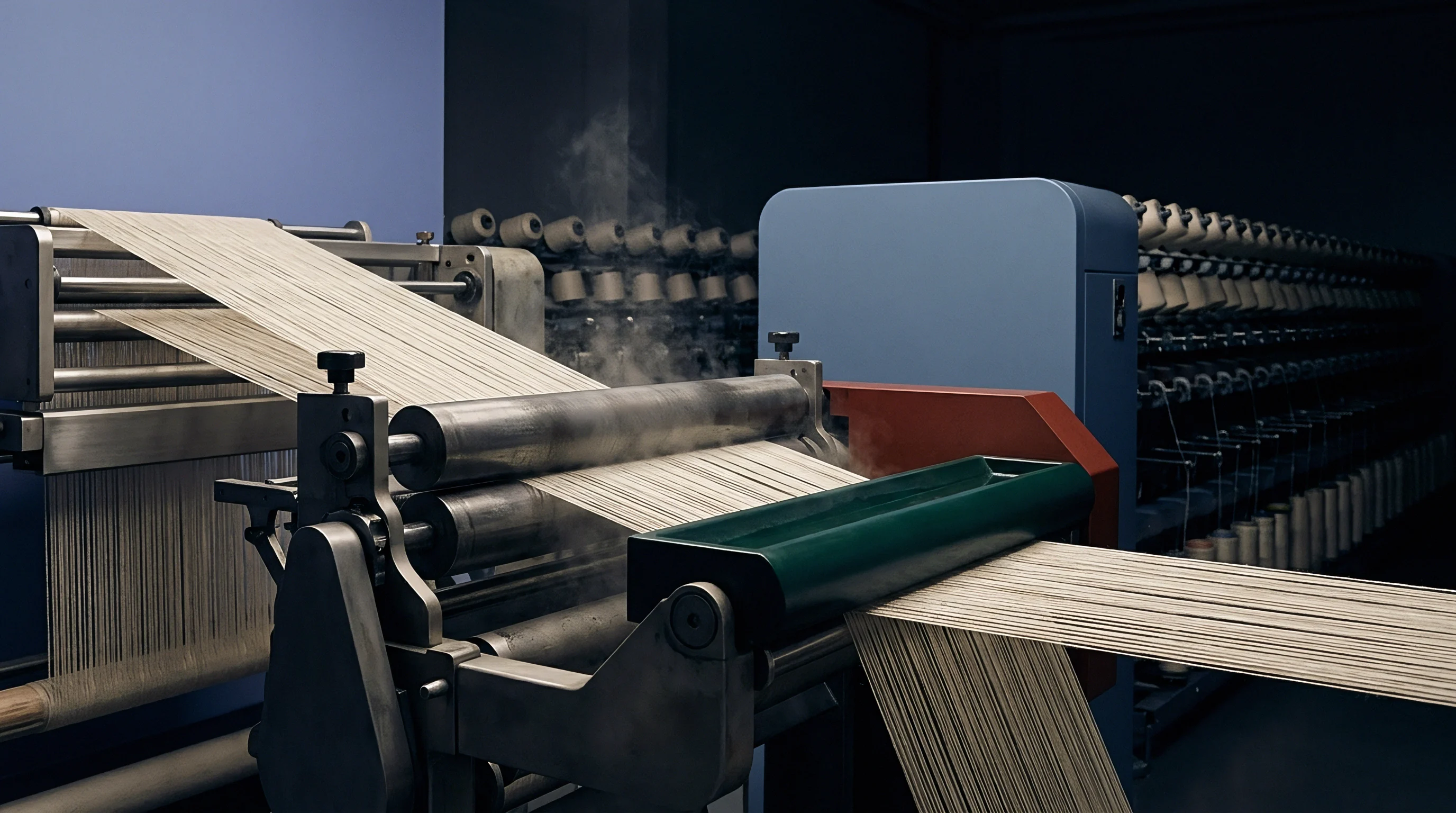
Mechanical extraction cylinders strip cellular bark from bast fibers through fluted breaker flutes and rotating scutching wheels. Inbound straw enters breaker cylinders that crack the inner woody core, known as shive or anas, into uniform fragments. Revolving turbine blades strike the crushed stems against scutching grates, peeling shives away from long bast bundles.
Friction inside the turbine chamber elevates ambient temperatures to thirty-five degrees Celsius, driving desorption directly inside the processing line.
As turbine beaters break damp shives, mechanical action expels moisture into surrounding exhaust channels alongside fine particulates. While straw enters the line at fourteen percent moisture, long line fiber emerges from turbine delivery clamps at eleven point eight percent moisture. Scutched tow, possessing higher surface area, drops to eleven point two percent moisture, while shives discharged onto vibrating conveyor belts measure ten point five percent moisture.

Why Penalize Desorption Losses during Mechanical Processing?
Pneumatic dust collection manifolds generate continuous air streams that evaporate cellular moisture from plant stems. Total mass balance across an industrial turbine line divides unadjusted input weight into four primary physical outputs and one invisible exhaust loss:
- Receiving teams weigh the gross straw bales and extract core samples to establish input moisture percentage.
- Crushing rollers fracture woody shives while convective ambient air lowers surface water content.
- Turbine blades separate long line filasse from short tow fibers, shives, seeds, and micro-dust.
- Conveyor scales record individual production outputs across dedicated filasse, tow, and shive baling stations.
- Auditors sum output weights and subtract ambient desorption losses to verify line mass balance continuity.
| Fraction Component | Unadjusted Processing (16.0% Intake MC) | Moisture Corrected Intake (12.0% Commercial Base) | Discharged Output Moisture (MC) | Absolute Output Dry Mass (kg) |
|---|---|---|---|---|
| Long Line Fiber (Filasse) | 15,500 kg | 15,500 kg | 11.5% | 13,718 |
| Scutched Tow (Étoupes) | 10,200 kg | 10,200 kg | 11.0% | 9,078 |
| Woody Shives (Anas) | 51,500 kg | 51,500 kg | 10.5% | 46,092 |
| Seed and Dust Extraction | 9,800 kg | 9,800 kg | 8.5% | 8,967 |
| Desorption Mass Loss | 13,000 kg | – | Evaporated Water | 0 |
| Adjusted Intake Straw | 100,000 kg | 95,455 kg | Reference Basis | 84,000 |
| Mass Balance Totals | 100,000 kg | 95,455 kg (Allocated) | Line Recovery: 98.6% | 83,855 kg Accounted |
When auditors omit processing desorption, the thirteen-tonne evaporation gap registers as unaccounted line waste or uncertified leakage. Drier stems separate clean shives under lighter beater impact, whereas damp bundles wrap fluted cylinders and tear long line fibers.


Yield
Output fiber ratios register false recoveries when technical staff bypass moisture normalization on damp straw parcels. European Flax certification standards demand complete physical mass integrity from agricultural field parcel to spinning mill sliver. Certifying inspection bodies reject mass balance ledgers showing unverified yield inflation.
If a mill buys one thousand tonnes of wet straw at sixteen percent moisture and claims standard fiber output without adjusting input mass, certified credits exceed physical reality.
Bureau Veritas chain of custody audits flag scutching facilities whose certified fiber conversion coefficients deviate beyond three standard deviations from seasonal regional yield benchmarks.
Because European Flax enforces physical auditing, transaction certificates issued under European Flax and Masters of Linen guidelines track net fiber kilograms. Converting wet straw into transaction credits without mathematical water deduction produces phantom volumes. When spinning mills in Jiangsu or Zhejiang purchase certified European flax bundles, incoming quality laboratories re-test moisture upon container opening.
A sea container loaded in Antwerp at eleven percent regain arrives in Ningbo absorbing or shedding weight based on ocean transit humidity, changing the commercial value of the fiber payload.
Chain of Custody Reconciliation at the Scutcher
External auditors checking European Flax dossiers examine physical delivery notes against production tally books. The auditor reconciles mass records through four mandatory checks:
- Weighbridge Delivery Slips confirm gross vehicle arrival weights alongside dated field origin parcel numbers.
- Oven Desiccation Records demonstrate daily batch moisture sampling matching specific incoming grower lots.
- Mass Adjustment Spreadsheets apply the standard twelve percent conversion factor before input registration.
- Bale Tag Ledgers document outbound filasse lot numbers, bale serials, and certified net commercial weights.
Discrepancies between farmer delivery dockets and outbound lot allocations trigger immediate certification suspension. When spinners dispute phantom fiber losses, scutching managers routinely explain discrepancies between input tickets and output bundles by attributing missing mass to natural field dust blown into extraction chimneys.


Surcharge
Settlement schedules impose monetary discounts on farm deliveries exceeding standardized moisture thresholds. Scutching operations contract straw purchases based on a standard moisture base of twelve percent. When a grower delivers round bales testing at fifteen percent moisture, the mill applies both a weight deduction and an industrial drying penalty.
The direct financial adjustment removes excess water weight from the payable invoice while charging a handling surcharge per excess moisture point to cover energy expenditures during prolonged warehouse ventilation.
Raw dew-retted straw trades between two hundred and eighty euros and three hundred and sixty euros per metric tonne delivered to the mill gate. Processing damp straw increases operational expenses through slower turbine line throughput, higher electrical power consumption on breaker drums, and elevated fire hazards caused by anaerobic decomposition inside stored stacks. Because ocean freight is billed on gross weight, shipping uncorrected damp fiber to Asian spinners at four euros and eighty cents per kilogram wastes maritime logistics expenditure on water ballast.

Settlement Penalties and Water Freight Pricing
Maritime shipping containers carry forty-foot payloads billed against gross manifest tonnage rather than bone-dry fiber mass. Exporting twenty tonnes of long line filasse baled at fourteen percent moisture instead of the twelve percent commercial reference means moving four hundred kilograms of dead water per container. Across a hundred-container shipping contract, the spinning mill pays ocean shipping, container drayage, and customs clearance charges on forty tonnes of phantom payload.
| Supply Chain Stage | Physical Volume | Uncorrected Moisture | Target Moisture | Monetary Variance Exposure |
|---|---|---|---|---|
| Grower Delivery (Farm Gate) | 25,000 kg Straw | 17.0% MC | 12.0% MC | 425 EUR Farm Deduction |
| Mill Intake Adjustment | 100,000 kg Straw | 15.5% MC | 12.0% MC | 1,192 EUR Weight Offset |
| Long Line Export Baling | 20,000 kg Filasse | 14.0% MC | 12.0% Commercial Base | 1,920 EUR Fiber Value Discrepancy |
| Ocean Freight (Antwerp to Ningbo) | 20,000 kg Payload | 14.0% MC | 12.0% Baseline | 180 EUR Water Transport Penalty |
| Spinning Mill Lot Intake | 20,000 kg Delivered | 14.0% Invoiced | 12.0% True Regain | 2,100 EUR Landed Cost Inflation |
Mill contracts stipulate strict rejection rights whenever inbound straw exceeds eighteen percent moisture content, protecting the scutcher from catastrophic bale rot and unrecoverable yield deficits. Commercial contracts enforce moisture penalty tables penalizing deliveries across graded tiers: one percent weight discount per point between thirteen and fifteen percent, and two percent discount per point between fifteen and eighteen percent. Whether cross-border customs authorities will eventually standardize mass balance moisture corrections for value-added tax deductions on imported technical fibers remains an open legal dispute across processing terminals.