Textile Yarn
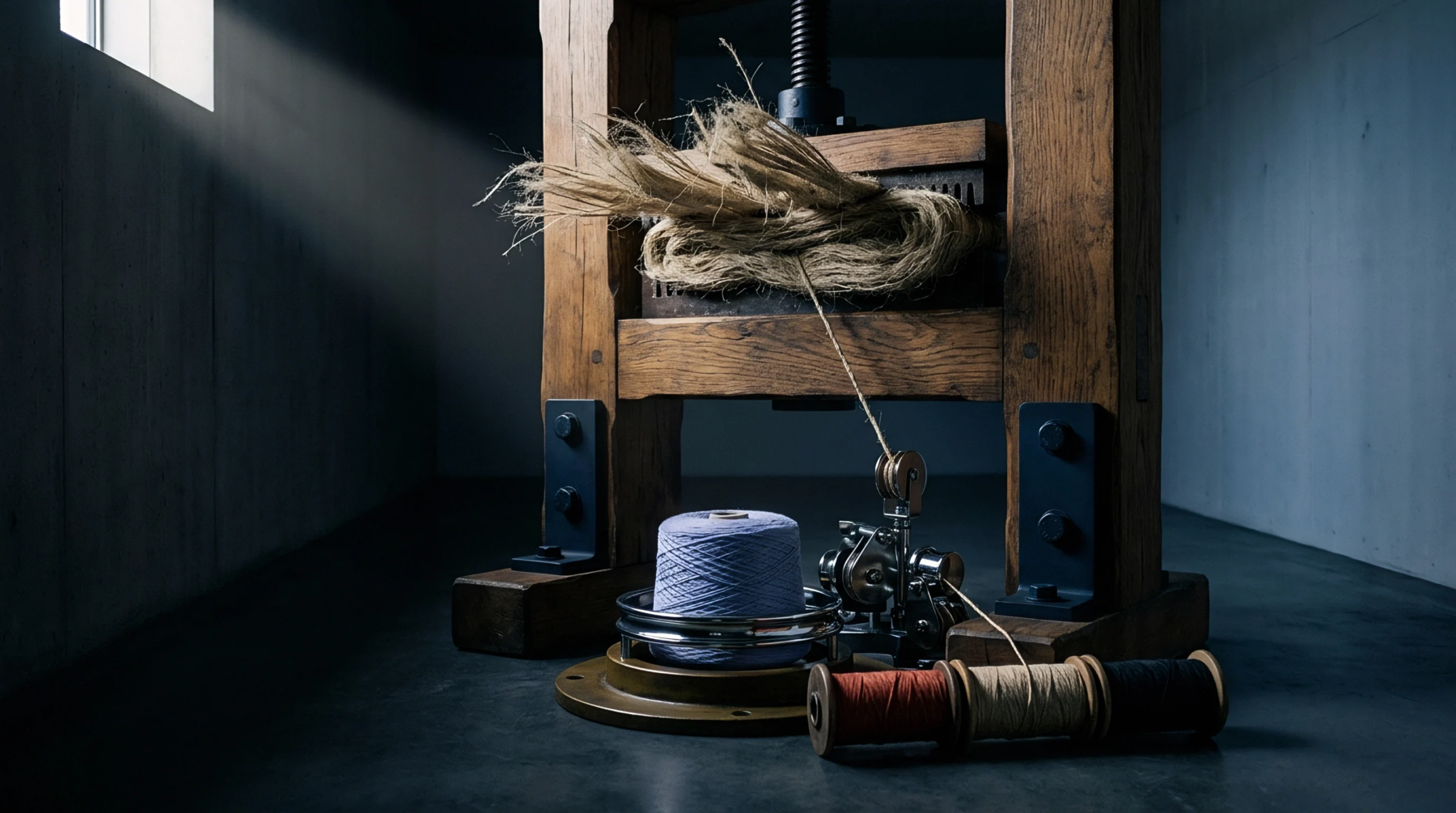
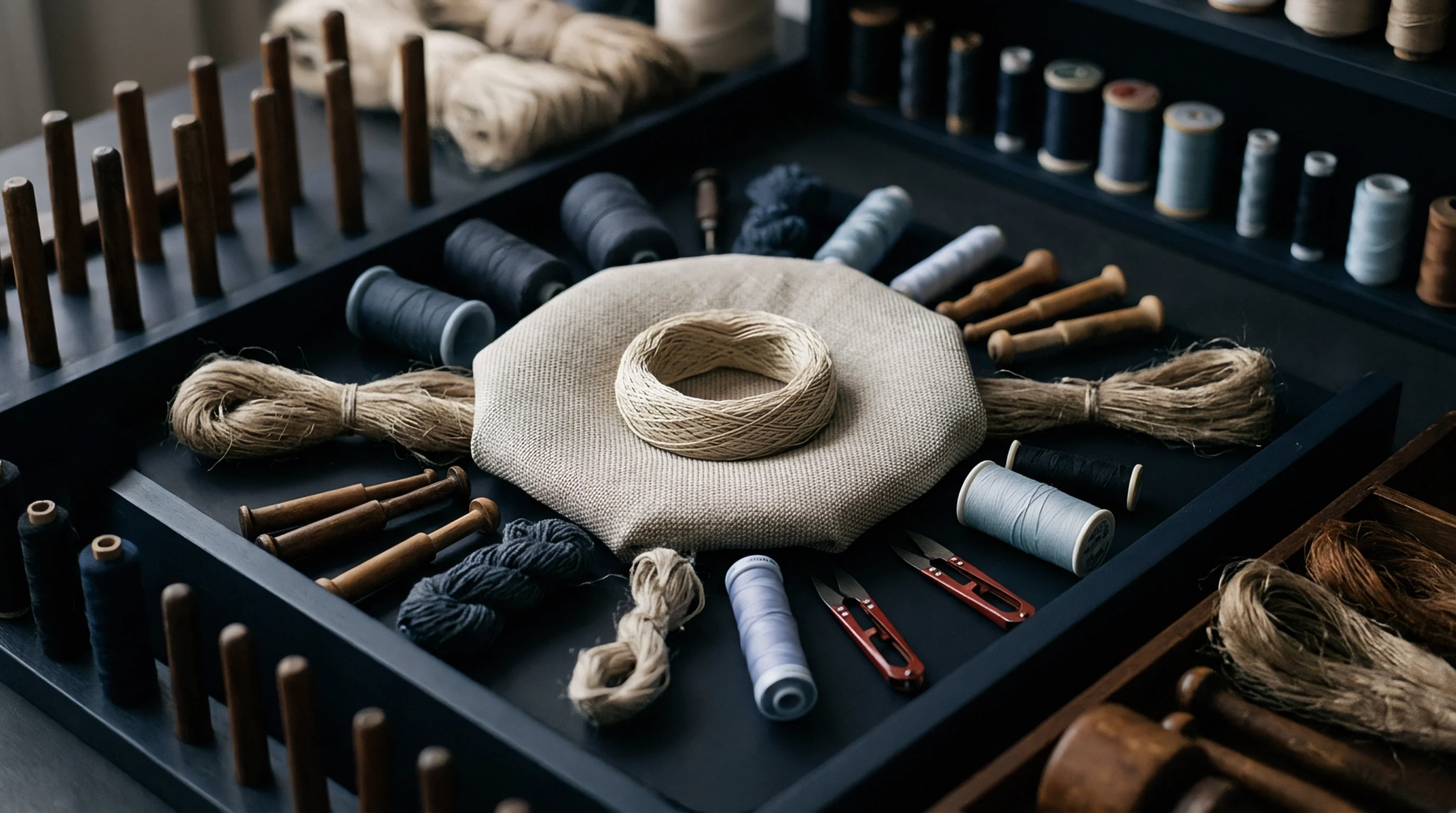
Bast fibre bundles drawn and twisted without prior hot-water maceration form a distinct category of coarse natural yarn. Mechanical processing of dry-spun flax relies strictly on mechanical combing and apron drafting to align fibre bundles held together by natural middle lamella pectins. Resulting counts generally range from 3 to 18 Lea, exhibiting prominent surface hairiness, higher bundle diameter irregularity and lower tensile elongation compared to wet-spun equivalents.
Production occurs on specialized ring spinning or flyer frames equipped with aggressive ratch settings suited for long, stiff fibre bundles.
Spinning Mechanics
Drafting rollers operate on dry sliver packages without chemical softening or thermal breakdown of non-cellulosic encrustations. Bundle coherence depends entirely on mechanical twist insertion, yielding a firm yarn body with high flexural rigidity that suits heavy upholstery and industrial canvas applications. Processing cards and drawing gills must handle variable fibre length distributions without introducing excessive nep clusters or slub defects.
Mill laboratory reports track linear density variations and single-yarn strength through electronic capacitance testing and standard tensile testing instruments. Mill technicians adjust break drafts and spindle speeds according to ambient relative humidity in the spinning room to suppress static charge generation and static-induced fly waste.
Commercial Utilization
Export documentation distinguishes dry-spun flax from wet-spun varieties through customs classification codes that evaluate linear density, yarn finish and manufacturing methodology. Buyer specifications for heavy furnishing fabrics specify maximum allowable count variation coefficients alongside minimum breaking tenacity measured in centinewtons per tex. Finishing routines for fabrics woven from these yarns require specialized washing formulations to scour surface waxes without destabilizing the coarse yarn structure.
Weaving performance sheets track filling insertion rates on rapier looms to prevent weft breaks caused by yarn stiffness and surface roughness. Laboratory certificates issued under accredited quality systems confirm that delivered lots meet designated yarn Lea numbers and twist multiplier targets before weaving operations commence.