High Temperature Wet Spinning Plasticization Dynamics and Secondary Cell Wall Microfibril Rupture Thresholds
Hot water trough temperatures between 68°C and 74°C plasticize middle lamella pectins, preventing microfibril rupture and securing fine yarn counts up to Nm 80.
Steam
Saturated hot-water troughs supply the thermal energy needed to soften the non-cellulosic matrix binding flax elementary fibres in roving bundles. Primary cell walls and inter-cellular middle lamellae are built from polysaccharide networks rich in acidic pectins, rhamnogalacturonans, and branched hemicelluloses. At room temperature, divalent calcium cross-links hold this gel matrix in a rigid, glassy state.
Dry drafting through such unyielding pectin fractures entire fibre bundles rather than separating individual strands cleanly. Once the bath temperature exceeds the glass transition point of this amorphous pectin phase, the middle lamella softens into a viscous fluid.
Thermal Hydration Kinetics of Pectin Gels
Immersion in hot water disrupts inter-molecular hydrogen bonds along the rhamnogalacturonan backbone of middle lamella polymers. Water enters the paracrystalline zones of the cell wall, opening up free volume between adjacent cellulose microfibril layers. Temperatures between 60°C and 75°C speed this hydration and destabilize calcium-pectate egg-box structures without degrading primary cellulose chains.
Bath dwell time dictates how deeply thermal equilibrium penetrates the roving. Thicker strands require tight dwell control so temperature gradients do not develop between outer fibres and the bundle core.
Water bath dwell times below 1.8 seconds at 65°C leave over 40 percent of middle lamella calcium pectates in an unplasticized gel state.
Controlling wet spinning frames depends on tracking these thermal immersion dynamics. The process moves through four successive stages:
- Pre-wetting roving coils in a low-temperature conditioning tank reduces surface tension and displaces trapped air pockets.
- Guiding the pre-conditioned roving into the main hot water trough raises core bundle temperatures to 72°C.
- Submerging the strand through a submerged roller grid enforces controlled mechanical flexing to accelerate water uptake.
- Feeding the plasticized bundle directly into the back drafting rollers maintains matrix viscosity prior to attenuation.
End breakages occurring at elevated trough temperatures frequently trace to hydrophobic wax deposits on raw flax, which block uniform water penetration despite trough heat.

Matrix
Flax secondary cell walls consist of highly oriented crystalline cellulose microfibrils set in an amorphous hemicellulose network. The thick S2 layer accounts for over 80 percent of total cell wall volume and provides most of the axial tensile strength. Microfibrils in the S2 layer follow a steep helical path, running at an angle of 6 to 10 degrees relative to the fibre axis, which gives flax elementary fibres their characteristic longitudinal stiffness.
During wet drafting, load travels through the thin S1 outer wall and the middle lamella. Plasticization reduces matrix shear yield stress so elementary fibres can slide past one another without transferring destructive peak loads to internal microfibrils.
Cell Wall Ultrastructure and Microfibril Orientation
Cohesion between neighbouring elementary cells balances inter-cellular sliding resistance against intra-cellular microfibril alignment. Microfibrillar angles vary with retting quality and stem position. Steeper, lower angles raise the axial tensile modulus and stiffen the fibre under tension, whereas higher angles allow more elongation before structural failure.
When temperature shifts the shear modulus of the pectin-hemicellulose matrix, stress along the S2 microfibril array redistributes significantly. Even load distribution keeps local stress concentrations from cleaving the cell wall prematurely.
Sellers delivering roving lots with residual calcium ion content exceeding 1200 parts per million face immediate drafting resistance penalties under trade specification guidelines.
Temperature Dependent Shearing Dynamics
Matrix viscosity falls rapidly as the water bath approaches optimal plasticization temperatures. Below this window, stiff matrix polymers leave inter-fibre friction to dominate drafting forces. Above it, water-soluble pectins leach out excessively, stripping away the boundary lubrication the bundle needs to draw smoothly.
| Temperature (°C) | Matrix Viscosity (Pa·s) | Pectin Solubilization (%) | Inter-Fibre Shear Resistance (MPa) | Dominant Deformation Mode |
|---|---|---|---|---|
| 20 | 1450 | 1.2 | 18.5 | Brittle Bundle Fracture |
| 55 | 420 | 4.8 | 8.2 | High-Friction Slip |
| 70 | 110 | 12.5 | 3.1 | Plastic Matrix Shear |
| 85 | 28 | 28.4 | 1.1 | Hydrodynamic Instability |
| 95 | 8 | 44.0 | 0.4 | Structural Matrix Collapse |
Fibre bundles drawn through water bath temperatures above optimal thresholds experience structural unspooling, where individual elementary fibres lose lateral support and slip unpredictably.
Rupture
Drafting tension forces a mechanical trade-off between inter-fibre slippage and intra-fibre failure. In a balanced wet spinning process, plasticized middle lamellae yield cleanly so fibres slide past one another. Microfibrils snap only when local draft tension exceeds the axial tensile limit of crystalline cellulose chains within the S2 wall.
Flax microfibrils fail at tensile strains between 1.8 and 2.5 percent. If unplasticized pectin pockets lock elementary fibres together, draft forces bypass the lamella and pull directly on individual cell walls, stretching microfibrils past their elastic limit.

Which Physical Parameters Define Microfibril Breakage during Wet Draft?
Drafting speeds above 1.2 metres per second generate shear spikes that surpass the axial yield limit of crystalline cellulose. At these high strain rates, the amorphous matrix lacks time to relax. Stresses concentrate around microfibrillar dislocation zones ~ the knee bands or crimp marks left by scutching and hackling ~ which act as structural weak points.
High draft loads snap microfibrils at these nodes, shortening filament length and throwing off short-fibre waste.
When drafting forces exceed inter-cellular matrix cohesion, elementary fibres split along cell wall boundaries rather than sliding cleanly past adjacent bundles.
Fibre degradation manifests through specific structural failure modes observed across the drafting zone:
- Intra-Cellular Cell Wall Fracture ~ Direct snapping of crystalline cellulose chains across the S2 layer occurring when local tension exceeds 850 MPa.
- Middle Lamella Matrix Cleavage ~ Clean separation along inter-cellular boundaries caused by complete plasticization of calcium-pectate complexes under moderate draft load.
- Microfibril Buckling and Fibrillation ~ Structural peeling of outer S1 wall microfibrils resulting from excessive hydrodynamic drag inside the hot water trough.
- Transverse Shear Delamination ~ Separation between the S1 and S2 cell wall layers caused by sharp speed differentials at nip roller contact points.
Inadequate temperature control during high-speed drafting causes permanent structural damage to long-staple flax lines, dropping spinnable count capacity by up to twenty lea numbers and increasing yarn hairiness beyond commercial acceptable thresholds.
Tension
Wet frame kinematics require balancing mechanical elongation against thermal softening. The drafting zone runs between a slow back roller set and a faster front set geared to the target draft ratio. Placing the water bath immediately upstream of the back rollers wets and softens the roving core before clamping.
Nip rollers squeeze out excess water while transferring drive torque into the fibres. Clamping must prevent slippage, but excessive nip load crushes softened cell walls and leaves surface micro-cracks that trigger microfibril breakage during drawing.

Nip Roller Kinematics and Residence Dwell Time
Delivery speed sets how long roving spends in the hot water trough. Accelerating frame output without raising bath temperature cuts hydration time short. As a result, outer fibres overheat while core bundles remain glassy and unplasticized.
That thermal gradient across the strand creates uneven drafting resistance, producing the periodic mass irregularities known as drafting waves.
| Bath Temperature (°C) | Delivery Speed (m/min) | Residence Time (s) | Draft Ratio | Peak Drafting Force (N) | Cell Wall Failure Mode |
|---|---|---|---|---|---|
| 60 | 18 | 2.4 | 12.0 | 14.2 | Microfibril Snapping |
| 68 | 22 | 1.9 | 14.5 | 8.6 | Controlled Matrix Slip |
| 74 | 26 | 1.6 | 16.0 | 5.1 | Pure Inter-Fibre Shear |
| 82 | 30 | 1.4 | 18.0 | 3.8 | Matrix Washout and Slip |
| 88 | 34 | 1.2 | 20.0 | 2.9 | Strand Separation Failure |
| Data gathered using dynamic inline force transducers; cell wall structural state verified via polarized light microscopy on 100 tex wet-spun line flax. | |||||
The operational window balancing thermal softening, delivery speed, and nip pressure remains tight across fine count production runs. Unresolved questions remain regarding whether ultrasonic agitation within the water trough can shorten required residence times without raising bath temperatures into pectin dissolution ranges.
Assay
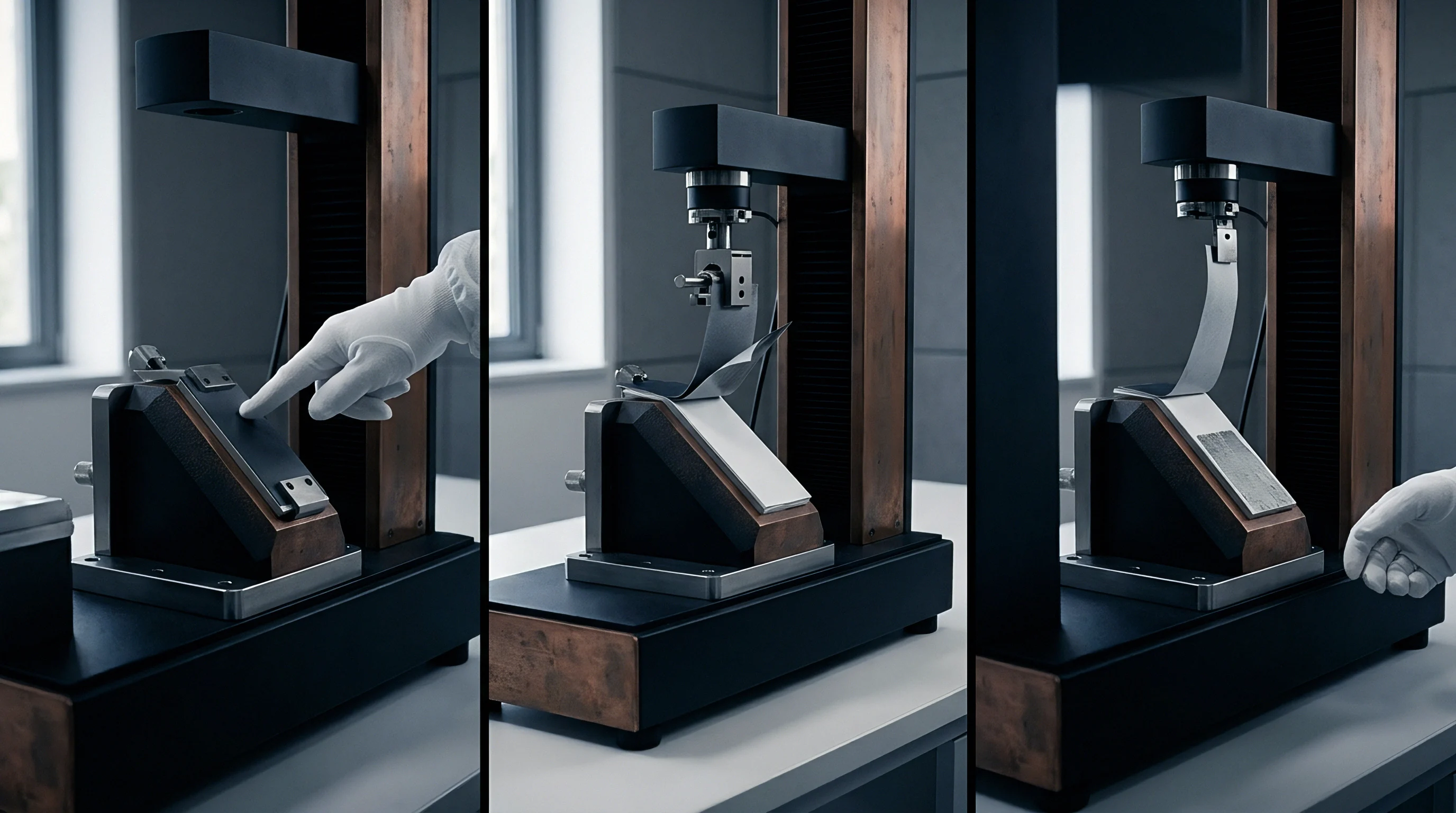
Tensile testing on spun yarn exposes structural damage caused by excessive drafting temperatures, measuring single-end breaking force, tenacity, and elongation under standardized conditions. Microfibril breakage during spinning degrades yarn tenacity and introduces irregular weak spots along the strand. Scanning electron microscopy tracks surface morphology, distinguishing clean inter-fibre pull-out from torn microfibril fragments.
Clustered microfibril fractures along the surface indicate aggressive drafting through an under-plasticized matrix.
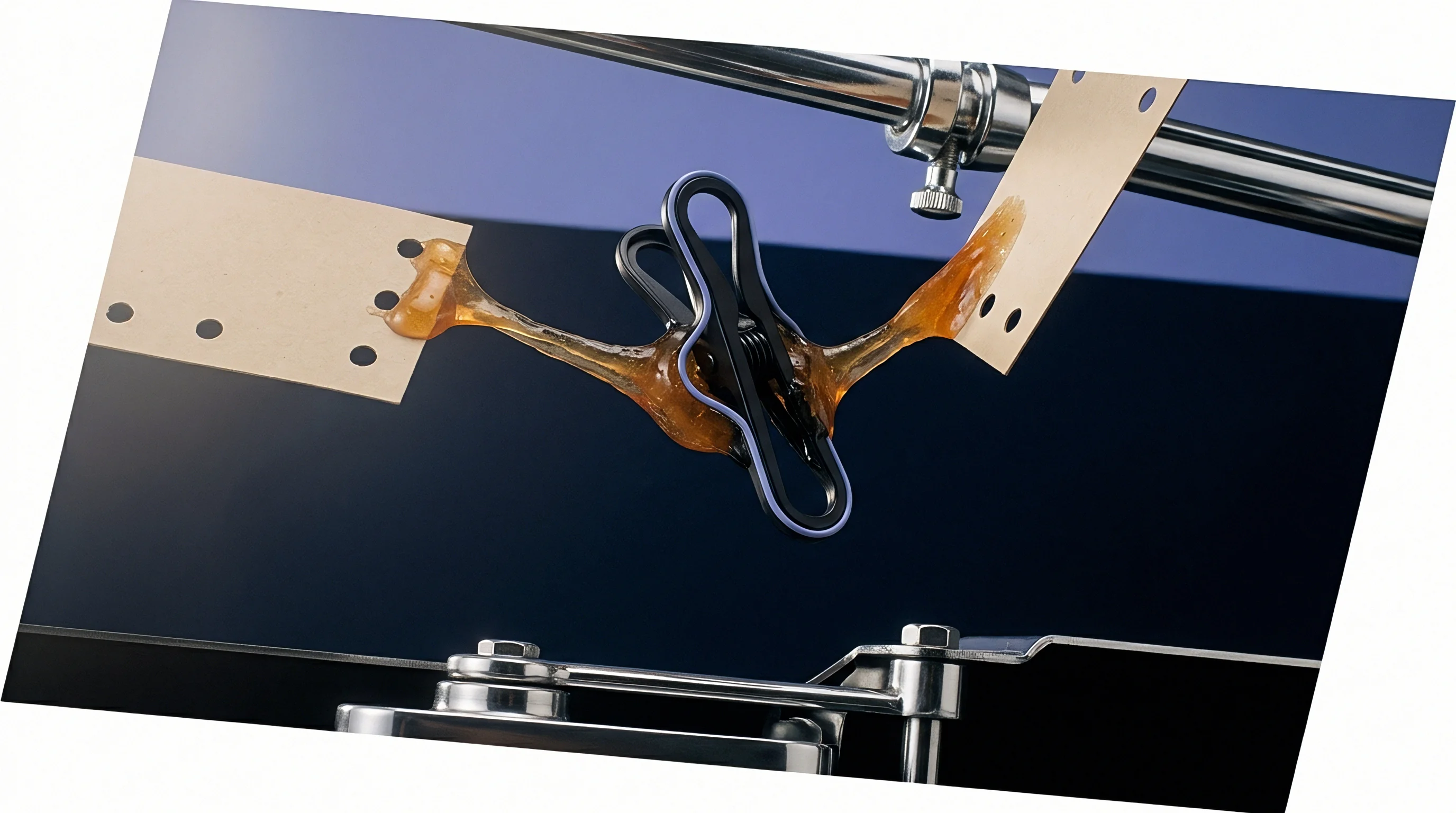
Single Yarn Tensile Testing and SEM Morphology
Evaluating yarn packages to ISO 2062 establishes single-strand tenacity and elongation at break. Premium wet-spun line flax yarn typically tests between 32 and 48 cN/tex. A sharp drop in tenacity alongside poor elongation points to microfibril cleavage during the draw.
Secondary wall integrity can be checked by swelling cross-sections in copper ethylenediamine: intact S2 networks swell evenly, whereas damaged cell walls balloon irregularly and split longitudinally under the microscope.
Yarn spun from thermally over-softened roving exhibits microfibril fraying and reduced lustre under polarized light microscopy.
Quality control technicians execute precise verification protocols to qualify incoming yarn shipments:
- Tenacity Coefficient Variation ~ Coefficient of variation for breaking force across twenty tested skeins must remain below 8.5 percent to prevent loom stoppages.
- Surface Fibrillation Density ~ Quantification of free fibre ends per millimetre using optical hairiness meters to detect excessive S1 cell wall delamination.
- Cross-Sectional Swelling Ratio ~ Microscopic evaluation of diameter expansion in alkaline baths to assess secondary cell wall structural density.
- End Breakage Frequency Logging ~ Continuous recording of frame stoppages per 1000 spindle hours to identify drafting zone instability in real time.
Standard purchase contracts for premium wet-spun yarn stipulate that if mean single yarn tenacity falls below 30.0 cN/tex under ISO 2062 testing, the buyer holds the absolute right to reject the lot or apply a compulsory price adjustment fee equal to fifteen percent of invoice value.

Valuation
Linen spinning margins depend heavily on count ceilings and frame efficiency. How well the matrix plasticizes determines the finest yarn count a flax lot can deliver. Under-softened pectin limits spinning to coarse counts such as Nm 26 or Nm 39 because end breakages spike.
Proper plasticization unlocks fine counts up to Nm 80 or Nm 100 from long-staple line flax, lifting the finished value per kilogram of raw fibre and offsetting the energy spent heating the troughs.
Spinning Limit Economics and Metre Landed Costs
Proper plasticization suppresses waste at the frame. Uncontrolled microfibril breakage produces fly waste, short lint, and roller laps at the front drafting nip. Every percentage point added to waste increases raw material cost in the finished yarn.
Higher end breakage rates drag down machine efficiency, adding direct labor and power costs to every kilogram produced.
| Thermal Regime | Target Yarn Count (Nm) | End Break Rate (per 1000 sp/hr) | Frame Efficiency (%) | Waste Rate (%) | Yarn Cost ($/kg) | Fabric Cost ($/m) |
|---|---|---|---|---|---|---|
| Under-Plasticized (50°C) | 39 | 42 | 81.5 | 4.8 | 18.50 | 4.25 |
| Optimized (72°C) | 60 | 11 | 94.2 | 1.9 | 24.80 | 3.10 |
| Over-Plasticized (88°C) | 60 | 28 | 86.0 | 3.6 | 27.10 | 3.38 |
Assumptions: Raw long-staple hackled flax input price at $6.20 per kilogram; standard plain weave fabric specification at 120 grams per square metre; fabric width 1.6 metres. Optimized thermal management drops fabric landed cost per linear metre by reducing material consumption per square metre while maintaining frame efficiency.
Operating wet spinning lines within calculated thermal and kinematic boundaries secures target count limits while preserving secondary cell wall microfibril structure. Raw fibre grading parameters dictate initial potential, but temperature precision inside the spinning trough decides final commercial yield.