Verifying European Flax Certificates across Global Processing Tiers
European Flax verification requires matching batch Transaction Certificates with valid supplier Scope Certificates and auditing mill mass-balance yields.
European Flax verification requires matching batch Transaction Certificates with valid supplier Scope Certificates and auditing mill mass-balance yields.

Proving non-preferential origin for Asian spun linen yarns demands mill-level mass-balance audit trails connecting European raw flax to yarn batches.

Dual-axis telecentric imaging and pectin density filtering eliminate cross-sectional ellipticity bias to yield true linear density in high-speed bast testing.

Calibrating optical snippet analyzers for bast fibers requires empirical polynomial form factors to correct projection bias caused by non-circular ribbon cross sections.

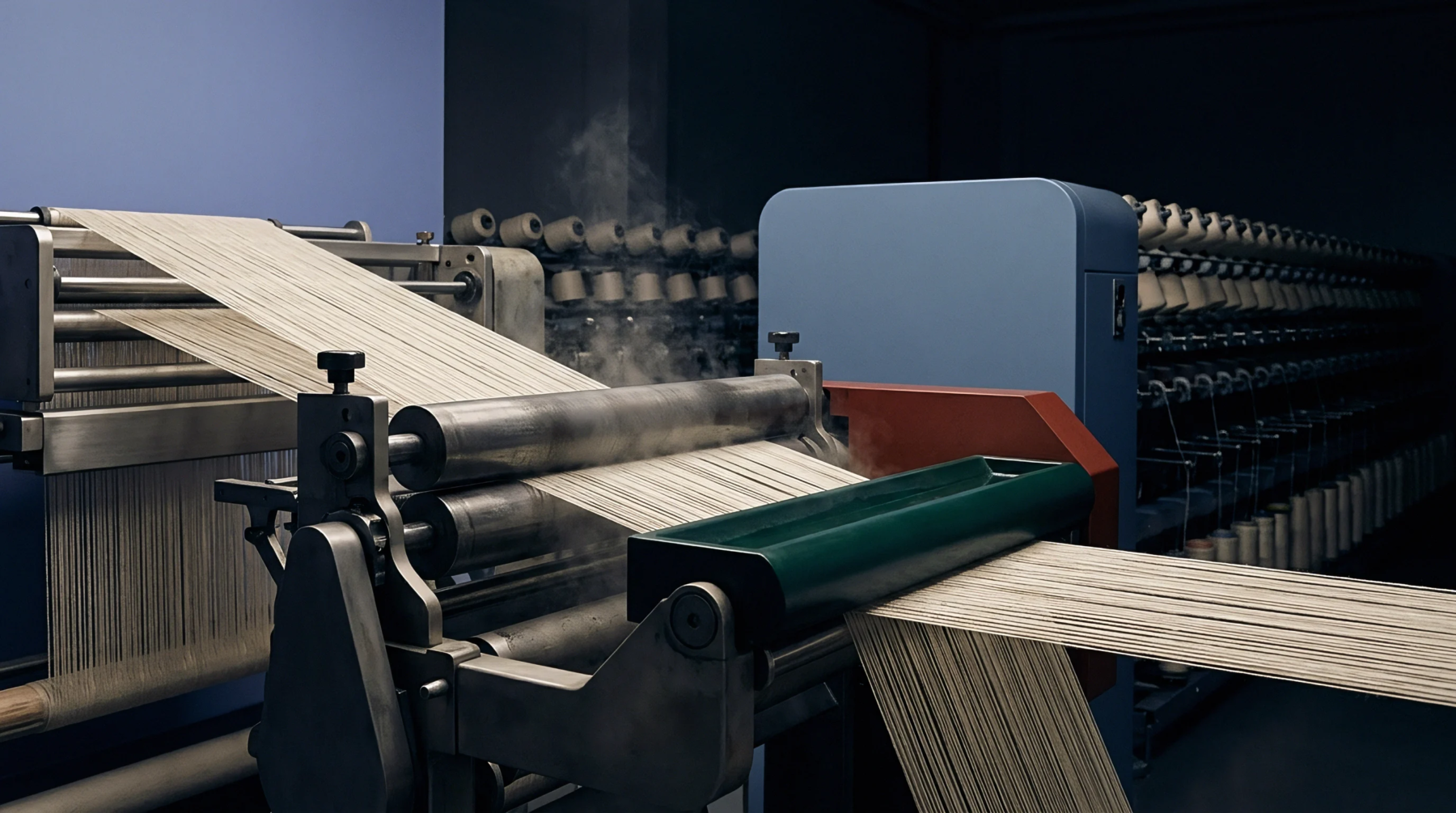
Scutched flax splitting efficiency directly dictates wet-spinning count limits by controlling the distribution of technical bundle diameters prior to roving draft.

Commercial claims on enzymatically processed flax require matching residual pectin levels against bundle tenacity and wet-spinning end breakages.

Container thermal swings drive flax moisture desorption, requiring oven-dry mass reconciliation against the twelve percent standard regain to verify true fiber volume.

Origin audits reconcile scutched flax inputs to spun yarn outputs by calculating moisture regain, mechanical hackling yields, and wet bath pectin losses.

Gravimetric linear density determination isolates conditioned cut fiber bundles on microbalances to establish precise tex and dtex spinnability limits for bast stock.

Maintain combing halls at 70% RH and control pectin esterification below 58% to maximize high count line flax hackling yields and lower metre costs.

Targeted polygalacturonase retting and controlled 65°C bath chelators depress pectin glass transition, optimizing fine line flax drafting and yarn yields.

Commercial mass adjustments correct landed weight for moisture regain while hackling yield allowances offset long line waste in yarn cost calculations.

Hackling yield directly establishes net fiber input costs, where a one percent yield gain lowers landed yarn expense by over two percent per finished meter.

Raw flax grading requires correlating technical bundle fineness and retting pectin decay with hackling yields to establish wet spinning count limits.

Maintaining residual pectin between 0.8% and 1.4% prevents roving draft collapse while enabling fibre attenuation in wet-spinning ultra-fine linen yarns.
Optimizing hackling pin density and wet-spinning trough temperature stabilizes draft forces, reducing bast yarn end breakage below fifteen breaks per thousand spindle hours.
Differentiating line from tow flax in ambiguous quotes requires verifying staple length over 500 mm, shive below 3%, and hackling yields above 50% by contract.

Hot water trough temperatures between 68°C and 74°C plasticize middle lamella pectins, preventing microfibril rupture and securing fine yarn counts up to Nm 80.
Cellulose microfibril angle dispersion drives transverse cell wall cleavage under pin shear, reducing dressed long line flax yield by up to 16 percentage points.

Substantial transformation audits in multi-country linen supply chains require linking lot-level transaction certificates from European flax fields to Asian spinning and weaving facilities to satisfy customs origin rules.

Secondary wall microfibrillar angle directly limits wet spun line yarn tenacity by setting crystallite load distribution before trough degumming.
Narrow crystallite orientation dispersion below 14 degrees FWHM maximizes wet spinning yields and fine count limit up to Nm 60 in long staple flax.

Widened microfibril angles reduce single fiber tenacity by increasing matrix shear stress, requiring X-ray diffraction checks to prevent yarn breakage.

Non-cellulosic thermogravimetric kinetic analysis quantifies binder levels to prevent hackling yield losses and wet-spinning breakage.

X-ray scattering and polarized Raman spectroscopy determine flax microfibril angles to project spinning performance and yarn tenacity.

Low S/G monomer ratios in flax middle lamella increase lignin cross-linking, elevating wet drafting force variability and driving yarn count instability.

Klason lignin testing combined with wet spinning draft analysis establishes raw flax mill suitability and prevents costly frame end breaks.

Standard flax fiber corrections adjust billable consignment weight to a twelve percent regain baseline derived from laboratory-verified oven-dry mass.
Microfibrillar thermal degradation reduces line flax tenacity, requiring adjusted gauge testing, lower wet-spinning temperatures, and recalibrated contract thresholds.

Controlled pectin removal enables clean bundle cleavage, elevating metric fibre fineness above Nm 2000 while maintaining long line yield above 60 percent.
Expertise is a utility, not a secret. sentiention™ publishes its working knowledge as open reference: intelligence layer covering the materials it sources, the markets it enters, and the reference that serves both.