Container Thermal Dynamics and Desorption Curves in Long Flax Maritime Transit Reconciliation
Container thermal swings drive flax moisture desorption, requiring oven-dry mass reconciliation against the twelve percent standard regain to verify true fiber volume.

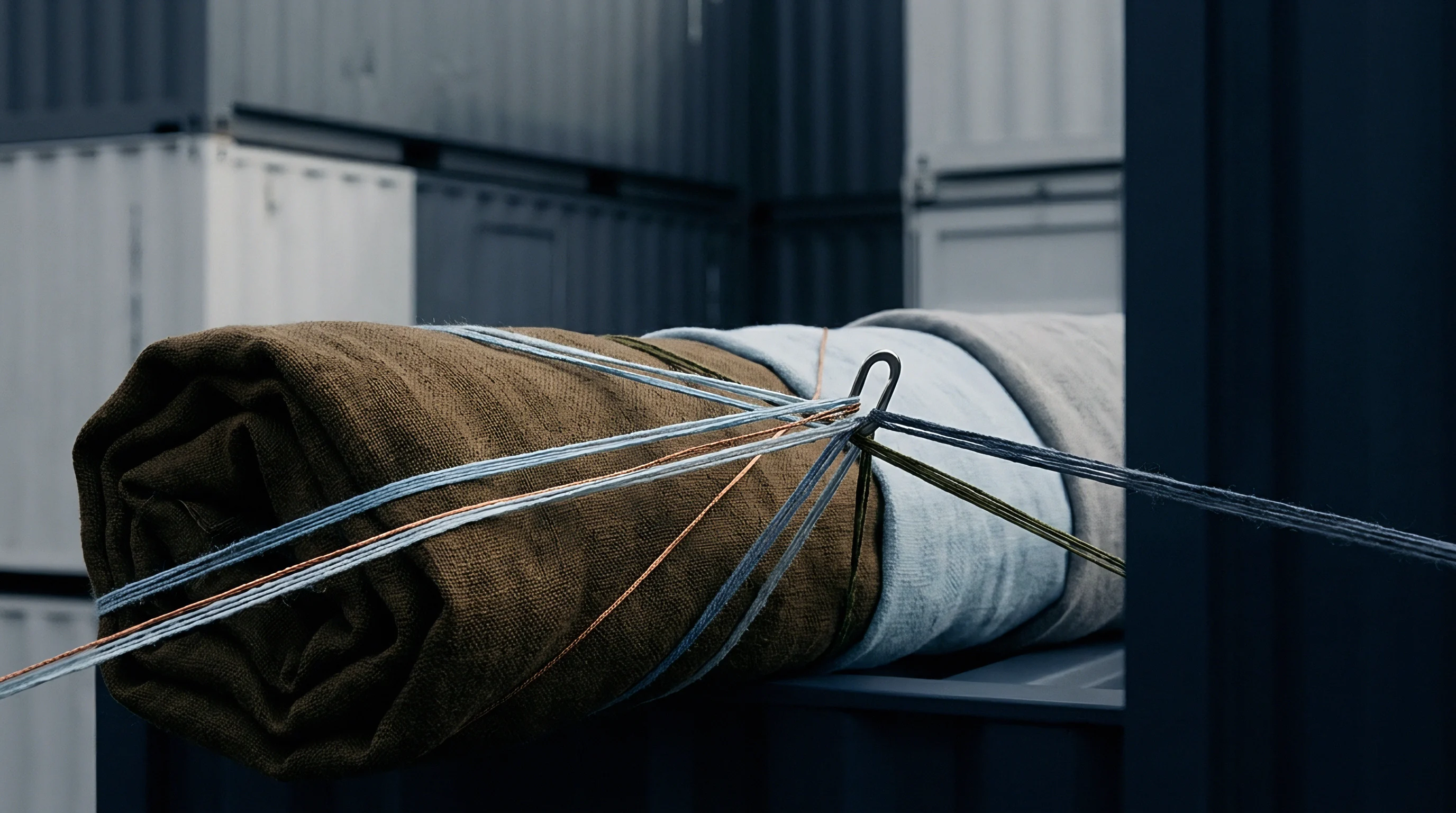
Steel
Exposed to direct equatorial sunlight, the steel skin of a shipping container can exceed 65 degrees Celsius during the day before rapidly cooling to 18 degrees Celsius at night. This daily temperature swing sets up convective air currents inside standard twenty-foot and forty-foot dry freight containers loaded with baled long flax fibre. Scutched flax loaded at origin ports like Antwerp, Le Havre, or Zeebrugge starts with an equilibrium moisture regain of 10.5 percent to 12.5 percent by mass.
As solar heat warms the outer steel shell and top air gap, thermal energy penetrates the outer edges of the compressed bales, causing water molecules bound in the hydrophilic cellulose and pectin matrix to desorb into the container head space.
Vapor pressure inside the box surges during peak heating. Air at 35 degrees Celsius holds up to 39.6 grams of water vapor per cubic metre at saturation, compared to just 12.8 grams at 15 degrees Celsius. When warm, moisture-laden air circulates against the uninsulated roof and side panels during evening cooling, the steel temperature drops below the internal dew point.
Water condenses on the ceiling and drips directly onto the top tier of bales. This cycle establishes an uneven hydration gradient through the load, keeping bale cores dry while the outer perimeter either absorbs falling liquid or vents vapor into the atmosphere.
A dark container roof exposed to tropical insolation transfers enough thermal flux to raise perimeter bale temperatures twenty degrees above ambient hold air.
Flax trading contracts resolve mass differences through standard commercial regain allowances. Buyers purchasing long line scutched flax under European Flax provenance frameworks settle invoices referenced to standard atmospheric conditions of 20 degrees Celsius and 65 percent relative humidity. Over a thirty-five-day sea passage through the Suez Canal or around the Cape of Good Hope to discharge ports in Ningbo, Shanghai, or Qingdao, landed weights recorded on port weighbridges routinely fall short of the loading manifest.
Moisture lost during warm transit reduces the gross physical tonnage, even though the actual dry fiber content remains unchanged.
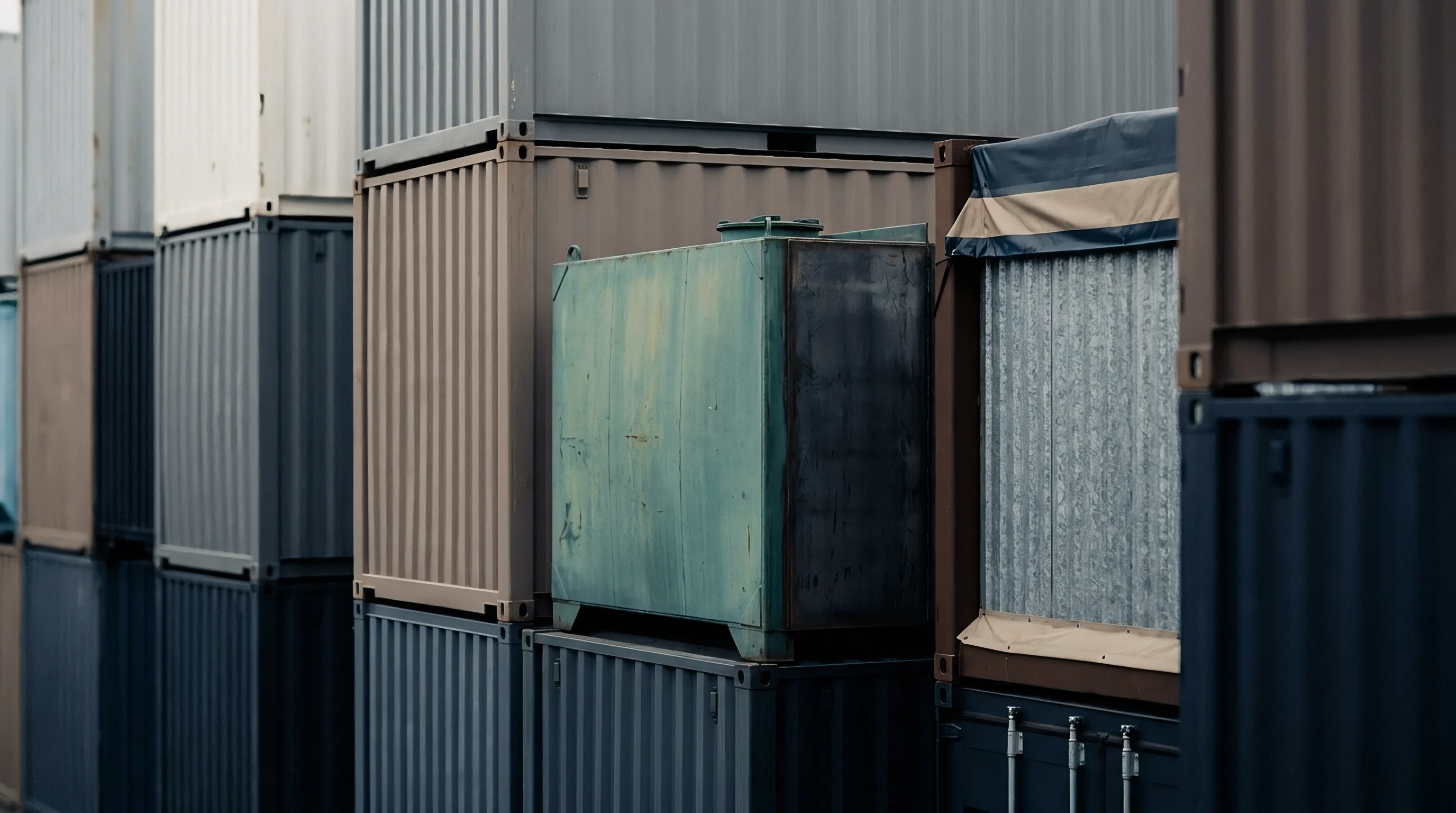
Thermal Gradients across High Density Bale Stacks
Bale arrangement directly affects how heat moves through the compressed fiber. Long line flax bales compressed above 400 kilograms per cubic metre have low bulk thermal conductivity, averaging 0.045 Watts per metre-Kelvin. Because of this insulation, the core of a dense stack can remain unaffected by outside temperature swings for up to seventy-two hours, even as the outer ten centimeters adjust quickly to the container walls.
Midday temperature differences between the core and the outer layer often reach 25 degrees Celsius near the equator.
Moisture naturally moves down this thermal gradient from hot areas to cooler ones inside the fiber mass. Inside an unventilated container, vapor released from the warm outer bales moves toward the cooler core during the day, then reverses direction toward the steel walls as they cool at night. For containers stowed on weather decks with top-tier exposure, intense solar heating drives moisture downward toward the bottom tiers.
Bales resting directly on timber flooring end up retaining extra moisture as the floorboards absorb vapor and slowly release it over the course of the voyage.
Dense cellulose packing acts as a thermal damper along maritime shipping routes.
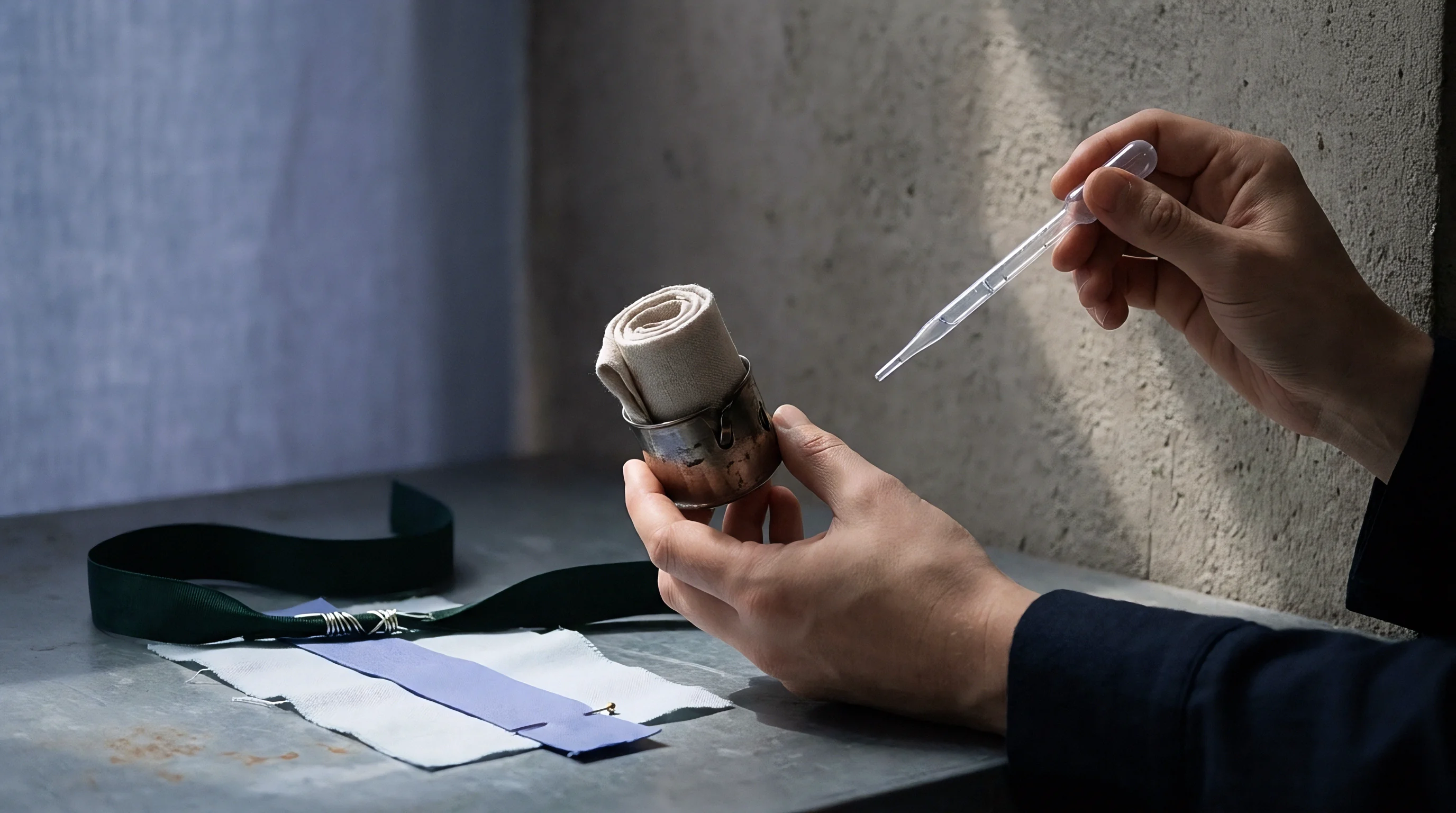

Isotherm
Moisture sorption in long flax fibre follows a sigmoidal Type II isotherm typical of natural hydrophilic polymers. Equilibrium moisture content and ambient water activity follow distinct paths depending on whether the fiber is absorbing or releasing water. Across the full relative humidity spectrum, the desorption curve sits above the absorption curve.
Flax drying down from a wet retting or scutching state retains more moisture at any given humidity than dry fiber absorbing vapor up to that same level.
| Relative Humidity (%) | Desorption Regain (%) | Adsorption Regain (%) | Hysteresis Delta (% Regain) |
|---|---|---|---|
| 30 | 6.85 | 5.40 | 1.45 |
| 45 | 8.90 | 7.20 | 1.70 |
| 60 | 11.45 | 9.55 | 1.90 |
| 65 | 12.50 | 10.35 | 2.15 |
| 75 | 14.80 | 12.40 | 2.40 |
| 85 | 18.20 | 15.60 | 2.60 |
Hysteresis in long flax reaches its maximum separation between 60 percent and 75 percent relative humidity. This gap stems from hydrogen bonding at accessible hydroxyl sites in non-crystalline cellulose, hemicellulose, and pectin. During desorption, water trapped inside the swollen microfibrillar network remains bound until internal capillary pressures drop substantially.
Conversely, when dry fiber adsorbs moisture, collapsed microfibrillar pores resist initial rehydration until ambient vapor pressure overcomes internal forces.
Standard commercial flax trade rules define legal regain at twelve percent while the physical hysteresis loop spans over two percentage points at equal humidity.
Higher temperatures shift the equilibrium sorption isotherm downward. Raising ambient temperature from 20 degrees Celsius to 40 degrees Celsius reduces the moisture-holding capacity of flax at 65 percent relative humidity by 1.8 percentage points. As a sealed container travels through tropical waters, higher internal heat and shifted equilibrium thresholds drive bound moisture out of the fiber, accelerating desorption into the air space.
Can Maritime Dew Point Shift Commercial Mass?
Passive vents on standard containers allow vapor exchange with outside sea air. Most general purpose boxes have two to four small labyrinth vents built to equalize pressure without letting in spray. Thermal expansion and wind pressure drive between 0.5 and 2.5 air changes per day through these openings.
Along dry tropical legs, warm air entering the box carries off desorbed vapor, permanently reducing the container’s total moisture weight.
This cumulative moisture loss noticeably reduces delivered container weights. A forty-foot box loaded with 21,000 kilograms of scutched flax at an initial regain of 12.0 percent carries 2,250 kilograms of water and 18,750 kilograms of bone-dry fiber. If high transit temperatures reduce the average regain across the bales to 10.2 percent, total water weight drops to 1,912 kilograms.
At the discharge port, the scale records a cargo weight of 20,662 kilograms ~ an apparent shortfall of 338 kilograms of commercial fiber.
In a laboratory conditioning chamber, standard ISO 139 protocols at 20 degrees Celsius and 65 percent relative humidity will restore regain after ninety-six hours of open exposure. But commercial spinning mills opening dense, intact bales do not sit on raw inventory for four days before production. Bales go straight to the opening line and drawframes under standard mill room humidity, translating the transit moisture loss directly into lower initial spinning yields.


Condensation
Liquid water dripping from container ceilings poses a major microbiological risk to long line flax stricks. When desorbed vapor condenses on cold, uninsulated steel panels during weather fronts, water accumulates on top paper wrappings and seeps into upper bale ties. Exposed to standing water in a closed container, flax stricks can develop localized fungal growth from species like Aspergillus niger and Cladosporium herbarum within forty-eight hours at temperatures above 25 degrees Celsius.
- Ceiling Sweat Precipitation occurs when sky cooling drops roof steel temperatures below the dew point, showering liquid droplets onto top bales.
- Bulkhead Contact Wetting happens when bale faces sit directly against corrugated side walls, drawing condensed wall runoff into compressed fiber through capillary action.
- Floorboard Vapor Desorption develops when unsealed timber flooring releases stored moisture into bottom bales, driven by heat conduct from underlying engine room holds.
- Corner Pocket Stagnation occurs in dead air zones near door gaskets where circulation stops, keeping relative humidity above 90 percent and triggering localized decay.
Fungi break down the intercellular pectin matrix that binds individual ultimate fibers into technical bundles. This enzymatic damage reduces tensile strength and causes severe discolouration. Weakened fiber bundles snap during hackling and drafting, increasing noil waste on combing machines and forcing production down from fine yarn counts to lower coarse tow grades.

Are Desorption Losses Recoverable at Opening?
Spinning plants process fiber far faster than ambient air can rehydrate dense bale cores. A bale opened after thirty days in a dry container needs significant exposure to regain equilibrium. Moisture absorption into tightly packed flax moves at less than one-third the speed of initial desorption under heated maritime air currents.
Bales opened immediately upon arrival process through hackling at their transit moisture state rather than their certified origin condition.
Even in mill conditioning rooms running at 70 percent relative humidity, only the outer five centimeters of an opened bale rehydrates within twenty-four hours. Running dry flax through high-speed hackling machinery causes severe fiber breakage, static buildup, and uneven sliver weight. If moisture regain falls below 9.5 percent, brittle pectin bonds break under pin impacts, lowering long line yields by up to 4.5 percent and raising dust levels throughout the hall.
Ignoring transit desorption leaves spinning mills absorbing processing losses and fiber breakage costs that never show up on the commercial bill of lading.

Tolerance
International flax contracts use standardized formulas to distinguish between lost fiber mass and routine moisture fluctuation. International trade rules set standard commercial regain for flax fiber at 12.00 percent of bone-dry weight. Reconciling contract settlements involves core-sampling landed containers, drying representative samples at 105 degrees Celsius per ISO 6741 standards, and calculating the certified invoice mass.
| Variable Parameter | Stable Transit | Moderate Desorption | Severe Desorption |
|---|---|---|---|
| Origin Net Mass (kg) | 20,000 | 20,000 | 20,000 |
| Origin Regain (%) | 12.00 | 12.00 | 12.00 |
| Dry Fiber Mass (kg) | 17,857.14 | 17,857.14 | 17,857.14 |
| Discharge Scale Mass (kg) | 20,000 | 19,650 | 19,300 |
| Discharge Regain (%) | 12.00 | 10.04 | 8.08 |
| Commercial Invoice Mass (kg) | 20,000.00 | 20,000.00 | 20,000.00 |
| Mass Discrepancy Scale vs Invoice (kg) | 0.00 | -350.00 | -700.00 |
Commercial invoice adjustments rely on the certified dry mass determined through oven analysis. Dry mass is calculated by dividing total wet weight by one plus the measured moisture regain expressed as a decimal. Multiplying that bone-dry figure by 1.12 gives the official invoice weight at the standard 12.00 percent allowance.
If a container loses weight purely to water evaporation, this calculated invoice mass matches the original dispatch weight, proving no dry fiber substance was lost.
Disputes arise when weighbridge tickets show a shortfall and buyers lack accredited moisture test certificates. Without joint oven-dry core sampling at container unloading, receiving mills log weight deficits as short shipments against ocean carriers or raw material sellers. While bills of lading list gross weights including tare, carriers reject claims for atmospheric moisture loss under standard carriage exceptions for natural shrinkage and inherent vice.
- Supervised Core Extraction requires sampling five percent of landed bales across top, middle, and bottom tiers using sealed coring tubes immediately when container doors open.
- Immediate Seal Packaging protects samples from dock air by sealing cores into vapor-barrier foil pouches right after extraction.
- Oven Conditioning Verification dries test specimens at 105 degrees Celsius to a constant mass, verified when two consecutive weighings fifteen minutes apart differ by less than 0.05 percent.
- Regain Arithmetic Application applies measured moisture values to gross weighbridge readings to determine the corrected invoice weight and confirm true fiber deficits.
Evaporation during tropical transit accounts for three hundred kilograms of missing scale weight while leaving the dry fiber substance intact.

Exposure
Traceability schemes linking Western European flax growers to overseas processors rely on transaction certificates and mass balance accounting to protect chain of custody. Certification audits match raw flax shipments leaving scutching mills in France, Belgium, or the Netherlands against intake figures at spinning plants in China, India, or Vietnam. Moisture loss during ocean transit creates systematic discrepancies between export certificates and import customs declarations.
If an exporter issues a certificate for 20,000 kilograms of certified European Flax at origin, and the receiving mill logs 19,400 kilograms on customs documents due to 3.0 percent moisture desorption, tracking systems flag a 600-kilogram deficit. Auditors evaluate these gaps during annual facility inspections. Mills without formal moisture reconciliation procedures face audit non-conformities or risk forfeiting certified volume credits.
A three percent moisture transit loss uncorrected by oven testing strips six hundred kilograms of certified volume from mill conversion allowances.
Chinese customs authorities classify raw scutched flax under HS code 5301.21, assessing tariffs strictly on physical scale weights at entry. When transit desorption lowers landed weight, the taxable baseline decreases while the effective unit price per dry kilogram increases. Importers managing compliance and chain-of-custody tracking must align customs scale declarations with certified provenance volumes using explicit moisture clauses in their purchase contracts.
Standard contracts under International Linen and Hemp Confederation rules mandate settling raw fiber invoices on commercial mass calculated at twelve percent regain. Under these rules, scale weight variations up to two percent caused by atmospheric moisture shifts fall within normal transit tolerance and do not justify purchase price deductions.