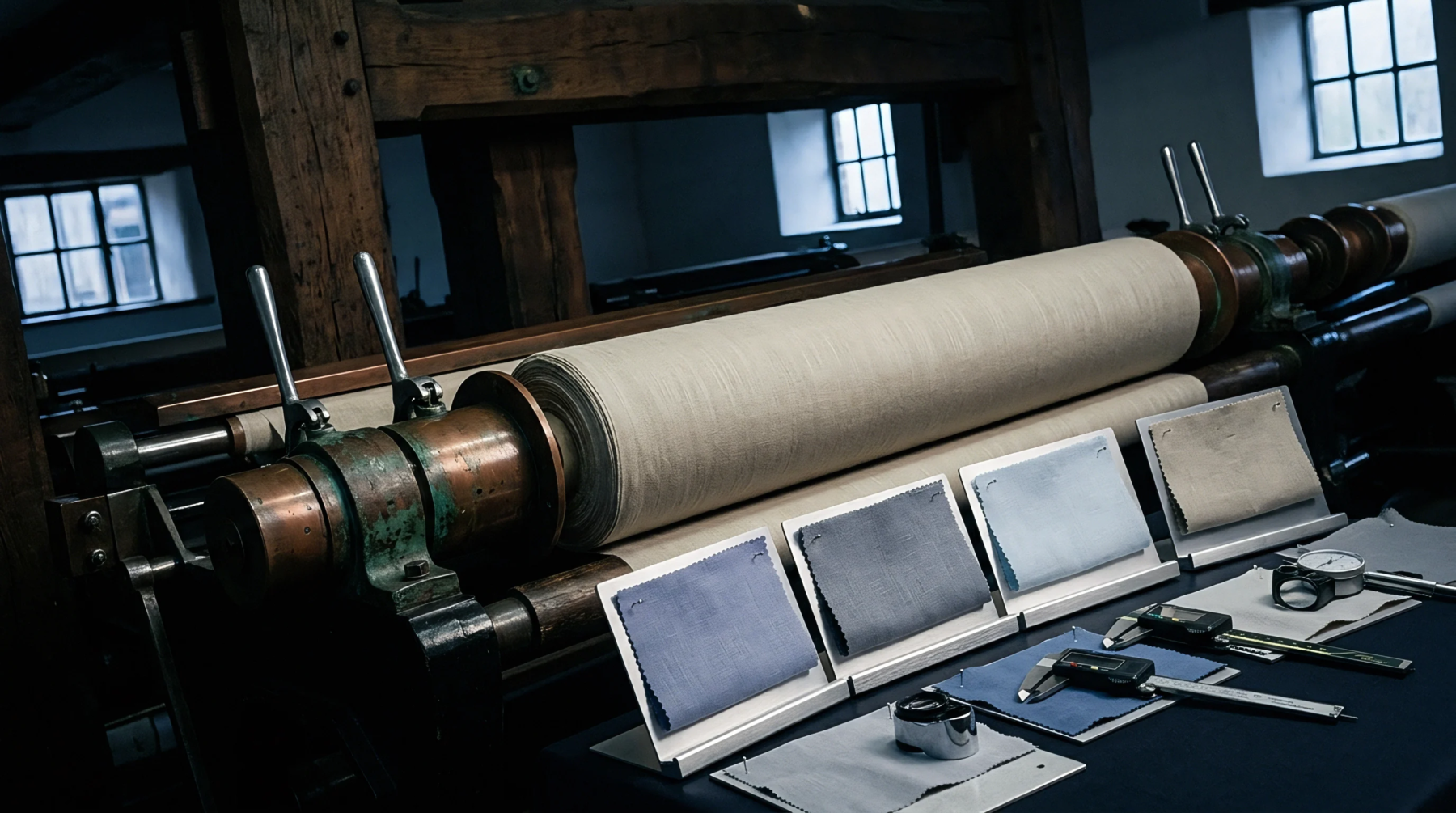
Gravimetric Mass Measurement Methods for Scutched Flax Fibres
Verify dry mass through oven desiccation at 105C and apply a 12% moisture regain formula to protect mill yield and block transit water charges.
Verify dry mass through oven desiccation at 105C and apply a 12% moisture regain formula to protect mill yield and block transit water charges.

Calibrating wet spinning trough temperature and pH prevents pectin-induced draft rupture, lowering fine yarn end breaks and securing target tenor tenacity.

Flax retting breaks down stalk pectin to separate spinnable fibers, requiring strict moisture control and scope-verified chain of custody to secure origin.

Verify Chinese linen wet spinning mass balance by deducting verified combing tow and pectin extraction losses from oven-dry commercial intake weights.

Reconciling European Flax certificates against Chinese mill intake requires balancing physical bale tags, mass-loss conversion yields, and transaction papers.

Container thermal swings drive flax moisture desorption, requiring oven-dry mass reconciliation against the twelve percent standard regain to verify true fiber volume.

Verify European Flax certificates by balancing scutched flax intake against spinning yields, matching lot numbers, and confirming valid Transaction Certificates.

Gravimetric linear density determination isolates conditioned cut fiber bundles on microbalances to establish precise tex and dtex spinnability limits for bast stock.

Maintain combing halls at 70% RH and control pectin esterification below 58% to maximize high count line flax hackling yields and lower metre costs.
Cellulose microfibril angle dispersion drives transverse cell wall cleavage under pin shear, reducing dressed long line flax yield by up to 16 percentage points.

Standard moisture regain in scutched flax fibre is set at 12.0% of bone-dry mass using ISO 6741-1 forced-convection oven drying at 105 degrees Celsius.
Reconciling wet-spun long line flax demands subtracting hot-bath pectin extraction loss and comb waste from certified fiber transaction receipts.

Klason lignin testing combined with wet spinning draft analysis establishes raw flax mill suitability and prevents costly frame end breaks.

Residual pectin levels below 1.5 percent dictate successful wet spinning of fine flax yarns above Nm 40 without elevated end breakage rates.

Comb array length analysis predicts hackling long-line yield, tow waste, and spinnable count limits to establish true landed cost per finished metre.

Non preferential origin for imported linen cloth resides in the country where greige yarns are interlaced on the loom, not where flax fibres were grown or spun.

Selective pectin degradation paired with tuned hackling pin density maximizes fibre bundle separation while retaining staple length for fine wet spinning.

Cut length flax gravimetric linear density variance triggers tiered commercial debits based on wet spinning draft limits and yarn count yield loss.

Auditing flax transformation ledgers requires mass-reconciliation across combing, spinning, and weaving nodes to verify customs origin declarations.
Reconciling spinning mill mass balance ledgers requires verifying raw intake certificates against physical machine yields, waste rates, and packaged yarn sales.
Dew retted line flax hackling yield determines long line fiber recovery, tow ratios, and yarn production costs through precise fineness and strength testing.

Fine count wet spun linen mass balance requires deducting 2.5 to 4.5 percent pectin dissolution loss and count-adjusted mechanical scrap from dry input mass.

Optimal long line flax wet spinning recovery requires raw fiber Klason lignin held between 1.8 and 2.5 wt% to maximize hackling yield and prevent end breakage.

Verify Chinese-spun European Flax by validating batch-specific Transaction Certificates against mill mass balances and scutcher intake tags before payment.

Linen origin rests on Western European raw flax scutching records linked through batch transaction certificates and mill mass-balance audits to finished bolts.

Metric fibre number claims require ISO 2370 gravimetric verification because airflow instruments skew up to fifteen percent across retting types and moisture regains.
Expertise is a utility, not a secret. sentiention™ publishes its working knowledge as open reference: intelligence layer covering the materials it sources, the markets it enters, and the reference that serves both.