Thermodynamic Regain Variance and Pectin Degradation Dynamics in High Count Line Flax Hackling Yield Realization
Maintain combing halls at 70% RH and control pectin esterification below 58% to maximize high count line flax hackling yields and lower metre costs.


Vapor

Relative Humidity Isotherms and Fiber Wall Hysteresis
Bound water in scutched flax bundles governs the boundary between clean bundle division and outright elementary fibre fracture. At the ultrastructural level, Linum usitatissimum cell walls consist of crystalline cellulose fibrils embedded in a hemicellulose and pectin matrix. Moisture enters by hydrogen bonding with available hydroxyl groups on these non-crystalline polysaccharides.
Regain, measured under ISO 6741, tracks ambient atmospheric changes along non-linear sorption isotherms. Because flax absorbs vapor along a different thermodynamic curve than it desorbs, bundles conditioned to 70 percent relative humidity from a wet state carry roughly 1.5 percent higher absolute moisture content than identical bundles brought up to 70 percent relative humidity from an oven-dry state.
This regain hysteresis determines the physical behavior of the middle lamella. Moisture plasticizes structural pectins, depressing their glass transition temperature from above 80 degrees Celsius when oven-dry down to a typical hackling room temperature of 20 to 22 degrees Celsius once fibre regain clears 11.5 percent. If combing hall humidity drops below 65 percent relative humidity, regain falls under 9.5 percent and the pectin matrix hardens into a glassy state.
Comb pins striking dry bundles cannot shear the pectin-rich middle lamella cleanly; the impact instead generates transverse micro-fractures through elementary cell walls. That damage shortens average staple length, degrades yarn tenacity, and converts spinnable long line into low-value combings tow.
| Relative Humidity (%) | Adsorption Regain (%) | Desorption Regain (%) | Pectin Matrix State | Hackling Behavior |
|---|---|---|---|---|
| 45 | 6.2 | 7.4 | Glassy / Brittle | Severe fibre shearing and high tow generation |
| 55 | 7.8 | 9.1 | Leathery / Rigid | Incomplete bundle division, coarse sliver |
| 65 | 9.6 | 11.0 | Transition Zone | Optimal separation force to strength ratio |
| 75 | 12.1 | 13.8 | Viscoelastic / Soft | Smooth pin penetration, minimal structural fracture |
| 85 | 15.4 | 17.2 | Saturated / Plasticized | Excessive fibre lap-up on hackling pins |

Thermodynamic Control Requirements in Combing Halls
Stable hackling requires maintaining fibres close to moisture equilibrium, typically 70 to 75 percent relative humidity at 21 degrees Celsius. Hall temperature swings shift water vapor partial pressures much faster than the interior of a dense flax strick can adjust. A 4 degrees Celsius temperature rise cuts room relative humidity by approximately 12 percent, pulling surface moisture off outer fibres while the inner core stays damp.
This radial moisture gradient gives fibres across the strick profile vastly different bending stiffness. Outer dry strands shatter on pin contact, creating fly waste and short combings, while damp cores resist pin penetration and form coarse, tangled sliver that drafts poorly downstream.
Relative moisture absorption paths establish a 1.5 percent regain variance between wetting and drying cycles at identical relative humidity.
Preserving line yield requires conditioning inventory thoroughly before feeding machines. Bales from European retting yards arrive anywhere between 8.5 percent and 14.0 percent moisture depending on transport and warehouse exposure. Putting bales straight onto the feed table without a forty-eight hour thermal and hygrometric equilibration period causes immediate yield loss.
Standard mill practice enforces a three-stage conditioning sequence prior to strick clamping.
- Unstrapped Bale Staging Bales sit in open ambient air at 70 percent relative humidity for twenty-four hours to equalize outer layer moisture gradients.
- Core Moisture Monitoring Moisture probes measure internal core regain across ten locations per bale to verify readings within a 11.0 to 12.5 percent target band.
- Strick Formation Balancing Operators balance strick weight allocations using moisture-compensated dry mass calculations to ensure uniform linear density per clamp.
Bypassing ambient conditioning during dry winter months cuts hackling long line yield by an average of 4.2 percent, with a corresponding surge in combings tow.


Cleavage

Pectin Structure and Rhamnogalacturonan Demethylation
The biochemistry of the middle lamella dictates how cleanly flax technical bundles split into elementary fibres. Intercellular pectin consists mainly of homogalacturonan chains interspaced with rhamnogalacturonan regions. The alpha-1,4-linked D-galacturonic acid residues carry carboxyl groups esterified with methyl alcohol to varying degrees based on cultivar, season, and retting conditions.
This degree of esterification sets the charge density along the polymer backbone: highly esterified pectins carry few ionized sites, limiting ionic cross-linking, whereas low esterification exposes free carboxyls that bind divalent cations ~ primarily calcium ~ into rigid egg-box junction networks.
Retting relies on fungal polygalacturonase and pectin lyase to hydrolyze these pectin networks. In field dew-retting, organisms like Cladosporium herbarum colonize the stems, but enzymatic selectivity is coarse. Over-retting attacks both the middle lamella and primary cell wall hemicelluloses, dropping elementary fibre tenacity from a typical 55 centinewtons per tex to below 38 centinewtons per tex.
Under-retting leaves the pectin binder intact, demanding excessive combing force to divide the bundles. Spinning fine yarns at metric count Nm 80 or finer requires elementary fineness under 1.5 decitex, which cannot be reached without controlled enzymatic cleavage of galacturonan chains.
Does Pectin Methylation Dictate Fine Hackling Resistance?
Carboxyl methyl ester content directly correlates with mechanical hackling resistance. High residual methylation resists enzymatic breakdown in the field, leaving dense networks that combs cannot divide cleanly. When processing raw lots with esterification levels above 65 percent, standard hackling produces coarse bundles averaging 3.2 to 4.5 decitex, well above the sub-2.0 decitex threshold required for fine line wet spinning.
Chelating agents such as ethylenediaminetetraacetic acid or citric acid applied during pre-conditioning capture divalent calcium, opening these ionic junctions and reducing the mechanical shear required to split bundles along natural cell boundaries.
Frictional heating during high-speed combing further complicates matrix behavior. Pins moving through dense stricks push local fibre temperatures above 45 degrees Celsius. In the presence of bound water, this heat triggers non-enzymatic beta-elimination along esterified homogalacturonan chains, cutting molecular weight abruptly.
Because uncontrolled beta-elimination occurs unevenly across the strick, localized zones disintegrate and shed short fibre fragments into the machine pit, degrading sliver uniformity and increasing tow volume.
Calcium ion chelation converts rigid pectin networks into soft plasticized matrices without breaking primary cellulosic walls.
Low long line yields from under-retted flax with variable pectin esterification often stem from biological fiber inconsistency rather than pinning setup errors. Test method ISO 2370 establishes the baseline for flax fibre fineness, while spectrophotometric assays quantify total uronic acid content and degree of esterification. When galacturonic acid concentrations exceed 48 milligrams per gram of dry fibre alongside esterification above 60 percent, the fibre retains excessive structural pectin, confirming incomplete biological retting.

Pin
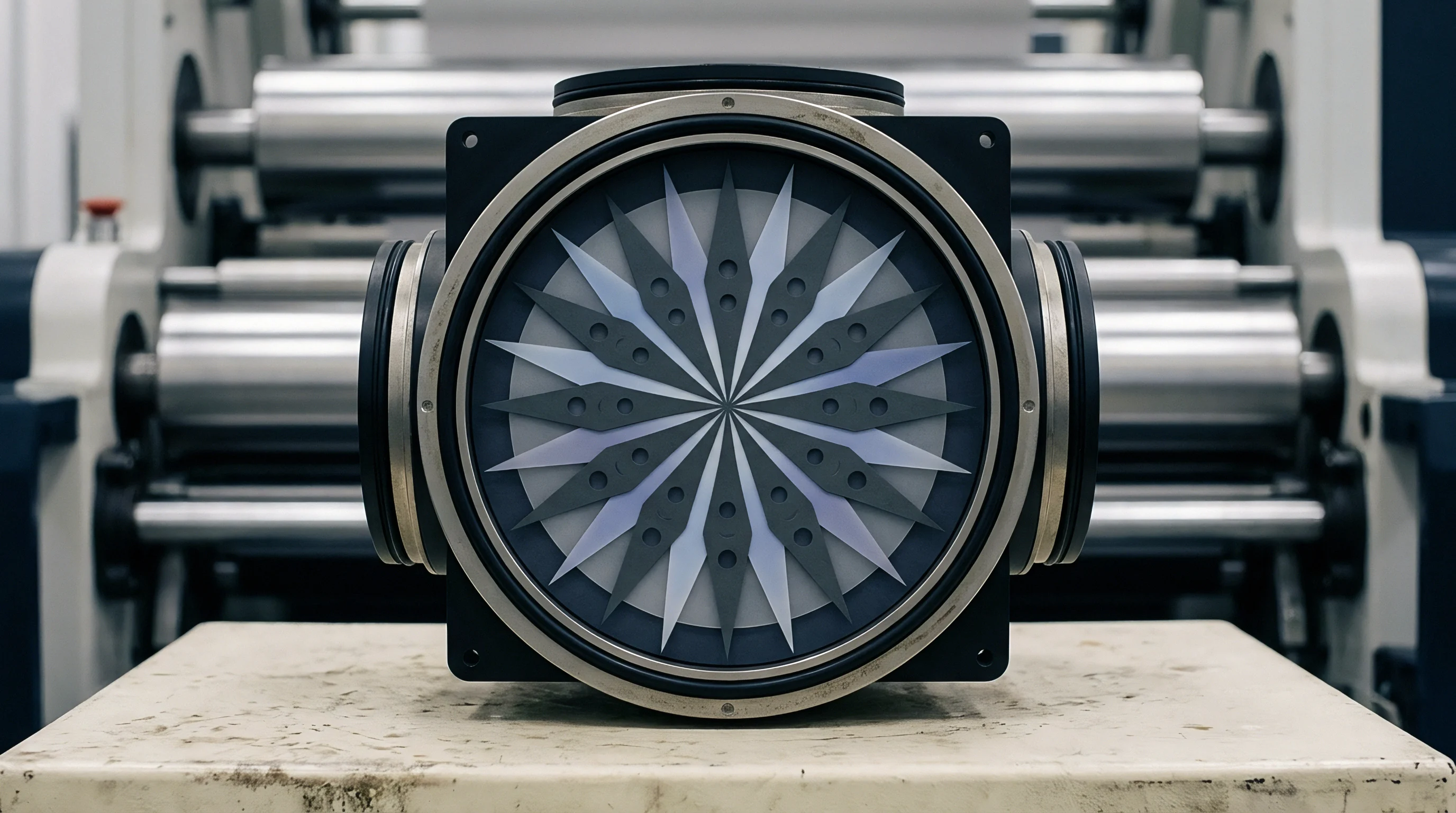
Combing Kinematics and Pin Density Sequences
Hackling machines split flax stricks across a graded sequence of increasing pin densities. Paired comb sheets carry pinned hackling bars past stricks suspended vertically in aluminum clamps. The entry roughing zones use round pins set at low densities, between 1.5 and 2.5 pins per centimeter, while the finishing field deploys flat needles spaced up to 18 pins per centimeter.
As pins pass through the strick, they exert axial shear along weak pectin interfaces between technical fibres. Pin radius, penetration depth, and linear chain speed must align with the viscoelastic state of the conditioned fibre to avoid tearing cell walls.
Driving fine pins too deeply into dry or under-retted flax deflects pins and shears fibre bundles. Excessive linear comb speed pushes impact forces beyond the tensile limits of elementary cellulosic walls. Splitting bundles for high count spinning requires progressive acceleration and interfacial shear rather than blunt transverse impact.
Finishing pins use polished, tapered profiles to slide between parallel strands, wedging bundles apart along pectin boundaries without abrading the outer cortical tissue into neps.
| Hackling Field Zone | Pin Density (pins/cm) | Pin Profile | Linear Speed (m/min) | Target Bundle Fineness (dtex) |
|---|---|---|---|---|
| Zone 1: Roughing Entry | 1.8 | Round Tapered | 12.0 | 18.0 – 22.0 |
| Zone 2: Coarse Division | 3.5 | Round Tapered | 14.5 | 11.0 – 14.0 |
| Zone 3: Intermediate Split | 7.0 | Flat Beveled | 16.0 | 6.5 – 8.5 |
| Zone 4: Fine Combing | 12.0 | Flat Polish Needle | 18.0 | 3.2 – 4.5 |
| Zone 5: High Count Finish | 17.5 | Micro Needle | 15.0 | 1.6 – 2.2 |

Fibre Division Failure Mechanics
Combing failure resolves into three distinct modes, each reflecting different fibre conditions and moisture levels.
- Transverse Cell Wall Fracture Elementary fibres snap across their main cellulosic axis, caused by excessively dry processing or high comb impact speed.
- Pectin Bond Shear Failure Desirable separation along the middle lamella, producing fine, parallel long line strands with intact elementary fibres.
- Bundle Delamination Shedding Cortical tissue and unretted shive bark peel away from fibre bundles, forming short, dirty combings waste due to poor scutching cleaning.
High-density pinning demands careful clamp gap setting. Excessive distance between the clamp edge and the pin impact line lets fibres deflect away from the comb, leaving strick midsections uncombed. Setting the clamp too close creates steep entry angles that break root ends.
High count preparations generally run a 32-millimeter clamp gap in initial coarse zones, closing down to 18 millimeters in micro-needle finishing fields.
Technical supply contracts specify a maximum six percent hackling combings allowance based on dry fibre weight at standard regain.
Commercial contracts routinely include mechanical yield clauses based on standardized comb trials. Under international trade standards, scutched flax lots are tested on sample hackling frames; if realized yield falls more than 2.0 percent below contract specifications, delivery terms require price adjustments compensating for the value difference between long line sliver and tow.
Waste

Mass Balance and Yield Realization Arithmetic
Transforming scutched flax into hackled sliver generates considerable mass loss as shive, short tangled fibres, root ends, and dust separate from the line. Combing outputs divide into long line sliver, hackling combings (tow), and machine waste. Long line realization is calculated as the dry weight of combed sliver divided by the total dry weight of raw input flax.
For high count processing, long line yield generally falls between 45 percent and 58 percent, with the remaining 42 to 55 percent diverted into combings streams or dust collection.
Uncorrected regain differences easily distort yield figures. In a 10,000 kilogram lot of scutched flax delivered at 13.0 percent regain, true dry input mass is 8,849.5 kilograms. If hackling in dry air yields 4,600 kilograms of sliver at 9.0 percent regain, dry line mass is 4,220.2 kilograms.
True dry-basis yield is 4,220.2 divided by 8,849.5, or 47.69 percent. Calculating yield straight from raw scale weights gives 4,600 divided by 10,000, or 46.00 percent, obscuring 1.69 percent of usable fibre through unrecorded moisture evaporation.
A reliable combing room audit isolates physical fibre waste from moisture loss through a systematic sampling routine.
- Sample ten stricks per shift immediately prior to machine loading and record initial gross mass.
- Extract moisture core samples from each strick and determine dry mass via ISO 6741 oven drying at 105 degrees Celsius.
- Process stricks through the hackling line under controlled speed and pin density parameters.
- Collect total combed long line sliver, weigh immediately, and extract secondary moisture test samples.
- Gather total combings tow from all hackling collection boxes, weigh gross mass, and test moisture content.
- Clean machine pit dust traps, weigh collected shive waste, and calculate closed mass balance closure within a 0.5 percent error margin.
Line yield is acutely sensitive to retting quality. Over-retted flax with weakened cell walls shatters in high-density pinning zones: every 1.0 percent increase in pectin depolymerization beyond optimal retting shifts roughly 2.3 percent of input mass from line sliver into combings. With combings tow trading at 20 to 25 percent of the price of hackled line, a 3 percent yield drop on a 20-tonne production run erodes operating margins across the mill.
Uncompensated regain loss during combing often conceals true mechanical fibre damage across high-density needle zones.


Roving

Wet Spinning Preparation and Trough Pectin Dynamics
Hackled sliver passes through multiple drawing passages to build an even roving for the spinning frame. Drawing blends slivers, attenuates linear density, and aligns elementary fibres. For fine counts between Nm 60 (16.6 tex) and Nm 100 (10.0 tex), drawing operations must hold sliver mass coefficient of variation below 11.5 percent.
Because fine yarns contain only 25 to 35 elementary fibres per cross-section, drafting waves from irregular fibre stick-slip movement produce thin spots that fail under spinning tension.
Before wet spinning, roving packages undergo a mild alkaline boil. Bobbins are submerged in hot baths of sodium carbonate and wetting agents to solubilize remaining pectins and break down calcium pectate cross-links in the middle lamella. This allows elementary fibres to slide freely in the wet spinning trough, maintained between 65 and 75 degrees Celsius.
The hot bath softens residual intercellular pectin, lubricating bundles as they pass between the drafting rollers.
Tight temperature control in the spinning trough is critical. Water below 55 degrees Celsius leaves pectins rigid, producing drafting force spikes that snap the strand. Temperatures above 85 degrees Celsius strip out too much pectin, causing bundles to dissociate completely and driving end-breakage rates above 80 breaks per 1000 spindle-hours.
Spinning trough temperatures held precisely at 70 degrees Celsius optimize pectin hydro-thermal softening without stripping structural cell matrix integrity.
Wet spinning troughs operate best when immersion dwell time is adjusted inversely to roving twist, adding two degrees Celsius of trough heat for every ten percent increase in raw fibre pectin content.

Margin

Landed Economics and Metre Conversion Costs
Evaluating fine line flax economics requires linking raw bale pricing through hackling yields to final grey cloth metrics. Top-grade European scutched flax commands a premium based on length, color, and fineness. Under ISO 6741, official commercial regain sits at 12.0 percent for scutched flax, hackled sliver, and grey line yarn alike.
Invoicing must be audited against oven-dry weight plus standard regain to avoid paying fibre prices for excess water.
Yield during hackling influences finished fabric costs far more than raw fibre unit pricing. For an Nm 80 (12.5 tex) wet-spun yarn woven into a 115 gsm plain shirting at 160 cm reed width, raw scutched flax at 6.50 Euros per kilogram dry basis carries processing costs ~ hackling, drawing, roving boiling, and spinning ~ of 14.20 Euros per output kilogram of yarn at baseline yields.
| Parameter / Scenario | Baseline Performance | Low Yield / Dry Hall | High Regain / Optimal Retting |
|---|---|---|---|
| Scutched Flax Dry Mass Input (kg) | 100.0 | 100.0 | 100.0 |
| Hackling Long Line Yield (%) | 52.0 | 44.0 | 56.0 |
| Produced Line Sliver Dry Mass (kg) | 52.0 | 44.0 | 56.0 |
| Spinning Efficiency Yield (%) | 88.0 | 82.0 | 90.0 |
| Final Delivered Yarn Dry Mass (kg) | 45.76 | 36.08 | 50.40 |
| Total Processing & Fibre Cost (€) | 1,300.00 | 1,300.00 | 1,300.00 |
| Effective Yarn Landed Cost (€/kg) | 28.41 | 36.03 | 25.79 |
| Fabric Yield (linear metres @ 115 gsm) | 248.7 | 196.1 | 273.9 |
| Finished Fabric Fibre Cost (€/metre) | 5.23 | 6.63 | 4.75 |
An eight percentage point decline in hackling yield raises landed yarn cost by 7.62 Euros per kilogram, lifting grey fabric production cost by 1.40 Euros per linear metre. Controlling environmental humidity, retting biochemistry, and pin mechanics is therefore essential to preserving margin.
Commercial purchase contracts rely on standard clauses to protect against yield deficits and uncompensated moisture swings.
- Official Commercial Mass Clause Invoices settle strictly on official mass calculated via ISO 6741 oven-dry testing plus standard 12.0 percent regain allowance.
- Hackling Yield Benchmark Clause Deliveries of raw scutched flax guaranteed for Nm 80 minimum count must demonstrate a minimum 50.0 percent long line yield on mill trial frames.
- Pectin Esterification Ceiling Clause Fiber lots shall exhibit galacturonic acid esterification degrees below 58 percent measured via spectrophotometric assay.
- Moisture Variance Penalty Clause Shipments arriving with average regain exceeding 14.0 percent incur a automatic weight deduction equal to twice the water weight excess.
High count line spinning depends on balance across moisture conditioning, pectin breakdown, and pin impact. Equilibrium regain prevents elementary wall fracture during combing, while controlled chemical and enzymatic breakdown lets bundles split down to fine counts without losing tenacity. When relative humidity, machine acceleration, and spinning trough temperatures are coordinated properly, hackling realization reaches its practical potential, keeping spindle breakage low and landed costs predictable.