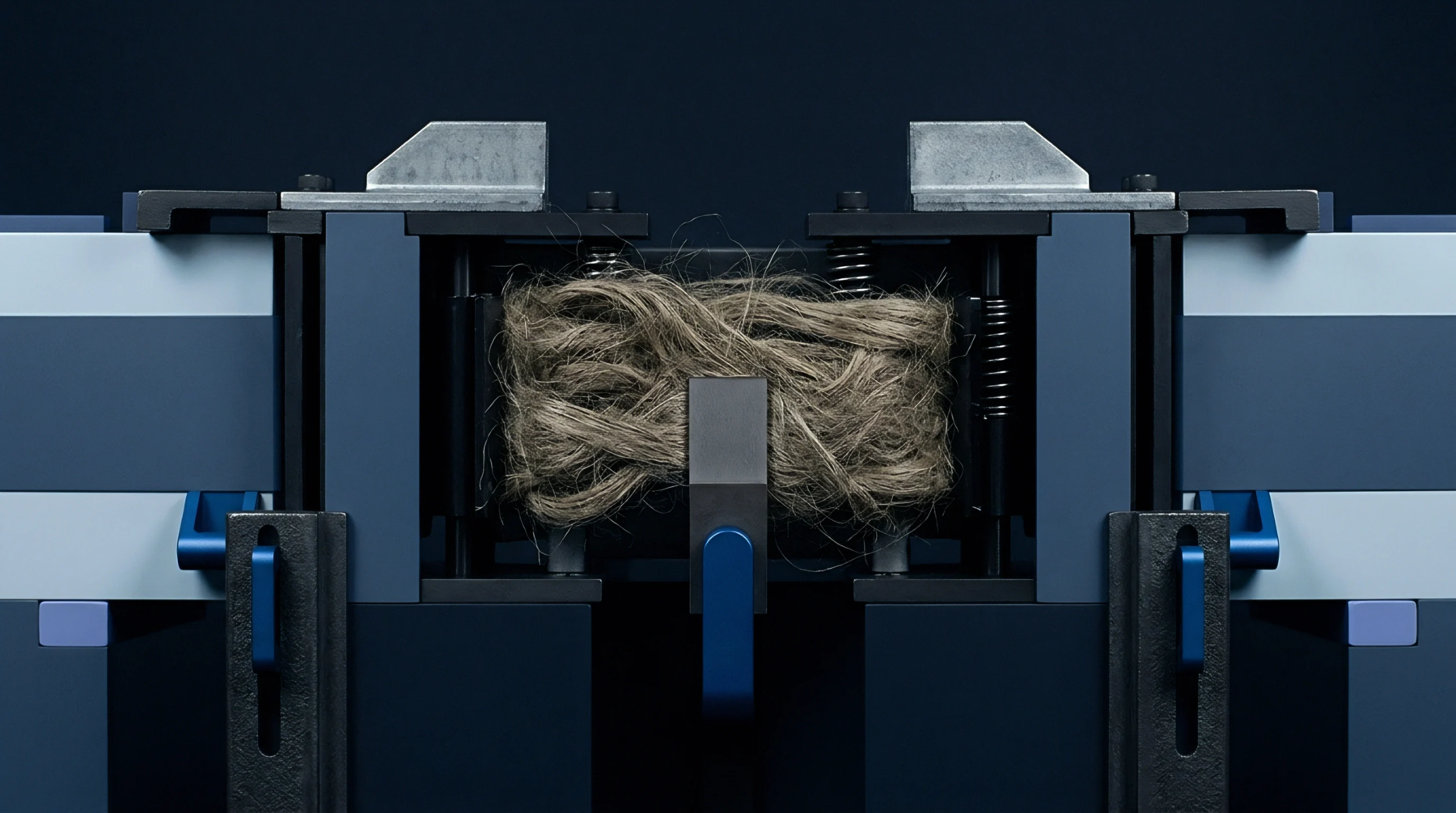
Industrial Pectin Hydrolysis Mechanics and Bundle Cleavage Limits in Fine Count Linen Spinning
Controlled wet spinning trough hydrolysis hydrolyzes middle lamella pectin to cleave flax bundles into ultimate fibers for fine counts above Nm 60.
Controlled wet spinning trough hydrolysis hydrolyzes middle lamella pectin to cleave flax bundles into ultimate fibers for fine counts above Nm 60.

Nonuniform residual pectin creates weak nodes and rotor groove debris, restricting single yarn tenacity and forcing costly speed reductions.

Deriving aspect ratio correction factor K_ar connects optical yarn width to gravimetric mass, eliminating twelve percent volumetric error in wet spun flax count calibration.
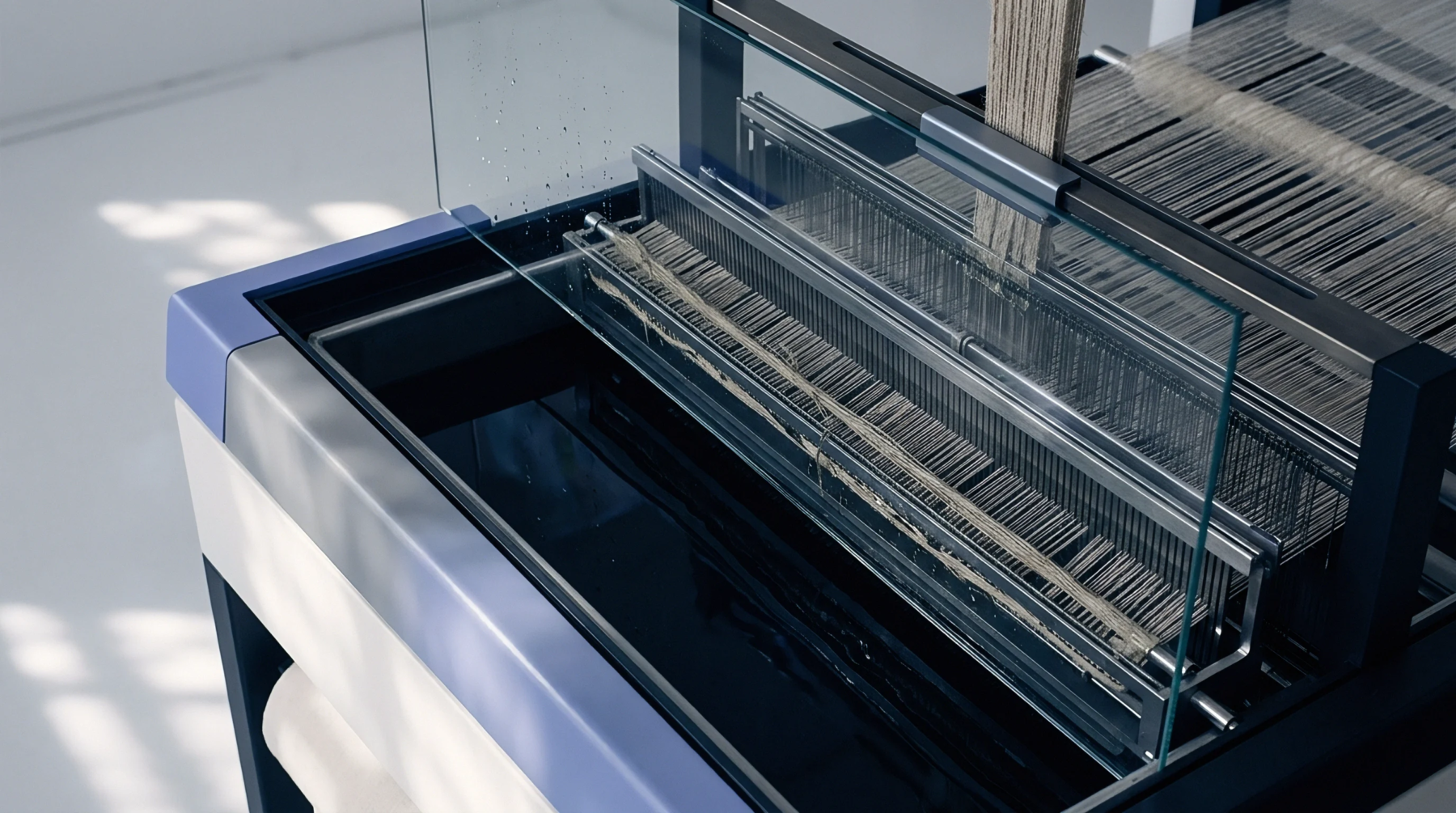
Determining warp cover factor and crimp allowance in linen weaving requires adjusting yarn packing metrics for flax fiber flattening under loom tension.
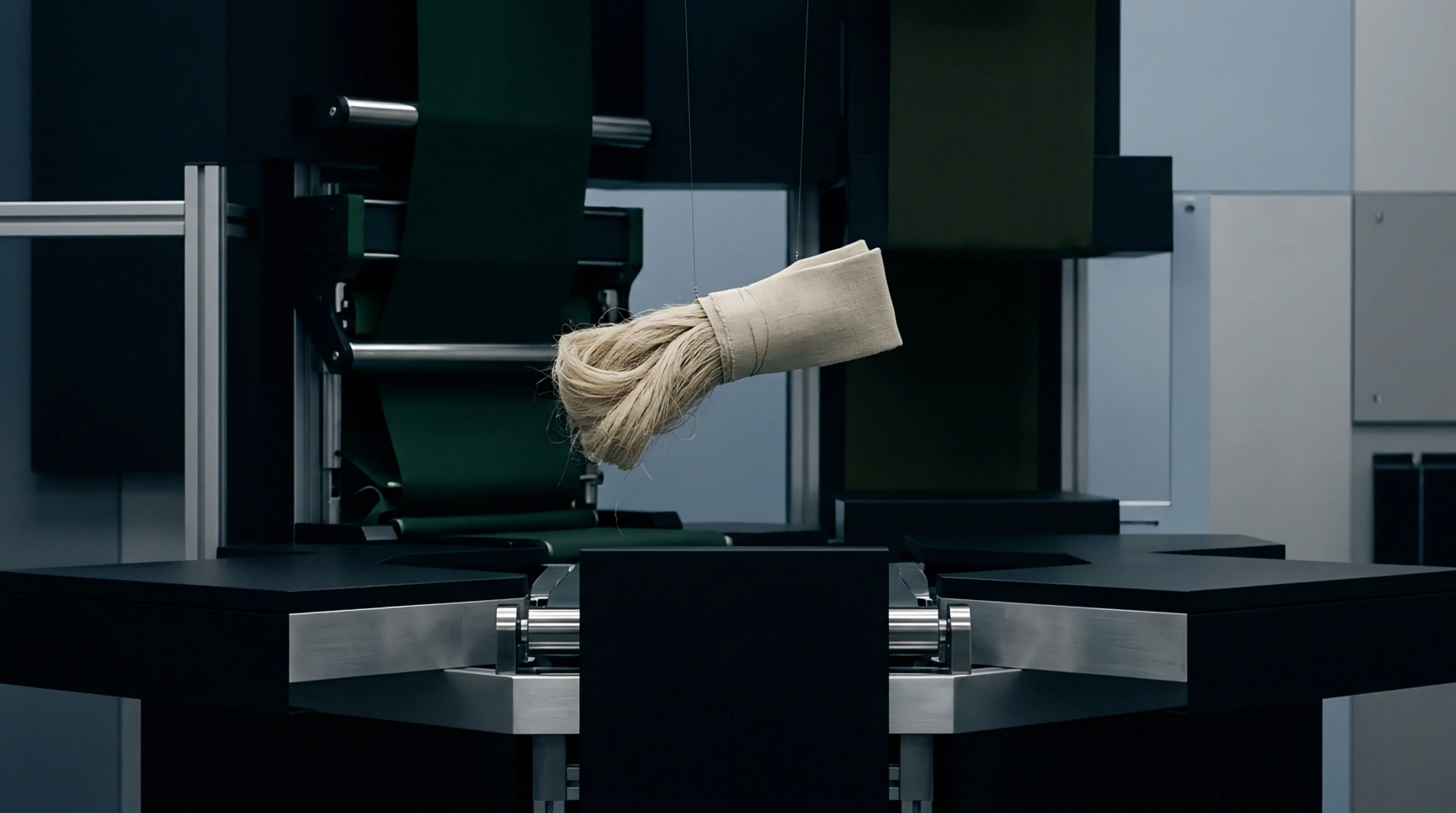
Evaluating raw flax fibre grade quotes demands checking retting degree, shive loading, metric fineness, and hackling yield against target wet-spun yarn counts.
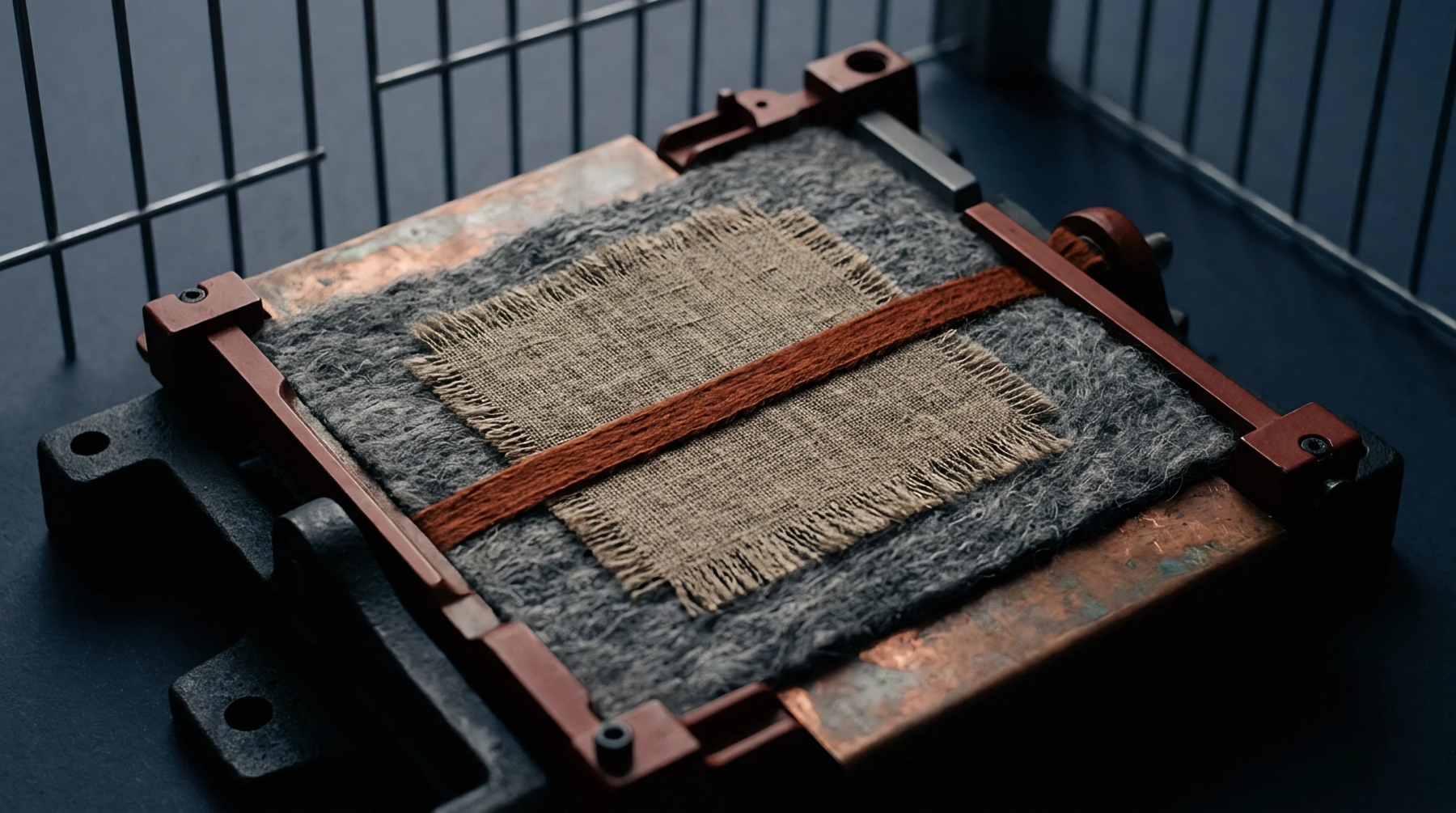
Gravimetric cut-length flax linear density testing converts as-tested bundle mass to official twelve percent commercial regain to prevent drafting and count errors.

A precise mass balance reconciles dry flax count, warp sizing solids, loom shedding fly, and rapier cutoffs against the official twelve percent moisture regain.

Predictive Weibull modeling identifies weak-link bast yarn flaws to optimize shed tension, preventing warp breaks and protecting high-speed loom yield.

Klason lignin testing combined with wet spinning draft analysis establishes raw flax mill suitability and prevents costly frame end breaks.

Dry spinning flax intake standards require strict bundle fineness under 2.2 tex, residual shive below 0.8 percent, and 11 percent target moisture regain.

Trough water at 70°C hydrolyzes middle lamella pectins to permit inter-fibre slippage, enabling high mechanical drafts down to fine linear yarn counts.

Optimizing hackling pin density requires matching pin pitch progression directly to the scutched flax length array to maximize fine line yield while preventing fibre breakage.
Expertise is a utility, not a secret. sentiention™ publishes its working knowledge as open reference: intelligence layer covering the materials it sources, the markets it enters, and the reference that serves both.