Automated Image Analysis for Real-Time Hackling Comb Parameter Adjustment
Real-time vision-based comb parameter adjustment optimizes pin penetration depth and speed to cut tow generation and maximize long-staple line flax yield.
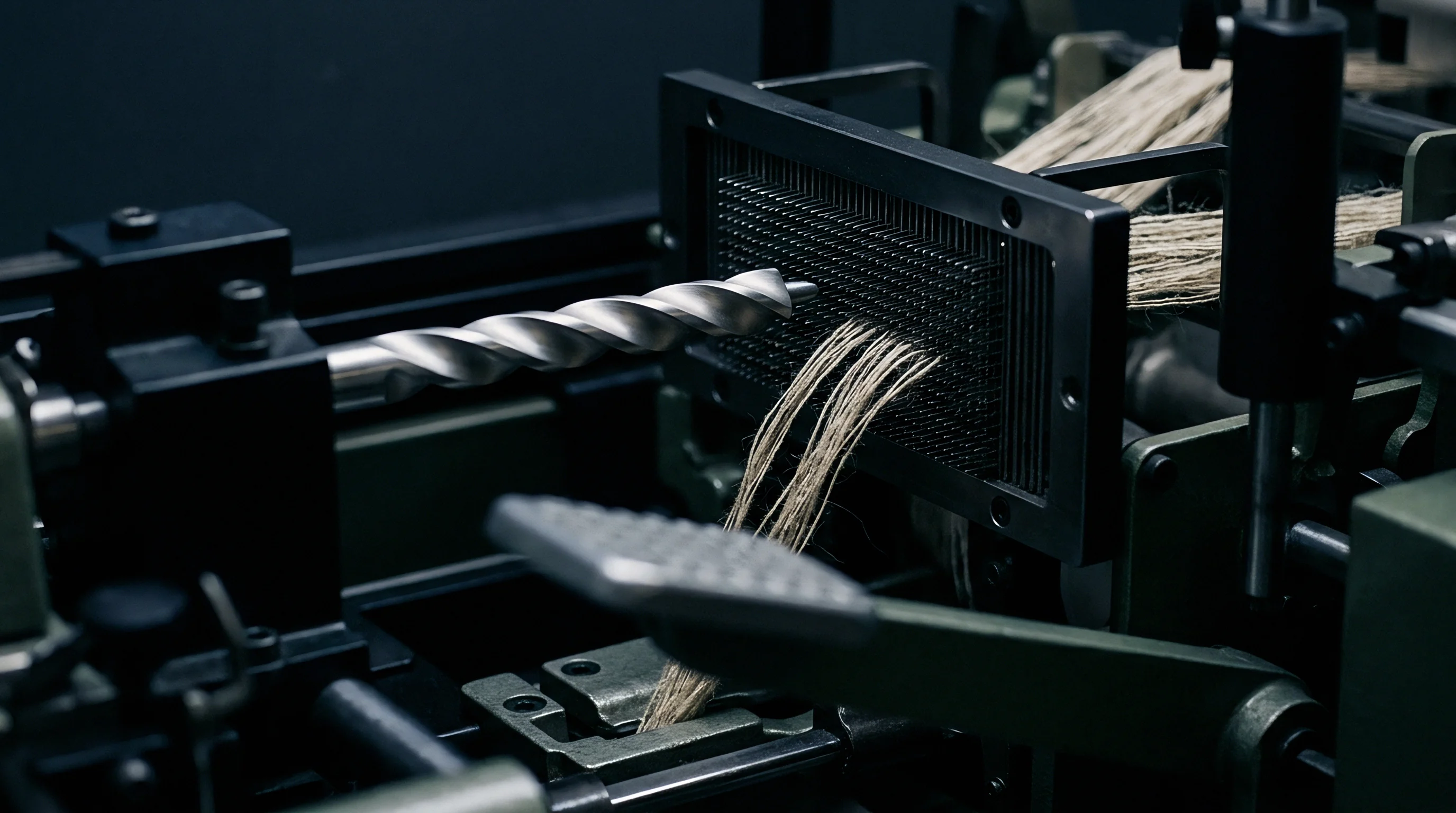
Intake
Incoming scutched flax stricks hit the hackling feed table with wide natural variations in bundle thickness, cleanliness, and alignment. High-speed multi-spectral line-scan cameras positioned perpendicular to the conveyor bed record raw fibre ribbons under continuous diffuse LED line illumination. Calibrated spatial resolution sits at 0.05 millimetres per pixel across a 1200-millimetre transverse scan width, capturing strick density profiles at line velocities reaching 1.8 metres per second.
Raw reflectance measurements across red, green, blue, and near-infrared bands isolate non-cellulosic shive, weed fragments, and unseparated cortical tissues from pure bast fibre bundles. Line speed dictates exposure timing. Image frames stream directly via dual 10-GigE vision interfaces into an industrial processing unit executing parallelized edge-detection and thresholding routines.
Spatial density gradients across the strick ribbon reveal the degree of mechanical scutcher extraction prior to pin contact. Bundles retaining excessive gummy pectinaceous matrices present higher optical absorption in the near-infrared spectrum at 940 nanometres, separating under-retted flax from properly degraded stems without physical contact. Grey-scale pixel intensity histograms across transverse cross-sections quantify mass per unit area, computing an instantaneous linear density estimate before the gripping clamps close over the strick root ends.
Optical segmentation routines map out bundle boundaries, void fractions, and entangled cross-overs. Raw bundle thickness shifts constantly.
Optical edge sharpness across raw bast ribbons drops predictably as relative humidity inside the hackling hall drifts beyond laboratory setpoints.
Sensor arrays mounted directly above the feed transport establish the spatial coordinate baseline used by all downstream servo-actuated comb adjustments.
- Spatial pixel resolution fixes the minimum detectable shive fragment size at forty microns under telecentric lens optics.
- Near-infrared absorption differentials separate lignified cortical shive from cellulosic bast fibre walls through targeted reflectance ratios.
- Transverse density profiling determines the mass distribution across individual strick clamps, preventing pin overload in subsequent hackling fields.
- Fibre orientation indexing calculates the angular deviation of raw stalks from the machine centerline, establishing whether mechanical comb entry occurs parallel to stem axes.
Machine vendors routinely claim their pre-set mechanical feeding geometries compensate automatically for incoming raw material variability without sensory feedback intervention.

Depth
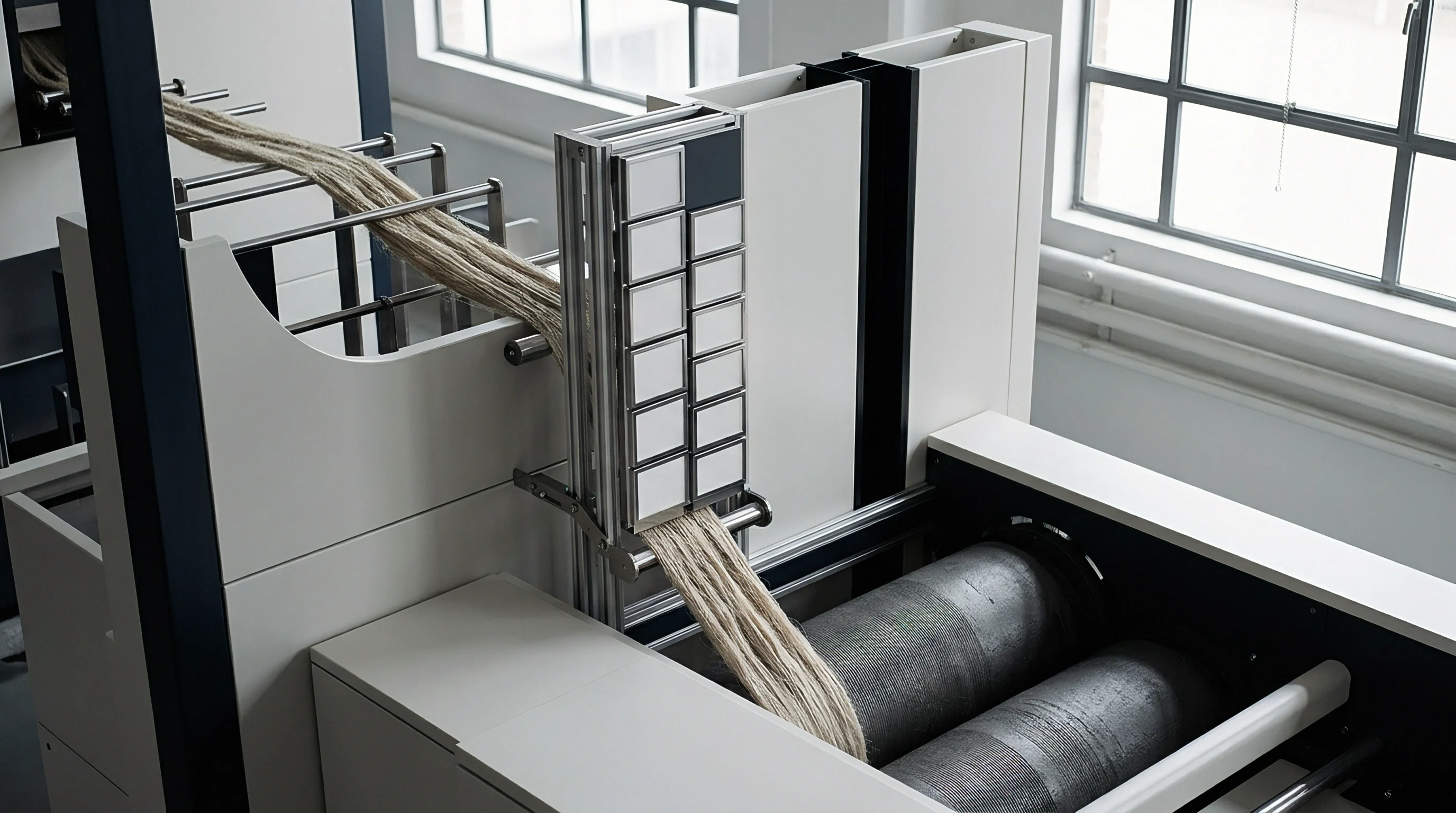
Pin field penetration into advancing flax bundles governs the rate of lateral separation between elementary bast fibres. Servo-driven ball screws reposition the horizontal comb rails relative to the strick transport plane, altering needle tip penetration depth within a dynamic range of 2.0 to 18.5 millimetres. When automated vision systems detect thick, unrefined stricks exceeding 380 kilotex, the primary hackling zone combs adjust toward shallower initial penetrations, preventing needle deflection and strand rupture.
Fine stricks below 180 kilotex receive immediate deeper pin engagement to eliminate loose surface fibres before the strick shifts to intermediate hackling passages. Pinned faller bars govern fibre split.
What Governs Dynamic Penetration inside Dense Bundles?
Mechanical resistance against moving pins scales exponentially with bundle cross-sectional density. If pins plunge too deeply into dense, coarse stricks, the normal force applied to individual fibres exceeds the tensile breaking strength of wet-retted bast cells, snapping long line fibre into low-value hackled tow. Servo actuators modulate comb intrusion profiles based on real-time thickness maps received from the intake vision scanner.
Penetration depth changes cycle by cycle, adjusting the clearance between opposing pin beds across twenty-four distinct pinning gradations. Coarser bundles resist initial division.
| Hackling Zone | Pin Density (Pins/cm) | Needle Diameter (mm) | Penetration Range (mm) | Linear Velocity (m/min) |
|---|---|---|---|---|
| Coarse Breaker | 1.2 to 2.5 | 2.20 | 14.0 to 18.5 | 18.0 |
| Intermediate Splitter | 3.5 to 7.0 | 1.40 | 8.0 to 13.5 | 24.5 |
| Fine Finisher | 9.0 to 16.0 | 0.85 | 4.0 to 7.5 | 32.0 |
| Ultra-Fine Dressing | 18.0 to 26.0 | 0.50 | 2.0 to 4.5 | 38.0 |
Comb speed coordination operates alongside penetration depth. As the image analysis pipeline detects bundles with superior longitudinal split tendencies, comb velocity advances relative to conveyor throughput, generating higher shear rates that tease apart composite bundles into finer technical strands. When low division indices appear, comb linear speeds drop immediately, preserving bundle continuity and preventing premature break-out.
Pectins cement individual elementary bast cells.
Pin penetration depth matches bundle density rather than machine frame capacity.
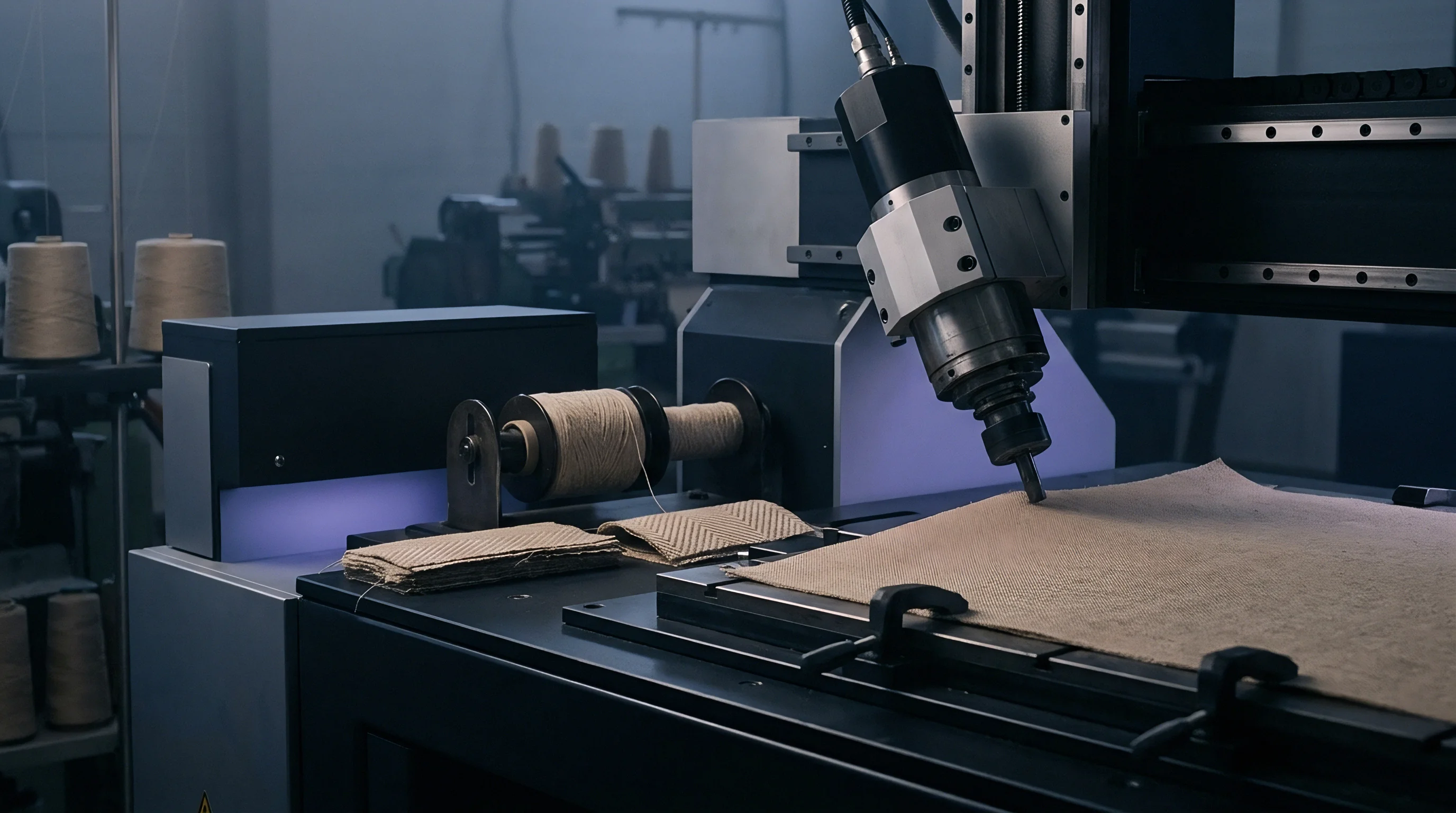
Fine finisher pins moving through dry, brittle stricks risk catastrophic pin clogging when vegetable debris fails to clear the comb points. Vision systems inspect the exit face of the comb bars on their return cycle, verifying that revolving brush and doffer rolls have cleared accumulated tow. If waste residues persist between dense pin clusters, pneumatic clearing blasts trigger before the comb re-enters the active flax ribbon.
False readings generate comb collisions.
A comb that enters the fibre bundle too deep or too fast produces tow rather than line linen.

Drift
Retting variations introduce persistent shifts in fibre bundle cohesion across a single delivery lot. Dew-retted European flax from Normandy exhibits higher variations in residual pectin and hemicellulose levels than tank-retted or water-retted alternatives, causing erratic separation behaviour under mechanical combing. As ambient temperature and air moisture vary during processing, fibre flexibility changes rapidly within minutes.
Moisture swings alter light reflectance. Vision processing algorithms track moving averages of bundle split ratios, identifying gradual departures from target sliver counts.

Why Do Vision Feedback Latencies Induce Overcombing?
Processing delays inside segmentation algorithms permit uncorrected fibre to bypass the active adjustment zone. When deep learning convolution networks or large filter kernels process 4K line-scan streams without dedicated graphics hardware acceleration, latency between strick image acquisition and comb servo repositioning climbs past 450 milliseconds. At an operational conveyor speed of 1.5 metres per second, this computational lag allows nearly 0.7 metres of flax strick to pass through static pin settings.
The resulting mismatch leads to excessive combing of sections that have already narrowed, fracturing fine fibres and degrading overall line yield. Overcombing degrades valuable long-staple fraction.
A vision processing latency exceeding 120 milliseconds at 1.8 metres per second line speed causes comb adjustments to execute on the subsequent strick clamp rather than the measured bundle.
Controlling drift demands systematic parameter cross-checks whenever lot origins or environmental conditions change inside the preparation room.
- Hemicellulose residual drift alters bundle stiffness, requiring automated adjustments to pin approach angles within three processing seconds.
- Retting gradient shifts alter the optical contrast between shive fragments and cleaned fibres, necessitating dynamic re-thresholding of image segmentations.
- Ambient relative humidity fluctuations modify bast fibre friction coefficients, prompting micro-adjustments in comb penetration depth to avoid sliver tears.
- Pin wear degradation reduces effective combing action over operating hours, detected through progressive increases in sliver clumpiness downstream.
Sensor drift corrupts edge detection thresholds. Untreated computational lag and faulty threshold boundaries cascade through the drawing and roving frames, generating thick-and-thin sliver variations that multiply end-breakage rates at the wet-spinning frame and destroy mill operating margins.

Yield
Combing economics hinge on the mass ratio between recovered long-staple line flax and extracted hackled tow. Long line fibre commands trading prices three to four times higher per kilogram than carded tow, making every percentage point of line extraction decisive for profitability. Automated comb adjustments maintain optimal pin interaction, removing short broken fibres and shive without breaking continuous technical fibres.
Static, unadjusted hackling setups typically sacrifice line yield to guarantee shive removal on heterogeneous lots. Automated image adjustment adapts combing severity to each individual bundle, protecting intact bast ribbons. Tow prices trail line fibre.
Consider a commercial hackling run processing a 50-tonne batch of dew-retted European scutched flax graded at metric fibre number Nm 2.2, with an initial unhackled purchase price of 4.80 USD per kilogram landed into the mill. Under traditional fixed-parameter mechanical hackling, the machine settings operate conservatively to clear stubborn shive, yielding 46.0 percent line flax, 42.0 percent hackled tow, and 12.0 percent shive and dust loss. Automated image analysis and real-time comb servo adjustment raise line flax yield to 51.5 percent, reducing tow fraction to 37.5 percent and maintaining uncombed waste loss at 11.0 percent through precise pin engagement.
| Metric Parameter | Static Mechanical Baseline | Real-Time Image-Adjusted | Variance / Delta |
|---|---|---|---|
| Batch Size (kg) | 50,000 | 50,000 | 0 |
| Recovered Line Fibre Yield (%) | 46.0 | 51.5 | +5.5 |
| Line Fibre Mass (kg) | 23,000 | 25,750 | +2,750 |
| Hackled Tow Yield (%) | 42.0 | 37.5 | -4.5 |
| Hackled Tow Mass (kg) | 21,000 | 18,750 | -2,250 |
| Shive and Comb Waste (%) | 12.0 | 11.0 | -1.0 |
| Line Fibre Value at 8.50 USD/kg (USD) | 195,500 | 218,875 | +23,375 |
| Tow Fibre Value at 2.40 USD/kg (USD) | 50,400 | 45,000 | -5,400 |
| Gross Fibre Output Realization (USD) | 245,900 | 263,875 | +17,975 |
| Recovered Value per Input kg (USD/kg) | 4.918 | 5.278 | +0.360 |
| Assumes fixed landed raw material cost of 4.80 USD/kg; valuations reflect benchmark European long line and tow market spot rates. | |||
The resulting 2,750 kilograms shifted from tow into line fibre elevate the spinnable count ceiling. Line fibres combed under vision-controlled gentle pin action retain longer mean staple length with fewer micro-cracks along the cell walls. In wet spinning, this preserved integrity allows spinners to draw slivers down to Nm 39 yarn rather than stalling at Nm 26.
When woven into standard 140 gram-per-square-metre plain linen cloth, the yield improvement translates directly to a cost reduction of 0.28 USD per finished linear metre. Shive particles deflect mechanical needles.
Downstream spinning efficiencies improve alongside monetary gains:
- Load incoming scutched stricks onto the feed lattice, verifying conveyor speed synchronization with the line-scan optical trigger.
- Calibrate the image threshold baseline using certified dark and white reflectance tiles to counter illumination degradation over production hours.
- Enable closed-loop servo feedback linking real-time strick thickness metrics to the first four coarse hackling comb banks.
- Monitor differential pressure sensors across the pneumatic comb cleaning hoods to verify complete tow extraction per comb pass.
- Inspect continuous downstream sliver mass readings from the auto-leveller drawing head, verifying that CVm percentages remain under 2.8.
Whether automated comb adjustments can preserve this line-tow yield advantage when handling severely weather-damaged, under-retted flax with elevated epidermal gum levels remains a contested engineering question.
Audit
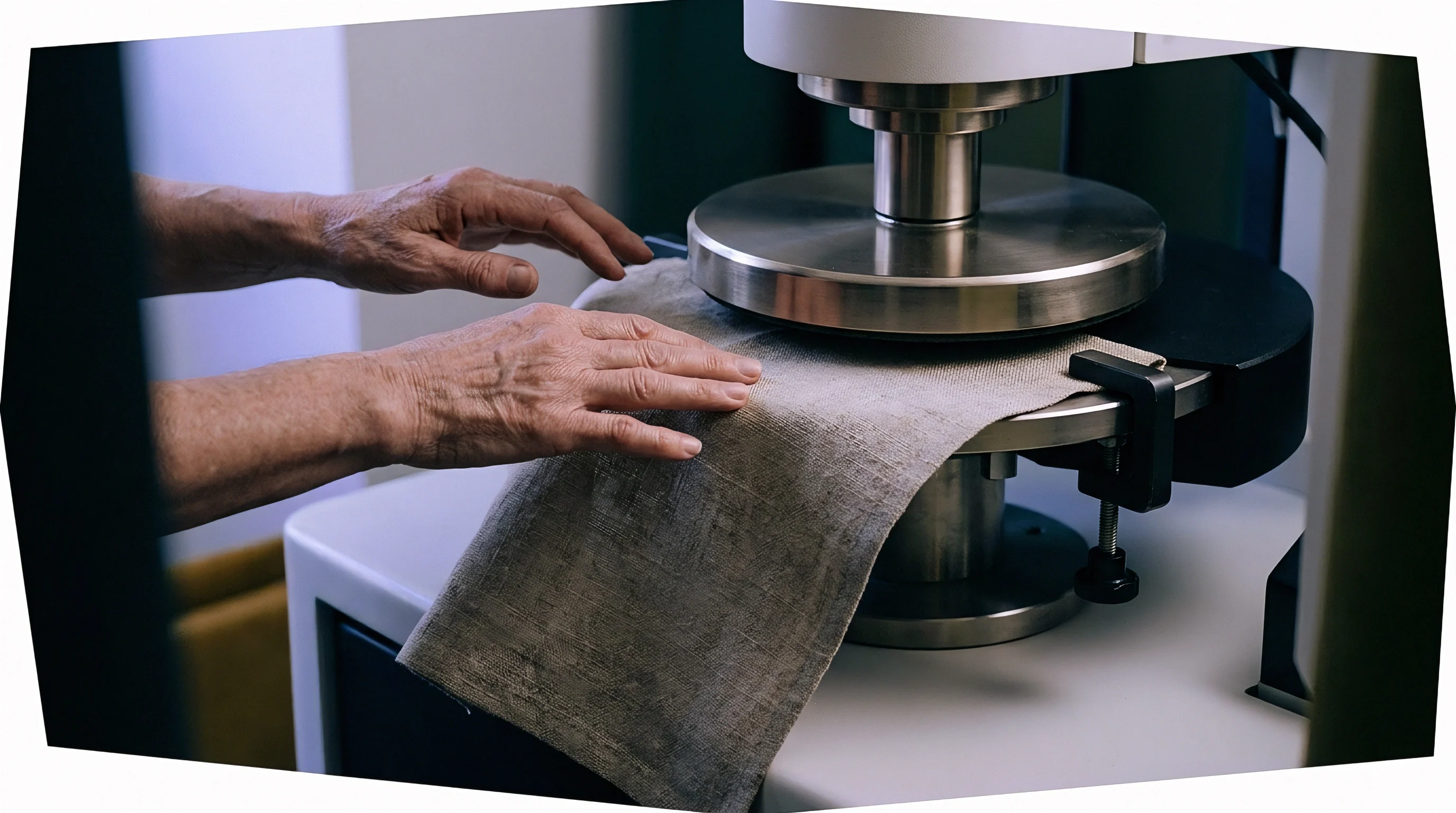
Laboratory testing of delivered hackled sliver establishes whether real-time adjustments delivered their theoretical promise. Technologists draw continuous sliver samples directly from the delivery spreadboard according to ISO 6741 conditioning protocols, holding specimens at 65 percent relative humidity and 20 degrees Celsius for 24 hours prior to measurement. Fineness determinations follow ISO 2370, evaluating the linear density of individual fibre bundles via airflow measurement and gravimetric skein weighing.
Mill managers penalize low sliver uniformity. Sliver mass variations that escape inline detection reveal flaws in camera calibration or servo responsiveness.
Image analysis at the comb does not replace standard tensile and fineness evaluations of the combed sliver. Technologists measure bundle tenacity on Stelometer or automated tensile instruments with a 3.2-millimetre clamp gauge length, tracking breaks across thirty test specimens per lot. Lots processed under properly tuned real-time combing display tenacity distributions centering between 42 and 54 centinewtons per tex, with a coefficient of variation below 8.5 percent.
Static hackling lines, by contrast, show broader tenacity scatter stretching down to 28 centinewtons per tex due to needle-induced fibre fracturing. Wet spinning demands uniform bundle division.
Tensile tenacity across combed long line flax drops below 35 centinewtons per tex whenever comb penetration velocity exceeds optimal fibre shear rates by more than fifteen percent.
Commercial acceptance clauses for flax line purchases specify tight dimensional tolerances. Contracts governing premium hackled sliver require that the coefficient of variation in sliver linear density shall not exceed 3.2 percent across any 100-metre continuous run, with shive content certified below 0.15 percent by mass, entitling the buyer to reject the consignment or deduct eight percent from the invoice price upon failure.