
Calibrating Optical Sensor Demerit Scoring with Loom Stop Telemetry Logs
Calibrating optical sensor demerits against loom stop telemetry eliminates false slub penalties by verifying mechanical fault codes against visual defects.
Calibrating optical sensor demerits against loom stop telemetry eliminates false slub penalties by verifying mechanical fault codes against visual defects.

Residual pectin above 3 percent prevents fiber bundle flattening, inducing premature mechanical yarn jamming that cuts rapier loom efficiency by 19 percent.

Strontium isotope mass spectrometry isolates bioavailable soil ratios in flax cellulose, enabling direct verification of European origin against mill declarations.

Quantitative ATR-FTIR and chemometric partial least squares regression resolve refractory bast fiber customs subheading disputes by measuring residual lignin.

Throttling air jet pressure below 0.54 MPa on linen weft cuts compressor load but spikes stoppage rates, raising net weaving cost per metre.

Optimizing profile reed depth and relay nozzle timing reduces air-jet pressure drops and drag stops when weaving high hairiness bast fiber warps.

Moisture plasticizes the amorphous pectin matrix in bast bundles, lowering yarn flexural rigidity while elevating cyclic bending energy dissipation.

Azimuthal XRD peak deconvolution isolates microfibril angle and crystallite alignment, exposing climate-degraded bast fibers before mill processing.

Controlled pectin extraction and asymmetric shed tuning enable stable air-jet linen weaving at 700 picks per minute while reducing landed fabric cost.

Standard flax fiber corrections adjust billable consignment weight to a twelve percent regain baseline derived from laboratory-verified oven-dry mass.

Standard moisture regain correction normalizes hackled flax linear density back to twelve percent regain, preventing draw frame drafting errors and financial overpayment.
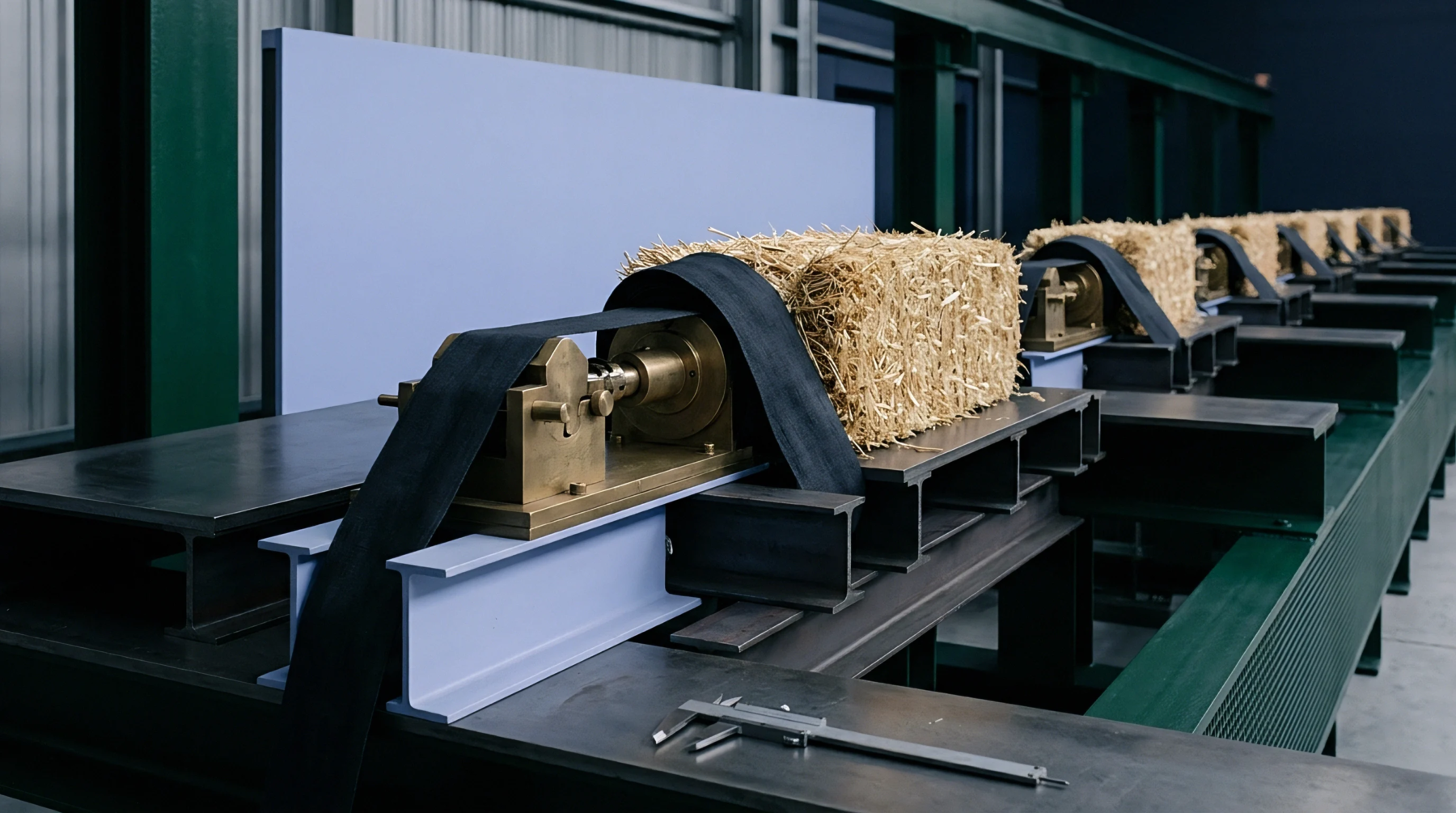
Dew retted line flax hackling yield determines long line fiber recovery, tow ratios, and yarn production costs through precise fineness and strength testing.

Quantifying residual pectin and protein content via ammonium oxalate extraction and FTIR prevents wet-spinning end-breakage disputes in fine bast lots.

Reconciling linen weight requires balancing chemical extraction losses against warp crimp contraction to hit target finished areal mass and dimensional stability.

Mechanical scutching defect quantification relies on precise gravimetric or optical mass-balance analysis to measure residual shive and control long fiber yield.

Engineering accurate linen fabric specifications requires coupling loom crimp take-up equations with wet process shrinkage factors to fix finished GSM and width.
Expertise is a utility, not a secret. sentiention™ publishes its working knowledge as open reference: intelligence layer covering the materials it sources, the markets it enters, and the reference that serves both.