Adjusting Line Flax Tenacity Thresholds under Climate Shift Microfibril Degradation
Microfibrillar thermal degradation reduces line flax tenacity, requiring adjusted gauge testing, lower wet-spinning temperatures, and recalibrated contract thresholds.
Cellulose
Extended thermal stress during vegetative growth alters how alpha-polymers deposit within bast fiber bundles. High ambient temperatures combined with late-season drought compress the window for secondary cell wall thickening in Linum usitatissimum. This forced maturation disrupts microfibrillar alignment along the fiber axis, dropping the average degree of polymerization from historical baselines above 9,000 to between 5,500 and 7,200.
Fiber arrays formed under these conditions carry structural variations that standard grading parameters miss before mechanical processing begins.
Microfibrils inside the S2 cell wall layer normally align at a steep helical angle relative to the fiber stem’s long axis. Thermal stress widens this angle from the standard 6 to 10 degrees up to 14 to 18 degrees. The wider orientation impairs axial force transfer across the cell wall matrix, so elementary fibers yield under lower applied loads.
The resulting fiber shows a low initial modulus and reduced tenacity even when air-permeability instruments record normal cross-sectional fineness.
Microfibrillar Realignment and Degree of Polymerization
Shorter chain lengths in primary structural polymers directly reduce the mechanical strength of individual bast filaments. Crystalline domains shrink as amorphous cellulose expands within the microfibril core. Higher growing temperatures accelerate hydrolytic cleavage of glycosidic bonds, leaving structural defects along the microfibrillar ribbon.
Gel permeation chromatography of heat-stressed crops shows a skewed molecular weight distribution, with a distinct secondary peak below 2,000 DP.
This molecular fragmentation changes how the entire fiber bundle handles stress. Under uniaxial tension, energy dissipates through inter-crystalline slip rather than crystalline deformation, causing premature bundle fracture. Classers relying only on traditional hand-pull tests misjudge spinnable quality, since high surface friction from coarse shive residue masks internal microfibrillar weakness.
Extreme thermal spikes during field retting accelerate fungal pectinase activity into the secondary cell wall.

Enzymatic Over-Retting Impact on Cell Walls
Uncontrolled moisture at high ambient temperatures shifts microbial populations during field retting. When field retting temperatures exceed 28 degrees Celsius, filamentous fungi produce aggressive cellulases alongside polygalacturonases. These enzymes pass through the middle lamella into the outer primary cell wall, breaking down the hemicellulose network that anchors the microfibrils.
Retting schedules developed for historic climate patterns leave straw over-retted in higher heat. Localized enzymatic pitting along secondary cell wall microfibrils creates stress concentration points that cut single-fiber breaking force by up to 35 percent. Growers often attribute this loss in tenacity to rainfall variation rather than heat-driven degradation of the crystalline core.
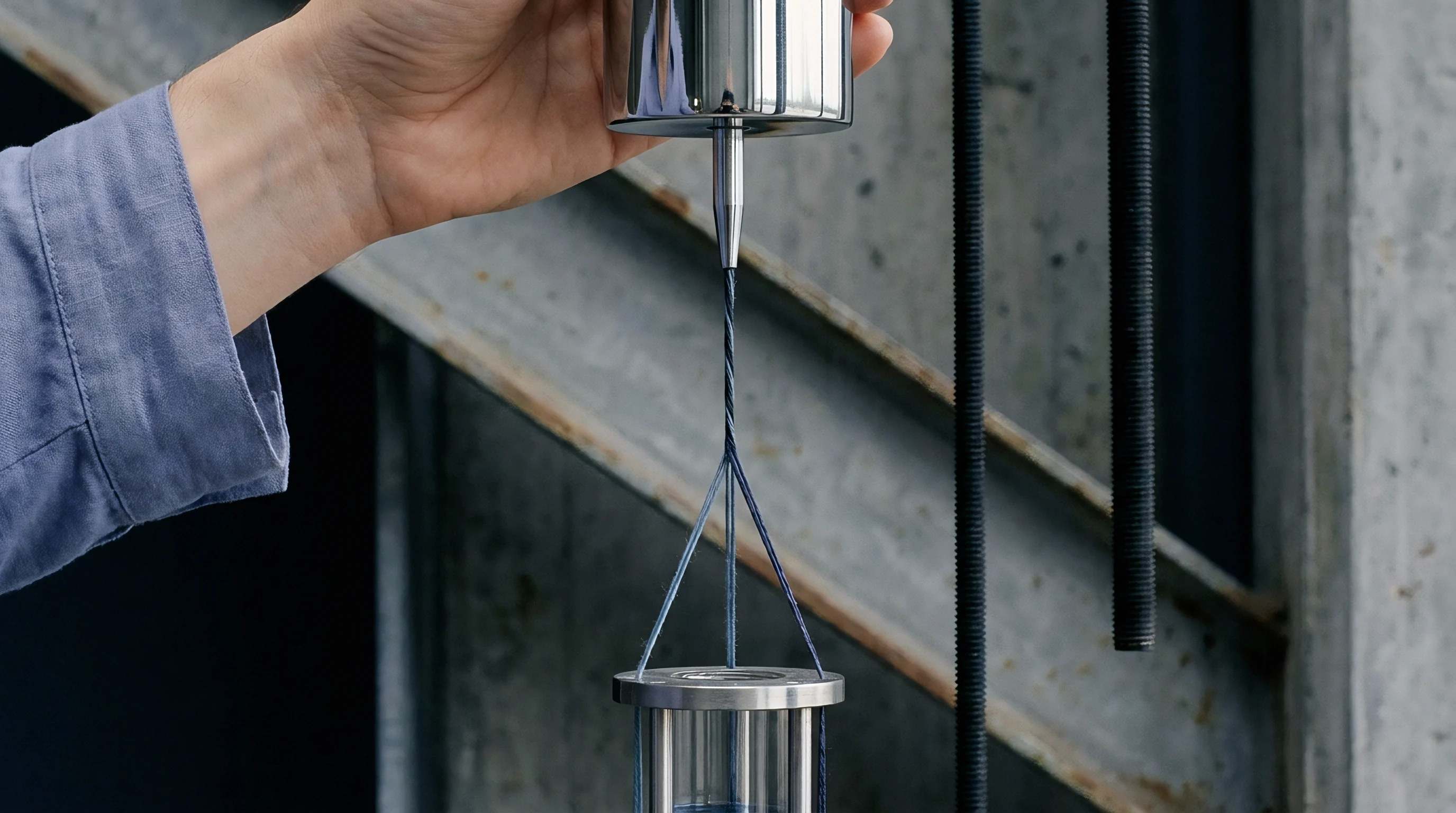
Clamp
Measuring bast fiber resistance in the lab requires tight control over jaw separation and pulling velocity. Standard bundle tenacity tests under ISO 2370 use a zero-gauge press clamp setup to record absolute breaking load. Climate-impacted flax with microfibrillar degradation can show surprisingly normal tensile values at zero gauge, because short crystalline domains still transfer shear stress across immediate contact points.
Testing those same lots at a 3-millimeter or 10-millimeter gauge length reveals severe strength loss. As gauge length increases, tests are more likely to span an enzymatic defect or dislocation zone, causing measured strength to drop sharply. Buyers specifying tenacity thresholds need multi-gauge testing to separate internal microfibrillar decay from surface friction.
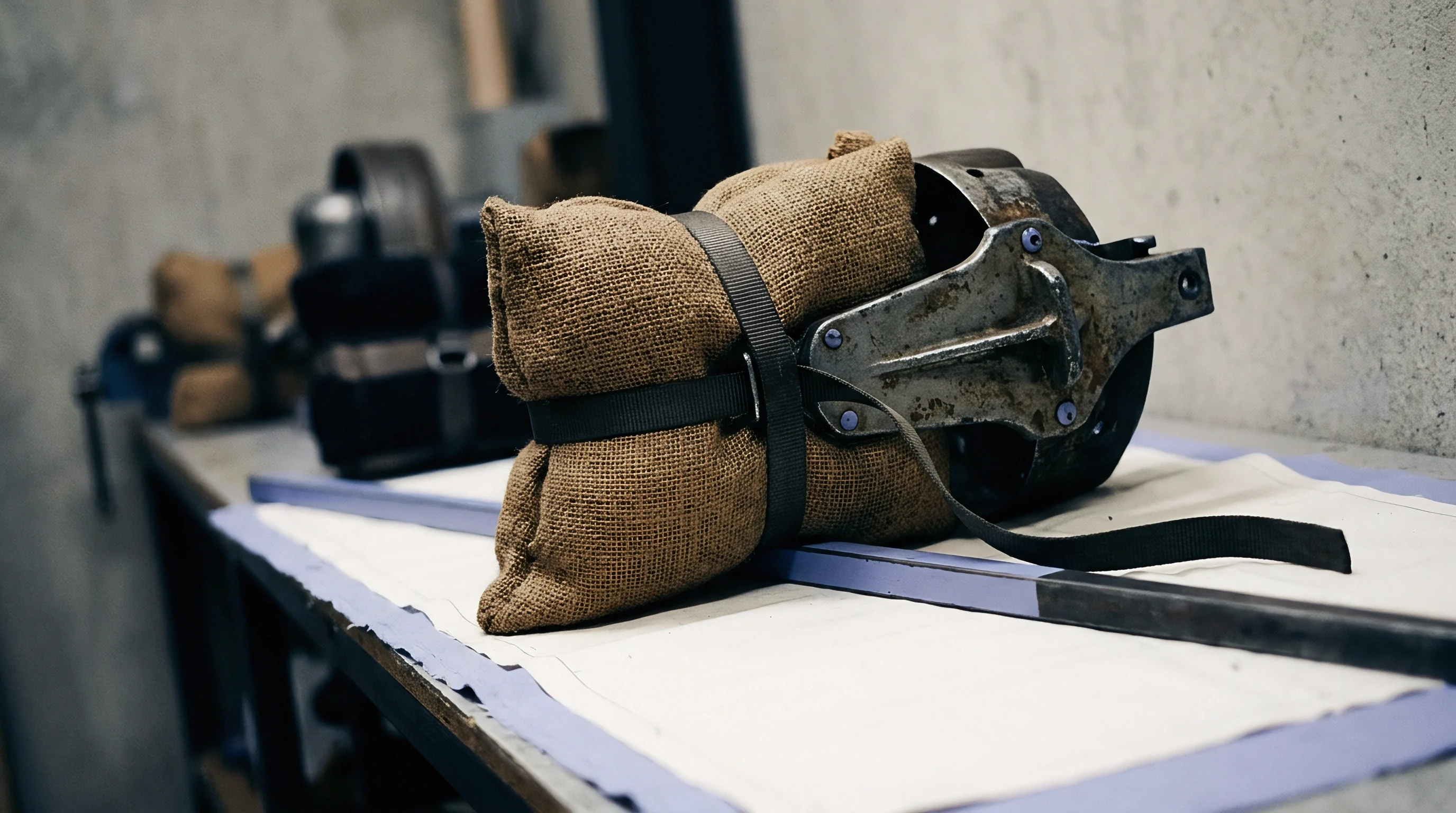
Gauge Length Variance in Tensile Evaluation
Widen the gap between grips and weak points along the fiber show up immediately. Automated single-fiber testers running ISO 1973 and ISO 2062 protocols evaluate individual elementary fibers drawn from hackled slivers. As gauge length expands from 0 to 10 millimeters, climate-degraded lots show a steep loss in tenacity, whereas sound flax retains over 75 percent of its zero-gauge rating.
| Thermal Profile | Mean Tenacity zero-gauge (cN/tex) | Mean Tenacity ten-millimeter (cN/tex) | Microfibril Angle (deg) | Elongation at Break (%) |
|---|---|---|---|---|
| Historical Baseline (18-22°C) | 52.4 | 41.2 | 8.2 | 2.8 |
| Moderate Heat Stress (23-27°C) | 46.1 | 31.5 | 12.4 | 2.1 |
| Severe Drought & Heat (>28°C) | 38.7 | 21.8 | 16.8 | 1.5 |
| Over-Retted High Thermal | 34.2 | 17.4 | 17.5 | 1.2 |

Can Degraded Secondary Walls Hold Wet Spinning Tension?
Structural collapse within outer filament layers reduces the lateral stress resistance needed during wet attenuation. When microfibrillar tenacity drops below 35 cN/tex at a 10-millimeter gauge length, the bundle can no longer withstand drafting forces inside the hot water spinning trough.
Defect modes commonly observed in climate-impacted lots include:
- Fiber Cortical Shearing ~ Lateral splitting along the middle lamella during hackling pin engagement, which increases short-fiber content.
- Cell Wall Buckling ~ Compressive failure marks from mechanical flexing of heat-stressed fibers, leading to premature bundle rupture.
- Pectin Matrix Dissolution ~ Loss of intercellular binding strength that causes strands to separate before reaching the first drawing head.
- Drafting Force Spikes ~ Irregular sliver thickness resulting from uneven fiber cohesion during attenuation on pin frames.
A 10-millimeter test gauge length reduces measured bundle tenacity by 18 percent compared to zero-gauge readings on thermal-damaged flax.
Reading single-fiber force curves without correcting for gauge length leads mills to set frame speeds that snap yarn continuously at the trough.
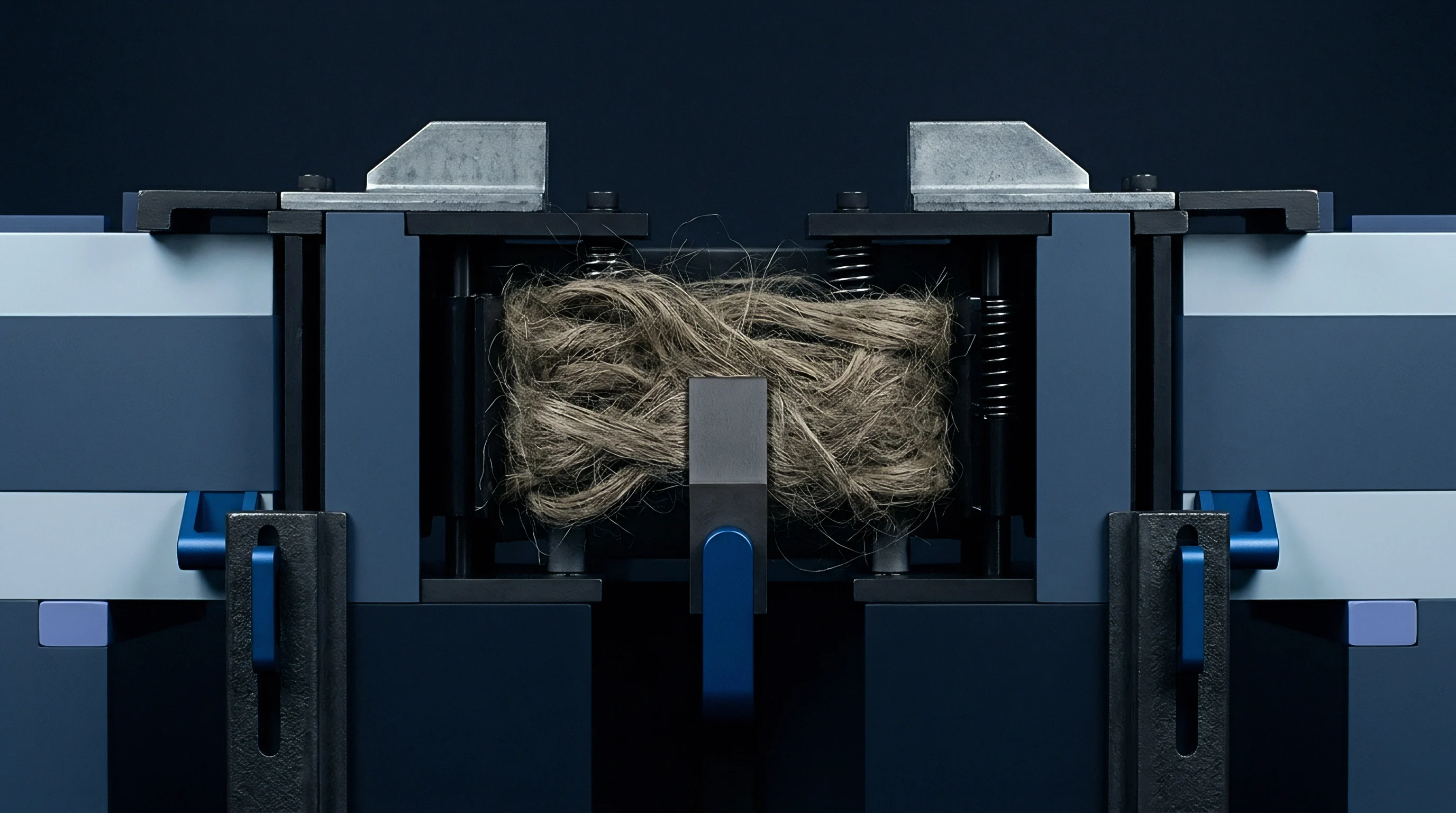
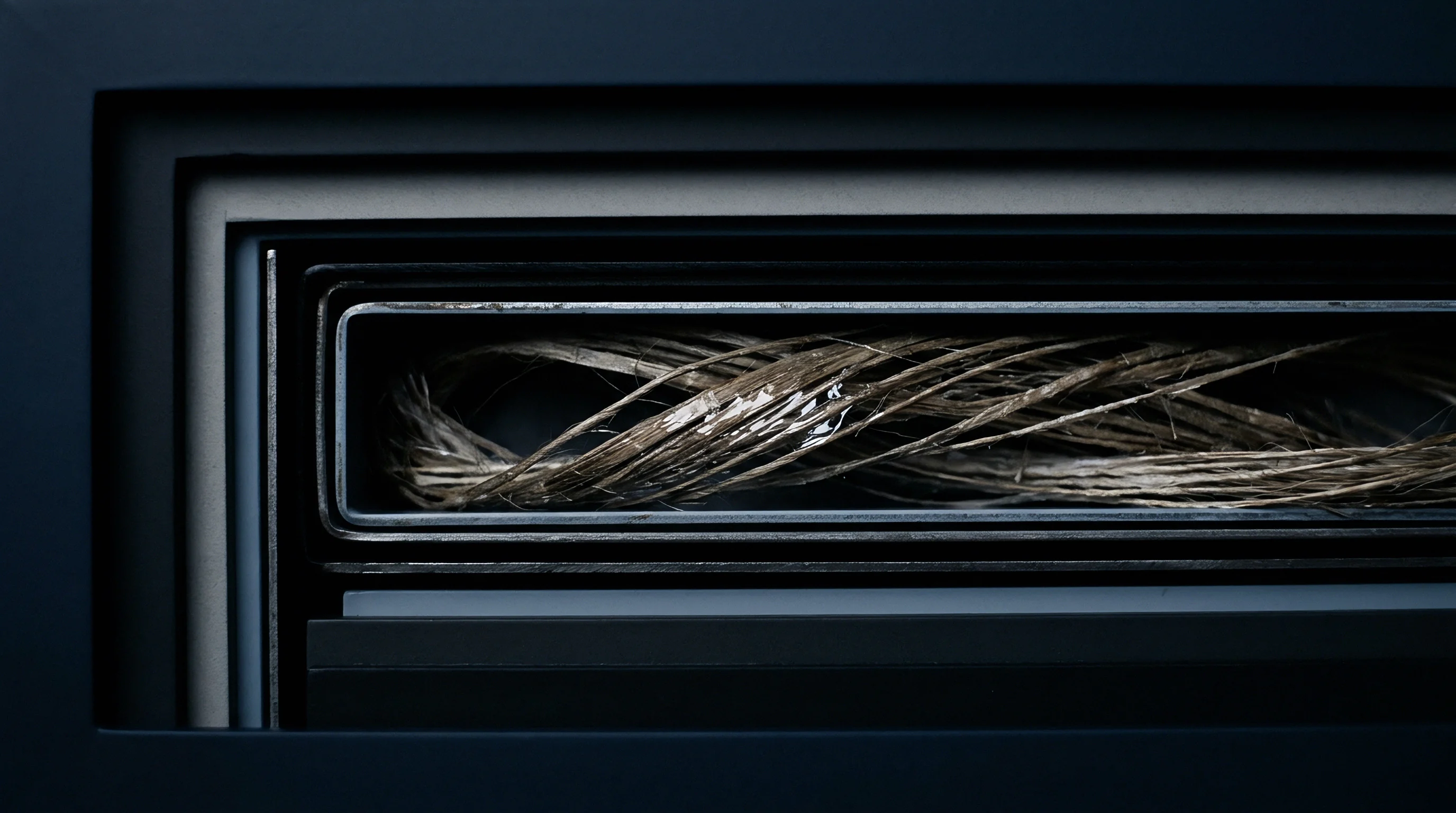
Sliver
Hackling machines separate bast bundles into aligned linear bands while removing tangled short fibers. When pins penetrate climate-degraded flax, filaments break rather than separating cleanly along the middle lamella. Microfibrillar damage lowers the energy needed to snap filaments, converting valuable long-staple line flax into low-value hackling tow.
Technicians processing low-tenacity lots have to adjust pin density, speed, and grid settings to protect line flax yield. Standard pin density schedules designed for sound fiber shatter degraded cell walls, dropping line flax output by 12 to 18 percentage points and generating far more combed tow.

Hackling Pin Density and Friction Control
Comb mechanical settings govern the drag applied to incoming raw bundles. Lowering pin density in the initial hackling fields reduces impact stress on compromised filaments. Operators also slow vertical brush speeds and open clearance between intersecting hackling bars to prevent structural shearing.
Processing heat-stressed raw flax through the hackling line requires specific machine setup to limit fiber destruction:
- Sample Batch Moisture Verification ~ Check incoming bale moisture and set conditioning rooms to reach 85 percent relative humidity before hackling.
- Reduce Initial Impact Density ~ Retrofit the first three hackling fields with fewer pins per centimeter to soften mechanical shock on weakened cell walls.
- Moderate Hackling Bar Velocity ~ Reduce line speed from the standard 22 cycles per minute to 16 cycles per minute, cutting dynamic peak tension on bundles.
- Adjust Combing Clearance ~ Open clearance between upper and lower hackling combs by 1.5 millimeters so irregular bundle diameters pass without shearing.
Worked Example of yield shift and cost reallocation on climate-degraded line flax:
Assume a raw scutched flax lot of 20,000 kilograms purchased at 4.20 Euros per kilogram, establishing a baseline material input cost of 84,000 Euros. Under standard climate conditions, raw scutched flax yields 62 percent line flax (12,400 kg), 28 percent hackling tow (5,600 kg), and 10 percent dust and unhackled waste (2,000 kg). Market valuation assigns 7.50 Euros per kilogram to line flax and 1.80 Euros per kilogram to hackling tow.
Calculating standard financial output: 12,400 kilograms of line flax generates 93,000 Euros; 5,600 kilograms of tow generates 10,080 Euros; total recovered value equals 103,080 Euros, yielding a gross processing margin of 19,080 Euros over raw material cost.
Under climate-shifted conditions with microfibrillar tenacity reduced from 48 cN/tex to 34 cN/tex, hackling performance degrades severely. Line flax yield drops to 44 percent (8,800 kg), hackling tow increases to 42 percent (8,400 kg), and waste increases to 14 percent (2,800 kg) due to fiber fragmentation.
Recalculating climate-degraded output value: 8,800 kilograms of line flax generates 66,000 Euros; 8,400 kilograms of tow generates 15,120 Euros; total recovered value drops to 81,120 Euros. Processing this degraded lot results in a direct loss of 2,880 Euros relative to raw material purchase cost, before accounting for mill energy and labor overhead.
Contractual specifications requiring a minimum 55 percent hackling line yield trigger automatic price adjustments when microfibril integrity drops below 40 cN per tex.
Excess fine dust inside the hackling cabinet signals structural breakdown of the fiber bundles before drafting even begins.


Spindle
Wet attenuation frames rely on warm water baths to soften intercellular pectin before inserting final yarn twist. Thermal stress during growth changes pectin composition, increasing the water-soluble fraction that dissolves rapidly in standard 60-degree Celsius troughs. If intercellular pectin dissolves before reaching the drafting roller nip, low-tenacity fibers pull apart completely and end-breakage spikes.
Spinners adjust roving twist ratios and drop trough temperatures to counteract microfibrillar weakness. Lowering the bath to 40 or 45 degrees Celsius slows pectin dissolution, keeping weakened elementary fibers cohesive through the drafting zone.

Thermal Moderation in the Wet Spinning Bath
Softening trough water temperatures control how fast pectin plasticizes during drawing. Overly hot baths weaken microfibrillar bonds in heat-damaged fibers, causing slippage inside the drafting zone. Dropping the water temperature maintains strand integrity and stabilizes drafting even when intrinsic fiber tenacity is low.
| Target Count (Nm) | Standard Roving Twist (α) | Adjusted Roving Twist (α) | Trough Temp (°C) | End Breaks (per 1000 sp-hr) |
|---|---|---|---|---|
| Nm 26 | 1.8 | 2.1 | 45 | 28 |
| Nm 36 | 1.9 | 2.3 | 40 | 42 |
| Nm 50 | 2.0 | 2.4 (Unstable) | 38 | 115 |
| Nm 60 | 2.1 | Not Feasible | 35 | >250 |
Requirements for spinning parameters when processing degraded microfibril lots:
- Roving Twist Factor Adjustment ~ Increase the roving twist multiplier by 15 to 20 percent to hold fiber alignment during trough immersion.
- Draft Ratio Reduction ~ Lower draft ratios on the wet frame by 10 percent to avoid thin spots and excessive end breaks.
- Spindle Speed Limitation ~ Cap spindle speeds at 6,500 RPM to control balloon tension along low-tenacity yarn paths.
- Trough Chemical Addition ~ Inject mild cross-linking agents or pectin stabilizers into the trough to reinforce degraded cell wall matrices.
Cooler trough water prevents the chemical breakdown of pectin binders when spinning heat-damaged bast fibers.
Official yarn delivery contracts under CILC guidelines specify that when lot tenacity drops below agreed thresholds, maximum spinnable count defaults to the next lower standard Nm tier with corresponding price adjustments per kilo.
Settlement
Commercial valuation formulas for raw bast fibers must account for lost performance in downstream processing. Traditional contracts that price flax strictly on color, scutching cleanliness, and hand-feel fail to protect spinners from heavy yield losses when microfibrillar degradation is present. Technical purchasing departments now rewrite raw material specifications to require automated tensile testing and thermal history logs.
Spinners handling degraded crops lower their target yarn counts and renegotiate raw material pricing to preserve margins. Purchasing contracts tie raw flax prices directly to 10-millimeter gauge bundle tenacity and guaranteed hackling line yields.
Commercial Valuation of Lowered Tenacity Lots
Fiber price adjustments scale non-linearly when raw tenacity drops below standard commercial grades. A fall in bundle tenacity from 48 cN/tex to 38 cN/tex reduces spinning efficiency, requiring higher twist factors that slow frame output in meters per minute. Buyers calculate true landed cost per yarn meter by adding lost frame productivity directly to the raw material invoice price.
Metre Yield Adjustments in Finished Fabric
Weaving mills base total yarn requirements on end-break frequency and reed efficiency. Lower-tenacity yarn needs higher twist, which increases torque and alters fabric hand, weight, and cover factor per square meter. Weavers penalize yarn suppliers if extra twist narrows fabric width or forces additional softening passes during finishing.
Whether emerging bio-synthetic cross-linking treatments applied during roving can permanently replace natural microfibrillar orientation remains an open operational question for high-count spinners.