Hackling Yield Calculation and Landed Yarn Cost Sensitivity Modeling
Hackling yield directly establishes net fiber input costs, where a one percent yield gain lowers landed yarn expense by over two percent per finished meter.
Loss
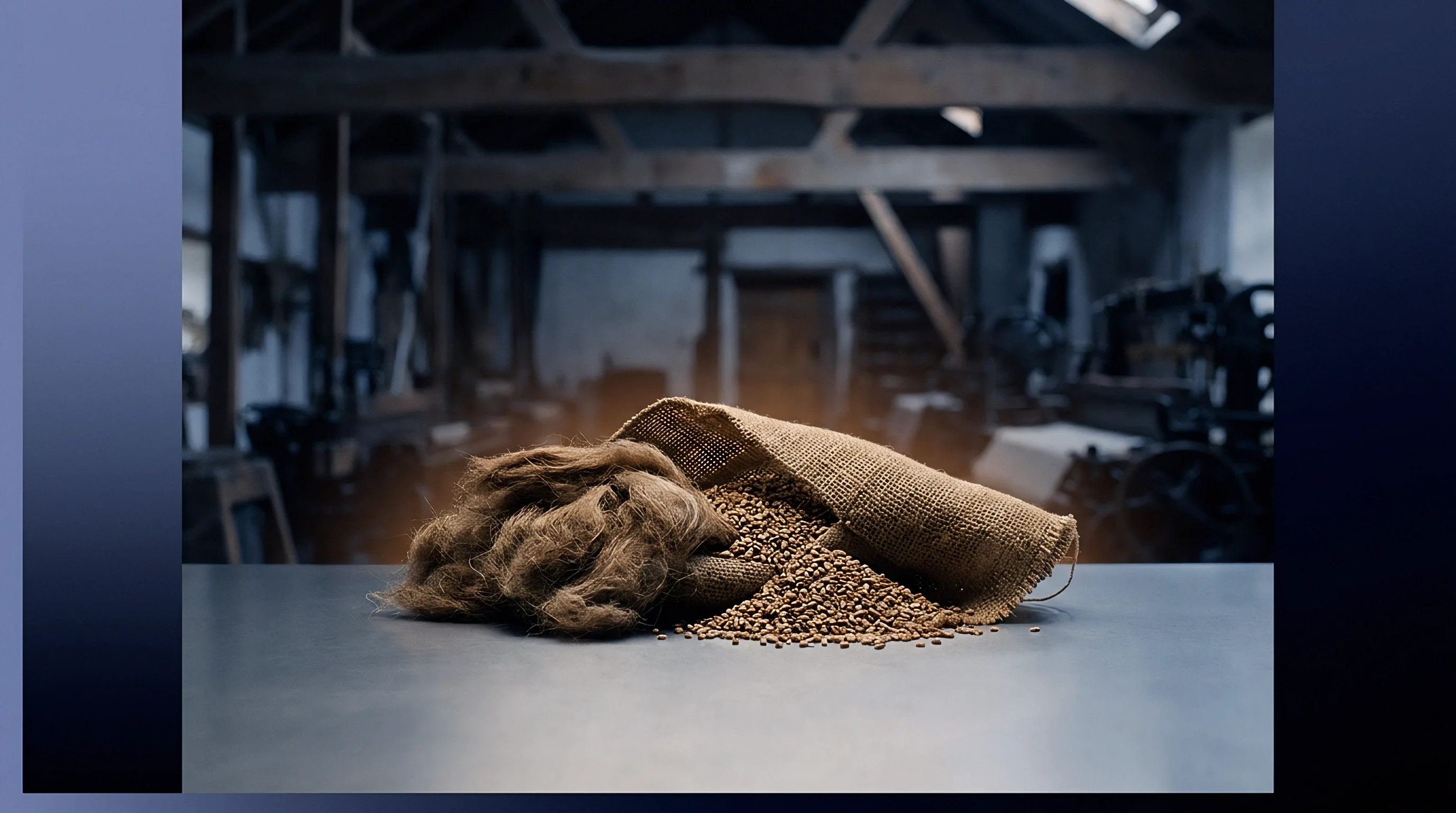
Scutched flax bundles enter the hackling room containing bark fragments, short fibers, and parallel stems. Machine combs split these coarse technical strands, aligning long fibers along their longitudinal axis while removing short fibers and residual wood. Long fiber retention defines the economic threshold of linen yarn production, directly dictating raw material efficiency before spinning commences.
Fibre mass dictates total conversion efficiency.
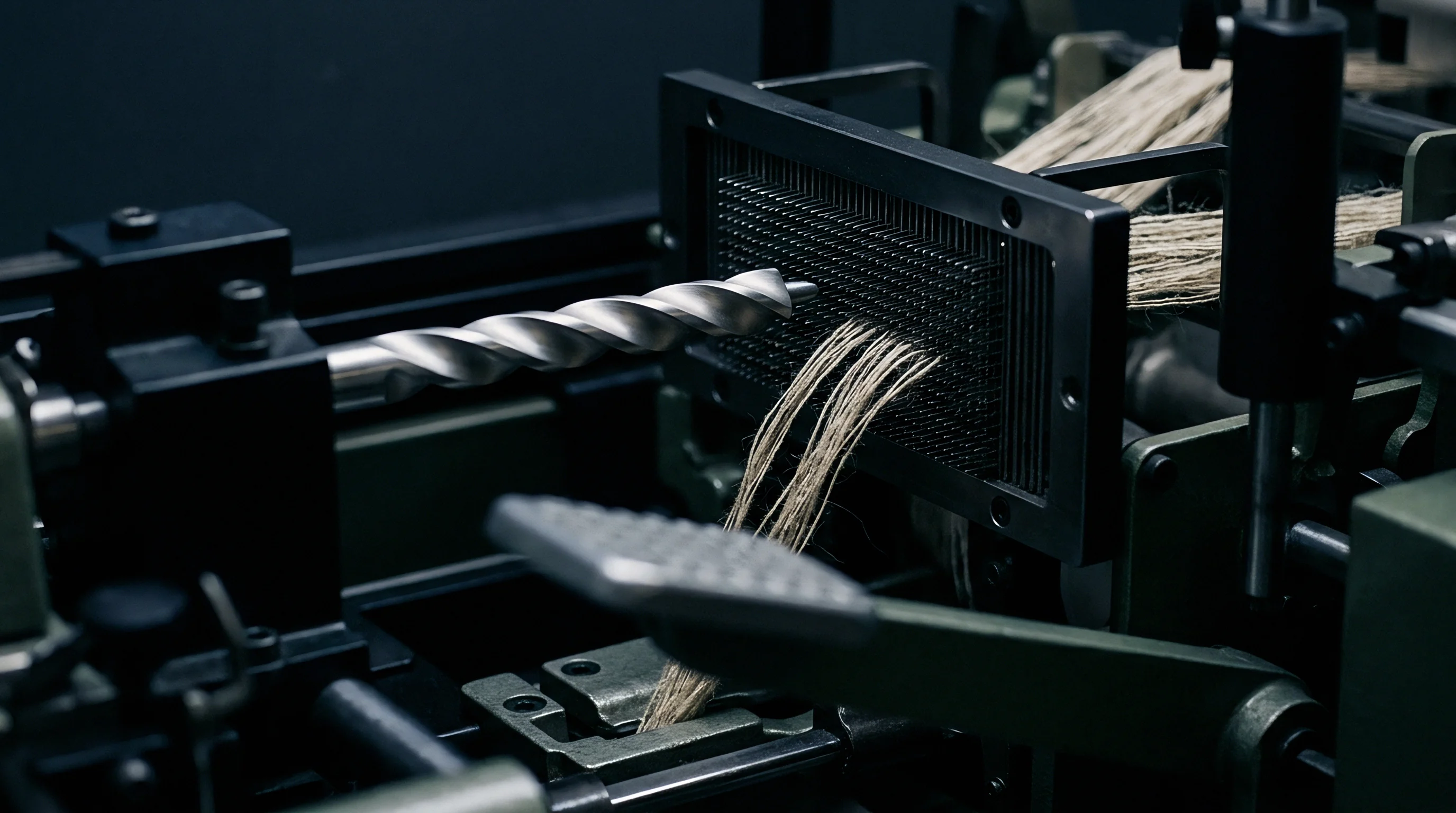
Hackling machines execute progressive carding and combing across pinned fields of increasing pin density. Scutched flax enters fine-toothed pins that comb out unretted shives, broken bast fragments, and entangled neps. The remaining continuous strands form hackled line sliver, while the short combings generate hackling tow.
Comb losses comprise non-fibrous dust and heavy woody shives expelled into collection hoppers beneath the comb beds.

Mechanical Division of Scutched Flax Bundles
Initial combing actions split coarse technical strands into finer individual filaments. Pectin gums binding fiber bundles determine how readily strands divide without fracturing under mechanical tension. Dew-retted flax harvested under dry conditions exhibits rigid pectin bonds that resist pin penetration, causing elevated fiber breakage in early combing passes.
Water-retted flax possesses soft, uniform pectin breakdown that allows smooth fiber separation across fine pins. Damp straw breaks during combing.
Machine operators adjust pin height, faller speed, and draw-off roller pressure based on incoming bundle stiffness. Coarse flax requires wide pin spacing on initial bars, transitioning to dense pin layouts on final bars. Excessive pin impact on brittle flax converts long fibers into low-value tow, reducing overall mill margins.
Retting degree sets bundle tenacity.
A dew-retted flax lot combed at 12 percent moisture regain yields 62 percent long line fibre under standard 18 pins per centimetre finishing density.

Primary Waste Streams in Mechanical Combing
Pectins holding bast bundles together breakdown during mechanical impact, generating distinct co-products. The long line sliver represents the primary high-value product destined for wet spinning frames. Short fiber combings form tow, which mills divert to dry spinning lines or sell to non-woven manufacturers.
Woody shive particles separate completely from the fiber mass, dropping into exhaust channels. Shive content reduces line output.
Comb waste ratios vary according to field retting uniformity, machine speed, and atmospheric relative humidity inside the hackling hall. Maintaining relative humidity between 65 percent and 70 percent prevents static electricity build-up and reduces fiber brittleness. Moisture regain alters comb losses.
Insufficient humidity increases static friction, forcing long fibers into the tow collectors.
- Incorrect Pin Taper Angle accelerates transverse fiber shearing during high-speed comb penetration, shifting up to four percent of long line mass directly into secondary tow collector bins.
- Over-Retted Straw Density reduces fiber bundle structural integrity, causing middle lamella failure and elevated short fiber creation during primary drafting passes.
- Inconsistent Belt Tensioning creates uneven feed speeds across the hackling bed, resulting in uncombed fiber clusters passing into the sliver or excessive fiber drag that snaps long stems.
- Excessive Moisture Deficit increases static charge and brittleness in dry flax, causing fine fiber tips to shatter against pinned bars and fall into under-bed waste hoppers.
Ignoring moisture balances during combing causes permanent strand damage, increasing short fiber ratios and inflating landed yarn expenses.


Arithmetic
Quantitative tracking of mass flow requires strict accounting of raw inputs and refined outputs. Calculating mechanical combed yield establishes the exact baseline for line fiber mass retention relative to byproduct generation. A mill tracks mass balance by weighing incoming scutched bales and comparing that mass against produced line slivers, collected tow, and discarded dust.
Total mass balance follows a conservation principle across the hackling line. Let raw scutched flax mass entering the system be represented as total input weight. Line fiber mass output divided by total input weight provides the fractional long line yield.
Hackling tow mass output divided by total input weight yields the tow factor. The residual fractional mass represents discarded shives and atmospheric comb dust loss.

Mass Balance Mechanics across Hackling Stages
Raw material inputs enter the processing line under continuous weight verification. Long line yield percentages typically range from 55 percent to 68 percent depending on crop quality and mechanical settings. Hackling tow generation accounts for 25 percent to 38 percent of input mass.
Residual comb dust and shive removal eliminate the remaining 5 percent to 10 percent of raw material weight. Tow credits offset combing losses.
Raw material mass calculations incorporate real-time pricing to establish net line fiber cost per kilogram. The net line fiber cost equals the total scutched flax input cost minus total tow realization revenue, divided by total line fiber mass output, plus hackling operational expense per kilogram. Higher tow realization prices partially soften low long-line yield penalties, but long-line retention remains the dominant pricing driver.
| Hackling Stage | Pin Density (pins/cm) | Line Retention (%) | Tow Generation (%) | Shive Removal Rate (%) |
|---|---|---|---|---|
| Coarse Breaker | 2.5 to 4.0 | 88.5 | 7.0 | 4.5 |
| Intermediate Comb | 6.0 to 10.0 | 78.2 | 16.0 | 5.8 |
| Fine Comb | 12.0 to 16.0 | 66.0 | 26.5 | 7.5 |
| Ultra-Fine Comb | 18.0 to 22.0 | 58.5 | 33.0 | 8.5 |
| Test parameters: Dew-retted French flax lot, 12.5% moisture regain, standard 120 metres per minute comb speed. | ||||

Sequential Processing Protocol for Mass Reconciliation
Sampling teams isolate standard production batches before running yield trials. Precise measurement protocols prevent cost misallocations caused by ambient humidity changes during mechanical comb trials.
- Weigh exactly 100 kilograms of conditioned scutched flax input at standard 12.0 percent moisture regain.
- Feed the sample batch through coarse and intermediate hackling passes at controlled comb speeds.
- Collect and weigh all hackling tow co-products accumulated in lower collector vacuum units.
- Separate non-fibrous woody shives from comb hoppers and record total dry shive loss mass.
- Calculate net line fiber yield by dividing clean output sliver mass by initial 100 kilogram feed weight.
High speed increases fiber breakage. Mill managers adjust mechanical draft ratios when comb trials indicate yield drop-offs below 60 percent. Accurate mass accounting links directly to commercial purchase terms under standardized bast fiber trading rules.
High pin density removes residual shives at the cost of breaking coarse long bundles into shorter tow fractions.
Standard purchasing agreements under international bast trade rules enforce price adjustments when combed line mass falls below contracted yield percentages.


Grade
Physical classification of raw bast fiber determines spinning capability before mechanical processing begins. Classers evaluate bundle length, fineness expressed as metric fiber number, tensile strength, retting uniformity, and color. High-grade flax exhibits supple bundles, soft hand, silver-grey color, and strong inter-fiber cohesion.
Coarse fibers resist pin penetration.
Fiber bundle fineness directly dictates the maximum spinning limit of finished yarns. Metric fiber number (Nm_f) measures fiber length in meters per gram of dry mass. Fine line flax ranges from Nm_f 1200 to Nm_f 2000, enabling fine wet-spun yarns up to Nm 80 count.
Coarse flax under Nm_f 800 remains limited to heavy dry-spun yarns or coarse tow blends. Hackling yield governs yarn cost.

When Do Coarse Bundles Shift Combing Balance?
Thick technical strands resist pin penetration, causing excessive long-strand breakage during early combing passes. Coarse flax bundles possess dense pectin structures that fail to divide under standard comb pin impact. When thick strands enter high-density pin fields, pins snap long stems instead of splitting them, shifting fiber mass from line sliver into hackling tow.
Hackling yield drops by three to five percentage points when bundle fineness falls below Nm_f 900.
Spinning mills compensate by reducing comb machine speeds and increasing pin clearance on breaker bars. Adjusting mechanical parameters preserves strand length but leaves higher residual shive levels in the combed sliver. Downstream wet spinning operations experience higher end-breakage rates when processing under-combed coarse slivers.
Coarse strands lower frame efficiency.

Fibre Fineness and Retting Degree Interactions
Enzymatic degradation of middle lamella pectins establishes bundle flexibility and terminal division limits. Dew retting relies on naturally occurring soil fungi to break down plant gums, producing variable retting degrees across a single harvest field. Water retting uses controlled warm water immersion to yield highly uniform pectolysis and superior fiber fineness.
Enzyme retting provides precise processing control but increases raw material cost.
Under-retted flax contains intact pectin layers that keep bundles thick and stiff. Over-retted flax suffers bacterial attack on cellulose cell walls, reducing fiber tensile strength measured via Stelometer testing (ISO 2370). Over-retted fibers shatter under mechanical combing tension, generating high tow volumes and low line yield.
Proper retting balance optimizes both strand fineness and bundle tenacity.
Uniform retting produces supple strands that yield smooth slivers at lower combing forces.
- Moisture Regain Target verifies that incoming raw straw stays between 11 percent and 13 percent moisture content to prevent bundle shattering or mold growth during bale storage.
- Shive Mass Ratio quantifies non-fibrous woody core residue, ensuring unretted straw content stays below 8 percent of total incoming bale weight.
- Mean Bundle Tenacity enforces minimum breaking strength of 28 centinewtons per tex measured via ISO 2370 test methods to guarantee fiber survival during comb draft passes.
- Colour Uniformity Index screens raw lots for localized rot, weather damage, or fungal staining that alters dye uptake uniformity in finished woven fabrics.
Uniform retting produces supple strands that yield smooth slivers at lower combing forces.

Draft
Hackled line sliver transitions through successive drawing passes to reduce linear density. Drawing frames combine multiple slivers through doubling, blending fibers to improve linear weight evenness. Pinned faller bars control short fibers during attenuation, creating uniform parallel slivers ready for roving frame processing.
Wet draft aligns long fibers.
Roving frames apply light mechanical draft while inserting soft twist to stabilize the fiber strand. The resulting roving package transfers to wet spinning frames equipped with hot water troughs. Submerging roving in hot water maintained between 60°C and 70°C softens residual pectins, allowing individual ultimate fibers to slide smoothly against each other during final high-ratio drafting.
Water temperature alters pectin softening.
Sliver Preparation and Roving Attenuation
Gills comb parallel assemblies while doubling operations homogenize linear density across multiple inputs. Three to four successive drawing stages reduce sliver weight from 20 grams per meter down to approximately 1.5 grams per meter. Draft ratios across individual drawing zones range from 6.0 to 10.0, tightly controlled to prevent draft waves caused by sliver slippage.
Pectin bonding controls bundle cohesion.
Roving machines apply protective twist, forming packages suitable for creel mounting on wet spinning frames. Twist factor selection balances package unwinding tension against fluid penetration in the wet spinning trough. Over-twisted roving resists hot water soaking, causing draft resistance and yarn count irregularity.
Under-twisted roving breaks prematurely during creel unwinding.

Wet Spinning Frame Parameters and Count Limits
Submerging attenuated roving in hot water dissolves inter-fiber pectins prior to final drafting. Roller draft mechanisms attenuate the softened strand to target yarn count. Ring spindle assemblies insert real twist, locking ultimate fibers into a compact yarn structure with high tensile strength and low hairiness.
Wet-spun line yarns achieve breaking tenacities exceeding 22 centinewtons per tex when tested per ISO 2062 standards.
Yarn count limits depend directly on hackled line fiber fineness. A combed line sliver with mean fiber fineness of Nm_f 1500 spins reliably up to yarn count Nm 60 (16.6 tex). Attempting to spin finer counts from coarse slivers causes high end-breakage rates exceeding 80 breaks per 1000 spindle hours.
Mill margins depend on yield.
ISO 2062 breaking force testing dictates a minimum single-strand tenacity of 18 centinewtons per tex for yarn intended for high-speed rapier weaving.
- Sliver Evenness Profile documents coefficient of variation mass values below 3.5 percent measured on capacitive evenness testers to prevent long-period thick places in fine yarn counts.
- Mean Fibre Length Distribution verifies that over 70 percent of hackled fibers exceed 300 millimeters in length, guaranteeing sufficient overlapping contact length during ring drafting.
- Pectin Softening Temperature Standard specifies trough water temperature control within plus or minus 2°C to maintain consistent fiber slide resistance in drafting zones.
- Splice Strength Ratio enforces pneumatic splice tensile strength above 85 percent of parent yarn strength, eliminating frame stoppages during high-speed winding.
Spinning mills often attribute count variation and high end-breakage to uneven pectin removal during field retting.

Parity
Economic alignment between raw material input expenses and delivered yarn prices defines commercial viability. Landed yarn cost modeling reconciles raw flax purchasing, hackling yield factors, tow credit realization, spinning conversion expenses, freight, and import tariffs. Small shifts in raw fiber yield alter net yarn landed cost significantly more than shipping rate fluctuations.
Sourcing choices fix fabric cost.
A comprehensive sensitivity model evaluates how fiber price changes and yield variations propagate through to landed thread pricing per kilogram and per finished fabric meter. Raw scutched flax represents 45 percent to 62 percent of total wet-spun yarn production cost. Combing yield changes directly amplify or dilute raw material expenditure per net kilogram of spinnable line fiber.
Landed Cost Model for Wet-Spun Linen Yarn
Calculating delivered thread pricing involves summing raw straw acquisition, combing yield factors, and spinning operational expenses. Net raw material cost per kilogram equals total scutched flax cost minus tow credit revenue divided by long line yield. Adding mechanical hackling cost, wet spinning conversion expense, cone winding overhead, export packing, freight, and duty establishes landed yarn price at the weave room door.
Mill conversion expenses include energy consumption for water heating, spindle power, labor, overhead, and capital depreciation. Wet spinning represents an energy-intensive process due to water heating in drafting troughs and drying cycles for wet yarn packages. Conversion expenses range from $3.80 to $5.50 per kilogram depending on yarn count, fine counts requiring lower spindle speeds and higher energy input per output mass.
| Hackling Yield (%) | Raw Flax Price ($/kg) | Tow Credit ($/kg) | Net Line Cost ($/kg) | Landed Yarn Nm 26 ($/kg) | Landed Fabric Cost ($/m) |
|---|---|---|---|---|---|
| 56.0 | 5.20 | 1.40 | 8.32 | 13.82 | 2.07 |
| 60.0 | 5.20 | 1.40 | 7.73 | 13.23 | 1.98 |
| 64.0 | 5.20 | 1.40 | 7.22 | 12.72 | 1.91 |
| 56.0 | 6.50 | 1.60 | 10.50 | 16.00 | 2.40 |
| 60.0 | 6.50 | 1.60 | 9.77 | 15.27 | 2.29 |
| 64.0 | 6.50 | 1.60 | 9.13 | 14.63 | 2.19 |

Sensitivity Analysis across Fibre Prices and Yield Rates
Modelling financial variations requires holding mill overhead static while shifting raw material and combing performance variables. Assume a base raw flax purchase price of $5.20 per kilogram, a hackling tow credit of $1.40 per kilogram, and a mill conversion cost of $5.50 per kilogram for Nm 26 wet-spun yarn. Increasing hackling yield from 56 percent to 64 percent reduces net line fiber cost from $8.32 per kilogram to $7.22 per kilogram, generating a $1.10 per kilogram cost savings.
Fabric cost per linear meter scales directly with yarn landed price. For a standard woven fabric weighing 150 grams per square meter at 1.4 meter width (210 grams per linear meter), a $1.10 per kilogram reduction in yarn landed cost lowers fabric weaving input cost by $0.23 per meter. A four percentage point improvement in hackling yield offsets a 15 percent increase in raw flax base purchasing price.
A shift of two percentage points in hackling yield alters net yarn landed cost more than an eight percent fluctuation in ocean freight rates.
It remains uncertain whether climate-driven retting variability will permanently elevate base fibre prices relative to synthetic substitutes in European spinning hubs.