Flax Fiber Grade Metrics and Raw Lot Quality Parameters
Raw flax grading requires correlating technical bundle fineness and retting pectin decay with hackling yields to establish wet spinning count limits.

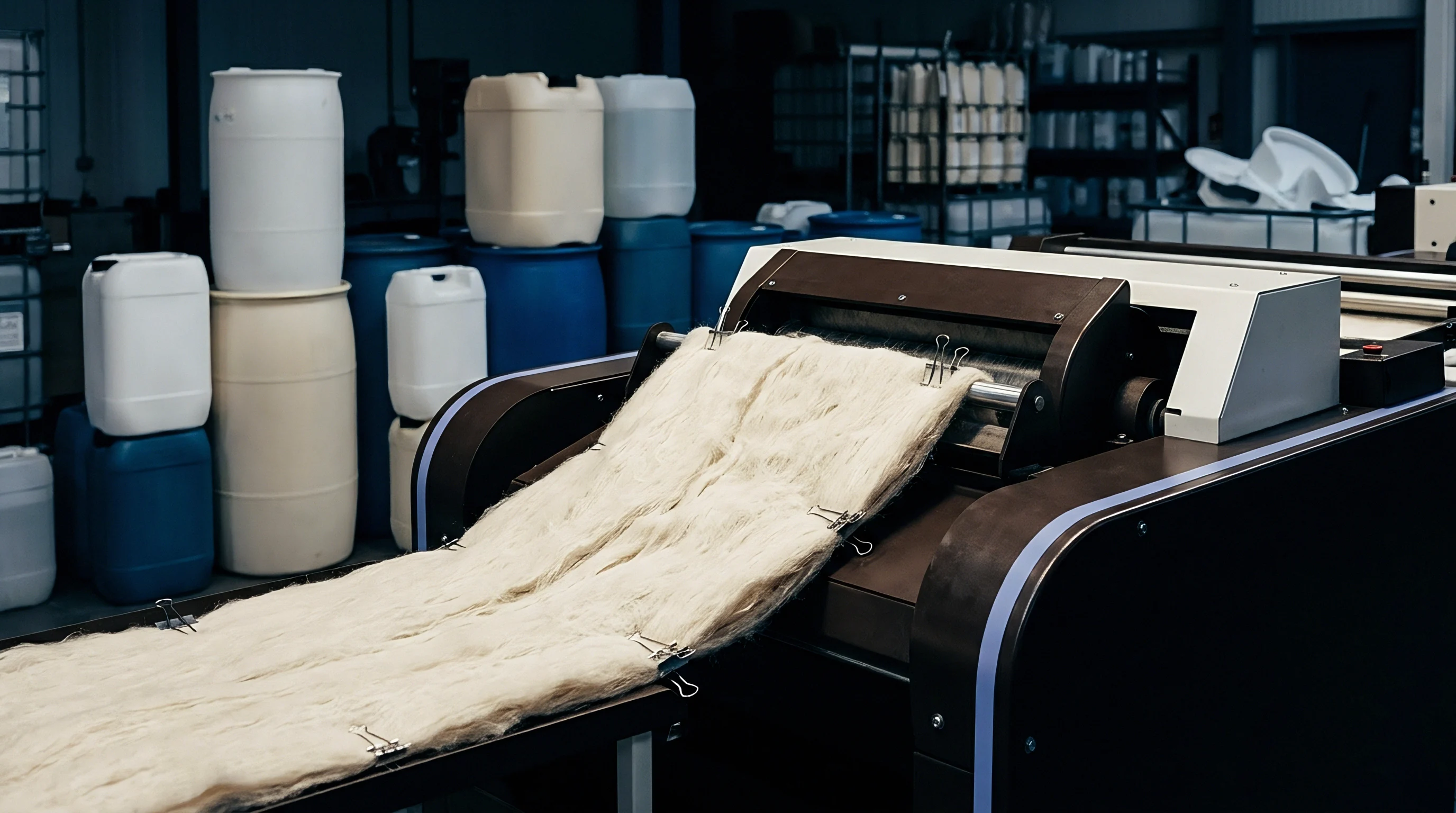
Anatomy
Single ultimate flax cells, known technically as elementary fibers, range from 15 to 55 millimeters in length with mean cross-sectional diameters between 12 and 25 micrometers. These individual cells assemble into technical fiber bundles measuring 300 to 900 millimeters through an intercellular matrix rich in pectins, hemicelluloses, and residual lignins. High-grade long-staple flax contains 70 to 75 percent alpha-cellulose by dry mass.
These non-cellulosic constituents dictate bundle cohesion, flexural rigidity, and retting response. The middle lamella binds adjacent elementary cell walls within the stem cortex. Incomplete pectin degradation leaves stiff, coarse technical bundles that resist drafting during yarn manufacture, while over-retting degrades the primary cellulosic cell wall, inducing micro-cracks that drop bundle tenacity below acceptable spinning thresholds.
Cellulose chains inside the secondary wall exhibit a steep spiral angle of 8 to 10 degrees relative to the fiber axis. This parallel alignment provides high tensile strength alongside low elongation at break, typically between 1.5 and 2.5 percent. Retting duration directly alters this structural assembly.
Dew retting under ambient moisture relies on fungal colonization, primarily by Cladosporium herbarum, to solubilize water-soluble pectins. ISO 2370 testing quantifies fineness by air permeability, reflecting the bundle cross-sectional distribution across a consolidated fiber plug. Spectrophotometric measurement at 280 nanometers quantifies aromatic lignin bonds within unretted bark remnants.
Fiber bundles missing adequate middle-lamella cohesion split prematurely during preliminary carding, reducing line fiber yield.
Dew-retted flax bundle tenacity drops below 28 centinewtons per tex when residual pectin levels fall under 1.2 percent by dry weight.
The central lumen accounts for 5 to 10 percent of the single fiber cross-sectional area. Fiber maturity determines lumen closure: fully matured stalks exhibit thick secondary walls and narrow, compressed lumens, whereas immature stalks yield thin-walled fibers that collapse into flattened ribbons during drying, creating severe structural variation within the bundle. Chemical retting protocols employing chelating agents or pectinase enzymes offer uniform pectin extraction, yet mechanical strength stays highly sensitive to bath pH and exposure time.
The exact rate at which enzymatic cleavage of middle-lamella polygalacturonase alters cell wall crystalline structure without compromising technical bundle cohesion remains under active investigation across bast-fiber laboratories.
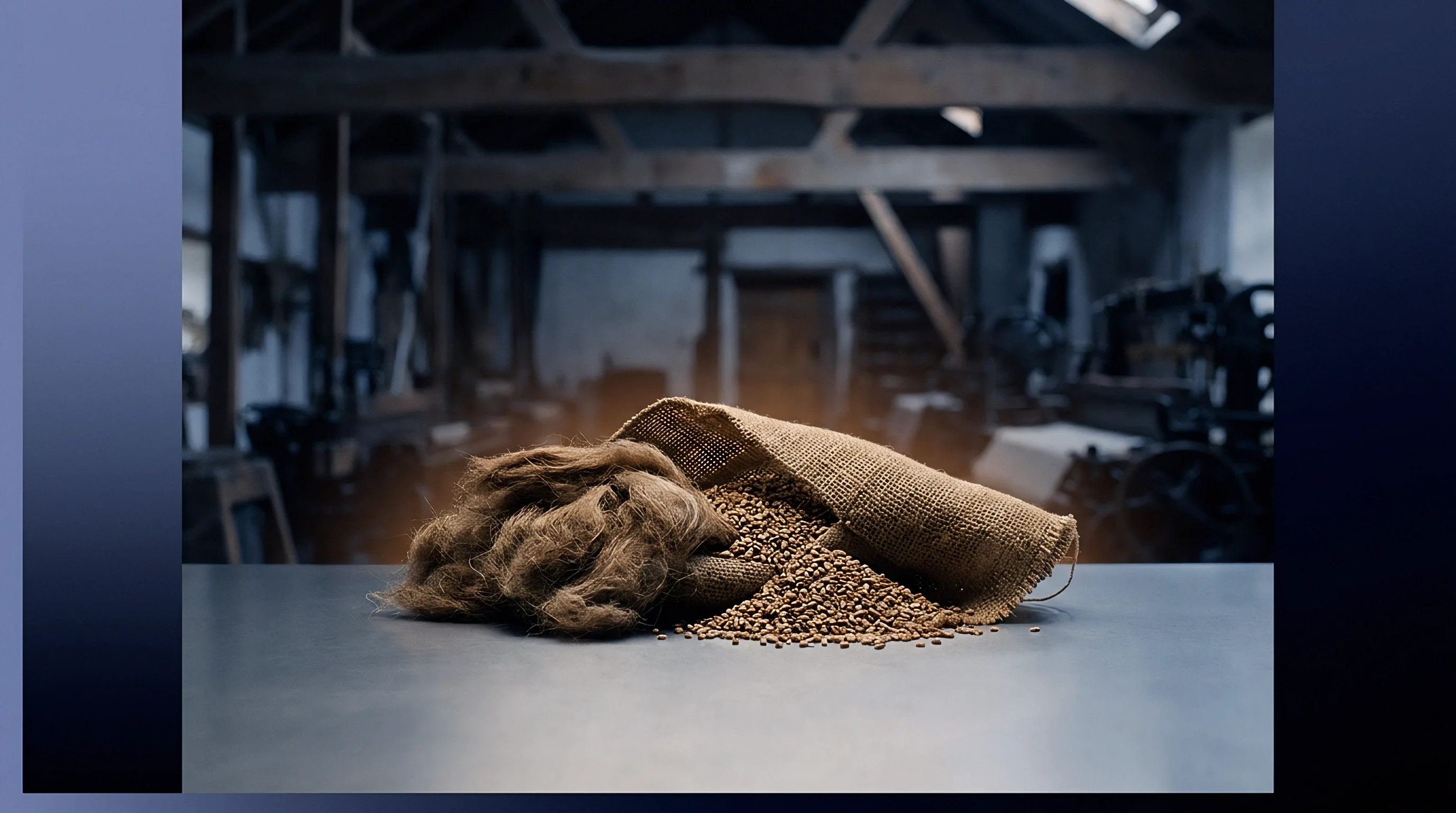
Sorting
Physical classification divides harvested flax into long-staple line fiber and short-staple tow fractions. Comb hackling frames process scutched flax to align long bundles into continuous, parallel slivers while combing out tangled short fibers. Line flax maintains superior draft evenness in fine wet-spinning operations.
Metric fiber number, designated as Nm, expresses linear density as the fiber length in meters per single gram of mass. Higher Nm figures denote finer technical bundles capable of forming fine yarn counts. Traditional hand classing evaluates bundle length, color, softness, and cleanness, while instrument-based evaluation uses airflow fineness meters, digital image-analysis bundle diameter profilers, and comb sorter length distribution arrays.
Standard commercial grades establish precise thresholds for staple length, linear density, and residual trash content. The table below delineates physical parameter ranges for standard European long-staple line and tow grades alongside their spinnable count boundaries.
| Grade Designation | Technical Bundle Length (mm) | Fineness (Nm) | Trash Content (%) | Target Yarn Count (Lea) |
|---|---|---|---|---|
| Grade 1 Long Line | 300 – 350 | 250 – 300 | 0.5 – 0.8 | 60 – 80 |
| Grade 2 Long Line | 250 – 300 | 200 – 245 | 0.8 – 1.5 | 40 – 50 |
| Grade 3 Medium Line | 200 – 250 | 160 – 195 | 1.5 – 2.2 | 25 – 30 |
| Tow Grade A | 60 – 120 | 110 – 150 | 2.2 – 3.5 | 10 – 20 (Dry Spun) |
Length uniformity controls drafting stability on the drawing frame. A wide spread in bundle length causes floating fibers in the drafting zone, generating periodic thickness variations known as draft waves, while overly coarse bundles risk rupturing comb pins.
Fibers exhibiting high lustre and slate-grey coloration yield smoother roving drafting with lower end-breakage rates.
Incoming raw lot evaluation relies on structured parameters to confirm specification compliance before release to the hackling room.
- Technical Bundle Staple Length measures the mean distance between broken bundle ends across a comb sorter array, establishing the upper limit for spinning draft settings.
- Metric Fiber Fineness Number calculates the length in meters per single gram of bundle mass, indicating potential yarn evenness.
- Non-Cellulosic Shive Concentration quantifies residual woody stem fragments by percentage weight, directly predicting comb waste during preliminary processing.
- Co-efficient of Length Variation measures bundle length dispersion within the lot, where values above thirty percent induce draft waves in the drawing frame.
Coarse tow bundles always demand higher twist multiples during dry spinning to offset their lack of natural inter-fiber cohesion.
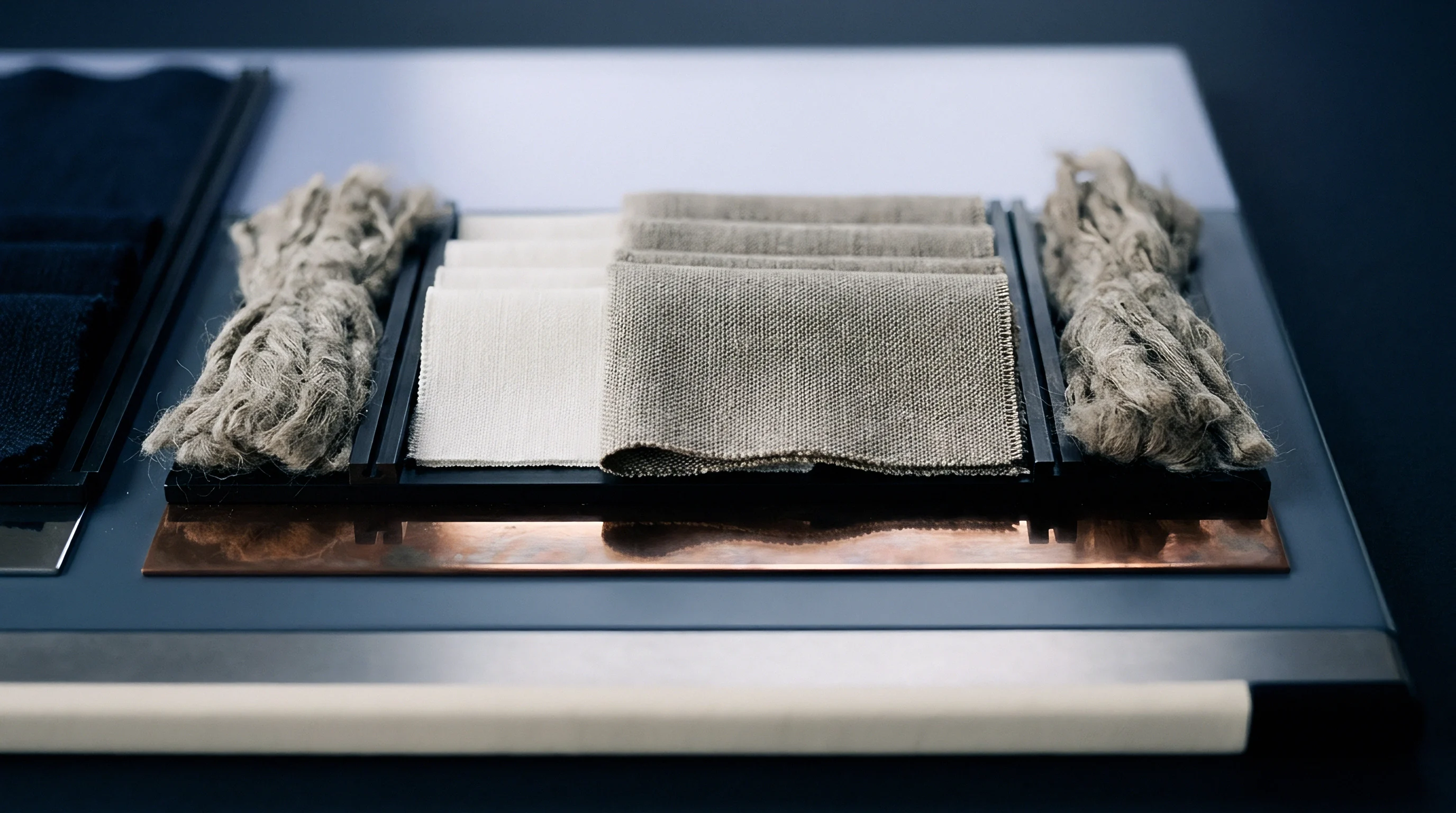
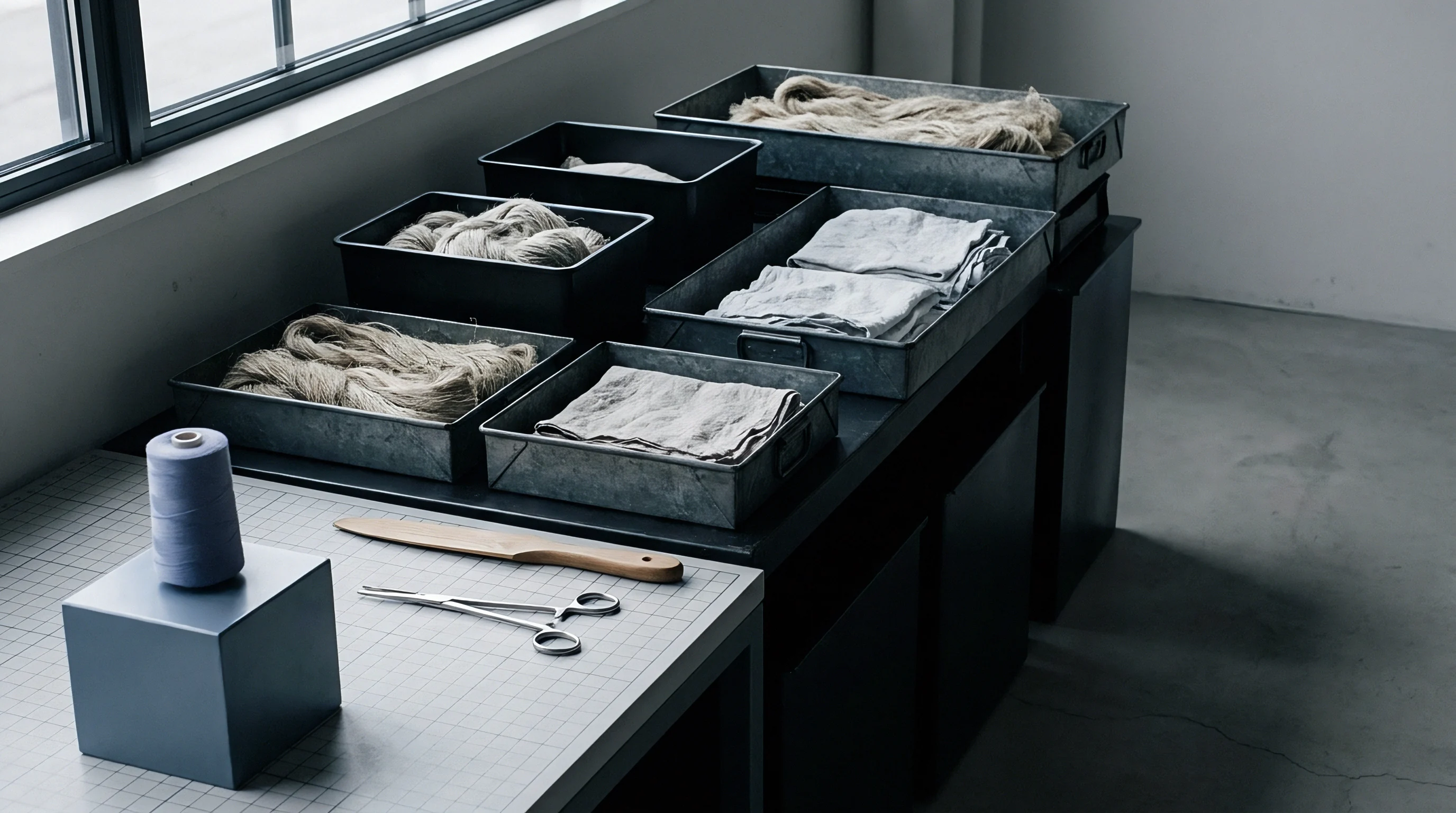
Frame
Wet-spinning machinery draws roved flax through hot water troughs maintained between 60°C and 70°C. Hot water softens pectin bonds in the middle lamella, enabling individual elementary fibers to slide past each other during drafting. Thermal softening permits mills to spin fine yarn counts up to 80 Lea (Nm 48) with high diameter uniformity, whereas dry spinning operates without thermal pectin softening, restricting output to coarser yarn counts between 6 Lea and 20 Lea.
Adjusting Break Draft for Fineness Spreads
Variations in bundle fineness across a single raw lot alter drafting resistance in the draw zone. Coarser bundles demand higher drafting forces, causing local slippage when break draft settings stay fixed for finer stock. The following operational sequence calibrates wet-spinning draft zones to accommodate incoming raw lot linear density variations.
- Mount roving bobbins from a single certified lot onto the spinning frame creel.
- Submerge roving slivers into the water trough, verifying bath temperature holds at 65°C using calibrated thermocouples.
- Adjust front-to-back draft roller nip pressure to 18 kilograms force per spindle.
- Set the break draft ratio between 1.08 and 1.12 based on the lot mean metric fiber number.
- Spin a test length of 1,000 meters at a spindle speed of 5,500 revolutions per minute.
- Measure yarn evenness and count variation on a capacitive yarn tester.
To evaluate material conversion efficiency, consider a worked mill processing scenario. Take a 20,000 kilogram raw lot of Grade 1 long line flax delivered at 12.0 percent moisture regain. Processing through comb hackling yields 65.0 percent long line fiber (13,000 kilograms), 28.0 percent tow waste (5,600 kilograms), and 7.0 percent unrecoverable shive and dust loss (1,400 kilograms).
The line fiber proceeds through drawing and roving, incurring a 3.0 percent process waste rate to yield 12,610 kilograms of roving slubbing.
Failure to maintain wet-spinning trough temperature within two degrees of sixty-five degrees Celsius triggers uncontrolled roving slippage and immediate yarn count variance.
Wet spinning converts this roving mass into 40 Lea (Nm 24) yarn at a net spinning recovery efficiency of 95.0 percent, yielding 11,979.5 kilograms of finished yarn on cones. The overall material conversion efficiency from raw bale to package yarn equals 59.9 percent. Incorrect break draft settings in the wet-spinning frame rupture long technical bundles prematurely, turning prime line fiber into high-priced spinning room waste.

Defect
Degradation during field retting introduces severe physical structural flaws into raw flax lots. Over-retting permits fungal hyphae to consume cellulosic cell walls, generating micro-cracks that cause extensive fiber breakage during scutching. Under-retting leaves epidermal tissue and woody shive firmly bound to technical bundles, increasing hackling pin load and comb waste.
Storage above 14.0 percent moisture regain promotes localized decay, causing fiber discoloration and rapid loss of bundle tenacity.
Raw lot defects degrade yarn quality and increase mechanical stop rates across the mill floor.
- Epidermal Bark Adhesion occurs when incomplete bacterial retting leaves outer stem skin bound to technical bundles, creating dark specks that survive chemical bleaching.
- Fungal Cell Wall Damage degrades structural cellulose chains through enzymatic cleavage, reducing bundle tenacity while increasing short-fiber generation during hackling.
- Entangled Micro-Neps form during aggressive scutching of unevenly retted lots, producing persistent thick places in spun yarn.
- Moisture-Induced Dry Rot develops when stored bales exceed fourteen percent relative moisture content, creating brittle fiber zones across entire lot layers.
Comb pins fail when processing under-retted stocks with excessive shive adhesion. The physical presence of shive particles alters fiber bundle alignment during roving drafting, introducing thick spots into the spun strand.
Unbleached shive particles larger than two millimeters cause immediate needle breakage on high-speed circular knitting machinery.
Unseasonal harvest rain cuts field retting short before stem separation completes, leaving raw lots with elevated shive loads.

Settlement
Commercial valuation reconciles gross delivered batch weight with standardized oven-dry mass. ISO 6741 establishes an official moisture regain allowance of 12.0 percent for raw flax fiber and 13.0 percent for flax yarn. Bales delivered above official regain levels trigger immediate mass adjustments on the commercial invoice.
Trash and non-combable shive contents exceeding contract baselines incur linear price deductions.
The table below presents a commercial mass and landed cost reconciliation matrix for a 10,000 kilogram raw flax lot under standard trade contract terms.
| Parameter Description | Measured Lot Value | Contract Baseline Standard | Adjusted Commercial Figure | |
|---|---|---|---|---|
| Gross Delivered Mass | 10,250.0 kg | 10,000.0 kg nominal | 10,250.0 kg actual weight | |
| Oven-Dry Fiber Mass | 8,951.8 kg | — | 8,951.8 kg dry mass basis | |
| Moisture Content / Regain | 14.5% measured regain | 12.0% ISO 6741 regain | Commercial Mass: 10,026.0 kg | |
| Non-Cellulosic Shive Content | 2.8% by weight | 1.5% maximum baseline | Net Payable Weight: 9,895.7 kg | |
| Base Fiber Contract Price | $4.20 per kg basis | $4.20 per kg basis | Adjusted Raw Lot Cost: $41,561.94 | |
| Calculated using ISO 6741 commercial mass formulas with oven-dry testing at 105°C; net payable weight reflects a 1.3 percent penalty deduction for excess shive content above standard baseline. | ||||
Hackling yield directly alters raw material cost per kilogram of spinnable line fiber. A drop in line fiber recovery from 65.0 percent to 60.0 percent increases effective raw material input cost by 8.3 percent per kilogram of combed sliver. Commercial contracts specifying clear yield bands protect buyers against excess tow generation.
Incorporating the standardized Confederation Europeenne du Lin et du Chanvre contract clause for moisture adjustment automatically converts wet delivered tonnage to oven-dry commercial weight plus twelve percent official regain.