Reconciling Loom Machine Capacity with Declared Linen Greige Yield Metrics
Reconciling loom capacity with linen greige yield metrics requires cross-referencing digital pick counts, power draws, and mass loss against yarn intake.
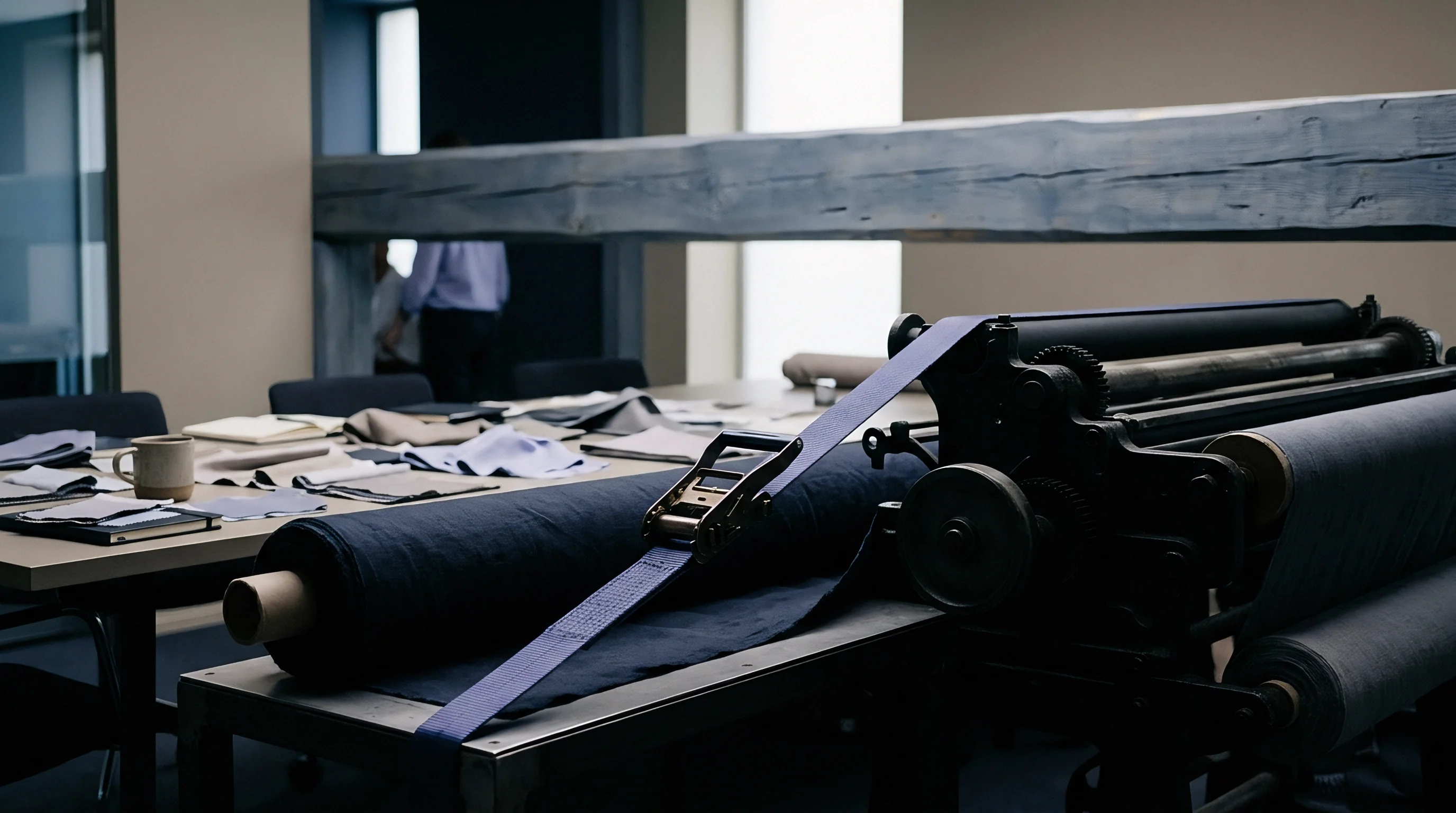

Reed
Air-jet and rapier shedding mechanisms convert yarn packages into woven cloth under rigid mechanical constraints, but linen introduces structural bottlenecks unknown to cotton or filament weaving. Because flax bast fibres are stiff, low in natural elasticity, and irregular in cross-section, they set hard ceilings on reed velocity, shed opening dimensions, and weft insertion rates. When auditing a mill’s capacity declaration, the first checkpoint is the specification plate on the loom chassis.
Those rated revolutions per minute show factory test runs on smooth synthetic yarns, never wet-spun flax yarn.
On medium counts, rapier looms running pure linen operate between three hundred and fifty and four hundred and eighty picks per minute, while projectile machines rarely exceed three hundred and twenty picks per minute against the drag of uneven flax weft. Air jets achieve higher velocities on combed cotton, but flax hairiness clogs the airstream through the main nozzles and relay jets, causing false picks, snarls, and cutouts. If a mill claims five hundred and fifty picks per minute for pure linen plainweave, the capacity projection is fabricated, as line flax resists rapid deceleration.
A rapier loom operating at four hundred picks per minute yields twenty-six point six metres of fifty-pick greige linen cloth per operating hour at ninety percent efficiency.
Mechanical Constraints on Rapier Insertion
Operating speeds between four hundred and six hundred picks per minute establish the physical boundary for linen weft insertion. The yarn feeds from the package through a pre-winder to absorb peak take-off spikes, but flax offers almost no elastic recovery when jerked. During the mid-shed rapier transfer, peak tensile loads snap the yarn whenever insertion velocity exceeds seventeen metres per second.
In practice, engineers running twenty-six lea wet-spun flax yarn throttle machine speed to fifteen metres per second to prevent repeated warp splits, even though wet spinning reduces yarn hairiness.
Reed width selection dictates both mechanical output and cloth shrinkage. A loom set to a reed width of one hundred and ninety centimetres cannot match the insertion cycle of a one hundred and fifty centimetres frame: the rapier tape covers a longer stroke, requiring broader acceleration and deceleration curves that pull down peak shaft rotation. Inserting weft across that extra width also multiplies friction through the drop wires, heald eyes, and reed dents.
Calculating gross greige metreage requires accounting for this speed penalty across different chassis sizes.
| Yarn Count (Lea / Nm) | Reed Width (cm) | Nameplate Speed (RPM) | Maximum Sustained Speed (RPM) | Practical Run Rate (RPM) |
|---|---|---|---|---|
| 14 Lea / 8.5 Nm | 220 | 520 | 360 | 320 |
| 26 Lea / 15.5 Nm | 190 | 580 | 440 | 390 |
| 36 Lea / 21.5 Nm | 190 | 600 | 480 | 430 |
| 40 Lea / 24.0 Nm | 150 | 650 | 520 | 460 |

Linear Yield versus Pick Density Calculations
Setting forty picks per inch on twenty-six lea wet-spun flax yarn fixes the theoretical yardage produced during an eight-hour shift. The calculation divides picks struck by target pick density: running at four hundred picks per minute, a machine logs twenty-four thousand picks per hour, which at forty picks per inch comes out to six hundred inches ~ equivalent to fifteen point two four linear metres. Multiplying this across twenty-four operational hours produces three hundred and sixty-five point seven linear metres at one hundred percent mechanical capacity.
No industrial shed achieves that theoretical output. Gear backlash in electronic cloth take-up drives, let-off variations at the warp beam, and thermal drift along the sley sword cause constant minor pitch variations. Off-loom greige dimensions also require deducting crimp take-up from nominal calculations.
Warp crimp accounts for five to nine percent of total beam length depending on warp tension and pick density, while tensile failure drops loom productivity.
Weave room managers balance pick density directly against yarn breakage thresholds instead of running at catalog insertion limits.
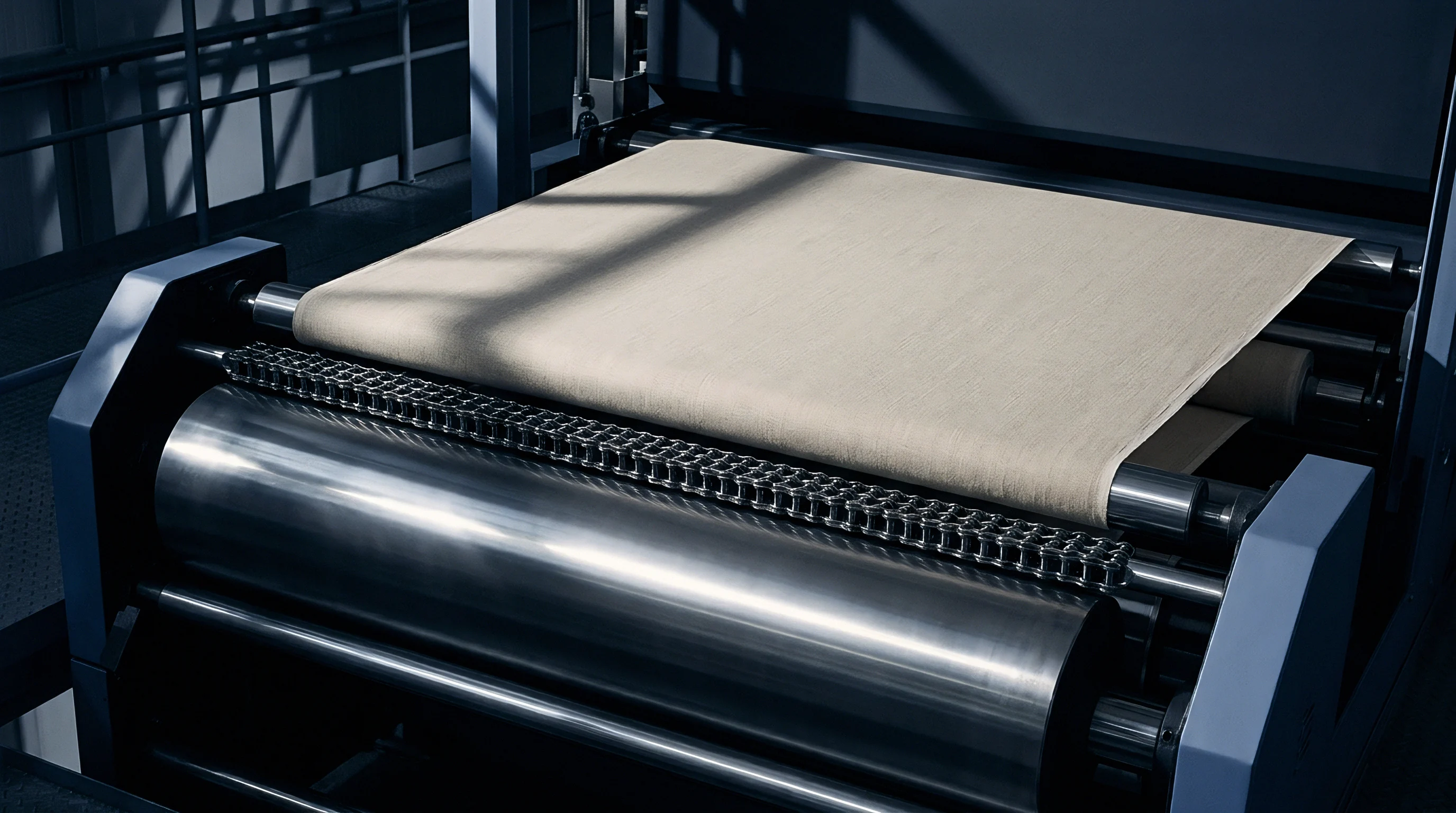

Stoppage
Flax yarn has minimal stretch, averaging between two and three percent elongation before failure. Minor surface slubs or thick spots bind inside the drop wires and heald eyes; when a warp end snaps under tension, the drop wire falls onto the contact bar, completing the circuit that trips the loom brake. Inertia carries modern high-speed looms through two to three picks before motion ceases entirely.
By then, the broken warp end has tangled with adjacent ends in the shed, multiplying manual piecing time for the weaver.
Auditors track downtime through overall equipment effectiveness metrics, where a typical linen shed runs between seventy-two and eighty-four percent mechanical efficiency. Mill records claiming ninety-two percent efficiency on pure linen constructions ignore the physical reality of flax processing. Shift logs capture four distinct stoppage classes ~ warp breakage, weft arrival faults, beam replenishment, and routine maintenance ~ and unmonitored downtime often conceals parallel production.

Environmental Moisture Control in the Loom Shed
Relative humidity maintained between seventy-five and eighty percent keeps flax pectin flexible enough to withstand shed opening tension. Dry air strips moisture from cellulose polymers, turning pliable bast fibres into brittle cords prone to micro-fractures. Temperature regulation maintains seventy-two degrees Fahrenheit to stabilize lubricant viscosity on the rapier slide paths and drive gearboxes, where shed friction causes yarn hairiness.
Failure of atomization nozzles or air exchange chillers drops relative humidity below seventy percent within twenty minutes. Warp breakage rates surge tenfold under dry conditions. Weavers spend their entire shifts tying broken warp ends rather than patrolling automated loom banks; machine stoppage duration per operator climbs exponentially, dragging total shed efficiency below fifty percent as dry air snaps linen warps.
Warp breakage frequency tracks yarn moisture content rather than mechanical motor stability.

Which Warp Breakage Rates Invalidate Theoretical Mill Capacity?
Ten stop occurrences per hundred thousand picks reduce machine output below sixty-five percent of nameplate rating. Each warp repair consumes between ninety seconds and three minutes of technician intervention, during which the loom stands idle while adjacent machines wait for operator assistance. When warp breaks exceed twelve per hundred thousand picks, an operator can manage no more than four rapier looms simultaneously, with loom speeds determining maximum throughput.
- Excessive Warp Sizing Degradation generates abrasive dusting inside the reed dents, causing repeated micro-snags on low-twist yarns.
- Uneven Yarn Count Variance produces tension spikes across thin yarn sectors that snap during shed changeovers.
- Defective Package Winding Angle generates sloughing-off defects where entire yarn layers collapse simultaneously, jamming weft feeders.
- Warp Beam Misalignment creates uneven sheet tension between the selvedge edges and the centre cloth body.
Spinning defects that enter the warping beam permanently restrict loom throughput regardless of weaving machine sophistication.
Capacity shortfalls are routinely attributed to regional power grid fluctuations interrupting automated humidification cycles during night shifts.
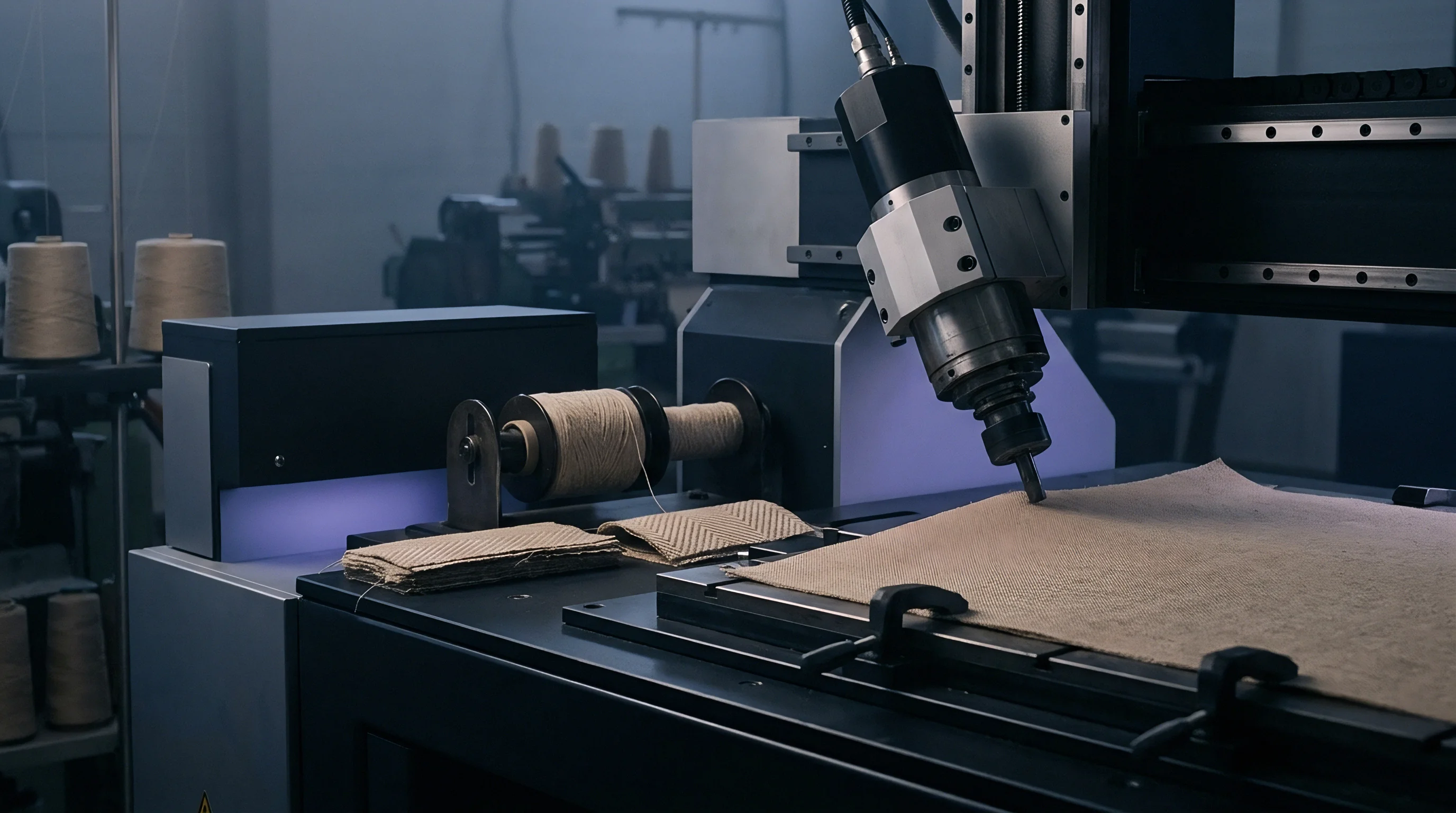

Variance
Discrepancies between billed metreage and recorded loom running hours expose uncertified yarn substitution in commercial consignments. When declared greige volume exceeds the mechanical capacity of certified machines, the surplus cloth originates from unverified commission weavers or synthetic blending. Auditors evaluate the reconciliation equation by comparing certified raw fibre mass intake against finished greige gross weight.
Standards like European Flax or Masters of Linen require physical mass segregation throughout intermediate production steps, where batch reconciliation protects commercial margins.
A mill operating forty rapier looms cannot physically generate two hundred thousand linear metres of heavy linen upholstery cloth within a thirty-day delivery window. Verifying production records against electric meter data and shift rosters reveals whether declared volume matches installed hardware. Fabricators disguise these discrepancies by inflating calculated loom run efficiencies or underreporting pick density specifications; discrepant mass signals uncertified tow blending.
Alliance for European Flax-Linen and Hemp Standard Section 4.2 revokes scope certificates when mill intake records fail to corroborate claimed loom greige yardage.

Mass Balance Losses across Loom Shed Operations
Lint shedding, bobbin remnants, and selvedge trimming consume four to seven percent of total input yarn weight. Sizing starches and conditioning lubricants add temporary mass that washes out during wet finishing, complicating greige weight reconciliation. Warp preparation generates sizing waste and beam residual yarns that never convert into saleable fabric metres.
Selvedge waste on rapier looms represents an unavoidable structural loss: tucked or leno selvedges require auxiliary fringe trimming on both fabric edges, and weft waste accumulates at the catch-cord.
Trimming removes ten to thirty millimetres of inserted weft per pick cycle across the cloth edges. On a fabric woven at forty picks per inch, this mechanical trim generates fifteen to thirty-five grams of discarded linen waste per linear metre. When declared mill records show a ninety-nine percent conversion efficiency from yarn intake to greige roll weight, the audit catches an impossible mass conservation claim.
Genuine line linen processing produces verifiable scrap streams.
| Processing Phase | Loss Classification | Low Bound Loss (%) | High Bound Loss (%) | Reclamation Method |
|---|---|---|---|---|
| Warping and Beaming | Yarn End Remnants | 0.8 | 1.5 | Resold to coarse spinning |
| Sizing Application | Thermal and Viscosity Sludge | 0.5 | 1.2 | Effluent neutralization |
| Weft Feeding | Bobbin Residuals | 1.0 | 2.0 | Mechanical opening |
| Loom Shed Shedding | Fly Dust and Fibre Shedding | 1.2 | 2.5 | Suction vacuum filtration |
| Selvedge Cutting | Leno and Auxiliary Waste | 1.5 | 3.5 | Non-woven insulation garnetting |

Can Loom Monitoring Hardware Prevent Greige Yield Inflation?
Digital warp-beam rotation counters log actual picks struck rather than estimates entered on shift sheets. Centralized weaving shed management networks poll microprocessor boards on modern rapier looms every thirty seconds, extracting running pick totals, instantaneous motor speeds, stoppage logs, and energy usage profiles. Interfacing monitoring software with enterprise resource databases prevents fraudulent retrospective record adjustments, and electronic pick counters expose ghost shifts.
The auditor establishes procedural truth by extracting machine data logs directly from onboard loom memories via industrial network ports:
- Connect diagnostic terminal hardware directly to the loom control processor to bypass local office desktop networks.
- Extract raw binary run files containing timestamped revolutions and pick-count arrays for the audit duration.
- Cross-reference logged loom runtime hours against local power utility kilowatt-hour bills for the designated shed.
- Compare machine serial numbers on the digital logs against equipment lists registered on certifier scope documents.
- Verify total pick counts against customer specification pick density to calculate actual linear cloth output.
Accepting unverified declared yield figures without cross-referencing digital pick records leaves procurement desks open to receiving mislabelled cotton-flax blends carrying pure linen price surcharges.


Balance
Reconciling raw fibre mass intake against finished roll weight isolates fraudulent volume expansion before cargo departs origin ports. Auditors run balance models using exact linear densities, warp thread counts, weft pick counts, reed widths, and measured loss factors to translate declared greige linear yardage back into required yarn kilograms. If the required yarn mass exceeds the scope certificate volume issued by the certifier, the consignment contains grey-market or undocumented fiber lots, and missing weighbridge slips trigger immediate rejections.
Physical laws govern textile mass balance: the weight of woven cloth equals warp yarn weight plus weft yarn weight, minus shed fly dust, plus sizing chemicals. Yarn count numbering follows the wet-spun lea convention, where one lea represents three hundred yards per pound. Converting lea counts into the metric tex system establishes absolute weight per kilometer of single yarn; a twenty-six lea yarn converts to thirty-four point two tex, meaning one thousand linear metres of this yarn weighs thirty-four point two grams, and clean logs eliminate audit delays.
Reconciling Ten Thousand Metres of Heavy Plainweave
A typical production order specifies two hundred and twenty grams per square metre across a finished width of one hundred and fifty centimetres. On a procurement order for exactly ten thousand linear metres of greige linen fabric, total declared cloth surface area equals fifteen thousand square metres. Multiplying fifteen thousand square metres by two hundred and twenty grams per square metre yields three thousand three hundred kilograms of raw greige cloth off the loom.
Construction parameters specify thirty-six warp ends per inch and thirty-four weft picks per inch using eighteen lea yarn, which equals forty-nine point four tex. Sizing starch adds eight percent temporary mass to the warp sheet during beam preparation. Selvedge fringing trims forty millimetres of weft width across rapier insertion edges, while mechanical shed fly consumes two percent of total yarn mass during weaving.
Applying these verified process factors exposes the exact yarn volume required to feed the weaving machines.
| Parameter Component | Unit Specification | Warp Allocation | Weft Allocation | Total Process Mass |
|---|---|---|---|---|
| Yarn Linear Mass | Tex (g/km) | 49.4 | 49.4 | N/A |
| Total Yarn Length In Fabric | Kilometres | 34,015 | 31,496 | 65,511 |
| Net Fibre Weight In Fabric | Kilograms | 1,680.3 | 1,555.9 | 3,236.2 |
| Process Loss Factors | Percentage | 3.5% (Remnants + Fly) | 4.5% (Fly + Trims) | 3.98% (Blended) |
| Size Starch Mass Added | Kilograms | 134.4 | 0.0 | 134.4 |
| Gross Yarn Mass Required | Kilograms | 1,741.2 | 1,629.2 | 3,370.4 |
| Assumptions: 18 Lea yarn; 150 cm width; 36 ends/inch; 34 picks/inch; 10,000 linear metres; audited run duration 380 machine hours across 10 rapier looms. | ||||

Systematic Detection of Undeclared Combed Tow Additions
Secondary spinners frequently introduce uncertified short-staple tow lots to dilute certified line flax without adjusting yarn tex designations. Tow yarns contain shorter fibres with wide diameter distributions, reducing yarn regularity and triggering higher warp break frequencies. Auditors detect this substitution by analyzing greige yield variances against invoice yarn purchase prices: certified long-staple European Flax wet-spun yarn trades at a substantial premium over dry-spun tow yarn per kilogram.
When a mill maintains nominal yarn counts while reporting abnormally low waste percentages, physical testing separates tow additions from line flax. Microscopic cross-sections reveal irregular lumen structures and higher residual pectin concentrations characteristic of unrefined tow fibres. Weighing greige bolt cuts at standard temperature and humidity conditions per ISO 139 provides uncontaminated mass baselines.
Any divergence between physical roll density and billed yarn input indicates unauthorized substitution.
- Transaction Document Gaps surface when yarn delivery notes lack corresponding bale lot reference codes tied to certified scutching units.
- Discrepant Yarn Moisture Baselines inflate intake invoice weights while delivering less bone-dry cellulose fiber mass to the warping frames.
- Unregistered Spun Tow Invoices indicate separate yarn purchasing tracks intended to dilute certified long-line warp beams.
- Omission Of Subcontracted Sizing Slips masks off-site chemical processing operations outside certifier surveillance boundaries.
Will international certifiers update transaction protocols to require physical chemical tracer testing inside all certified greige batches?


Ledger
Customs authorities and commercial auditors demand contemporaneous shift logs rather than retrospective summaries assembled after dispatch. Traceability standards under European Flax regulations mandate clear chains of custody connecting retail yardage directly to scutched flax straw lots. When intermediate weaving operations take place at subcontracted mills, origin documentation breaks down unless transfer manifests match machine allocations.
Document dossiers must present chronological harmony between spinning invoices, weaving entries, and transport bills of lading.
Discrepancies in greige declarations invite border delays, preferential tariff revocations, and secondary penalties under origin verification laws. United States Customs and Border Protection enforces strict evidentiary standards for textile entry goods under the Uyghur Forced Labor Prevention Act and general tariff regimes. European Union customs brokers demand documented proof of processing transformations per the Union Customs Code non-preferential rules of origin; a fraudulent yield metric compromises the legal status of the entire finished shipment.
Substation electricity consumption charts expose phantom weaving operations faster than manual production logs.

Shift Log Auditing against Electrical Consumption Records
Substation metering charts display continuous kilowatt-hour draw during genuine weaving shifts. Rapier motors, main suction vacuums, air compressors, and humidifiers register identifiable power load signatures. A fifty-loom shed consumes between eighty and one hundred and thirty kilowatts per hour depending on mechanical load, whereas idle machinery cycling under zero-load conditions draws less than twenty percent of active weaving power.
Comparing factory power invoices against declared production calendars immediately validates or disproves mill capacity claims.
If power company utility slips reveal nominal power consumption during a week when a mill recorded eighty thousand picks across twenty looms, weaving never took place on site. Production was outsourced to uncertified non-compliant facilities or assembled from grey-market inventory rolls. Sourcing managers demand utility records alongside production manifests during facility audits, since electrical consumption provides independent physical confirmation that cannot be altered on local office spreadsheets.
Transaction Certificate Scopes across Subcontracted Operations
European Flax certification rules under the Alliance for European Flax-Linen and Hemp penalize unrecorded commission weaving with immediate revocation. Every processing unit handling certified materials must hold a valid scope certificate covering specific manufacturing steps; weaving mills cannot outsource warp preparation or fabric formation to external partners lacking active scope certification. A transaction certificate remains valid only when gross and net weights match across the entire documentary chain from yarn spinner to finished fabric consignee.
Auditors verify transaction certificates by interrogating public certification databases and confirming invoice dates against certificate validity ranges. Scope certificates expire annually, requiring on-site physical audits by accredited inspection bodies like Control Union or Bureau Veritas. Expired certificates invalidate subsequent transaction documents across all downstream manufacturing operations; maintaining chain-of-custody integrity requires continuous auditing of certified lot balances against machine-level yield limits.
Standard purchase contracts incorporating the Linen Trade Warranty Clause mandate automatic order cancellation and total deposit forfeitures whenever physical loom output records fail to reconcile with declared greige consignment yardage.