
Verifying Third Country Non Preferential Origin Certificate Integrity
Non-preferential origin verification requires matching mill processing yield records against issuing chamber stamps and customs tariff shift rules.
Non-preferential origin verification requires matching mill processing yield records against issuing chamber stamps and customs tariff shift rules.

Flax roving wet spinning attenuation defects stem from improper hot-water pectin softening and front roller nip slip, manageable through precise temperature and pressure control.

Gravimetric oven drying at 105°C establishes bone-dry mass, allowing conversion from wet moisture content to 12% standard regain for commercial mass adjustments.

Resolving wet spun flax roving contract disputes requires invoicing based on oven-dry mass plus official commercial regain rather than net scale mass.

Deriving finished linen weight from greige density factors requires adjusting thread counts for dimensional contraction while subtracting non-cellulosic scour loss.

Quantifying epicuticular wax mass fractions in dew-retted line flax bales isolates true fiber yield and optimizes wet-spinning boundary lubrication parameters.

Standard moisture regain correction normalizes hackled flax linear density back to twelve percent regain, preventing draw frame drafting errors and financial overpayment.

Wet-spun linen warps demand a minimum tenacity of 18.5 cN/tex with under 1.2% beaming stretch to maintain loom stop rates below 1.5 per 100,000 picks.

Gravimetric testing determines hackled flax sliver dry mass, moisture regain, and linear density to lock in fair commercial yarn pricing.

Cross-border mass balance reconciliation requires normalizing physical fiber weights to 12% moisture regain and deducting process losses at every node.

Commercial mass adjustment corrects delivered flax invoice weight by calculating bone-dry mass via oven drying and applying standard regain allowances.

Air jet weaving of fine linen requires active back rest dampening and controlled sizing to hold dynamic tension peaks below yarn elastic limits.

Resolving gravimetric fineness disputes requires ISO 2370 extraction standards, n=50 bundle sample sizes, and contracted metric number tolerance bands.

Airflow fineness measurement requires strict thermodynamic equilibrium and morphology calibration to avoid deceptive linear density readings in bast fiber trading.

Flax moisture regain directly alters measured yarn count and fabric mass; accurate verification requires oven-drying to normalize weights against standard commercial regain allowances.

High-speed rapier friction accelerates evaporative desiccation in wet spun linen, requiring targeted shed micro-climates to maintain eleven percent regain.

Air permeability testing measures specific surface area to derive bast fibre linear density, requiring precise moisture conditioning and shive removal.

Scouring raw flax reduces mass by 9-12% while yarn crimp increases fabric density, requiring exact reed width allowances to reach finished weight target.

Verify conditioned skein count, capacitive CVm evenness, and cone hardness against ISO tolerances to stop defective flax yarn before freight release.

Trough water at 70°C hydrolyzes middle lamella pectins to permit inter-fibre slippage, enabling high mechanical drafts down to fine linear yarn counts.
Reconciling spinning mill mass balance ledgers requires verifying raw intake certificates against physical machine yields, waste rates, and packaged yarn sales.

Landed flax contracts adjust invoice mass by converting quay scale weights to dry cell wall mass using ISO 6741 oven tests before applying 12% standard regain.

Controlled size encapsulation and 10 percent moisture regain suppress linen warp breaks, preserving high loom efficiency and direct landed metre margins.
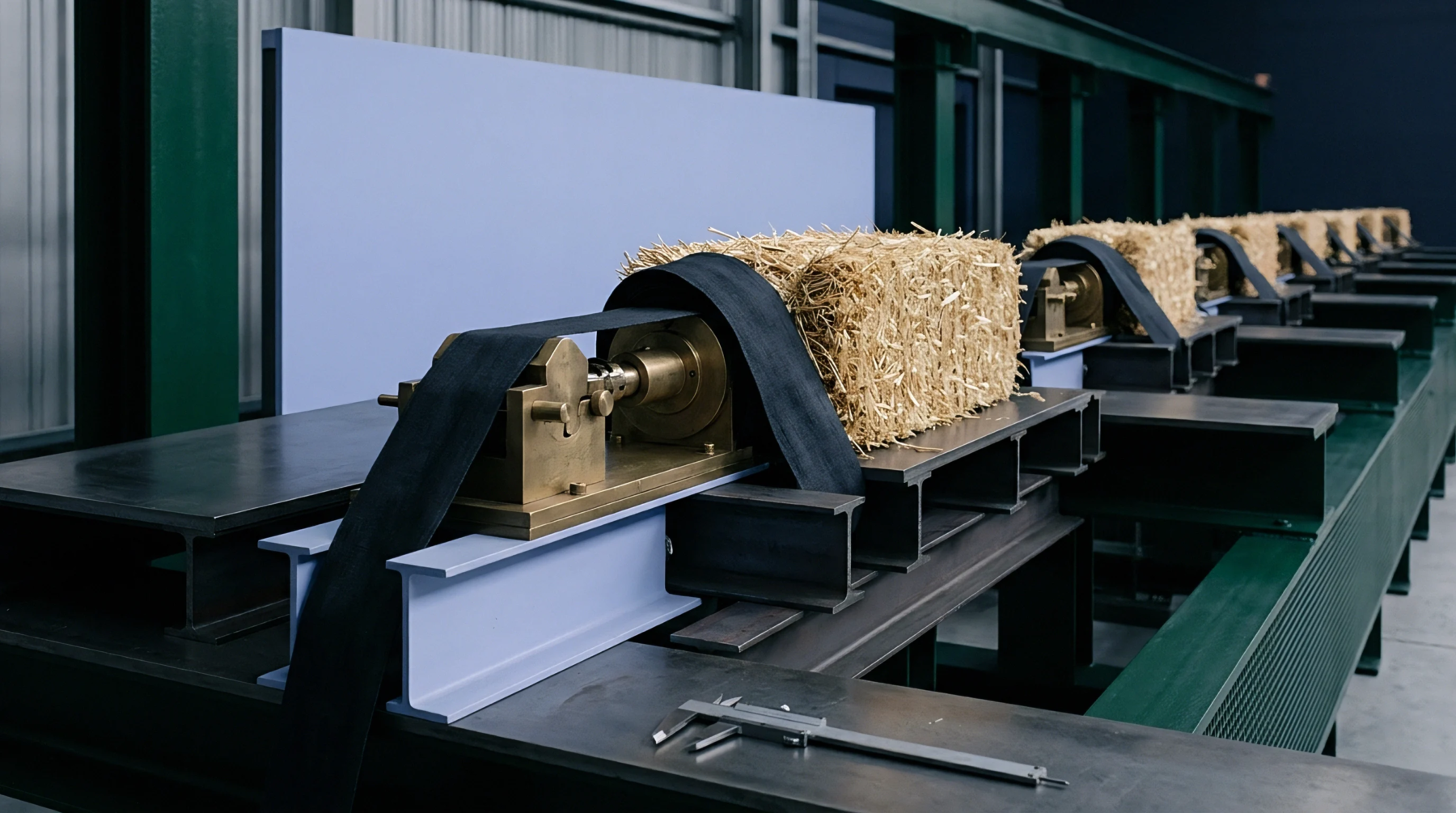
Dew retted line flax hackling yield determines long line fiber recovery, tow ratios, and yarn production costs through precise fineness and strength testing.

Raw flax field dockets match scutching intake when weighbridge tares, moisture regain corrections, and lot dockets reconcile under standard ISO dry mass limits.

Commercial moisture adjustments convert raw flax scale weight to invoice weight using dry mass and the contractual twelve percent regain baseline.

Auditing European Flax scutched fiber receiving records reconciles dry fiber mass, certificate codes, and scutching lot numbers to defend chain of custody.

Reconciling third-country linen origin mass balances requires normalizing moisture regain to dry matter mass and accounting for specific hackling and scouring waste factors.

Gravimetric flax fineness testing requires correcting bone dry bundle mass to 12% standard regain to prevent count errors and landed cost distortions

European Flax verification for Asian spinning mills demands matching annual facility scope certificates with lot transaction certificates and dry mass balance ledgers.
Expertise is a utility, not a secret. sentiention™ publishes its working knowledge as open reference: intelligence layer covering the materials it sources, the markets it enters, and the reference that serves both.