Resolving Moisture Regain Discrepancies in Cross Border Chinese Wet Spun Flax Roving Contracts
Resolving wet spun flax roving contract disputes requires invoicing based on oven-dry mass plus official commercial regain rather than net scale mass.

Chamber
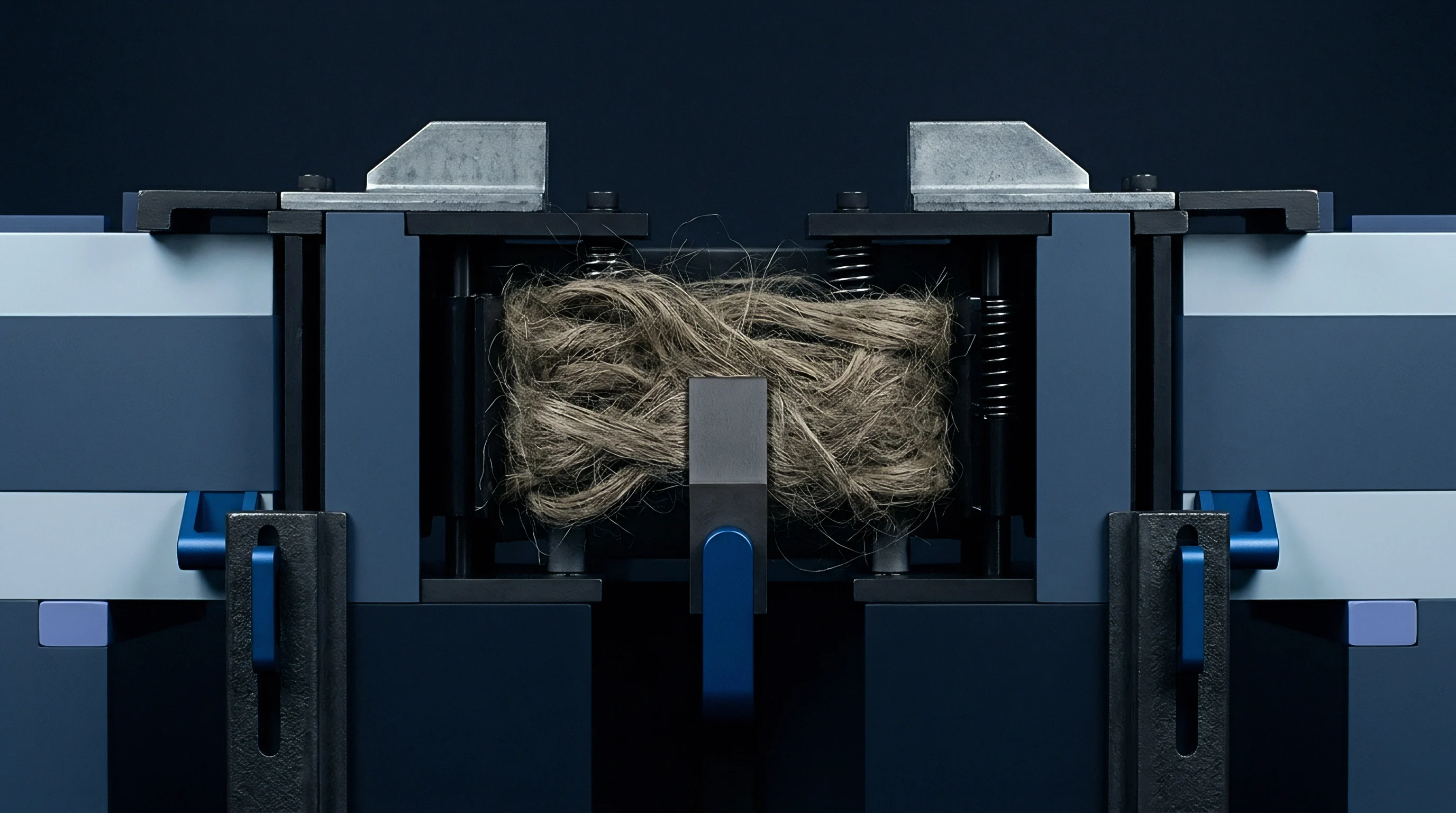
Accurate desiccation in a textile lab demands tight thermal control and isolation from the environment. When wet spun flax roving crosses maritime borders, invoice values hinge directly on the fraction of water bound within the bast fibre bundles. A discrepancy of two percent in measured regain alters the billable tonnage of a single container by hundreds of kilograms.
Standard commercial regain for flax yarn and roving stands at twelve percent under international conventions, yet laboratory methods used to establish oven-dry mass frequently diverge between Chinese mill testing facilities and European port laboratories.
Oven drying under national standard GB/T 9995 relies on forced hot air circulating at 105 degrees Celsius until consecutive weighings show mass variation below 0.05 percent. ISO 6741-1 permits high-temperature desiccation but allows alternative atmospheric correction formulas when samples contain non-water volatile compounds. Flax roving produced via wet spinning carries residual emulsified drafting oils, spinning waxes, and natural pectins.
At 105 degrees Celsius, these volatile lipid fractions evaporate alongside structural water. A laboratory that treats total mass loss as pure moisture regain overstates true water content, depressing calculated oven-dry mass and artificially inflating the final commercial mass billing index.
Because dry mass forms the baseline, when testing chambers operate without desiccant traps during cooling, bone-dry bast fibre reabsorbs ambient moisture within forty seconds of leaving the oven. China Inspection and Quarantine laboratory protocols mandate weighing inside sealed weighing bottles or directly within an integrated hot-oven balance beam. European import check laboratories frequently transfer dried roving specimens to external desiccators before balance placement.
Ambient humidity inside the transfer zone alters the baseline dry weight, generating systematic variance between origin loading certificates and destination port arrival assays.
| Standard Specification | Drying Temperature Zone | Target End-Point Mass Stability | Volatile Extraction Correction | Sampling Package Location |
|---|---|---|---|---|
| GB/T 9995 Method A | 105 to 110 degrees C | 0.05 percent per 15 minutes | None applied to raw roving | Full bobbin unwound core to shell |
| ISO 6741 Part 1 | 105 to 109 degrees C | 0.05 percent per 20 minutes | Solvent wash optional prior to drying | Middle layer skeletal slice |
| ASTM D2495 Protocol | 105 to 110 degrees C | 0.10 percent per 10 minutes | Ether extraction calculation factor | Randomized package surface cuts |
Exposing wet spun roving to prolonged heat degrades the primary cellulose crystalline structure if temperatures exceed 110 degrees Celsius. When spinning oils vaporize during moisture testing, the laboratory-recorded weight loss reflects both moisture loss and organic finish depletion. If an origin mill omits solvent washing before thermal desiccation, the calculated regain figure climbs by 0.4 to 0.8 percent above actual water weight.
Destination buyers who re-test samples using petroleum ether extraction isolate the pure fiber mass, exposing an unearned surcharge embedded in the origin invoice weight.
Commercial regain calculations based on total thermal mass loss convert evaporated spinning lubricants into billable bast fibre mass.
Reaching equilibrium in conditioned testing rooms introduces another analytical complication. ISO 139 specifies standard atmospheric conditions of 20 degrees Celsius and 65 percent relative humidity for sample pre-conditioning, maintaining a forty-eight-hour soak period. GB/T 5889 allows reduced conditioning times for rapid mill clearance when relative humidity sits within sixty to sixty-five percent.
Wet spun flax roving features a high degree of pectin retention compared to fully bleached linen yarn, slowing moisture desorption rates significantly. A package moving from a damp spinning shed into a dry laboratory loses moisture along a hysteretic curve, meaning its equilibrium moisture content remains higher than a dry package absorbing water in the same atmosphere.
Exporting mills frequently argue that destination testing laboratories report artificially low regain values because arrival samples suffer moisture loss during multi-stage customs sampling procedures.

Spool
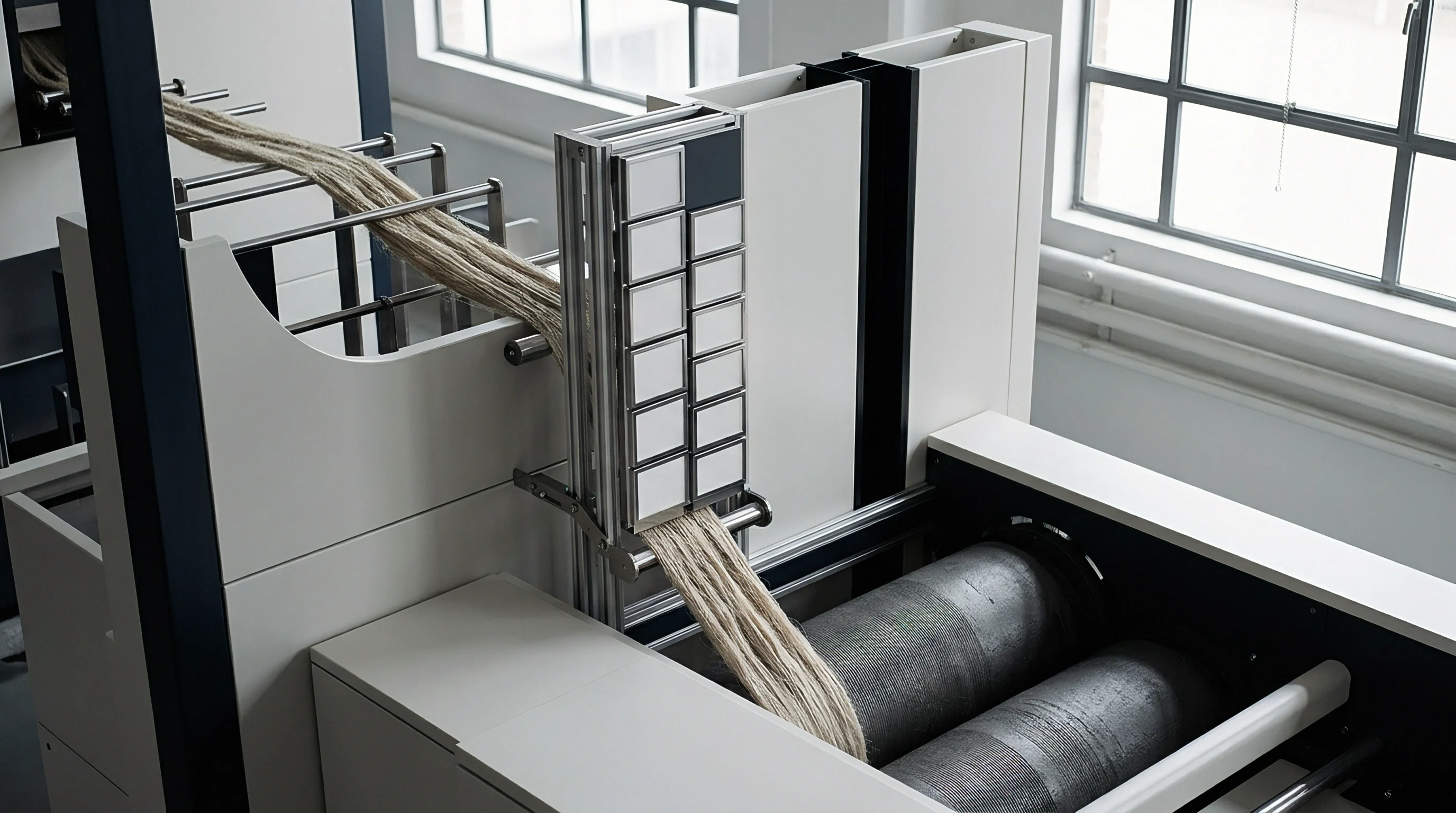
Bobbins of wet spun flax roving represent complex thermodynamic micro-environments. During wet spinning, flax sliver passes through a hot water trough reaching 60 to 70 degrees Celsius, softening natural pectins to permit fine drafting. The drafted package winds onto perforated plastic tubes while retaining up to sixty percent water by weight.
Mill drying processes attempt to reduce this water content uniformly to the twelve percent standard regain mark, but industrial radio-frequency or hot-air drying tunnels establish steep moisture gradients across the bobbin radius.
Outer yarn layers evaporate water rapidly under direct air exposure, while interior layers wrapped tightly around the plastic core retain trapped liquid as moisture moves inward. When a mill packages roving bobbins into sealed polyethylene bumps immediately after hot air drying, bobbin density drives outer evaporation while the core temperature remains elevated as the package shell cools. Water vapor migrates inward toward the cooler core regions or outwards toward the outer plastic barrier, creating severe moisture non-uniformity across a single bobbin package.
Core-to-shell moisture differentials across dense wet spun roving packages regularly exceed three percentage points upon mill dispatch.
Sampling depth determines the outcome of any moisture verification assay. An auditor taking roving strands exclusively from the package surface records a regain figure near nine percent. A technician driving a sampling tube deep into the bobbin core extracts fibre holding fourteen percent water.
Neither figure represents the commercial mass of the bobbin package. Correct moisture evaluation requires taking a complete radial cross-section slice down to the tube surface, shredding the full strand profile, and blending the fiber thoroughly before taking oven specimens.
- Core Moisture Retention occurs when rapid surface drying seals the outer layer pores and traps residual wet spinning liquor inside dense interior bobbin windings.
- Plastic Wrap Condensation forms when warm bobbins undergo immediate poly-sheeting before thermal stabilization finishes inside the mill conditioning room.
- Spinning Oil Layering concentrates emulsified wax compounds near outer package surfaces during high-velocity warm air drying cycles.
- Tube Cavity Entrapment holds liquid water within hollow perforated bobbin centers when drainage air blasts fail to clear tube interiors.
Internal density variations within the roving bobbin compound the analytical error. Roving packages wound with high mechanical tension resist vapor diffusion, locking bound moisture within the lumen of the flax ultimate cells. Flax fiber lumens act as capillary reservoirs.
Unlike cotton, where moisture redistributes quickly along thin cell walls, the thick lignified middle lamella of wet spun flax retards internal moisture migration. Packages stored in mill warehouses for weeks prior to container loading display gradual equilibrium, but freshly dried production lots dispatched directly to sea containers present extreme core-to-surface regain variances.
Thick package cores retain residual heat and water long after surface layers reach equilibrium.
Dock
Maritime transit exposes sealed flax roving shipments to severe thermal cycling and moisture redistribution. Container ships departing ports in Eastern China cross ambient zones where ocean temperatures and solar radiation vary wildly across three to four weeks at sea. High relative humidity inside sealed steel containers creates container rain, where water evaporating from wood pallets and carton packaging condenses against cold steel container ceilings and drips back onto top-tier cargo pallets.
Foil barrier wraps and heavy polyethylene sea-freight bags protect roving bumps from direct external liquid water, yet internal moisture redistribution within sealed bags remains unstoppable under heat. Solar radiation beating down on container decks elevates internal air temperatures above 55 degrees Celsius during equatorial passages. Water bound within the wet spun flax roving vaporizes, driven out of the bobbin structure into the air gap inside the poly-bag.
When night temperatures drop, this vapor condenses on the inner surface of the plastic wrapping, creating localized wet spots on external bobbin surfaces while depressing internal bobbin regain figures.

Whose Standard Prevails during Port Acceptance Sampling?
Destination arrival sampling protocols frequently trigger commercial disputes when customs inspectors or buyer surveyors open sealed containers at European ports. Because port labs test cold samples and ocean air penetrates poorly sealed wrap, sampling officers who draw roving specimens immediately upon unsealing containers record artificially skewed regain metrics if moisture has condensed against internal wrap surfaces. Importers demand a forty-eight-hour stabilization window inside a temperature-controlled laboratory prior to official sample drawing, permitting condensed surface moisture to re-absorb into the fiber matrix.
| Transit Phase | Ambient Temp Range | Container Relative Humidity | Core Bobbin Regain | Outer Shell Regain |
|---|---|---|---|---|
| Departure Port Loading | 22 to 25 degrees C | 62 to 65 percent | 13.8 percent | 11.2 percent |
| Equatorial Sea Passage | 48 to 58 degrees C | 88 to 95 percent | 12.1 percent | 14.6 percent (vapor phase) |
| Destination Unloading | 8 to 12 degrees C | 75 to 82 percent | 11.4 percent | 10.1 percent (condensed liquid) |
Container floor timber absorbs up to twenty liters of water during unheated winter storage in Northern Chinese ports prior to stuffing. When solar heat warms the container, this timber releases vapor into the cargo space. If flax roving packages sit inside defective outer cartons without vapor barrier liners, cargo absorbs ambient water vapor, inflating delivery weight at the import terminal.
Conversely, high temperatures combined with micro-ventilation in low-grade containers cause net mass loss, leaving the buyer with a shortfall in delivered fiber weight relative to the origin bill of lading mass.
- Barrier Bag Breach introduces ambient sea air into sealed bump units, altering fiber equilibrium during long anchorage delays.
- Thermal Cycling Condensation shifts bound moisture out of inner package layers into free liquid pockets against plastic packaging walls.
- Pallet Desorption Drift transfers water vapor from moist wooden skid frames directly into lower carton layers during heated transit legs.
- Sampling Delay Evaporation occurs when open sample bags sit inside drafty customs sheds prior to laboratory balance weighing.
Whether destination port checks conducted under cold ambient conditions validly reflect dispatch mass remains an unresolved legal question when contract clauses fail to specify transit sampling delays.

Clause
Commercial contracts governing cross-border sales of wet spun flax roving must replace simple net-weight billing with standard commercial mass reconciliation terms. Net weight scale readings reflect variable water fractions rather than true cellulose substance. A buyer purchasing twenty tonnes of roving at net scale weight with fourteen percent actual moisture regain pays pure yarn prices for four hundred kilograms of excess water above the twelve percent commercial standard.
Commercial mass calculations eliminate water weight volatility by converting all scale weights back to a bone-dry baseline before applying official commercial regain factors. Water weight carries real commercial value. The contract formula determines commercial mass by multiplying actual net scale mass by the sum of one hundred plus official commercial regain, then dividing by the sum of one hundred plus actual measured moisture regain percentage.
Consider a practical contract execution scenario involving a 20,000 kilogram nominal lot of wet spun flax roving priced at $12.50 per commercial kilogram, with official commercial regain set at 12.0 percent. The origin invoice presents net scale weight as commercial mass based on a quick mill test reporting 12.0 percent regain. Upon arrival, independent laboratory testing using standardized oven desiccation and solvent extraction reveals an actual moisture regain of 14.5 percent across the consignment.
- Establish the total net scale mass measured on calibrated arrival weighbridges: 20,000 kilograms.
- Determine actual oven-dry fiber mass by removing the 14.5 percent measured moisture regain: 20,000 divided by 1.145 yields 17,467.25 kilograms of bone-dry cellulose.
- Apply the official contract commercial regain rate of 12.0 percent to the dry fiber mass: 17,467.25 multiplied by 1.120 yields 19,563.32 kilograms of billable commercial mass.
- Calculate the invoice mass shortfalls: 20,000 kilograms minus 19,563.32 kilograms exposes a billing excess of 436.68 commercial kilograms.
- Deduct the monetary value of the regain discrepancy from the final settlement: 436.68 kilograms multiplied by $12.50 per kilogram results in a $5,458.50 invoice credit due to the buyer.
When contract language omits explicit calculation rules, origin mills enforce invoice weights based on dispatch weighbridge tickets. Commercial disputes escalate when origin export certificates issued by regional inspection bureaus assert a pre-shipment regain figure that conflicts with import port re-test results. Contracts must stipulate that arrival laboratory assays conducted by an accredited ISO 17025 facility supersede origin preliminary certificates when sample collection follows joint sampling rules.
Adjusting invoice mass to true oven-dry fiber weight protects the buyer against paying spinning mill rates for residual process water.
Landed cost calculations must incorporate both moisture shortfall adjustments and laboratory testing fees. If the cost of conducting independent desiccation assays exceeds the monetary value of a small moisture discrepancy, the buyer loses commercial leverage. Including automatic penalty thresholds in supply agreements ensures that mills absorb destination laboratory fees whenever measured regain exceeds contract allowances by more than 0.5 percent.
The standard trade clause reads: Payment shall be settled strictly against Commercial Weight calculated as Oven Dry Mass multiplied by 1.12, where Oven Dry Mass is determined via ISO 6741-1 testing on joint samples drawn at the port of entry, with laboratory costs charged to the seller if actual regain exceeds twelve percent by more than half a percentage point.

Audit
Executing effective mill-gate verification requires physical inspection of spinning facility drying assets and calibration records. Auditing engineers check moisture meter calibration logs, hot-air drying tunnel temperature charts, and weighbridge maintenance certificates. Chinese mills operating high-speed wet spinning lines often rely on resistance-type hand meters for rapid quality checks during bobbin doffing.
Portable resistance pin meters measure electrical conductivity across outer yarn layers, understating internal bobbin water content by up to two percent compared to oven drying.
Pre-shipment verification protocols must demand dual testing: rapid electronic checks for lot uniformity combined with full oven desiccation for invoice mass certification. Mill inspectors verify that calibration curves on electronic meters align specifically with wet spun flax fiber rather than raw scutched flax or cotton blends. Wet spun flax retains higher ion concentrations from retting liquor residues, altering electrical resistance readings at equivalent moisture levels.
| Inspection Point | Verification Tool | Tolerance Threshold | Corrective Operational Action |
|---|---|---|---|
| Bake Tunnel Discharge | Infrared pyrometer and core probe | Core temp below 35 degrees C | Extend cooling cycle prior to poly wrapping |
| Packing Shed Storage | Ambient thermo-hygrometer | RH 60 to 65 percent at 20 degrees C | Dehumidify holding zone prior to stuffing |
| Desiccation Oven Station | ISO 17025 balance cross-check | Balance precision to 0.001g | Recalibrate against Class F1 reference weights |
| Container Load Weighbridge | Certified load cell assay | Variance under 0.1 percent | Re-weigh empty chassis before container loading |
Joint sampling protocols executed at the mill loading bay rely on seal numbers to prevent sample swapping, requiring duplicate reference samples placed inside hermetically sealed foil-laminated bags. One sample undergoes immediate oven testing at the origin laboratory, while the second sealed specimen travels inside the container door frame for destination validation. If destination checks reveal regain discrepancies, the untouched container door sample undergoes arbitration testing at an agreed third-party laboratory, establishing an unalterable chain of custody.
Failing to establish rigorous moisture verification mechanics in wet spun flax roving contracts leaves the importer vulnerable to systemic weight inflation, unearned freight charges for transit water, and continuous disputes over invoice mass adjustments.