Auditing European Flax Scutched Fiber Receiving Records
Auditing European Flax scutched fiber receiving records reconciles dry fiber mass, certificate codes, and scutching lot numbers to defend chain of custody.


Intake
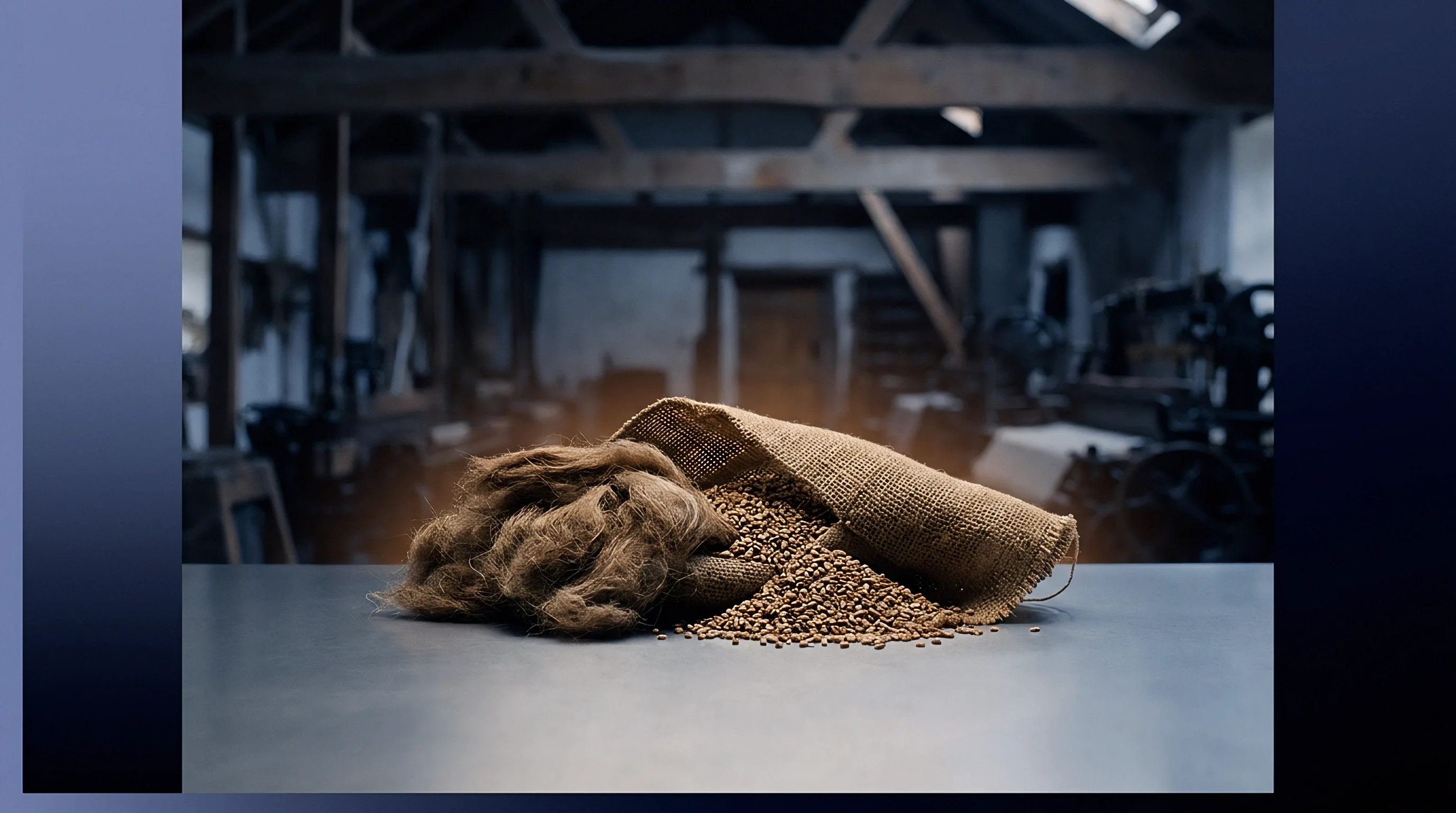
Bale deliveries arriving at a flax yarn spinning mill carry physical documentation establishing material origin before unloading starts. When container doors open at the receiving bay, auditors check every bale stack for structural integrity, moisture exposure, and original press strapping. Long scutched flax (lin teillé) arrives in compressed, high-density bales wrapped in protective polypropylene or natural burlap, bound with heavy steel or polyester strapping.
Each bale weighs between 180 and 220 kilograms, depending on the scutching mill’s press equipment and target density settings. Discrepancies show up immediately if physical markings on the bale wrap fail to match the shipping manifest or the accompanying European Flax delivery note.
The primary receiving document issued by the scutching facility (usine de teillage) is the scutching lot ticket (ticket de lot de teillage). This document records the grower registration number, field parcel identification, retting year, scutching line operator ID, and net bale mass. Scutched flax represents the clean long fibers left after mechanical decortication removes the woody core (chicon or shive) from retted flax straw.
Across European scutching basins in Normandy, Hauts-de-France, and Flanders, scutching mills assign a continuous trace code to every pressed batch. Without this code clearly stenciled or barcode-tagged on each bale, auditors cannot connect incoming raw fiber to a certified farm group.
Scutching lot stamps trace incoming raw scutched straw bundles back to the registered pressing facility. Initial bay-door verification requires physical inspection of five core bale characteristics before a forklift moves the consignment into the raw material hold:
- Strapping Integrity verifies that original steel or heavy polymer bands remain intact and untampered, ensuring no secondary uncertified fiber was inserted into the bale core during transit.
- Scutcher Lot Stencils confirm that weather-resistant ink markings on the bale outer wrapping match the exact lot numbers declared on the seller invoice and shipping specification.
- Retting Color Uniformity checks that long fiber strands display consistent grey-to-beige tonal ranges typical of Western European field retting rather than yellowish hues associated with unretted or stream-steeped fibers.
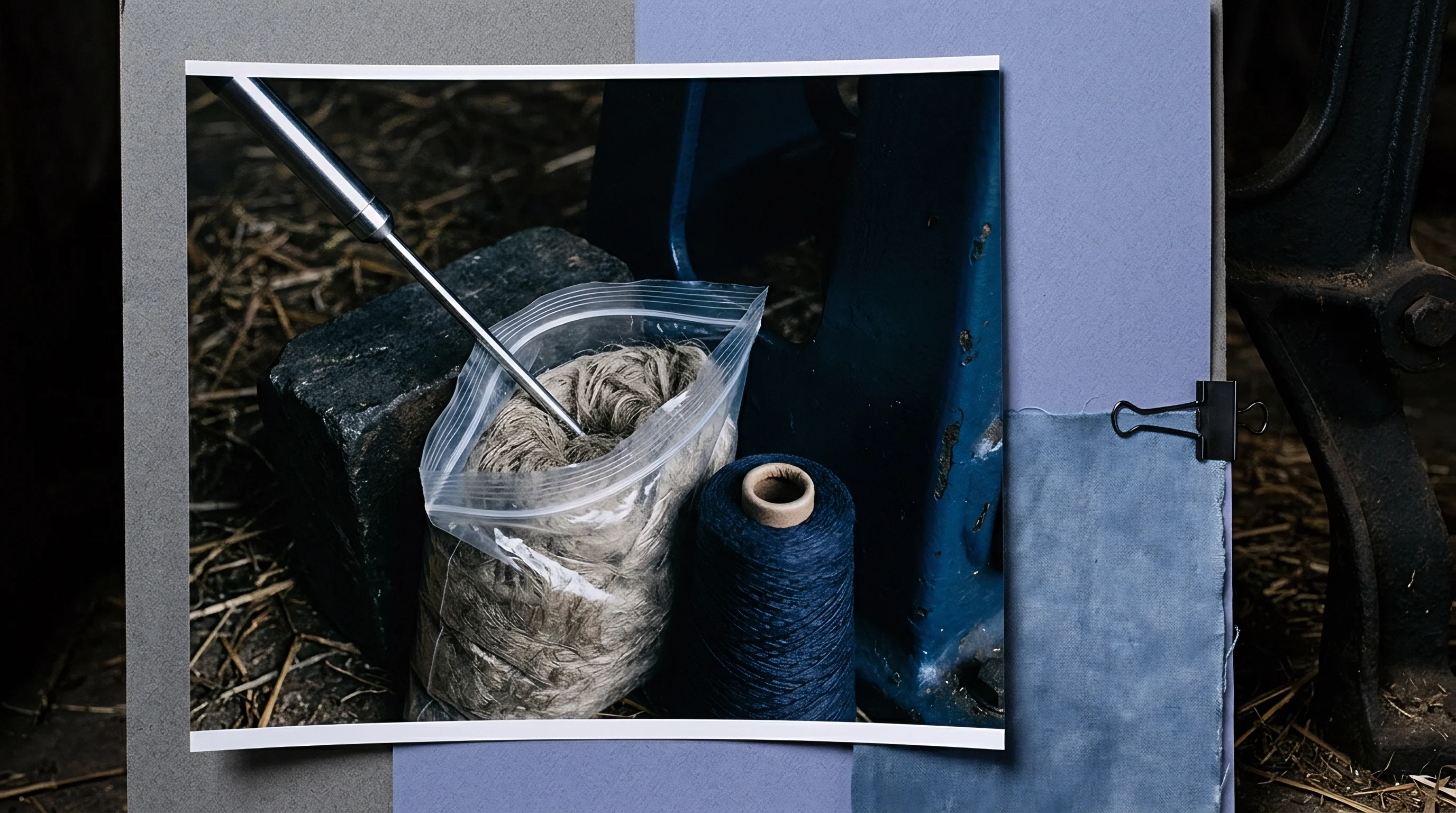
- Moisture Core Readings record baseline moisture levels using probe-type electrical resistance meters inserted deep into the compressed bale center at multiple sampling points.
- Shive Content Visuals evaluate the visible surface presence of unseparated woody shive fragments to detect under-scutched or poorly decorticated fiber lots.
Scutched fiber quality varies by crop year and weather conditions during dew-retting (rouissage sur champ). Dew-retting relies on indigenous soil fungi (microscopic species such as Cladosporium herbarum) to break down pectin holding fiber bundles to the woody stem under natural rain and sun cycles. When rain is sparse, scutching mills yield fiber with higher residual pectin, producing coarser fiber bundles (teillats) that resist smooth hackling.
Auditors catch these physical variances during intake log reviews because excessive pectin stiffness alters spinning yields and increases comb breakage during yarn preparation.

Physical Verification of Scutched Fiber Shipments
Inspectors check every unhackled fiber bundle at the receiving bay door to confirm physical condition and container seals. Freight containers carrying European scutched flax usually arrive under ISO seals applied at the European port of lading or scutching plant warehouse. The receiving log records seal identification numbers, container numbers, tractor registration, and the arrival timestamp.
If a seal arrives broken or missing, the receiving clerk flags the entire shipment for quarantine, preventing unverified fiber from entering the active spinning queue.
Physical sampling during dock intake follows standard batch sampling ratios. For a container carrying 100 bales of long scutched flax, auditors draw core samples from at least 10 randomly selected bales across different container depth zones. Inspectors measure fiber bundle length, hand-hackle strength, and surface cleanliness.
Scutched long flax strands generally measure between 60 centimeters and 90 centimeters in length. Short fiber lengths under 45 centimeters indicate severe mechanical damage during decortication, which reduces suitability for high-count yarn spinning.
Relative humidity during field scutching directly impacts fiber moisture regain, requiring standard laboratory dry-mass adjustments on every commercial lot.

Bale Identification and Scutcher Batch Markings
Every pressed package carries weather-resistant labels specifying the processing facility code and harvesting year. The Alliance for European Flax-Linen & Hemp mandates that certified scutching facilities affix indelible batch tags containing the unit’s unique European Flax certificate number. This identification number connects the specific bale to the scutching mill’s annual Scope Certificate (SC) issued by accredited third-party auditing bodies such as Bureau Veritas or Control Union.
Barcoded bale tags contain encoded data strings including the scutching line number, pressing date, net weight, and fiber grade classification. When auditors scan incoming bales at the spinning mill warehouse gate, the receiving software matches scanned barcodes against the pre-shipment ASN (Advance Shipping Notice). Mismatches between scanned bale IDs and transaction paperwork signal potential supply chain substitution, prompting an immediate physical hold and origin verification.
Rain during transit can elevate container humidity, but raw fiber moisture does not naturally normalize inside warm mill warehouses without controlled drying.

Scale
Weight measurement at the receiving dock establishes the baseline mass for commercial transactions. Flax raw material trades on a clean dry-mass basis adjusted for official standard moisture regain. Scutched flax absorbs atmospheric moisture readily due to the porous cellulosic structure of bast fiber bundles.
Under standard international trade rules governing flax fiber (including ISO 6741 and IWTO guidelines applied to bast fibers), the official moisture regain allowance for flax sits at 12.0 percent dry-basis mass. This regain corresponds to a maximum commercial moisture content of 10.71 percent on a wet-weight receiving basis.
Landed containers weighed on certified weighbridges yield the gross scale mass. Subtracting tractor, trailer, and container tare weight leaves the net wet receiving weight (poids brut d’arrivée). Because shipping containers spend weeks at sea or in port storage, ambient humidity inside the box fluctuates dramatically.
Fibers shipped at 9 percent moisture content weigh less upon arrival than fibers absorbing ocean air up to 14 percent moisture content. Commercial settlements require calculating the official commercial weight (poids marchand) using laboratory dry-mass determination.
Laboratory moisture determination utilizes oven drying under ISO 2060 rules. Auditors extract representative core samples from tested bales, weigh them immediately to record wet mass (Mwet), and place them in a ventilated drying oven held at 105 degrees Celsius (± 2circC) until consecutive weighings show constant dry mass (Mdry). The actual moisture regain (Ractual) and commercial weight (Wcommercial) follow established formulas:
Ractual = fracMwet – MdryMdry × 100
Wcommercial = Mdry × left(1 + fracRofficial100right) = Mdry × 1.120
When measured moisture regain exceeds the standard 12.0 percent allowance, the buyer deducts the excess water mass from the invoice payout. Conversely, if fiber arrives drier than 12.0 percent regain, the seller receives a proportional upward weight adjustment. Weight adjustments require precise testing to ensure fairness across commercial lots.

Moisture Regain Calculations and Weight Adjustments
Standard atmospheric conditions during laboratory oven drying determine the dry fiber mass of raw flax lots. Testing laboratories maintain temperature controls at 20 degrees Celsius (± 2circC) and relative humidity at 65 percent (± 4%) for sample conditioning prior to physical testing. When reviewing incoming scutched fiber receiving records, auditors cross-check oven-dry test logs against invoice net weight to verify that commercial mass adjustments were correctly executed.
The table below details commercial mass adjustment factors applied across varying receiving moisture levels for a 20,000 kilogram nominal scutched fiber delivery:
| Receiving Moisture Regain (%) | Receiving Wet Mass (kg) | Calculated Dry Mass (kg) | Commercial Mass at 12.0% Regain (kg) | Invoice Mass Adjustment (kg) | Commercial Financial Impact |
|---|---|---|---|---|---|
| 8.0 % | 20,000 | 18,518.52 | 20,740.74 | +740.74 | Credit to Seller |
| 10.0 % | 20,000 | 18,181.82 | 20,363.64 | +363.64 | Credit to Seller |
| 12.0 % | 20,000 | 17,857.14 | 20,000.00 | 0.00 | Par Value |
| 14.0 % | 20,000 | 17,543.86 | 19,649.12 | -350.88 | Debit to Seller |
| 16.0 % | 20,000 | 17,241.38 | 19,310.34 | -689.66 | Debit to Seller |
Moisture content variations alter invoice balances significantly on multi-container contracts. A shipment arriving at 16.0 percent moisture regain contains 689.66 kilograms of excess water per 20 metric tons of wet weight. At a scutched long flax raw material price of 5.50 Euros per kilogram, failing to apply regain adjustments results in an overpayment of 3,793.13 Euros on a single container.

Commercial Weighbridge Discrepancies at Arrival
Gross vehicle mass measurements taken at port terminals frequently differ from inbound facility readings. Certified weighbridges require annual recalibration under ISO/IEC 17025 laboratory standards or national legal metrology rules (such as OIML R76). Auditors accept receiving weight tolerances within ± 0.5% between port bill of lading weights and mill weighbridge records.
Discrepancies exceeding 0.5 percent trigger mandatory re-weighing of individual bales on calibrated floor scales.
Floor scale calibration checks utilize certified Class M1 test weights totaling at least 500 kilograms. Scale drift caused by dust accumulation under scale platforms or temperature swings in unheated warehouse bays alters tare readings. Auditors demand daily zero-point check logs and monthly calibration certificates for all dock scales handling certified raw fiber intake.
Contractual purchasing specifications mandate that commercial weight adjustments take precedence over gross receiving scale figures during final invoice settlement.
Failing to normalize wet receiving mass to standard commercial regain inflates landed raw material costs by tens of thousands of dollars per shipping lot.


Custody
Documentary continuity across ownership transfers prevents uncertified raw straw from entering certified spinning streams. European Flax certification relies on explicit chain of custody principles verified through dual certificate mechanisms: Scope Certificates (SC) and Transaction Certificates (TC). A Scope Certificate proves that a business entity (scutcher, trader, spinner, weaver) possesses the operational infrastructure and administrative protocols to handle certified flax under Alliance guidelines.
Scope certificates carry an annual expiration date and detail covered site locations and processing activities.
Transaction Certificates provide batch-level proof of physical origin transfer. When a scutching mill sells a lot of scutched long flax to an international merchant or spinning mill, the seller applies to their accredited certifier for a TC. The certifier validates that the seller holds sufficient certified input volume (mass balance balance sheet) before issuing the official TC.
The TC lists specific bale numbers, gross mass, net mass, commercial dry mass, shipping invoice numbers, buyer name, and transport document references.
Reconciling wet intake slips against certified dry mass during routine audits reveals weight variances, such as a 4.2 percent gap between gross wet figures and certified dry mass. Auditing receiving records requires cross-checking four distinct document tiers to establish unbroken chain of custody proof:
- Verify that the seller’s Scope Certificate was active and valid on the exact date of shipment departure from the European scutching plant.
- Match every bale lot identifier printed on the physical shipping invoice directly against the line-item bale registry attached to the official Transaction Certificate.
- Reconcile the net dry mass listed on the Transaction Certificate against the destination mill’s receiving weighbridge tickets and moisture laboratory test sheets.
- Confirm that transport documentation, including bills of lading and CMR road consignment notes, identifies the European scutching facility as the shipper of origin.
- Check the central certification online portal to confirm the authenticity of the TC number and ensure the certificate status reads valid without suspension.
Chain breaks occur when intermediaries purchase certified fiber but fail to obtain or pass along a valid TC. Non-certified traders sitting between the scutching mill and the spinning factory break the custodial link. Even if the underlying fiber originated in Western Europe, passing ownership through an uncertified broker invalidates the European Flax claim for the downstream spinning mill.

Scope Certificates and Transaction Certificate Reconciliation
Certifying bodies grant operational licenses annually after verifying that processing facilities maintain dedicated segregation protocols. Scope certificates specify certified product categories, such as “Scutched Flax” (HS 5301.21) or “Flax Tow” (HS 5301.29). Auditors audit receiving records to ensure that the scope category printed on the supplier certificate covers the exact material form received at the dock bay.
Transaction Certificates must be issued within strict timeframe windows following physical shipment. Certifiers generally require TC application submission within 60 to 90 days of shipment departure. TCs presented months after material arrival raise compliance red flags, requiring extra verification against certifier databases to rule out backdated or fraudulent documents.
Where Does the Fiber Transfer Claim Break?
Documentary breaks occur when raw flax leaves European scutching plants without complete transaction papers attached. A common break point occurs during bonded transit through third-country logistic hubs. When European scutched fiber moves through uncertified consolidation warehouses in East Asia or North Africa before reaching the yarn mill, custodial continuity fails unless the warehouse facility maintains certified sub-scope status under ISO 17065 frameworks.
Another major breakdown point involves partial consignment splitting. When a large 100-metric-ton scutched fiber lot covered by a single European TC is divided among three separate spinning mills, the merchant must obtain split Transaction Certificates (Partial TCs) for each destination. If the trader supplies photocopies of the master TC without individual certifier split endorsements, receiving auditors reject the provenance claim for the partial lot.

Chain Audit Procedures for Overseas Spinning Mills
Spinning operations operating outside the European Union maintain separate physical storage zones for certified long straw. In countries like China, India, Vietnam, or Mexico, mills spinning both conventional and European Flax yarn implement strict physical segregation (mass segregation) or audited mass balance protocols. Receiving records must show dedicated warehouse bay allocations (e.g.
Grid Zone EF-01) with distinct visual signage and independent stock ledger accounts.
Auditors conducting on-site mill verification inspect raw bale stock logs against spinning frame creel sheets. Each spinning frame (metier à filer) produces specific yarn lot numbers. The mill receiving ledger must demonstrate that for every kilogram of certified European Flax yarn spun, an equivalent weight of certified scutched fiber (adjusted for combing and spinning mass loss) was checked out of the certified raw material store.
Standard purchase contracts incorporate European Flax scheme rule 4.2, which automatically reclassifies any unverified fiber consignment as conventional non-certified material upon dock entry.


Disparity
Variations between expected combed sliver yield and delivered raw mass reveal physical impurities within the straw. Raw scutched flax contains variable amounts of residual epidermal tissue, unseparated wood fragments (shive), and short unaligned fibers. During yarn preparation, the scutched fiber bundles pass through hackling machines (machines de peignage).
Hackling combs align the long fibers, remove short fibers (étoupe de peignage or hackled tow), and drop residual shive particle dust into collection hoppers.
Hackling yield (rendement au peignage) measures the percentage of clean long fiber sliver recovered relative to the raw scutched fiber input mass. Typical hackling long-fiber yields range from 65 percent to 78 percent depending on crop quality, retting degree, and machine comb settings. The remaining 22 percent to 35 percent consists of hackling tow (short fibers suitable for coarse or dry-spun yarns), shive dust, and moisture loss.
Discrepancies between expected and actual yields alter the final cost calculation of combed flax sliver.
Examining combing waste rates across consecutive hackling runs isolates physical shive contamination from structural fiber breakage. High shive content indicates inadequate scutching turbine settings at the origin mill. Shive particles possess no textile value; they add dead weight during receiving scale measurement while generating extra waste during mechanical combing.
If a 20-ton shipment carries 4.0 percent shive content instead of the standard 1.5 percent contract limit, the buyer pays raw fiber prices for 500 kilograms of valueless wood waste.
A interesting parallel exists in automotive composite engineering, where structural flax shive density and thermal behavior are evaluated against hemp hurd for acoustic insulation panels. Flax inner core tissue displays distinct lignification levels compared to bast fibers, making shive separation critical for textile spinning while offering desirable damping properties in non-woven industrial mats.

Shive Content and Fiber Loss Variance
Mechanical cleaning removes residual woody core fragments left behind by incomplete scutching turbine passes. Laboratory testing for shive content utilizes standardized mechanical carding or manual sorting of 100-gram raw fiber samples. Technicians separate clean long fibers from shive fragments and weigh the isolated shive mass to calculate percentage contamination (Spct):
Spct = fracMass of Isolated Shives (g)Total Sample Mass (g) × 100
Contractual specifications for European scutched long flax set maximum allowable shive content tolerances between 1.0 percent and 2.0 percent by mass. Consignments exceeding these limits trigger financial penalty clauses or mass yield adjustments during contract reconciliation.
Hackling Yield Tolerances in Yield Reconciliation
Combing pin configurations determine how much short tow separates from long fiber bundles during initial processing. Hackling yield reconciliation requires matching incoming scutched lot receiving mass against post-hackling weighing logs. Mills track mass balance across three primary outputs: combed long sliver mass, combed tow mass, and shive/dust waste mass.
The table below summarizes typical yield distributions and financial impact metrics across three scutching fiber quality grades processed through standard hackling lines:
| Fiber Quality Grade | Combed Long Sliver Yield (%) | Hackling Short Tow Yield (%) | Shive & Dust Loss (%) | Moisture Loss (%) | Effective Long Sliver Mass (kg) | Sliver Cost Index (Base = 100) |
|---|---|---|---|---|---|---|
| Grade A (Superior Retting) | 76.5 % | 17.0 % | 4.5 % | 2.0 % | 7,650 | 100.0 |
| Grade B (Standard Commercial) | 71.0 % | 21.5 % | 5.5 % | 2.0 % | 7,100 | 107.7 |
| Grade C (Under-Retted / High Shive) | 63.5 % | 27.0 % | 7.5 % | 2.0 % | 6,350 | 120.5 |
Yield variations alter the raw material cost per kilogram of combed long fiber sliver. When processing Grade C fiber, the mill produces 1,300 kilograms less long sliver per 10 metric tons of raw input compared to Grade A fiber. This 13 percent yield drop inflates the raw fiber cost component of spun yarn, making receiving yield audits vital for maintaining spinning margin targets.
Combing waste losses during hackling range between 18.5 percent and 26.2 percent for long scutched fiber lots from 2022 to 2024 harvests.
High shive retention in received scutched fiber correlates directly with elevated comb pin breakage and increased spinning draft slippage.


Traceability
Verifying European origin demands complete visibility from field harvest location down to spinning frame creels. The European Flax label guarantees that flax raw materials originate from agricultural production in Western Europe (France, Belgium, Netherlands). This geographical region provides optimal coastal climate conditions, rich silt soils, and specialized agricultural expertise necessary for growing high-tenacity bast fibers without artificial irrigation.
Authentic European origin commands a premium price surcharge over conventional flax grown in other global regions.
Audit defense requires constructing a bulletproof receiving dossier for every incoming raw fiber shipment. Auditors compile physical documents, analytical test sheets, certifier portal validation records, and ERP inventory entries into a single verifiable compliance file. When customs authorities or third-party scheme inspectors conduct post-import verification audits, the mill presents these dossiers to prove product origin claims.
Evaluating supplier scope certificates directly against the central certifier database prior to releasing payment protects against uncertified shipments. Complete receiving verification relies on seven core compliance criteria:
- Documentary Identification requires matching invoice seller details, transaction certificate issuing names, and shipping bill of lading entities without third-party discrepancies.
- Volume Continuity confirms that total metric tons received across consecutive shipments do not exceed the maximum certified production volume stated on the scutching mill Scope Certificate.
- Origin Declaration Lines verify that customs entry summary declarations declare correct Harmonized System origin codes backed by official non-preferential certificates of origin.
- Physical Lot Cross-Referencing checks that physical bale stencils directly match line-item entry manifests recorded in the mill’s ERP receiving module.
- Testing Method Consistency validates that dry mass adjustments were calculated using ISO 2060 oven-dry procedures rather than estimated moisture allowances.
- Segregation Storage Proof demonstrates that physical warehouse locations maintain clear physical separation between European Flax bales and non-certified fiber inventory.
- Transaction Timeline Coherence confirms that shipping dates, bill of lading issuance dates, receiving weighbridge timestamps, and certificate issue dates follow a logical chronological sequence.
Discrepancies in timeline coherence reveal systemic paperwork issues. For instance, if a Transaction Certificate bears an issuance date preceding the actual scutching press batch date recorded on physical bale stencils, the document file is flagged as fraudulent or misapplied.
Documentary Verification of European Scutching Origin
Customs authorities examine certificate details alongside transport manifests to confirm non-preferential origin criteria. Under Union Customs Code (UCC) rules and international non-preferential origin standards, flax fiber acquires origin in the country where it was harvested and decorticated (scutched). Simple packing, washing, or re-baling in Europe of raw straw harvested elsewhere does not grant European origin status.
The table below provides a document matching checklist applied by receiving auditors during dossier validation:
| Document Type | Primary Data Points Verified | Cross-Check Reference Document | Critical Discrepancy Red Flags |
|---|---|---|---|
| Supplier Scope Certificate (SC) | Certificate Code, Expiration Date, Certified Activity (“Scutching”) | Alliance Official Certifier Portal | Expired certificate date; missing “Scutching” scope activity |
| Transaction Certificate (TC) | TC Number, Certified Mass (kg), Net Weight, Bale ID List | Mill Dock Weighbridge Ticket | TC mass lower than invoice mass; missing bale barcode listings |
| Commercial Invoice | Seller Entity, Material Description, HS Code 5301.21, Unit Price | Bill of Lading / CMR Manifest | Description lacks “European Flax” wording; seller name differs from TC |
| Certificate of Origin (EUR.1 / COO) | Country of Origin (France/Belgium/NL), Issuing Chamber Seal | Scutcher Farm Group Registry | Non-EU transit country declared as origin; missing chamber stamp |
| Mill Intake Weight Slip | Gross Weight, Container Tare, Net Wet Weight, Arrival Timestamp | Oven-Dry Moisture Test Log | Uncalibrated scale stamp; missing lab sampler signature |
Document discrepancies weaken audit defense during customs reviews. Importers declaring European Flax origin under preferential tariff regimes or brand labeling compliance agreements face severe back-duty assessments and financial fines if receiving dossiers lack valid, verified Transaction Certificates matching physical receiving weight logs.

Mass Balance Auditing across Blended Fiber Batches
Mills mixing certified European long flax with non-certified tow track volumetric inputs through strict inventory formulas. Mass balance systems permit mills to claim European Flax content on finished yarn batches only up to the exact percentage of verified certified input fiber processed through the spinning frames. Accounting software calculates input-output mass balances using real-time yield equations:
Certified Input Fiber (kg) × Hackling Long Fiber Yield (%) = Maξμm Spun Certified Yarn Output (kg)
Auditors audit these mass balances monthly. If raw material accounting ledgers reveal that a spinning mill produced 50,000 kilograms of certified European Flax yarn while receiving only 40,000 kilograms of certified scutched fiber (assuming a 70 percent hackling yield requirement of 71,428 kilograms of raw fiber input), the mill faces immediate certification revocation and market recall liability.
It remains uncertain how future digital product passports will handle historical batch continuity when scutched fiber passes through multiple uncertified intermediate trading hubs.


Compliance
Commercial contracts govern the financial remedies available when raw material deliveries fail scope validation. Sourcing agreements for European scutched flax include explicit origin warranties, moisture adjustment clauses, shive tolerance limits, and certificate delivery deadlines. When an incoming shipment fails receiving audits, the buyer relies on clear contract terms to enforce price discounts, lot rejections, or seller indemnification.
Warranty terms must state that all delivered fiber strictly conforms to European Flax scheme standards, supported by valid Transaction Certificates issued by accredited certifying bodies. If a supplier delivers fiber without valid TCs or if certifiers revoke the seller’s Scope Certificate during transit, the contract obligates the seller to replace the uncertified material with fully certified stock within a specified remedy period (typically 14 to 30 calendar days) at zero additional cost to the buyer.
Customs duty risk represents another key financial consideration during receiving record audits. Scutched flax entering international markets under Harmonized System code 5301.21 carries varying tariff rates depending on declared non-preferential origin. Under United States International Trade Commission (USITC) HTS code 5301.21.00 or European Union Combined Nomenclature (CN) code 5301 21 00, fraudulent or unprovable origin declarations expose importers to duty adjustments, anti-circumvention penalties, and seizure of goods under national trade enforcement laws (such as the US Tariff Act Section 592 or EU Customs Enforcement Regulations).

Contractual Penalties and Surcharge Protection
Purchasing agreements include financial clawback mechanisms triggered when received fiber lacks valid certification. Premium surcharges for European Flax scutched fiber range from 0.40 Euros to 1.20 Euros per kilogram above conventional flax prices. If receiving audits prove that delivered fiber cannot be certified due to documentation gaps or broken chain of custody, contract clauses automatically reduce the unit purchase price to conventional market rates, forcing the seller to refund the certified surcharge balance immediately.
Rejection protocols specify handling procedures for non-conforming lots. When receiving moisture tests show moisture content exceeding maximum acceptable thresholds (e.g. above 15.0 percent regain) or when shive content exceeds 3.0 percent by mass, the buyer issues a formal Notice of Non-Conformity (NNC). The seller maintains the right to request joint re-testing at an independent accredited testing laboratory (such as Centexbel or IFTH) within seven business days.
If independent re-testing confirms non-conformity, the seller bears all testing expenses and removes the rejected bales from the buyer’s warehouse bay at their own expense.

Customs Origin Declarations and Audit Defense
Importers filing entry summaries under Harmonized System chapter 53 present transaction files to customs officers during post-clearance reviews. A defensible customs audit file contains the complete chain of receiving documents: commercial invoice, packing list, bill of lading, Certificate of Origin, mill weighbridge slip, moisture dry-mass test report, European Flax Scope Certificate, and matching Transaction Certificate. Customs authorities scrutinize these records to verify that declared transaction values reflect true dry-mass commercial weights and that non-preferential origin criteria were fully met at the time of importation.
Exact regional shive mass retention under variable field retting conditions remains difficult to calculate precisely without destructive burn tests, so buyers apply a standardized 2.5 percent tare allowance during dry-mass reconciliation.
Properly maintained receiving logs ensure that every meter of finished linen fabric backed by European Flax claims withstands scrutiny from customs inspectors and commercial auditors alike.