Fibre Porosity
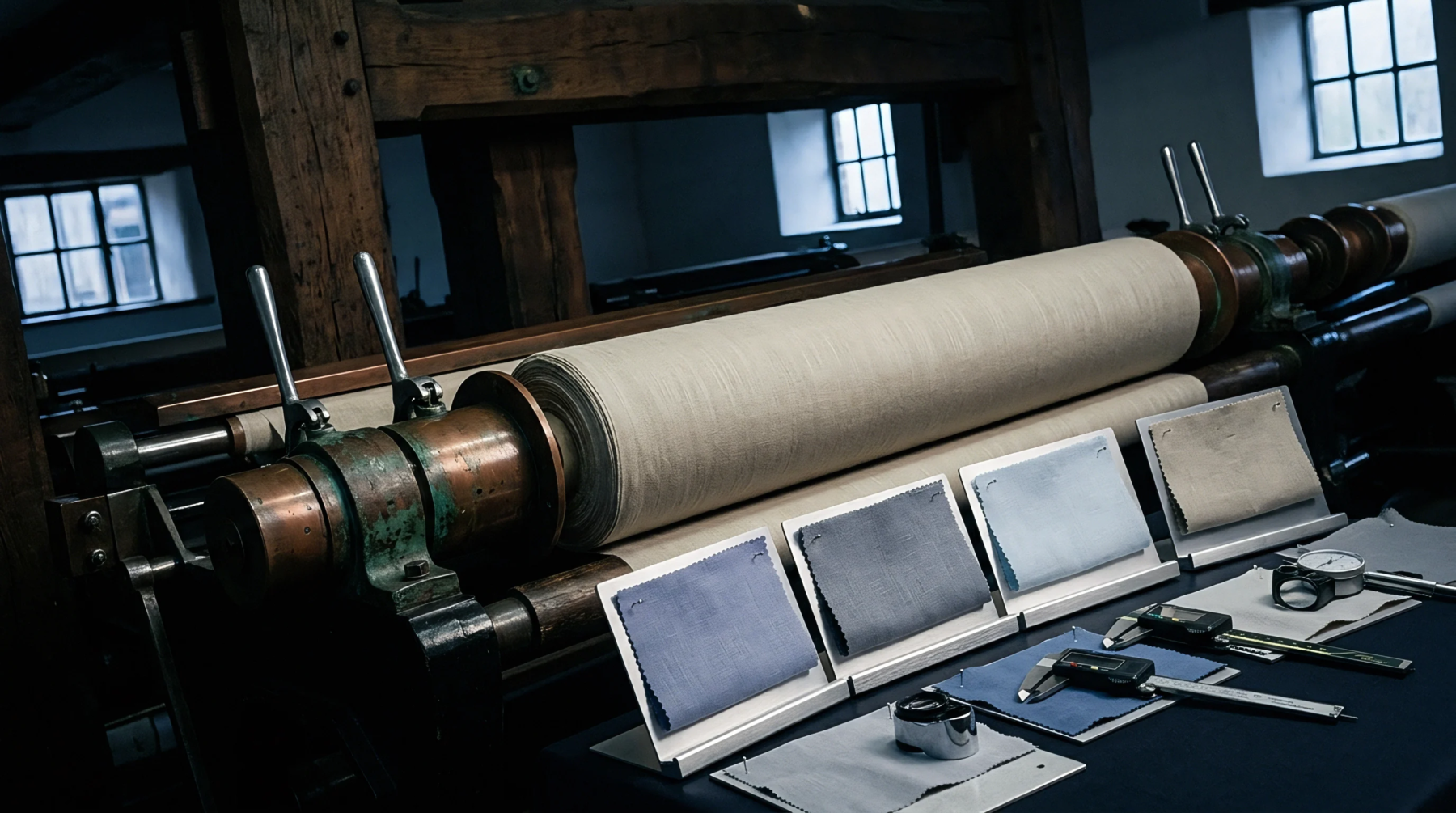
Porosity metrics establish the geometric structure of flax lint entering Chinese spinning mills before wet treatment begins. Specific surface area quantifies total interstitial boundary per unit mass, determining how thoroughly pectin solvents penetrate dry bundles during alkali boiling. Higher interfacial exposure accelerates chemical softening, yet excessive microvoid volume weakens staple integrity under rotor tension.
Raw stalks display lower external area than hackled slivers because mechanical splitting exposes internal capillaries previously sealed by cuticle wax. Mill operators record this metric on the incoming bale certificate alongside moisture content to determine caustic soda consumption rates. Fibre grades demand precise surface thresholds to prevent uneven bleaching across thick lots.
Fabric grades diverge by requiring lower interfacial exposure to preserve yarn density during high speed wet spinning. Buyers establish strict acceptance limits in the supply contract, whereas the mill applies internal tolerances to manage bath exhaustion. Solvents interact differently when capillary diameters shrink below molecular thresholds, limiting fluid transport through dense cellulose walls.
Processing parameters shift whenever raw stock density fluctuates, requiring constant titration of scouring vats.
Spinning Adsorption
Adsorptive capacity during carding depends entirely on particle contact zones exposed to ambient humidity within the spinning hall. Specific surface area dictates moisture uptake velocity across dry linen roving, influencing electrostatic dissipation on high speed frames. Fine counts demand higher boundary exposure to absorb paraffin emulsions uniformly before drawing frames compress the sliver.
Low interfacial values cause uneven lubricant distribution, resulting in erratic yarn tension and frequent thread breakage during ring spinning. Supervisors check export documentation to verify that ambient conditioning meets the supplier specification sheet. Carding technicians adjust roller speeds whenever lint density changes, preventing web tear during sliver formation.
Lubricant droplets coat available capillary walls instantly, leaving hydrophobic cores untouched if spatial exposure falls below critical thresholds. Hydrophilic bonding strengthens only when sizing agents cover the entire interfacial boundary without forming thick pools in larger channels.
Finishing Reactivity
Dye uptake efficiency during final pad batch coloration relies upon internal capillary exposure within woven linen goods. Specific surface area governs reactive dye diffusion rates into the cellulose matrix during alkaline fixation. Dense fabrics restrict dye molecule movement when interstitial channels narrow excessively, causing uneven shade depth across finished bolts.
Finished cloth testing confirms whether mercerization altered capillary dimensions sufficiently to satisfy buyer specifications. Laboratory technicians measure dye exhaustion levels against the mill baseline to certify colour fastness before export packing. Finishing plants maintain strict temperature controls throughout the steaming chamber because thermal shifts alter swelling behaviour inside microscopic pores.
Chemical reactions proceed faster when internal boundaries multiply, reducing total dye bath residence times for heavy canvas weights. Dye molecules bind permanently to available cellulose hydroxyl groups once fluid transport reaches saturation across the entire boundary layer.