Dynamic Hysteresis Loops in High Speed Flax Shedding and Moisture Adjusted Invoice Settlements
Dynamic flax shedding causes thermal moisture desorption, requiring invoice adjustments based on ISO 6741 oven-dry mass plus standard regain.
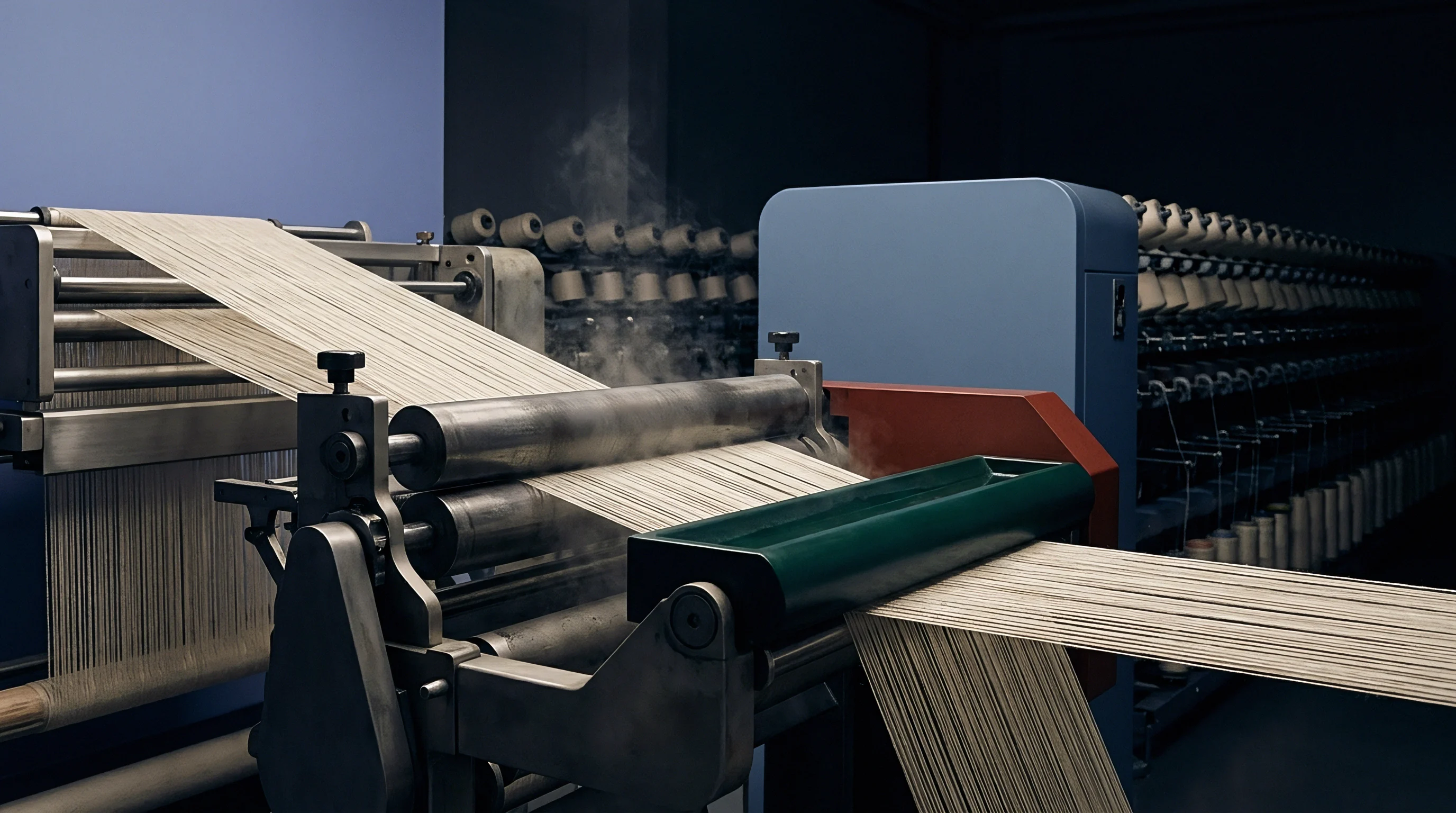

Hysteresis
Cyclic deformation of flax warp yarns during shedding dissipates significant energy between the opening and closing phases of the loom harness. High-speed rapier and air-jet looms running at speeds above 450 picks per minute subject bast fibers to asymmetric axial loading profiles. Because flax ultimate cells consist of highly crystalline cellulose fibrils embedded in an amorphous hemicellulose and pectin matrix, yarn strain response lags behind applied heddle displacement.
The mechanical load trace recorded across a complete harness cycle forms a closed loop whose interior area defines the mechanical work converted directly into internal thermal energy within the warp line.
When loom speeds increase from 250 to 550 picks per minute, the relaxation window available to flax fibers during harness dwell shrinks from 80 milliseconds down to less than 35 milliseconds. Flax yarn lacks the rapid elastic recovery of synthetic filaments or fine wool, causing structural extension to accumulate across successive pick insertions; dynamic modulus rises while peak breaking elongation drops. High shed lift positions increase tensile stress on the upper warp sheet, expanding the cyclic tension loop and driving structural fatigue at the heddle eyelets.
Standard flax warp yarns lose three percent of their dynamic extension capacity for every one hundred picks per minute increase in shed operating frequency.
Mechanical work dissipated within the yarn bundle during rapid shed cycles initiates structural degradation at microstructural interfaces. Inter-fiber slippage occurs when peak warp tension surpasses the static friction threshold maintained by sizing agents and native pectins. Uncompensated cyclic stress in high-speed linen shedding typically leads to four primary failure modes:
- Fibrillar Splitting occurs when repeated tensile peaks force individual ultimate flax fibers to detach from the middle lamella, creating localized surface fuzz that chokes heddle eyes.
- Shed Clear Faulting manifests when yarn tension decay during shed closing leaves warp ends slack, causing incoming rapiers to pierce the misaligned shed line.
- Crimp Accumulation develops when permanent deformation along the warp axis shifts the structural balance between warp and weft, altering greige end counts per centimetre.
- Sizing Decoupling occurs under severe stress variation, fracturing the protective starch envelope and exposing un-reinforced fiber bundles to reed friction.
Structural recovery depends heavily on the dwell angle of the shedding motion. An electronic dobby configured with an asymmetric dwell profile reduces peak stress by extending the opening duration while accelerating the shed crossover. This mechanical adjustment narrows the dynamic tension loop, minimizing permanent elongation and keeping warp tension within the working elastic limit of 18 to 22 centinewtons per tex.
| Shed Speed (RPM) | Peak Tension (cN/tex) | Hysteresis Loop Area (mJ/m) | Permanent Strain (%) | Shed Line Clearance (mm) |
|---|---|---|---|---|
| 300 | 14.2 | 1.85 | 0.42 | 62.0 |
| 400 | 17.8 | 2.41 | 0.78 | 59.5 |
| 500 | 21.5 | 3.15 | 1.35 | 56.0 |
| 600 | 25.9 | 4.02 | 2.10 | 51.5 |
Lower shed clearance heights reduce total mechanical strain on the warp sheet during high-speed operation. Harness frames set to a minimal stroke limit yarn stretching, which prevents excessive energy absorption in the fiber core. The continuous conversion of strain energy into heat remains a fundamental physical boundary in high-velocity flax weaving.

Desorption
Water molecules held within the hydrophilic amorphous zones of flax fibers evaporate rapidly during intensive mechanical working. Friction between warp ends, drop wires, heddle eyes, and reed dents generates localized heat, raising yarn surface temperatures by 8 to 14 degrees Celsius above ambient room conditions. As temperature climbs within the working zone of the loom frame, the equilibrium moisture regain of the yarn drops sharply.
Standard moisture regain for flax yarn stands at 12.00 percent under ISO 139 standard atmosphere conditions of 20 degrees Celsius and 65 percent relative humidity. Within an operating loom shed running high-speed machinery without localized micro-atomizers, yarn moisture content drops from an initial 12.5 percent down to 7.5 percent within forty minutes of continuous running. This sharp desorption alters the physical dimensions and tensile strength of the fiber, as dry flax exhibits higher initial modulus but lower flexural rigidity, making the warp line increasingly brittle and susceptible to shear failure at the reed dent face.
- Position calibrated capacitive moisture sensors 50 centimetres behind the stop-motion dropper bank and directly above the woven cloth fell.
- Record baseline moisture regain percentages prior to warp beam mounting and after four hours of continuous machine operation.
- Measure relative humidity and ambient temperature at three distinct vertical heights across the loom frame to calculate local vapour pressure differentials.
- Extract greige cloth samples immediately upon bolt doffing, seal them in vapor-tight aluminum foil bags, and determine oven-dry mass according to ISO 6741 standards.
In accordance with ISO 6741 procedures, commercial mass determinations require full oven-drying at 105 degrees Celsius followed by the addition of the official standard regain factor of twelve percent.
Desorption rates accelerate exponentially as shedding speeds pass 450 picks per minute. The constant movement of air generated by high-frequency harness motion strips the boundary layer of humidified air surrounding individual yarn ends. Without targeted air humidification directed straight into the harness zone, moisture loss reduces yarn flexibility and increases lint generation by up to three hundred percent.
Delivery weight shortfalls are often attributed to ambient humidity loss on the loom floor, but this explanation ignores the distinction between temporary physical moisture loss during weaving and actual fiber net mass. The dry fiber core mass remains unchanged regardless of localized atmospheric drying during high-speed shed execution.

Beam
Warp tension control systems mounted on modern high-speed looms utilize electronic let-off mechanisms to maintain uniform thread stress from full to empty beam diameter. As shedding speeds rise, static warp tension settings must adjust to compensate for the dynamic amplitude of the cyclic stress curve. Incorrect beam tensioning amplifies the dynamic load loop, causing irregular crimp distribution and differential fabric shrinkage across the roll length.
When warp threads pass off the beam profile under high static tension, the combined effect of static pre-load and dynamic shedding stroke can exceed the yield point of un-sized bast fibers. The warp beam flange alignment must hold tight tolerances to prevent edge-end friction, which induces localized heating and targeted moisture desorption along the selvedges.
Managing high-speed flax warps demands strict adherence to operational beam parameter limits during weaving preparation. The following checks establish correct warp delivery conditions for high-speed shedding:
- Flange Realignment prevents differential thread unwinding tension that distorts edge harness motion.
- Barrel Hardness Verification confirms uniform beam density across all sections, avoiding localized yarn sinks.
- Let-Off Motor Tuning balances dynamic sensor response with harness drive acceleration profiles.
- Sizing Pick-Up Consistency ensures uniform chemical coating that resists dynamic friction heating.
Consider a 100 percent flax plain weave contract specified at 180 centimetres greige width, 22 ends per centimetre, 18 picks per centimetre, using 26 Nm single flax yarn on a 1000-metre warp beam. Assuming a target greige weight of 240 grams per square metre at standard 12.00 percent moisture regain, the calculated dry mass of the warp beam without sizing stands at 171.4 kilograms.
| Beam Winding Radius (mm) | Static Tension per End (cN) | Dynamic Tension Peak (cN) | Measured Regain (%) | Greige Width Deviation (mm) |
|---|---|---|---|---|
| 500 (Full) | 35.0 | 52.5 | 11.8 | +1.5 |
| 400 | 35.2 | 54.1 | 10.5 | 0.0 |
| 300 | 35.8 | 56.8 | 9.2 | -2.0 |
| 200 (Empty) | 36.5 | 61.2 | 7.8 | -5.5 |
If high-speed shedding drives moisture content down to 8.00 percent during the final 200 metres of the beam run, yarn stiffness increases. The elevated dynamic tension forces the warp crimp down while increasing weft crimp, reducing finished fabric width by up to 5.5 millimetres. Failure to adjust let-off response to shifting regain profiles results in off-spec cloth widths and non-conforming roll weights at final delivery inspection.
A two percent drop in warp moisture content below eight percent increases yarn friction against heddle eyes by thirty-five percent, doubling warp stop rates.
Improper setting of warp let-off controllers under dynamic moisture loss conditions causes severe width variation across the bolt. Buyers receiving rolls woven under uncorrected high-tension shifts will face dimensional instability during subsequent wet processing and washing cycles.

Invoice
Commercial transactions for flax fabric rely on certified mass, yet moisture loss during high-speed shedding directly reduces scale weight at the loom doffing station. Fabric off-loading scale readings taken in an unconditioned warehouse capture transient water loss rather than true substance mass. Financial settlements based purely on scale weight at the mill gate transfer shedding friction costs directly onto the buyer unless commercial invoices undergo moisture adjustment calculation.
ISO 6741-1 defines the formula for calculating commercial mass from oven-dry weight: commercial mass equals the oven-dry mass multiplied by one hundred plus the official commercial moisture regain percentage, divided by one hundred. For flax yarn and cloth, the official standard commercial regain is 12.00 percent.
A standard commercial contract requires specific moisture adjustment documentation to validate raw scale weights. The following items must appear on the official mill inspection certificate before payment authorization:
- As-Delivered Gross Mass recorded immediately upon container sealing using calibrated scale systems.
- Oven-Dry Test Mass derived from representative core samples tested under ISO 6741 laboratory protocols.
- Calculated Moisture Regain expressing measured water content as a percentage of absolute dry mass.
- Official Invoice Allowance adjusting total billing weight to match standard twelve percent commercial regain.
Consider a commercial contract for 10,000 metres of heavy flax canvas woven at high speed. The nominal specification calls for a fabric weight of 400 grams per square metre at 12.00 percent standard regain, yielding a total contract target mass of 4,000.0 kilograms at full 100-centimetre width. The agreed price is 6.50 Euros per kilogram of commercial mass.
During production at 520 picks per minute, intensive shedding friction reduces fabric moisture content at doffing to 7.50 percent. The physical scale reading at the mill dock shows a total shipment mass of 3,839.3 kilograms.
| Settlement Parameter | Unadjusted Scale Basis | Corrected Commercial Basis | Variance Amount |
|---|---|---|---|
| Shipment Weight (kg) | 3,839.3 | 4,000.0 | +160.7 kg |
| Moisture Regain (%) | 7.50% | 12.00% (Standard) | +4.50% |
| Oven-Dry Mass (kg) | 3,571.4 | 3,571.4 | 0.0 kg |
| Invoice Total (€) | €24,955.45 | €26,000.00 | +€1,044.55 |
Direct billing against unadjusted physical dock weights understates the true commercial mass of the delivered fiber, forcing the supplier into an improper short-fall credit. Conversely, fabric packed in humid environments absorbs ambient moisture prior to weighing, inflating raw scale readings above the true dry fiber value.
Standard purchase terms governed by International Linen and Hemp Federation rules stipulate that all greige cloth settlements must calculate final invoice totals using oven-dry testing procedures whenever delivery moisture content deviates by more than 1.0 percent from official commercial regain standard.
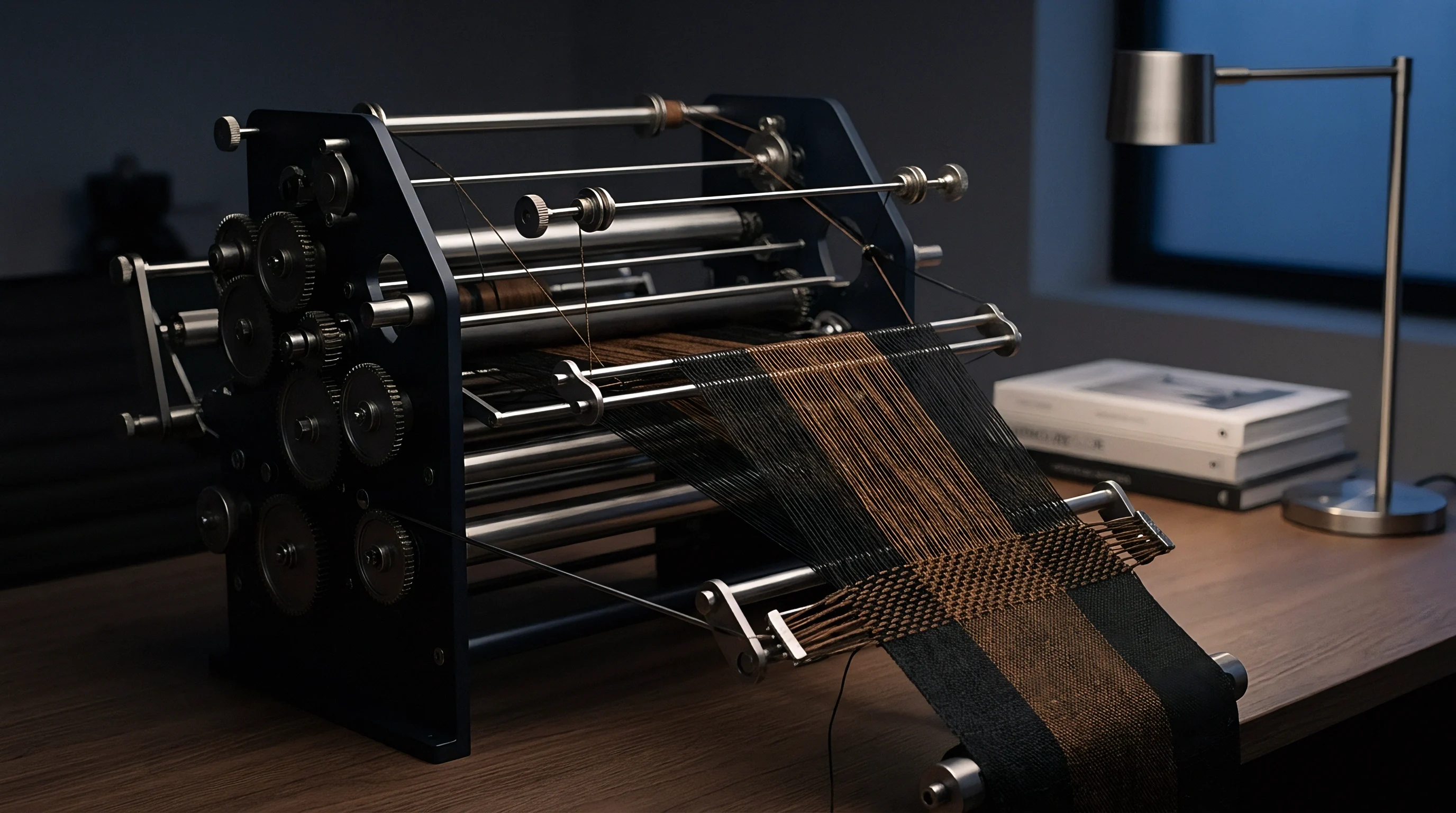
Discrepancy
Resolving invoice disputes over flax weight variations requires separating physical fiber loss from dynamic water desorption. High-speed shedding mechanically strips loose short fibers, producing lint fly that reduces actual dry mass. This physical mass loss represents true yarn yield degradation, distinct from reversible moisture evaporation caused by shedding heat.
Dynamic friction in long shedding runs can generate a permanent mass loss of 0.5 to 1.8 percent through fiber shedding and micro-fragmentation. When a buyer receives a shipment with low dock mass, oven-dry laboratory testing isolates fiber loss from moisture deficit. If the calculated dry mass falls below contract specification after accounting for standard regain, the mill has delivered short fiber volume.
Distinguishing between dynamic structural changes and chemical size loss requires solvent extraction of greige samples before dry mass determination. Sizing materials strip away during high-speed loom friction, changing yarn mass ratios without altering bast fiber length. Quality assurance dossiers must record both sizing pick-up percentage and oven-dry clean fiber weight to provide clear audit trails for contract arbitration.
Contractual settlement frameworks must account for dynamic loss coefficients derived from mill audit data. High-speed weaving machines operating above 500 picks per minute alter yarn stress profiles enough to change finished fabric yield calculations. Sourcing practices that calculate landed costs without accounting for shedding-induced moisture desorption risk ongoing financial friction over weight variances.
Does high-speed harness motion permanently alter the molecular water-binding capacity of re-hydrated flax fibers?