
Classification of Scutched Flax and Line Fibre Parameters
Scutched flax line classification dictates hackling yield, bundle fineness, and wet-spinning count limits, establishing the landed cost per metre of cloth.
Scutched flax line classification dictates hackling yield, bundle fineness, and wet-spinning count limits, establishing the landed cost per metre of cloth.

Ocean microclimates generate steep radial moisture gradients in dense flax bales, rendering single-core regain tests inaccurate for invoicing and spinning prep.

Standard commercial mass in scutched flax trading converts oven-dry weight to invoice mass using the agreed twelve percent moisture regain factor under ISO 6741.

Scutched flax line yarn suitability requires bundle fineness below 1.8 tex, shive under two percent, and uniform retting to prevent comb tow losses.

European Flax chain of custody requires physical lot segregation and batch-level transaction certificates from scutching to finished fabric.

Flax hackling yield hinges on sorption history; desorption-path fibers hold higher internal moisture, cutting brittle breakages and shifting line outturn by 3%.
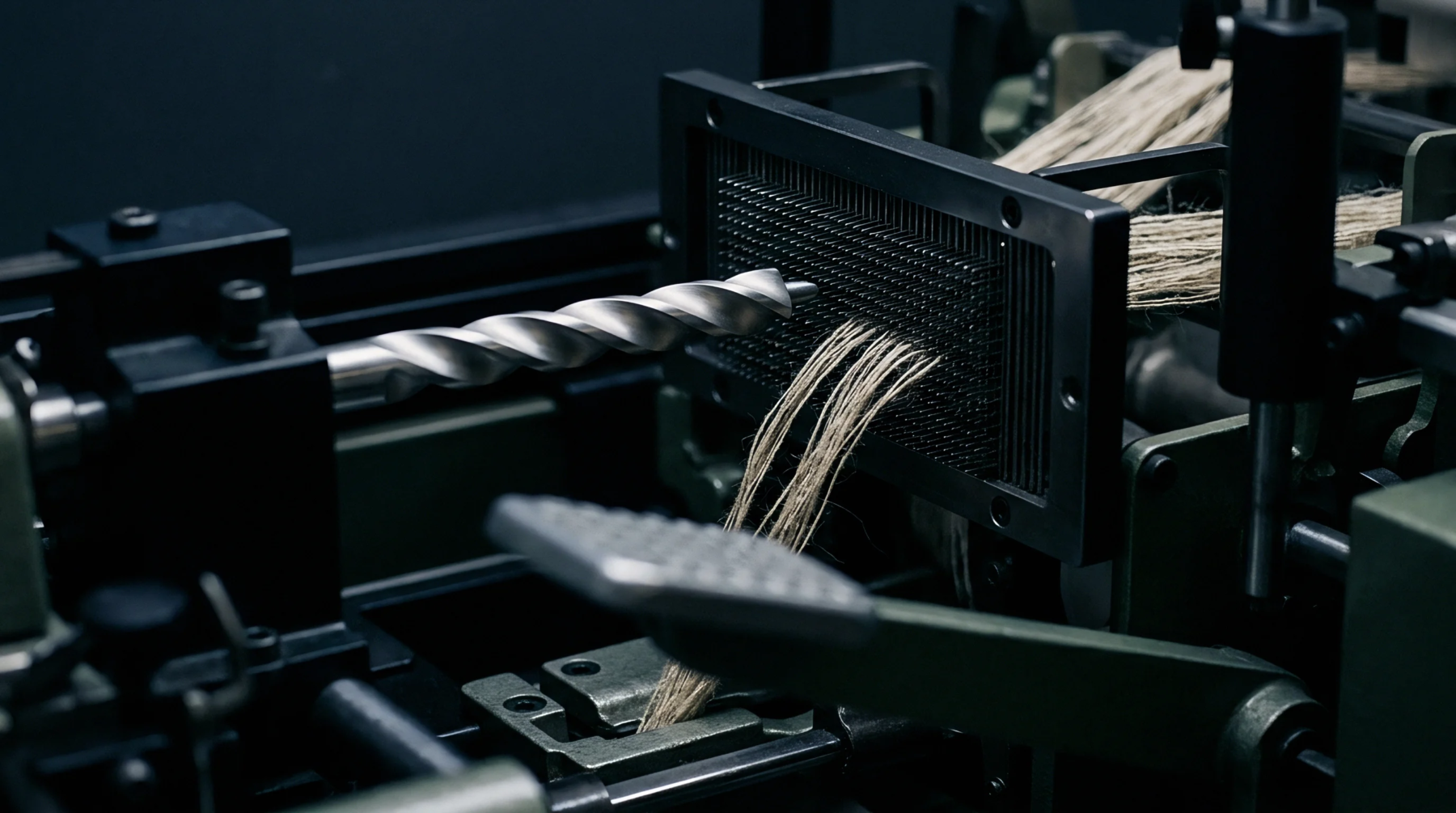
Real-time vision-based comb parameter adjustment optimizes pin penetration depth and speed to cut tow generation and maximize long-staple line flax yield.

Optimal pectin degradation (1.8-2.4%) balances middle lamella splitting and cell integrity, maximising hackling line yield and wet-spun yarn tenacity.

Flax technical bundle fineness dictates maximum spinnable yarn count while 3.2 millimetre gauge tenacity governs wet-spinning end breaks and hackling yield economics.
Verify European Flax scutched line through scope certificates, lot-matched transaction certificates, and rigorous hackling-to-spinning mass balance audits.

Reconciling European Flax certificates against Chinese mill intake requires balancing physical bale tags, mass-loss conversion yields, and transaction papers.

Origin audits reconcile scutched flax inputs to spun yarn outputs by calculating moisture regain, mechanical hackling yields, and wet bath pectin losses.

Physical chain of custody locks raw fiber origin to individual yarn bolts, while mass balance credit swapping balances paper accounts without physical tracing.

Reconciling spinning mill mass balance ledgers requires verifying raw intake certificates against physical machine yields, waste rates, and packaged yarn sales.

Reconciling third-country linen origin mass balances requires normalizing moisture regain to dry matter mass and accounting for specific hackling and scouring waste factors.

Verify flax linear density using ISO 1973 cut-and-weigh gravimetry at standard 12% regain to accurately forecast wet-spinning limits and enforce contract pricing.
Expertise is a utility, not a secret. sentiention™ publishes its working knowledge as open reference: intelligence layer covering the materials it sources, the markets it enters, and the reference that serves both.