Wet Spinning Trough Softening Physics and Linear Yarn Count Mechanics
Trough water at 70°C hydrolyzes middle lamella pectins to permit inter-fibre slippage, enabling high mechanical drafts down to fine linear yarn counts.


Solvation
Thermal Dissolution of Middle Lamella Pectins
Flax technical bundles consist of elementary fibres cemented together by an intercellular matrix of rhamnogalacturonan-I, homogalacturonan, hemicellulosic polysaccharides, and structural proteins. Wet spinning relies on the heat and water sensitivity of this middle lamella to split coarse technical bundles into finer individual fibres during drafting. Immersing boiled or unboiled flax roving in a water bath rapidly hydrates the hydrophilic polyuronides.
Water molecules break the intermolecular hydrogen bonds between adjacent galacturonan backbones, dropping the glass transition temperature of the amorphous pectin network below the trough operating temperature.
At room temperature, unmodified pectin polymers stay cohesive because calcium links the ionized carboxyl groups on adjacent homogalacturonan chains. Hot water destabilizes these ionic bridges, giving the chains room to move. Solvation rates depend on bath temperature, dwell time, mechanical agitation, and chemical additives.
As water soaks into the inter-fibre boundaries, the middle lamella turns from a glassy state into a swollen, viscous gel. This drops matrix shear strength by over eighty percent, letting elementary fibres slide past each other under tension instead of snapping across their cellulose walls.
Water bath temperature below sixty degrees Celsius leaves the intercellular calcium pectate shell rigid and produces coarse, irregular yarn with severe drafting slubs.
Matrix dissolution follows a temperature-dependent diffusion curve. Between sixty-five and seventy-five degrees Celsius, pectin dissolves at a balanced rate ~ enough to let fibres slide without washing away the structural binder completely. Stripping the middle lamella entirely leads to roving collapse and fibre wash-out in the drafting zone.
Keeping a controlled fraction of residual pectin maintains bundle continuity so the yarn can re-solidify into a cohesive structure during drying on the ring frame package.
Industrial spinning troughs replenish water continuously to flush out dissolved gums, organic acids, and extracted waxes. As roving moves along the submerged path, extracted water-soluble compounds shift the bath equilibrium. Accumulated polyuronide fragments in recirculated bath water raise viscosity and slow further pectin extraction from the roving core.
Feeding fresh, softened water prevents saturation and keeps extraction uniform across every position on the frame.
Upstream retting methods change how the fibre behaves in the bath. Dew-retted European long line flax contains more residual calcium and localized fungal decay than traditional water-retted fibre. Enzyme-treated roving needs less heat and shorter exposure because commercial pectinase formulations pre-cleave homogalacturonan segments beforehand.
Running standard thermal profiles on enzyme-treated roving causes over-separation, leading to roller lap-ups and count variations.
Water hardness above five French degrees adds divalent calcium and magnesium ions to the trough. These cations cross-link free carboxyl groups on de-esterified polygalacturonic acid chains, undoing the softening achieved by heating. Feeding hard water into the troughs quickly raises end break rates and leaves unattenuated fibre clumps in the yarn.
Automated deionization units keep bath hardness below two French degrees to stop cations from re-stiffening the matrix.
What Variable Governs Pectin Hydrolysis Rates?
Trough pH controls the ionization of galacturonic acid residues and regulates ester bond hydrolysis in the middle lamella. Between pH 6.8 and 7.2, carboxylic groups stay partially dissociated, allowing steady hydration without breaking down the polysaccharide backbone too quickly. Dropping below pH 5.5 suppresses carboxylate dissociation, reducing gel hydration and requiring higher temperatures to achieve the same fibre softness.
Adding alkali to the trough speeds up saponification of methyl-esterified galacturonides, converting hydrophobic methyl esters into hydrophilic carboxylate anions that boost water uptake and swelling. However, pushing alkalinity above pH 8.5 breaks hemicellulose chains indiscriminately and weakens the primary cell wall. Industrial operations generally avoid harsh alkalis, using mild sequestering agents instead to capture free calcium while protecting the cellulose.
Roving speed through the trough sets the actual residence time. At typical delivery speeds between twenty and thirty-five metres per minute, the roving is submerged for only two to five seconds. Getting water into the core of tight, high-twist roving requires fast wetting.
Non-ionic surfactants that drop surface tension below thirty millinewtons per metre speed up radial water penetration through dense bundles.
Mechanical twist creates the main barrier to liquor diffusion. High twist packs fibres tightly, blocking fluid movement through inter-fibre capillaries. Water moves through twisted roving mostly by capillary wicking along longitudinal channels and diffusion across the bundle diameter.
Over-twisted roving leaves the trough with dry cores, causing intermittent drafting failures when hard center bundles pass intact through the nip.
Maintaining uniform temperature across the bath requires active steam injection and circulation manifolds. Temperature variations over three degrees Celsius along the frame create clear count differences from spindle to spindle. Positions near cold water inlets produce heavy, uneven yarn because the matrix fails to soften fully, while those next to unmodulated steam outlets over-soften and shed fibre.
Closed-loop control using multi-point RTD probes stabilizes conditions across the drafting zone.
Trough depth provides the hydrostatic pressure that helps drive liquid into the bundle. Deep troughs with long submersion bars extend contact time and increase mechanical flexing over guide rods. This flexing works water into voids between bundles, driving out air pockets that keep dry segments insulated from the warm bath.
Path geometry works with bath chemistry to ensure every bundle is evenly hydrated before reaching the back rollers.
Water composition dictates long-term trough hygiene and bath stability. Biofilms and algae thrive in warm water enriched with extracted plant sugars. Accumulated biofilm alters fluid drag on the moving roving and releases enzymes that degrade cellulose during frame stops.
Dosing non-oxidizing biocides controls organic growth without introducing halogen ions that corrode stainless steel components.
Uncontrolled trough chemistry has an immediate impact: unmonitored bath changes spike drafting force variance across the frame, creating thick-and-thin yarn defects that fail weaving specs and lead to rejected fabric.

Rheology
Viscoelastic Deformation in Wet Drafting Fields
Under shear and extensional forces, hydrated flax roving behaves like a multi-phase viscoelastic suspension. In the drafting zone between back and front rollers, elementary fibres act as rigid, high-modulus inclusions suspended in a shear-thinning polysaccharide hydrogel. Elongating the bundle requires a drafting force dictated by middle lamella viscosity, relative fibre velocity, and the contact pressure applied by aprons or fluted rollers.
Under steady shear, the swollen pectin-hemicellulose gel thins following a power-law relationship. Higher drafting speeds align the polysaccharide chains, lowering flow resistance and easing fibre slippage. But if speed becomes excessive, extensional stress surpasses the cohesive strength of the softened matrix, causing irregular bundle separation and periodic mass spikes.
Matrix rheology ultimately sets the running speed window for a given roving count.
Dynamic mechanical analysis shows strong temperature dependence in the storage and loss moduli of wet flax bundles. Below fifty degrees Celsius, storage modulus dominates, reflecting elastic resistance that resists bundle division. Between sixty and seventy-five degrees Celsius, the loss modulus rises relative to storage modulus as viscous dissipation takes over.
This peak in loss modulus marks the ideal rheological window, where mechanical drafting achieves maximum attenuation with minimal fibre breakage.
Friction between fibres in trough liquor involves both boundary contact and hydrodynamic lubrication. At low drafting speeds, boundary friction between rough fibre surfaces creates most of the resistance. As delivery speed rises, a thin fluid film forms between sliding fibres, shifting the mechanism into a hydrodynamic regime.
Preserving this fluid film requires stable surface tension and sufficient liquor pick-up.
Uneven hydration creates local stress points during drafting. When dry roving sections reach the drafting zone, the unplasticized matrix forces elementary fibres to carry the entire tensile load. While individual fibres have high crystalline strength, their elongation at break is low ~ typically between 1.5% and 2.5%.
Stressing them beyond this limit causes brittle snaps instead of smooth sliding, generating short fibre fly that clogs aprons and dulls yarn lustre.
Sliver preparation uniformity on drawing frames directly impacts wet drafting rheology. Variations in doubling, hackling cleanliness, and roving twist create density gradients along the strand. Dense segments resist liquor penetration and fail to soften adequately, while open sections absorb excess water and draft prematurely before reaching the front roller nip.
| Trough Temperature (°C) | Apparent Matrix Viscosity (Pa·s) | Peak Drafting Force (cN/tex) | Bundle Cleavage Ratio (%) | Fibre Fracture Index (%) |
|---|---|---|---|---|
| 20 (Ambient) | 450 ± 35 | 12.4 ± 0.8 | 14 ± 2 | 28 ± 3 |
| 40 (Sub-optimal) | 280 ± 22 | 8.6 ± 0.5 | 32 ± 3 | 18 ± 2 |
| 60 (Standard Target) | 85 ± 8 | 3.8 ± 0.3 | 68 ± 4 | 6 ± 1 |
| 70 (High Softening) | 42 ± 5 | 2.1 ± 0.2 | 86 ± 3 | 3 ± 1 |
| 85 (Over-extracted) | 18 ± 3 | 1.2 ± 0.1 | 92 ± 2 | 9 ± 2 |
Hydrodynamic Drag and Normal Pressure Distribution
The drafting zone geometry sets up a complex pressure field along the roving path. Weighted top rollers press against bottom fluted steel rollers to grip the bundle and transfer surface speed. In wet spinning, water on the fibre surfaces creates positive hydrodynamic pressure wedges at the roller nip entry.
Excessive roller speed can lift the top roller off the fluted drive, causing slippage, lost draft control, and severe count coarsening.
Saddle weighting systems use dead weights, spring packs, or pneumatic cylinders to apply downward loads of forty to ninety decanewtons per roller boss. These heavy loads squeeze the saturated bundle, expelling free water while keeping boundary friction high enough to prevent uncontrolled drafting. Saddle loads must match roving linear density and line speed ~ too little pressure lets bundles float, while too much crushes softened fibres against the fluted steel ridges.
Fluted roller profiles dictate fibre control and fluid drainage through the drafting zone. Straight or helical flutes channel away squeezed liquor to prevent hydrostatic pressure build-up at the nip. As flutes wear over time, contact area changes, reducing grip pressure and introducing drafting variations across spindles.
Regular checks on roller geometry keep mechanical drafting uniform across all positions.
Boundary lubricants added to the trough alter the friction coefficient between flax cellulose and steel rollers. Polyethylene glycol derivatives and fatty acid ethoxylates lower metal-to-fibre friction without sacrificing fibre-to-fibre cohesion. Modifying friction this way reduces roller wear, cuts down yarn hairiness, and limits static build-up as the yarn begins drying on the bobbin.
Capillary forces draw elementary fibres close together as the drafted strand dries. As water evaporates from yarn leaving the front roller nip, surface tension pulls adjacent fibres together before twist binds them mechanically. Upon drying, residual softened pectin acts as a binder, cementing the fibres into the smooth, lustrous yarn typical of high-grade wet-spun linen.
Drafting reach defines the free span between back and front roller nips. In wet flax spinning, reach settings run between forty and seventy-five millimetres ~ much shorter than the technical bundle length used in dry spinning. This short reach works because the softened middle lamella lets bundles split and slide continuously during drafting.
Setting reach too wide causes strands to lose cohesion and break draft early; setting it too narrow forces unsoftened bundles into both roller pairs at once, snapping the fibres.
It remains an open question whether non-contact ultrasonic agitation in the trough channel can decouple matrix softening kinetics from thermal inputs, yielding equivalent bundle cleavage at ambient bath temperatures.

Attenuation

Drafting Mechanics and Bundle Cleavage Dynamics
Mechanical attenuation on the wet-spinning frame draws down heavy roving from 400 ~ 1200 tex to a fine strand of 10 ~ 150 tex. This drafting occurs in a narrow zone governed by the surface speed ratio between back feed rollers and front delivery rollers. Total mechanical draft is defined by the velocity ratio:
D = v_front / v_back
In dry drafting, technical flax bundles travel as rigid units, limiting maximum drafts to under twelve to avoid unevenness and erratic drafting. Wet spinning enables drafts of twelve to thirty-five by allowing progressive bundle cleavage.
As saturated roving enters the drafting zone, back rollers hold the trailing bundle while faster front rollers pull the leading tips. Tensile stress generates shear along the softened middle lamella. Coarse technical bundles split longitudinally into smaller sub-bundles and eventually into elementary fibres averaging ten to twenty-five micrometres in diameter.
Splitting degree correlates directly with draft ratio and trough softening.
Controlling floating fibres between roller nips is the main mechanical hurdle during attenuation. Floating fibres are shorter than the reach distance and are not held by either roller pair. While dry spinning uses aprons or gills to control them, wet spinning relies on surface tension from the water film and viscous drag from the softened matrix.
These forces keep short fibres aligned with the moving strand, maintaining draft stability without mechanical pins.
Unwinding roving twist is a key step in bundle attenuation. Roving twist is inserted earlier to keep packages intact during handling and creeling. In the wet drafting zone, this twist must unwinds evenly across the drafting span.
High twist increases draft resistance and causes surging, letting clumps of unattenuated fibre pass through the front nip. Twist multipliers are kept low, typically between fifteen and twenty-five turns per metre.
Twist insertion before complete matrix dewatering locks residual water into the core and creates dark, brittle yarn packages.
Fibre length distribution in the roving dictates drafting performance and yarn evenness. High-grade long line flax slivers from thorough hackling have uniform staple lengths over two hundred millimetres and low short-fibre content. Lower-grade flax tow slivers show wide length variations, spanning twenty to one hundred fifty millimetres.
Tow slivers require shorter reach, heavier saddle loading, and lower total drafts to prevent drafting waves.
Velocity profiles in the drafting field show a distinct acceleration point where fibres shift from back-roller speed to front-roller speed. In a well-adjusted zone, this point remains stable near the front roller nip. Fluctuations in trough temperature, liquor level, or roving moisture cause this acceleration point to shift back and forth, generating drafting waves that show up as periodic peaks on yarn spectrograms.
Tension across the spinning triangle downstream of the front roller nip governs end breaks during drafting. The spinning triangle is the triangular band of untwisted fibres emerging from the nip before ring traveler twist binds them into yarn. In wet spinning, the water film strengthens this delicate zone, reducing end breaks on fine counts and allowing higher traveller speeds than dry bast processing permits.
Operational optimization requires systematic adherence to established machine settings across the frame:
- Submersion Depth stabilizes hydraulic pressure and ensures complete roving saturation across multi-spindle banks.
- Roller Reach matches the staple length of softened sub-bundles to prevent mechanical fibre rupture.
- Saddle Loading prevents hydrodynamic roller floating without crushing elementary cell walls.
- Trough Temperature maintains matrix loss modulus peaks to ensure uniform bundle cleavage.
- Draft Ratio aligns input roving tex with target count limits to avoid drafting wave amplification.
Is High Drafting Speed Thermally Limited?
Running delivery speeds above forty metres per minute cuts roving dwell time below critical hydration thresholds. At high throughput, heat transfer from the bath into the core cannot raise internal matrix temperature to sixty-five degrees Celsius before reaching the rollers. This thermal gradient causes uneven drafting: outer fibres slide smoothly while inner bundles snap or pass through unsoftened.
To overcome thermal limits without lengthening troughs, modern frames use multi-pass immersion, pre-heated creels, or localized high-frequency heating. Vacuum steaming roving bobbins before spinning improves moisture uniformity and raises initial bundle temperature, permitting higher frame speeds. Machine output remains limited by how fast heat transfers into compact bast bundles.
Roller slip increases non-linearly with speed in wet conditions. High rotational speeds create continuous mist and fluid film build-up on fluted steel rollers. Flute profiles require self-clearing grooves and scraper blades to clear water instantly.
Polyurethane top cots with a surface hardness of eighty-five to ninety-five Shore A provide the grip needed to prevent slip without degrading rapidly in warm water.
The operational rule holds across all long line flax frames: warm troughs with stable reaches yield smooth yarn, while cold troughs with shifting reaches deliver slubs.

Count

Linear Density Metrics and Conversion Mechanics
Linen yarn linear density is commercially specified and traded across multiple measurement systems depending on regional practice and downstream market sector. The traditional international flax count system is the wet-spun lea (NeL), defined as the number of three-hundred-yard cuts of yarn that weigh one avoirdupois pound. The direct metric system expresses linear density in Tex, representing the mass in grams per one thousand metres of yarn.
The indirect metric count (Nm) defines the length in kilometres per one kilogram of mass.
Accurate commercial conversion requires absolute adherence to standardized mathematical relationships:
Nm = 1000 / Tex
NeL = Nm × 1.65346
Tex = 1653.46 / NeL
Tex = 1000 / Nm
The English cotton count (NeC) and metric count (Nm) relate through the direct ratio:
NeC = Nm × 0.59054
Commercial transactions and technical yarn specifications must declare the exact moisture regain basis used for count determination. Flax fibre possesses high hygroscopicity, with official commercial moisture regain established at twelve percent under ISO 6741 standards. Testing linear density without pre-conditioning samples to standard atmosphere (twenty degrees Celsius and sixty-five percent relative humidity) or failing to correct for oven-dry mass plus official regain yields false count discrepancies that trigger commercial disputes.
| Flax Lea (NeL) | Metric Count (Nm) | Linear Density (Tex) | Nominal Twist (TPM) | Minimum Fibre Grade | Typical CVm (%) |
|---|---|---|---|---|---|
| 10 | 6.05 | 165.3 | 280 | Medium Tow / Scutching Tow | 18.5 |
| 25 | 15.12 | 66.1 | 440 | High Tow / Mixed Line | 15.2 |
| 40 | 24.19 | 41.3 | 560 | Standard Long Line (Courtrai/Normandy) | 13.8 |
| 60 | 36.29 | 27.6 | 690 | Prime Long Line Grade IV+ | 12.5 |
| 80 | 48.38 | 20.7 | 800 | Superior Long Line Grade V+ | 11.8 |
| 100 | 60.48 | 16.5 | 890 | Selected Extra Fine Line | 11.2 |
| 120 | 72.57 | 13.8 | 980 | Specialty High-Division Line | 10.8 |
Worked Calculation of Frame Draft and Production Balance
Producing a fine wet-spun linen yarn of nominal count NeL 60 (Nm 36.29, or 27.56 tex) from an input long line flax roving of linear density 680 tex requires accounting for spinning contraction caused by twist insertion.
Inserting 690 turns per metre (TPM) into a 27.56 tex wet strand shortens the delivery length and increases the apparent linear density by a contraction factor (c). For wet-spun long line flax at this twist level, standard twist contraction is 3.5% (c = 1.035). The target linear density of the drafted strand emerging from the front roller nip before twist insertion (Tex_drafted) is calculated as:
Tex_drafted = Tex_nominal / c = 27.56 / 1.035 = 26.63 tex
The total mechanical draft (D_total) required on the wet-spinning frame is derived from the ratio of input roving linear density to the untwisted drafted strand linear density:
D_total = Tex_roving / Tex_drafted = 680 / 26.63 = 25.535
The wet-spinning frame gearing incorporates fixed draft constants. With a back roller diameter of 38 millimetres and a front roller diameter of 50 millimetres, the draft gear change calculation determines the specific tooth count required on the change pinion to achieve D_total = 25.54.
Single spindle output per hour is calculated as follows. Operating at a front roller delivery speed (v_delivery) of 26.0 metres per minute at 91% mechanical efficiency (eta = 0.91):
L_effective = v_delivery × 60 × eta = 26.0 × 60 × 0.91 = 1419.6 metres per spindle-hour
The mass delivered per spindle-hour (m_spindle) at nominal count 27.56 tex is:
m_spindle = (L_effective × Tex_nominal) / 1000 = (1419.6 × 27.56) / 1000 = 39.12 grams per spindle-hour
On an industrial frame configured with 240 spindles, total hourly yarn output equals:
M_frame = (39.12 × 240) / 1000 = 9.389 kilograms per hour
Spindle rotational speed (N_spindle) required to insert 690 TPM at 26.0 metres per minute delivery is:
N_spindle = v_delivery × TPM = 26.0 × 690 = 17940 revolutions per minute
At these operating velocities, traveller wear, ring lubrication via trough carry-over water, and package balloon tension reach their technical limits. Higher spindle speeds generate excessive centrifugal misting and traveller burning.
The commercial cost bridge from raw scutched flax to finished woven fabric shows clear escalation at each stage. Raw long line flax scutched in Normandy enters the mill at 4.80 USD per kilogram. Hackling yield to produce dressed line sliver averages 58%, shifting the intermediate sliver material cost to 8.28 USD per kilogram after crediting hackled tow by-products.
Wet spinning, drying, winding, and automated cone clearing add 4.50 USD per kilogram in conversion cost, yielding a finished NeL 60 cone yarn cost of 12.78 USD per kilogram.
When this yarn is woven into a plain-weave shirting fabric weighing 115 grams per square metre with warp and weft counts of NeL 60 and fabric density of 24 ends per centimetre and 22 picks per centimetre, weaving waste, loom conversion, scouring, and semi-bleach finishing establish a landed fabric manufacturing cost of 3.42 USD per linear metre at 145 centimetre cut width. A count deviation of five percent from nominal shifts fabric square metre weight outside commercial tolerance and escalates raw material consumption across downstream production runs.
Checking lea count on an unconditioned balance straight off the drying bobbin gives an artificially light reading that appears within specification.

Spread
Quality Variations and Imperfection Profiles
Mass variation in wet-spun flax yarn exhibits structural characteristics distinct from ring-spun cotton or synthetic filaments. Due to the composite nature of bast fibre bundles, linen yarn displays inherently higher mass coefficient of variation (CVm) and broader imperfection spreads. Online capacitance testing and optical array sensors categorize mass deviations into thin places (-50%), thick places (+50%), and neps (+200%).
In wet-spun yarns, thin places originate primarily from localized bundle breaks where floating fibres fail to transfer smoothly across the drafting zone. Thick places represent unattenuated technical bundles where middle lamella softening was incomplete, allowing multi-fibre clusters to pass through the front roller nip intact. Neps in wet-spun linen consist of two distinct morphologies: mechanical tangles of damaged elementary fibres formed during excessive carding or hackling, and shive neps, which are unretted woody core fragments adhering to the outer bundle surface.
Spectrogram analysis of wet-spun flax yarn identifies specific mechanical and chemical faults across the processing line:
- Drafting Wave Peaks develop as broad humps between two and five times the reach length, indicating insufficient trough softening or irregular saddle pressure.
- Roller Eccentricity Spikes appear as sharp spectral lines matching the circumference of back or front drafting rollers, revealing bent roller arbours or damaged cot coverings.
- Periodic Gear Faults reflect missing or worn gear teeth in the headstock transmission, imposing cyclic mass pulses on the drafted strand.
- Twist Surging Signatures emerge in low-frequency bands when high-twist roving unwinds unevenly under variable creel brake tensions.
Tensile property distributions of wet-spun yarn reflect the efficiency of middle lamella re-adhesion upon drying. Single-end tensile testing according to ISO 2062 reveals high tenacity values, typically ranging from twenty-five to forty-five centinewtons per tex for high-grade long line yarns. Elongation at break remains low, averaging 1.8% to 2.8%.
The low elongation creates high sensitivity to sudden tension peaks during high-speed warping and weaving.
Yarn count distribution across multi-bobbin spinning lots follows a normal distribution whose standard deviation governs commercial grading. Premium weaving yarn requires a lot count CV below 2.5%, whereas knitting-grade linen demands count CV below 1.8% alongside special low-twist processing to prevent package spirality and torque-induced fabric skewing. Cones exhibiting out-of-tolerance count deviations generate striping and barre defects in plain woven and circular knitted fabrics.
Hairiness in wet-spun linen yarn is substantially lower than in dry-spun bast yarns because the surface water film flattens elementary fibre ends against the yarn core during twist insertion. Residual pectins act as a sizing agent, bonding protruding ends into the core matrix. Over-extraction of pectin in excessively hot or alkaline spinning troughs strips this natural adhesive, elevating yarn hairiness, increasing fly generation on downstream winding equipment, and degrading warp runnability.
Commercial Verification Protocols and Defect Thresholds
Incoming inspection of wet-spun linen cones mandates standardized testing to verify physical parameters before yarn lots are released to warp preparation or knitting lines. Testing involves systematic sampling across ten percent of delivered cases. Conditioning samples in standard atmosphere for forty-eight hours is non-negotiable to achieve equilibrium moisture regain prior to mass and tensile determination.
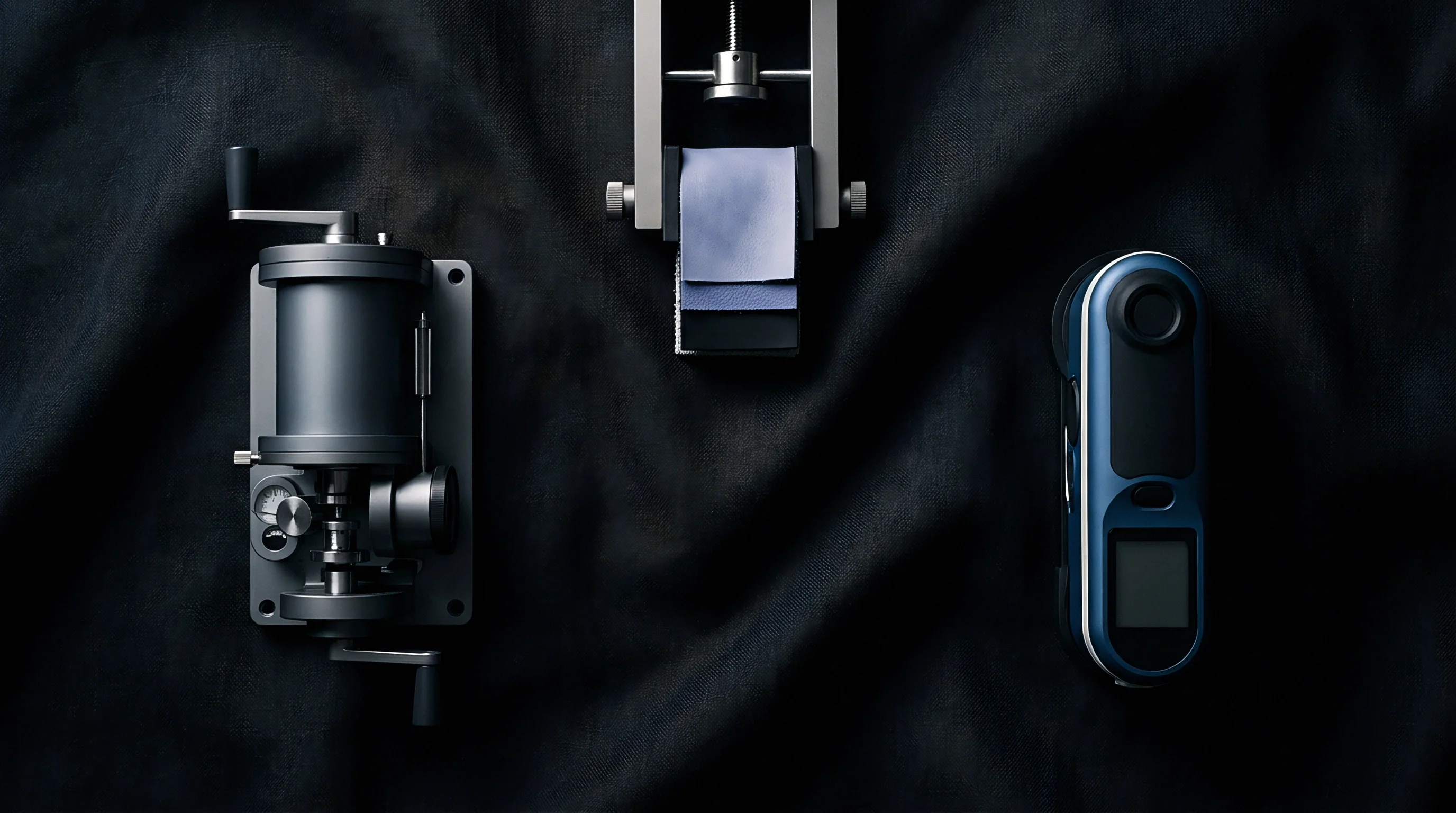
Count verification utilizes automated wrap reels producing one-hundred-metre skeins, weighed on calibrated analytical balances to 0.001 gram precision. Moisture testing via rapid oven-drying instruments establishes the exact dry mass, to which the standard commercial regain of twelve percent is applied mathematically. Lots showing count deviations exceeding plus or minus 2.5% from contract nominal are rejected or re-graded with commercial invoice adjustments.
Tensile verification demands fifty individual breaks per sample cone on constant-rate-of-extension (CRE) testing frames operating at a gauge length of five hundred millimetres and test speed of five hundred millimetres per minute. Yarns exhibiting tenacity variations (CV of breaking force) exceeding twelve percent cause excessive loom stops during high-tension air-jet or rapier weaving, reducing weaving room efficiency below acceptable commercial thresholds.
The contract arbitration clause stipulates that count determination and commercial mass calculations follow ISO 2060 and ISO 6741 exactly, with moisture regain discrepancies exceeding one percent settled by certified conditioning house weight certificates.