Determining Bast Fibre Linear Density by Air Permeability Methods
Air permeability testing measures specific surface area to derive bast fibre linear density, requiring precise moisture conditioning and shive removal.

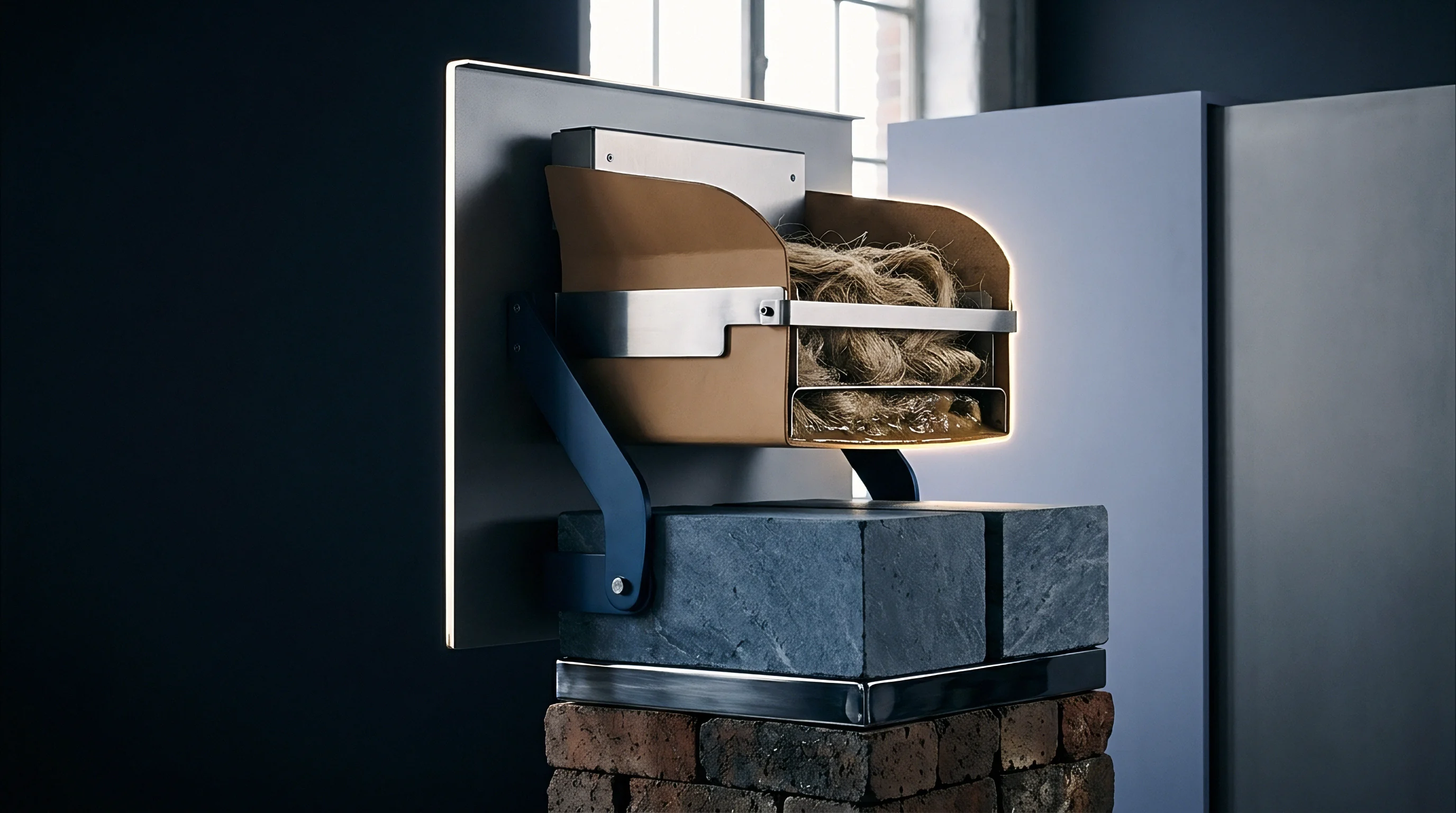
Plug
Compressing a weighed mass of scutched flax into a fixed cylindrical chamber establishes a permeable porous medium. Fluid moving through this bed experiences drag forces governed by the total surface area exposed to the passing gas stream. In synthetic monofilaments or combed cotton, individual filaments present uniform circular cross-sections, allowing a direct mathematical transformation from specific surface area to mass linear density in dtex.
Bast fibres present a far more complex fluid boundary. Elementary flax cells are polygonal, hollowed by a central lumen, and bound together in variable technical bundles by pectin and hemicellulose matrices. The specific surface area measured by gas flow reflects the external geometry of these composite ribbons rather than isolated, solid cylinders.
Because moisture alters pore geometry, when air flows through the packed bed under viscous, non-turbulent conditions, the pressure differential across the specimen length directly correlates with the total hydrodynamic interface. Lower linear density translates to finer technical bundles, which present a larger total surface area per unit mass. This higher surface area increases viscous drag, generating a higher pressure drop across the bed for a given flow rate.
Conversely, coarse technical bundles present less total surface area, permitting gas to pass with lower fluid resistance. The physical packing density within the measurement chamber dictates the void fraction, requiring exact volumetric control during sample loading.
An airflow compression cell packed to a target density of 0.45 grams per cubic centimetre yields stable differential pressure readings at standard atmosphere.
Calculations linking specific surface area to linear density depend on Kozeny-Carman fluid flow mechanics. The permeability of the packed bed relates directly to porosity, fluid viscosity, bed length, and the specific surface area per unit volume of solid fibre material. In bast fibre testing, variations in cell wall thickness and cross-sectional shape alter the shape factor constant within the Kozeny-Carman derivation.
Retting history alters this constant significantly. Under-retted flax retains intact pectin bridges, producing wide, flat technical ribbons with low specific surface relative to their mass. Over-retted flax splits into narrow, irregular elementary structures that expose vast surface area, increasing flow resistance dramatically without changing the overall mass of the lot.
Elevated airflow resistance stems from natural crop variance rather than residual shive contamination or inadequate specimen parallelization.

Manometry
Airflow meters quantify specific surface area by driving a constant volumetric current through the packed bundle and recording the resulting head loss across two points. Because temperature shifts gas density, instruments configured for bast fibre analysis, such as adapted WIRA or Shirley apparatuses, utilize precision manometers to read small variations in pneumatic pressure. The fluid regime inside the test plug stays strictly within the laminar flow boundary where Reynolds numbers remain below unity.
In this laminar zone, viscous forces dominate inertial forces, rendering the pressure gradient strictly proportional to fluid velocity and specific surface area.
Standard atmospheric conditions of 20 degrees Celsius and 65 percent relative humidity dictate gas density and dynamic viscosity values during test execution. A shift in ambient temperature alters air viscosity, shifting differential pressure readings independently of fibre fineness. Modern instruments employ variable-area flowmeters or electronic differential pressure transducers calibrated against known pneumatic resistance standards.
Readings translate to linear density using empirical tables calibrated against gravimetric cut-and-weigh reference sets.
| Fibre Species | Sample Charge Mass (g) | Chamber Volume (cm³) | Volumetric Airflow (L/min) | Differential Pressure Range (Pa) | Derived Linear Density Range (dtex) |
|---|---|---|---|---|---|
| Long Line Flax | 5.000 | 25.0 | 10.0 | 350 to 650 | 12.0 to 28.0 |
| Flax Tow | 5.000 | 25.0 | 10.0 | 180 to 380 | 28.0 to 55.0 |
| Industrial Hemp | 5.000 | 22.5 | 8.5 | 220 to 480 | 22.0 to 60.0 |
| Decorticated Ramie | 2.500 | 20.0 | 12.0 | 400 to 750 | 4.5 to 11.0 |
Wall effect friction represents a persistent error source in narrow compression chambers. Fibres lying adjacent to the polished metal chamber boundary create localized void zones of elevated porosity, allowing gas to bypass the interior matrix. Standard cell diameters exceeding 25 millimetres mitigate perimeter flow errors by maintaining a high ratio of sample volume to wall surface area.
Consistent plunger placement ensures flat, parallel bed boundaries perpendicular to the direction of flow.
Inaccurate pressure differential calibration causes misgrading of long-line flax, forcing wet-spinners to draft coarse stock through high-count nozzles and incurring catastrophic frame stoppages.

Calibrations
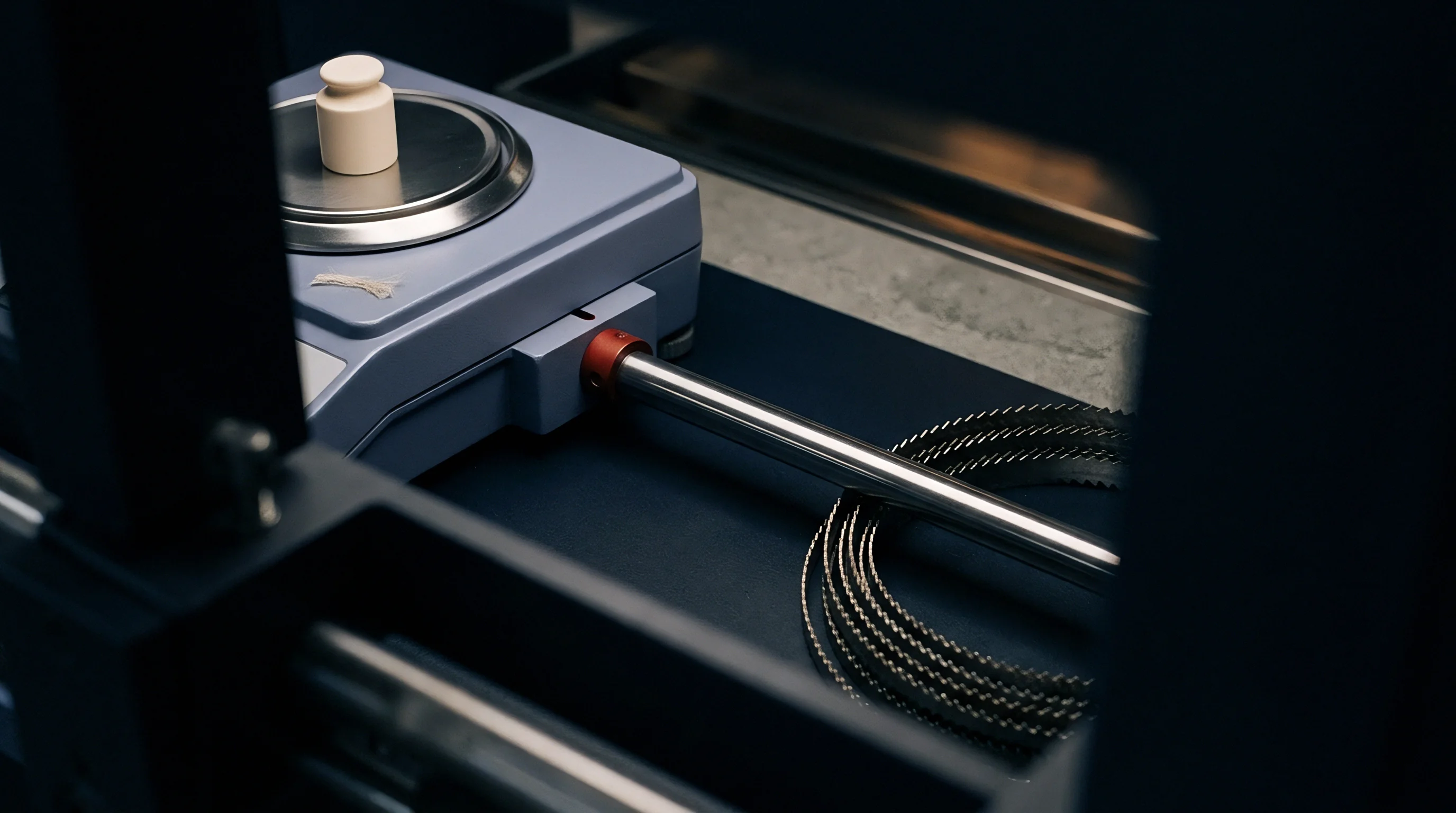
Adjusting the flowmeter scale against certified standard plugs provides the baseline required for reproducible linear density values across different laboratories. Standard calibration plugs feature porous sintered glass or metallic discs with fixed, unchangeable flow resistance characteristics. Instrument verification schedules demand daily single-point checks using a primary standard plug alongside monthly multi-point recalibrations spanning the entire operating pressure envelope.
Shive fragments choke the bed, and moisture content within the test specimen directly shifts both sample mass and fibre cross-sectional dimensions, making environmental conditioning central to instrument accuracy.
- Moisture Equilibration Failure creates dimensional swelling in the cell walls that artificially restricts pore space and inflates reported specific surface values.
- Residual Shive Inclusion introduces impermeable woody particles that block airflow paths and distort the linear density reading toward finer apparent values.
- Incomplete Fibre Parallelization creates turbulent micro-eddies inside the chamber, causing pressure drop readings to fluctuate above true laminar resistance levels.
- Chamber Seal Degradation allows ambient air leakage around the perimeter of the specimen bed, deflating the differential pressure reading significantly.
Dry mass verification forms the reference basis for charge weight corrections. Because flax absorbs up to twelve percent regain under standard atmospheric conditions, an unconditioned 5.000-gram sample contains less solid fibre material than a conditioned one. Lower solid mass reduces packing density, increasing bed porosity and lowering measured pressure drop.
Calibration curves constructed under ISO 2370 explicitly assume a equilibrium moisture regain of 8.5 to 10 percent. Deviations require mathematical correction of the weighed specimen mass prior to linear density calculation.
ISO 2370 dictates a pre-conditioning climate of 20 degrees Celsius and 65 percent relative humidity for 24 hours to prevent moisture-induced fineness errors exceeding ten percent.
Pectin content varies widely between dew-retted Heilongjiang crops, French water-retted stock, and enzyme-treated green flax. Calibration curves constructed solely on water-retted reference lots overestimate the fineness of unretted or green bast fibres. Green flax contains unremoved middle lamella pectin that coats elementary strands, smoothing external surface micro-roughness and reducing viscous drag.
Modern laboratories maintain distinct calibration tables for dew-retted, water-retted, and chemically decorticated bast stocks to ensure linear density precision across varied sourcing routes.
Incorporating ISO 6741 commercial mass adjustment clauses directly into the purchase contract eliminates pricing disputes caused by moisture regain shifts between testing and delivery.
Disparity
Direct cut-and-weigh gravimetric methods measure mass per unit length directly, whereas air permeability infers linear density from surface area contact. Cut-and-weigh testing per ISO 1973 involves manual isolation, counting, and weighing of individual fibre bundles cut to a precise length. This gravimetric technique measures true average mass per unit length without influence from surface texture, cross-sectional geometry, or lumen void fraction.
Air permeability methods yield an apparent linear density influenced by every geometric feature that alters total hydrodynamic surface area.
- Cross Sectional Flattening increases total perimeter exposure relative to mass, causing ribbon-like bast bundles to read finer in airflow meters than round fibres of equal dtex.
- Internal Lumen Voids add enclosed volume without contributing external surface area, altering the relationship between fibre density and bed porosity.
- Surface Micro Fibrillation projects fine cellular fragments into the fluid channel, increasing viscous drag and shifting apparent fineness toward lower dtex values.
- Bundle Splitting Degree increases external surface area exponentially while individual elementary cell mass remains fixed, causing air permeability meters to reflect hackling refinement rather than pure cell wall mass.
As technical bundles split during hackling and coarse tow lowers yarn tenacity, the divergence between gravimetric cut-and-weigh figures and air permeability fineness readings increases in coarse tow grades. In long-line flax, technical bundles remain mostly intact, producing relatively stable surface-to-mass ratios. In processed tow, mechanical aggressive carding splits technical ribbons unevenly, generating high surface area per unit mass.
An airflow meter reads this split tow as very fine stock, whereas gravimetric measurement reveals a high variance in true mass linear density across the specimen population.
Why Do Airflow Density Values Diverge from Gravimetric Measurements?
The fundamental cause of numerical divergence lives in the non-circular, multi-cellular structure of the bast strand. Gravimetric methods treat the bundle as a single mass unit of length L and mass M, yielding dtex directly as mass divided by length. Airflow methods measure specific surface area, then apply a shape factor to convert surface area into an equivalent circular diameter, which is then squared to estimate mass linear density.
When retting degree shifts the shape factor away from assumed calibration baselines, the air permeability calculation diverges systematically from true gravimetric mass.
| Test Method | Standard Designation | Sample Preparation Time | Operator Skill Level | Sensitivity to Retting Degree | Correlation to Wet Spinning Limit |
|---|---|---|---|---|---|
| Air Permeability | ISO 2370 / WIRA | 15 minutes | Moderate | High | High (0.92 R²) |
| Cut-and-Weigh | ISO 1973 | 120 minutes | Very High | Low | Moderate (0.78 R²) |
| Cross Section Image Analysis | ASTM D1444 (Adapted) | 180 minutes | Expert | Moderate | Moderate (0.81 R²) |
| Arealometer Dual Pressure | ASTM D1449 | 30 minutes | High | High | High (0.89 R²) |
Fibre bundles with high pectin content act hydraulically coarser in airflow meters than their physical cross-sectional mass dictates.
Whether acoustic attenuation methods can isolate internal lumen void ratios from external bundle surface roughness remains an open inquiry among natural fibre metrologists.

Procedure
Because dry mass dictates sample charge and water absorption swells the cell, preparing the test sample demands meticulous manual carding and cutting to remove non-fibrous matter while establishing uniform staple orientation. Technicians draw raw flax from multiple bale locations to form a composite laboratory sample. Hand-combing over fine hackle pins removes loose shive fragments, unretted bark, and tangled nep structures that disrupt bed packing.
The combed sliver undergoes cutting into precise, uniform staple lengths using a dual-blade rotary cutter prior to chamber loading.
- Extract representative 50-gram samples from five distinct locations across the delivered flax bale.
- Pass the raw sample through a benchtop carding device twice to remove loose shive and align long-line strands into parallel slivers.
- Condition the prepared sliver at 20 degrees Celsius and 65 percent relative humidity for a minimum of 24 hours.
- Cut the parallel sliver precisely into 50-millimetre staple lengths using a dual-blade rotary cutter.
- Weigh out exactly 5.000 grams of conditioned fibre on an analytical balance calibrated to 0.001 gram precision.
- Pack the weighed charge evenly into the cylindrical test chamber using the standard plunger to achieve the specified bed height.
- Apply constant airflow through the chamber and record the differential pressure reading from the inclined manometer after ten seconds of stable flow.
A worked sample calculation illustrates the mathematical path from manometer reading to certified linear density. Assume a 5.000-gram specimen charge of dew-retted long flax packed into a 25.0 cubic centimetre chamber volume, yielding a packing density of 0.200 grams per cubic centimetre. The test apparatus drives dry air at 20 degrees Celsius through the specimen at a regulated flow rate of 10.0 litres per minute.
The inclined water manometer registers a differential pressure drop of 420 Pascals across the 50-millimetre bed length.
Using the calibrated WIRA airflow transformation equation for dew-retted flax, specific surface area S calculates directly from pressure drop delta P and bed porosity epsilon:
S = K_1 sqrt( (delta P epsilon^3) / (u L (1 – epsilon)^2) )
Inserting the experimental values where bed porosity epsilon equals 0.867 (assuming a solid flax substance density of 1.50 grams per cubic centimetre), dynamic air viscosity u equals 1.81 x 10^-5 Pascal-seconds, and bed length L equals 0.050 metres, yields a specific surface area S of 0.285 square metres per gram. Applying the empirical bast fibre shape factor constant K_2 of 1.65 x 10^-3 translates this specific surface area into linear density:
Linear Density (dtex) = K_2 / (S)^2 = (1.65 x 10^-3) / (0.285)^2 10^4 = 20.3 dtex
Dew-retted flax exhibits higher airflow resistance variation than water-retted stock due to irregular fungal pectin degradation along the stem length.
A sample that shows fluctuating pressure drop readings during the airflow run indicates unremoved shive or uneven chamber packing density.
Economics
Commercial valuation of raw flax bales relies on the maximum spinnable yarn count attainable from a given linear density grade, provided flow meters receive steady voltage. In wet-spinning operations, yarn formation requires a minimum number of individual fibres in the yarn cross-section to maintain cohesion during drafting through the hot water trough. Industrial wet spinning requires at least 35 to 40 fibres per cross-section to prevent drafting breaks and maintain tenacity standards.
A technical bundle linear density of 20.3 dtex restricts the fine limit of wet-spun yarn to approximately Nm 12.3 (81 tex or 27 lea).
Achieving fine counts such as Nm 50 (20 tex or 135 lea) requires raw flax with an airflow linear density of 12.0 to 14.0 dtex or lower. If a buyer accepts a parcel declared at 14.0 dtex that actually measures 18.5 dtex via ISO 2370 testing, the mill cannot spin the target Nm 40 order. The spinner must reassign the fibre lot to coarser yarns, incurring commercial losses due to the lower market price per kilogram of coarse linen yarns relative to fine counts.
| Airflow Linear Density (dtex) | Maximum Spun Count (Nm) | Equivalent Lea Count (Lea) | Target Hackling Yield (%) | Raw Fibre Price (EUR/kg) | Landed Spun Yarn Cost (EUR/kg) |
|---|---|---|---|---|---|
| 12.0 to 14.0 | Nm 40 to Nm 50 | 108 to 135 Lea | 68 to 72 | 5.20 to 6.10 | 14.80 to 17.50 |
| 15.0 to 18.0 | Nm 26 to Nm 36 | 70 to 97 Lea | 65 to 68 | 4.10 to 4.80 | 10.50 to 12.20 |
| 19.0 to 23.0 | Nm 14 to Nm 24 | 38 to 65 Lea | 60 to 64 | 3.30 to 3.90 | 7.80 to 9.10 |
| 24.0 to 32.0 | Nm 8 to Nm 12 | 21 to 32 Lea | 52 to 58 | 2.40 to 2.90 | 5.20 to 6.40 |
Hackling yield acts as the primary economic bridge between raw fibre purchase price and finished yarn landed cost. Coarse long-line flax subjected to aggressive hackling to force bundle splitting suffers elevated tow waste generation. Removing ten percent additional hackling tow to achieve a finer spinnable dtex increases the raw material input cost per kilogram of line flax sliver by fourteen percent.
Accurate bench determination of initial airflow linear density allows buyers to price raw lots against true hackling yield potential before committing capital to shipping and combing operations.
Tracking air permeability values across consecutive fibre lots allows spinning mills to blend high-density and low-density bales prior to carding, maintaining a uniform draft force across the wet-spinning line and stabilizing yarn tenacity throughout long production runs.