
Mass Balance Conversion Factors for Cross Border Yarn Accounting
Mass balance yarn accounting requires empirical conversion factors adjusting for moisture regain, mechanical tow extraction, and customs processing loss limits.
Mass balance yarn accounting requires empirical conversion factors adjusting for moisture regain, mechanical tow extraction, and customs processing loss limits.

Importers bear strict regulatory liability and unrecoverable commercial loss when overseas spinning mills commingle certified flax without batch transaction records.

Oven-drying reports adjust invoice totals by establishing true dry mass and applying standard 12 percent regain, preventing payment for absorbed transport water.

Point-of-delivery shed conditioning stabilizes bast fiber regain at ten percent, preventing warp cleavage and raising high-speed rapier efficiency past ninety percent.

Gravimetric determination measures flax metric fibre number by weighing cut bundle segments to establish length per mass for accurate wet spinning yield calculation.

Dynamic PID let-off loops must counter flax hygroscopic shrinkage by tracking real-time backrest load rather than mechanical pick accumulation.

Reconciling trade entry fiber origin claims requires verifying batch-level scutching manifests, bale serial tags, and physical spinning mass balances against customs filings.

Thermodynamic moisture regain and internal porosity skew bast linear density; true tex demands oven-dry cut-and-weigh testing plus standard commercial allowance.

Airflow porosimetry on cut bast stricks determines bundle fineness and spinnable count by measuring differential pressure across an isotropic chopped plug.

Residual pectin alters bast fiber bundle volume and aerodynamic drag, causing airflow fineness testers to overestimate coarseness by up to twenty-eight percent.

European Flax origin claims require batch-level transaction certificates matching mill mass-balance yields across line hackling and wet spinning stages.

Yield discrepancies in wet spun flax shift assist values, demanding formal customs reconciliation of actual mass balance, tow salvage credits, and duty deltas.

Polymeric size degradation on fine flax during rapier insertion results from brittle shear failure, mitigated by PVA-CMC blending and seventy percent humidity.

Reconciling flax yarn ledgers requires converting physical weights to standard commercial dry mass to strip out moisture shifts and process waste loss.

Measure flax wet pick up through mass balance and microwave attenuation to maintain thirty percent dry size add-on.

Reconcile scutched flax mass balance ledgers by applying BISFA moisture regains, verified hackling yield fractions, and a rolling twelve-month credit window.

Verify certified flax wet spinning yields by measuring dry mass balances across hackling, autoclave scouring, and trough flumes to catch volume inflation.

Fine wet spun linen warps demand 7 to 9 percent starch size add-on, 8 percent moisture regain, and under 21 degree shed angles to run above 85 percent loom efficiency.

Private fibre scope certificates confirm material lineage but do not satisfy legal customs standards for substantial transformation and tariff origin.

Auditing overseas linen spinning ledgers demands reconciling core bone-dry fiber weights against machine waste logs to eliminate phantom mass balance credits.

Reconciling ocean transit linen losses requires calculating bone-dry fiber mass plus statutory regain rather than comparing uncorrected scale weights.

Cut-and-weigh gravimetric testing on conditioned bundles establishes the baseline tex that determines drafting limits, spinning counts, and invoice weights.

Standard bundle cut gravimetry determines line flax linear density by sectioning combed parallel strands to fixed length and weighing conditioned mass per ISO 2370.
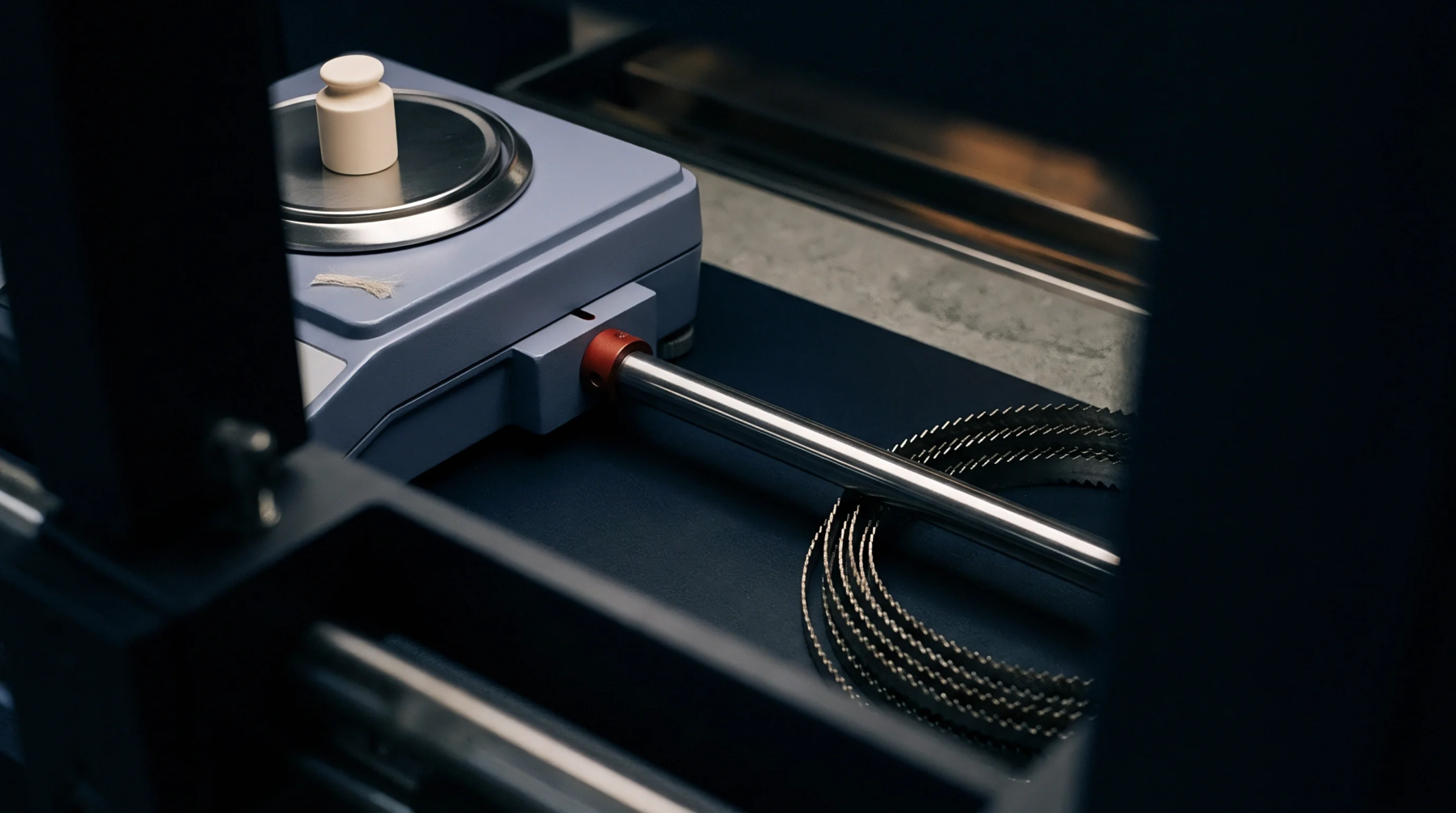
Moisture regain plasticizes pectic middle lamella bonds, dropping interfacial shear strength from 38 to 10 MPa and dictating drafting stability.

Selecting an 11.8-millimetre Pressley clamp gauge over zero gauge measures inter-filament pectin shear, yielding tenacity figures that predict flax spinning performance.

Reconciling hackling yield requires continuous mass balance records matching physical sliver, tow, and extraction waste to incoming scutched flax lot certificates.

Controlled 11% regain prevents bast matrix delamination, cutting loom stops to under 1.5 per 100k picks to secure full shed efficiency.

Controlled moisture regain between 10.5 and 12.5 percent combined with dynamic load-cell let-off feedback prevents brittle warp breakage in high-speed linen weaving.

Scouring removes 11 to 13 percent dry flax mass, creating yield deficits that Chinese mills mask through uncertified fiber blending or commercial moisture inflation.

Derive broadloom linen reed space by calculating weft crimp and wet finishing contraction to guarantee minimum off-loom greige and finished commercial widths.
Expertise is a utility, not a secret. sentiention™ publishes its working knowledge as open reference: intelligence layer covering the materials it sources, the markets it enters, and the reference that serves both.