Thermodynamic Hysteresis and Moisture Regain Corrections in Industrial Flax Hackling Operations
Flax hackling yield hinges on sorption history; desorption-path fibers hold higher internal moisture, cutting brittle breakages and shifting line outturn by 3%.


Sorptometry
Flax hackling yields depend directly on the moisture sorption history of the scutched strick. At twenty degrees Celsius and sixty-five percent relative humidity, a lot brought to equilibrium from an oven-dry state levels out near 9.8 percent moisture regain. The same parcel arriving out of field conditioning at ninety percent relative humidity holds around 12.4 percent regain under those identical room conditions.
That divergence is the sorption hysteresis loop of bast cellulose. In desorption, water molecules form secondary hydrogen bonds throughout non-crystalline zones and hemicellulose matrices, where steric entrapment and capillary condensation in interfibrillar voids hold them against release. Mills that price line flax against hackling outturn face real financial losses if they treat these two distinct thermodynamic paths as interchangeable moisture values.
Pectic middle lamellae plasticize according to actual retained moisture, not ambient relative humidity. Desorption-path bundles retain swollen encrusting polymers that buffer technical fibres against harsh pin impact. Bundles arriving along an adsorption path carry unhydrated outer skins that tend to shatter under the coarse pins of the first hackling field, casting valuable line flax into the tow box.
ISO 6741 fixes the commercial moisture regain allowance of scutching and hackling flax at twelve percent of bone-dry mass.
The 2.6 percentage point split in equilibrium regain swings hackled line yield by three to four absolute percent. On a thirty-tonne parcel of dew-retted European scutched flax, diverting four percent of bundle mass from line to tow bleeds twenty-four thousand euros of revenue out of spinning outturn. Mill managers routinely blame this shortfall on over-retting or field weathering.
Preparation hall air conditioning cannot erase sorption hysteresis; incoming lots retain the molecular signature of prior storage, yielding uneven pin resistance across ostensibly identical settings.
Trough
Moisture gradients across the strick cross-section determine how technical fibres divide under pin impact. Scutched stricks entering the hackler usually carry sharp differences between the outer bundle perimeter and the dense core, because capillary transport through the compact reed lags behind boundary-layer evaporation. In unconditioned stricks, outer filaments sitting at eight percent regain often enclose a core still holding fourteen percent.
The exterior filaments shatter under tension, while the damp core resists drafting and wraps the intermediate worker pins.

Capillary Transport inside the Bast Tissue
Flax stems form concentric rings of bast bundles cemented by pectin and lignin complexes. Water migrates through these structures via dual-mode sorption: Langmuir monolayer coverage on high-affinity hydroxyl sites, followed by multilayer clustering throughout micro-voids. Desorption leaves liquid locked in the lumen of individual ultimates through capillary condensation; Kelvin radius calculations indicate that pores under five nanometres retain free water down to forty percent ambient relative humidity.
Bale opening protocols typically call for forty-eight hours on the floor to establish isothermal conditions. Where ambient temperatures shift by five degrees Celsius between storage bays, the equilibrium curve drops by roughly 0.3 percent regain per degree rise. Bales parked near external walls develop thermal stratification that distorts moisture profiles across stricks fed into the clamp.

Retting Levels and Sorption Dynamics
Enzymatic breakdown during dew retting degrades calcium pectate bonds, opening the bundle architecture and increasing specific surface area. Over-retted material takes up moisture rapidly because of loose fibrillar separation. Under-retted fibre retains a tough cuticle barrier that restricts water penetration into inner bundles, meaning sorption isotherms vary with the retting state across a lot.
| Retting Classification | Fried Fraction Index | Adsorption Regain at 65% RH (%) | Desorption Regain at 65% RH (%) | Hysteresis Delta (% Regain) |
|---|---|---|---|---|
| Under-retted Green Flax | 0.18 to 0.24 | 8.4 | 10.7 | 2.3 |
| Standard Dew-Retted | 0.28 to 0.35 | 9.8 | 12.4 | 2.6 |
| Advanced Dew-Retted | 0.38 to 0.44 | 10.6 | 13.5 | 2.9 |
| Water-Retted Traditional | 0.32 to 0.38 | 10.1 | 12.9 | 2.8 |
| Fried Fraction Index determined by chemical extraction of residual pectic substances according to standard bast testing protocols. | ||||
Running under-retted flax along an adsorption curve causes widespread transverse splintering, as the dry middle lamella cleaves along irregular planes and leaves a coarse, stiff sliver. Conversely, processing advanced dew-retted stock on a desorption path leads to slippage: pins glide through softened pectin without opening bundles down to required line counts.
Failing to match pinning arrangements to the incoming sorption state shortens mean line fibre length by fifty millimetres and seeds nep clusters through the sliver.

Comb
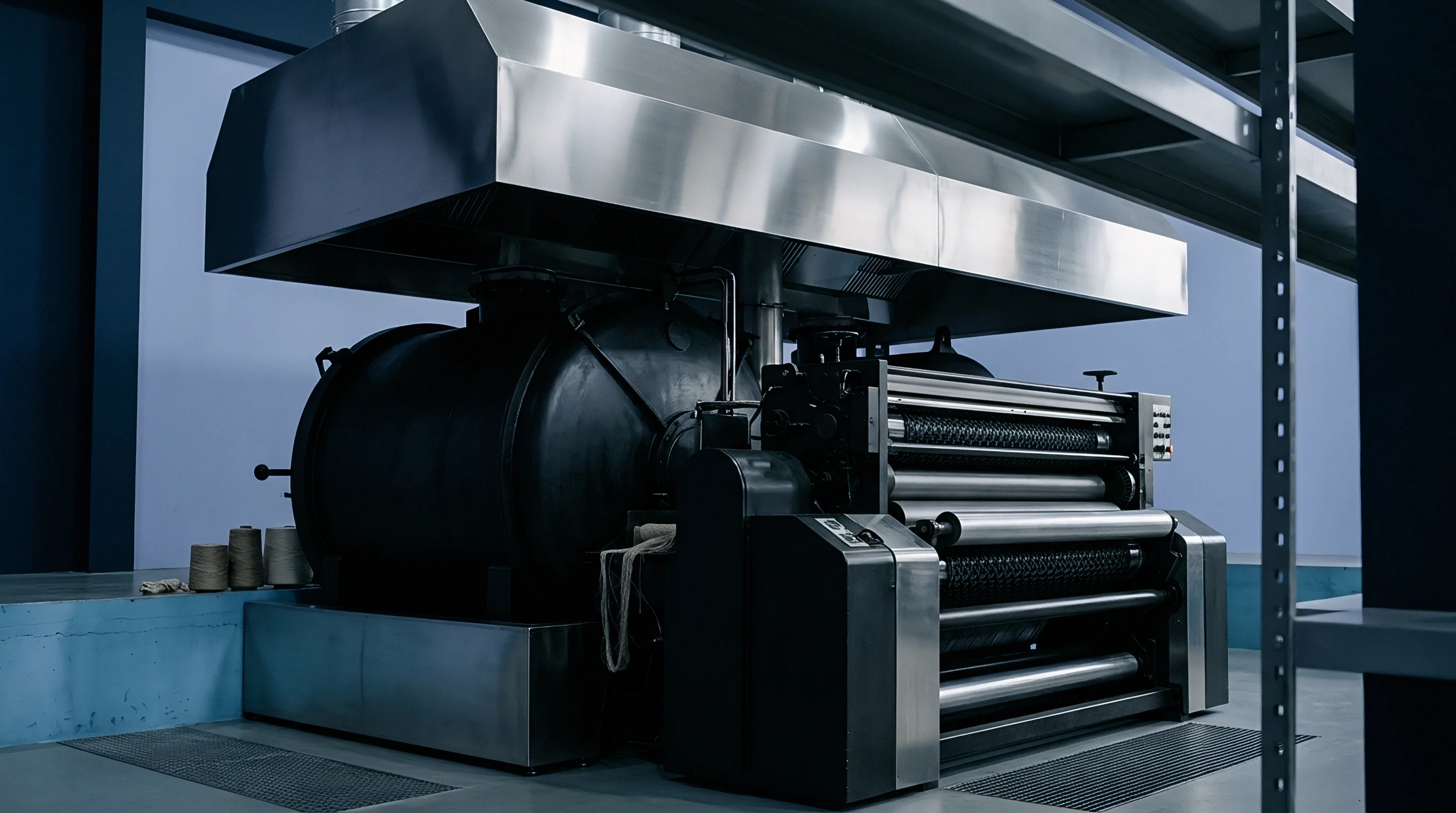
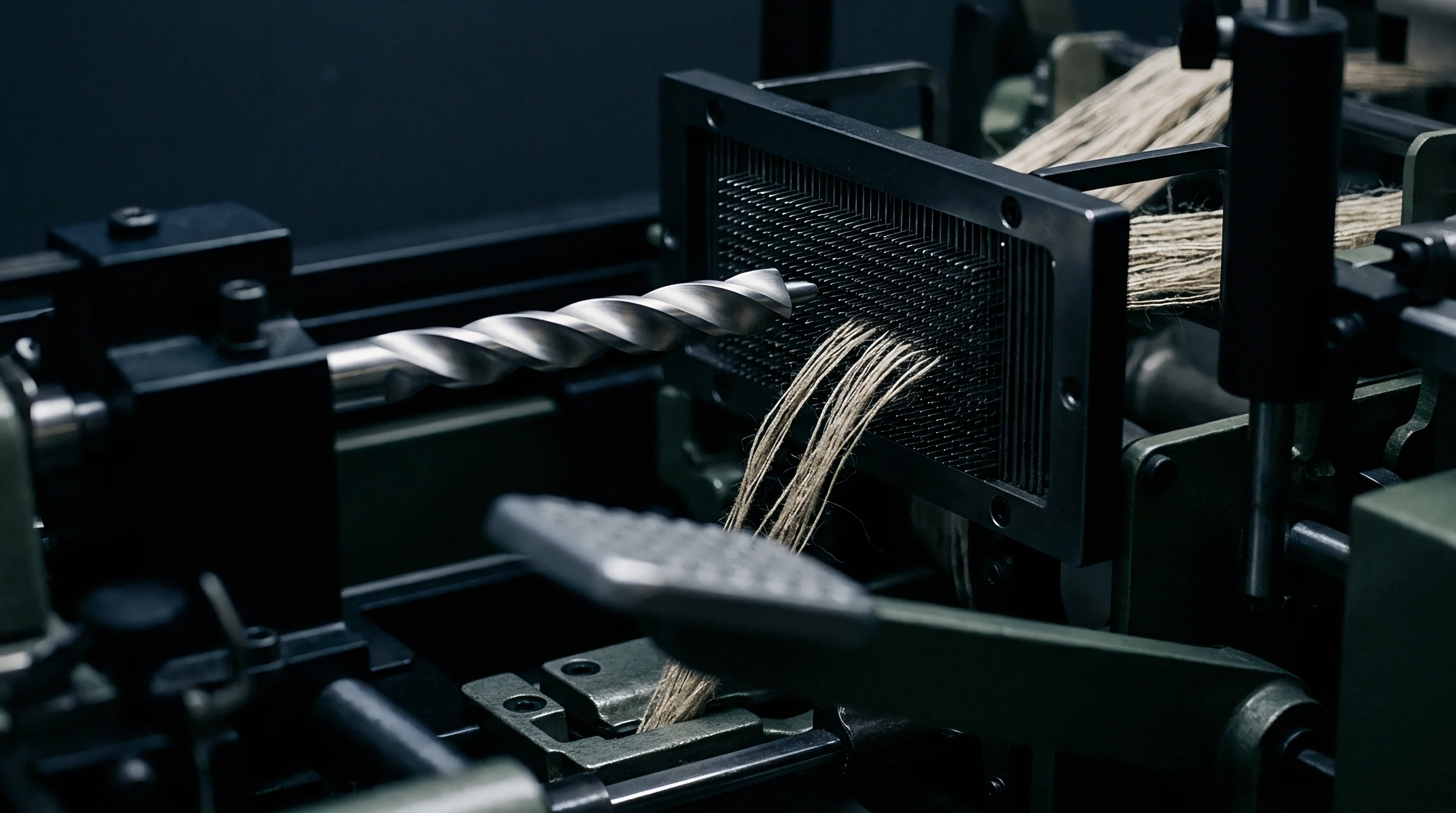
Hackling machines apply progressive tensile and transverse shear stresses using pinned bars mounted on rotating sheets. The operation steps up through graded fields, moving from two pins per centimetre on coarse opening bars to twenty-four pins per centimetre in the finishing zone. Clamps draw stricks through the pin beds, reversing bundle ends to achieve balanced penetration.
The pins cleave composite bast bundles into finer line strands while clearing out shive and short fibre.
Fiber Viscoelasticity under Pin Stress
Flax bundles behave viscoelastically, shedding tensile modulus as moisture regain climbs. Dry bundles at eight percent regain show a high Young modulus with very little elongation at break, causing them to fracture under comb bars travelling above 1.2 metres per second. At twelve percent regain, lower modulus and plastic yield allow bundles to separate cleanly along natural lamellar boundaries.
Fibre-to-metal friction shifts non-linearly with moisture content. As regain approaches thirteen percent, boundary lubrication gives way to hydrodynamic drag, raising the drafting force on the pins. Pin wear accelerates under this load, driving up operating temperatures across comb bars.

Mechanical Adjustments for Thermodynamic History
Operators tune mechanical setups to match the moisture history of the bundle:
- Initial Pin Depth regulates initial contact penetration on unsplit strick ends to avoid shock shearing on dry adsorption material.
- Sheet Velocity Ratio sets the differential speed between upper and lower pin fields to balance longitudinal tension across viscoelastic fibres.
- Pin Insertion Angle shifts the angle of comb bars between seventy-five and eighty-two degrees to compensate for bundle drag changes caused by moisture desorption states.
- Graduated Pitch Staging alters pin density jumps across the machine bed to prevent bundle rupture in low-regain lots.
Feeding high-regain desorption stock into aggressive pin layouts pulls long bundles into the tow rolls, wasting high-grade bast fibre in lower-value fractions. Low-regain adsorption stock suffers broken tips, shortening overall combed yield.
A two percent drop in moisture regain below ten percent cuts hackled line tensile strength by fifteen percent during downstream wet drafting.
Auditors verify bundle conditioning before stricks hit the feed table, because hackling bay air systems cannot correct internal moisture differentials during a production shift without sufficient floor dwell time.

Weight
Commercial settlements for industrial flax turn on commercial mass, defined under ISO 6741 as bone-dry mass adjusted by the standard twelve percent regain allowance. Scutched flax shipments regularly vary between nine and fourteen percent regain with seasonal weather. Costing discrepancies happen when gross delivered weight is taken for payable fibre, leaving billing offices paying for moisture or misallocating raw material inventory.
Commercial Mass Formulations
Establishing commercial mass requires determining lot dry weight via rapid drying ovens or calibrated dielectric meters. The calculation applies standard commodity terms:
Commercial Mass equals Gross Delivered Mass multiplied by the factor of one hundred plus Commercial Regain, divided by one hundred plus Actual Measured Regain.
For forty tonnes of scutched flax delivered at fourteen percent regain against a twelve percent contractual allowance, commercial mass adjusts downward:
Commercial Mass equals 40000 multiplied by 112, divided by 114, yielding 39,298.2 kilograms.
The lot contains 701.8 kilograms of excess water billed at dry fibre rates. At four euros and eighty cents per kilogram for premium French dew-retted line, that translates to 3,368.64 euros paid for absent fibre on a single delivery.
Hackling Mass Balance and Outturn Economics
Evaporation across the hackling line complicates mass balances. Fast-moving comb bars generate convective air currents that strip 0.8 to 1.5 percent moisture off the fibre during processing, so total outturn mass always comes up short against raw intake.
| Output Stream | Nominal Mass (kg) | Actual Regain (%) | Commercial Mass (kg) | Unit Valuation (EUR/kg) | Total Stream Value (EUR) |
|---|---|---|---|---|---|
| Hackled Line Sliver | 21,600 | 10.8 | 21,833.9 | 8.50 | 185,588.15 |
| Hackled Tow Number 1 | 7,200 | 10.6 | 7,291.1 | 2.40 | 17,498.64 |
| Hackled Tow Number 2 | 4,800 | 10.5 | 4,865.2 | 1.60 | 7,784.32 |
| Shive and Comb Dust | 5,920 | 9.8 | 6,038.6 | 0.15 | 905.79 |
| Evaporative Water Deficit | 480 | 0.0 | 0.0 | 0.00 | 0.00 |
Uncorrected weights skew calculated line yields. Dividing raw line sliver weight by raw bale weight shows a line yield of 54.0 percent. Rebalancing both inputs and outputs to commercial mass at twelve percent regain yields an actual figure of 55.5 percent.
That 1.5 percent variance reshapes yarn costings on wet-spun counts above sixty lea.
The cost accountant traces this straight to the finished square metre of linen. In an ordinary plain-weave cloth of one hundred and eighty grams per square metre woven from lea fifty yarn in warp and weft, raw fibre accounts for fifty-five percent of greige fabric price. Miscalculating hackling outturn by 1.5 percent moves weaving cost estimates by twelve euro cents per linear metre.
Suppliers rarely entertain claims for calculated moisture variances once bales are opened and fed to the line.


Shift
Managing preparation rooms requires controlling sorption paths, not just holding relative humidity. Air washers set flatly to sixty-five percent relative humidity do not ensure consistent drafting. When cold bales come in from unheated winter storage, warm moist hall air condenses on the cold bundle surfaces.
The resulting condensation mobilizes surface pectins, leaving sticky residues on the pins that jam hackle bars.

Conditioning Cell Operations
Mills running modern preparation lines stage raw stock through climate cells before feeding the hackler. A standard conditioning sequence runs across three stages:
- Bales enter the thermal equilibration cell without plastic wraps, holding for twelve hours at nineteen degrees Celsius with air circulation at zero point three metres per second.
- Chamber humidity steps to seventy-eight percent relative humidity for eighteen hours, forcing bone-dry lots up the steep adsorption isotherm.
- Relative humidity drops to sixty-two percent for six hours, guiding the final fibre state onto the desorption boundary curve prior to hackling.
Desorption-conditioned fibre carries lower stiffness and greater elongation than fibre brought straight up to target regain on an adsorption curve. Working on the desorption side cuts hackled tow outturn by 2.2 absolute percent across identical raw lots.

Which Environmental Strategy Guarantees Minimal Waste?
Holding fibre on the desorption branch yields the most dependable performance under high-speed pin drafting. Bast fibre conditioned downward from a higher humidity retains water within cell lumens and secondary wall micro-capillaries. This internal moisture lubricates microfibrils during lateral pin shear without dampening surface traction on drafting rolls, so bundles divide cleanly without snapping transversely.
Chamber monitoring pairs psychrometric sensors with routine oven testing. Dielectric bale probes drift by up to 1.8 percent regain when residual salt levels vary after coastal retting, making oven drying at one hundred and five degrees Celsius necessary for calibration.
A contract omitting the hysteresis path definition leaves the buyer absorbing up to three percent yield variation across seasons.
Spinners that build sorption dynamics into their cost models protect themselves from buying excess water or losing outturn to brittle fibre breakage. Incoming moisture history shapes bundle response all through hackling, drawing, roving, and final wet spinning.
Whether uniform moisture equilibrium can ever be reached throughout high-density, five-hundred-kilogram flax bales without extended dwell on the warehouse floor remains an open operational question across the bast trade.