Dew Retted Line Flax Hackling Yield Fundamentals and Testing
Dew retted line flax hackling yield determines long line fiber recovery, tow ratios, and yarn production costs through precise fineness and strength testing.

Straw
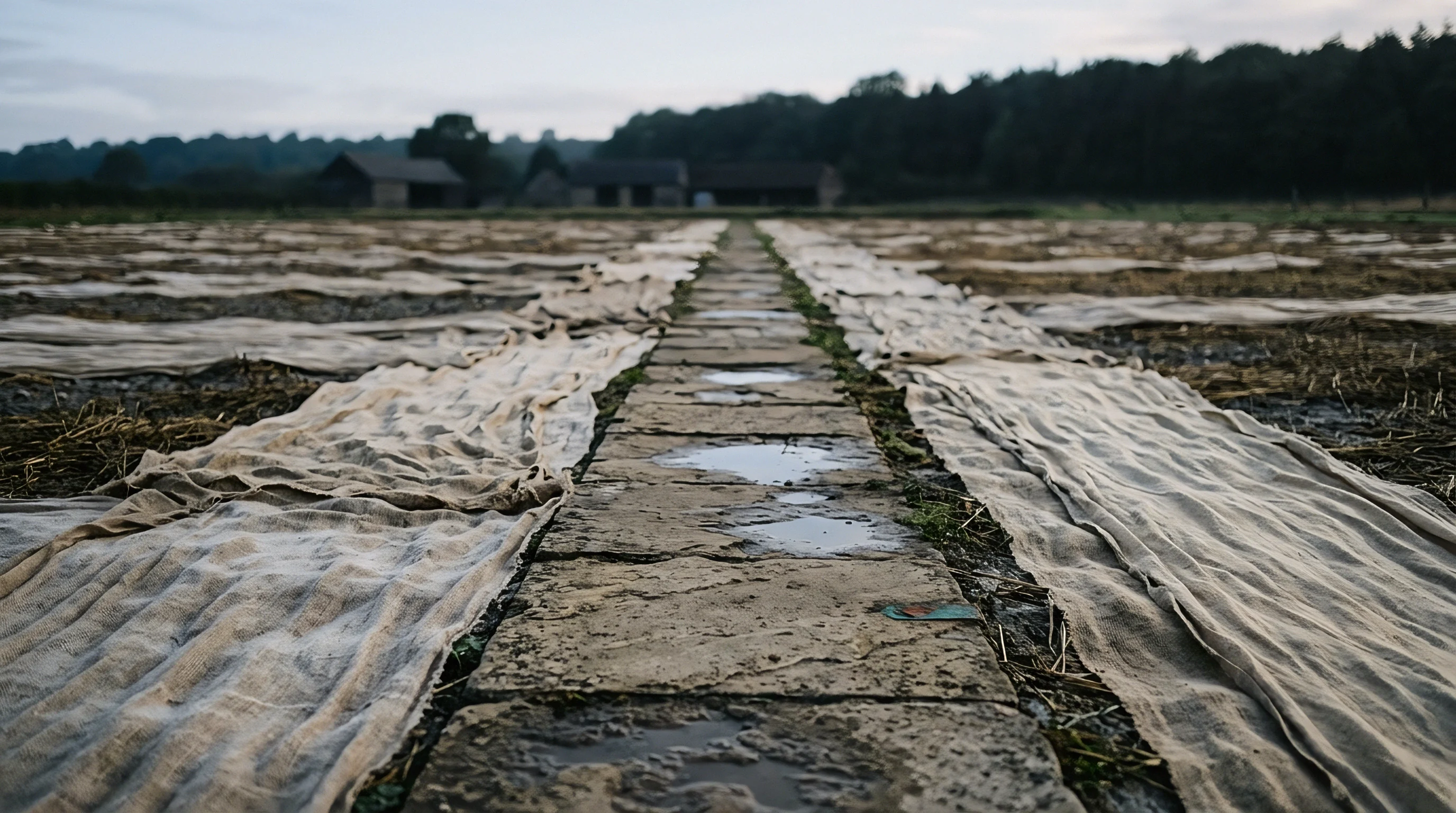
Opening a bale of dew-retted scutched line flax reveals its biochemical history right away. Silver-grey coloration, an earthy odor, and the handle of the raw bundles show how thoroughly field retting broke down the inter-fiber pectins. The process relies on soil fungi ~ principally Cladosporium herbarum, Epicoccum nigrum, and Alternaria alternata ~ colonizing swathed flax straw on arable ground.
These organisms release extracellular enzymes such as polygalacturonases and pectin lyases, which digest the non-cellulosic middle lamella binding bast fiber bundles to the woody core xylem and outer cortex. Under balanced temperature and moisture, fungal hyphae dismantle this pectin matrix without chewing into the structural cell walls inside each bundle. That selective breakdown determines whether hackling pins can later split coarse bundles into fine, spinnable line sliver without shattering the filaments.
Scutched line flax arrives at the mill as long, parallel strands between 600 mm and 900 mm in length. Each strand contains elementary fibers 20 mm to 40 mm long, measuring 15 µm to 25 µm across. Industrial hackling combs these strands toward elementary fiber fineness while preserving overall strand length.
When straw is underscutched or under-retted, heavy deposits of calcium pectinate remain, locking fibers together with rigid intercellular bridges. As these bundles strike the hackling pins, the steel needles cannot penetrate the gummy matrix; high mechanical forces snap the fibers into short shards instead. These fragments drop into the catch pans as low-value tow waste, pulling long line hackling yield down from an expected 52 percent to 40 percent or less.

Dew Retting Mechanics and Bast Fiber Separation
The extent to which indigenous fungi cleave middle lamella polygalacturonans dictates how cleanly cortex bundles separate from inner shive. Moisture drives the entire process. In dry weather below 60 percent relative humidity, fungal activity stalls, leaving stubborn pectin bands throughout the middle of the stem.
Sustained wet spells above 85 percent relative humidity let saprophytes attack the structural cellulose within elementary cell walls. Over-retting degrades bundle tenacity, turning what should have been premium long line fiber into brittle filaments that shear apart under industrial dressing tensions.
Evaluating scutched line lots requires tracking pectin breakdown alongside gravimetric linear density. Properly dew-retted straw produces technical bundles with a linear density between 15 tex and 30 tex, whereas under-retted lots frequently run above 45 tex because of adhered parenchymal tissue. Residual shive content must remain minimal.
Woody xylem fragments bonded to the fiber core act as anchors during combing: when a pin hits shive stuck to an unretted bundle, it shears the technical fiber or pulls the strick out of the clamp entirely, routing long line material straight into the tow box.
Microbial Pectinolysis and Middle Lamella Breakdown
Fungal hyphae colonize field-spread flax straw, releasing polygalacturonase and pectin lyase across alternating wet and dry cycles. This enzymatic attack degrades soluble pectins, hemicelluloses, and low-molecular-weight aromatics within the primary cell wall. Elementary fibers maintain strength through a crystalline cellulose core oriented at microfibril angles of 8 to 10 degrees along the fiber axis ~ a structure that survives intact under sound retting regimes.
The degree of retting ultimately governs physical cohesion between technical filaments, setting the mechanical energy needed to part them during combing.
The chemical degradation of intercellular pectin during field retting establishes the physical boundary for mechanical bundle splitting during subsequent industrial comb dressing.
When erratic weather disrupts retting in the field, scutched fiber develops sharp structural variations along the stem. Root ends resting against wet soil often suffer over-retting and microbial cell-wall thinning, while top ends dry out quickly and remain stiff and under-retted. This axial imbalance causes several distinct fault modes on the hackling floor:
- Root End Degradation leads to localized tensile failure under comb tension, generating high volumes of short, weak comb waste in the initial dressing heads.
- Top End Under-Retting leaves coarse, gummy bundle clusters that resist pin penetration, triggering comb bar deflection and severe pin wear across fine hackling beds.
- Cortical Tissue Adhesion traps epidermis layers against the technical fiber, increasing friction during drafting and causing uneven sliver weight distribution.
- Shive Encapsulation occurs when xylem fragments remain glued to fiber bundles, forcing mechanical clamps to lose grip on adjacent loose filaments.
- Fungal Discoloration creates dark bands where localized cellulose degradation has compromised individual elementary fiber cell walls.
Catching these variations requires thorough incoming inspection before feeding scutched bales into production. Degraded bundle tenacity is frequently attributed to late rains during retting rather than misjudged harvest timing, making laboratory verification necessary.
Pin
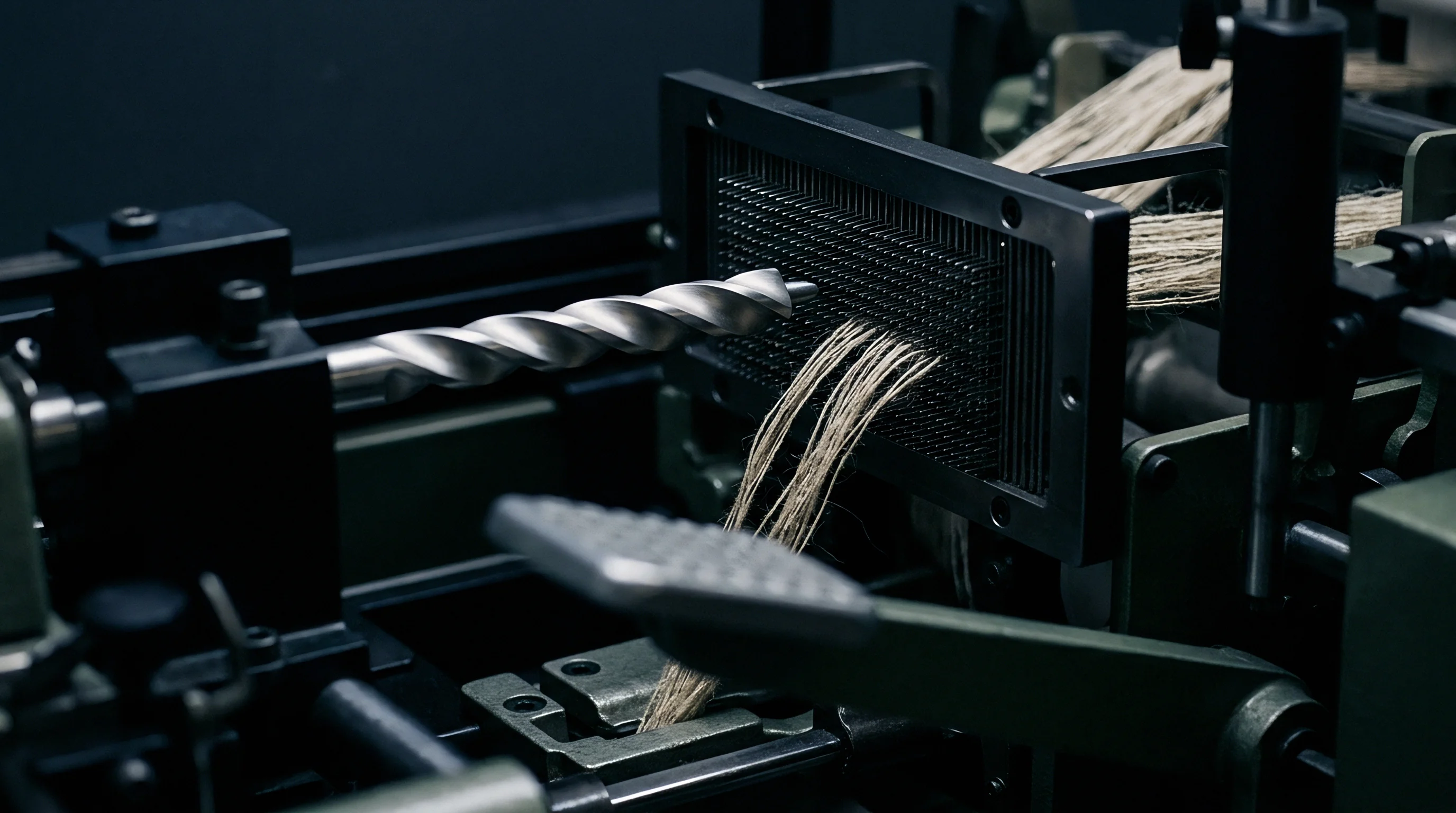
Hackling machines draw scutched line flax through successive dressing stages to comb, parallelize, split, and clean raw bundles. Flax stricks are secured in metal clamps carried along an overhead track above circulating sheets of horizontal comb bars. These bars carry vertical steel pins arranged in progressively tighter configurations.
As the clamp lowers the strick into the moving pin field, the combs clear out short fibers, tangles, residual shive, and unretted cortical tissue, dropping them beneath the frame as hackled tow. Continuous long fibers stay gripped in the clamp, exiting as dressed line flax ready for sliver formation on the piecing drawer.
Pin density directly governs sliver fineness. A standard industrial hackling line houses 12 to 24 separate dressing heads. Initial heads use coarse pins spaced at 1.2 to 2.5 pins per centimeter, with needle diameters exceeding 1.5 mm.
These open the rough strick, clearing loose shive and separating heavy fiber clusters without causing massive breakage. Down the line, intermediate and fine heads step up density to 16 or 18 pins per centimeter using fine needles down to 0.35 mm in diameter. This dense pin field splits technical bundles down to the linear density required for high-count wet spinning.

Hackling Machine Architecture and Combing Mechanics
Industrial dressing frames feed clamped bundles through increasingly fine needle beds to align technical filaments along their axis. Holding force depends entirely on clamp pressure. Rubber linings or knurled steel clamp faces compress the fiber strick under pneumatic or mechanical load.
If clamping pressure drops below 0.6 MPa, combing action drags full-length fibers out of the strick, raising tow weight and gutting hackling yield. Excessive pressure crushes stems at the grip line, leaving weak points that snap when the strick reverses for top-end dressing.
Gradual pin density progression across comb bars prevents premature tensile overload on raw scutched bundles while maximizing long line fiber recovery.
The speed ratio between clamp travel and apron rotation sets the mechanical impact force applied to the flax. Running aprons faster relative to clamp descent increases needle penetration frequency, aiding bundle splitting and shive removal. Pushing speed beyond critical thresholds causes transverse shear failure in low-tenacity dew-retted fibers, which shear on fine pins.
Setting optimum speeds requires balancing production throughput against fiber strength values established during raw material testing.

Where Does Unretted Pectin Impair Hackling Yield?
Residual middle lamella gums bind adjacent filaments tightly together, forcing the combs to fracture long bundles into coarse tow fragments. When unretted fiber reaches fine hackling pins, the needle tips cannot divide the stiff pectin matrix. Instead of sliding between individual filaments, pins subject the whole bundle to bending stresses until the fibers snap.
This failure converts high-grade line material into low-value comb tow, skewing mass recovery.
| Head Pin Density (pins/cm) | Comb Apron Speed (m/min) | Clamp Pressure (MPa) | Hackled Line Yield (%) | Total Tow Waste (%) | Dressed Line Fineness (Nm) |
|---|---|---|---|---|---|
| 1.2 to 6.0 (Coarse) | 120 | 0.7 | 62.5 | 28.0 | 180 |
| 1.2 to 12.0 (Medium) | 140 | 0.7 | 54.2 | 36.1 | 260 |
| 1.2 to 18.0 (Fine) | 160 | 0.7 | 48.5 | 42.3 | 380 |
| 1.2 to 18.0 (Fine) | 180 | 0.5 (Slippage) | 41.0 | 50.2 | 310 |
| 1.2 to 18.0 (Fine) | 180 | 0.8 (Crushing) | 43.8 | 47.5 | 340 |
Combing parameters must also track ambient mill conditions. Relative humidity dictates fiber pliability and static buildup on the pins. At humidity levels below 50 percent, dew-retted flax turns brittle, throwing excessive dust and shattering under the pins; above 75 percent, fibers cling together and wrap around comb bars.
Regular pin inspection is equally critical, since bent or burred needles slice through technical bundles rather than opening them.

Bench
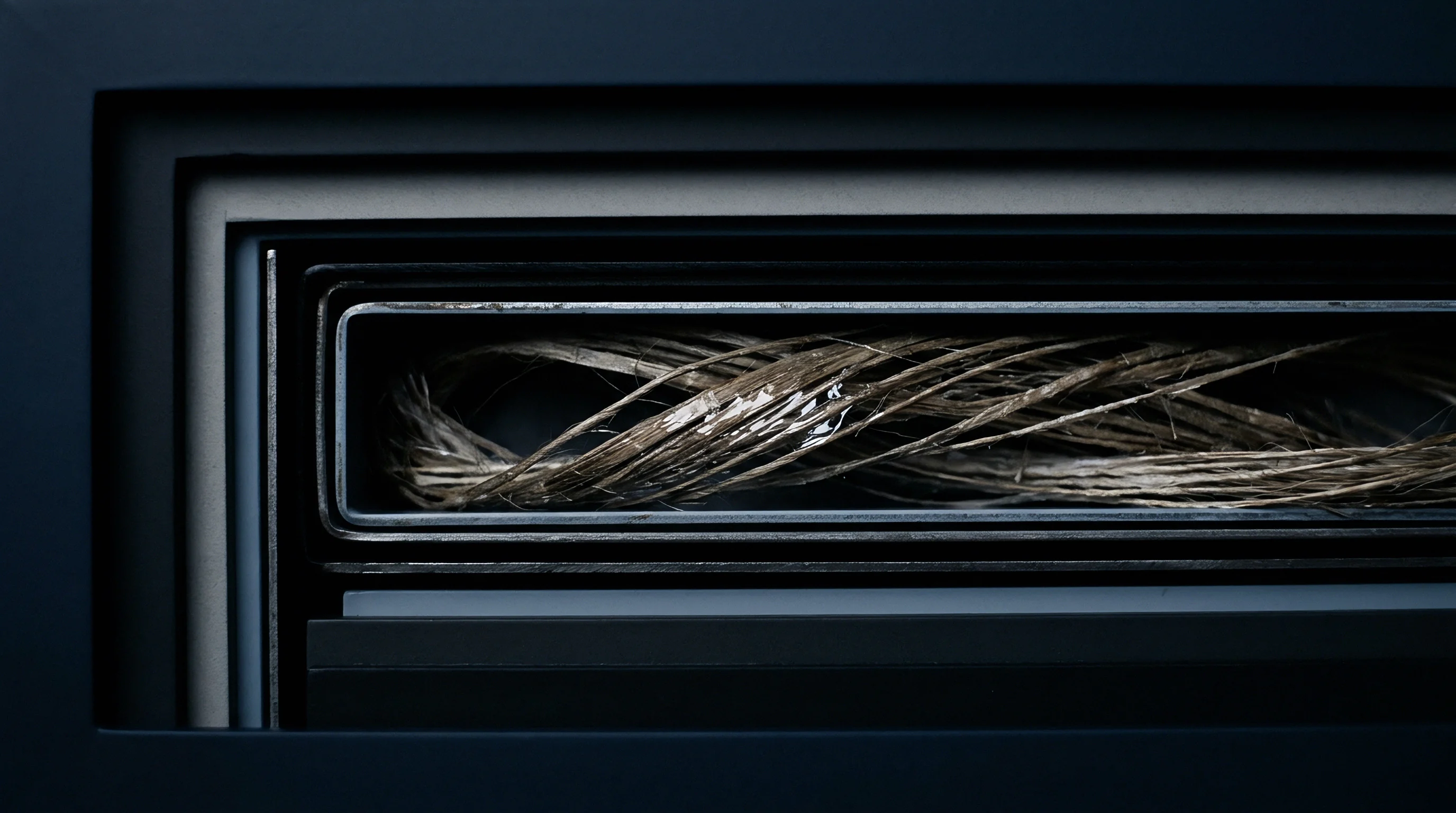
Laboratory testing of dew-retted line flax provides the baseline physical measurements needed to predict hackling performance and spinning limits. Standardized procedures replace the visual appraisal and hand-feel historically used by classers with objective data. Key testing parameters include gravimetric linear density, specific surface area via airflow resistance, flat-bundle tensile tenacity, shive mass percentage, and equilibrium moisture content.
Reliable results require conditioning all samples under ISO 139 parameters ~ 20 degrees Celsius and 65 percent relative humidity ~ for at least 24 hours before testing.
Linear density sets the spinning limit for any flax lot. Measuring the fineness of line flax relies on two main methods: gravimetric tex determination and airflow permeability testing under ISO 2370. Gravimetric analysis involves cutting a parallelized bundle to a calibrated length, weighing it on an analytical balance, and counting individual filaments under magnification to find mass per unit length.
The metric number (Nm) reflects the length in meters per gram of fiber. High-grade dew-retted line flax yields dressed fineness values between Nm 280 and Nm 450, corresponding to linear densities of 3.57 tex to 2.22 tex.
Standardized Testing for Bast Fiber Physical Properties
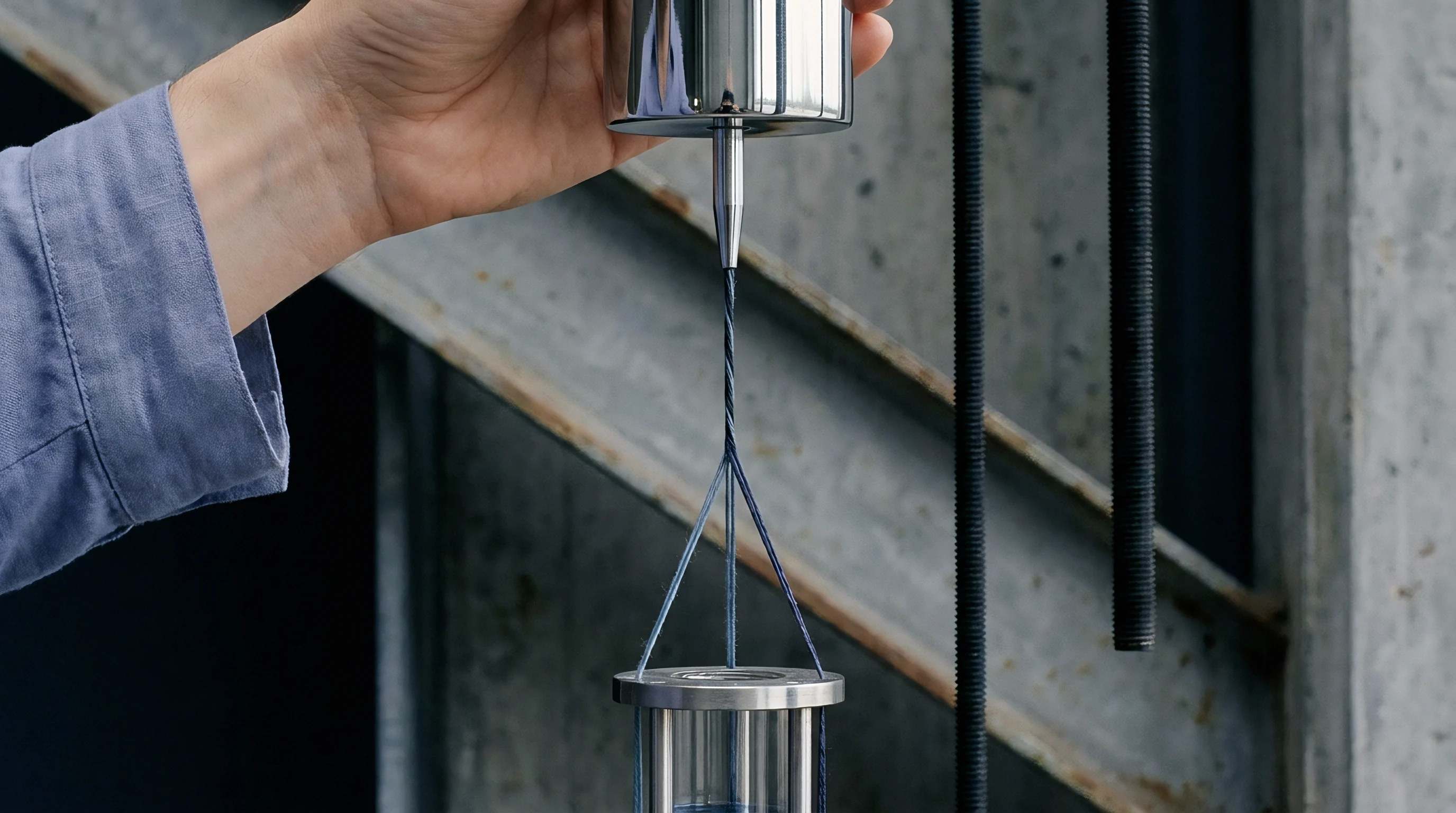
Strict climate control at 20 degrees Celsius and 65 percent relative humidity is essential when testing scutched line stock. Tensile strength trials determine the maximum breaking force a fiber bundle withstands under axial load. Tests follow ISO 2370 using flat clamps on a constant-rate-of-extension tester.
A bundle weighing between 2.0 mg and 5.0 mg is clamped at a set gauge length ~ typically 10 mm or 0 mm ~ and loaded to break. Tenacity is recorded in centinewtons per tex (cN/tex). Sound dew-retted line flax requires a flat-bundle tenacity above 38 cN/tex at 0 mm gauge length.
Lower values point to over-retting, rough scutching damage, or microbial degradation of the cell walls.
Enforcing standardized test conditions under ISO standards isolates environmental regain variation from genuine structural cellulose strength during bundle tenacity trials.
Shive content testing determines the mass fraction of unretted woody fragments left in scutched or hackled fiber. The test uses mechanical shaking and manual picking to separate shive from a 50-gram representative sample, followed by gravimetric weighing. Clean hackled sliver requires shive content below 0.2 percent by weight.
Excess shive creates draft instability on roving frames and triggers end breaks during ring spinning.
| Parameter | Test Standard | Sample Size / Condition | Acceptable Target Range | Measurement Unit |
|---|---|---|---|---|
| Airflow Fineness | ISO 2370 | 5.0 g compressed plug | Nm 250 to Nm 420 | Metric Number (Nm) |
| Bundle Tenacity | ISO 2370 / ASTM D1445 | 10 mm gauge, 3.0 mg bundle | 34.0 to 44.0 | cN/tex |
| Shive Content | ISO 6741 | 50.0 g raw strick | 0.10 to 0.35 | Mass Percentage (%) |
| Moisture Regain | ISO 6741-1 | 100.0 g oven-dry method | 11.5 to 13.0 | Percentage (%) |
| Fibre Length Spread | ISO 2709 | 100 mm comb sorter array | 550 to 750 | Millimeters (mm) |

Gravimetric Linear Density and Airflow Fineness Methods
ISO 2370 outlines airflow permeability protocols across compressed fiber plugs to evaluate specific surface area. The instrument draws a regulated air stream through a chamber packed with a known mass of aligned flax fibers. Finer fibers present greater surface area, resisting airflow and creating a larger pressure drop across the plug.
This differential pressure correlates with gravimetric tex, giving spinning mills a fast, repeatable metric for quality control when tuning hackling machines.
- Extract representative stricks from ten distinct bales selected randomly across the raw material lot.
- Condition the extracted fiber samples at 20 degrees Celsius and 65 percent relative humidity for 24 hours.
- Comb the conditioned sample manually using a hand dressing pin block to remove loose short fibers and dust.
- Cut a central section of 100 mm precisely from the middle of the combed strick using a dual-blade cutter.
- Weigh a 5.00-gram specimen on an analytical balance accurate to 0.001 grams.
- Pack the 5.00-gram specimen uniformly into the ISO 2370 airflow test chamber.
- Initiate regulated air flow through the chamber and record the differential pressure reading from the manometer.
- Convert the pressure drop reading into metric fiber number (Nm) using the calibrated instrument conversion table.
Tracking test data across conditioned specimens isolates environmental moisture swings from genuine bundle fineness. Unconditioned fibers evaluated in dry rooms show artificially high fineness due to radial fiber shrinkage. A practical complication remains in whether micro-void distributions inside dew-retted walls distort permeability readings independently of external bundle diameter.
Tally
Yield calculations form the economic baseline of flax processing. Hackling converts one raw material stream ~ scutched line flax ~ into three distinct outputs: hackled dressed line, combed hackling tow, and solid waste comprising shive dust, fiber fragments, and moisture loss. Keeping tight control over this mass balance is essential, because even modest percentage shifts from line fiber into tow immediately alter unit spinning costs.
Processing 1000 kilograms of scutched flax separates raw mass into predictable fractions of long line sliver, tow, and extraction waste. Scutched line purchased at 12 percent commercial regain goes to the dressing line, where a 16-head hackling machine yields a definitive mass balance across all output fractions.
Mass Balance Mechanics across Industrial Hackling Lines
Determining long line recovery requires balancing bone-dry raw input against total comb waste collected across the dressing cycle. Total incoming mass must match the sum of all outgoing streams once adjusted for ambient moisture changes. Calculating these fractions on a dry basis reveals the true mechanical efficiency of the line.
Consider a standard production run processing a batch of dew-retted scutched flax:
- Scutched Line Input Mass equals 1,000.0 kg at a measured moisture content of 12.0 percent, yielding a bone-dry fiber mass of 880.0 kg.
- Hackled Dressed Line Mass recovered from the clamps equals 520.0 kg at 11.8 percent moisture content, yielding a bone-dry mass of 458.64 kg.
- Hackling Tow Mass collected from all comb aprons equals 380.0 kg at 11.5 percent moisture content, yielding a bone-dry mass of 336.3 kg.
- Shive and Dust Waste Mass collected in vacuum extraction filters equals 85.0 kg dry mass.
- Unaccounted Evaporative Loss accounts for the remaining 15.0 kg of moisture lost due to mechanical friction heating during combing.
Calculating the primary hackling parameters from these dry mass figures establishes true material recovery performance:
Hackled Line Yield Percentage = (458.64 kg Dry Dressed Line / 880.0 kg Dry Input Scutched Line) 100 = 52.12 percent.
Hackling Tow Percentage = (336.30 kg Dry Tow / 880.0 kg Dry Input Scutched Line) 100 = 38.22 percent.
Solid Waste Loss Percentage = (85.00 kg Dry Waste / 880.0 kg Dry Input Scutched Line) 100 = 9.66 percent.
Yield Derivation and Waste Allocation Arithmetic
Yield loss carries heavy financial consequences. Dressed line commands a far higher market value than combed tow. If incomplete retting or aggressive pinning drops long line yield from 52.12 percent to 42.00 percent while increasing tow output to 48.34 percent, the raw material cost loaded onto the remaining line fiber climbs sharply.
Mapping market prices across the mass balance highlights this exposure. Assuming scutched line costs 4.50 EUR/kg landed, hackled tow returns 1.20 EUR/kg, and solid waste has zero value, the net raw material cost per kilogram of dressed line is calculated as follows.
At 52.12 percent line yield:
Input Cost = 1,000 kg 4.50 EUR/kg = 4,500.00 EUR.
Tow Credit = 380 kg 1.20 EUR/kg = 456.00 EUR.
Net Dressed Line Cost = (4,500.00 EUR – 456.00 EUR) / 520 kg = 7.78 EUR/kg of dressed line flax.
At 42.00 percent line yield (yielding 420 kg dressed line and 481 kg tow):
Input Cost = 1,000 kg 4.50 EUR/kg = 4,500.00 EUR.
Tow Credit = 481 kg 1.20 EUR/kg = 577.20 EUR.
Net Dressed Line Cost = (4,500.00 EUR – 577.20 EUR) / 420 kg = 9.34 EUR/kg of dressed line flax.
A ten-percent drop in hackling yield increases the effective fiber input cost of the spinnable line sliver by 20.05 percent per kilogram, destroying profitability long before the material reaches a spinning frame.
Ignoring dry mass calculations when setting up hackling frames masks mechanical fiber damage and produces significant financial losses whenever raw flax is bought on wet mass.
Paperwork
Commercial contracts for dew-retted line flax require explicit technical parameters to prevent disputes over yield, moisture regain, and fiber fineness. Relying on visual descriptions exposes spinning mills to financial risk. Procurement contracts tie purchase orders to physical parameters measured under international standards, incorporating explicit tolerances, penalty discount schedules, and rejection thresholds.
Specifications should stipulate minimum bundle tenacity, airflow fineness, maximum shive content, standard moisture allowances, and certified hackling yields under test comb conditions.
Contracts must define moisture limits, shive mass fractions, and minimum tenacity thresholds. Standard commercial moisture regain for flax is 12.0 percent under international trade terms. Yet bales stored in unconditioned warehouses absorb ambient humidity, often reaching 15.0 percent moisture or higher.
Buying raw fiber on gross scale weight without adjusting for excess water means paying line-flax prices for moisture. Settlement invoices should always determine dry mass via oven-dry tests (ISO 6741-1) and apply the standard 12.0 percent regain allowance.

Contract Specification Terms for Scutched Flax Purchasing
Valid lot sampling requires drawing cores from 10 percent of bales across any incoming shipment, adhering to ISO 2859-1 acceptance sampling protocols. On arrival, inspectors pull core samples across multiple bale zones to compile a composite sample for lab testing. If results miss contractual specifications, predefined discount schedules apply directly to the invoice before payment.
Incorporating certified laboratory testing parameters into initial purchase agreements establishes clear legal grounds for invoice adjustments when delivered fiber fails hackling yield targets.
Procurement documents should specify clear limits across all key fiber properties:
- Certified Hackling Yield Floor establishes a mandatory minimum line fiber recovery of 50.0 percent when dressed on an agreed laboratory test comb frame, with a 1.5 percent invoice price deduction for every 1.0 percent yield shortfall down to 45.0 percent.
- Maximum Shive Content Threshold caps woody stem contamination at 0.30 percent by mass, triggering a fixed cleaning fee deduction of 0.15 EUR/kg if measured shive falls between 0.31 and 0.50 percent, and granting full lot rejection rights above 0.50 percent.
- Minimum Bundle Tenacity Limit mandates a minimum flat-bundle breaking strength of 36.0 cN/tex under ISO 2370 test conditions, with immediate rejection of any lot testing below 32.0 cN/tex.
- Target Airflow Fineness Range specifies acceptable fiber fineness between Nm 280 and Nm 360, applying price adjustments for coarse stock measuring below Nm 250 due to reduced high-count spinning utility.
- Commercial Moisture Regain Adjustment Clause enforces invoice settlement based strictly on ISO 6741 dry mass calculations plus standard 12.0 percent regain, rejecting any weight surcharge resulting from excess dampness above 13.5 percent.
Sampling Dossiers and Laboratory Quality Verification
Aligning quality records between supplier labs and receiving mills prevents delays at delivery. The seller must provide an accredited certificate of analysis for each batch prior to dispatch. The receiving mill then runs verification tests on core samples within five business days.
When test results diverge, samples go to an agreed independent referee laboratory whose findings serve as final and binding.
Under standard purchase clauses, if verified laboratory hackling yield falls more than 5.0 percentage points below the contractual baseline, the buyer retains the right to reject the entire shipment at the seller expense.


Tariff
Choosing high-grade dew-retted line flax with strong hackling yield directly drives ring-frame efficiency and landed fabric economics. Hackling yield is the central cost multiplier in linen production: every kilogram lost as tow or extraction waste must be absorbed by the surviving line sliver. Wet spinning magnifies these differences.
Fine wet-spun yarns ~ from Nm 39 (15 lea) up to Nm 102 (40 lea) ~ require fine, uniform line fibers with high bundle tenacity. Trying to spin high counts from coarse, low-yield, or under-retted flax leads to excessive end breaks on the ring frame, inflating labor costs, lowering efficiency, and creating fabric slubs that lead to downgrades at final inspection.
Fiber fineness in metric number dictates the highest yarn count a ring frame can spin without excessive breakage. During wet spinning, line fiber passes through a hot water trough at 60 to 70 degrees Celsius ahead of the drafting zone. This bath softens residual pectins in the hackled sliver, allowing individual elementary fibers to slide past each other.
If hackling failed to split the technical bundles because of poor retting or dull pins, these heavy aggregates resist drafting, causing ends down or leaving thick yarn slubs that break during winding.

Count Capability and Wet Spinning Limit Models
Calculating the final landed cost per meter of fabric requires compounding hackling yield losses with spinning waste rates. High-count yarns demand higher drafting ratios, making sliver levelness critical. Sliver produced from flax yielding 54 percent hackled line contains long, well-split filaments with low cross-sectional variation.
This uniformity enables smooth drawing across three passages of draw frames, yielding an even roving that holds together under high ring drafts.
| Hackling Yield Grade (%) | Max Spinnable Count (Nm) | Roving Waste (%) | Spinning End Breaks (/1000 sp-hr) | Yarn Cost (EUR/kg) | Finished Metre Cost (EUR/m) |
|---|---|---|---|---|---|
| 56.0 (Fine Dew-Retted) | Nm 80 (31.5 lea) | 2.1 | 22 | 18.50 | 4.85 |
| 52.0 (Standard Line) | Nm 52 (20.5 lea) | 3.2 | 35 | 15.20 | 3.95 |
| 46.0 (Coarse / Short Line) | Nm 39 (15.3 lea) | 4.8 | 58 | 13.80 | 3.60 |
| 40.0 (Under-Retted Line) | Nm 26 (10.2 lea) | 7.5 | 95 | 13.10 | 3.45 |

Fabric Cost Integration and Landed Metre Price Calculations
To see how fiber quality flows through to finished fabric costs, consider a 150 g/m² plain weave fabric woven at 160 cm width using Nm 52 wet-spun line yarn in both warp and weft. Total fabric cost incorporates raw fiber price, hackling yield, spinning conversion efficiency, weaving stops, and finishing shrinkage.
Comparing two sourcing strategies illustrates why discounted scutched flax often produces expensive cloth:
Pathway A: Premium Dew-Retted Scutched Line
- Raw Scutched Flax Purchase Price equals 5.20 EUR/kg.
- Verified Hackling Yield achieves 55.0 percent long line recovery, generating a net dressed line fiber cost of 8.85 EUR/kg after tow credit.
- Spinning Mill Processing Efficiency achieves 92.0 percent total yarn yield from dressed line to packaged cone, resulting in an Nm 52 yarn production cost of 14.80 EUR/kg.
- Weaving Efficiency on Air-Jet Looms runs at 94.5 percent efficiency due to high yarn tenacity (28.0 cN/tex) and low yarn defect counts, consuming 0.265 kg of yarn per meter of grey fabric.
- Finished Fabric Landed Cost after finishing and wet processing settles at 4.22 EUR per linear meter.
Pathway B: Discount Under-Retted Scutched Line
- Raw Scutched Flax Purchase Price equals 4.10 EUR/kg (a 21.1 percent initial raw material price saving).
- Verified Hackling Yield achieves only 42.0 percent long line recovery due to coarse bundle breakage, raising net dressed line fiber cost to 8.90 EUR/kg after tow credit.
- Spinning Mill Processing Efficiency drops to 84.0 percent total yarn yield due to high fly waste and frequent end breaks, increasing Nm 52 yarn production cost to 16.40 EUR/kg.
- Weaving Efficiency on Air-Jet Looms falls to 86.0 percent due to weak warp spots (yarn tenacity 21.5 cN/tex), increasing loom stoppage downtime and raising yarn consumption to 0.285 kg per meter due to waste.
- Finished Fabric Landed Cost after finishing settles at 5.15 EUR per linear meter.
Opting for the cheaper fiber stock ultimately increased finished cloth cost by 22.0 percent. The stronger hackling yield of the premium dew-retted lot protected fiber alignment, lowered spinning losses, preserved loom speeds, and yielded a cheaper finished fabric. Flax purchasing decisions have to account for the entire physical processing chain ~ from field retting chemistry and pin settings to final woven meter economics.