Spinning Frequency
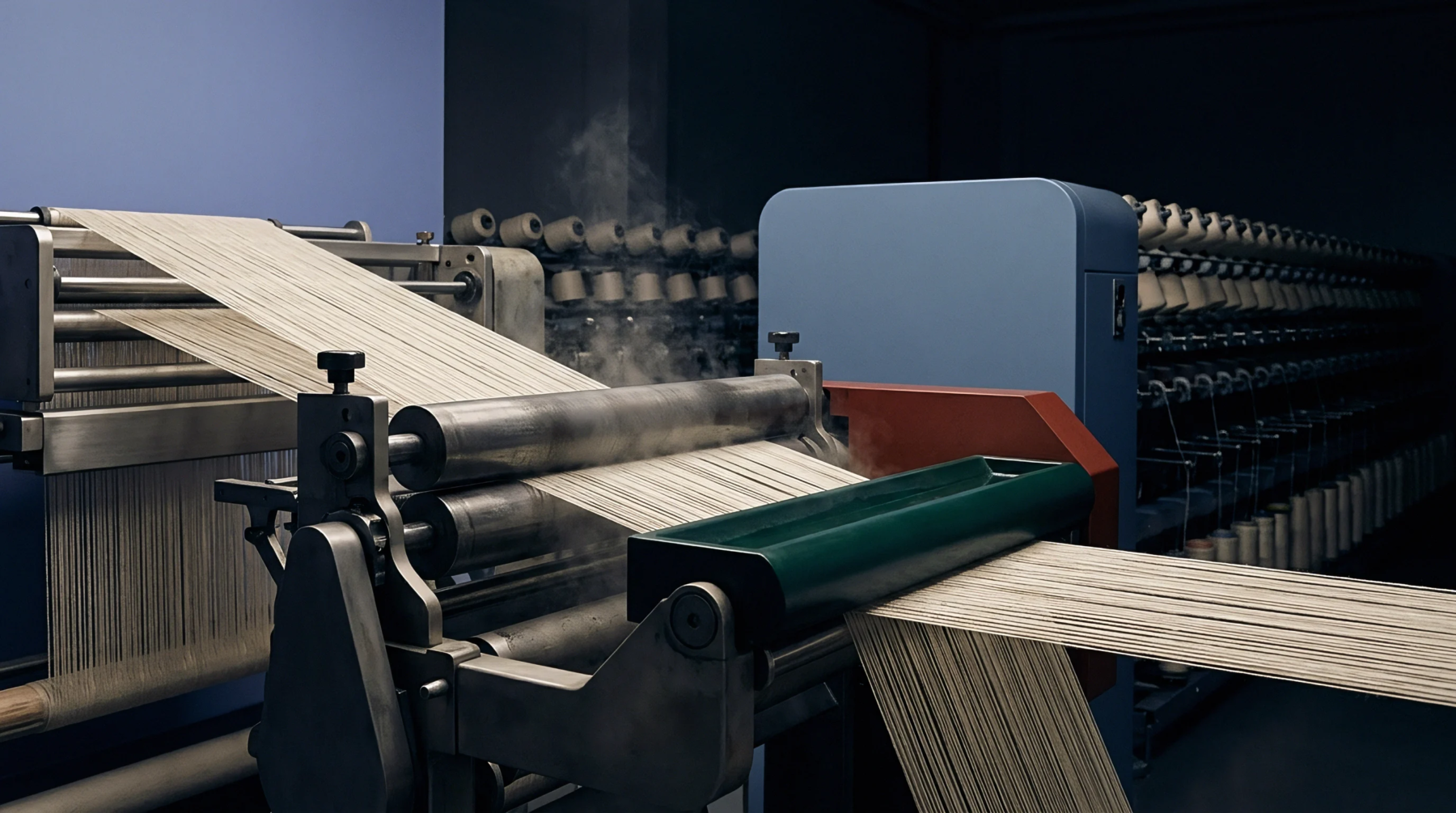
An angular measurement of fibre orientation inside a roving strand determines the tensile stability and downstream drafting capacity of flax material before the material enters the spinning frame. A roving twist protects the integrity of the parallel fibres during handling or transport between the primary drawing stage and the ring frame. High rotation counts provide resistance to breakage but increase the physical force required for further attenuation.
Mills record these values on the batch production card to maintain consistency across shift rotations. The density of the spiral holds the individual bast fibres against radial displacement. If the tension is too loose, the structure separates under mechanical strain.
Excessive rotation creates a hard shell that resists chemical penetration during the subsequent wet spinning process. Each spinning mill maintains an internal tolerance based on the specific fineness of the raw flax line.
Drafting Friction
Operators verify the coefficient of internal resistance by applying a controlled load to a sample segment of the roving twist to check for early fibre slippage. This test occurs before the material moves to the final wet spinning bath because an uneven rotation destroys the uniformity of the output yarn. A standard grade of roving twist allows for predictable elongation during high speed machine operation.
Technicians calibrate the drafting rollers to match the specific spiral density of each batch. When the value drifts outside the established mill limit, the machine operator recalibrates the motor drive to reset the delivery speed. A consistent twist protects the fibre bundles from rupturing during the sharp acceleration inside the draft zone.
Improper settings result in uneven yarn diameter and excessive waste at the bottom of the spindle.
Production Boundary
Final buyer quality criteria often specify the maximum allowable variation in the roving twist to ensure the consistency of the finished linen product for export. Any deviation from the agreed measurement triggers an immediate stop of the spinning line to prevent the output of sub-standard textile batches. The measurement stops at the entry point of the spinning frame, as the subsequent drafting process removes the initial structure.
Buyers reject batches that fail to meet these specific rotation requirements during the pre-shipment audit. A stable twist level ensures the uniformity of every woven piece.