Sizing and Warp Preparation behind Linen Warp Breakage Rates
Controlled size encapsulation and 10 percent moisture regain suppress linen warp breaks, preserving high loom efficiency and direct landed metre margins.
Creel
A single broken end on a high-speed rapier loom running pure wet-spun flax halts production immediately. The loom stops, the drop wire falls to the contact bar, and the operator must walk the alley to locate an untied tail buried beneath three thousand adjacent ends. Wet-spun linen yarn exhibits high tensile strength along its axis alongside minimal elongation at break, typically between 1.5 percent and 2.2 percent.
When an unyielding yarn encounters dynamic tension spikes during warping, the fiber bundles do not stretch to absorb the shock. They fracture cleanly at structural nodes. The preparation of a linen warp begins at the package creel, where unwinding geometry, balloon control, and package build quality dictate whether yarn arrives at the sizing box with its fibrillar integrity intact.
Dry-spun flax packages present irregular package densities that complicate tension regulation. During direct warping from a V-creel or parallel creel, yarn speeds reaching 400 to 600 metres per minute induce severe ballooning if yarn packages carry soft shoulders or uneven winding cross-angles. The friction of the flax bundle sliding over ceramic disc tensioners generates surface abrading forces that loosen weak pectin bonds.
Flax fibers consist of cellulose microfibrils cemented by non-cellulosic polysaccharides, primarily pectins, hemicelluloses, and lignin. These chemical bonds shear under friction, releasing loose surface fibrils that form slubs upstream of the warper reed.
Package Density and Unwinding Tension Profiles
Cross-wound cones with a traverse angle of 18 to 22 degrees provide stable unwinding performance for wet-spun flax counts ranging from 14 Nm to 50 Nm (71 tex down to 20 tex). Softer cone packages collapse at high unwinding velocities, causing yarn traps where the running end snags under adjacent layers. Package hardness is measured across three distinct zones: the nose, the middle body, and the base.
A durometer reading varying by more than 8 Shore D units across a single package indicates density inconsistency that produces variable drag at the tension disc.
| Yarn Count (Nm / Tex) | Spinning Method | Creel Tension (cN/tex) | Warping Speed (m/min) | Package Hardness (Shore D) |
|---|---|---|---|---|
| Nm 14 / 71.4 Tex | Dry Spun | 0.85 to 1.10 | 350 to 400 | 68 to 72 |
| Nm 26 / 38.5 Tex | Wet Spun | 0.95 to 1.25 | 450 to 520 | 74 to 78 |
| Nm 36 / 27.8 Tex | Wet Spun | 1.10 to 1.40 | 480 to 550 | 76 to 80 |
| Nm 50 / 20.0 Tex | Wet Spun High Grade | 1.20 to 1.55 | 500 to 600 | 78 to 82 |
Tension variations at the creel propagate directly into the sizing cylinder. When adjacent warp ends enter the size vat under differing tensions, slack ends absorb greater volumes of liquor while tight ends experience surface shearing. This discrepancy creates uneven sizing pick-up across the sheet.
The target tension for wet-spun linen on direct warping creels remains strictly calibrated between 1.0 and 1.3 centinewtons per tex to prevent microfibril dislocation.

Sectional Warping versus Direct Slashing
Direct beaming into a sizing machine offers continuous tension control for long runs exceeding 5,000 metres of woven cloth. For short sampling warps or complex multi-count stripe patterns, sectional warping onto a conical drum remains the standard industrial route. Sectional warping introduces distinct risk factors for 100 percent linen warps.
The incline angle of the warping drum must match the build thickness of each section precisely. If the cone angle calculation misses the buildup rate by even 0.5 degrees, the edges of successive bands slip downward, creating loose selvage ends that lose tension during beaming-off.
Dry-spun flax yarns processed via sectional warping suffer higher breakage rates when transferred from drum to weaver beam. The outer wraps exert compressive pressure on inner layers, crushing hairy flax fibrils together and promoting inter-yarn adhesion prior to sizing. Direct beaming directly from creel to slasher beam preserves the parallel alignment of ends, keeping each bundle isolated until it contacts the sizing liquor.
Defect Detection and Clearing Thresholds
Optical yarn clearers situated at the winder stage eliminate thick places, thin places, and nep clusters that cause shedding blockages. Flax yarn contains natural structural irregularities, known as nodes or dislocations, which occur every 200 to 500 micrometres along the elementary fiber. Optical clearers set to standard cotton clearing curves reject these natural nodes as slubs, generating excessive package splices.
Mechanical pneumatic splicers for linen must apply controlled water mist and precise untwist-retwist cycles to match the original yarn breaking force.
- Splice Strength Ratio reaches a minimum of 80 percent of the parent yarn tensile strength when tested under ISO 2062 conditions.
- Splice Diameter Increase remains capped below 1.25 times the nominal yarn diameter to prevent clearance faults through heddle eyes.
- Optical Cut Channels calibrate clearing limits specifically to eliminate loose outer bark fragments without cutting natural cell nodes.
- Knot Elimination replaces all manual weavers knots with pneumatic or thermal adhesive splices to clear drop wires cleanly.
Improper package clearing and uncontrolled creel friction deliver damaged yarn to the sizing line, resulting in elevated shedding resistance, continuous warp entanglement behind the drop wires, and severe mechanical stoppage across the weaving floor.


Bath
Sizing linen differs fundamentally from sizing cotton or synthetic staple yarns. Flax is a stiff, inelastic bast fiber characterized by low moisture absorption velocity across its crystalline outer cell walls, yet high water retention within its inner lumen once saturated. Cotton fibers possess a natural ribbon-like convolution that accommodates film elasticity.
Linen bundles maintain a crystalline, highly oriented cellulose core surrounded by hydrophobic residual waxes and lignins. Size formulations must penetrate the bundle interstices to bond individual elementary fibers together while creating a smooth, flexible outer film that lays down protruding hairiness without making the yarn brittle.
Starch selection dictates the rheological behavior of the size paste at elevated temperatures. Native potato starch delivers high binding power yet exhibits rapid retrogradation and high paste viscosity that resists penetration into dense wet-spun bundles. Modified low-viscosity starches, including oxidized corn starch and hydroxyethyl ether derivatives, maintain fluid mobility at high solids concentrations, allowing size liquor to enter the yarn core at processing temperatures between 85 and 92 degrees Celsius.

Formulation Chemistry and Viscosity Dynamics
A standard size recipe for fine wet-spun linen incorporates modified potato starch or carboxymethylated corn starch, polyvinyl alcohol (PVA) with a degree of hydrolysis around 88 percent, and a water-dispersible polyester or acrylic binder. Polyvinyl alcohol confers tensile elasticity to the dried size film, raising the yield point of the sized yarn under dynamic loom tension. Wetting agents and refined tallow or synthetic lubricants reduce the coefficient of friction against steel heddles and reeds.
| Chemical Component | Fine Count Formulation (Nm 36 to 50) | Medium Count Formulation (Nm 20 to 26) | Coarse Dry-Spun (Nm 10 to 14) | Functional Role |
|---|---|---|---|---|
| Modified Hydroxyethyl Starch | 50 kg / 1000 L | 65 kg / 1000 L | 80 kg / 1000 L | Primary film and bundle core binder |
| Polyvinyl Alcohol (88% Hydrolysis) | 30 kg / 1000 L | 20 kg / 1000 L | 10 kg / 1000 L | Film elasticity and tensile elongation |
| Polyacrylic Copolymer Dispersion | 15 kg / 1000 L | 12 kg / 1000 L | 10 kg / 1000 L | Adhesion promoter to flax cell walls |
| Sulfated Oil / Synthetic Wax | 5 kg / 1000 L | 6 kg / 1000 L | 8 kg / 1000 L | Surface lubrication and antistatic control |
| Nonionic Penetrating Agent | 1.5 kg / 1000 L | 1.5 kg / 1000 L | 2.0 kg / 1000 L | Lowering surface tension for wet-in |
Viscosity measurement demands rigorous timing using a standard Zahn cup or rotary viscometer. At 85 degrees Celsius, size viscosity must measure between 8.0 and 12.0 centipoise for fine linen warps. Higher viscosities prevent core migration, creating heavy surface deposits that flake off during shedding.
Where Sizing Film Penetration Fails under High Tension?
The balance between size penetration and size encapsulation determines warp survival in the loom shed. Pure surface encapsulation without internal penetration leaves core fibers dry and free to slide against one another under tension. The yarn bundle slips internally, necking down in diameter and snapping at modest loads.
Total core impregnation without a distinct outer film leaves surface fibrils exposed to abrasive rubbing against reed wires and drop wires.
Microscopic cross-sectional analysis reveals the target size distribution for flax. Size liquor must penetrate between 20 percent and 35 percent of the bundle radius, locking the outer perimeter of elementary fibers firmly to the structural core while leaving the internal lumen open for moisture migration. A size encapsulation ring covering 100 percent of the yarn circumference with a uniform film thickness of 2 to 4 micrometres suppresses protruding hairiness, raising the yarn-on-metal abrasion resistance by over 300 percent compared to unsized flax.
When sizing liquor solids exceed 14 percent on fine linen counts, size film embrittlement increases warp breakage rates by four breaks per 100,000 picks.
Squeeze Roller Pressure and Wet Pick-Up Regulation
The size box configuration requires dual immersion rollers and a high-pressure squeeze unit. Squeeze roller hardness ranges from 65 to 75 Shore A durometer to ensure even pressure distribution across the wide yarn sheet without flattening the round cross-section of wet-spun flax. Squeeze pressures between 15 and 35 kilonewtons across a working width of 2,000 millimetres yield a target wet pick-up between 90 percent and 110 percent by weight.
Linear sizing speed must coordinate with squeeze loading via closed-loop programmable logic controllers. If the sizing machine slows down during beam doffing or roll changes, squeeze pressure decreases proportionally to prevent over-squeezing the stationary yarn. Stationary over-squeezed sections enter the dry cans starved of binder, producing immediate warp breaks when they reach the loom heddle frame.
Synthetic polyacrylate binders do not eliminate the need for moisture monitoring, as humidity control remains necessary to prevent flax embrittlement regardless of polymer formulation.
Cylinder
Drying wet-sized linen warps requires precise thermal profiling across multiple drying cylinders. Wet flax loses tensile resistance when exposed to rapid, intense heat. Thermal shock causes moisture inside the fiber lumen to flash into steam, rupturing delicate cell walls and blistering the sizing film.
Slasher drying sections employ multi-can drying cylinders arranged in distinct temperature zones to evaporate water progressively while maintaining yarn elasticity.
Drying begins on non-stick polytetrafluoroethylene (PTFE) coated cylinders at moderate temperatures. The size film remains sticky during initial water evaporation. Bare stainless steel cans at the entry stage cause the size paste to adhere to the metal cylinder face, plucking fibers from the bundle and creating broken filaments that wrap around subsequent guide rolls.
The first two drying cans operate between 65 and 75 degrees Celsius. Subsequent drying cans run at 95 to 110 degrees Celsius to complete water removal, while the final cooling cans reduce yarn surface temperature before the split section.
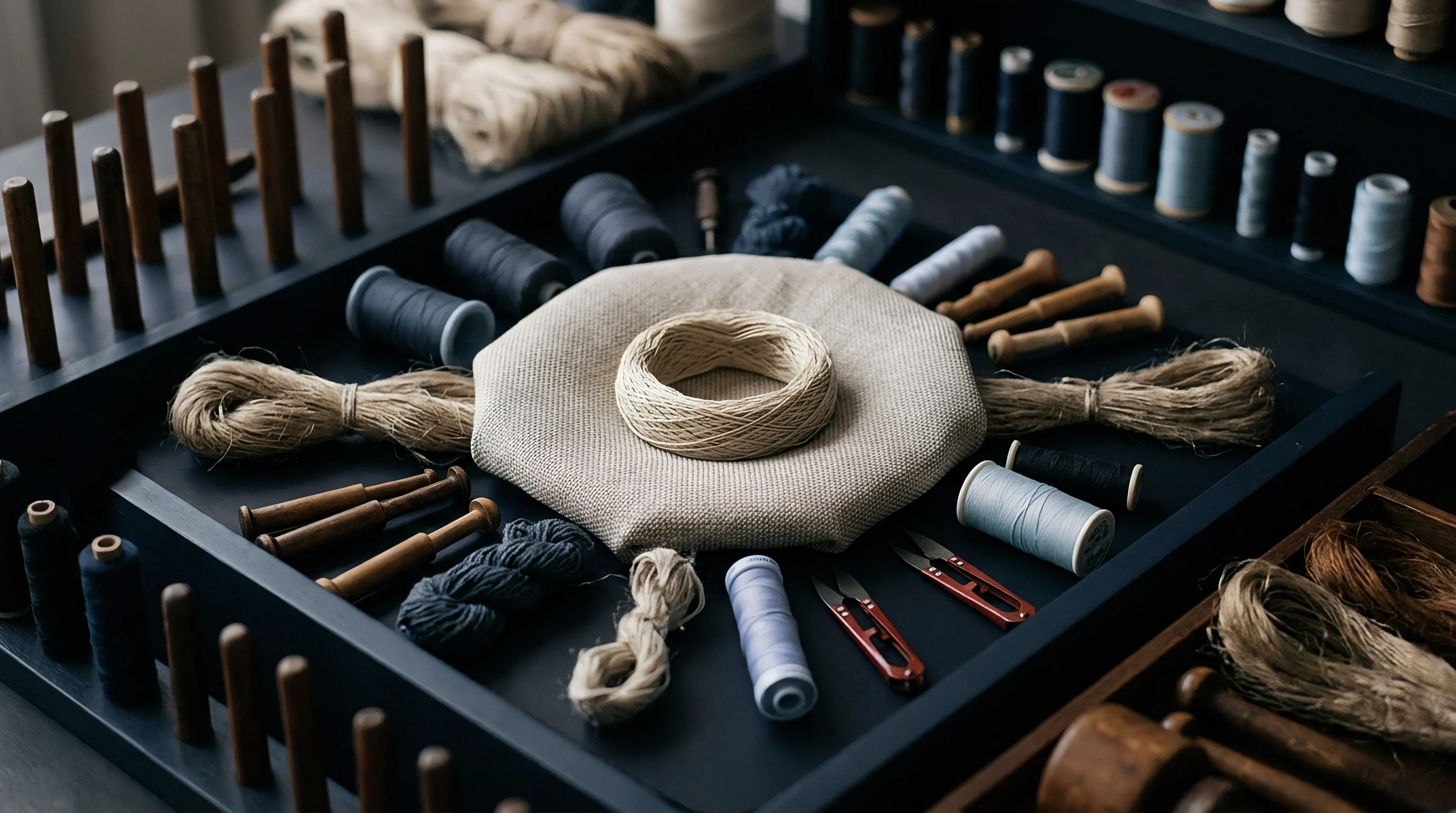
Thermal Profiling and Moisture Regain Targets
Flax possesses a standard commercial moisture regain of 12.0 percent according to international testing criteria. Sized linen leaving the drying section must retain an absolute moisture content between 9.5 percent and 11.5 percent. Over-drying flax below 8.0 percent moisture induces severe fiber embrittlement.
Desiccated cellulose microfibrils lose their capacity to slip and redistribute stress under cyclic loads, driving loom stop frequencies to unsustainable levels.
| Cylinder Position | Surface Coating | Operating Temperature (°C) | Steam Pressure (bar) | Moisture Removal Rate (%) |
|---|---|---|---|---|
| Cylinder 1 to 2 | PTFE Non-Stick | 70 to 75 | 0.8 to 1.2 | 25 to 30 |
| Cylinder 3 to 6 | Polished Stainless Steel | 95 to 105 | 2.0 to 2.5 | 45 to 50 |
| Cylinder 7 to 8 | Polished Stainless Steel | 105 to 112 | 2.5 to 3.0 | 15 to 20 |
| Cylinder 9 to 10 | Chrome Plated Cooling | 35 to 45 | Cooling Water | 0 (Conditioning) |
Under-drying presents equal operational hazards. Sized warps wound onto weaver beams with moisture levels above 13.5 percent suffer from bacterial degradation, mildew development during ocean transit, and inter-yarn blocking where wet size films fuse adjacent ends into a solid sheet on the beam barrel.

Tension Gradient through the Dryer Chamber
Flax yarn contracts in length during wet processing and expands upon complete dehydration. If yarn is held rigidly under fixed stretch ratios through the drying chamber, internal tensile stresses build within the fiber core. The slasher drive system must operate with multi-motor sectional tension zones driven by load-cell feedback.
Sizing machine drive tensions are configured to maintain less than 1.0 percent total stretch from the size box immersion roll to the final delivery nip. Cotton warps routinely tolerate stretch ratios of 1.5 to 2.5 percent during sizing. Applying those same stretch rates to wet-spun flax destroys the fiber crimp and ruptures the non-cellulosic matrix, leaving the yarn structurally weakened before it ever meets a loom harness.
Maintaining positive moisture control at the slasher delivery delivery roll keeps flax fibers pliable enough to navigate high-speed heddle shedding cycles.

Online Moisture Measurement Systems
Online microwave absorption or contact resistance sensors continuously scan the warp sheet at the exit of the drying section. These sensors interface with the main slasher line speed control. If the moisture sensor detects falling moisture levels below 9.5 percent, the slasher automatically accelerates to shorten dwell time on the heated cylinders.
If moisture exceeds 11.5 percent, line speed decreases until equilibrium restores.
Warp moisture levels that deviate across the width of the slasher beam point to condensate drainage failure inside individual steam cans. Siphon pipes inside rotating cylinders must clear liquid water continuously. Accumulated condensate insulates the lower cylinder shell, dropping local surface temperatures and creating damp warp bands that ruin beam uniformity.
Over-dried linen snaps under the abrupt impact of the beat-up reed.


Split
Upon exiting the drying cans, sized warp ends form a continuous, lightly consolidated sheet held together by dried size bridges spanning adjacent yarns. This sheet must pass through the dry split section, where chrome-plated lease rods and bust bars mechanically separate individual ends back into isolated units. For linen warps, the dry splitting operation represents the most violent mechanical disruption encountered during warp preparation.
If the size paste was applied at excessive solids concentrations or if drying was uneven, splitting tears the protective size film away from the yarn surface, creating jagged hairy whiskers that jam adjacent ends in the drop wires.
Bust bars must be arranged in a graduated geometric ladder. Sized sheets carrying 3,000 to 6,000 ends cannot be split across a single rod without exerting massive tearing forces that snap brittle flax fibrils. Slasher operators employ a multi-tier split arrangement, dividing the full sheet into half-sheets, then quarter-sheets, and finally eighth-sheets using lease rods of decreasing diameters.
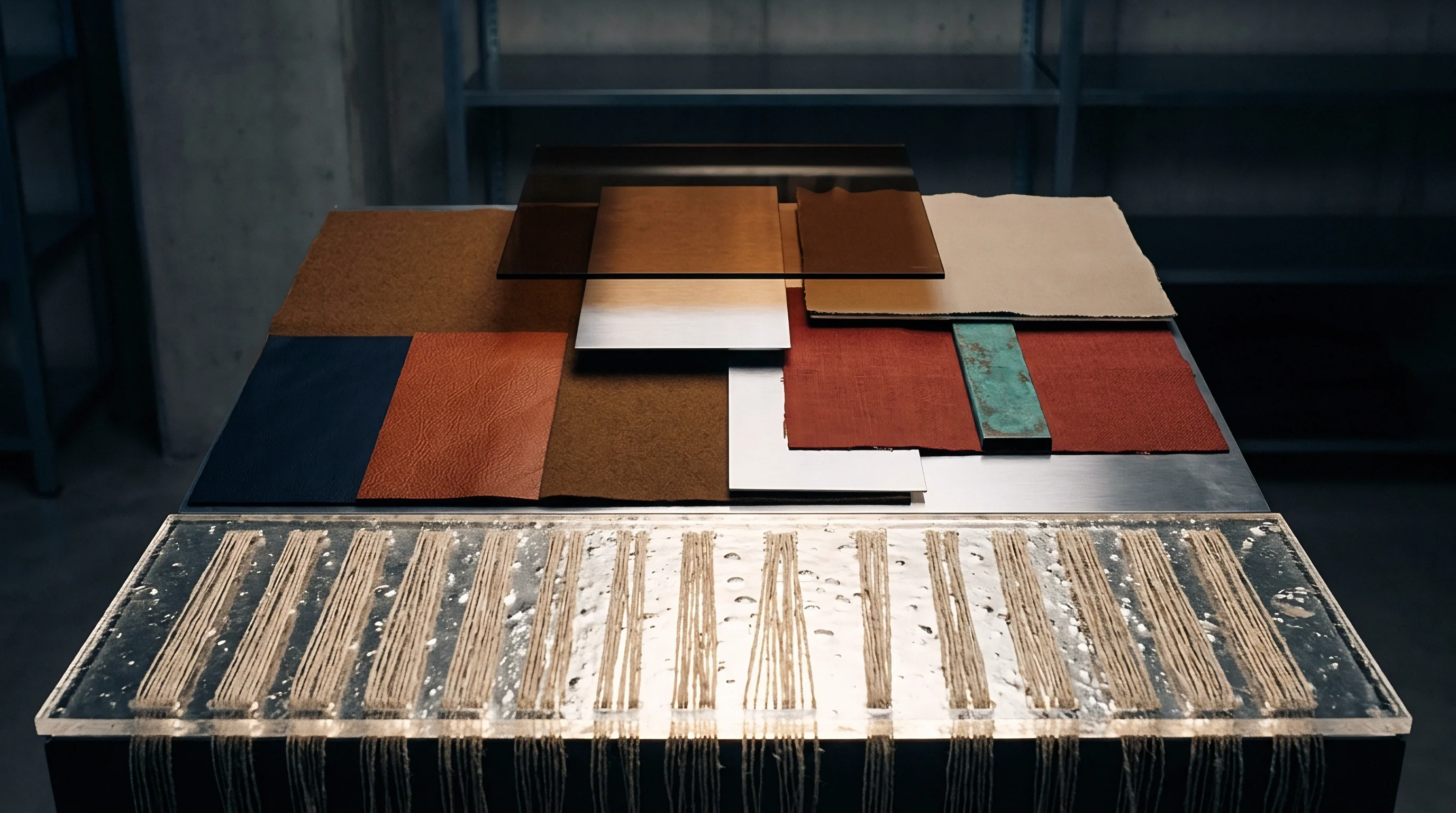
Lease Rod Angles and Separation Mechanics
The primary bust bar carries the largest diameter, typically 75 to 100 millimetres, constructed from mirror-polished stainless steel or hard-anodized aluminum. This bar separates the top half of the warp ends from the bottom half. Secondary and tertiary rods measure 35 to 50 millimetres in diameter.
The angle of wrap around each lease rod must remain as shallow as possible, never exceeding 15 to 20 degrees of angular deflection.
| Rod Diameter (mm) | Deflection Angle (degrees) | Split Force (N/1000 ends) | Size Film Peel-Off (%) | Hairiness Increase (Zweigle s3) |
|---|---|---|---|---|
| 100 (Primary) | 12 to 15 | 45 to 60 | 0.5 to 1.2 | +15% |
| 60 (Secondary) | 15 to 18 | 70 to 90 | 1.8 to 2.5 | +28% |
| 35 (Tertiary) | 18 to 22 | 110 to 140 | 3.2 to 4.5 | +45% |
| 25 (Unsuitable) | 25 to 35 | 180 to 240 | 7.5 to 11.0 | +95% |
Sharp wrap angles over small rods focus splitting energy onto a narrow shear line. This severe localized shear strips the outer size sheath cleanly off the flax core, leaving raw unprotected fibers. When sized warps display white powder accumulation beneath the lease section, the size film is flaking due to excessive separation force or over-drying.
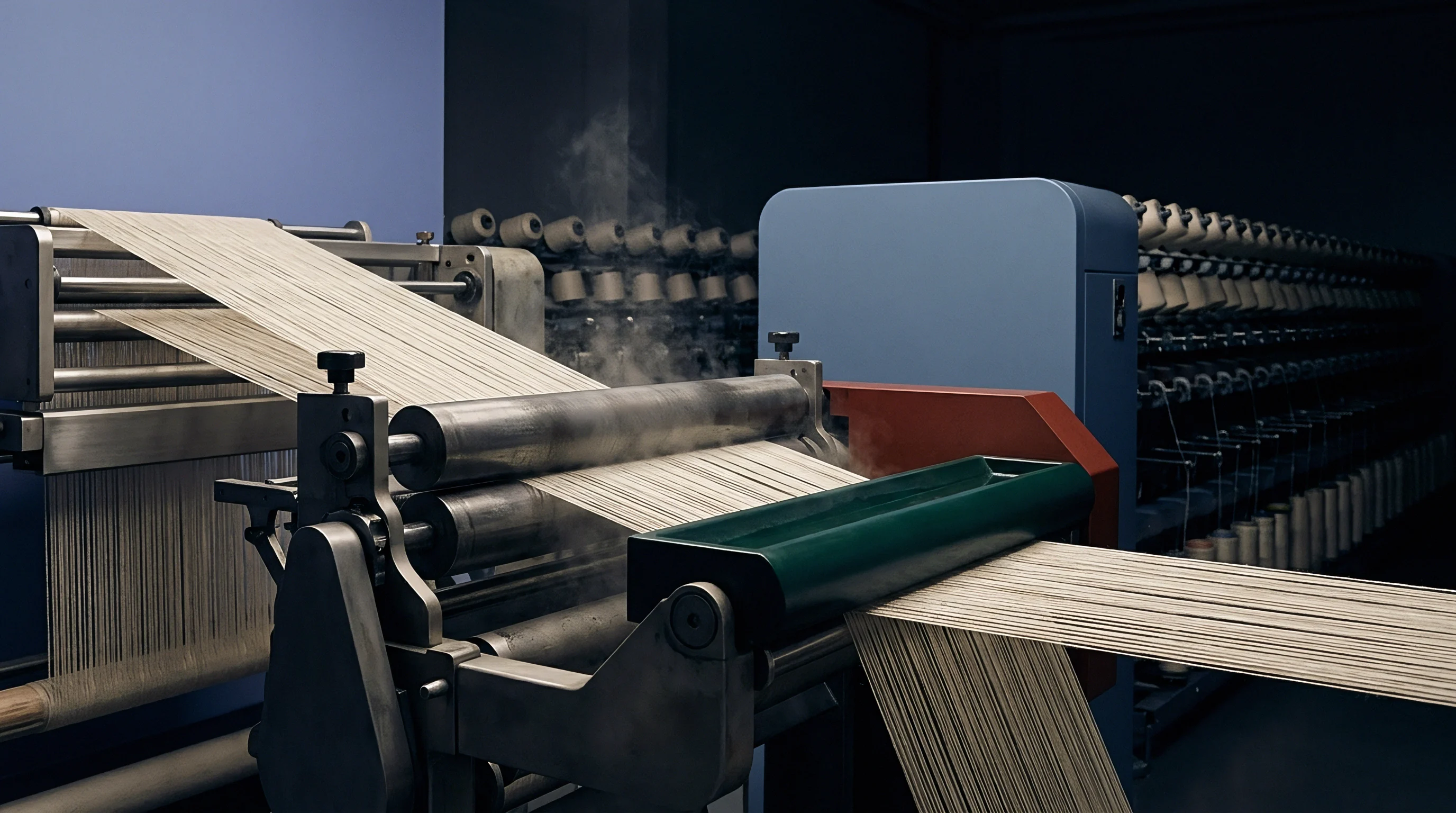
Static Dissipation and Fiber Orientation
Dry splitting generates electrostatic charges as synthetic size components rub across chrome split bars. Static electricity causes adjacent linen ends to repel each other laterally or balloon into adjacent yarn paths, promoting entanglement upstream of the comb. Active ionizing static elimination bars installed immediately before and after the bust rod assembly neutralize surface charges, allowing ends to travel straight into the expansion comb.
The expansion comb (wraithe) sets the final warp density and width for winding onto the weaver beam. A zig-zag or traverse wraithe oscillates slowly across a 2 to 5 millimetre stroke to prevent individual ends from cutting wear grooves into the chrome teeth. The denting of the slasher wraithe must match the intended loom reed count to prevent angular deviation of the warp ends as they wind onto the beam.
ASTM D5430 inspection protocols penalize sizing-induced split defects that register as continuous yarn fuzziness across more than three contiguous warp ends.
The standard procurement specification must state that size encapsulation integrity will be verified via microscopic cross-sectioning under ISO 7211 guidelines, with any batch showing greater than 3.0 percent size flaking rejected prior to loom mounting.
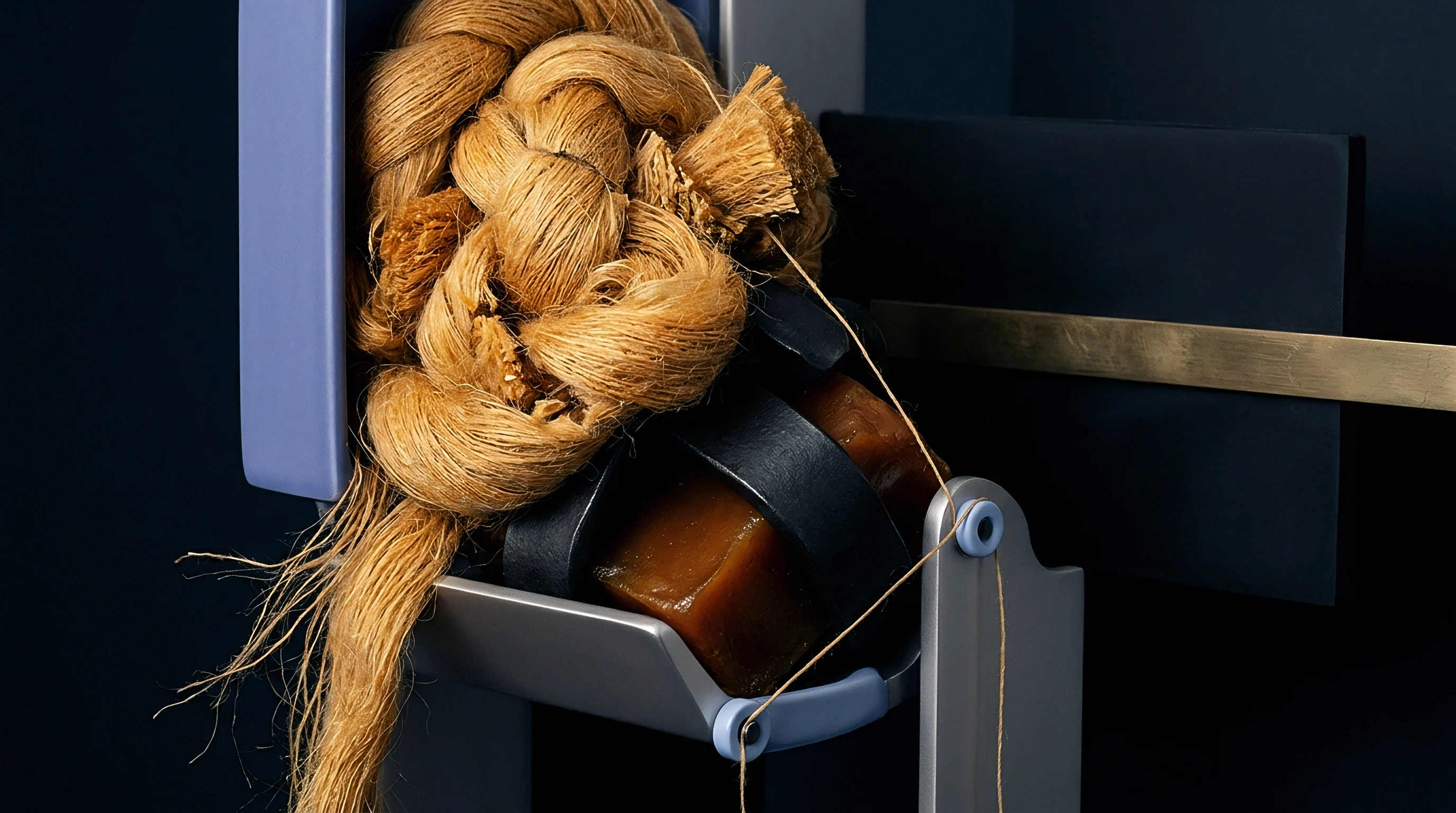
Beam
The mechanical winding of the sized warp sheet onto the weaver beam establishes the foundation for uniform warp delivery during weaving. A weaver beam carrying 4,000 ends of Nm 26 wet-spun linen across a width of 190 centimetres stores immense radial and axial mechanical energy. Because flax possesses negligible elongation, any density differential across the width of the beam barrel results in immediate tension variations at the loom shed.
When the shed opens, slack ends sag into the path of the weft insertion element, while tight ends snap under peak harness lift.
Winding tension control requires closed-loop torque regulation driven by load cells under the delivery press roller. Slasher headstocks utilize hydraulic or pneumatic compacting rollers that press against the growing yarn package on the beam barrel. Compacting pressure must decrease gradually as the beam diameter builds from the bare core to the full flange limit.
Winding Density and Radial Compaction Profiles
Warp beam density is measured in grams per cubic centimetre. Pure linen warps demand a target winding density between 0.55 and 0.68 g/cm³. Winding a linen beam too loosely leads to yarn embedding, where tight outer wraps under high loom let-off tension wedge down between loose inner wraps, locking the beam and breaking multiple warp ends simultaneously.
Winding too tightly deflects beam flanges outward, creating loose edges across both selvages.
- Bare Barrel Winding begins with compacting pressure calibrated to 3,500 newtons to secure the warp leader without end slippage.
- Linear Density Tapering reduces compaction force along a calculated parabolic curve down to 1,800 newtons at full beam diameter.
- Flange Alignment Verification confirms that beam flanges remain perpendicular to the central barrel within 0.5 millimetres across 360 degrees of rotation.
- Yarn Sheet Centering verifies that the expansion comb width matches the inner flange distance exactly to eliminate edge valleys or end piling.
Flange deflection represents a hidden cause of high warp breakage rates. When heavy steel flanges yield under hydraulic winding pressure, the warp ends at the flange face drop into the opened gap. When the beam is mounted on the loom, these pinched edge ends cannot unwind freely from the barrel, snapping during the first hundred picks of operation.
Whether Unwinding Velocity Exceeds Critical Flax Modulus?
The dynamic modulus of elasticity of wet-spun flax ranges from 50 to 80 gigapascals under static loads, but increases sharply under rapid cyclic impact. As the loom let-off system pulses with each pick cycle, the instantaneous unwinding velocity fluctuates. If the beam contains eccentricity or runout exceeding 0.8 millimetres, the tension swings exceed the breaking threshold of outer flax fibers.
Modern electronic positive let-off mechanisms compensate for beam inertia using servomotors linked to dancer rolls or load-cell backrests. The backrest must exhibit minimal mechanical inertia. Heavy steel backrest rollers damp dynamic response, transferring cyclic shock loads directly into the warp sheet.
Carbon-fiber composite backrests reduce moving mass, responding instantly to shed opening demands.
Residual stress frequently remains locked inside the crystalline cellulose core of high-twist wet-spun linen after weeks of storage on high-density weaver beams under varying warehouse temperatures.

Passage
The true performance of warp preparation reveals itself in the loom shed. Here, the sized linen warp encounters simultaneous cyclic tensioning, heddle eye friction, drop wire chattering, reed abrasion, and high-velocity weft insertion. On a modern rapier loom operating at 500 picks per minute, a single point on a warp yarn undergoes between 2,500 and 4,000 friction cycles as it advances from the backrest through the drop wires, heddles, and reed to the cloth fell.
If sizing formulation, moisture regain, and beam winding were executed correctly, warp breakage rates remain below 1.0 break per 100,000 picks. If warp preparation failed, break rates escalate to 5.0 or 10.0 breaks per 100,000 picks, destroying shed efficiency and turning weaving margins into net operating losses.
Warp breaks on rapier and air-jet looms running linen categorize into three primary zones: the drop wire zone, the harness heddle zone, and the reed beat-up zone. Each zone exposes specific weaknesses in yarn preparation.

Loom Shed Kinematics and Abrasion Zones
The drop wire zone tests yarn cleanliness and splitting quality. Protruding surface fibrils that survived sizing trap adjacent ends, preventing individual drop wires from sliding freely. When ends cling together, the drop wire remains suspended even after an end has snapped, delaying loom stop mechanisms and generating long missing-warp defects in the greige cloth.
The harness frame zone subjects yarn to extreme flexural abrasion. As heddles reciprocate up and down to form the shed, the yarn bends sharply through the steel heddle eye. Heddle eye geometry must match the yarn count.
Inserted twisted wire heddles with mail eyes or hard-chrome flat steel heddles with deburred, polished eyelets prevent micro-grooving. An undersized heddle eye strips the protective size film within 500 picks, leaving raw flax bundles exposed to shear failure.
| Failure Location | Dominant Root Cause | Break Share (%) | Sizing / Prep Precursor | Corrective Action |
|---|---|---|---|---|
| Drop Wires | Fuzz Balls & Clinging Ends | 35% | Insufficient Hairiness Lay-down | Increase PVA content, sharpen lease split |
| Heddle Eyes | Flex Fatigue & Peeling | 40% | Low Size Film Elasticity / Brittle Film | Add plasticizer wax, raise shed humidity |
| Reed Fell Zone | Abrasive Cutting & Slubs | 15% | Over-squeezed Size / Slub Misses | Adjust squeeze roll loading, refine clearers |
| Selvage Zone | Edge Tension Spikes | 10% | Beam Flange Deflection / Wraithe Errors | Recalibrate flange taper, match comb width |
The reed zone represents the site of maximum mechanical impact. During beat-up, the reed pushes the newly inserted weft pick into the cloth fell. The warp ends rub against the stainless steel reed dents under peak tension.
Reed dent thickness, air space percentage, and surface polish determine whether flax ends slide smoothly or suffer surface peeling. For pure linen constructions, the reed air space must never fall below 50 percent; air spaces of 40 to 45 percent cause inter-yarn crowding that abrades size coatings rapidly.
Shed Humidity and Moisture Equilibrium Control
Weaving sheds dedicated to pure flax require tight atmospheric conditioning. The moisture equilibrium of linen must be maintained between 65 percent and 75 percent relative humidity at 20 to 24 degrees Celsius. If shed humidity drops below 60 percent, sized flax loses its plasticizing moisture within thirty minutes.
The starch-PVA size film crystallizes, turning brittle and shattering into dust under the reciprocating action of the harness frames.
Conversely, relative humidity exceeding 80 percent plasticizes the size film excessively, making it tacky. Sticky size films adhere to the reed dents, accumulating gummy deposits that trap fly waste and induce warp breaks across adjacent ends. Ultrasonic or high-pressure water-atomizing humidification systems distributed directly above the loom harness maintain local microclimates without wetting machine frames.
Loom Capacity Economics and Loom-Hour Losses
The financial impact of warp preparation quality appears directly on the loom-hour ledger. A commercial weaving mill pricing loom capacity calculates landed cloth costs based on target machine efficiencies. Consider a standard linen apparel cloth: plain weave 1/1, warp Nm 26 wet-spun flax (38.5 tex), weft Nm 26 wet-spun flax, sett 18 ends/cm, pick count 16 picks/cm, reeded width 160 cm, woven on a positive rapier loom running at 450 picks per minute.
At 450 picks per minute, the loom inserts 27,000 picks per running hour. At 16 picks per centimetre, 100 percent theoretical production yields 16.875 metres of greige cloth per loom hour. In a high-performing shed with well-prepared warps generating 0.8 breaks per 100,000 picks, overall loom efficiency reaches 88.0 percent after factoring in weft package changes, cloth doffing, and minor stops.
Actual production delivers 14.85 finished metres per loom hour.
When warp preparation is compromised through poor size formulation, improper drying, or erratic beam winding, warp break rates rise to 4.5 breaks per 100,000 picks. Each warp break on a high-density linen harness requires an average of 2.5 minutes for the weaver to locate the end, re-draw through drop wire, heddle eye, and reed, tie the knot, and restart the machine. At 4.5 breaks per 100,000 picks, the loom suffers 1.215 warp stops per hour, consuming 3.04 minutes of stop time per running hour.
Secondary stops, including starting marks, misdraws, and adjacent end entanglements, compound the loss, driving overall loom efficiency down to 68.5 percent.
| Performance Metric | Optimized Prep (0.8 breaks/10^5 picks) | Moderate Defect (2.5 breaks/10^5 picks) | Severe Failure (4.5 breaks/10^5 picks) |
|---|---|---|---|
| Warp Stops per Loom Hour | 0.216 | 0.675 | 1.215 |
| Operator Repair Time (min/hr) | 0.54 | 1.69 | 3.04 |
| Actual Shed Efficiency (%) | 88.0% | 78.5% | 68.5% |
| Greige Output (m/loom hour) | 14.85 m | 13.25 m | 11.56 m |
| Loom Booking Rate ($/hr) | $28.50 | $28.50 | $28.50 |
| Weaving Cost per Metre ($/m) | $1.92 / m | $2.15 / m | $2.47 / m |
| Cost Premium on Finished Goods | Baseline | +$0.23 / m (+12.0%) | +$0.55 / m (+28.6%) |
The arithmetic is inescapable. A mill running 50 rapier looms on a 10,000-metre production contract absorbs an additional $5,500 in unrecoverable weaving overhead when warp preparation errors depress machine efficiency by 19.5 percentage points. Furthermore, greige cloth woven under high breakage rates contains numerous starting marks, spliced tails, and uneven beat-up bands that degrade final fabric grading under the ASTM D5430 4-point inspection system.
Incoming yarn lots must meet certified elongation limits before creeling. Size formulations require balanced penetration and encapsulation. Drying cylinders must preserve natural moisture equilibrium.
When these engineering parameters are monitored and controlled across every stage of warp preparation, wet-spun linen runs with the efficiency and predictability demanded by modern weaving operations.