Calculating Commercial Moisture Corrections for Raw Scutched Flax Bales
Commercial moisture adjustments convert raw flax scale weight to invoice weight using dry mass and the contractual twelve percent regain baseline.


Sorption
Raw scutched flax strands absorb atmospheric water vapour readily because of the high density of free hydroxyl groups in both the crystalline and amorphous regions of native cellulose. Long scutched flax consists of primary cell wall structures held together by non-cellulosic polymers ~ mainly pectins, hemicelluloses, and residual lignin. These non-cellulosic components are considerably more hygroscopic than purified cellulose.
Water molecules form hydrogen bonds within the amorphous matrix, causing bundles to swell or shrink as relative humidity and temperature change. When flax is baled under high pressure at the mill, trapped moisture directly impacts its commercial value. A bale weighed right after scutching during a humid European autumn carries extra water that evaporates during sea transit or dry storage.
Bales packed in dry winter weather do the opposite, pulling in ambient moisture once moved into humid warehouses.
Since flax is sold by weight, paying raw fiber prices for absorbed moisture is a direct loss for the buyer. Unadjusted scale weights obscure the actual yield of clean, dry fiber. To normalize settlements across the textile industry, trade organizations set standardized reference values for moisture regain.
The recognized commercial standard for raw scutched flax fiber is twelve percent. Commercial weight calculations reconcile physical scale weights recorded at the weighbridge back to this baseline.

Distinguishing Moisture Regain from Moisture Content
Traders and spinning mills often confuse wet-basis mass fractions with dry-basis absorption ratios. Moisture content measures water mass as a percentage of total wet fiber weight (which includes the water). Moisture regain expresses water mass as a percentage of the oven-dried fiber mass.
The math behind these two figures is fundamentally different, yielding distinct numbers for the exact same sample.
A one-hundred-kilogram bale of scutched flax containing twelve kilograms of water has a moisture content of twelve percent. The dry fiber inside weighs eighty-eight kilograms. To find the moisture regain for that same bale, divide twelve kilograms of water by eighty-eight kilograms of dry fiber, which gives a regain of thirteen point64 percent.
Using moisture content formulas instead of regain equations for commercial adjustments introduces systematic errors into invoices. For this reason, standard purchase contracts explicitly specify moisture regain as the only valid metric for billing corrections.

Equilibrium Hysteresis in Transoceanic Storage
Bales shipped from European scutching mills experience major environmental changes during four to six weeks in container holds. Fiber moisture does not track relative humidity in a linear or reversible way ~ high bale density slows vapor movement, creating a hysteresis loop where the absorption path differs consistently from desorption.
Flax reaching equilibrium from a wet state holds a higher regain percentage at any given relative humidity than fiber coming up from a dry state. Scutched flax harvested and processed in a wet retting season desorbs moisture slowly in a sealed hold. When ambient temperatures rise along tropical shipping routes, trapped air inside the container reaches saturation; water evaporates from outer bale surfaces, condenses on cold steel container ceilings, and drips onto top-tier bales.
Meanwhile, the dense core of these bales retains its original moisture level, insulated from short-term humidity swings. For instance, unconditioned long flax bales stored at seventy percent relative humidity stabilize near twelve percent regain on the desorption curve, while dry bales in the same environment settle closer to ten point five percent on the absorption curve.
Raw scutched flax held in unconditioned transit desorbs moisture faster through outer bale walls than it absorbs ambient humidity into its core.
Recognizing these moisture dynamics clarifies why weight discrepancies arise between shipping ports and destination mills. Buyers who ignore ambient equilibrium conditions risk paying fiber prices for transient water weight.
- Ambient thermal spikes in unconditioned warehouses drive surface evaporation that distorts scale weight without altering core moisture.
- Condensation run-off from container ceilings drips onto top-tier bales, creating wet patches that skew surface testing.
- Hygroscopic hysteresis gaps between desorption and adsorption curves cause consistent discrepancies between origin certificates and mill intake weights.
- Compaction gradients inside tightly strapped bales restrict internal vapor transfer, isolating the core from ambient air.
- Improper plastic wrap sealing traps moisture pockets that encourage mold growth over long voyages.
When scutched flax is stored above fourteen percent moisture regain in humid conditions, micro-organisms quickly degrade the non-cellulosic pectin binders, reducing fiber tenacity before it ever reaches the spinning frame.
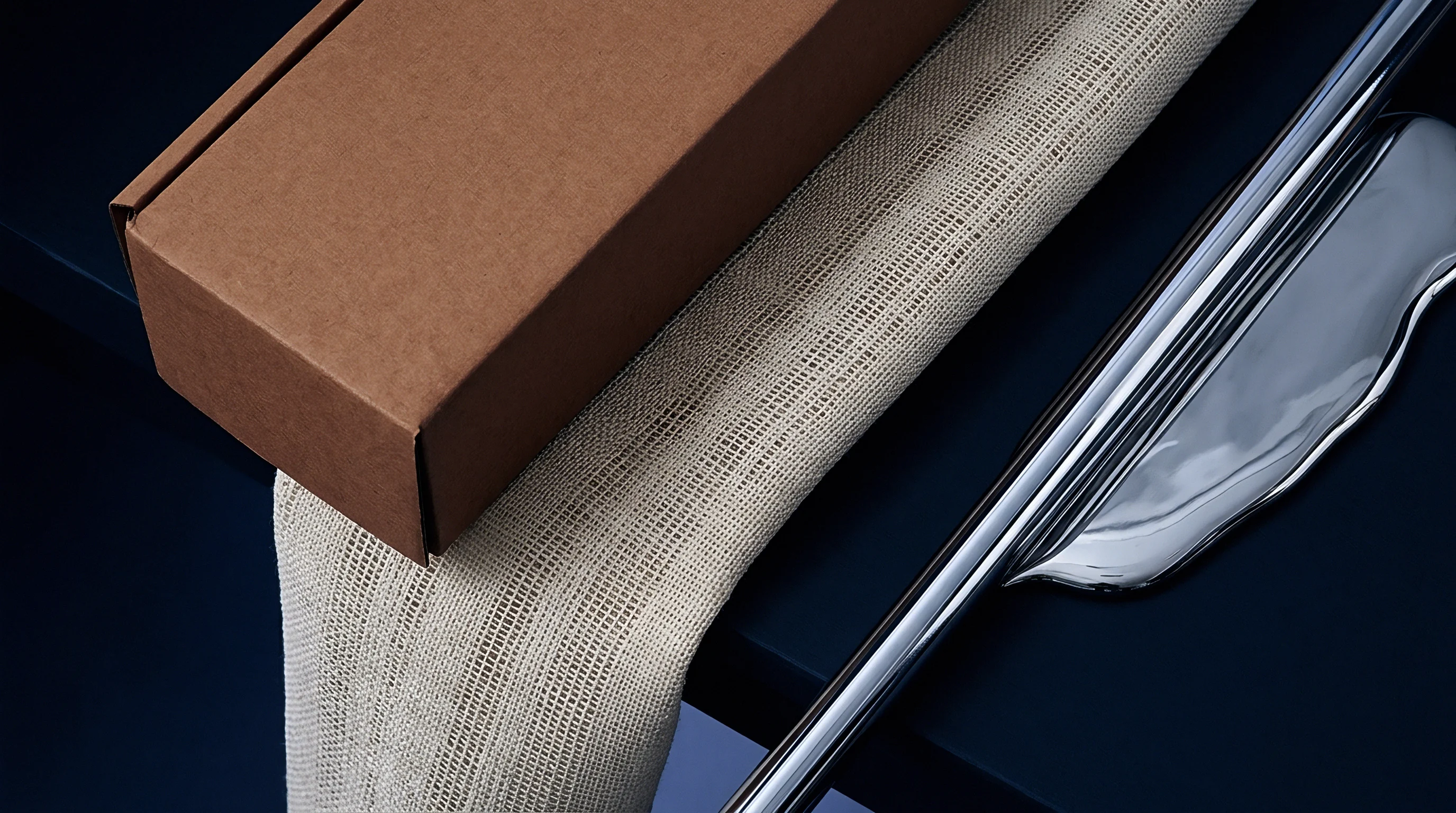

Core
Sampling the interior of compressed flax bales requires specialized equipment that can reach well past the outer boundary layer. Raw scutched long flax is baled under hydraulic pressure to densities between three hundred and four hundred fifty kilograms per cubic meter. Because the outer surfaces adjust to humidity changes within hours, a steep moisture gradient quickly forms between the exterior shell and the dense core.
Exterior measurements on a strapped bale reflect storage conditions rather than overall mass, as surface meters only reach shallow depths. Getting an accurate assessment of a shipment requires taking fiber directly from the bale’s interior. Sampling tools use hollow stainless-steel tubes with serrated cutting tips, driven by high-torque drills or hydraulic rams thirty to fifty centimeters into the bale to extract an intact cylindrical core of long fiber.
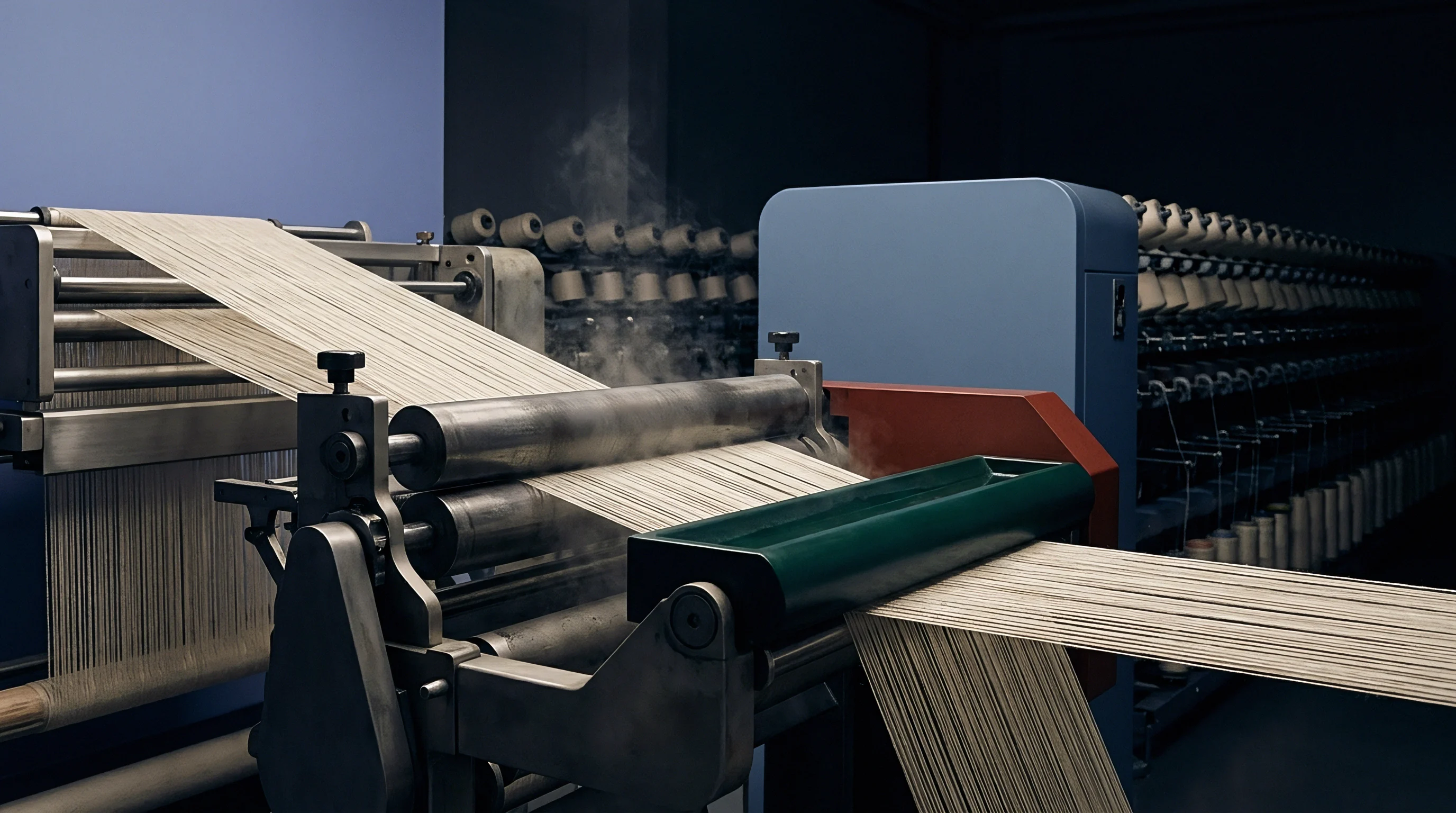
Representative Sampling Patterns across High Density Bales
Assessing moisture across a multi-ton lot requires a systematic sampling pattern. Testing every bale in a consignment is economically nonviable, but sampling only one or two introduces major errors. Standards require choosing a sample size proportionate to total bale count, typically based on the square root rule or standard international sampling tables.
In a hundred-bale consignment, for example, an auditor randomly draws ten bales from different heights in the stack. Cores are taken from varied spots across the bale faces while steering clear of strap lines and corners where air penetrates most freely. The extracted cores must go straight into airtight glass jars or heavy aluminum laminate bags ~ even two minutes of exposure to room air lets thin sample strands gain or lose moisture, spoiling the lab test.

Why Do High Density Scutched Bales Distort Surface Dielectric Probes?
Capacitance instruments estimate moisture by measuring field attenuation in the outer layers. Heavy compression changes local bulk density and alters the fiber’s dielectric constant regardless of actual water content. On top of that, uneven hand pressure on pin electrodes touching coarse stricks produces erratic resistance values and false digital readings.
Surface pin probes reach only fifteen to twenty-five millimeters deep. In a compressed bale, this outer shell acts as a buffer, picking up or losing surface moisture as warehouse humidity changes. A bale kept in a dry building will register low moisture on a probe while its core remains wet from the original scutching run.
Settling invoices on surface probe readings routinely results in significant financial miscalculations.
| Measurement Method | Penetration Depth | Testing Speed | Accuracy Margin | Primary Failure Mode |
|---|---|---|---|---|
| Surface Electrical Resistance Probes | 5 to 25 mm | Immediate | ± 2.5% Regain | Sensitivity to surface drying and contact pressure variations |
| High-Frequency Capacitance Plates | 30 to 80 mm | Immediate | ± 1.8% Regain | Errors driven by density variations and bale strap interference |
| Rotary Core Tube Extraction | 300 to 500 mm | 15 Minutes per Bale | ± 0.2% Regain | Sample exposure during transfer before airtight sealing |
| Full Bale Microwave Absorption | Full Width | 3 Minutes per Bale | ± 0.5% Regain | High capital cost and sensitivity to metal strapping bands |
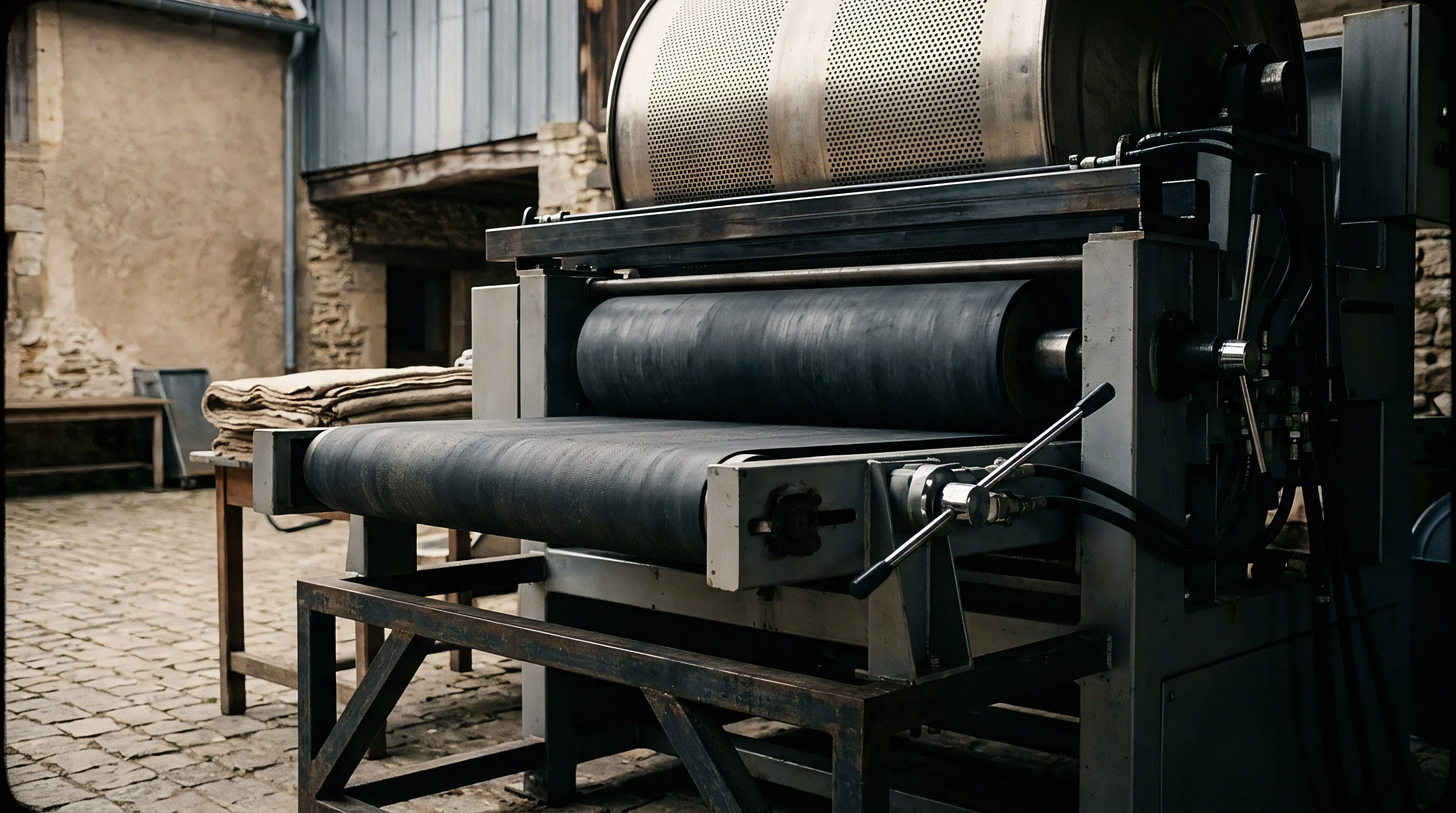
Penetration Depths and Core Extraction Mechanics
Extracting good cores requires equipment built for tough, long bast fibers. Standard timber or cotton samplers tend to jam or scorch flax through friction heat. Purpose-built flax tubes feature smooth internal bores and hardened tool-steel cutting heads that slice cleanly without winding long strands around the shaft.
- Insert the stainless steel extraction tube through the bale strap gap at a thirty-degree downward angle.
- Rotate the cutting head continuously while applying five bar of steady forward hydraulic pressure.
- Withdraw the core cylinder smoothly to prevent fiber shearing along the edge of the tube.
- Place the core sample directly into an airtight glass container within ten seconds of extraction.
Combining cores from multiple bales creates a composite sample that reflects the true moisture state of the overall shipment. Examining moisture distribution across these samples highlights wet centers caused by insufficiently dried scutching runs.
Surface readings at the warehouse door reflect interior moisture only if the shipment has fully reached atmospheric equilibrium before loading.

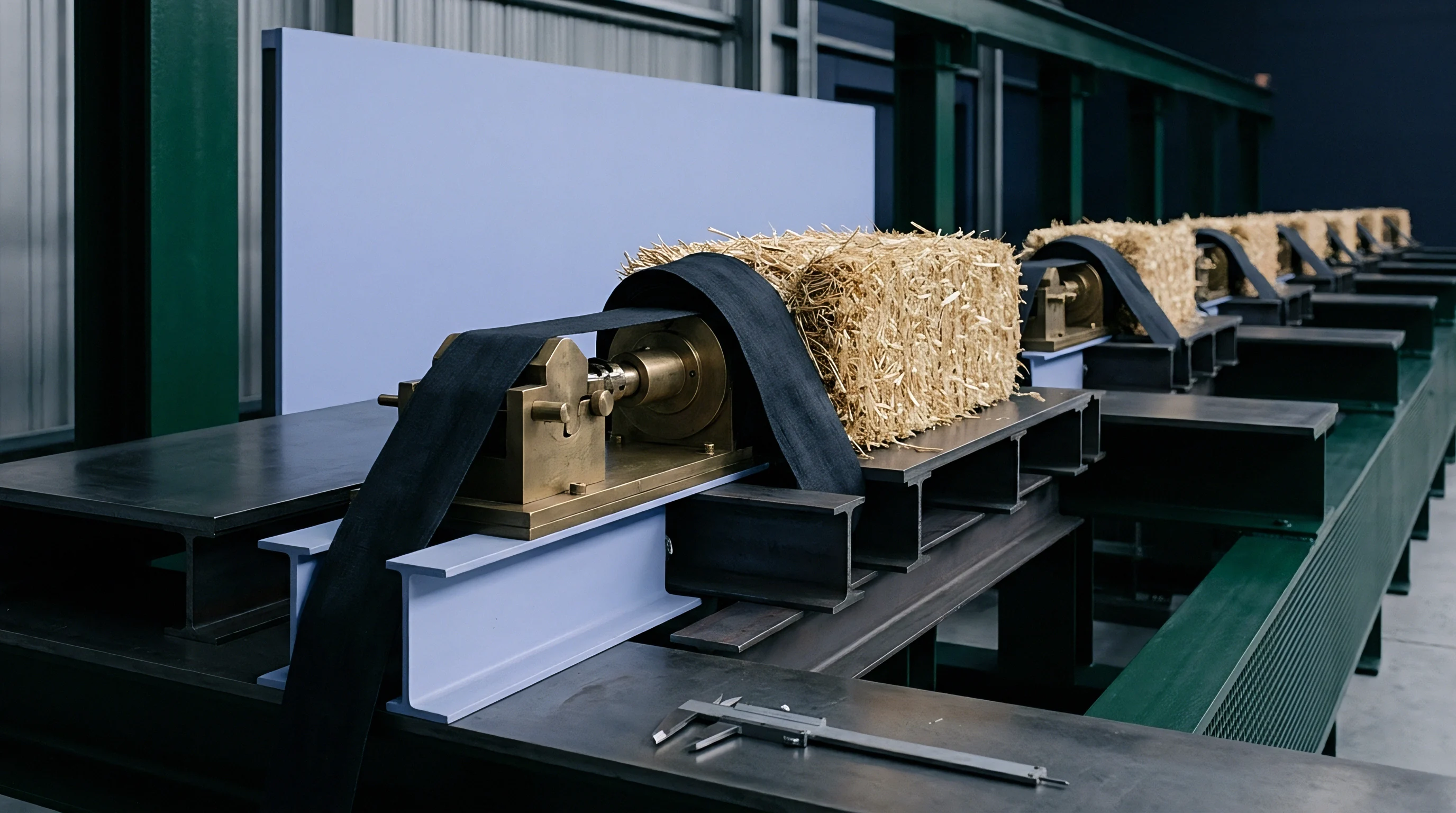
Oven
Standardized thermal gravimetry sets the dry mass benchmark for plant fibers through controlled heating. Oven drying is the referee method used to calibrate all electronic, chemical, and indirect moisture meters, working by driving off water via forced thermal convection until the sample reaches constant weight.
Testing follows standard procedures like ISO 6741. Core samples are removed from their sealed containers, weighed right away on an analytical balance precise to zero point zero zero one grams, and placed in a ventilated oven set to one hundred five degrees Celsius, plus or minus two degrees. Keeping within this window is essential: below one hundred three degrees, bound water remains trapped in the microfibrils; above one hundred seven degrees, non-cellulosic pectins and natural waxes begin to degrade, releasing organic volatiles that mimic water loss.

Gravimetric Standardization and Thermal Drying Kinetics
Drying kinetics in raw flax differ markedly from cotton or synthetic fibers. Water is held in three distinct ways: free capillary water between fibers, absorbed water bound by hydrogen bonds inside amorphous cell walls, and water structurally tied to pectin complexes. Free capillary water evaporates within the first fifteen minutes, but bound water releases slowly over hours.
Samples are dried in forced-draft ovens fitted with internal balance hooks so they can be weighed without opening the door ~ opening it lets ambient room air in, causing instant moisture regain on the hot fiber. Constant mass is reached when weighings taken fifteen minutes apart vary by less than zero point zero five percent. Total drying time usually runs three to five hours, depending on sample size and airflow.
Failure to pre-weigh sealed sample canisters immediately after extraction invalidates gravimetric mass calculations under standard testing terms.

Correction for Non-Aqueous Volatiles and Residual Impurities
Raw scutched flax carries natural waxes, fats, residual shives, and dust that affect gravimetric results. Oven temperatures vaporize light waxes along with water; while this loss is a tiny fraction of the total, high-precision lab work factors in non-aqueous losses when measuring pure dry fiber mass.
Calculating commercial moisture regain requires comparing the exact mass of evaporated water against the final dry weight recorded at the end of the thermal cycle. The mathematical relation is expressed as:
Tested Moisture Regain Percentage = (Initial Sample Mass – Final Constant Dry Mass) / (Final Constant Dry Mass) × 100
If a composite core sample starting at two hundred fifty point zero grams dries to a constant mass of two hundred twenty point two grams, twenty-nine point eight grams of water evaporated. Dividing twenty-nine point eight grams by the dry mass of two hundred twenty point two grams produces a tested moisture regain of thirteen point53 percent. Placed into commercial settlement equations, this tested figure determines the final invoice adjustment.
An ongoing question in the trade is whether automated microwave loss-on-drying units will ever gain the legal standing of forced-draft convection ovens in resolving international commercial claims.


Computation
Commercial mass calculations convert scale readings into standardized billing figures. Raw scutched flax contracts base invoicing on commercial mass rather than gross or net scale weight ~ meaning the weight the shipment would have if every bale sat at the contract’s baseline regain, usually twelve percent.
If bales arrive at a spinning mill with moisture regain above twelve percent, the buyer is paying for unneeded water weight. Adjusting scale weight to commercial billing mass removes that excess water through a standard formula. If the fiber arrives drier than the baseline, the commercial weight scales up above net scale weight, compensating the seller for supplying additional dry fiber.

Derivation of the Invoice Adjustment Equation
Adjusting commercial mass starts by calculating the absolute dry mass of the shipment. This value is found by dividing net scale mass by one plus the tested regain (expressed as a decimal). Multiplying that dry mass by one plus the contractual regain percentage gives the final invoice weight.
The consolidated equation executes this two-step transformation directly:
Commercial Billed Mass = Net Scale Mass × (100 + Commercial Reference Regain Percentage) / (100 + Tested Actual Regain Percentage)
Here, Net Scale Mass is total weighbridge weight minus the tare weight of trucks, pallets, straps, and packaging. Commercial Reference Regain is set by contract at twelve point zero zero percent, and Tested Actual Regain is the oven-dry figure from core samples.
Worked Case Sensitivity across Varied Shipping Weights
To see how moisture variations impact cost, take a ocean consignment of twenty metric tons (twenty thousand kilograms) of long scutched flax, priced at four Euros and eighty Cents per kilogram (four thousand eight hundred Euros per metric ton).
In the first case, core samples analyzed in an accredited laboratory reveal an actual average moisture regain of fourteen point five zero percent. Applying the formula:
Commercial Billed Mass = 20,000 kg × (100 + 12.00) / (100 + 14.50)
Commercial Billed Mass = 20,000 kg × 112.00 / 114.50
Commercial Billed Mass = 19,563.32 kg
The calculated commercial weight comes to nineteen thousand five hundred sixty-three point three two kilograms. That excess moisture reduces billable mass by four hundred thirty-six point six eight kilograms. At four Euros and eighty Cents per kilogram, this translates into an invoice deduction of two thousand ninety-six Euros and six Cents.
In a second case, the same twenty-thousand-kilogram shipment arrives dry, testing at an actual moisture regain of nine point eight zero percent. Executing the adjustment equation:
Commercial Billed Mass = 20,000 kg × 112.00 / 109.80
Commercial Billed Mass = 20,400.73 kg
In this scenario, billable weight increases by four hundred point seven three kilograms over scale mass. The buyer owes an additional one thousand nine hundred twenty-three Euros and fifty Cents to cover the higher concentration of usable spinning fiber.
| Scale Mass (kg) | Tested Regain (%) | Standard Regain (%) | Commercial Mass (kg) | Financial Adjustment (€ at €4.80/kg) |
|---|---|---|---|---|
| 20,000 | 15.50 | 12.00 | 19,393.94 | -€2,909.09 (Buyer Credit) |
| 20,000 | 14.00 | 12.00 | 19,649.12 | -€1,684.22 (Buyer Credit) |
| 20,000 | 13.00 | 12.00 | 19,823.01 | -€849.55 (Buyer Credit) |
| 20,000 | 12.00 | 12.00 | 20,000.00 | €0.00 (Zero Correction) |
| 20,000 | 11.00 | 12.00 | 20,180.18 | +€864.86 (Seller Debit) |
| 20,000 | 10.00 | 12.00 | 20,363.64 | +€1,745.47 (Seller Debit) |

Financial Exposure under Unadjusted As-Received Mass
Accepting scale weight invoices without testing for moisture leads to steady financial losses. Across an annual volume of five thousand metric tons, an uncorrected moisture excess of just two percent adds up to over fifty thousand kilograms of paid water weight ~ costing over two hundred forty thousand Euros per year in unrecoverable expenditure.
A consignment of twenty metric tons arriving at fourteen point five percent regain yields a paid water penalty exceeding two metric tons if invoiced at gross scale mass.
Executing accurate financial reconciliations requires clear administrative protocols during mill intake.
- Verify weighbridge calibration certificates to ensure scale accuracy prior to container discharge.
- Extract core samples from selected bales within three hours of breaking container seals.
- Seal cores in vapor-tight containers and log initial weights on an analytical balance before oven drying.
- Apply dry-basis regain formulas to calculate verified commercial mass credit or debit notes.
Failing to apply regain corrections on large flax contracts inflates raw material expenditure by tens of thousands of Euros and introduces processing variability during wet spinning.

Covenant
Purchase contracts must define how scale weight discrepancies are resolved. A clear commercial agreement eliminates ambiguity by citing established international trade rules, such as those of the Alliance for European Flax-Linen & Hemp or the Confederation Européenne du Lin et du Chanvre.
Contract terms should state the baseline regain figure, approved testing facilities, allowable moisture tolerances, and protocols for joint sampling during a dispute. Without clear clauses governing moisture correction formulas, buyers lack legal standing to claim billing adjustments once containers are discharged.

Contractual Tolerances and Moisture Regain Neutral Zones
To prevent disputes over minor weight differences, contracts often include a tolerance threshold or neutral band. Under these clauses, no financial adjustment is made if the tested moisture regain falls within a narrow window around the twelve percent baseline, such as eleven point five to twelve point five percent.
However, if tested moisture exceeds twelve point five percent, the invoice correction typically applies to the full deviation back to the twelve point zero baseline, rather than just the amount above twelve point five. Contracts need to state clearly whether adjustments apply past the threshold or on a continuous scale from zero point one percent variance.
- Explicit reference standard statements designate twelve percent regain as the mandatory calculation baseline.
- Core sampling protocol definitions mandate rotary extraction tools and airtight transfer containers.
- Arbitration lab designation names accredited ISO 17025 facilities whose test results bind both parties.
- Discrepancy notice windows require submitting moisture claims within fourteen calendar days of arrival at the mill.
- Cost allocation clauses assign testing fees to the seller when excess moisture exceeds contractual tolerances.

Dispute Protocols and Independent Laboratory Arbitration
When excess moisture exceeds contract limits, formal dispute procedures begin. The buyer holds the lot in its original state, keeping unsampled bales intact alongside container seal records. Joint core samples are then pulled in the presence of both buyer and seller representatives and sent to an accredited independent laboratory.
Commercial agreements that omit explicitly defined core sampling protocols inevitably transfer moisture loss risks to the spinning mill.
Findings from the referee laboratory override intake tests. If the laboratory confirms moisture regain above agreed tolerances, the seller issues an amended invoice or credit note based on the recalculated commercial mass and covers the testing fee. If the test shows moisture within tolerance, the original scale weight invoice stands, and the buyer pays for testing.
Standard CELC clauses specify that adjustments trigger only when core sample regain deviates by more than zero point five percent from the baseline, avoiding trivial administrative disputes while protecting both parties against major moisture discrepancies.