Reconciling Warp Crimp Shrinkage and Chemical Scouring Mass Loss
Reconciling linen weight requires balancing chemical extraction losses against warp crimp contraction to hit target finished areal mass and dimensional stability.


Dispute
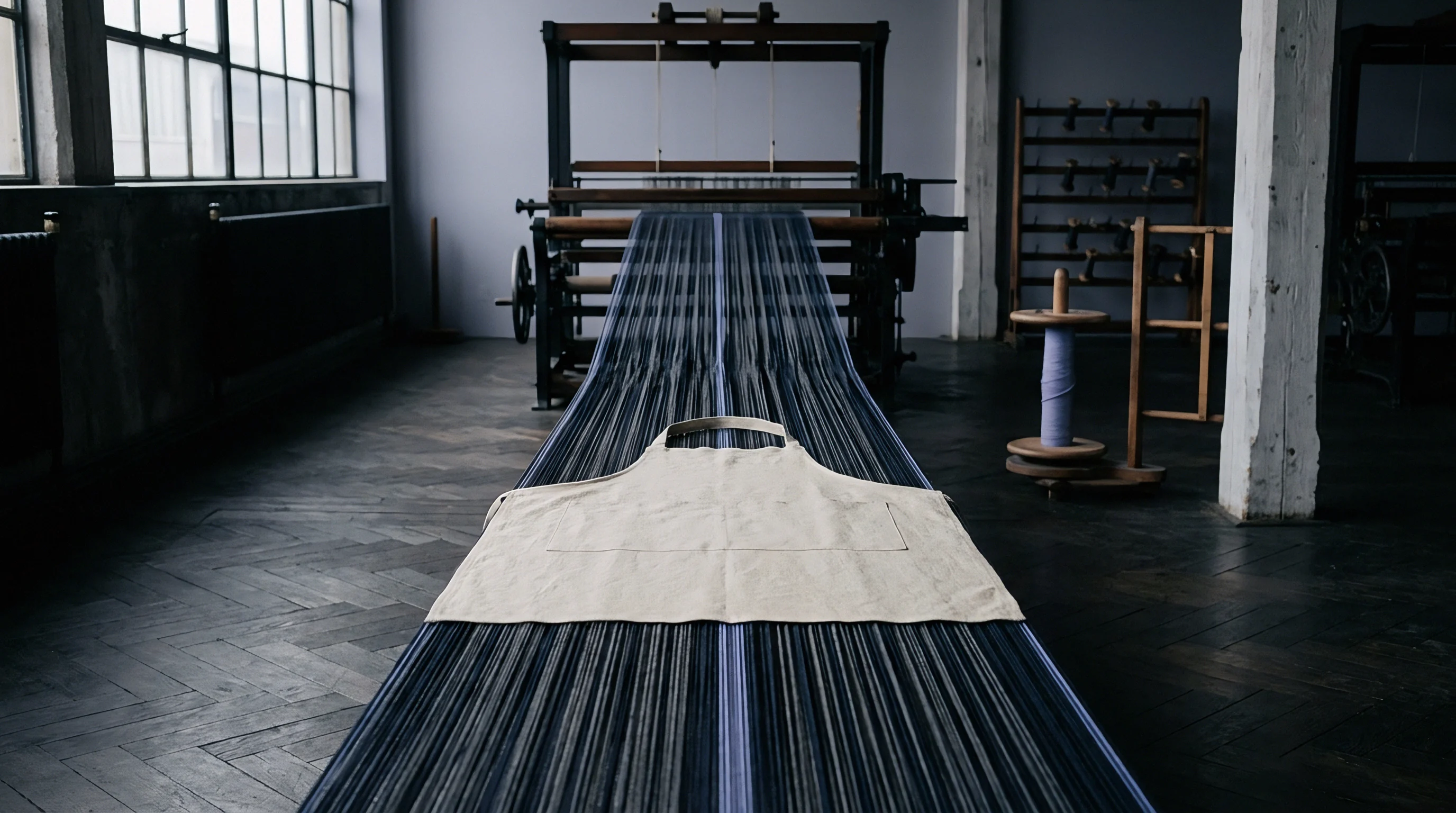
Greige linen off the loom never weighs what the finished bolt does at the cutting table. A plain weave specified at 185 grams per square metre finished often comes off the breast beam at 165 grams in the grey state, yet the mill invoices for 1.14 metres of loom output per delivered metre. That invoice covers raw yarn and machine time; the delivered roll reflects wet chemical extraction and mechanical compaction.
Compare greige ticket weights against incoming inspection lab reports, and the math looks broken. Twelve percent of the raw fiber mass vanishes in the alkaline scouring liquor, while dimensional contraction pushes areal density up by eight percent. These two forces pull the mass balance in opposite directions through every wet finishing step.
Every commercial dispute over linen weight starts in this gap. The weaver buys yarn by weight, schedules loom beams by length, and manages warp tension to stop breakages. The finisher takes that loom-state roll, boils out pectins, hemicelluloses, and sizing in an alkaline bath, then dries it under tension on a stenter frame.
Pulling too hard in the warp to reclaim yardage drops the pick count below spec, producing light cloth with a thin, papery hand. Running the bath with no warp tension allows the fabric to relax completely; warp crimp surges, finished GSM shoots past target, and delivered length drops by fifteen percent. The mill ends up swallowing a huge yield loss unless the contract spells out who owns the line between chemical loss and structural take-up.
Dew-retted European flax loses between 9.5% and 13.0% of its dry mass during caustic scouring at 95 degrees Celsius.
The conflict comes down to who pays for the dissolved mass and who gets the contract length. Mills price production on loom hours, yarn mass fed to the warping creel, and scheduled picks per minute. When a tech pack calls for a finished 200 GSM plain weave at 145 centimetres cuttable width, the weaver cannot just put a 200 GSM greige web on the loom.
The draughtsman has to calculate the exact ends and picks on the loom so that, after scouring strips non-cellulosics and the relaxed yarns crimp, the finished fabric hits both weight and width at once. That calculation demands separating mass lost to chemical dissolution from mass concentrated through yarn contraction.
Commercial Friction at the Receiving Frame
Receiving docks regularly quarantine linen shipments over conflicting test data. A lab tech cuts five swatches across the width per ISO 3801 Method 5, conditions them at 20 degrees Celsius and 65 percent relative humidity for twenty-four hours, and finds the mass sits five percent below specification. Yet the pick count measured under ISO 7211-2 matches the tech pack exactly.
Discrepancies like this usually point either to finer yarn swapped in at the loom or to over-scouring of bast bundles in finishing. Trace the greige production logs, though, and the real issue usually turns up elsewhere: the finisher pulled the web through continuous wash boxes under 450 Newtons of warp tension, stretching out the warp crimp and keeping the fabric from tightening up to target weight.
This disconnect shows up in both wet-spun and dry-spun flax programs. Buyers unaccustomed to bast fibers expect a straight linear mass balance like synthetic filament weaves. Polyester and nylon lose essentially no mass during scouring; their finished weight depends almost entirely on reed width reduction and warp shrinkage.
Linen operates through two overlapping, non-linear systems: a biochemical reaction that dissolves up to eighteen percent of the fiber mass, and a viscoelastic structural shift where crimp interchange alters the spatial density of the remaining cellulose. Lump these into a single shrinkage percentage, and you end up with constant pricing disputes, erratic drape, and repeated customs reclassifications on imported goods.

Structural Misalignments in Greige Procurement
Split responsibility between the weaving shed and the finishing plant makes these errors worse. Most linen runs rely on commission finishers or tiered subcontracts. The weaver ships greige rolls tagged with loom length, reed width, and gross greige weight.
The finisher processes them using a standard recipe aimed at a target whiteness or color shade, often paying little attention to the structural sett. When finished rolls show poor tensile strength or erratic weight, fault often lies between harsh scouring chemicals, inadequate warp size, or uneven loom crimp.
Avoiding these arguments requires explicit contractual limits for greige sett, target scour loss, finishing take-up, and moisture regain. Leave these off the tech sheet, and the buyer is exposed to yield manipulation. A finisher can pull a bolt long to get three extra metres out of a hundred-metre roll ~ flattening warp crimp, dropping areal mass, and leaving the linen vulnerable to heavy shrinkage in the wash.
That instability eventually hits the brand in customer returns, garment sizing distortion, and failed seam tests.
A buyer accepting finished weight without checking yarn count and crimp percentage pays for phantom mass washed down the mill drain.

Mechanics
Warp crimp is the difference between the unstraightened length of a warp yarn in fabric and the actual length of the fabric. On the loom, let-off and take-up mechanisms hold warp ends under high tension, keeping the warp straight and forcing weft picks to do most of the bending. Once the cloth is wound, cut from the loom, and submerged in finishing baths, internal stresses relax.
Tension stored in the cellulosic microfibrils dissipates, letting the warp pull back into the wavy profile that constitutes its crimp.
Measuring this change requires testing under ISO 7211-3. A technician pulls ten warp yarns from a conditioned sample, marks a 200-millimetre distance on each while still in the weave, carefully lifts the yarn without untwisting, and loads it to straighten the waves. For flax, this load is calculated from the yarn’s linear density so it flattens the crimp without stretching the underlying bast fibers.
Measuring the extended length and dividing the difference by original cloth length gives the crimp percentage.
The Crimp Interchange Dynamic
Warp crimp doesn’t exist in isolation; it trades off with weft crimp through the weave structure. When 1/1 plain weave linen hits a wet scouring bath, hydrophilic fiber bundles swell, increasing yarn diameter by twenty to thirty percent. Thicker yarns force crossing threads to travel a longer path around every intersection.
If the warp shrinks freely lengthwise, warp crimp surges and pick density climbs. Comparing on-loom parameters to the relaxed, finished fabric shows how this shift works in a standard medium-weight apparel linen.
| Parameter | On-Loom State | Greige Off-Loom | Finished State |
|---|---|---|---|
| Warp Count (Nm) | 26.0 (38.5 tex) | 26.0 (38.5 tex) | 29.5 (33.9 tex) |
| Weft Count (Nm) | 26.0 (38.5 tex) | 26.0 (38.5 tex) | 29.5 (33.9 tex) |
| Warp Density (ends/cm) | 18.0 (in reed) | 18.8 (off loom) | 20.5 (finished) |
| Weft Density (picks/cm) | 16.5 (at fell) | 17.0 (relaxed) | 19.0 (finished) |
| Warp Crimp (%) | 4.2% | 6.8% | 11.5% |
| Weft Crimp (%) | 8.5% | 7.2% | 6.1% |
| Width (cm) | 162.0 (reed) | 155.0 (greige) | 142.0 (finished) |
| Calculated Areal Mass (g/m²) | 137.4 (dry fiber) | 148.5 (conditioned) | 150.2 (conditioned) |
This transition explains why fabric areal mass can rise even as individual yarns grow finer from chemical extraction. Raw yarn linear density starts at 38.5 tex (Nm 26). Scouring strips non-cellulosic mass, thinning the dry yarn to 33.9 tex (Nm 29.5) ~ an 11.9 percent loss in yarn weight.
Were the structural sett locked at the on-loom density of 18.0 ends and 16.5 picks per centimetre, dry finished mass would drop from 137.4 g/m² down to 121.0 g/m². But because warp crimp climbs from 4.2 percent to 11.5 percent and reed width contracts from 162 to 142 centimetres, finished density compresses to 20.5 ends and 19.0 picks per centimetre. That compaction packs the remaining fiber into a smaller area, bringing final conditioned weight up to 150.2 g/m².
Flax Viscoelasticity and Stress Dissipation
Flax is a low-elongation, highly crystalline bast fiber with an elastic recovery profile very different from cotton or wool. On a rapier loom running at 450 picks per minute, warp threads experience cyclic peak extensions of 1.5 to 2.5 percent. Because elementary fibers are bound by rigid pectin and lignin matrices, the yarn doesn’t deform by simple molecular chain uncoiling.
Instead, fibers slip past each other and micro-fibrils reorient along the 10-degree spiral angle of the primary cell wall. Much of the stretch imparted during sizing and weaving becomes a semi-permanent plastic set.
When dry greige cloth leaves the loom, that deformation stays locked into the yarn cross-overs. Resting at ambient room conditions releases only a fraction of the strain. It takes immersion in hot water to hydrate and open hydrogen bonds within the hemicellulose zones, allowing built-in tension to relax.
That release triggers rapid length contraction. Applying tension during scouring suppresses this contraction, locking warp ends in an extended state that collapses during the first home wash.
A draughtsman must account for this behavior when setting up the weave draft. Set the reed density too high, and yarns lack room to swell during wet processing, leading to jammed structures that cockle, buckle, and turn stiff. Maximum sett is best determined with modified Pierce geometrical models adapted for irregular, non-circular bast yarn profiles.
Warp contraction cannot compensate for chemical mass loss if the finished end density exceeds eighty-five percent of structural jamming limit.
Structural jamming occurs when space between adjacent warp ends drops below the compressed diameter of the weft pick. Because flax yarn diameter varies up to forty percent along a single lea from slubs and uneven bundle splitting, linen jams much sooner than combed cotton. If jamming happens as the fabric shrinks in wet finishing, the warp cannot crimp further without buckling out of plane.
The finisher then has to pull the cloth long to smooth it out, destroying crimp balance and creating unstable yardage.
Controlling loom let-off tension sets the baseline crimp before finishing. High warp tension on the loom yields low greige crimp, raising the risk of severe shrinkage during the scour boil.

Extraction
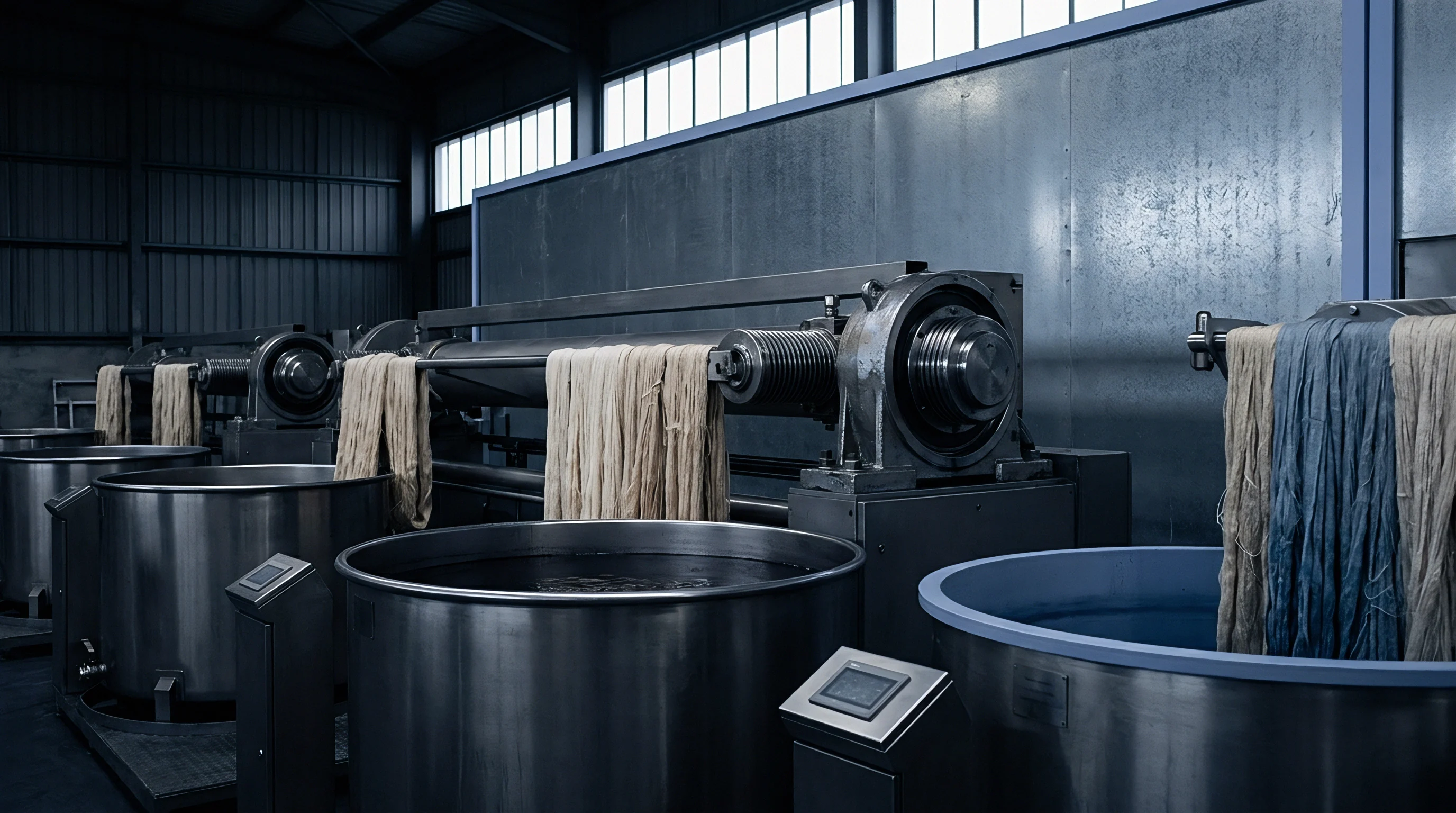
Raw flax is complex, consisting of a cellulosic core bound into bast bundles by non-cellulosic materials. Dew-retted European flax fiber typically contains 70 to 75 percent cellulose, 12 to 16 percent hemicelluloses, 2.0 to 3.5 percent pectins, 2.0 to 4.5 percent lignin, 1.5 to 2.0 percent waxes and fats, and 1.0 to 1.5 percent inorganic ash, plus any warp sizing. Scouring strips hydrophobic waxes, insoluble pectins, and part of the hemicellulose matrix to make the substrate absorbent and receptive to dyeing, bleaching, or resin treatments.
Industrial scouring exposes greige linen to hot alkaline liquor made of sodium hydroxide or sodium carbonate, sequestering agents, and non-ionic surfactants. At high pH (11.5 to 13.0) and temperatures from 90 to 105 degrees Celsius, ester links in pectin undergo beta-elimination and saponification, turning insoluble protopectin into soluble sodium pectate salts. Fats and waxes saponify into soaps or emulsify, while accessible hemicelluloses hydrolyze into shorter polysaccharides that wash out into the bath.
Quantifying Non-Cellulosic Mass Loss Fractions
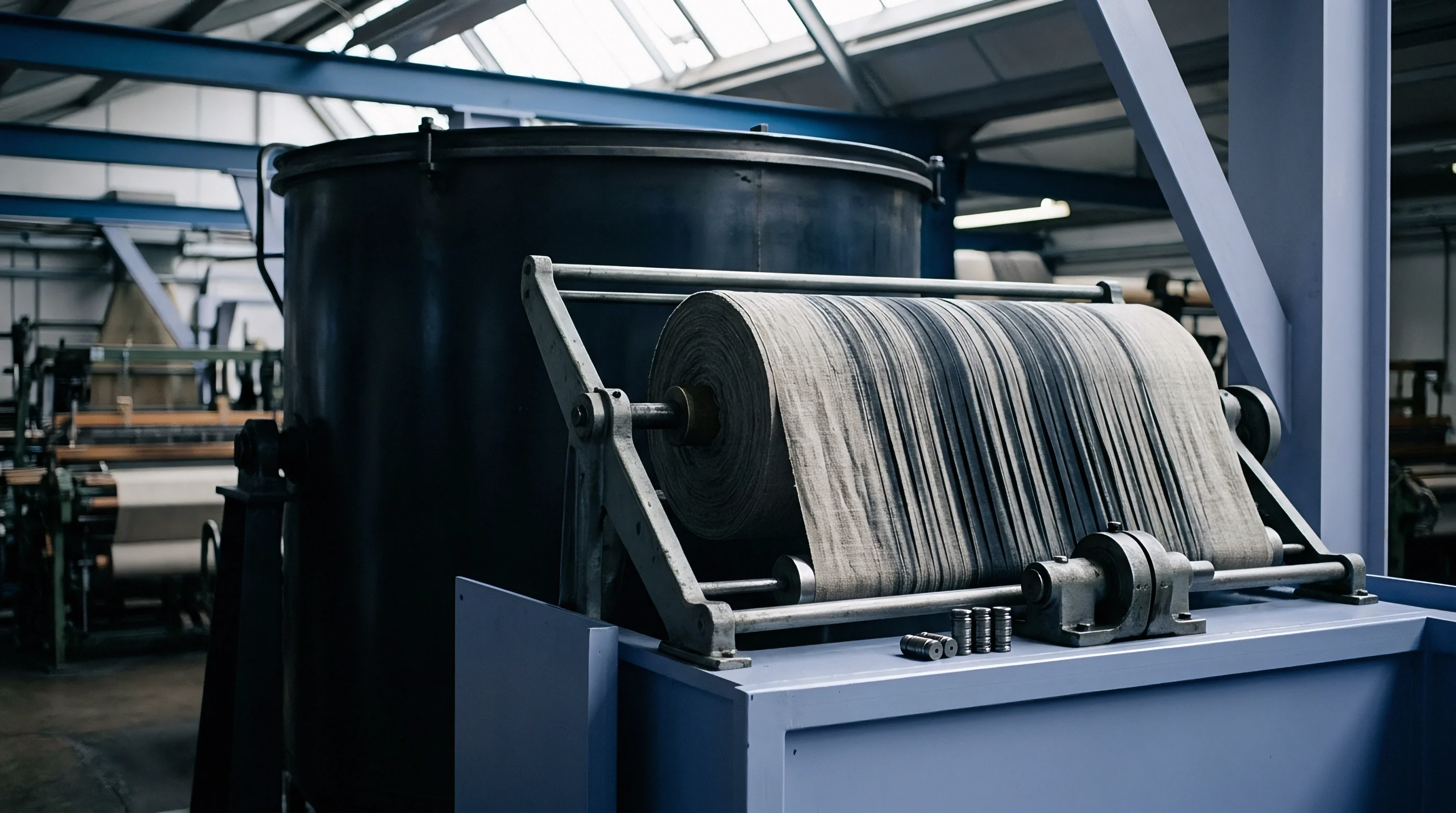
Mass loss during scouring depends on retting quality, spinning method, sizing, and scour aggressiveness. Over-retted flax starts with fewer pectins, leading to lower chemical loss in finishing, but produces weaker yarns that shed fiber. Under-retted flax retains heavy gummy deposits, resulting in dry-mass losses up to sixteen percent.
Typical dry-mass losses across commercial processing routes break down as follows.
| Fiber and Processing Classification | Pectin Loss (%) | Hemicellulose Loss (%) | Wax and Fat Loss (%) | Size Removal (%) | Total Mass Loss (%) |
|---|---|---|---|---|---|
| Water-Retted Wet-Spun (Unsliced Warp) | 2.8% | 4.5% | 1.4% | 0.0% | 8.7% |
| Dew-Retted Wet-Spun (PVA Sized Warp) | 3.1% | 6.2% | 1.6% | 3.5% | 14.4% |
| Dew-Retted Dry-Spun (Starch Sized Warp) | 3.4% | 7.8% | 1.8% | 4.8% | 17.8% |
| Semi-Bleached Roving Wet-Spun (Unsized) | 1.2% | 2.4% | 0.8% | 0.0% | 4.4% |
| Organic Dew-Retted (Enzymatic Scour) | 2.2% | 3.8% | 1.1% | 2.5% | 9.6% |
Sizing agents make up a significant share of the mass lost between loom and final inspection. In dry-spun weaving, warp breakage rates soar without sizing; yarns carry modified starches, carboxymethyl cellulose (CMC), or polyvinyl alcohol (PVA) at four to eight percent of dry warp weight. Desizing in wet preparation ~ via enzymatic amylase breakdown or hot alkaline washing ~ removes this size completely.
That mass is present on the loom beam but gone from finished cloth.
In wet-spun flax, where roving passes through hot water during drafting to soften pectins and allow bundle drawing, warp sizing is often omitted for fine yarns on modern air-jet or rapier looms. For unsized warps, mass loss is entirely native biochemical extraction, usually running eight to twelve percent of dry fiber mass.

Alkaline Kinetics and Scouring Control
Removing non-cellulosics depends on caustic concentration, bath temperature, dwell time, and liquor circulation. In continuous open-width ranges, fabric is padded with 30 to 50 grams per litre of sodium hydroxide, steamed at 100 degrees Celsius for 20 to 45 minutes, and rinsed through counter-current wash boxes. Jigger or winch processing takes several hours at lower chemical concentrations.
If scouring is overly aggressive, alkaline hydrolysis attacks amorphous regions in the core cellulose, dropping the degree of polymerization (DP) and destroying tensile and tear strength. Controlled scouring minimizes cellulose degradation while emulsifying pectins and waxes, maintaining a DP above 2000 in high-grade European flax. Key parameters for managing the scour include:
- Sodium Hydroxide Titration keeps active alkali within plus or minus 1.5 grams per litre to prevent lot-to-lot weight variations.
- Chelating Agent Dosage neutralizes calcium and magnesium ions from ash, preventing insoluble pectate deposits that stiffen fabric.
- Surfactant Wetting Power speeds liquor penetration into dense bast bundles without extra mechanical tension.
- Counter-Current Rinse Temperature steps down from 85 to 40 degrees Celsius to prevent thermal shock and re-deposition of emulsified waxes.
Stripping encrusting matter changes yarn volume and density. As waxes and gums wash out, void space inside the bundle expands, raising yarn porosity. That boosts absorbency but reduces physical yarn substance.
If mechanical weave shrinkage does not compensate for this volume loss, the fabric stays loose and pinholed, failing seam slippage tests under ASTM D434 or ISO 13936-1.
Finishers must view scouring as permanent chemical extraction rather than routine washing. Stripped non-cellulosic mass cannot be replaced.


Mass
Calculating mass balance in woven linen requires balancing two opposing forces: weight lost to chemical extraction and weight gained through fabric compaction. Relying on single-point shrinkage figures leads to off-spec shipments. A complete engineering model tracks fiber weight, size, yarn count, warp take-up, weft contraction, and moisture regain from creel to pack-out.
Dry mass per square metre of loom-state greige cloth depends on warp and weft density, yarn linear density, and size add-on. The basic equation for dry greige areal mass is:
Mgreige,dry = +
Where Ereed is ends per centimetre in the reed, Pfell is picks per centimetre at the fell, Tex is linear density in grams per 1000 metres, Swarp is fractional size add-on, and C is fractional loom crimp. Passing through scouring and stenter drying subjects the web to chemical mass loss Lchem alongside length shrinkage Kwarp and width shrinkage Kwidth.
Can Warp Contraction Fully Offset Scour Depletion in Dense Plain Weaves?
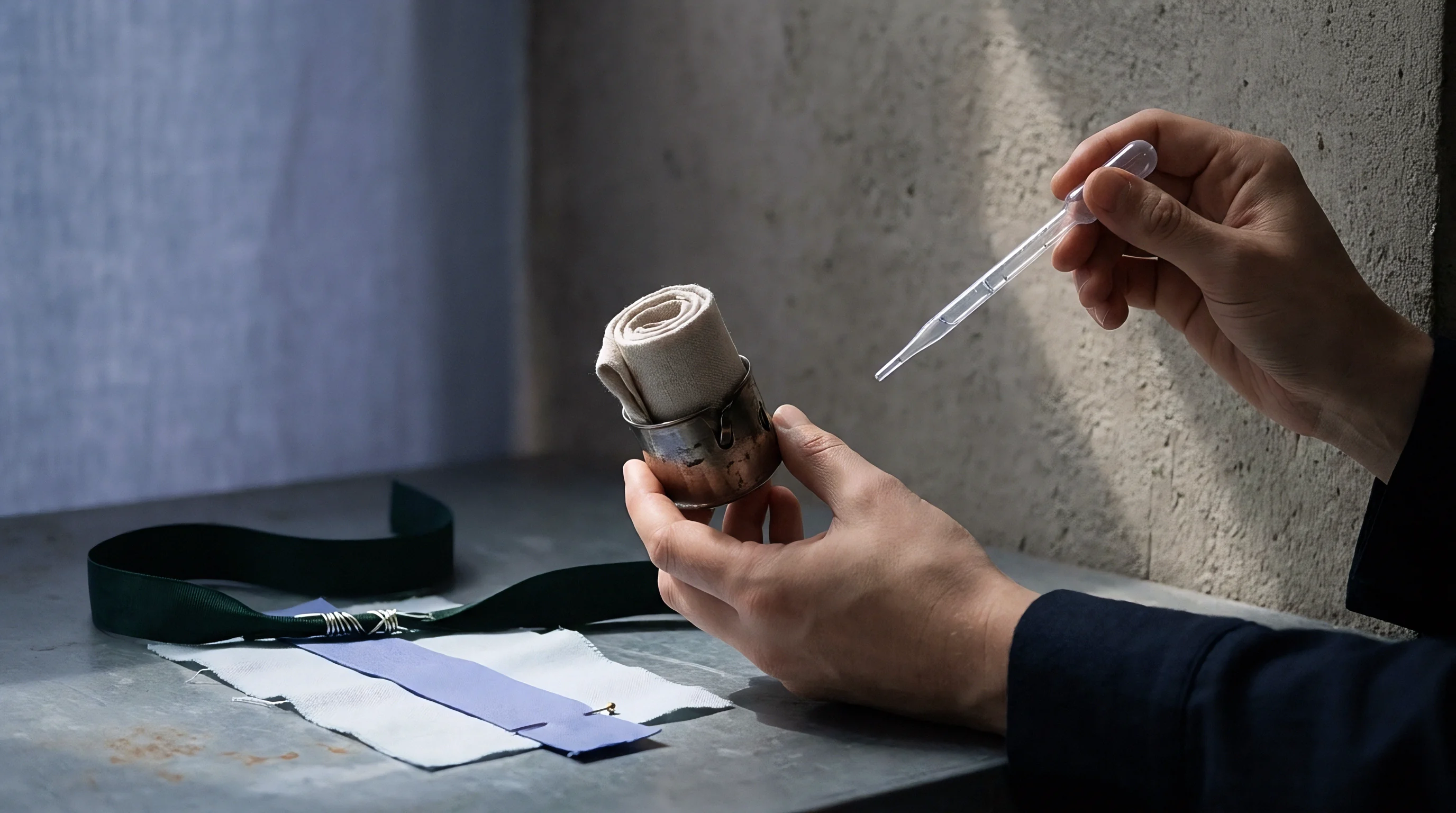
Warp contraction offsets chemical mass loss only when area reduction exceeds weight loss. The transformation for finished dry mass per square metre is:
Mfin,dry = Mgreige,dry × (1 – Ltotal) /
Here Ltotal accounts for combined non-cellulosic dissolution and size removal. The denominator gives the finished area yielded by one square metre of greige fabric. When area reduction (1 – Kwarp) × (1 – Kwidth) drops below the remaining mass fraction (1 – Ltotal), finished dry GSM exceeds greige dry GSM.
When area reduction is larger, finished weight falls below greige weight.
Under standard atmospheric conditions of 20 degrees Celsius and 65% relative humidity, pure scoured linen carries an official commercial moisture regain of twelve percent.
Commercial transactions base weight on conditioned mass rather than dry mass. ISO 3801 specifies mass per unit area under standard atmospheric conditions. Converting dry mass to conditioned mass requires multiplying by (1 + R), where R is official moisture regain (0.120 for flax under ISO rules, versus 0.085 for cotton).
Skipping standard moisture conditioning before weighing causes immediate three to four percent discrepancies between mill tests and lab audits.

Step-by-Step Mass Reconciliation Walkthrough
The following walkthrough traces a commercial high-density apparel plain weave from yarn spec through loom settings to final bolt delivery.
- Target Finished Specification ~ 185.0 g/m² conditioned weight at 140.0 cm cuttable width, 21.0 ends/cm, 18.0 picks/cm, pure dew-retted wet-spun flax.
- Yarn and Chemical Loss Parameters ~ Raw yarn count at Nm 28.0 (35.71 tex) warp and weft, zero size, expected scour mass loss of 11.5% (Lchem = 0.115), moisture regain of 12.0%.
- Required Finished Dry Mass ~ Calculated as 185.0 / (1 + 0.120) = 165.18 g/m² dry fiber mass.
- Finished Linear Yarn Densities ~ After 11.5% chemical loss, yarn becomes 35.71 × (1 – 0.115) = 31.60 tex (Nm 31.65) in warp and weft.
- Finished Structural Mass Contribution ~ Warp dry mass = 21.0 ends/cm × 100 cm/m × 31.60 tex / 1000 × (1 + 0.095 crimp) = 72.67 g/m²; Weft dry mass = 18.0 picks/cm × 100 cm/m × 31.60 tex / 1000 × (1 + 0.065 crimp) = 60.57 g/m²; Total dry yarn mass = 133.24 g/m². This leaves a deficit against the 165.18 g/m² target, showing yarn must be spun coarser or sett increased.
- Corrected Loom State Construction ~ Raw yarn adjusted to Nm 22.5 (44.44 tex). After 11.5% scour loss, finished yarn reaches 39.33 tex. Warp dry mass at 21 ends/cm with 9.5% finished crimp = 90.43 g/m². Weft dry mass at 18 picks/cm with 6.5% finished crimp = 75.40 g/m². Total finished dry mass = 165.83 g/m². Conditioned finished mass = 165.83 × 1.12 = 185.73 g/m², meeting the 185.0 g/m² target within 0.4%.
- Loom Setup Dimensions ~ Target finished width 140 cm. Total width shrinkage (reed to finished) 10.5%. Reed width = 140 / (1 – 0.105) = 156.4 cm. Reed denting = 21.0 × (1 – 0.105) = 18.8 ends/cm in reed. Loom pick density at fell = 18.0 × (1 – 0.120 warp shrinkage) = 15.84 picks/cm.
The balance sheet below tracks how 1000 metres of warp yarn converts into delivered finished fabric.
| Stage of Production | Length (m) | Width (cm) | Area (m²) | Total Mass (kg) | Areal Mass (g/m²) | Warp Crimp (%) |
|---|---|---|---|---|---|---|
| Warp Beam on Creel | 1000.0 | N/A | N/A | 130.65 | N/A | 0.0% |
| On-Loom (Under Tension) | 962.0 | 156.4 | 1504.6 | 236.40 | 157.1 | 3.9% |
| Off-Loom Greige (Relaxed) | 935.0 | 151.0 | 1411.9 | 242.80 | 172.0 | 6.9% |
| Scoured (Wet Unset) | 850.0 | 145.0 | 1232.5 | 194.50 | 157.8 | 17.6% |
| Stenter Finished (Conditioned) | 880.0 | 140.0 | 1232.0 | 228.82 | 185.7 | 9.5% |
These numbers explain the procurement paradox. Total dry mass drops from 236.40 kilograms on the loom to 194.50 kilograms after scouring due to 11.5 percent chemical mass loss and grease extraction. Yet invoiced conditioned weight reaches 185.7 grams per square metre ~ higher than the on-loom greige weight of 157.1 grams per square metre.
Fabric area shrinks from 1504.6 to 1232.0 square metres (an 18.1 percent area reduction), outpacing raw mass loss and raising weight per unit area while yielding 880 metres of finished goods from 1000 metres of warp beam.
If the finisher stretches the stenter frame to deliver 920 metres instead of 880, finished area expands to 1288.0 square metres. Total finished mass stays fixed at 228.82 kilograms. Conditioned weight drops to 177.6 grams per square metre, failing the 185 GSM target.
Over-tensioning in finishing renders the batch defective.
Every gram of weight discrepancy traces back to this balance between stripped non-cellulosic mass and stenter frame tension settings.

Settlement
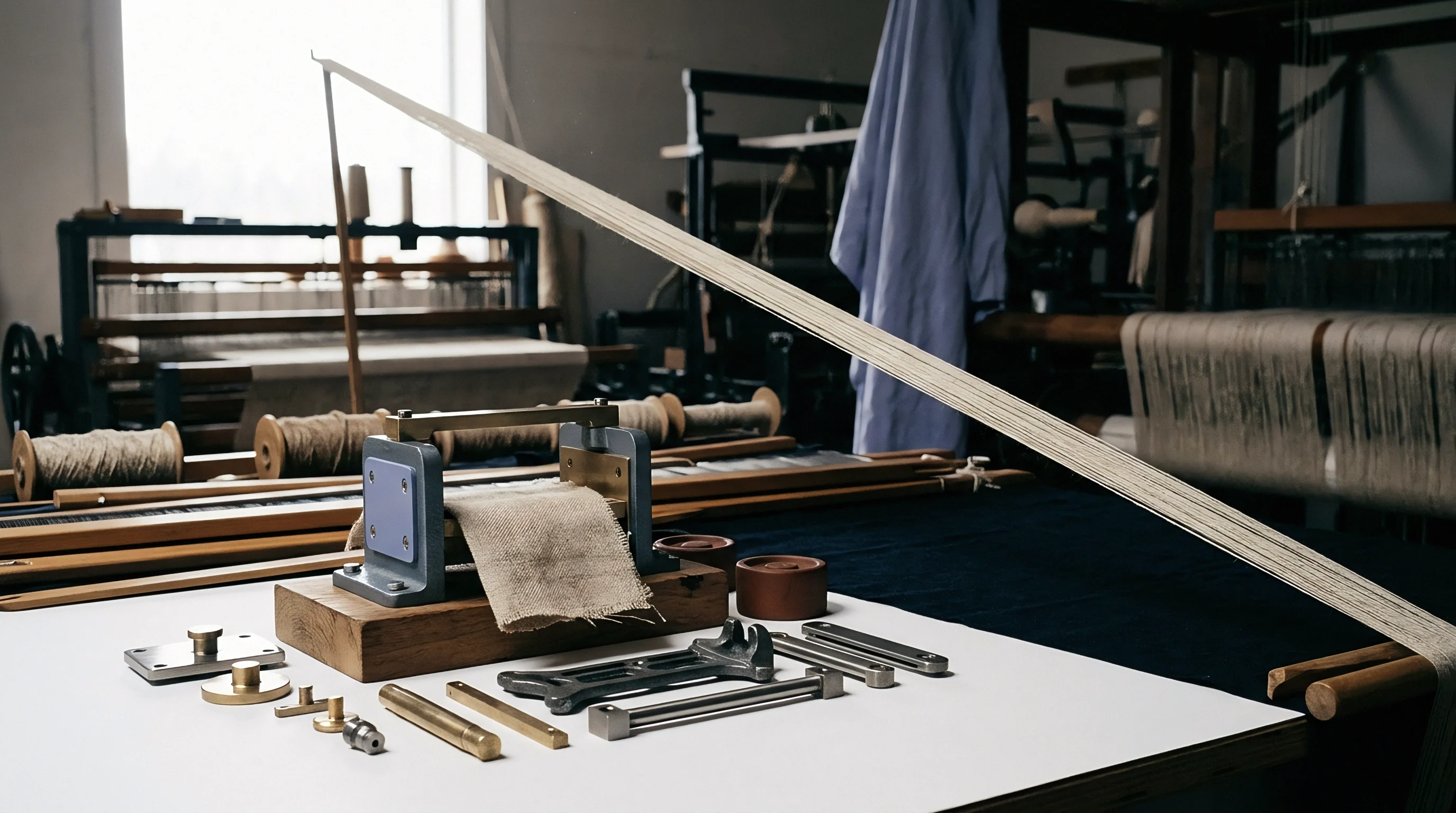
Linen purchasing agreements must build mass reconciliation directly into commercial contracts. Standard terms written for cotton or synthetics fall apart when applied to bast fibers. Specifying finished width, GSM, and yardage without defining raw yarn baselines and allowed finishing tensions leads directly to off-spec shipments and disputes.
Contracts must set clear limits for chemical extraction and mechanical take-up on technical spec sheets.
Loom scheduling depends directly on these settings. A mill running 50 rapier looms at 420 picks per minute inserts a set number of picks per shift. If target finished sett is 18.0 picks per centimetre, but weaving is set at 17.0 picks while relying on 12 percent finishing shrinkage to hit spec, output in linear metres increases by 5.8 percent.
If the weaver must insert 19.5 picks on the loom because the finisher runs high warp tension during dyeing, loom output drops and machine time rises. Capacity is bought on picks inserted at the loom fell, not pick counts measured on finished rolls.

Structuring the Technical Purchase Agreement
Contracts for linen cloth eliminate friction by separating raw yarn commitments from finishing yields. Rather than relying on a generic weight tolerance, specs should define operating ranges for each variable. Essential clauses include:
- Raw Yarn Count Verification mandates testing raw yarn linear density before warping under ISO 2060 to lock in baseline tex before chemical extraction.
- Scour Mass Loss Envelope sets allowed extraction between 9.0% and 13.5% for dew-retted fiber, treating losses over 14.0% as chemical over-processing and damage.
- Greige Reed and Pick Settings defines minimum on-loom ends and picks per centimetre, preventing an under-sett weave that relies on excessive finishing shrinkage.
- Finished Dimensional Stability Limits sets maximum residual shrinkage under ISO 5077 (typically 3.0% warp and 2.0% weft max after washing at 40 degrees Celsius).
- Conditioned Weight Settlement Method requires invoice verification under ISO 3801 Method 5 after conditioning, applying the 12.0% official moisture regain factor.
With these parameters documented, liability for off-spec fabric is clear. If finished cloth comes in light while residual wash shrinkage is high (such as 7.5% in the warp), the finisher stretched the warp during drying to gain yardage, violating Clause 4. The finisher assumes liability for the rejected lot.
If cloth comes in light while residual shrinkage stays within the 3.0% limit, the weaver used light raw yarn or insufficient reed density, violating Clauses 1 and 3. The mill owns the defect.
Cost Modeling and Yield Optimization
Pricing linen cloth requires modeling raw material consumption per finished square metre, accounting for chemical dissolution and structural shrinkage. Costing based strictly on greige yardage underestimates yarn requirements. Financial calculations must track raw yarn, sizing, weaving charges, wet processing fees, and net yield.
Take an order for 10,000 finished metres of 185 GSM plain weave at 140 cm width. Delivering 10,000 metres requires 11,363 metres of loom warp (a 1.1363 take-up multiplier) at 156.4 cm reed width. Total raw yarn needed for warp and weft comes to 2,684 kilograms.
Chemical scouring dissolves 308 kilograms of fiber mass into wastewater. The buyer pays for all 2,684 kilograms of yarn plus loom hours to insert 18,000,000 picks. If the contract ignores the 13.6 percent length contraction and 11.5 percent chemical extraction, the mill absorbs a 25 percent cost variance or stretches the fabric in finishing, compromising quality.
Defining where chemical extraction ends and mechanical contraction begins creates a clean baseline for both buyer and mill. Production runs smoothly, lab reports match, and delivered linen meets target weight, hand, and dimensional stability.
Linking yarn count, chemical loss thresholds, and finished pick density in purchase terms removes the ambiguity that destabilizes linen programs.