Harmonized System Chapter 53 Classification Mechanics for Flax Fabrics
Harmonized System Chapter 53 classification of flax fabrics relies on an 85 percent mass threshold verified through dry-weight chemical analysis.
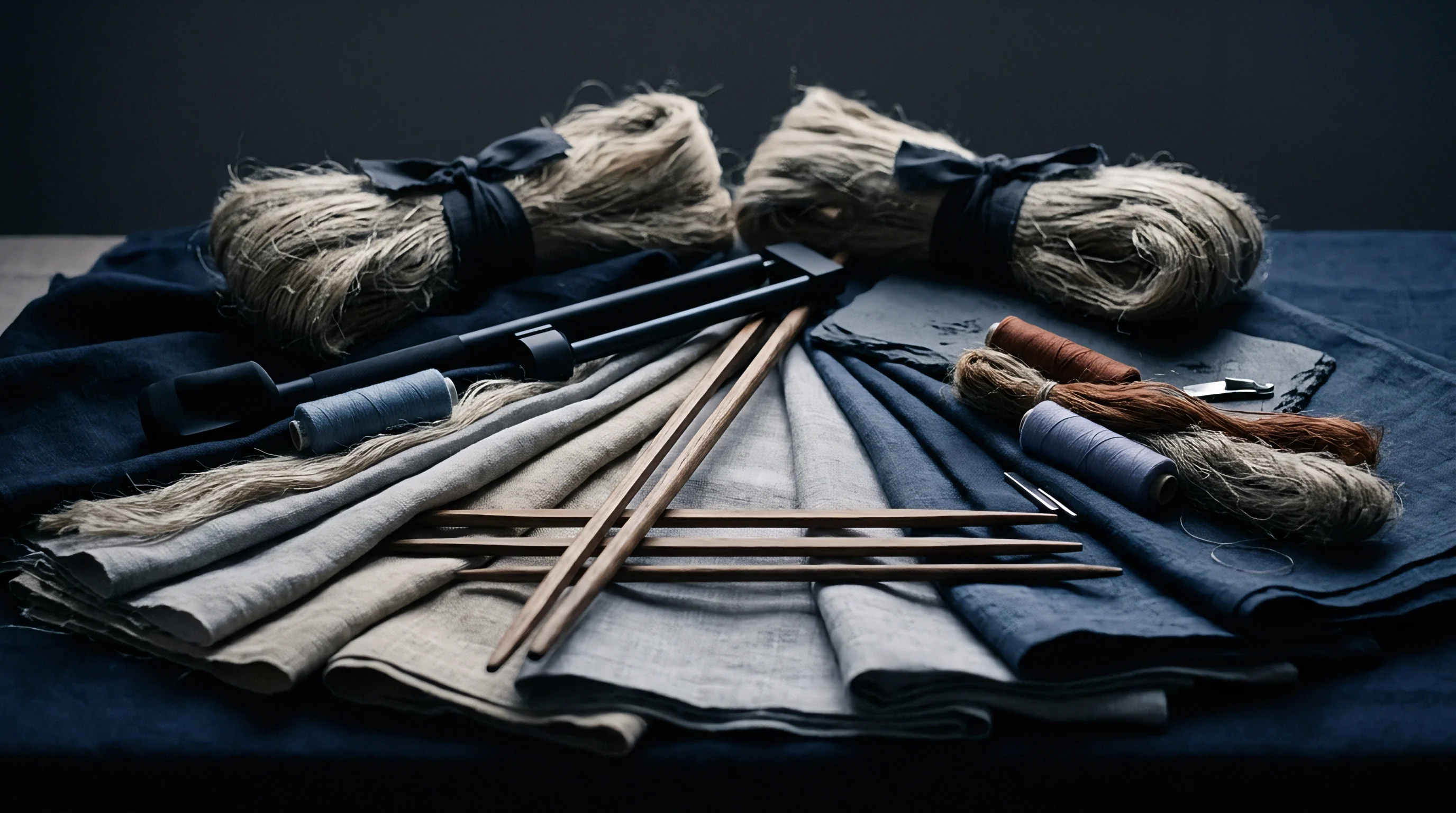

Nomenclature
Harmonized System Chapter 53 governs international tariff classifications for flax, hemp, ramie, and related vegetable bast fibers, covering everything from raw straw to woven yardage. Within this chapter, Heading 53.09 establishes the specific classification criteria for woven fabrics of flax. Importers and customs brokers evaluate shipments under the World Customs Organization General Interpretative Rules, Section XI legal notes, and Chapter 53 annotations.
Determining the correct four-digit and six-digit codes requires precise quantification of fiber weight percentages, chemical finishing, and yarn structure. Customs authorities reject estimated blends and marketing descriptions during entry reviews, relying strictly on physical examination and laboratory test reports.
The central division in Heading 53.09 separates fabrics containing eighty-five percent or more flax by weight from those containing less than eighty-five percent. This eighty-five percent threshold directly affects duty rates and documentation requirements across major ports. Fabrics at or above the cutoff enter subheading 5309.11 or 5309.19; blends falling below it shift to subheading 5309.21 or 5309.29.
Subheading assignments also hinge on the chemical state of the fabric. Calculating these percentages requires applying official textile moisture regain standards, as bast fibers absorb atmospheric moisture at rates that will distort raw dry weight measurements.

Legal Framework of Heading 5309
Section XI legal notes establish binding rules for categorizing bast fabrics by mass ratios and processing stages. Heading 53.09 applies exclusively to woven fabrics. Non-woven webs, knitted materials, and braided goods fall outside Chapter 53 and are classified under Chapters 56, 59, or 60.
Qualifying for Heading 53.09 requires yardage produced by interlacing warp and weft yarns on a loom. Chapter 53 covers true flax fibers from Linum usitatissimum; other bast fibers such as Boehmeria nivea are classified separately, with ramie entering under Heading 53.11.
Under General Interpretative Rule 1, classification is determined according to the terms of the headings and any relative section or chapter notes. For mixed flax goods, Note 2 to Section XI governs multi-component woven items. Importers must apply Note 2(A) whenever a fabric contains two or more distinct textile materials: the item is classified as if consisting entirely of the single textile material that predominates by weight over any other single component.
A fabric containing bast fibers must meet yarn predominance criteria across all warp and weft systems before claiming pure vegetable classification.
In a woven blend composed of sixty percent flax, twenty-five percent cotton, and fifteen percent polyester, flax is the single largest fiber by weight. Under Section XI Note 2(A), customs classifies this fabric under Heading 53.09, even though non-flax fibers make up forty percent of the total. Conversely, if a woven fabric contains forty percent flax, forty-five percent combed cotton, and fifteen percent viscose, the cotton fraction outweighs the flax.
That shipment leaves Chapter 53 entirely and enters Chapter 52 under Heading 52.12 as a woven cotton fabric.
Section XI Note 2 Weight Predominance Rules
Multi-fiber constructions follow explicit classification directives when flax is blended with synthetic, artificial, or animal fibers. Note 2(B) defines how to execute the weight calculations required by Note 2(A). For classification purposes, continuous filament yarns from Chapter 54 and discontinuous staple fibers from Chapter 55 are treated as a single category when weighed against natural fibers.
Similarly, yarns composed of different synthetic materials are aggregated into one combined weight before comparison against flax content.
When calculating fiber mass fractions under Section XI notes, testing facilities calculate commercial weight rather than oven-dry mass. Commercial weight applies the official moisture regain allowance established for each fiber type by international standards. Flax carries a standard moisture regain allowance of twelve percent in official tariff schedules.
Cotton has an allowance of eight point five percent, while polyester carries only zero point four percent. Raw dry weight analysis skews the actual percentage split and leads to incorrect tariff assignments.
Take a laboratory sample with an oven-dry fiber composition of eighty-four point zero grams of flax, ten point zero grams of cotton, and six point zero grams of polyester per one hundred grams of dry cloth. Applying the official moisture regain factors recalculates the commercial masses as follows:
Flax commercial weight: eighty-four point zero multiplied by one point one two equals ninety-four point zero eight grams.
Cotton commercial weight: ten point zero multiplied by one point zero eight five equals ten point eight five grams.
Polyester commercial weight: six point zero multiplied by one point zero zero four equals six point zero two grams.
The total commercial weight of the blend comes to one hundred ten point ninety-five grams. Dividing ninety-four point zero eight by one hundred ten point ninety-five yields an official flax commercial weight fraction of eighty-four point dismissive seven percent. Because eighty-four point seven percent falls below the statutory eighty-five percent threshold, the material enters subheading 5309.21 rather than 5309.11.
The unadjusted dry weight of eighty-four point zero percent would produce the same subheading in this instance, but for lots sitting near the boundary ~ such as eighty-four point eight percent ~ moisture regain adjustments decide the legal outcome.

Subheading Categories for Pure and Mixed Flax
Tariff schedules divide woven bast materials into specific four-digit and six-digit codes based on the verified percentage of vegetable fiber. Heading 53.09 splits at the five-digit level into 5309.10 for goods containing eighty-five percent or more flax by mass, and 5309.20 for goods containing less than eighty-five percent. At the six-digit level, subheadings distinguish fabrics by processing state: unbleached, bleached, piece-dyed, woven from yarns of different colors, or printed.
| Tariff Subheading | Primary Fiber Weight Threshold | Chemical and Color State | Customs Entry Verification Basis |
|---|---|---|---|
| 5309.11 | 85 percent or greater flax | Unbleached or Bleached | Oven-dry chemical extraction and spectrographic brightness test |
| 5309.19 | 85 percent or greater flax | Dyed, Yarns of Different Colors, Printed | Piece-dye inspection, weave structural pattern, surface print audit |
| 5309.21 | Less than 85 percent flax | Unbleached or Bleached | Quantitative solvent dissolution (ISO 1833) and regain adjustment |
| 5309.29 | Less than 85 percent flax | Dyed, Yarns of Different Colors, Printed | Multi-fiber solvent separation and cross-sectional optical scan |
Subheading Note 1 to Section XI defines unbleached, bleached, dyed, yarns of different colors, and printed fabrics. Unbleached fabrics are woven from unbleached yarns that have received no bleaching, dyeing, or printing treatments. Raw unbleached flax fabric retains the natural grey-brown tone resulting from field retting and residual pectin.
Bleached fabric includes yardage bleached in the piece, treated chemically to remove natural pigments, or woven entirely from bleached yarns.
Dyed fabrics include yardage dyed a single uniform color in the piece or woven from uniformly dyed yarns. The category for yarns of different colors applies to jacquard, dobby, or plain-weave yardage featuring stripes, checks, or micro-patterns produced by combining yarns of varying shades or distinct hues. Printed fabrics receive localized surface printing after weaving, adding patterns over unbleached, bleached, or piece-dyed grounds.
Even a small fraction of synthetic filament can reclassify the yardage into another heading if non-bast components outweigh the flax.
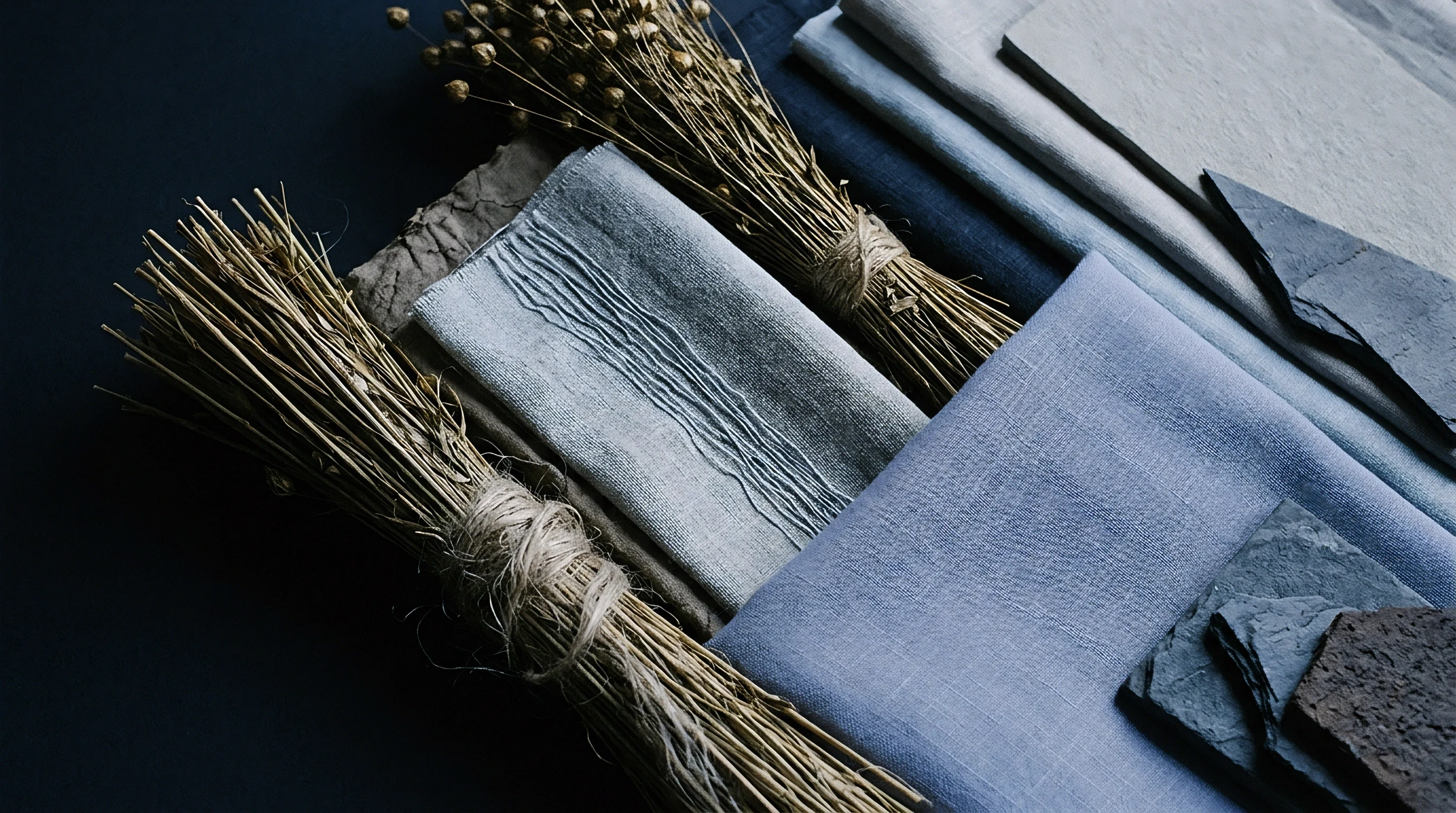

Loom
Shuttleless air-jet and rapier weaving machines convert hackled flax yarns into stable industrial and apparel fabrics through controlled warp tension and precise shed openings. Loom settings govern thread density, mass per unit area, and selvedge structure ~ all variables scrutinized by customs inspectors during entry audits. Flax yarns have lower elasticity and a higher initial modulus than cotton or synthetic spun yarns, requiring strict humidity control and careful sizing formulations to avoid warp breakage during high-speed shed formation.
Key structural parameters measured off the loom include warp ends per centimeter and weft picks per centimeter. Taken alongside yarn linear density in tex or metric yarn count (Nm), these counts determine fabric weight in grams per square meter. Customs authorities verify declared classifications by checking invoice weights against physical samples taken from imported fabric rolls.
Any discrepancy between mill technical sheets and actual bolt weights points to potential differences in yarn count or blend ratios that could shift classification under Chapter 53.

Structural Weave Construction and Subheading Criteria
Weave patterns change the surface texture and thread density of bast fabrics without necessarily moving them to a different statistical line in the tariff schedule. Plain, twill, and satin weaves all remain within Heading 53.09 provided the fiber blend meets statutory criteria. Plain weave alternates warp and weft in a standard over-one under-one pattern, providing structural stability and thread density.
Twill constructions, including three-end and four-end diagonal weaves, accommodate closer yarn packing to yield heavier fabrics used for structured apparel and furnishings.
Jacquard mechanisms mounted on the weaving frame control warp ends individually, producing complex figurative patterns. Jacquard-woven flax remains under Heading 53.09 as long as it meets fiber predominance limits. However, if a jacquard design incorporates metallic threads or heavy decorative chenille yarns of silk or synthetic filament, customs calculates the weight contribution of those decorative yarns.
If they alter the essential character of the fabric under GIR 3(b) or exceed statutory limits, the material reclassifies into Chapter 58 under Heading 58.09.
Selvedge construction provides useful diagnostic details during customs inspections. High-speed rapier looms cut the weft yarn at each pick, leaving fringe edges that must be tucked back into the shed or bound with leno weave threads. Leno selvedges frequently use high-tenacity continuous filament polyester to secure cut picks.
Customs auditors check whether synthetic leno selvedge yarns were factored into the total net weight of the fabric bolt, as technical leno yarns form an integral structural element of the woven fabric and must be included in the total weight reconciliation.

Yarn Processing States under Customs Definitions
Bleaching, dyeing, and printing determine the six-digit subheading assignment under international trade notes. Section XI Subheading Note 1(h) defines unbleached woven fabric as cloth made from unbleached yarns that has undergone no bleaching, dyeing, or printing. Unbleached flax yarn retains natural field-retting pigments, showing light brown, grey, or tan shades, and receives no chemical stripping or peroxide processing before weaving.
Neutral sizing compounds like starch or polyvinyl alcohol applied to protect warp yarns during weaving do not compromise unbleached status under subheading 5309.11 or 5309.21.
Bleached fabric under Subheading Note 1(i) covers yardage bleached in the piece, woven entirely from bleached yarns, or produced from a mix of unbleached and bleached yarns. Chemical bleaching uses hydrogen peroxide or sodium hypochlorite solutions to break down carotenoids and lignin within the bast fiber wall. The process slightly reduces total dry fiber mass by dissolving non-cellulosic matter.
Importers must verify whether scouring and boil-off operations involved full chemical bleaching agents before declaring yardage as bleached under subheadings 5309.11 or 5309.21.
Dyed woven fabric under Subheading Note 1(j) applies to cloth dyed a single uniform color or woven from single-shade yarns. Yarns of different colors under Subheading Note 1(k) covers fabrics featuring patterns like stripes, checks, or heather effects created by combining yarns of varying shades. Yarn-dyed linen often carries higher tariff valuations in select markets.
Customs laboratories inspect yarn cross-sections under optical magnification to separate piece-dyed from yarn-dyed cloth, checking for uncolored cores inside yarn bundles that indicate incomplete dye penetration during piece dyeing.

Mill Floor Documentation and Production Records
Auditors examine loom shed logbooks against weight declarations. Verifying declared subheadings requires primary production records generated inside the weaving plant. Customs auditors request specific mill records to trace yarn processing history, fiber origin, and net fabric weight.
Maintaining an unbroken paper trail from the raw yarn warehouse to the packing list prevents cargo detention and tariff reclassifications at arrival ports.
Technical compliance relies on specific mill documents:
- Warp Beam Tallies document the initial thread count, sizing application, and total fiber mass loaded onto the weaving frame.
- Dobby Reed Schedules specify the exact ends per centimeter and pick density during active cloth production.
- Greige Roll Inspection Sheets capture raw off-frame weights prior to aqueous finishing or chemical bleaching procedures.
- Scouring Yield Logs establish the non-lint residue loss occurring during wet processing on the finishing line.
Shuttleless weaving frames track pick insertion rates automatically, logging yarn consumption per meter of cloth. Matching warp beam tallies, loom logs, and weft consumption figures against raw yarn purchase invoices confirms whether declared pure flax lots were blended with synthetic fibers during production. When greige fabric moves to wet finishing, scouring yield logs record mass loss from pectin removal and desizing.
Scouring losses in pure flax typically range from four to eight percent of raw cloth weight, altering the baseline mass figures used for tariff determinations.


Analysis
Customs testing laboratories use standardized dissolution and microscopic protocols to verify fiber ratios on import shipments. When inspectors suspect misdeclarations or blend shifts near statutory boundaries, they draw swatches from fabric bolts for accredited laboratory testing. Laboratory analysis confirms whether goods declared under 5309.11 or 5309.19 meet the eighty-five percent minimum flax threshold through chemical separation, microscopic identification, and oven-dry weight measurement adjusted for moisture regain.
Chemical testing of flax blends requires specialized solvent extraction because flax consists mainly of alpha-cellulose bound with hemicellulose, pectins, and lignins. Bast fibers share chemical characteristics with cotton, hemp, and ramie, preventing the straightforward organic solvent dissolution used for synthetics. Separating flax from other vegetable or synthetic fibers requires standard ISO 1833 or ASTM D629 protocols, quantifying both non-cellulosic impurities and the exact proportion of each plant species present in the yarn.

What Defines Unbleached Woven Flax under Customs Scrutiny?
Chemical testing confirms the presence of natural pectins, waxes, and lignins in raw bast yarns prior to import clearance. Unbleached flax exhibits chemical markers that distinguish it from bleached or semi-bleached yardage. Raw flax contains roughly seventy to seventy-five percent cellulose, fifteen percent hemicellulose, two to three percent pectin, two to three percent lignin, and one to two percent natural waxes and fats.
Laboratory tests quantify residual lignin via Klason lignin dissolution or spectrophotometric absorbance testing.
Bleaching breaks down lignin structures and eliminates pectins through alkaline scouring and oxidation. A fully bleached flax fabric shows Klason lignin levels below zero point two percent by weight and an ISO brightness level above seventy-five percent. Unbleached flax retains Klason lignin between one point five and three point zero percent, with ISO brightness values between forty-five and sixty-five percent.
Customs laboratories measure spectrophotometric reflectance on imported cloth to detect whether declared unbleached fabrics underwent partial chemical bleaching to enhance brightness, which shifts the subheading from 5309.11 to 5309.19 or from 5309.21 to 5309.29.
Soxhlet solvent extraction removes sizing compounds, spinning oils, and finishing resins before chemical fiber separation begins. Starch sizes wash out in hot water containing amylase enzymes, while polyvinyl alcohol dissolves in hot water flushes, and polyacrylate sizes strip cleanly in dilute sodium hydroxide. Leaving non-fibrous sizing agents on the sample inflates dry fabric mass and distorts subsequent quantitative fiber calculations.

Optical Microscopy and Microfibrillar Twist Differentiation
Polarized light examination using the Herzog method identifies structural differences between flax, hemp, and ramie fibers. Distinguishing flax (Linum usitatissimum) from hemp (Cannabis sativa) and ramie (Boehmeria nivea) is a common testing challenge because all three bast fibers consist of cellulosic ultimate fibers bundled together. Standard chemical dissolution methods cannot reliably separate flax from hemp or ramie because their solubility in zinc chloride or sulfuric acid is nearly identical.
Testing relies on optical microscopy, cross-sectional morphology, and polarized light extinction angles.
Under longitudinal magnification, individual flax ultimate fibers show smooth, cylindrical surfaces with narrow lumens and transverse cross-markings known as nodes or dislocations. Flax ultimate fibers measure fifteen to twenty-eight micrometers in diameter. Hemp fibers display wider lumens, irregular cell walls, and blunt ends, with average diameters of eighteen to thirty-five micrometers.
Ramie ultimate fibers are the largest among commercial bast fibers, featuring thick cell walls, wide irregular lumens, prominent longitudinal striations, and diameters reaching forty to eighty micrometers.
The Herzog test uses polarized light microscopy to determine the direction of microfibrillar twist in the fiber’s tertiary cell wall. Aligning the fiber parallel to the extinction plane of crossed polarizers with a red first-order retardation plate produces distinct interference colors:
Flax ultimate fibers exhibit S-twist microfibrillar architecture. When aligned parallel to the slow axis of the retardation plate, flax displays a sky-blue interference color. Rotating the stage ninety degrees shifts the interference color to yellow-orange.
Industrial hemp fibers possess Z-twist microfibrillar architecture. In the identical orientation parallel to the slow axis of the retardation plate, hemp displays a yellow-orange interference color, shifting to sky-blue upon ninety-degree stage rotation.
Ramie fibers share the Z-twist orientation of hemp, but technicians distinguish ramie by its significantly larger cross-section and characteristic wall striations. If a declared pure linen fabric displays predominant Z-twist optical interference under crossed polarizers, customs authorities reject Chapter 53 flax classification and reclassify the material as hemp or ramie under Heading 53.11.

Moisture Regain Calculations and Dry Weight Adjustments
Standard allowances under ISO 1833 define how oven-dry test weights convert to commercial mass figures for customs declarations. Chemical dissolution testing isolates the dry mass of each fiber component. Converting oven-dry weights into legal commercial masses under Chapter 53 requires applying statutory moisture regain allowances established by international tariff schedules.
Laboratory testing follows a standard analytical procedure:
- Condition the fabric specimen in a controlled atmosphere at twenty degrees Celsius and sixty-five percent relative humidity for sixteen hours.
- Extract soluble non-fibrous matter using petroleum ether in a Soxhlet apparatus for four hours to strip surface oils and sizing resins.
- Dissolve target cellulosic fibers selectively using zinc chloride and formic acid reagents according to established quantitative laboratory protocol.
- Filter remaining insoluble material through a weighed glass sinter crucible and wash with distilled water until neutral.
- Oven-dry the residual fiber mass at one hundred five degrees Celsius until consecutive weighings show constant weight within one milligram.
- Apply standard moisture regain factors of twelve percent for flax and eight point five percent for cotton to compute official commercial mass.
Evaluating flax blended with synthetic fibers like polyester or polyamide requires targeted chemical dissolution. Formic acid and zinc chloride reagents dissolve cotton and cellulosic fibers while leaving polyester intact. Sulfuric acid solutions dissolve cellulosic components, leaving residual synthetic filaments available for direct weighing.
| Fiber Type | Reagent Dissolution System | Microscopic Cross-Section | Polarized Light Twist Direction | Standard Regain Allowance |
|---|---|---|---|---|
| Flax (Linum usitatissimum) | Soluble in 75% H2SO4; insoluble in acetone | Polygonal, sharp angles, small lumen | S-twist (Blue under slow axis alignment) | 12.0 percent |
| Ramie (Boehmeria nivea) | Soluble in 75% H2SO4; insoluble in acetone | Elongated oval, thick wall, wide lumen | Z-twist (Yellow under slow axis alignment) | 12.0 percent |
| Industrial Hemp (Cannabis) | Soluble in 75% H2SO4; insoluble in acetone | Rounded polygonal, blunt ends, distinct lumen | Z-twist (Yellow under slow axis alignment) | 12.0 percent |
| Cotton (Gossypium) | Soluble in 75% H2SO4; insoluble in formic/ZnCl2 | Kidney-bean shape, central lumen canal | No uniform microfibrillar spiral twist | 8.5 percent |
| Methods Note: Quantitative separation procedures conform to ISO 1833-1 and ISO 1833-11. Regain allowances reflect statutory values defined in Section XI Subheading Notes. Soxhlet pre-extraction using petroleum ether precedes all reagent immersion steps. | ||||
Precise chemical separation ensures that blends near the eighty-five percent threshold reflect actual fiber content rather than moisture variations or chemical residues. Faulty fiber declarations lead to automated reclassifications, retroactive duties, and administrative penalties at the port of entry.

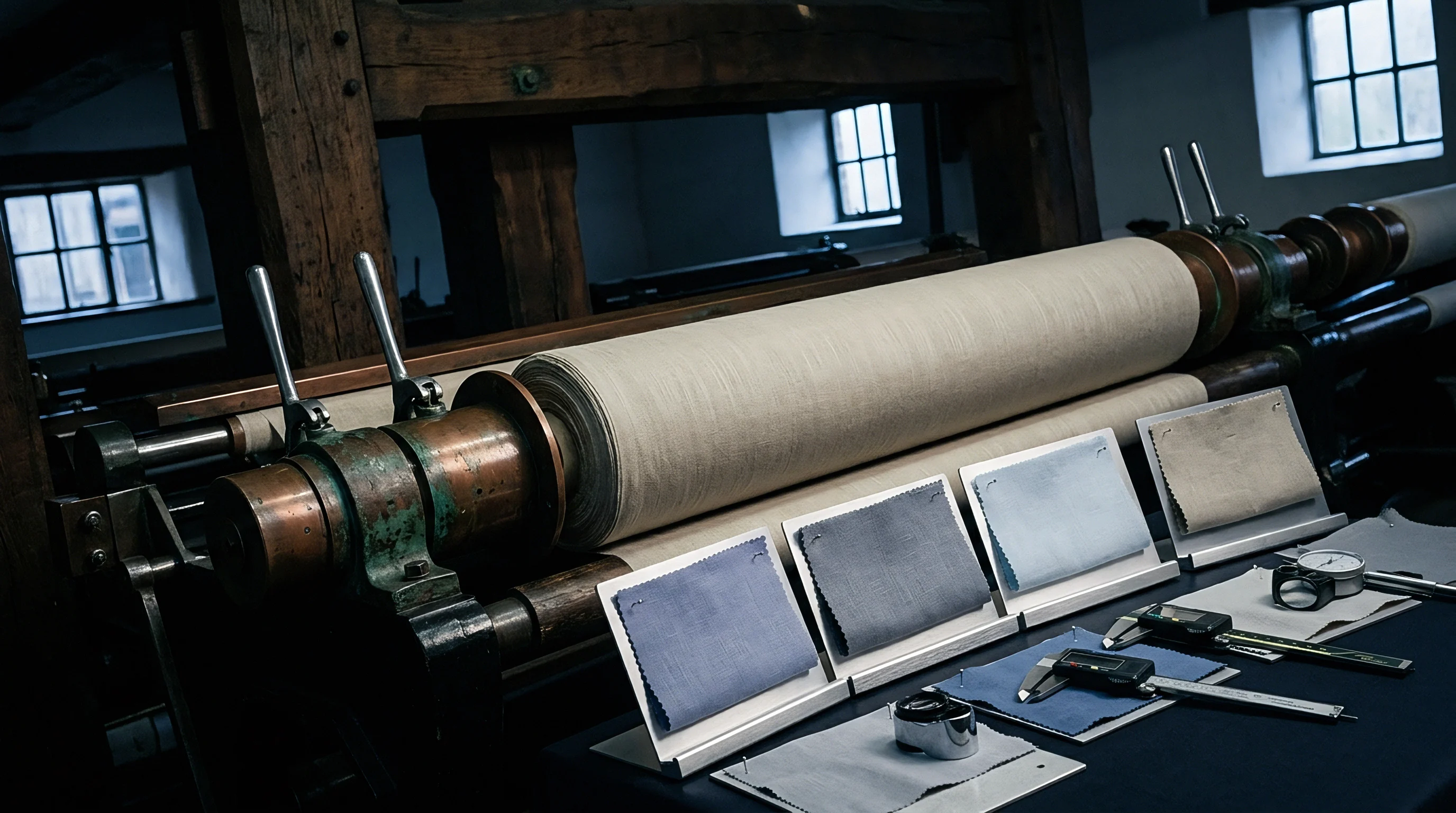
Origin
Non-preferential origin rules evaluate the country where complete weaving occurs rather than where raw flax straw was grown. Country of origin determines eligibility for preferential tariffs, exposure to anti-dumping duties, and trade sanction compliance. Importers often conflate private geographic fiber certifications with statutory origin rules enforced by customs agencies.
Establishing non-preferential origin for woven yardage under Heading 53.09 depends entirely on identifying where substantial transformation occurred.
Under United States regulations (19 CFR 102.21) and the European Union Customs Code (UCC), non-preferential origin for woven fabric is conferred by the country in which the fabric is woven. Converting spun yarn into woven cloth is recognized as an origin-conferring manufacturing step. If flax straw is harvested in France, scutched in Belgium, spun in China, and woven on looms in Portugal, the non-preferential country of origin for tariff classification and customs entry is Portugal.
Substantial Transformation Rules and Tariff Shift Mechanics
Transforming spun yarn into woven cloth satisfies substantial transformation criteria across most trade jurisdictions. The tariff shift rule for Heading 53.09 requires a change from any heading outside 53.06 through 53.11, or a shift from yarn under Heading 53.06 to woven fabric under 53.09. Because weaving moves the product from 53.06 (flax yarn) to 5309 (woven flax fabric), the weaving mill’s location confers origin.
ISO 1833-1 requires solvent extraction of non-cellulosic impurities before quantitative chemical analysis of fiber blends.
Preferential trade agreements impose further conditions on origin qualification. Frameworks like the Pan-Euro-Med rules or the United States-Mexico-Canada Agreement (USMCA) enforce yarn-forward or fiber-forward rules. Under a yarn-forward rule, woven fabric qualifies for preferential zero-duty rates only if spinning and weaving both take place within member countries.
If a European mill weaves yarn spun in a non-member nation, the fabric enters under Most-Favored-Nation (MFN) rates rather than preferential terms, despite holding European non-preferential origin.
Importers must examine specific rules of origin (ROO) before claiming preferential tariff rates on Chapter 53 shipments. Claiming preferential origin based solely on weaving location without meeting underlying yarn-forward requirements leads to administrative penalties and retroactive duty assessments dating back to entry.

Certification Scope Limits across European Flax and Masters of Linen
Private traceability programs establish clear geographic boundaries for raw fiber farming, spinning, and weaving. While these programs provide supply chain transparency, their certified scopes differ fundamentally from statutory origin definitions. The European Flax label, overseen by the Alliance for European Flax-Linen and Hemp, certifies that raw fiber was grown in Western Europe (specifically France, Belgium, and the Netherlands).
However, European Flax certification allows raw fiber to be exported globally for subsequent processing.
Fabric woven in Jiangsu Province, China, using European Flax raw fiber carries valid transaction certificates for that fiber stock. For customs entry into North America or Europe, however, the non-preferential country of origin remains China. Declaring European origin on customs entries based solely on raw fiber certification is considered misdeclaration.
The Masters of Linen standard sets a stricter requirement, mandating that fiber cultivation, spinning, and weaving all take place entirely within European borders.
Distinguishing between scope certificates and transaction certificates helps prevent classification and entry errors:
- Transaction Certificate Scopes confirm that specific batch lot numbers match mill delivery invoices and weighbridge tickets exactly.
- Physical Segregation Logs prevent the accidental mixing of certified European fiber with uncertified alternative raw stock during spinning.
- Mass Balance Yield Checks compare total incoming scutched fiber weight against outgoing woven yardage allowances to detect volume inflation.
- GOTS Transaction Papers validate chemical input compliance for organic bast fabrics entering regulated import channels.
Customs officials require transaction certificates that link directly to shipping container bills of lading. Scope certificates show only that a mill has the capacity to produce certified goods, not that a specific shipment contains certified fiber.

Chain of Custody Verification from Fiber Store to Invoice
Auditors track the physical conversion of hackled sliver into finished woven bolts. Supply chain chain-of-custody audits reconcile raw fiber inputs with mill output invoices. When sourcing linen from mills processing imported scutched flax, buyers require mass balance reconciliations to confirm that uncertified local fibers were not substituted during hackling or wet spinning.
Scutched flax arrives at spinning mills in compressed bales marked with lot numbers and weighbridge receipts. During carding and hackling, raw fiber separates into hackled sliver and short tow waste, yielding approximately sixty to sixty-five percent long fiber and thirty to thirty-five percent tow. Long fiber sliver goes to wet spinning frames for fine yarns, while tow sliver is dry-spun into heavier counts.
Auditors verify fiber content and origin by applying a mass balance check to mill production records:
Total Scutched Fiber Received (kg) multiplied by Hackling Yield Ratio equals Net Spinable Sliver Mass (kg).
Net Spinable Sliver Mass (kg) minus Spinning Waste Allowance (typically 3% to 5%) equals Total Spun Yarn Mass (kg).
Total Spun Yarn Mass (kg) divided by Fabric Target Mass (kg/m) equals Maximum Verifiable Fabric Yield (meters).
If an invoice bills fifteen thousand linear meters of woven linen fabric at three hundred grams per meter (totaling four thousand five hundred kilograms), but spinning records show only three thousand kilograms of certified long-fiber sliver consumed, an unexplained fiber deficit exists. The unverified fifteen hundred kilograms represents uncertified fiber, alternative yarn lots, or synthetic blending. Section 14 of the master supply agreement specifies that the seller warrants full customs tariff compliance and assumes financial liability for any origin reclassification expenses.


Dispute
Customs agencies issue formal notices of action when laboratory findings contradict declared six-digit tariff classifications. Importers receiving redelivery demands or rate advance notices face financial exposure, cargo detention, and civil penalties. Heading 53.09 disputes generally stem from three issues: blend ratios straddling statutory thresholds, misidentified processing states (such as unbleached versus bleached or piece-dyed versus yarn-dyed), or misidentification between flax, hemp, and ramie.
Resolving disputes requires presenting technical documentation and legal arguments to customs authorities. Importers provide original mill production records, test results from accredited independent laboratories, yarn purchase invoices, and chemical analysis reports. If entry officers deny an initial protest, importers can escalate through administrative appeals boards or trade courts to obtain binding rulings.

Binding Tariff Information Rulings and Legal Precedents
Importers use advance administrative rulings to establish enforceable classification decisions before shipping cargo. In the European Union, national authorities issue Binding Tariff Information (BTI) decisions; in the United States, Customs and Border Protection (CBP) issues Binding Ruling Letters under 19 CFR Part 177. A binding ruling provides legal certainty by fixing the tariff classification for a specific fabric construction, binding port officers across that jurisdiction for a multi-year term.
Applying for a binding ruling requires comprehensive technical submissions, including full fiber breakdowns, yarn counts, weave specifications, mass per unit area, finishing chemical data, and physical fabric swatches. Once an importer holds a valid ruling for a specific woven flax fabric, port officers cannot reclassify the product without formal revocation proceedings initiated at the national agency level.
Customs court rulings have helped define classification boundaries for treated fabrics. Precedents establish that functional finishes, such as fluorocarbon water repellents or enzyme softening washes, do not alter the primary character of woven flax under Chapter 53. Unless a coating is clearly visible to the naked eye (disregarding simple color changes), treated flax fabric remains classified in Heading 53.09 rather than shifting into Chapter 59 under Heading 59.03 as a coated or impregnated textile.

Threshold Discrepancies at the Eighty Five Percent Boundary
Small variations in measured cellulosic fiber content can reclassify pure linen declarations into mixed-fiber subheadings. The eighty-five percent flax threshold divides subheading 5309.11/5309.19 from subheading 5309.21/5309.29. Many disputes arise when an importer declares goods under 5309.11 based on a mill spec of eighty-five percent flax and fifteen percent cotton, but customs laboratory analysis finds eighty-four point two percent flax.
Customs agencies interpret numerical thresholds strictly. If solvent extraction testing yields a commercial mass of eighty-four point two percent flax, customs reclassifies the entry under 5309.21. Port officials do not round eighty-four point two percent up to eighty-five percent.
This shift frequently raises the applicable Most-Favored-Nation duty rate and invalidates preferential origin claims tied to pure-linen quotas.
Importers challenge border test results by reviewing the testing methodology used by customs laboratories. Common technical arguments include:
Customs laboratory failed to perform Soxhlet pre-extraction, leaving synthetic sizing agents in the dry sample mass that distorted subsequent fiber percentage calculations.
Customs technicians applied unadjusted oven-dry weights rather than computing official commercial mass using statutory moisture regain allowances (twelve percent for flax, eight point five percent for cotton).
Customs testing relied on single-specimen dissolution rather than averaging results across the mandatory minimum of three test specimens cut from different locations across the imported fabric bolt.
Establishing methodological flaws in customs testing can invalidate a reclassification notice and restore the original tariff entry code.

Reconciliation Procedures during Customs Audits
Importers use mill production sheets, yarn spinning slips, and laboratory counter-sample reports to defend original declarations during post-clearance audits. Customs audits review historical import data across three to five years, looking for systematic misclassifications or under-valuations. When auditors identify recurring Chapter 53 errors, they issue retroactive duty assessments with accrued interest and administrative penalties.
To defend against retroactive assessments, importers maintain technical compliance files for every active fabric program. A complete audit file includes the initial purchase order, mill technical specification sheets, ISO 17025 laboratory test certificates, yarn purchase records, weighbridge receipts, and customs entry summaries.
When test discrepancies emerge during an audit, importers initiate formal reconciliation proceedings by submitting independent laboratory data from retained production swatches. If re-testing demonstrates that the fiber mass fraction aligns with statutory limits after moisture regain adjustments, auditors withdraw the reclassification demand and close the file. Whether customs authorities will adopt unified international standards for lignin testing in mixed bast fabrics remains an unresolved administrative issue across major markets.

Tariff
Duty liabilities for bast fabric imports depend on the six-digit subheading, country of origin, and declared customs valuation. Sourcing teams model landed costs against Most-Favored-Nation (MFN) tariff schedules, preferential trade agreements, and trade remedy duties. Miscalculating duty rates or entering incorrect subheadings can create port demurrage fees, cash flow disruptions, and retroactive tariff liabilities that reduce operating margins.
The Harmonized Tariff Schedule of the United States (HTSUS), the European Union Common Customs Tariff (CCT), and equivalent Asian tariff schedules apply ad valorem duties to Chapter 53 subheadings. Ad valorem rates apply directly to the dutiable value of the goods. Customs value includes the net purchase price plus statutory additions such as packing costs, selling commissions, design assists, and mandatory fiber licensing royalties.

Duty Rate Divergence between Pure and Blended Subclassifications
Most-Favored-Nation schedules apply different duty rates across unbleached, bleached, and dyed woven flax. Tariff structures typically assess higher ad valorem rates on blended or heavily processed piece-dyed fabrics than on raw unbleached yardage. Understanding these rate structures allows sourcing teams to optimize fabric construction specifications before placing mill orders.
Under the European Union Common Customs Tariff, pure woven flax containing eighty-five percent or more flax under heading 5309.11 (unbleached or bleached) carries an MFN duty rate of four point four percent. Blended flax fabrics containing less than eighty-five percent flax under heading 5309.21 carry a higher MFN rate of five point eight percent. In the United States HTSUS schedule, pure flax under 5309.11 enters at two point eight percent, while certain lightweight blends under 5309.29 carry rates up to six point zero percent.
| Declared Subheading | Reclassified Subheading | EU MFN Duty Difference | Financial Risk per 10,000m (€30,000 Value) | Primary Physical Trigger for Shift |
|---|---|---|---|---|
| 5309.11 (Pure Unbleached) | 5309.21 (Blended Unbleached) | +1.4 percentage points | €420.00 base duty addition | Flax mass drops below 85.0% due to synthetic leno thread inclusion |
| 5309.11 (Pure Unbleached) | 5309.19 (Pure Dyed/Printed) | +0.8 percentage points | €240.00 base duty addition | Klason lignin drops below 0.2% indicating chemical bleaching process |
| 5309.19 (Pure Dyed) | 5212.13 (Woven Cotton Blend) | +3.2 percentage points | €960.00 base duty addition | Cotton mass fraction exceeds flax mass fraction under Section XI Note 2 |
| 5309.29 (Blended Woven) | 6307.90 (Made-Up Article) | +6.2 percentage points | €1,860.00 base duty addition | Fabric bolt includes hemmed borders shifting item to Chapter 63 |
Reclassifying yardage from Chapter 53 into made-up textile articles under Chapter 63 introduces major duty increases. If imported flax yardage features hemmed edges, fringe borders, or attached fasteners, customs classifies the shipment under Heading 6307. Made-up textile articles face significantly higher MFN duty rates, often exceeding twelve percent ad valorem in European and North American markets.

Customs Valuation Adjustments for Traceability Surcharges
Invoiced charges for fiber certification programs, chain-of-custody audits, and mill verification certificates can alter the dutiable customs value. Sourcing operations often make separate payments to certification bodies or fiber syndicates for European Flax or Masters of Linen transaction certificates. Valuation rules require that any payments made directly or indirectly by the buyer to or for the benefit of the seller be included in the dutiable customs value.
If an importer pays a mill thirty Euros per meter for woven linen and separately pays a European certification bureau two Euros per meter to obtain transaction certificates for that order, customs evaluates whether the certification fee is a condition of sale. If purchasing the fabric requires the transaction certificate, customs adds the two Euros per meter fee into the transaction value, raising dutiable value from thirty to thirty-two Euros per meter.
At twenty degrees Celsius and sixty-five percent relative humidity, flax yarn achieves standard commercial moisture regain at exactly twelve percent of dry mass.
General annual membership dues paid to sustainability organizations that do not tie to specific import consignments are excluded from customs value calculations. Importers separate general corporate sustainability fees from shipment-specific transaction costs in commercial agreements to support declared customs values during post-clearance reviews.
Financial Landed Cost Modeling and Audit Reserves
Commercial fiber mass can diverge from oven-dry weight by 2.4 percent. Customs binding rulings are evaluated alongside laboratory solvent extraction results. Financial modeling for imported linen incorporates duty rates, freight handling fees, port inspection costs, and penalty contingency reserves into landed unit cost calculations, identifying financial exposures before purchase orders are issued.
Total landed cost per linear meter is calculated using the following equation:
Landed Cost = (FOB Unit Price + Traceability Surcharges) + Transport Insurance + Import Freight + (Customs Duty Rate × Customs Unit Value) + Handling Fees + Audit Reserve Allowance.
To illustrate the cost impact, consider a shipment of ten thousand linear meters of pure woven flax valued at twenty Euros per meter FOB (totaling two hundred thousand Euros). Freight and insurance add ten thousand Euros, setting a CIF customs value of two hundred ten thousand Euros. At the EU MFN duty rate of four point four percent under subheading 5309.11, base customs duty is nine thousand two hundred forty Euros.
If customs reclassifies the entry under subheading 5309.21 because a minor cotton blend shift lowers flax content to eighty-four point five percent, the duty rate rises to five point eight percent. Total duty increases to twelve thousand one hundred eighty Euros ~ an unexpected difference of two thousand nine hundred forty Euros. If customs also assesses a ten percent misdeclaration penalty, an additional penalty of twelve thousand one hundred eighty Euros applies, raising total import costs by fifteen thousand one hundred twenty Euros.
Sourcing programs mitigate these risks with pre-shipment laboratory testing, supplier contract indemnity clauses, and customs audit contingency reserves set at two percent of annual landed value. These measures protect operating margins against classification disputes and support regulatory compliance across import programs.
Commercial invoices must state exact chemical processing details alongside unit pricing and weight metrics to satisfy customs entry requirements. Invoices should detail total net fabric mass, net fiber weight by species, six-digit HS subheading, weave construction, and relevant transaction certificate numbers. Matching shipping documents directly with container packing lists, mill test certificates, and weighbridge slips prevents administrative delays at entry ports.