Determining Critical Lignin Thresholds to Optimize Long Line Flax Recovery in Wet Spinning
Optimal long line flax wet spinning recovery requires raw fiber Klason lignin held between 1.8 and 2.5 wt% to maximize hackling yield and prevent end breakage.
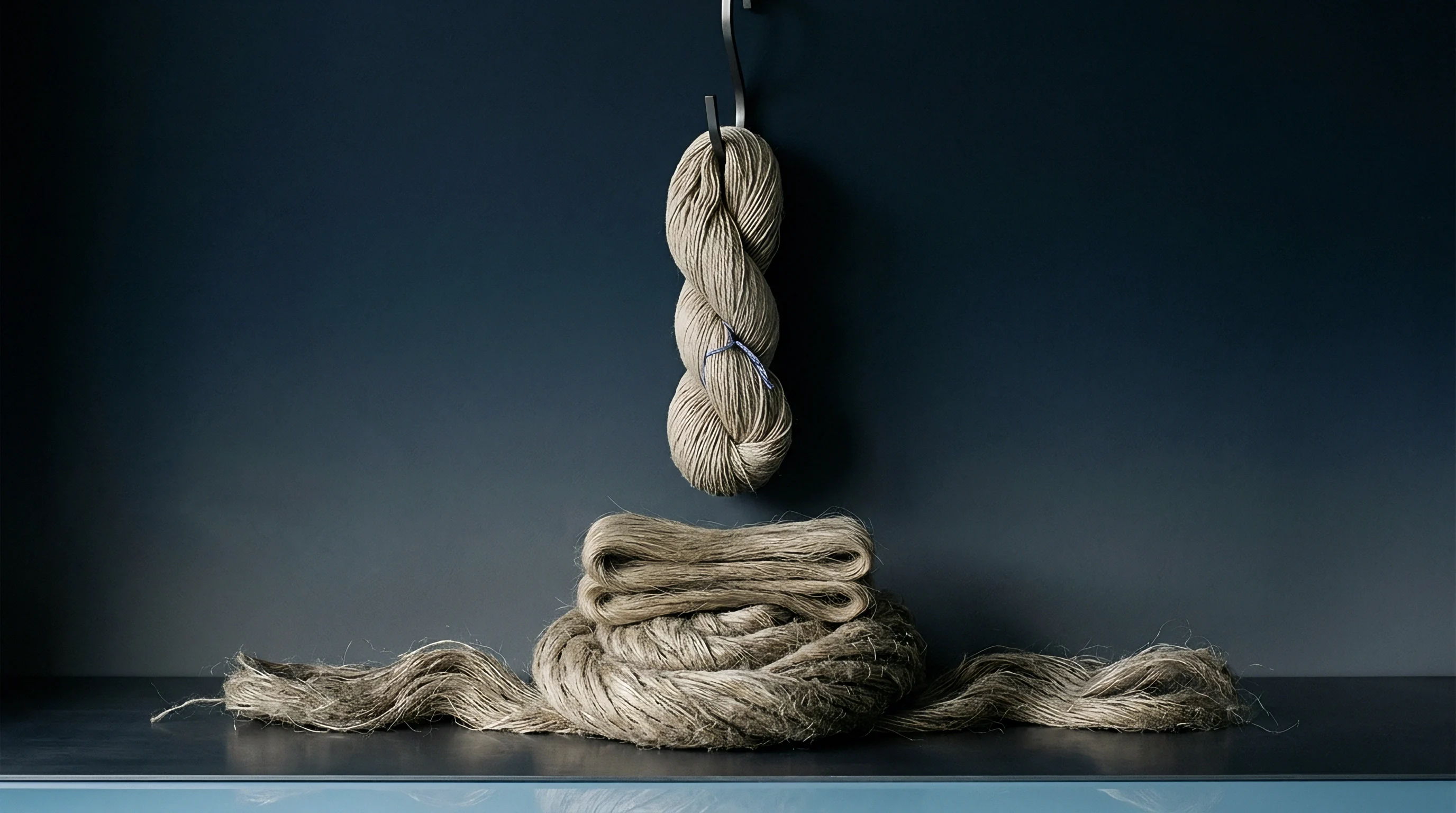

Stalk
In flax stems, fiber bundles reside within the phloem tissue, bounded by the outer epidermis and inner woody core. Technical fibers consist of elementary cells glued together by an intercellular middle lamella ~ a matrix of pectin, hemicellulose, structural proteins, and phenolic polymers. Lignin acts as the permanent adhesive in this layer.
During natural retting, fungal or bacterial enzymes selectively break down non-cellulosic polysaccharides to free bast bundles from surrounding cortical parenchyma, ideally without dissolving the binder holding ultimate cells together.
Once laboratory alkaline extraction removes the middle lamella pectin and lignin matrix components, individual elementary flax fibers measure between 12 and 24 micrometres in diameter.
Lignin deposits mostly as the plant approaches full maturity, concentrating in the outer middle lamella and cell corners. Here, guaiacyl and syringyl phenylpropanoid units cross-link with hemicellulosic polysaccharides via ester and ether bonds to build an insoluble three-dimensional network. This phenolic shield protects adjacent polysaccharides from enzymatic cleavage during dew retting.
Stems harvested prematurely carry low lignin levels, leaving intercellular bonds vulnerable to overly aggressive breakdown in the field. Delayed harvests, on the other hand, yield heavily lignified stems where phenolic cross-linking extends into the primary cell walls of ultimate fibers.
How cleanly a fiber bundle splits during mechanical processing depends heavily on middle lamella chemistry. Technical fibers need to withstand scutching impacts, yet remain soft enough to cleave lengthwise into sub-units during combing. Where lignin is concentrated dictates where the bundle breaks under tensile shear.
When cell corners contain high lignin levels, they form stiff, localized nodes. When comb pins strike these points, stress concentrates at the node rather than distributing along the bundle’s longitudinal axis, snapping the fiber across its width instead of splitting it along intercellular boundaries.
The degree of splitting determines final fineness, while lignin holds the core bundle together.
Pectins dissolve readily under mild aqueous conditions, but cross-linked lignin remains insoluble below elevated temperatures and specific chemical thresholds. Under-retted flax carrying excessive middle lamella lignin resists mechanical division during dry processing. Scutched ribbon from over-lignified stems yields thick, coarse technical fibers that resist drafting during yarn formation.
Conversely, over-retted stock loses nearly all middle lamella polymers, causing ultimate fibers to fall apart into short fragments before reaching the spinning frame.
Processing stems with uneven lignification causes severe fiber length degradation during scutching, spiking short-fiber content, reducing long line yield, and impairing spinning draft capacity.

Method
Measuring phenolic polymer concentrations in scutched flax requires strict sample preparation to eliminate lipophilic compounds that skew gravimetric readings. Waxes, fats, and chlorophyll absorb at identical spectrophotometric wavelengths and precipitate during acid digestion. Samples undergo Soxhlet extraction using a two-to-one volume mixture of toluene and ethanol for six hours, followed by a secondary ethanol extraction for four hours.
The residue is then vacuum-dried at 40 °C to a constant mass before chemical digestion starts.
Acid hydrolysis isolates insolubles to determine Klason mass fractions. Two grams of extract-free fiber react with 15 millilitres of 72 percent sulfuric acid at 20 °C for two hours under constant mechanical agitation. Primary hydrolysis breaks down cellulosic and hemicellulosic polymers into soluble monomeric sugars.
Water is then added to dilute the acid concentration to 3 percent sulfuric acid before boiling the mixture under reflux for four hours. This secondary boiling completes the conversion of oligomers to monomers while forcing insoluble phenolic residues to aggregate. Filtering through pre-weighed porous glass crucibles collects the acid-insoluble fraction, which is dried at 105 °C to isolate dry residue mass and ignited at 525 °C in a muffle furnace to subtract residual inorganic ash.
| Analysis Method | Primary Standard | Sample Mass Required | Testing Dwell Time | Coefficient of Variation |
|---|---|---|---|---|
| Acid-Insoluble Gravimetric | TAPPI T222 / ISO 13906 | 2.00 grams | 12.5 hours | 2.1 percent |
| Acetyl Bromide UV Spectroscopy | ISO 13906 Derivative | 0.10 grams | 1.5 hours | 3.4 percent |
| FTIR Absorbance Ratio | ASTM E168 Modified | 0.05 grams | 0.2 hours | 4.8 percent |
| All metrics established on solvent-extracted, oven-dried long line flax sliver across 30 replicate laboratory runs. | ||||
When twelve-hour gravimetric timelines delay bale clearance, mills use acetyl bromide spectrophotometry for rapid evaluation. Ten milligrams of solvent-extracted fiber dissolve in a 25 percent volume solution of acetyl bromide in glacial acetic acid, held at 50 °C for two hours. Adding perchloric acid stabilizes the colored complex before measuring ultraviolet absorbance at 280 nanometers.
Absorbance coefficients calibrated against pure flax Klason standards convert optical density into percentage concentrations. FTIR spectroscopy offers complementary structural detail by tracking the intensity ratio between the aromatic skeletal vibration peak at 1510 reciprocal centimeters and the cellulose reference peak at 1030 reciprocal centimeters.
- Cut representative raw flax samples from ten distinct locations across three opened bales to eliminate local retting variance.
- Extract non-phenolic extractives using toluene-ethanol solvent in a Soxhlet apparatus for six hours to prevent false mass addition.
- Perform primary acid digestion with 72 percent sulfuric acid at 20 °C, keeping timing within a strict two-minute tolerance window.
- Dilute digestate with deionized water to exactly 3 percent acid concentration and reflux boil for four consecutive hours.
- Filter digestate through weighed glass crucibles, record dry residue weight at 105 °C, and ignite at 525 °C to subtract ash weight.
Calibrating chemical measurements against spinnability metrics sets clear operational boundaries for long line flax. Raw scutched flax with acid-insoluble lignin values above 3.2 percent retains dense middle lamella structures that refuse to divide cleanly during hackling. Fibers testing below 1.5 percent Klason content lack sufficient intercellular cohesion to withstand drawing tensions without breaking.
The target window for high-count wet spinning sits between 1.8 percent and 2.5 percent acid-insoluble lignin by dry mass, where middle lamella polymers yield to hot water plasticization while maintaining filament continuity.
Does the chemical ratio between guaiacyl and syringyl sub-units alter middle lamella plasticization temperature independently of absolute Klason mass?
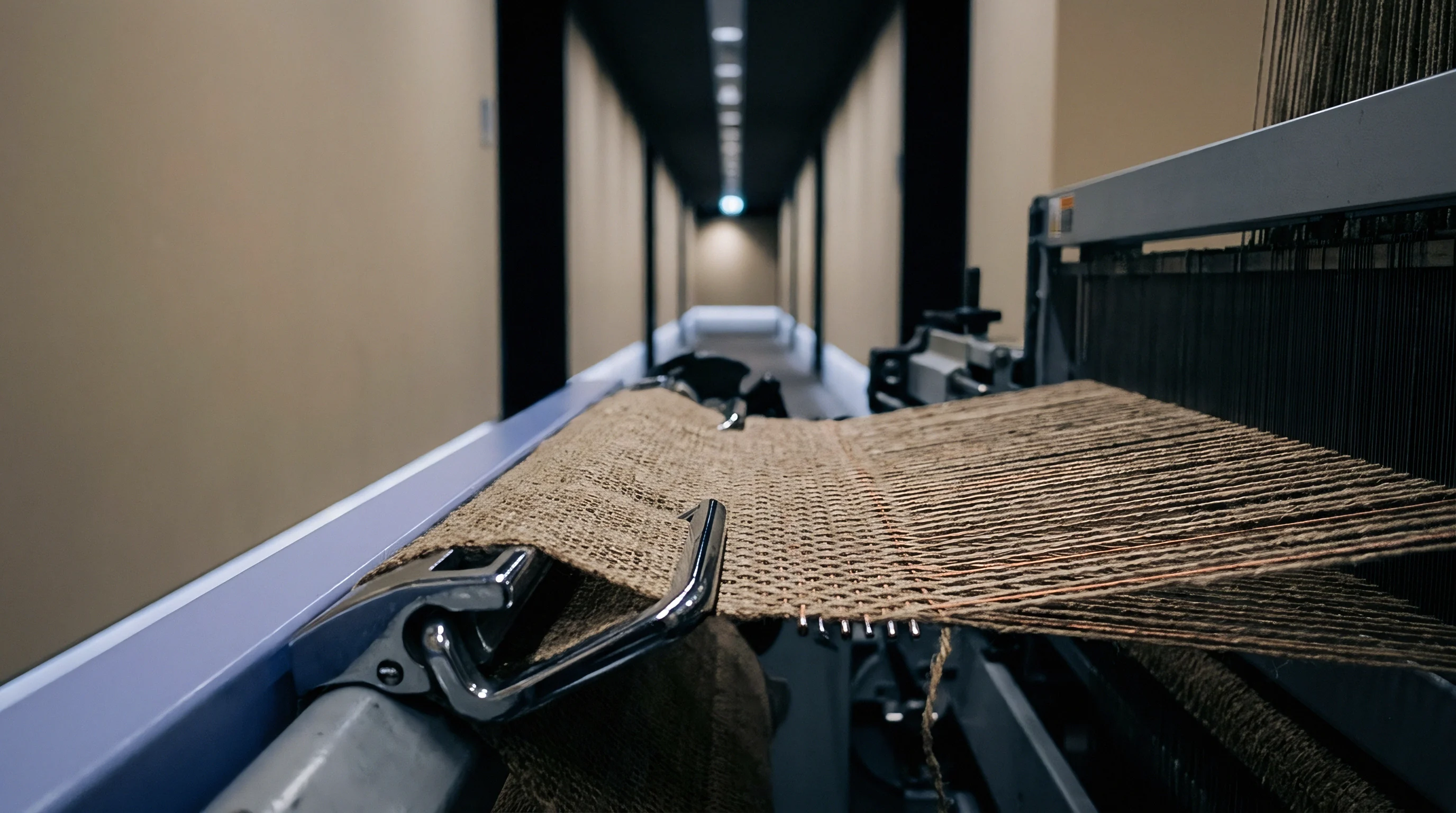
Hackling
Mechanical hackling converts rough scutched flax ribbons into continuous long line sliver while removing short fibers, shives, and un-retted coarse bundles. Scutched flax stricks pass through rotating hackling combs with steel pins of increasing density and decreasing diameter. Initial coarse pins start at 2 pins per centimeter, while fine finishing combs reach 40 pins per centimeter.
Comb pins strike suspended flax stricks at high linear velocity, applying impact and shear forces along the bundle’s longitudinal axis.
Fiber bundle division during hackling depends on the balance between pin penetration force and middle lamella shear strength. At an optimal Klason lignin content of 2.1 percent, comb impact splits broad technical ribbons into uniform sub-bundles averaging 1.8 to 2.4 dtex. Pin resistance remains within normal torque thresholds, preserving stem length and recovering up to 64 percent long line fiber by mass.
The remaining 36 percent converts into hackling tow and minimal processing dust.
Coarse technical fibers that resist initial pin penetration transfer their rigidity directly into drawing sliver unevenness.
Shifts in phenolic content disrupt mechanical yield across the hackling line. Over-lignified flax testing at 3.5 percent Klason content exhibits high structural stiffness. Steel comb pins fail to penetrate the locked middle lamella, flexing or shearing technical fibers transversely.
Long line recovery collapses as coarse bundles snap into short fragments, shifting output mass into lower-value tow. These under-retted lots also cause severe pin wear, higher energy consumption per kilogram of sliver, and elevated nep formation because fiber ribbons tear rather than split.
| Lignin Content (wt%) | Long Line Recovery (%) | Hackling Tow (%) | Sliver Fineness (dtex) | Mean Fiber Length (mm) |
|---|---|---|---|---|
| 1.4 (Over-retted) | 46.2 | 48.5 | 1.3 | 520 |
| 2.1 (Target) | 63.8 | 31.4 | 2.1 | 740 |
| 2.7 (Moderate) | 57.1 | 37.9 | 3.4 | 690 |
| 3.6 (Under-retted) | 39.4 | 54.2 | 5.8 | 410 |
Processing over-retted stock below 1.5 percent Klason content creates the opposite failure mode. Lignin-depleted middle lamellae collapse under initial coarse pin impact. Without adequate structural binder, ultimate fibers separate prematurely from the long line strick.
Hackling yield drops below 48 percent as long line fiber turns into tangled tow, yielding sliver with weak longitudinal cohesion that breaks frequently on the drawing frame.
- Transverse Bundle Fracture snaps long stems when rigid, highly lignified cell corners resist longitudinal comb pin penetration.
- Pin Deflection Wear occurs when hard, under-retted flax ribbons strike fine hackling pins at high operational speeds.
- Premature Fiber Disassembly reduces long line yield as lignin-deficient middle lamellae shed short fibers into the tow collector.
- Nep Agglomeration forms tight fiber knots when torn, semi-lignified bark remnants entangle with split elementary fibers.
Across seasonal flax crops, raw fiber lots containing 2.2 percent Klason lignin deliver a 14 percent increase in long line recovery compared to lots testing at 3.4 percent under identical comb pin graduation profiles.
Low hackling recovery is often attributed to field weathering during retting, but high residual lignin is what prevents mechanical splitting on the frame.
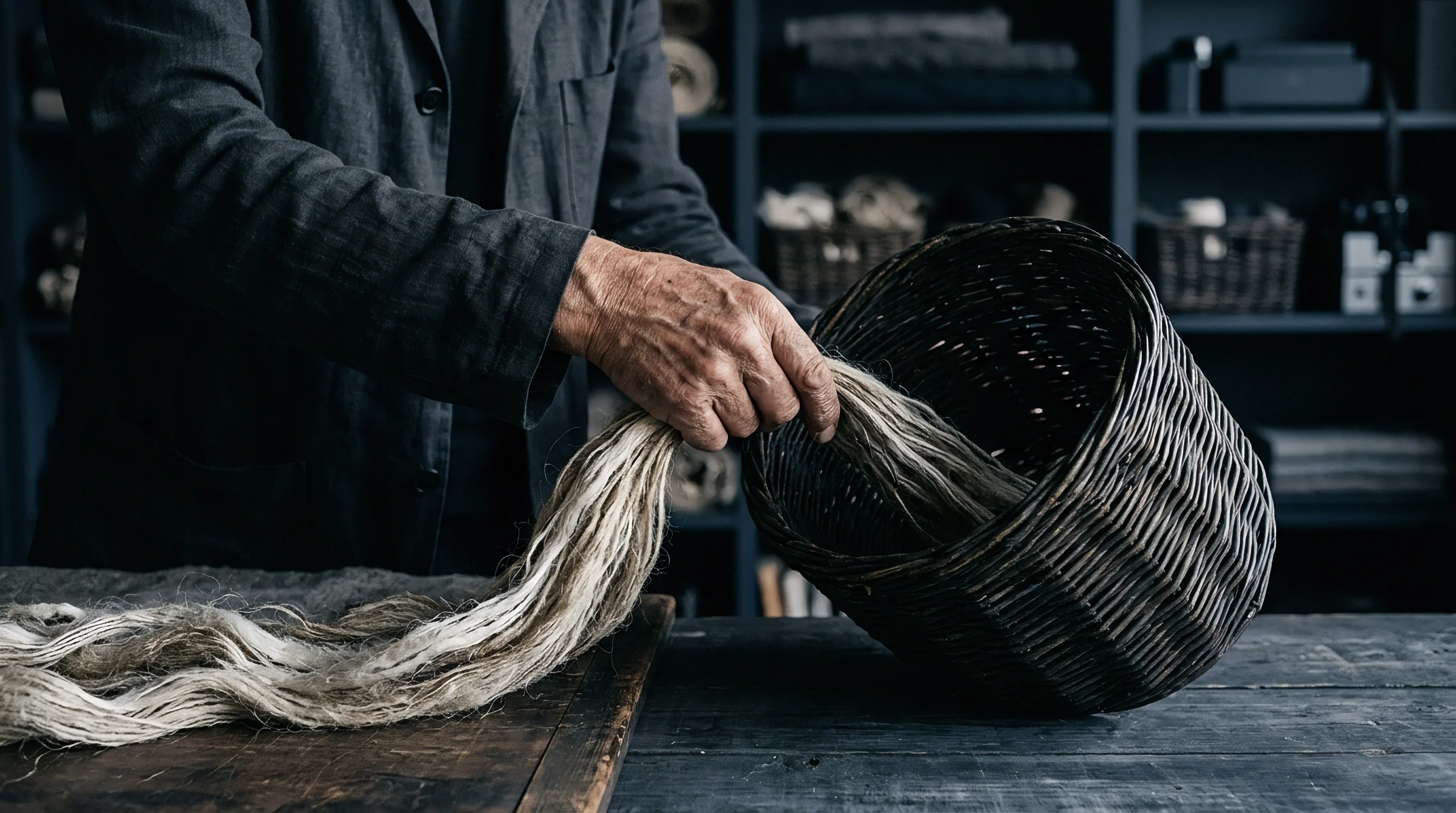
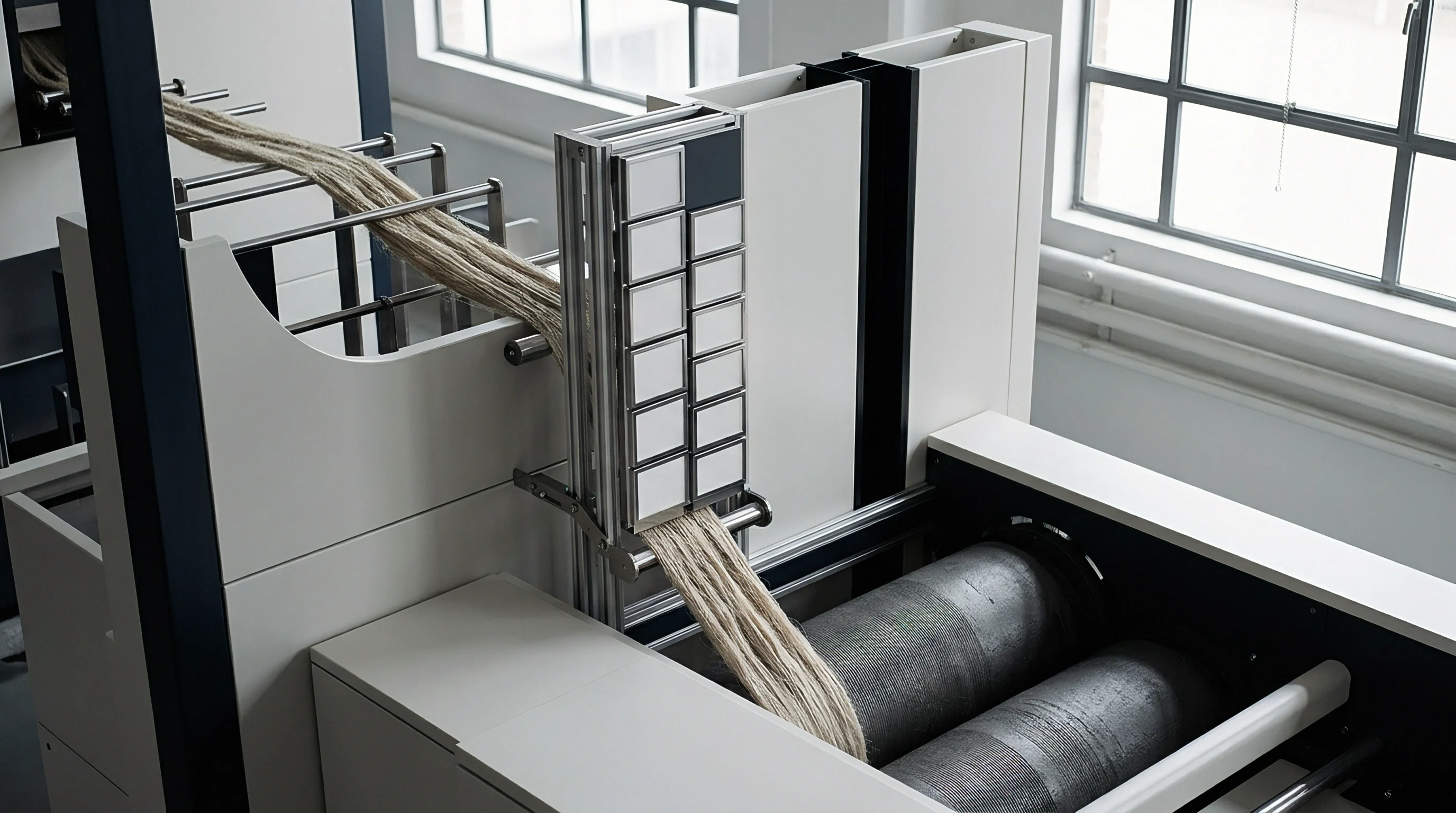
Trough
Roving frames wind hackled and drawn flax sliver onto wooden or plastic bobbins with a light protective twist. These packages enter the wet spinning frame, passing through a heated water trough immediately before final drafting and twist insertion. The primary physical objective in wet spinning is to soften residual middle lamella polymers, allowing individual elementary fibers and sub-bundles to slide smoothly past one another under draft tension.
Standard mill contracts specifying wet-spinning trough water temperatures above 78 degrees Celsius forfeit seller liability for yarn tensile loss when roving dwell time exceeds forty seconds.
Water inside the trough acts as both a thermal conductor and a plasticizing solvent. Operating temperatures between 60 °C and 70 °C exceed the glass transition temperature of moisture-saturated pectins and amorphous hemicelluloses. As water penetrates the roving core, hydrogen bonds within the non-cellulosic matrix weaken.
However, neutral water alone provides incomplete plasticization when residual lignin exceeds 2.6 percent, as lignin retains its hydrophobic, cross-linked character at standard trough temperatures and blocks water from swelling the inner middle lamella.
Where Does Lignin Hydrolysis Convert to Bundle Slippage?
Dwell time inside the trough determines chemical softening depth. Standard wet spinning frames operate with roving immersion times between 15 and 35 seconds, depending on roller speeds and trough length. When residual Klason lignin sits at the target 2.1 percent level, a 20-second immersion at 65 °C softens the intercellular matrix enough for uniform drafting force, letting technical fibers slip cleanly without structural rupture.
Raising water temperature to 80 °C accelerates pectin solubilization, but causes rapid degradation in low-lignin roving, leading to trough breaks and wide sliver mass variation.
- Thermal Softening Phase raises roving core temperature above the glass transition point of wet hemicellulosic polymers.
- Solvent Swelling Phase forces water molecules into intercellular spaces, expanding the pectin matrix around lignin nodes.
- Viscous Shear Phase permits adjacent elementary fibers to slide past one another under applied roller draft tension.
- Re-Solidification Phase sets the newly aligned fiber structure as yarn passes through thread guides and dries on bobbins.
Chemical trough additives alter middle lamella plasticization dynamics. Small concentrations of non-ionic surfactants reduce surface tension, accelerating penetration into dense, highly lignified roving. Adding alkaline compounds such as sodium carbonate at 1.5 grams per liter elevates liquor pH to 8.5.
This mild alkalinity hydrolyzes ester links between lignin and hemicellulose, lowering middle lamella shear resistance without damaging primary cellulose chains. Both temperature and liquor viscosity govern processing speed.
Standard procurement contracts specify that yarn delivered with tensile strength below 14 cN/tex will be rejected if test records show that incoming roving Klason lignin exceeded 2.8 percent prior to trough processing.

Spindle
Drafting rollers draw the softened roving package down to its final linear density before spindle rotation inserts spinning twist. The drafting zone consists of back rollers, carrier rolls, and front delivery rollers running at surface speed ratios from 10:1 up to 20:1. Under ideal conditions, high draft ratios attenuate the strand evenly, pulling individual elementary units into a parallel stream.
The spinning traveler, rotating around the ring at speeds up to 7500 revolutions per minute, imparts true twist that locks aligned fibers into a strong yarn structure.
Lignin content directly governs maximum achievable yarn count and spinning frame stability. Raw flax holding 2.0 percent Klason lignin softens uniformly in the wet trough, allowing drawing rollers to attenuate sliver down to fine metric counts such as Nm 50 or Nm 60. End breakage rates remain low, averaging under 35 breaks per 1000 spindle-hours.
The resulting yarn exhibits tensile strength exceeding 22 cN/tex, Uster mass CV values below 13.5 percent, and minimal surface hairiness.
High residual lignin levels in wet-spun flax yarn elevate surface hairiness by preventing outer elementary fibers from wrapping cleanly around the core during twist insertion.
Elevated phenolic concentrations degrade wet spinning performance across all counts. Roving carrying 3.4 percent Klason lignin resists drafting roller traction because middle lamella nodes refuse to yield inside the trough. Instead of smooth fiber-on-fiber slippage, entire bundles pull through intact or snap under draft tension.
End breakage rates surge above 120 breaks per 1000 spindle-hours, forcing operators to slow front rollers and lower draft ratios, which drops spinnable limits to coarse counts below Nm 26.
| Klason Lignin (wt%) | Max Spinnable Count (Nm) | Tensile Strength (cN/tex) | End Breakage Rate (per 1000 sp-hr) | Yarn Mass CV (%) |
|---|---|---|---|---|
| 1.4 (Over-retted) | Nm 39 | 13.2 | 88 | 18.4 |
| 2.0 (Target Fine) | Nm 60 | 23.5 | 28 | 12.8 |
| 2.5 (Target Coarse) | Nm 36 | 19.8 | 42 | 14.6 |
| 3.4 (Under-retted) | Nm 22 | 11.4 | 135 | 21.2 |
Insufficient lignin creates a mirror failure profile driven by structural weakness rather than excessive rigidity. Over-retted roving with 1.3 percent Klason lignin disintegrates inside the drafting zone under standard roller weighting. Elementary fibers separate completely before twist insertion can bind them into yarn, producing weak, irregular output prone to false twist breaks and unstable counts.
- Verify incoming roving Klason lignin test values to set baseline drafting zone expectations before mounting bobbins.
- Adjust wet trough water bath temperature to match roving lignin profile, increasing heat for high-lignin lots.
- Set drafting roller gauge distance based on mean technical fiber length measured after trough softening.
- Select traveler weight and ring diameter to maintain balanced yarn tension during high-speed twist insertion.
- Monitor spindle end breakage logs continuously, reducing front roller delivery speed if break rates exceed 45 per 1000 spindle-hours.
Fiber density dictates draft, cohesion maintains sliver structure, and twist fixes yarn strength.
Uniform middle lamella plasticization allows lower twist factors without sacrificing yarn tenacity.

Margin
Calculating the landed economic value of long line flax requires tracking mass yields and processing losses from raw scutched bale purchase down to delivered fabric per linear meter. Raw scutched flax commands market prices based on origin, fiber length, and visual grading classes. However, buying decisions based solely on raw fiber cost per kilogram frequently fail to yield the lowest fabric production cost if low initial prices stem from improper retting and suboptimal lignin values.
| Input Metric / Cost Stage | Lot A: Target Lignin (2.1 wt%) | Lot B: High Lignin (3.5 wt%) |
|---|---|---|
| Scutched Flax Purchase Price | €5.20 / kg | €4.30 / kg |
| Hackling Long Line Yield | 64.0 percent | 40.0 percent |
| Hackling Tow Credit Value | €1.40 / kg tow generated | €1.20 / kg tow generated |
| Effective Hackled Sliver Cost | €7.34 / kg | €9.40 / kg |
| Spinning Efficiency (1000 sp-hr) | 94.2 percent | 76.5 percent |
| Delivered Fine Yarn Net Cost | €12.80 / kg | €17.50 / kg |
Yield arithmetic demonstrates the financial advantage of specifying critical lignin thresholds in raw material contracts. One thousand kilograms of Lot A scutched flax, purchased at €5.20 per kilogram with 2.1 percent Klason lignin, yields 640 kilograms of prime long line hackled sliver and 360 kilograms of tow. Accounting for tow resale credit, net sliver cost comes to €7.34 per kilogram.
Processing Lot B under-retted flax, purchased at a discounted €4.30 per kilogram with 3.5 percent lignin, yields only 400 kilograms of long line sliver due to comb breakage, pushing effective sliver cost to €9.40 per kilogram.
- Define acceptable Klason lignin target ranges of 1.9 percent to 2.4 percent in raw material purchase agreements.
- Require suppliers to submit certified ISO 13906 test reports attached to each delivered shipping lot identifier.
- Establish automatic price discount scales for lots testing between 2.5 percent and 3.0 percent lignin content.
- Mandate complete lot rejection rights for raw flax shipments displaying Klason lignin values above 3.2 percent or below 1.5 percent.
Spinning line downtime amplifies raw material cost variance. High-lignin fiber lots incur frequent end breaks, reducing spinning frame efficiency from 94 percent to 76 percent. Frame operators spend excess labor re-threading spindles, while yarn scrap increases.
When converted into finished woven linen fabric weighing 160 grams per square meter, yarn produced from Lot A fiber lands at €3.10 per linear meter. The discounted Lot B raw fiber yields finished fabric costing €4.25 per linear meter due to cumulative processing waste, slower spinning speeds, and higher defect repair costs.
Writing strict Klason lignin thresholds into raw material sourcing specifications reduces landed yarn cost by 26 percent while securing stable high-count spinning capability across seasonal harvest variations. Sourcing teams that evaluate flax offers based on laboratory chemical compliance rather than initial purchase price protect spinning margins and maintain consistent mill throughput.