Harmonized System Subheading Classification Rules for Processed Bast Fibers
Harmonized System bast fiber classification relies on physical shive percentage, pectin degradation depth, and mechanical hackling status.


Bale
Raw agricultural shipments reaching customs clearance facilities typically register moisture levels between 8% and 12%, alongside variable amounts of shive debris. Entry officers verify vegetable raw materials physically before accepting declared tariff subheadings. Importers handling bast fibers run into classification hurdles immediately at the warehouse door: flax, hemp, jute, and ramie enter international freight compressed into 180 to 220-kilogram units bound with wire or synthetic bands.
Field tags indicate origin, harvest year, and gross weight, but clearance agents core-drill these bales to assess moisture regain, stalk condition, and woody core separation. If unretted epidermis or intact woody shive fragments remain, the cargo risks shifting from primary straw subheadings into secondary industrial fiber codes, distorting customs valuation and triggering border holds.
Raw fibers carry residual moisture.
Customs authorities in major importing jurisdictions follow Chapter 53 guidelines under the Harmonized Commodity Description and Coding System. The entry baseline for unprocessed bast fibers hinges on whether stalks have undergone retting, breaking, or decortication. Unretted green flax straw falls under subheading 5301.10 as raw or retted flax; hemp stalks carrying intact cortical tissue and core shive enter under subheading 5302.10.
Importers who misclassify this structural boundary between field straw and decorticated fiber face immediate reassessment. Inspectors verify whether dew retting loosened the pectin bonds between the outer phloem and the inner woody xylem. Intact pectin mantles keep consignments under unprocessed agricultural tariff rates.
Tracing flax straw back through weighbridge dockets prevents tariff disputes when fiber moves off the farm and into primary processing.
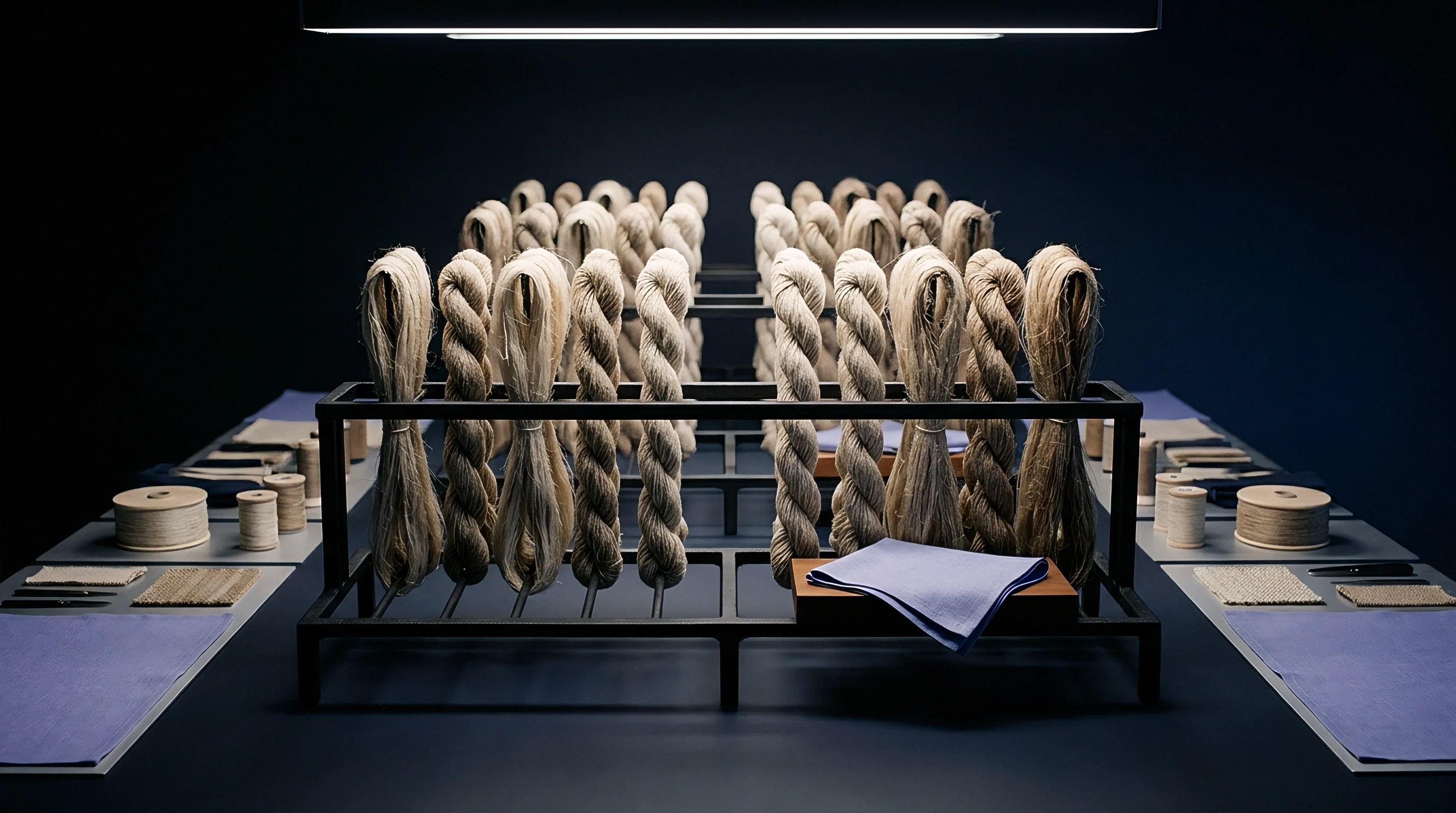
Raw Straw Entry Parameters
Unretted plant stalks enter customs territories under raw agricultural headings prior to any mechanical separation. Dew retting relies on field micro-organisms to consume plant pectins and hemicellulose, degrading the chemical bond between the outer phloem fibers and the inner xylem wood. Customs laboratories test for residual pectin, which spans 14% to 22% by weight in unretted green straw.
Thorough field retting brings that figure below 10%, letting breaker rollers dislodge woody shives without fracturing primary fiber bundles. Inspectors check bale cores for fungal rot, stalk discoloration, and uneven moisture. Bales reading above 16% moisture often develop mold in transit, altering fiber color and throwing off sensory evaluations at the port.
Scutched flax consignments exceeding 12% moisture content by weight incur commercial weight deductions under standard IWTO regain standards prior to customs classification.
Sampling protocols require customs officers to extract at least 500 grams of fiber from five separate points across each sampled bale. Testing labs weigh these samples before and after forced-air drying at 105 degrees Celsius. Establishing bone-dry mass provides the baseline for commercial regain calculations under International Wool Textile Organisation and International Organization for Standardization standards.
If measured moisture differs from manifest figures by more than 1.5%, customs authorities adjust the declared net weight. These corrections directly shift duties assessed on specific mass, so shipping manifests must reflect dry-weight values adjusted for standard moisture allowances.

Moisture Content and Mass Verification
Commercial invoices adjust scale weights using standardized moisture regain allowances recognized in international trade. The official commercial regain allowance sits at 12.0% for flax fiber, 12.0% for true hemp, and 8.5% for ramie. If a 200-kilogram bale arrives at 15% physical moisture, valuation officers deduct 6 kilograms of excess water from the dutiable weight.
Entering unadjusted gross weights leads to duty overpayments and post-clearance audit findings. Customs auditors calculate adjusted commercial mass using the standard trade relationship:
Dry Mass = Gross Physical Mass / (1 + (Measured Moisture Percentage / 100))
Commercial Mass = Dry Mass (1 + (Official Regain Percentage / 100))
On a 10,000-kilogram shipment landing at 15% moisture, this formula determines an actual dry mass of 8,695.65 kilograms. Applying the official 1.12 regain factor for flax produces a dutiable commercial mass of 9,739.13 kilograms. Entry filings require this adjusted commercial mass rather than raw weighbridge values.
Clearance officers compare commercial invoices against these mass adjustments to verify declared unit values per kilogram of dry fiber.
Exporters frequently attribute elevated pectin levels and residual woody fragments in raw fiber shipments to adverse harvesting weather rather than incomplete retting cycles.
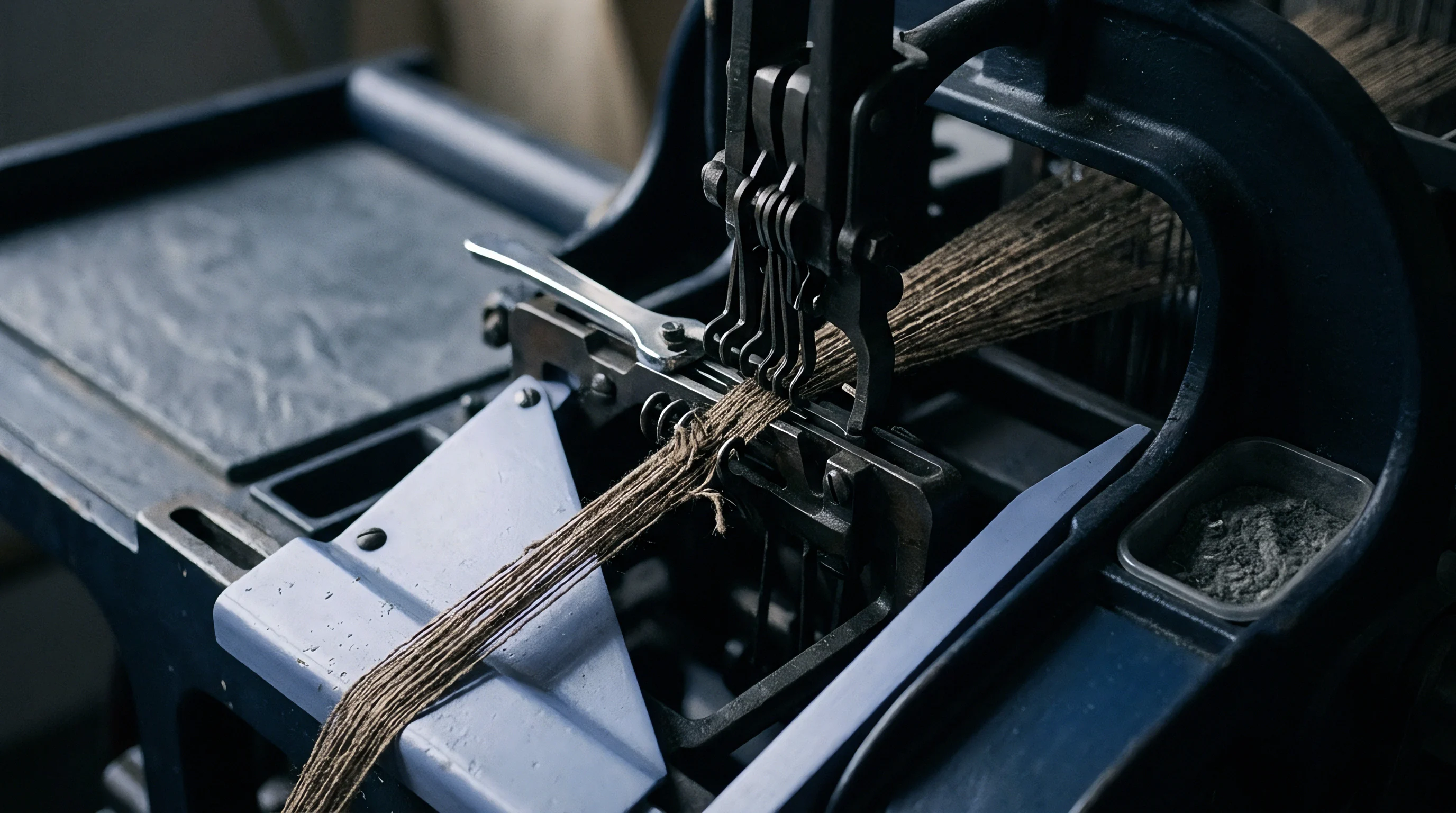

Decortication
Mechanical decortication strips the outer cortical fiber away from the woody xylem core of hemp, flax, and jute stalks, marking the boundary where agricultural straw becomes industrial textile fiber. A scutching line uses fluted breaking rollers and high-speed turbine blades to crush the woody inner stem ~ the shive ~ and beat it out of the bast fiber bundles. This yields two main commercial grades: long line fiber and short, unaligned tow.
Long line flax consists of aligned fiber strands measuring between 500 and 900 millimeters in length. Scutched line flax falls under subheading 5301.21, whereas scutched true hemp enters under subheading 5302.90. Customs laboratories test the gravimetric ratio of residual shive to clean fiber to verify scutching declarations.
Shive content dictates tariff entry.
Retting alters fiber separation.
Importers need direct visibility into decortication performance to substantiate their declared tariff codes during customs reviews. Scutching line waste ratios serve as an operational benchmark: processing standard bast straw yields roughly 15% to 20% long scutched fiber, 10% to 15% tow, 45% to 50% woody shives, and 15% dust and short waste. Shive content serves as the legal dividing line between raw broken straw and fully scutched fiber.
Long line flax imports must register below 2.0% shive by weight; shipments showing between 2.0% and 8.0% shive risk reclassification as crude broken straw under subheading 5301.10. Well-maintained turbine lines working well-retted European flax reduce residual shive to 0.8% or less.

Scutcher Yield Parameters
Breaking rollers crush the inner core without snapping the bast fibers. Intermeshing fluted rollers crack the brittle xylem, letting loose shives drop through the bottom grid. The remaining fiber ribbons feed into turbine wheels fitted with metal scutching blades that strike the hanging fiber fringe at 150 to 250 revolutions per minute.
This beating clears remaining shive fragments and ejects short, damaged fibers into the tow collector. Technicians calibrate turbine clearance and blade speed to balance yield against residual shive percentage.
- Stalk Inspection verifies biological retting uniformity across farm bales prior to unstrapping and feeding into the breaker feed apron.
- Roller Breaking fractures the brittle internal shive stem into uniform fragments measuring between 2 and 10 millimeters in length.
- Turbine Scutching beats residual woody debris out of suspended fiber ribbons using rotating steel blades adjusted to precise clearance gaps.
- Tow Recovery collects short, disoriented fibers ejected through turbine screens for secondary opening and carding operations.
- Bundle Sorting grades parallel long line fiber hanks by color, strength, and residual shive content prior to pressing and baling.
Proper machinery adjustment prevents fiber bundle breakage and minimizes short tow generation. Over-scutching damages fiber cell structures, lowering bundle tenacity and generating micro-dust that clogs downstream hackling pins. Under-scutching leaves woody shives embedded in fiber bundles, prompting customs inspectors to reject declarations under subheading 5301.21.
Clearance testing relies on standardized mechanical shaker screens to isolate shives from fiber samples: laboratory technicians shake a 100-gram test sample over a 1-millimeter mesh screen for ten minutes, weighing the fallen woody particles to calculate exact shive percentages.
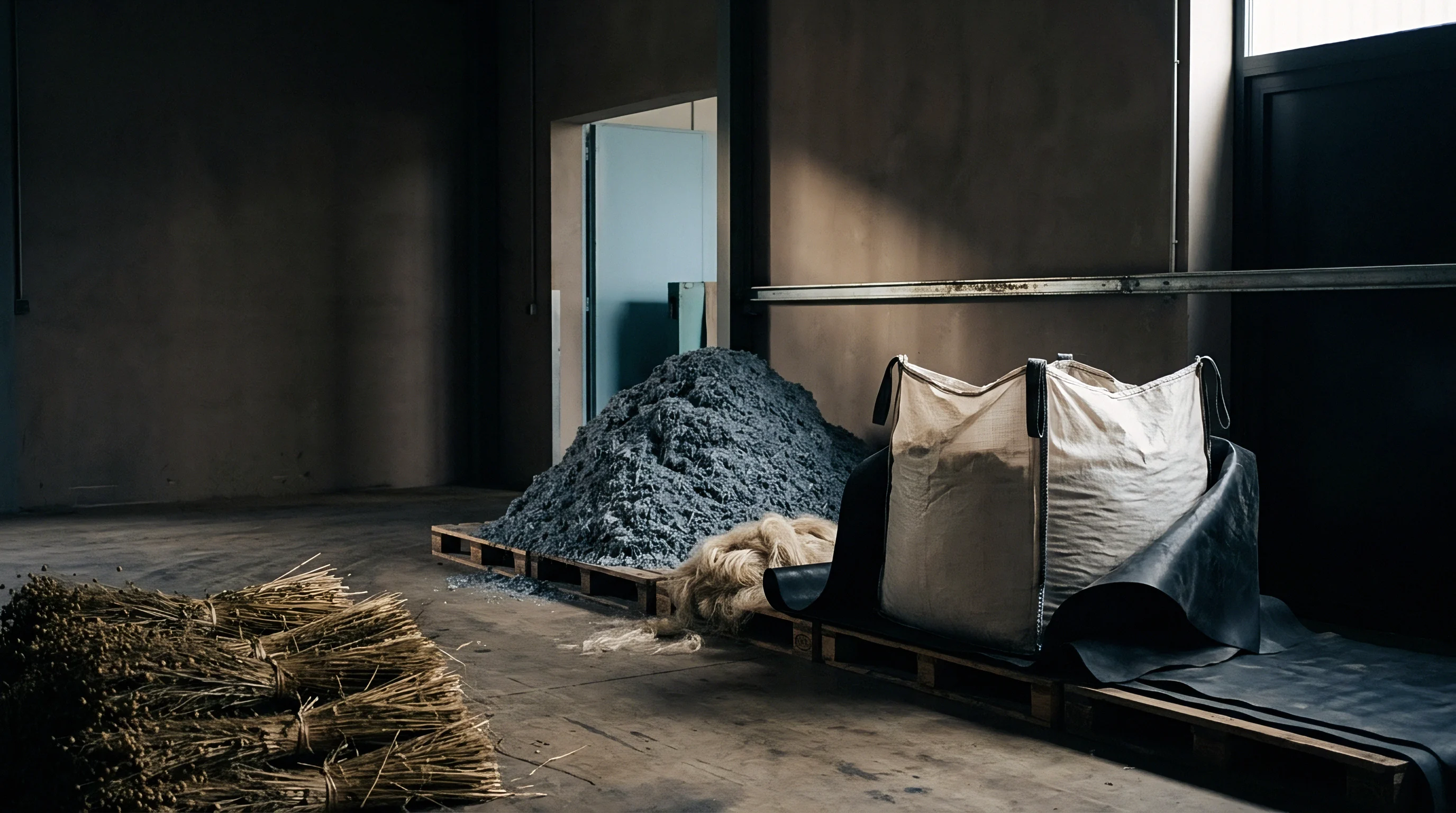
Hackling Residual Metrics
Combing pins align long bast filaments and pull out short fibers for fine yarn production. During hackling, scutched line fiber hanks pass across pins of increasing density. This combs out tangles, splits coarse bundles into finer technical filaments, and clears residual shive trapped within bundle cores.
Hackled line flax enters under subheading 5301.29 as flax, hackled or otherwise processed, but not spun. Hackled fiber is noticeably cleaner than scutched stock, typically carrying less than 0.3% shive by weight.
| Stage | Shive Content % | Average Fiber Length mm | Pectin Content % | HS Subheading Code |
|---|---|---|---|---|
| Raw Field Straw | 65.0 – 75.0 | 600 – 1000 | 14.0 – 20.0 | 5301.10 |
| Scutched Line Fiber | 0.8 – 2.0 | 450 – 750 | 8.0 – 12.0 | 5301.21 |
| Hackled Line Fiber | 0.05 – 0.3 | 400 – 650 | 6.0 – 9.0 | 5301.29 |
| Scutched Tow Fiber | 3.0 – 6.0 | 50 – 150 | 9.0 – 14.0 | 5301.30 |
Hackling machines collect combed-out short fiber as hackling tow. This byproduct differs from crude scutched tow, having shorter staple lengths but greater purity. The Harmonized System classifies hackling tow alongside scutched tow under subheading 5301.30 for flax and 5302.90 for true hemp.
To distinguish hackled line fiber from tow, laboratories measure fiber length distribution profiles; lots containing more than 50% fiber under 50 millimeters fail line classification and default to tow codes.
When hand-pulled fiber bundles release visible shive dust upon clean paper, border officials classify the cargo under raw or broken categories regardless of invoice descriptions.

Subheading
Tariff classification under Chapter 53 turns on mechanical refinement and chemical processing. The Harmonized System provides specific six-digit subheadings based on plant species, extraction stage, and chemical alteration. Importers must apply Section XI and Chapter 53 legal notes precisely: heading 5301 governs flax, 5302 covers true hemp, 5303 covers jute and other bast varieties like kenaf and sunn hemp, and 5305 applies to ramie, abaca, and sisal.
A mismatched six-digit code changes applicable duty rates, flags shipments for regulatory review, and can void preferential tariff treatment under free trade agreements.
Hackling reduces non-cellulosic mass.
Bill of lading entries frequently misclassify intermediate goods by conflating preliminary mechanical processing with cottonized or degummed fibers. Subheading 5301.10 applies strictly to raw or retted straw. Subheading 5301.21 covers broken or scutched flax from primary mechanical lines.
Hackled line flax and other non-spun processed forms enter under 5301.29, while flax tow and yarn waste fall under 5301.30. Defending an entry at the six-digit level requires laboratory verification of mechanical processing, fiber length, and residual non-cellulosic matter.

Flax Tariff Classification Rules
Heading 5301 splits long-line bast fibers from short tow waste across four primary six-digit classifications. National customs authorities enforce strict physical criteria when evaluating entries under heading 5301. Moving from 5301.10 to 5301.21 hinges on mechanical scutching.
Broken flax straw that passed through breaker rollers but bypassed turbine scutchers remains under 5301.21 provided woody shive removal has started. When processing moves to pin hackling, the resulting parallel fiber hanks shift from 5301.21 to 5301.29. Tow generated during either scutching or hackling must be declared under 5301.30.
Customs auditors reject attempts to mix long line fiber and short tow in a single declared subheading to achieve averaged duty rates.
ISO 2076 testing protocols dictate that bast fiber bundles containing over 2% residual shive remain classified under broken or scutched subheadings rather than hackled categories.
Bleached or dyed flax fiber stays within Chapter 53 provided it has not been chemically cottonized or carded for spinning. Bleaching with hydrogen peroxide or sodium hypochlorite clears pigments while preserving the technical bast bundle structure, allowing dyed hanks to retain their 5301.29 classification. Importers must supply processing logs showing chemical baths have not degraded the bundle into individual ultimate cells; dissolving the inter-cellular pectin bridges produces staple-like fibers, risking reclassification under synthetic or man-made headings.

Which Test Criteria Determine Scutched versus Hackled Line Flax?
Shive content and fiber bundle alignment define the boundary between intermediate processing stages. Clearance laboratories rely on microscopic imaging and gravimetric shive measurements to separate 5301.21 from 5301.29. Scutched flax contains shive pockets within its bundles, whereas hackled flax presents clean, parallel fiber ribbons with virtually no residual wood.
Length distribution provides secondary confirmation: scutched lots show wide variation with tangled short fibers mixed into long bundles, while hackled lots show uniform length profiles with high bundle parallelism.
| Fiber Type | Processing Level | Chemical/Physical Marker | Primary HS Subheading | Customs Valuation Risk |
|---|---|---|---|---|
| Flax (Linum usitatissimum) | Scutched Line Fiber | Shive 0.8% – 2.0%, Length >450mm | 5301.21 | Low |
| Flax (Linum usitatissimum) | Hackled Line Fiber | Shive <0.3%, Parallel alignment | 5301.29 | Moderate |
| Flax (Linum usitatissimum) | Scutched / Hackling Tow | Shive 3.0% – 6.0%, Length <150mm | 5301.30 | High |
| True Hemp (Cannabis sativa) | Scutched / Processed Fiber | Shive <3.0%, Pectin 6% - 10% | 5302.90 | Moderate |
| Ramie (Boehmeria nivea) | Degummed Fiber | Residual Gum <1.5%, Length 60-250mm | 5305.00 | High |
Customs technicians examine transverse fiber cross-sections under polarizing light microscopy. Scutched bundles display composite cross-sections of 10 to 40 individual ultimate cells held by middle lamellae. Hackled flax shows partial separation into smaller units of 5 to 15 ultimate cells.
If testing shows complete dissociation into single cells, customs reclassifies the cargo as cottonized fiber. Defending a 5301.29 entry requires cross-sectional cell counts backed by gravimetric purity certificates.
Hemp and Alternative Bast Subheadings
Heading 5302 governs Cannabis sativa fibers, maintaining parallel distinctions between raw dew-retted straw and processed tow. Subheading 5302.10 covers raw or retted true hemp straw and stalks. Subheading 5302.90 captures all processed true hemp forms, including scutched fiber, hackled fiber, hemp tow, and fiber waste.
Unlike flax, the Harmonized System does not provide separate six-digit subheadings for scutched versus hackled hemp; all mechanically processed non-spun hemp fiber falls into 5302.90. Importers must distinguish true hemp from sunn hemp (Crotalaria juncea), which enters under heading 5303 alongside jute and kenaf.
Ramie fiber follows distinct structural classification rules under heading 5305. Raw decorticated ramie ribbon contains up to 30% natural gum and pectin, rendering it stiff and uncombable. Chemical degumming via pressurized sodium hydroxide boiling is required to yield spinnable fiber.
Fully degummed ramie enters under subheading 5305.00. Customs declarations must specify whether ramie consignments consist of raw decorticated ribbons or chemically degummed staple, as mislabeling shifts tariff schedules and prompts non-preferential origin reviews.
Declaring hackled line flax under raw bast fiber codes leads to retroactive tariff reclassification, forfeiture of entry bonds, and mandatory physical inspection on all future imported lots.
Tow
Short, tangled fibers pulled during scutching and hackling make up a distinct commercial line for spinners. Tow presents regular classification issues: it contains short, disorganized fiber fragments mixed with residual shives, knots, and dust, destined for coarse yarn, non-woven insulation, or paper pulp. Subheading 5301.30 covers flax tow and waste, while subheading 5302.90 applies to hemp tow.
Deciding whether a lot counts as processable tow or unspinnable waste requires direct testing of fiber length, purity, and carding suitability.
Tow classification demands lab testing.
Chemical degumming breaks pectins down.
Cottonization chemically separates bast fiber bundles. In nature, bast fibers form long composite bundles held together by pectin and lignin middle lamellae. Cottonization uses alkaline boiling, enzymatic digestion, or steam explosion to strip these binders, reducing long technical bundles to individual ultimate fibers measuring 15 to 30 millimeters in length.
This allows processors to blend flax or hemp with short-staple cotton or synthetics for conventional ring spinning. Measuring cross-sectional cell wall thickness under polarized light microscopy separates cottonized bast fibers from synthetic viscose. Cottonized bast stays under 5301.29 or 5302.90 until it undergoes carding or combing for yarn production.
Microstructural Fiber Examination
Cross-sectional inspection using scanning electron microscopy shows cell lumen dimensions and wall thickness. Flax ultimates display polygonal cross-sections with narrow lumens and thick, concentric secondary walls. Hemp ultimates show rounded polygonal profiles with broader, irregular lumens and characteristic cross-markings along the wall.
Microscopic analysis confirms plant species when consignments lack origin certificates. Analysts inspect whether bundles retain middle lamella pectins or exhibit the total chemical isolation of single cells seen in cottonized lots.
Chemical degumming that strips outer pectin binders turns coarse bast fiber bundles into cottonized ultimates that cross tariff boundaries into synthetic staple fiber analogues.
Polarized light microscopy differentiates natural bast fibers from regenerated cellulosic fibers like viscose or lyocell. Bast fibers exhibit high birefringence under crossed polarizers, showing vibrant interference colors and longitudinal cross-markings known as knees or dislocations. Regenerated cellulosics display smooth longitudinal surfaces and uniform cross-sectional lobes without internal cell lumen structures.
Customs laboratories reject declarations claiming bast fiber status if microscopic evaluation reveals the circular, lobed cross-sections typical of extruded man-made fibers.
Degumming Chemical Thresholds
Alkaline boiling dissolves pectins and hemicelluloses, converting raw bundles into individual fibers. Degumming ramie or hemp involves boiling decorticated ribbons in sodium hydroxide solutions under pressure at 120 to 140 degrees Celsius, maintaining alkali concentrations between 2% and 6% by weight. Effective processing cuts residual gum from 25% to under 1.5%.
Chemists evaluate residual gum by boiling test samples in standard solvents and tracking mass loss under ASTM D2496 protocols.
- Excessive Ash Residue indicates incomplete washing following alkaline degumming, leaving residual sodium salts embedded within fiber lumens.
- High Pectin Content confirms inadequate chemical treatment, leaving fibers bound in coarse bundles unfit for cottonized spinning applications.
- Severe Cell Wall Degradation reveals over-degumming using aggressive acid hydrolysis, destroying fiber bundle tenacity and reducing commercial spinnability.
- Synthetic Fiber Contamination signals blending with polyester or polypropylene cut staples, requiring immediate reclassification under mixed textile headings.
- Elevated Shive Count demonstrates inadequate mechanical pre-opening prior to chemical degumming, trapping raw wood fragments inside processed fiber bales.
Quantifying chemical residual markers protects importers from reclassification penalties. Consignments undergoing light alkali scouring to remove surface waxes retain their bast bundle identity and remain in Chapter 53. Fiber lots subjected to aggressive acid digestion or xanthation cross legal definitions into modified cellulosic fibers under Chapter 55.
Importers must obtain chemical processing certificates from exporting mills specifying exact alkali concentrations, reaction temperatures, and residual pectin test scores prior to filing entry documents.
The exact threshold where microfluidic chemical extraction alters the crystalline cell structure of hemp bast fiber enough to force reclassification under man-made cellulosic staple headings remains unresolved among customs analytical laboratories.

Customs
Customs authorities in North America and the European Union enforce origin rules through comprehensive audit programs. Processed bast fiber imports require strict documentary verification to clear post-entry audits. Authorities review shipping paperwork to confirm six-digit subheadings, origin country declarations, and preferential duty eligibility.
Importers must maintain records tying physical bale tags to field harvest certificates, scutching delivery receipts, and spinning consumption logs. A break in this chain can prompt customs to invalidate origin claims, levy back duties, and impose civil fines.
Lab tests expose false claims.
Discrepancies invalidate origin scope certificates.
Reconciling mill transaction ledgers against customs entry declarations reveals physical mass discrepancies. Preferential rules under treaties such as the EU-UK Trade and Cooperation Agreement or USMCA require documented transformation at each processing stage. Non-preferential rules assign origin to the location where the last substantial economic processing occurred.
For flax, mechanical scutching of green straw constitutes substantial transformation, shifting origin to the mill’s jurisdiction; baling, drying, and sorting do not. Importers track mass balances across all operations to defend origin classifications during audits.

Documentation Chain Architecture
Traceability begins in the field, with harvest records mapped to specific agricultural plots. Scutching mills receive raw straw alongside weighbridge tickets that record farm coordinates, gross weight, and moisture readings. The mill then generates yield certificates detailing long line fiber, tow recovery, and shive waste.
Spinning operations track incoming bales through internal lot systems that link bale tags directly to finished yarn lots. Auditors follow this paper trail backward from the port of entry to verify each processing node.
Scope certificates from European Flax cover agricultural origin but do not guarantee six-digit customs classification correctness at destination entry ports.
Independent verification bodies issue scope certificates and transaction certificates to validate origin and production standards. European Flax certification confirms that raw flax straw was grown in Western Europe under sustainable farming practices, while Masters of Linen certification requires that all processing steps ~ from straw scutching to finished fabric weaving ~ took place within European territories. Customs officers accept these certificates as supporting evidence for origin claims, but reserve the right to run physical laboratory tests to confirm fiber species and classification subheadings.
Origin Audit Verification Protocols
Regulatory agencies compare total raw material procurement against finished fiber export volumes to detect fraudulent classification claims. Customs audit teams analyze mill mass balance ledgers to verify that input straw tonnages match total output fiber and waste tonnages within realistic physical limits. Scutching yield ratios must fall within standard industry bands of 15% to 20% long line fiber and 10% to 15% tow.
Scutching facilities claiming a 40% long-line yield from raw straw trigger immediate fraud investigations for blending imported foreign fiber into domestic production streams.
- Harvest Certificate Verification validates agricultural plot location, land area, and raw straw harvest yield figures against regional agricultural benchmarks.
- Weighbridge Ticket Reconciliation matches incoming straw bale mass against scutching line input logs to confirm raw material consumption rates.
- Mass Balance Calculation compares total fiber output mass against raw material input mass adjusted for moisture loss and woody shive waste.
- Transaction Certificate Audit cross-checks scope certificate lot numbers against commercial invoices and international bill of lading manifests.
- Customs Subheading Validation tests physical fiber samples pulled during border entry against declared six-digit Harmonized System classification codes.
Audit failures carry severe commercial penalties under national customs enforcement acts. United States Customs and Border Protection issues monetary penalties under 19 U.S.C. 1592 for fraudulent, grossly negligent, or negligent classification filings. Penalties for gross negligence reach up to 40% of the dutiable value or four times the lawful duty amount.
European customs authorities enforce equivalent recovery mechanisms under the Union Customs Code, assessing retroactive duties and administrative fines for up to three years post-entry. Importers must maintain audit-ready verification files for at least five years following clearance.
| Transformation Stage | Mandatory Commercial Record | Audit Verification Point | Discrepancy Red Flag |
|---|---|---|---|
| Agricultural Harvest | Farm Harvest Ticket & Land Plot Map | Crop yield per hectare vs regional norm | Straw volume exceeds farm acreage yield limits |
| Scutching Extraction | Scutcher Input/Output Mass Ledger | Fiber yield percentage vs straw input | Long line yield exceeds 22% of straw mass |
| Bale Storage & Transit | Bale Tag Register & Regain Ticket | Physical bale serial numbers vs invoice | Duplicate bale tags or missing lot numbers |
| Customs Border Entry | Bill of Lading & Test Certificate | Declared HS code vs lab shive test | Hackled classification on fiber with >1% shive |
Standard procurement contracts incorporate European Flax scope compliance provisions that assign full monetary liability for tariff reassessment penalties directly to the seller.


Contract
Commercial agreements between buyers and fiber processors set how tariff and regulatory risks are allocated. Sourcing certified bast fibers incurs price surcharges alongside legal responsibilities that require careful contractual management. Spot prices for raw flax and hemp shift with annual harvest yields, staple lengths, and origin status.
Long-line European flax trades between $4.50 and $6.50 per kilogram, while scutched tow ranges from $1.80 to $2.80 per kilogram. Certified origin fibers carry premiums of $0.35 to $0.60 per kilogram over baseline stock. Supply contracts must assign liability for classification errors, origin failures, and tariff penalties directly to supplying mills.
Audit trails protect trade margins.
Surcharges alter landed cost calculations.
Proper documents prevent port delays.
Chinese spinning mills process substantial volumes of European raw flax straw and scutched fiber. Intermediate processing in third countries alters tariff classifications and origin status: shipping European flax to China for scutching or hackling before exporting linen yarn to North America or Europe changes the origin determination. Non-preferential origin rules treat mechanical scutching in China as conferring Chinese origin on the resulting fiber.
Declaring European origin on Chinese-scutched flax risks product seizure and fraud penalties. Procurement contracts must mandate transparency regarding all intermediate processing sites and transformation stages.

Landed Cost Arithmetic
Base purchasing prices increase when certified fiber surcharges, laboratory testing fees, and customs duties hit the ledger. Calculating true landed cost requires accounting for physical fiber loss, moisture adjustments, customs tariffs, and certification audit fees. Import duty rates for Chapter 53 subheadings vary significantly by destination country and preferential trade agreement status.
General duty rates for raw or scutched flax entering North America range from 0.0% to 2.7%, while processed yarn subheadings incur higher duties. The formula below details total landed cost per net kilogram of processed bast fiber:
Landed Cost = ((Base Price + Surcharge) Mass Adjustment Factor (1 + Tariff Rate)) + (Audit Fee / Total Net Mass) + Freight
Consider a 20,000-kilogram order of hackled line flax priced at $5.20 per kilogram with a $0.45 per kilogram European Flax certified origin surcharge. Transporting the lot incurs $0.25 per kilogram in freight fees, $0.05 per kilogram in third-party testing costs, and a 2.7% customs tariff. Applying the landed cost calculation yields a base fiber cost of $113,000.
Adding tariff duty of $3,051, testing fees of $1,000, and freight of $5,000 brings total landed expenditure to $122,051. Net landed cost per kilogram equals $6.10, representing a 17.3% premium over the initial base purchasing price. Failing to model these secondary cost elements distorts commercial gross margin projections.
Warranties and Indemnity Structures
Indemnity clauses specify damages when imported fiber fails laboratory classification tests at destination ports. Purchase contracts should set clear technical warranties confirming that shipments meet the physical standards of declared Harmonized System subheadings, including maximum shive levels, fiber length profiles, and residual pectin limits. If customs rejects a declared subheading due to excessive shive or incomplete processing, indemnity terms must obligate the seller to cover any resulting financial loss.
Suppliers must warrant that all scope certificates, transaction records, and mass balance ledgers are complete, authentic, and compliant with origin rules. Contracts should explicitly state that if an audit disallows an origin claim because of missing mill documentation, the seller bears all back duties, interest, and penalties. Buyers can protect their position by holding 10% of invoice value in escrow pending formal customs clearance and lab verification at the port of entry, providing immediate leverage if clearance disputes arise.
Contracts also need clear terms for third-party testing if clearance officers challenge declared fiber specifications. If customs disputes a 5301.29 hackled flax entry, the agreement should direct an accredited independent laboratory to draw joint samples under a verified chain of custody. These laboratory results then serve as binding evidence between buyer and seller.
Clear contractual remedies, accurate landed cost calculations, and strict inspection rules allow importers to protect commercial margins while staying fully compliant with international trade laws.
Structured indemnity clauses transfer demurrage fees, warehouse inspection costs, and administrative fines back to the mill when chemical laboratory tests invalidate declared subheading numbers.