Applying Stochastic Queueing Formulas to Machine Interference in High-Speed Weaving
Finite population queueing models quantify loom interference losses, preventing over-assignment that drives down air-jet shed efficiency below economic targets.
Finite population queueing models quantify loom interference losses, preventing over-assignment that drives down air-jet shed efficiency below economic targets.

Weaver allocation balances labor wages against machine interference losses, where optimal loom-to-operator ratios maximize amortized shed efficiency.
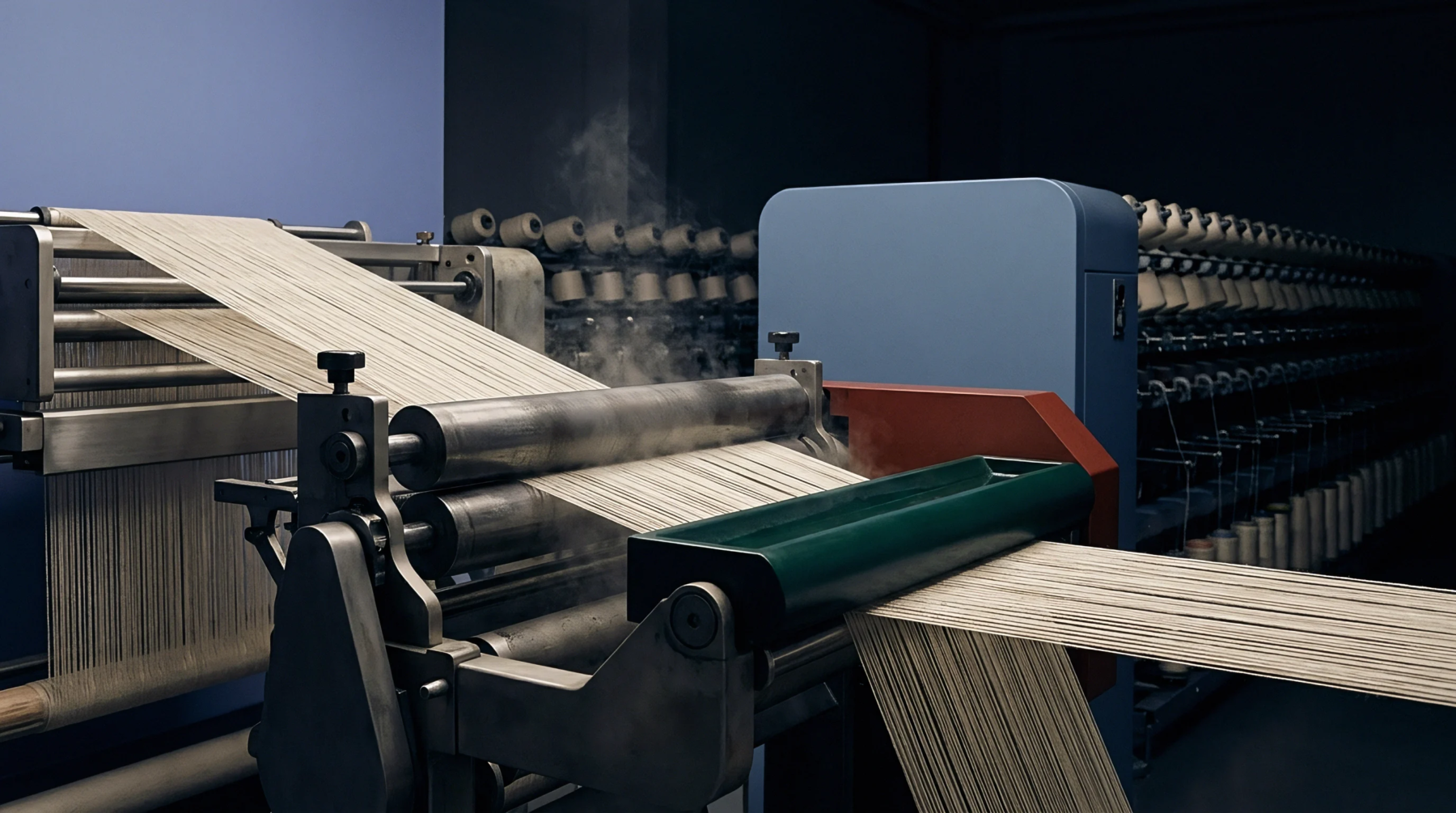
Wet spun linen warp yarn requires a minimum dry tenacity of 26 cN/tex to run on rapier looms at 85 percent efficiency.

High-speed shedding triggers pectin shear in wet spun flax, requiring dynamic tension adjustment to prevent viscoelastic decay, warp breaks, and costly stops.

Dynamic tensile fatigue protocols for wet spun flax quantify cyclic inter-fiber pectin shear, predicting high-speed loom warp stops before beam mounting.
Expertise is a utility, not a secret. sentiention™ publishes its working knowledge as open reference: intelligence layer covering the materials it sources, the markets it enters, and the reference that serves both.