Reconciling Wet Spinning Yield Loss in Mass Balance Auditing
Reconciling wet spinning yield loss requires adjusting raw fiber weights for 12% regain, deducting 3.2-5.8% pectin extraction loss, and verifying comber tow sales.


Basin
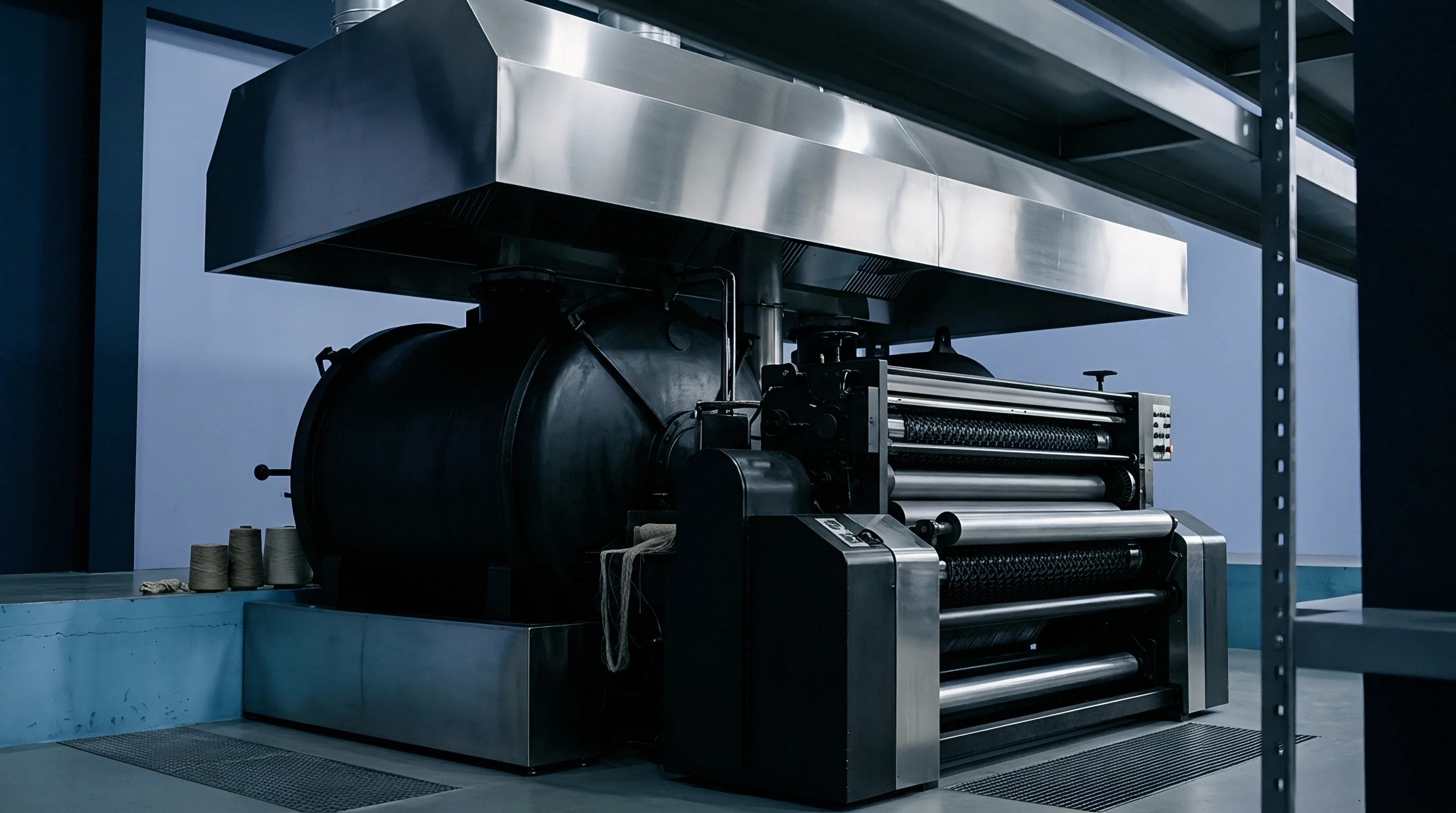
Wet spinning converts hackled flax sliver into high-tenacity yarn by drawing roving through a heated water bath before applying mechanical twist. High-count linen yarns rely on this thermal and chemical process to soften the pectins binding individual ultimate fibers inside the technical fiber bundle. Mechanical drafting alone cannot attenuate dry flax sliver to counts above Nm 26 without causing excessive end-break rates.
Immersing flax roving in water baths held between 60°C and 72°C alters the structure of the middle lamella, solubilizing low-molecular-weight polysaccharides and loosening inter-fiber bonds. This extraction causes an intrinsic mass loss that does not occur in dry-spinning systems like cotton or wool ~ a reduction mass balance auditors often misidentify as physical waste or inventory leakage.
Flax elementary fibers, measuring 10 to 40 millimeters long and 12 to 30 micrometers in diameter, assemble into technical fiber bundles bound by a non-cellulosic matrix. Raw scutched flax fiber consists of 70% to 75% alpha-cellulose, 12% to 15% hemicellulose, 2% to 5% pectins, 2% to 4% lignin, and 1% to 2% wax and fat compounds, with mineral matter and moisture making up the remainder. Water-soluble pectins and hemicellulosic pentosans dissolve rapidly when submerged in the hot spinning basin.
Continuous frame operation flushes these extracted compounds into the mill wastewater system. Quantitative sampling of basin liquor indicates a steady-state extraction rate between 3.2% and 5.8% of total dry fiber mass, depending on bath temperature, residence time, water pH, and raw fiber retting history.
Extracting low-molecular-weight pectins in a 65°C spinning trough reduces dry fiber mass by 4.1% before mechanical draft roller engagement.
Mechanical fiber rejection further adds to chemical extraction loss inside the wet spinning trough and drafting zone. High draft ratios, ranging from 10 to 20 on flyer and ring frames, pull attenuated fiber strands past submerged guide rods and nip rollers. Short fibers detached during drafting fall into the basin liquor or cling to bottom drafting rollers as lap waste.
Circulation pumps draw suspended fiber fragments from the trough, sending them to inline mechanical filters or settling sumps as wet sludge. Heavy yarn counts like Nm 14 experience minimal short-fiber shedding, whereas ultra-fine counts like Nm 80 shed up to 3.5% of input mass into the trough filter cake. Combined chemical extraction and mechanical basin rejection result in an aggregate wet-zone mass loss of 5.5% to 9.2% relative to dry roving mass.
Moisture regain hysteresis introduces a parallel distortion into mill mass balance accounting. Flax possesses high moisture regain capacity due to its abundant amorphous cellulose and hydroxyl surface groups. Standard commercial regain for flax fiber and yarn is set at 12.0% under ISO 139 and BISFA guidelines.
In-process fiber moisture fluctuates continuously across spinning stages. Incoming baled fiber arrives at 10% to 14% moisture content depending on warehouse humidity. Wet roving bobbins leaving the basin hold over 110% water relative to dry fiber mass.
High-frequency or thermal bobbin dryers lower moisture to 8% before package winding, where the yarn equilibrates back toward ambient atmospheric regain. Weighing fiber at non-standard regain levels distorts input-output mass calculations, creating artificial mass surpluses or deficits that obscure true conversion ratios.
| Process Gate | Loss Classification | Dry Mass Range | Primary Extraction Mechanism | Audit Ledger Location |
|---|---|---|---|---|
| Hackling and Combing | Mechanical Waste | 28.0% to 42.0% | Coarse short fiber rejection and bark removal | Tow sale weighbridge receipts |
| Roving Preparation | Fly and Sliver Waste | 1.5% to 3.0% | Drafting apron fly and bobbin stripper waste | Internal re-carding logs |
| Hot Trough Leaching | Chemical Extraction | 3.2% to 5.8% | Pectin and hemicellulose dissolution in 65°C water | Effluent sludge mass records |
| Drafting and Twisting | Mechanical Sludge | 1.5% to 3.5% | Short fiber detachment in wet nip zone | Trough filter cake weighings |
| Winding and Clearing | Hard Thread Waste | 0.8% to 1.8% | Slub yarn cutter rejections and knotting tails | Boiler fuel or non-woven logs |
Running scutched long flax through hackling lines generates substantial secondary fiber streams known as hackling tow. Hackling pins split, straighten, and clean raw fiber bundles, producing hackled line sliver alongside 30% to 40% comber tow waste. This tow represents a physical yield shift rather than an absolute loss, as mills sell tow into secondary coarse spinning or paper manufacturing operations.
Mass balance accounting requires isolating hackled line sliver yield from secondary tow production before calculating wet spinning loss factors. Confounding hackling tow generation with wet spinning basin loss invalidates yield audit baselines. Audit records must track long flax line sliver input directly into roving frames, separating raw material hackling yields from wet trough chemical losses.
Trough water turnover rates directly shape extraction dynamics across industrial spinning frames. High water refresh rates maintain steep concentration gradients between the fiber core and surrounding bath, maximizing pectin dissolution rates. Closed-loop recirculating basins accumulate dissolved solids up to 18,000 milligrams per liter, reaching thermodynamic solubility limits that suppress further pectin extraction.
Water conservation systems using recirculated trough water yield lower apparent mass losses, shifting residual pectins onto the finished yarn package where they affect subsequent bleaching and dyeing yields. Reconciling wet spinning yield loss requires recording bath renewal volumes, water temperature profiles, and wastewater discharge metrics alongside fiber weighbridge weights.
Whether total pectin extraction loss varies predictably between dew-retted and water-retted flax lots when trough water pH shifts from acidic to slightly alkaline regimes remains unresolved in current audit literature.

Tolerance
Mass balance verification frameworks rely on standardized yield conversion allowances to evaluate compliance across certified supply chains. Certification bodies like European Flax, Masters of Linen, and the Global Organic Textile Standard establish fixed conversion ratios between raw flax input and spun yarn output. These standards allow spinning mills operating under mass balance accounting rules to attribute certified status to yarn outputs based on calculated input weights minus standard process allowances.
Default standards allow a total cumulative process loss between 15% and 22% from raw hackled long flax to finished wet-spun yarn. Standard conversion factors simplify audit administration across large industrial networks, but static allowances fail to capture physical yield variances caused by raw fiber grade differences, yarn fineness targets, and machine technology generations.
Yarn count, designated in English Quality Number or Metric Number (Nm), acts as the primary physical driver of wet spinning yield variance. Spinning coarse Nm 14 yarn generates low mechanical waste due to heavy sliver cross-sections and low draft ratios. Spinning fine Nm 80 yarn requires high draft ratios, aggressive sliver drafting, and fine-pin combed sliver inputs.
Fine yarn production generates elevated flyer fly waste, frequent end-breaks, and intensive trough sludge accumulation. A single flat allowance factor creates a systemic audit loophole. Coarse yarn mills operating below the standard process loss allowance accumulate unearned mass balance credits in their ledger.
Fine yarn mills operating above the allowance face artificial mass deficits, forcing them to purchase supplementary certified fiber credits or misreport loss categories to achieve mass balance closure.
Coarse yarn spinning under flat yield allowances generates phantom certified fiber credits that obscure physical origin tracking.
Discrepancies between standard yield allowances and real floor yields create primary fraud vectors in wet spinning mass balance verification. A mill spinning coarse Nm 26 yarn achieves an actual floor loss of 11% from hackled sliver to yarn package. If the mass balance standard allows an 18% process loss, the mill holds a 7% unaccounted mass margin in its certification ledger.
Dishonest operators exploit this margin by blending non-certified conventional flax sliver into the spinning lot. The mill issues Transaction Certificates for the total yarn output using banked mass balance credits from the unconsumed yield allowance. The incoming paper trail balances perfectly against outgoing sales certificates, yet non-certified fiber enters the certified market through yield allowance inflation.
Yield loss manipulation also occurs through misclassifying secondary waste streams. Scutched flax generates coarse tow waste that commands lower market prices than hackled long line fiber. Spinning mills can report genuine high-grade long line fiber as “unrecoverable wet trough waste” or “low-value sludge” on internal production sheets.
The mill subsequently diverts the unrecorded high-grade fiber into conventional spinning lines while substituting cheap imported non-certified fiber into the certified line. Auditors must reconcile secondary waste sales invoices against waste processing capacity logs to prevent unrecorded fiber substitution. Mass balance integrity depends on verifying the physical destruction, energy recovery, or secondary sale of every kilogram of declared waste.
- Unregistered sliver blending introduces uncertified conventional fiber into roving frames while reporting inflated trough extraction loss figures.
- Moisture balance manipulation involves weighing incoming raw fiber at dry states while weighing finished yarn packages at elevated relative humidity.
- Secondary waste re-routing declares high-grade comber tow as unrecoverable trough sludge, masking the physical diversion of certified fiber.
- Phantom waste generation claims fictitious machine breakdown waste on job cards to cover raw material stock ledger imbalances.
- Double-counting certification credits issues mass balance TCs for yarn while simultaneously selling comber tow waste under certified claims.
Standard conversion factors in certified flax supply chains require dynamic adjustment formulas based on yarn fineness and fiber quality parameters. ISO 22095 defines criteria for mass balance models in industrial production, stipulating that conversion factors reflect documented physical yields under standard operating conditions. Incorporating yarn fineness equations into certification audit protocols eliminates artificial mass balance credit accumulation.
Auditors applying fixed yield allowances without adjusting for yarn count metrics risk validating compromised chain-of-custody documentation.
High-grade dew-retted Western European flax exhibits distinct tensile and extraction behaviors compared to lower-grade imported inputs. French and Belgian flax long fiber features uniform pectin structures that solubilize consistently in hot trough water. Variable fiber retting levels lead to inconsistent pectin removal rates, forcing mills to adjust trough temperatures and residence times.
Uncontrolled trough temperature fluctuations cause yield loss variations between 4% and 12% across different fiber lots. Yield auditing frameworks must mandate lot-level conversion factor recalculations based on documented fiber test parameters rather than static regional assumptions.
A mass balance credit buffer that exceeds actual floor loss by three percent generates phantom inventory capable of certifying unverified fiber lots.

Regimen
Physical verification of mass balance integrity in a wet spinning mill requires systematic physical sampling combined with document cross-examination. Auditors cannot rely on annual material balance summaries provided by mill management. The audit sequence begins at the raw material bale store, tracing incoming fiber lots through weighbridge logs, moisture meter calibrations, and warehouse stack tags.
Each certified bale carries a physical tag detailing lot number, scutching mill registration, gross weight, tare weight, and moisture content. The auditor compares these physical tags against incoming shipping manifests, customs import declarations, and supplier Transaction Certificates to confirm raw material provenance before examining floor transformation records.
Which Wet Spinning Loss Factors Corrupt Transaction Certificates?
Hot water basin extraction and short-fiber sludge generation represent the primary yield loss factors that corrupt Transaction Certificate volumes if unaccounted for in mass balance ledgers. Unrecorded extraction losses leave phantom certified fiber in the mill ledger, enabling the issuance of TCs for uncertified yarn volumes. The physical audit requires sampling spinning trough liquid and settling tank residues.
Auditors collect trough liquor samples at operating temperature to measure dissolved solids concentrations via evaporative dry-weight analysis under standard laboratory protocols. Summing dissolved pectin solids with wet centrifuge cake dry weights yields the true extraction mass loss per operating shift.
Effluent accounting provides an independent chemical cross-check against declared physical mass losses. Wet spinning mills discharge trough overflow and washing water into primary effluent treatment facilities or Municipal Wastewater Treatment Plants (WWTP). Total Suspended Solids (TSS) and Chemical Oxygen Demand (COD) measurements taken at mill discharge flumes quantify total biological and organic mass leaving the facility.
Pectins and hemicelluloses exert a specific COD load of approximately 1.1 to 1.3 grams COD per gram of extracted organic matter. Comparing total discharge COD mass against declared trough extraction loss verifies whether reported process losses match chemical wastewater outputs. Discrepancies between reported floor waste and effluent COD loads indicate unrecorded solid waste removal or fraudulent waste declarations.
- Verify raw material warehouse inventory by weighing five percent of stored certified flax bales using calibrated floor scales certified to OIML Class III standards.
- Extract ten core moisture samples per bale lot using an electronic probe calibrated against oven-drying methods defined in ISO 6741.
- Audit spinning frame shift logs to extract total operating frame hours, spindle speeds, yarn count produced, and recorded bobbin weights.
- Collect spinning trough discharge water samples during active production and determine total dissolved solids (TDS) per liter of bath volume.
- Weigh wet filter press sludge cakes from trough circulation pumps and extract representative core samples to determine oven-dry solid fiber content.
- Reconcile calculated chemical and mechanical losses against the certified material balance ledger to confirm input-output balance within allowable limits.
Secondary yield accounting demands equal audit rigor to prevent double-counting of certified mass credits. Hackling tow, combing waste, and hard thread waste generated during winding represent legitimate secondary product streams. When a mill sells hackling tow to a secondary buyer, the transaction requires issuing a distinct secondary Transaction Certificate covering the exact dry fiber weight transferred.
The auditor checks that secondary TCs match physical weighbridge departure tickets and sales invoices. Subtracting secondary certified tow TCs from total raw material input ensures that certified long line yarn TCs represent only the remaining physical long line fiber mass.
| Verification Parameter | Primary Mill Record | Testing Protocol | Tolerance Limit | Audit Corrective Action |
|---|---|---|---|---|
| Incoming Bale Regain | Warehouse Receiving Log | ISO 6741 Oven Drying | 12.0% ± 1.5% | Adjust input mass to standard 12.0% regain baseline |
| Trough Solubilization | Boiler and Water Logs | Gravimetric TDS Analysis | 3.5% to 6.0% | Recalculate chemical extraction loss factor |
| Sludge Fiber Content | WWTP Filter Cake Log | ISO 1833 Fiber Analysis | 1.5% to 3.5% | Add verified fiber mass to mechanical loss ledger |
| Hard Thread Waste | Winder Cutter Logs | Scale Calibration Verification | 0.8% to 1.8% | Cross-check against boiler fuel consumption records |
| Outgoing Yarn Regain | Final Packing Manifest | ISO 2060 Regain Testing | 12.0% ± 1.0% | Normalize sales weight before issuing Transaction Certificate |
Audit sampling frequency dictates the statistical confidence of mass balance verification. Annual audits examining aggregated material summaries allow short-term inventory manipulation to pass undetected between audit cycles. High-integrity verification frameworks require quarterly ledger reconciliations combined with unannounced mill-floor inspections.
Unannounced inspections catch operational deviations, such as unrecorded fiber blending or bypass water lines that flush trough sludge without record. Reconciling digital scale log memory directly from weighing stations prevents manual record alteration by mill personnel prior to scheduled audit dates.
Inline optical sensor arrays placed along sliver drafting lines allow digital mass tracking systems to continuously measure sliver linear density and mass flow rates before roving insertion, providing real-time yield data directly to automated mass balance ledgers. Continuous inline mass measurement eliminates human reporting errors and provides immediate detection of mass balance deviations exceeding calibrated process thresholds. Automated digital weight integration closes the gap between physical mill operations and documentary certification systems.
Disregarding wet sludge dry-matter analysis during annual audits leads directly to unallocated ledger margins that invalidate destination certification TCs.

Computation
Quantifying mass flow through a wet spinning mill requires setting up precise mass balance conservation equations across each physical transformation gate. Consider a certified production order commencing with 10,000 kilograms gross weight of baled European Flax long line fiber. Testing upon bale opening reveals a measured moisture regain of 13.5%, exceeding the 12.0% standard commercial regain.
The auditor first calculates the normalized dry fiber mass and standard commercial weight to establish the baseline material balance input.
The gross input mass is adjusted to standard commercial weight using standard regain calculations:
Commercial Weight = Gross Weight (100 + Standard Regain) / (100 + Measured Regain)
Commercial Weight = 10,000 kg (100 + 12.0) / (100 + 13.5) = 9,867.84 kg standard input mass.
This 9,867.84 kg standard mass serves as the absolute input basis for all downstream process gate yield tracking.
The normalized flax fiber passes through sequential transformation gates, suffering physical and chemical mass reductions at each stage. Hackling long line fiber produces hackled line sliver alongside coarse comber tow waste. Roving frames generate drafting fly waste.
Wet spinning frames induce hot trough pectin leaching, short-fiber trough sludge deposition, and yarn break waste. Winding and electronic yarn clearing remove slubs and defects, generating hard thread waste. Finally, finished yarn equilibrates to standard moisture regain prior to final packaging.
Standard regain normalization eliminates water weight fluctuations from raw fiber processing calculations.
Mass loss quantification across each gate proceeds through measured floor metrics:
- Hackling Line Yield Gate processes 9,867.84 kg standard long line fiber, yielding 6,414.10 kg hackled sliver (65.0%), 3,157.71 kg comber tow (32.0%), and 296.03 kg hackling dust and fly waste (3.0%).
- Roving Preparation Gate receives 6,414.10 kg hackled sliver, producing 6,285.82 kg roving bobbin mass (98.0%) and 128.28 kg flyer fly and lap waste (2.0%).
- Wet Spinning Basin Gate submerged roving suffers 4.5% chemical pectin extraction loss (282.86 kg) and 2.5% wet mechanical trough sludge loss (157.15 kg), producing 5,845.81 kg wet-spun yarn dry mass.
- Winding and Clearing Gate processes yarn packages, generating 1.2% hard thread waste (70.15 kg) and yielding 5,775.66 kg net yarn dry mass.
- Packaging Equilibrium Gate conditions net yarn dry mass to standard 12.0% commercial regain, resulting in 6,468.74 kg final package commercial weight.
The total yield of wet-spun long line linen yarn from the initial 9,867.84 kg standard raw long line fiber input equals 6,468.74 kg, representing a net total long line conversion yield of 65.55%. Concurrently, the mill produces 3,157.71 kg of certified secondary comber tow at standard regain (32.0% yield). Total accounted certified product output (yarn plus tow) equals 9,626.45 kg, or 97.55% total material recovery.
The remaining 241.39 kg (2.45%) represents true unrecoverable process waste (dust, fly, hard waste, and trough chemical extraction sludge).
| Transformation Gate | Input Weight (kg) | Output Product (kg) | Waste Stream (kg) | Gate Yield (%) | Cumulative Yield (%) |
|---|---|---|---|---|---|
| Bale Opening & Normalization | 10,000.00 (Gross) | 9,867.84 (Standard) | 132.16 (Moisture) | 98.68% | 98.68% |
| Hackling and Combing | 9,867.84 | 6,414.10 (Sliver) | 3,157.71 (Tow) / 296.03 (Fly) | 65.00% (Line) | 64.14% |
| Roving Preparation | 6,414.10 | 6,285.82 (Roving) | 128.28 (Fly Waste) | 98.00% | 62.86% |
| Wet Spinning (Hot Trough) | 6,285.82 | 5,845.81 (Dry Yarn) | 282.86 (Pectin) / 157.15 (Sludge) | 93.00% | 58.46% |
| Winding & Clearing | 5,845.81 | 5,775.66 (Dry Yarn) | 70.15 (Hard Waste) | 98.80% | 57.76% |
| Moisture Conditioning | 5,775.66 (Dry) | 6,468.74 (Standard) | 0.00 (Regain Add) | 112.00% | 65.55% |
Evaluating this quantitative mass balance under financial costing models reveals the true surcharge impact on finished yarn pricing. Raw certified European Flax long line fiber purchased at $4.80 per kilogram standard weight results in a total raw material cost of $47,365.63 for the consignment. Allocating raw material cost across primary line yarn and secondary comber tow requires establishing market value equivalencies.
If comber tow sells at $1.80 per kilogram, the 3,157.71 kg tow output generates $5,683.88 in credit. Net raw material cost assigned to the 6,468.74 kg line yarn equals $41,681.75, yielding a raw fiber cost component of $6.44 per kilogram of finished wet-spun yarn.
Spinning ultra-fine yarn counts like Nm 60 alters gate yields significantly. Hackling requires finer pin density, increasing comber tow rejection to 42.0%. Wet spinning trough residence time increases, driving chemical extraction loss to 5.5% and mechanical sludge rejection to 3.2%.
Total line yarn yield drops to 52.10%, producing 5,141.15 kg of finished yarn from the same 9,867.84 kg raw input. The raw fiber cost component per kilogram of fine yarn rises to $8.28 after accounting for tow credit. Applying a single flat process yield factor across both Nm 26 and Nm 60 yarn orders introduces severe financial and material accounting distortions into mill ledger operations.
Hot water trough mass loss fluctuates according to boiler water hardness and cannot be recorded on daily job cards.

Exposure
Cross-border commercial transactions involving wet-spun linen yarn face rigorous customs classification rules and non-preferential origin legal requirements. Under the International Harmonized Commodity Description and Coding System (HS), raw or processed flax fiber falls under heading 5301 (Flax, raw or processed but not spun; flax tow and waste). Wet-spun linen yarn falls under heading 5306 (Flax yarn).
The transformation from 5301 to 5306 represents a major tariff shift, triggering origin determination rules under trade agreements. Non-preferential origin rules enforced by the European Union under Regulation (EU) 2015/2447 and United States Customs and Border Protection under 19 CFR 102.21 dictate that origin attaches to the country where wet spinning occurs, provided substantial transformation criteria are satisfied.
Mass balance accounting plays a critical role in defending origin declarations during customs origin audits. If a spinning mill located in China imports certified raw flax fiber from France (HS 5301) and wet-spins it into yarn (HS 5306), the finished yarn qualifies as Chinese origin for non-preferential customs declarations, but retains French origin for raw material provenance claims. If the mill claims preferential tariff treatment or regional provenance branding under European Flax rules, the mill’s mass balance dossier must withstand regulatory examination.
Customs authorities auditing preferential origin claims examine yield loss reconciliations to verify that exported certified yarn volumes do not exceed imported certified fiber quantities minus verified wet spinning losses.
Regulatory scrutiny around corporate sustainability claims and greenwashing enforcement intensifies legal exposure for brand owners and buyers. The European Union Directive on Empowering Consumers for the Green Transition and the United States Federal Trade Commission Green Guides penalize false or unverified environmental claims. Selling linen apparel with certified origin claims backed by flawed mass balance documentation creates substantial liability.
Inaccurate yield loss accounting that allows conventional fiber substitution constitutes commercial fraud, exposing brands to administrative fines, inventory customs seizure, and mandatory public retractions.
Contracts with spinning mills must contain binding provenance compliance and mass balance reconciliation covenants. Sourcing agreements require clear technical definitions governing acceptable yield loss calculations, audit access rights, and financial indemnity structures. Clause structures should mandate transaction-level reporting of yield metrics, lot-level fiber regain testing, and direct wastewater sludge verification metrics.
Moving commercial liability onto the spinning mill requires incorporating explicit origin warranty terms directly into purchase order contracts.
A robust contractual provenance clause reads as follows: “Seller warrants that all certified yarn delivered under this agreement originates exclusively from verified raw material lots traced through documented mass balance ledgers operating under ISO 22095 standards. Seller confirms that declared process yield losses represent actual physical and chemical transformation losses verified by lot-level weight logs and effluent wastewater tests. Any discrepancy exceeding 2.0% between declared mass balance yield loss and verified floor loss shall constitute a material breach of contract, entitling Buyer to full financial indemnification for audit costs, customs penalties, and inventory re-classification losses.”
Establishing warranty enforcement mechanisms across cross-border linen supply contracts secures client sourcing positions. Implementing mandatory quarterly mass balance reconciliation gates before invoice settlement prevents fraudulent material credit banking. Importers who verify wet spinning yield loss through physical mill audit dossiers secure defensive legal evidence capable of satisfying destination market enforcement agencies and customs inspectors alike.
The buyer retains the right to cancel outstanding purchase orders and claim full refund of pre-payments whenever mill mass balance reconciliations show unverified yield loss variations exceeding two percent of total lot mass.