
Linen Yarn Count Correction Formulas under Varying Moisture Regain
True linen yarn count requires converting observed scale mass to standard commercial regain mass, preventing financial loss and loom efficiency drops.
True linen yarn count requires converting observed scale mass to standard commercial regain mass, preventing financial loss and loom efficiency drops.

Microbalance weighing of cut hackled flax bundles establishes true technical fibre linear density to fix wet spinning limits and enforce raw lot contracts.
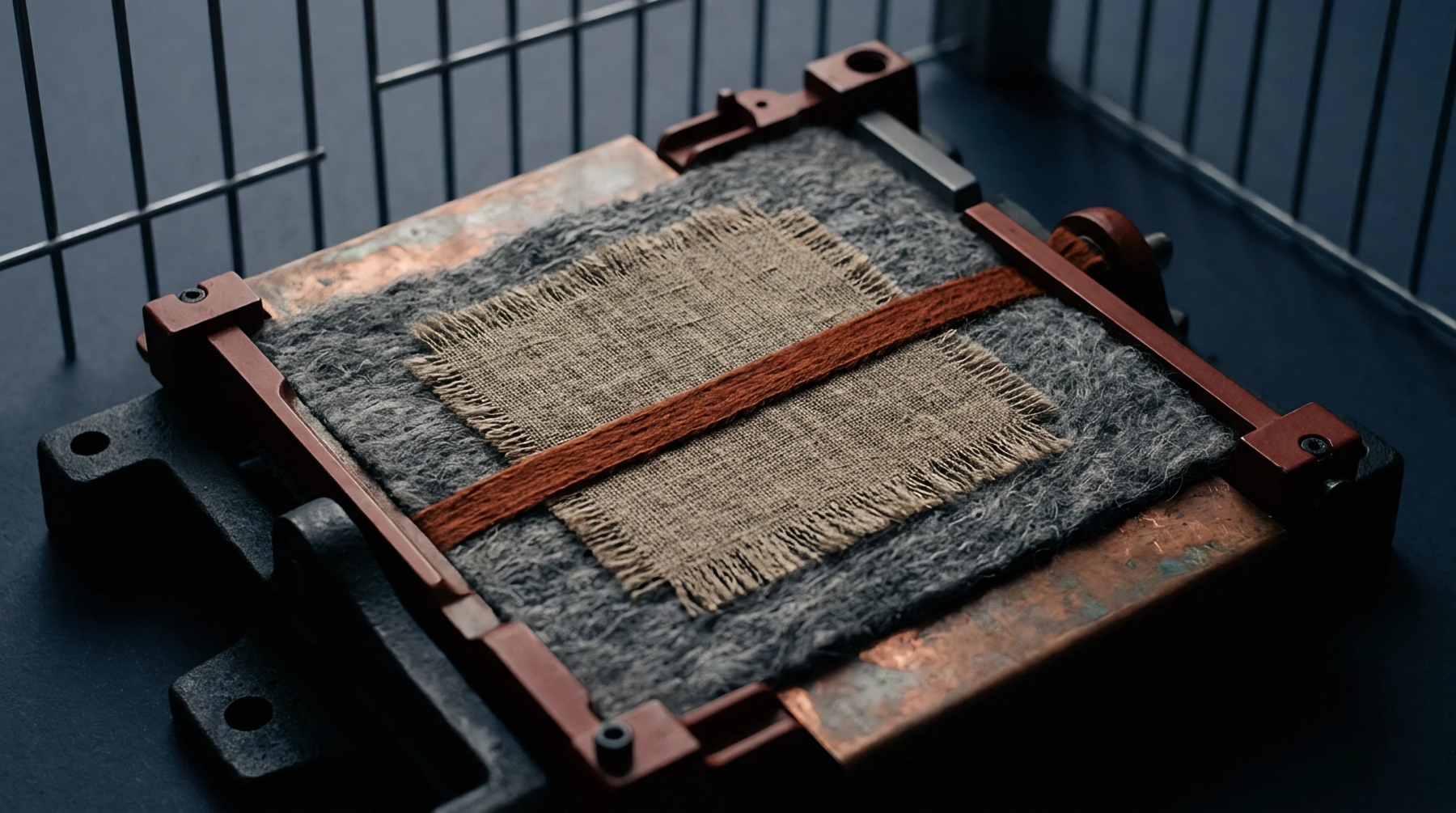
Gravimetric cut-length flax linear density testing converts as-tested bundle mass to official twelve percent commercial regain to prevent drafting and count errors.

Customs flax blend tolerances rely on statutory 3% variance margins adjusted for standard moisture regain factors under ISO 1833 chemical testing.
ISO gravimetric fineness testing measures cut bundle mass and length to establish decitex, directly dictating spinnable yarn count and fabric yield.

Standard cut length gravimetric testing uses strict pretensioning, razor sectioning, and moisture regain corrections to establish spinnable tex accurately.

Auditing wet-spun linen mass balance requires subtracting a 3.5% to 7.0% dry leaching loss factor for trough pectin dissolution before calculating yield fraud.

European Flax certificates verify raw fibre origin, but US Customs non-preferential classification derives strictly from the country where yarn spinning or fabric weaving occurs.
Expertise is a utility, not a secret. sentiention™ publishes its working knowledge as open reference: intelligence layer covering the materials it sources, the markets it enters, and the reference that serves both.