Resolving Country of Origin Shift Failures in Multi-Country Linen Hemming Operations
Statutory non-preferential origin for hemmed linen bed and table linens remains attached to the weaving location under 19 CFR 102.21 and UCC Annex 22-01.


Jurisdiction
Customs authorities across major importing jurisdictions strictly enforce rules of origin for textile products under Chapter 63 of the Harmonized System. Sourcing managers frequently assume that importing greige or finished flax fabric into a secondary country for cutting, hemming, and packaging confers a new non-preferential country of origin. That assumption creates severe legal and financial liability during customs audits.
Non-preferential origin rules dictate applicable normal trade relations duty rates, trade remedies, anti-dumping duties, and country-of-origin labeling requirements. In the United States, 19 CFR 102.21 sets the statutory hierarchy for determining textile origin. For flax bed linen, table linen, and kitchen towels under HS heading 6302, cutting cloth and hemming edges does not satisfy the threshold for substantial transformation.
Origin remains tied to the country where the fabric was woven. Under 19 CFR 102.21(c)(2), a textile or apparel product of HS 6302 derives its origin entirely from the single country, territory, or insular possession where the fabric was produced through weaving, knitting, or another fabric-forming process. When greige linen is woven in China (HS 5309) and shipped to Vietnam or India for cutting, hemstitching, labeling, and packing, US Customs and Border Protection treats the origin as China.
Labor added in the second country alters the material’s physical form without shifting its statutory origin classification.
This statutory hierarchy governs the classification outcome regardless of processing volume.
European Union non-preferential origin rules operate under equivalent principles codified in Article 32 and Annex 22-01 of the Union Customs Code Delegated Regulation. European customs authorities inspect primary fabric manufacturing. Annex 22-01 specifies non-preferential origin rules for Chapter 63 items.
Making up bed or table linen from imported fabric does not grant origin status to the processing territory unless that processing includes complete weaving of the fabric. Origin audits center on primary weaving logs rather than final hemming invoices. Importers relying on a local Certificate of Origin issued by a chamber of commerce in a secondary country quickly learn that local administrative statements cannot override destination customs regulations.
Importers declaring third-country origin for hemmed linen articles derived from Chinese greige fabric face retroactive tariff adjustments of 25 percent under Section 301 regulations when entry documentation lacks loom-shed bills of lading.

Statutory Scope of Substantial Transformation Rules
Customs regulations draw a clear line between preferential trade regimes and non-preferential compliance. Preferential rules of origin under free trade agreements, such as the EU-Vietnam Free Trade Agreement or the Comprehensive and Progressive Agreement for Trans-Pacific Partnership, feature specific Product-Specific Rules that often demand a yarn-forward or fabric-forward standard. Importers who confuse preferential rules with non-preferential standards open their supply chains to severe penalties.
Even under preferential agreements, simple finishing, cutting, and edge-hemming operations rarely satisfy local value-content or manufacturing transformation criteria without qualifying origin fabric inputs.
That distinction dictates how documents must be assembled. When an importer brings hemmed linen napkins into the United States, customs inspectors scrutinize entry summary Form 7501 alongside the commercial invoice. If the invoice lists Vietnam as the country of origin based on local hemming, but mill audits show the flax yarn was spun and woven in Jiangsu or Zhejiang, customs rejects the entry classification.
The importer faces immediate reclassification under HS 5309 fabric origin rules, triggering Section 301 punitive tariffs alongside standard Most-Favored-Nation duty rates.
| Importing Jurisdiction | Statutory Rule Standard | Declared Processing Operations | Conferred Non-Preferential Origin | Key Statutory Reference |
|---|---|---|---|---|
| United States | 19 CFR 102.21(c)(2) | Fabric woven in Country A; cut, hemmed, and packed in Country B | Country A (Weaving location) | 19 CFR 102.21 Section 334 Uruguay Round Agreements Act |
| European Union | UCC Delegated Regulation Annex 22-01 | Fabric woven in Country A; bleached, dyed, cut, and hemmed in Country B | Country A (Weaving location) | UCC Article 60(2), Regulation (EU) 2015/2446 Annex 22-01 |
| United Kingdom | UK Trade Tariff Non-Preferential Rules | Fabric woven in Country A; cut, hemstitched, and finished in Country B | Country A (Weaving location) | Customs (Origin of Chargeable Goods) Regulations 2020 |
| Canada | Customs Tariff Origin Regulations | Fabric woven in Country A; cut, hemmed, and packaged in Country B | Country A (Weaving location) | Proof of Origin of Imported Goods Regulations (SOR/98-52) |

Distinctions between Preferential Trade and Non-Preferential Duties
Discrepancies between preferential trade certificates and customs entry declarations create serious audit vulnerabilities. Free trade agreements permit preferential duty treatment when goods satisfy specific origin criteria, but those rules run independent of marking requirements and general non-preferential duties. Importers who fail to maintain separate compliance tracking for tariff preferences and origin marking regularly mislabel products sold to consumers.
The United States Federal Trade Commission enforces Textile Fiber Products Identification Act standards that mandate explicit origin statements on textile labels. Labeling a linen pillowcase as Made in Vietnam because it was cut and hemmed in Ho Chi Minh City, when the fabric was woven in China, constitutes deceptive labeling under federal law.
FTC enforcement proceeds alongside customs entry audits. While Customs and Border Protection assesses duty shortfalls and misdeclaration penalties, the FTC issues cease-and-desist orders and requires public corrective notices. European consumer protection agencies enforce matching standards under Regulation (EU) 1007/2011 on textile fibre names and related labelling.
Importers must build traceable documentation connecting every finished stock-keeping unit directly back to the loom shed where the flax greige fabric was woven.
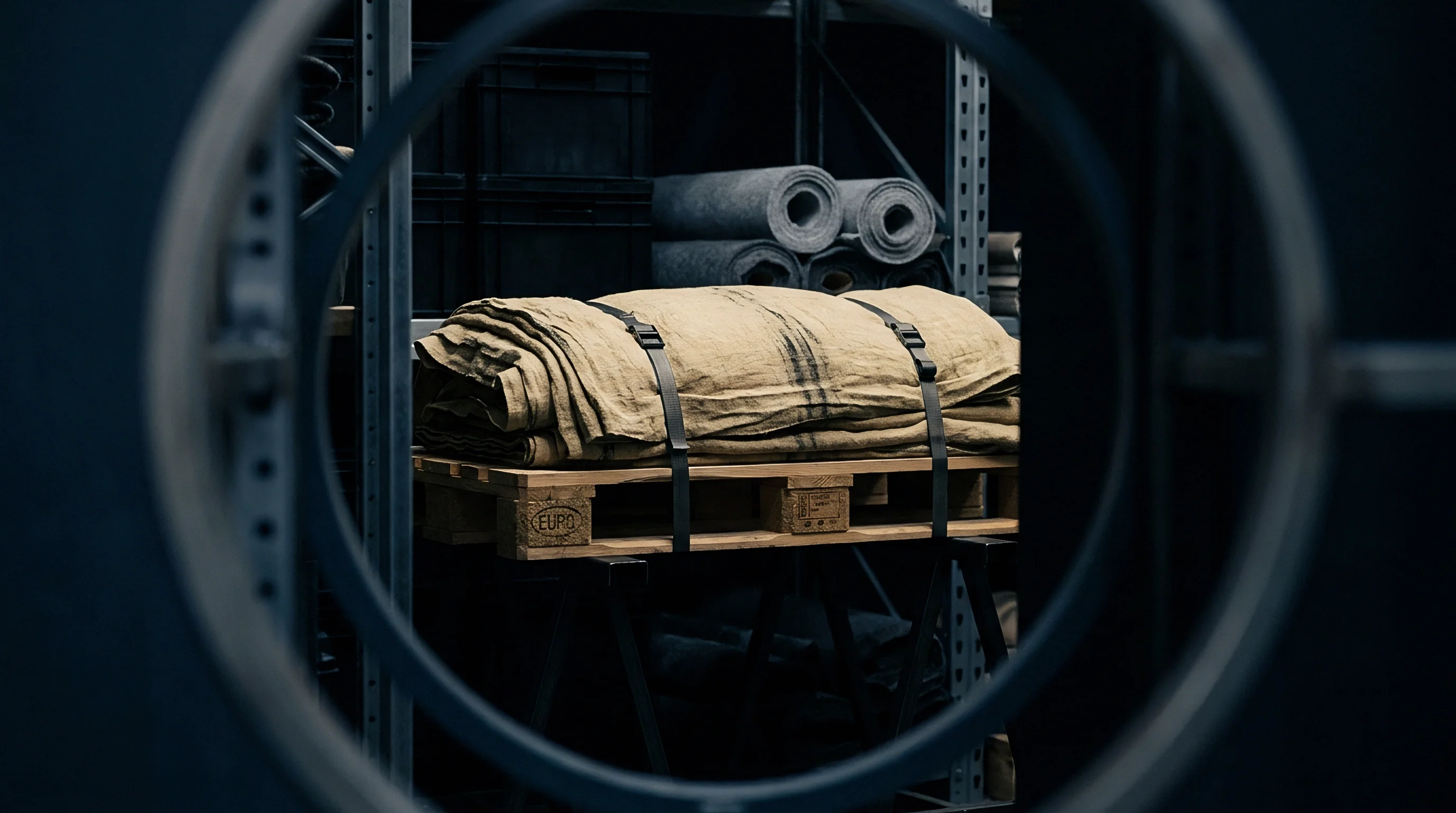
Where Does Fabric Origin Remain Attached during Multi-Country Assembly?
Origin stays permanently attached to the fabric-forming stage through every downstream cutting and sewing operation. Converting a continuous bolt of woven flax cloth into finished individual items via slitting, cross-cutting, edge-folding, and machine-stitching changes the product’s tariff classification from Chapter 53 to Chapter 63. However, that tariff shift does not alter the country of origin under non-preferential customs standards.
Physical fabric identity takes precedence over final assembly across all major customs jurisdictions.
Cross-border supply networks frequently split manufacturing steps across three or four countries. Flax fiber grown in France or Belgium under European Flax certification might be exported to China for spinning and weaving, then shipped to Tunisia, Vietnam, or Cambodia for cut-and-sew operations before heading to consumer markets. Traceability breaks down when compliance teams conflate certified fiber origin with statutory product origin.
European Flax scope certificates verify the agricultural origin of the raw flax fiber ~ they do not assign European origin to finished linen sheets if the spinning and weaving took place outside the European Union.
Running a multi-country production line without mapping statutory substantial transformation rules leads directly to tariff reclassification, retroactive duty assessments, and potential goods seizures at the port of entry.

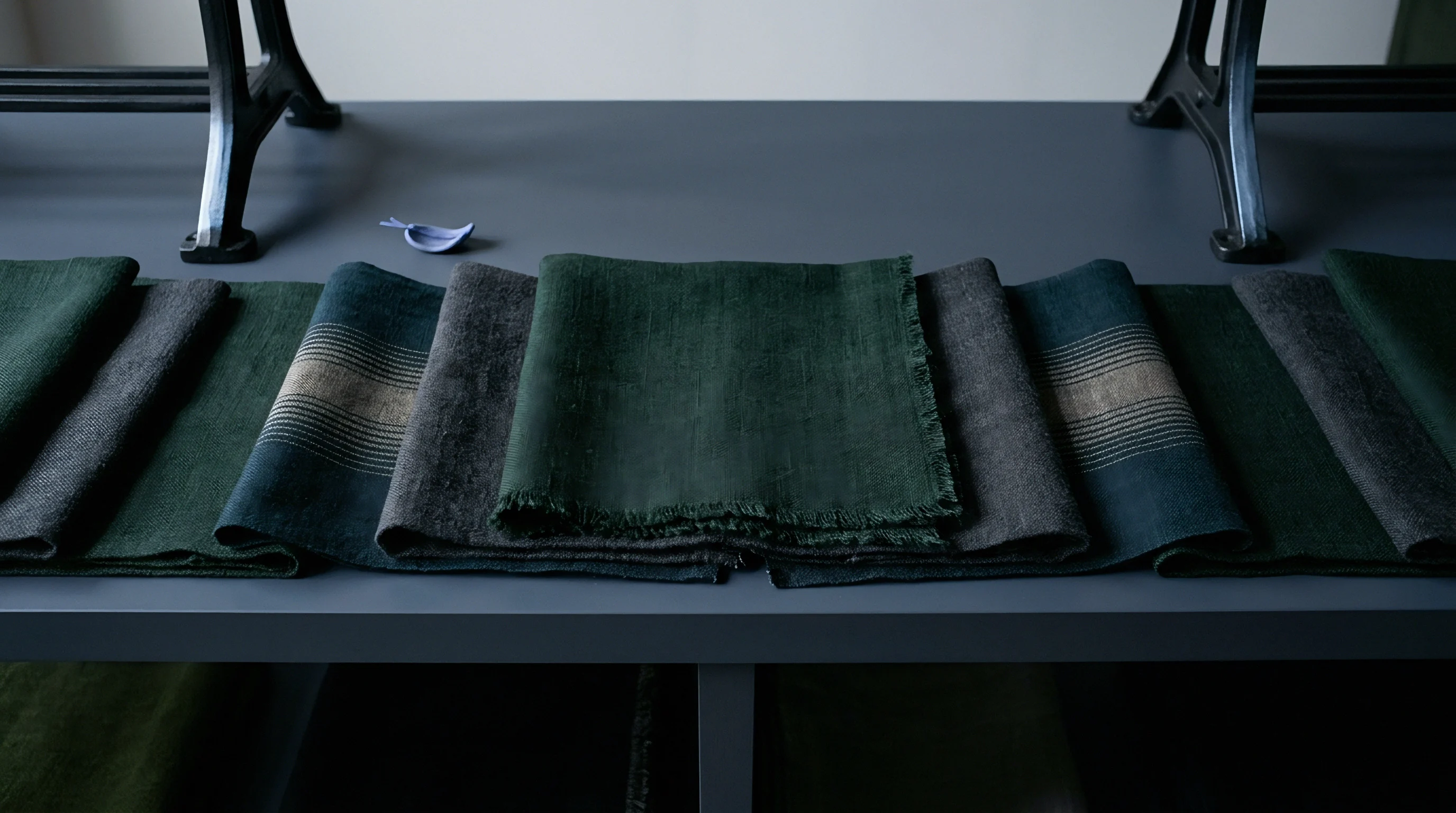
Stitch
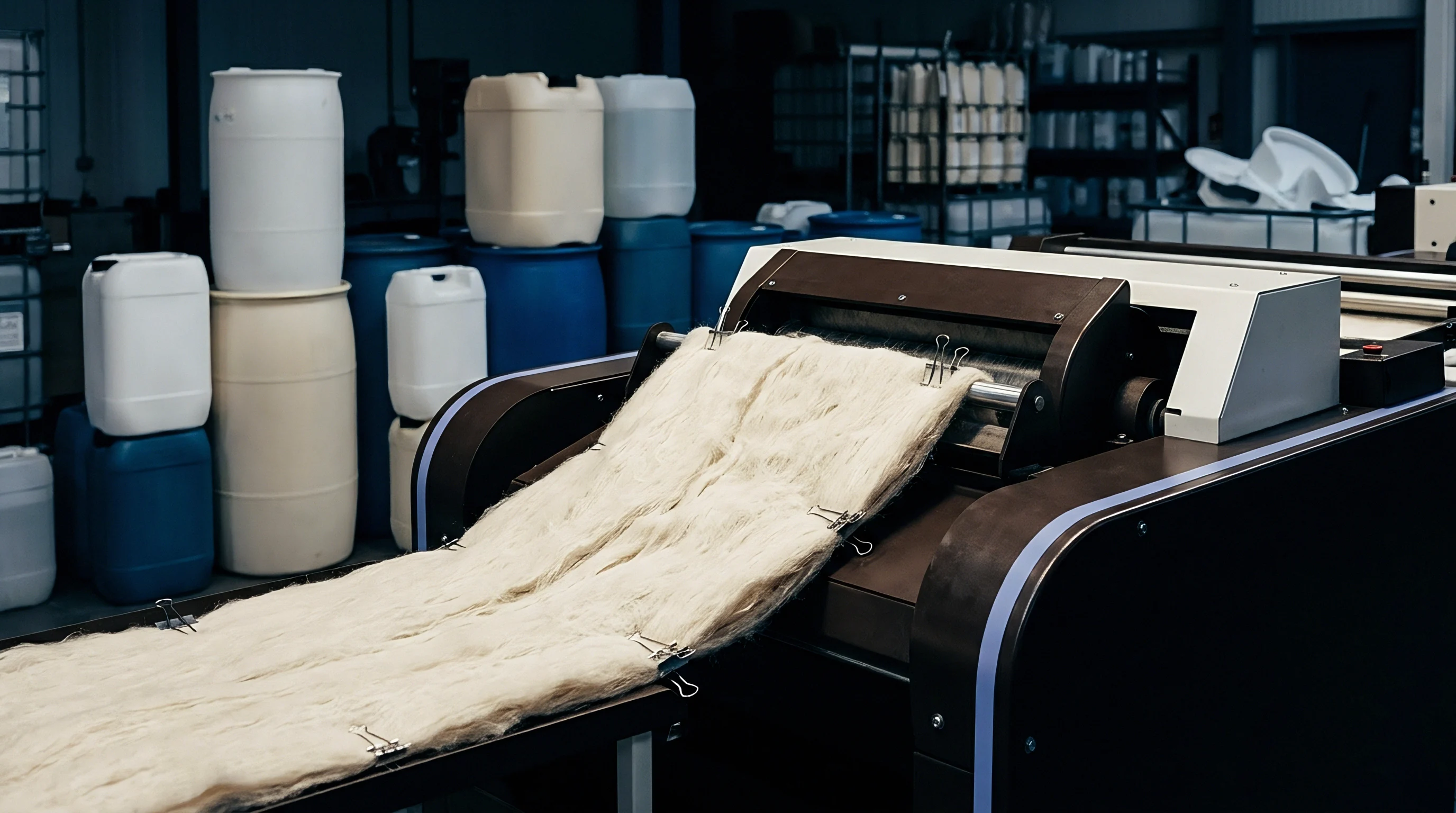
Factory managers running cut-and-sew operations often mistake physical labor for a legal shift in origin. A commercial hemming plant receives large rolls of woven linen, unrolls them across automated spreading tables, cuts panels to size, and finishes the edges on specialized stitching machinery. Typical steps include straight cutting, mitred corner folding, overlocking raw edges, running dual-needle hemstitching machines, sewing in brand labels, and pressing finished items.
The concentration of machinery, organized labor, and added value on the hemming floor easily creates the impression of origin transformation among plant executives.
Yet mechanical processing alters geometry, not statutory origin. Whether an automated unit or a manual operator handles a blind hem, hemstitch, or double-fold lockstitch, international customs law views the work as simple assembly. Sewing thread, care labels, and packaging added during hemming are minor inputs.
They do not change the fundamental character of the article, which comes entirely from the underlying woven flax structure.
Slitting and sewing operations leave the underlying textile classification intact.
Plant layouts highlight why floor operations fall short of origin shift standards. A typical linen hemming facility maintains dedicated areas for raw fabric storage, spreading tables, automated cutters, rows of sewing machines, inspection stations, and packing lines. The equipment lineup consists mainly of spreading tables, gantry cutters, lockstitch units, hemstitching machines, and steam presses.
None of these tools alter the chemical or structural character of the linen yarn or the weave pattern produced at the weaving mill.
Hemming consumes clear labor hours and electricity while producing fabric scrap. In a standard production run for flat sheets (275 centimeters by 300 centimeters), raw fabric width scrap and cut-loss run between 3 percent and 6 percent of gross fabric weight. The plant pays local workers to fold a 2.5-centimeter double hem on four sides and sew 8 to 10 stitches per inch using 100 percent cotton or spun polyester thread.
Despite those physical steps, importing customs agencies evaluate the end product strictly as an article assembled from imported fabric.
Under United States Code Title 19 Section 102.21, the country of origin of a textile product classified under Chapter 63 remains the country where the fabric was woven, regardless of cutting, edge-trimming, or hemming executed in a secondary nation.

Physical Assembly Operations versus Origin Shift Metrics
Customs authorities analyze the specific mechanical operations applied to fabric. The summary below covers common operational scenarios where assembly teams mistake physical floor processing for a statutory origin shift.
- Simple Slitting and Cross-Cutting splits continuous roll goods of HS 5309 into rectangular panel dimensions without changing the weave matrix or yarn composition.
- Edge Folding and Mitred Corner Seaming forms functional finished edges mechanically, leaving the core fabric structure untouched under customs inspection standards.
- Hemstitching and Decorative Overlocking adds secondary structural or decorative stitching without changing the country where the base greige fabric was woven.
- Brand and Care Label Attachment adds mandatory regulatory labels to the finished product but has no effect on non-preferential country of origin determinations.
- Secondary Embroidery and Monogramming adds localized stitch designs that do not meet substantial transformation thresholds unless explicitly recognized by specific trade agreement provisions.
Plant managers often point to local value-add numbers to justify origin claims. Value-add metrics weigh local labor, overhead, thread costs, and margins against the finished sheet’s export price. In non-preferential customs regimes, percentage value-add calculations carry no weight for Chapter 63 textile items unless product-specific rules explicitly specify a regional value content threshold.
For linen bed and table linens, statutory origin depends entirely on where the fabric was woven.

Equipment Footprints and Labor Allocations at Hemming Plants
Auditing a cut-and-sew subcontractor requires checking equipment inventories against claimed operations. A facility equipped only with cutting tables, lockstitch machines, and packing stations cannot weave fabric. When a vendor claims full regional origin for finished linen goods but operates no spinning frames or looms in the country, the claim collapses upon physical inspection.
Compliance auditors review equipment maintenance logs, electricity bills, and machine capacity records to verify that the plant only performs making-up work.
Subcontracting hemming to satellite workshops introduces hidden origin risks. Primary hemming vendors routinely offload volume spikes to unvetted third-party sewing shops nearby. These secondary workshops rarely maintain strict batch tracking, mixing greige fabrics from different countries within a single production run.
A single order of finished napkins might combine identical-looking cloth woven in China, India, and Vietnam. When customs samples an incoming shipment, physical and chemical testing of yarn features can expose multiple fabric sources inside a single commercial order.
When called on misdeclared origin filings, hemming plant executives frequently argue that because local authorities issued an export certificate or chamber of commerce origin document, the finished goods legally qualify for local origin status.


Discrepancy
The financial costs of origin misdeclaration stack up quickly during enforcement actions. When customs authorities reject a declared country of origin on hemmed linen imports, they reclassify the shipment under its actual origin country, assessing back duties, punitive tariffs, and statutory interest. The financial hit extends beyond the immediate entry to cover all open shipments within the statute of limitations, which typically spans three to five years depending on the country.
Importers working on slim gross margins face severe disruption when hit with retroactive tariff adjustments. Declaring a 0 percent or low MFN duty rate under a third-country origin assumption, when the true origin carries a 25 percent Section 301 punitive tariff, creates an immediate duty gap of 250,000 USD per 1,000,000 USD of imported customs value. Customs authorities also assess administrative interest on unpaid duties running from the original entry date.
Interest on unpaid duties accumulates from the original date of entry.
Penalties for misdeclaration scale with the importer’s level of fault. Under US administrative law (19 U.S.C. 1592), penalties range from simple negligence to gross negligence and fraud. Negligence penalties can reach up to two times the unpaid duty or 20 percent of commercial entry value.
Gross negligence penalties rise to four times unpaid duty or 40 percent of entry value. For fraudulent misdeclaration, customs can seek penalties up to the full domestic retail value of the merchandise.
Compliance teams model total financial exposure by calculating duty underpayments alongside administrative penalties across every open entry. Total financial liability regularly exceeds the original purchase order value of the imported goods.
| Cost Component Parameter | Declared Setup (Vietnam Hemmed) | Audited Setup (China Woven) | Financial Variance Impact | Legal / Statutory Basis |
|---|---|---|---|---|
| Declared Customs Entry Value | $450,000 | $450,000 | $0 | FOB Invoice Value (10,000 units @ $45/unit) |
| Standard MFN Duty (HS 6302.39) | $13,500 (3.0%) | $13,500 (3.0%) | $0 | US Harmonized Tariff Schedule Chapter 63 |
| Section 301 Punitive Tariff | $0 (Exempt) | $112,500 (25.0%) | +$112,500 | US Trade Act of 1974 Section 301 Action |
| Mitigated Negligence Penalty | $0 | $56,250 (0.5x Duty) | +$56,250 | 19 U.S.C. 1592 Administrative Settlement |
| Customs Broker Audit Fee | $0 | $12,500 | +$12,500 | Legal Defense and Re-entry Expenses |
| Net Landed Cost Per Unit | $46.35 / unit | $64.47 / unit | +$18.12 / unit (+39.1%) | Comprehensive Landed Cost Recalculation |
Financial Exposure from Retroactive Tariff Reclassifications
Supply contracts between importers and secondary-country hemming vendors often contain weak or unenforceable liability terms. Sourcing reviews routinely find that foreign hemming plants lack the capital or legal exposure needed to cover contractual indemnity claims when destination customs authorities reject origin declarations. The importer of record remains strictly liable to customs for all duties, tariffs, and penalties, regardless of vendor promises.
Customs enforcement actions snarl operational cash flow through immediate cargo holds and mandatory bond increases. When Customs and Border Protection issues a Notice of Action (Form 28 or Form 29) challenging country of origin, subsequent incoming shipments from that supplier or route face automatic detention. Cargo sits in bonded warehouses, building demurrage and storage fees while compliance teams gather proof.
Storage fees at major container ports frequently exceed 300 USD per container per day, wiping out product margins within weeks.
Penalty Calculations and Enforcement Actions at Import Customs
Customs enforcement agencies use data analytics and targeting algorithms to identify high-risk transshipment routes. Importers showing sudden shifts in origin for Chapter 63 goods ~ such as shifting large volumes from Chinese weaving mills to newly established hemming plants in Southeast Asia ~ trigger automated audit flags. Customs officers inspect containers physically, pulling fabric samples for origin testing.
Relying on seller-provided origin declarations becomes unsustainable as machine learning algorithms cross-reference global bills of lading against port export volumes in real time.


Dossier
Proving country of origin requires building an unbroken paper trail that documents every physical stage of production from raw fiber to final packaging. Importers cannot rely on single-page origin certificates issued by third parties. Customs authorities demand primary commercial and production records showing where yarn spinning, fabric weaving, and item finishing occurred.
Audit teams build a full verification dossier for every imported SKU before filing customs entries.
The documentation chain must follow a strict linear sequence. The numbered process below outlines the step-by-step cross-examination needed to validate a multi-country linen hemming dossier.
- Verify raw flax fiber origin through farm-level invoices, European Flax or Masters of Linen scope certificates, and scutching facility delivery tickets.
- Cross-examine yarn spinning lot records against mill output logs, confirming the transformation of scutched flax fiber into single or plied linen yarn.
- Inspect loom shed production schedules, beam records, and greige fabric roll numbers at the specific mill where weaving occurred.
- Reconcile international bills of lading, packing lists, and export declarations covering the transfer of greige or finished fabric from the weaving mill to the secondary hemming plant.
- Audit hemming facility receiving logs, matching incoming fabric roll numbers against internal cut-order requisitions and daily sewing output manifests.
- Validate finished goods commercial invoices, packing lists, and bill of lading documents generated for export to the final importing country.
Customs authorities require primary factory records rather than third-party affidavits.
Scope certificates from sustainability programs are frequently misapplied in customs dossiers. A European Flax scope certificate confirms that a certified business handles flax fiber grown in Western Europe under specific environmental standards. However, if a Chinese mill buys European Flax certified fiber, spins it into yarn, and weaves it into cloth in Jiangsu province, the statutory country of origin of that fabric is China.
Including the European Flax certificate in a customs submission demonstrates environmental compliance, but it does not establish European origin for customs purposes.
Physical assembly complexity inside a sewing factory does not alter the origin of a woven flax fabric unless the underlying customs schedule explicitly recognizes cut-and-sew operations as substantial transformation.

Documentary Verification Chains for Transshipped Linen Fabric
Bills of lading for intermediate fabric shipments serve as crucial evidence in origin audits. Customs auditors review intermediate bills of lading to track container movements, vessel names, port calls, and weight declarations between the weaving mill and the hemming plant. Gaps or mismatches in intermediate shipping documents suggest unauthorized transshipment, roll swapping, or untracked processing in a third country.
Loom shed logs offer direct proof of where fabric was made. A loom log records machine numbers, weaver details, grey fabric width, construction parameters (ends and picks per inch), roll length, and total weight produced. Matching fabric roll tags from hemming receiving logs back to specific loom entries establishes a clear link between the finished product and the weaving location.
Sourcing organizations should mandate that hemming suppliers keep fabric roll traceability tags attached to every cut lot through final packing.

Scope Certificate Limitations across Cross-Border Hemming Nodes
Transaction Certificates (TCs) issued under chain-of-custody standards provide strong documentary support when properly audited. A Transaction Certificate lists shipment weights, lot numbers, buyer details, and seller details for certified materials moving between facilities. However, compliance officers must inspect the scope coverage of every transaction certificate.
A TC issued for greige fabric moving from a Chinese weaving mill to a Vietnamese hemming plant confirms material tracking, but it explicitly names the Chinese mill as the fabric manufacturer.
Chambers of Commerce in secondary processing countries frequently issue Certificates of Non-Preferential Origin based strictly on local vendor affidavits. These documents carry minimal weight in customs audits. Customs authorities view local chamber certificates as administrative self-declarations rather than independent proof of substantial transformation.
When an importer presents a local chamber certificate claiming Vietnamese origin for hemmed sheets woven from Chinese greige, customs inspectors reject the certificate under statutory non-preferential origin rules.
Every commercial purchase agreement should include a mandatory supplier documentation clause: “Seller shall deliver to Buyer, no later than 14 days prior to cargo shipment, an unbroken dossier of primary production records comprising loom shed logs, intermediate bills of lading, and roll-level mass reconciliation statements establishing the statutory weaving origin of all fabric incorporated into the goods.”

Audit
Physical inventory reconciliation at the hemming plant serves as the ultimate test of provenance documentation. Mill auditors verify that the weight and area of fabric imported into the secondary country match the volume of finished linen articles exported, accounting for normal manufacturing scrap. Hemming plants trying to conceal untracked fabric sources fail mass balance reconciliation when their exported finished mass exceeds their documented fabric import mass.
Mass balance accounting relies on physical conservation principles. Net fabric weight imported must equal net finished product weight exported plus documented cutting scrap, hem trim waste, and process moisture variation. The decision checklist below outlines physical verification steps during an on-site mill audit.
- Fabric Weighbridge Tickets must match declared roll weights on incoming bills of lading within a 1.5 percent tolerance, adjusted for standardized yarn moisture regain rates.
- Spreading Table Scrap Records require daily logging of cut-out end scraps, selvage trims, and fabric defect cut-outs, verifying normal operating loss ratios between 3 percent and 6 percent.
- Finished Unit Weighing measures net weight per hemmed article across representative sample lots, multiplying by total packed unit counts to establish net exported fabric mass.
- Sewing Thread Consumption Adjustments subtract added thread mass (typically 1.0 percent to 2.5 percent of finished item weight) from exported mass totals prior to fabric reconciliation.
- Bale Store Scrap Audits inspect physical waste storage areas to confirm that reported scrap weights exist in physical storage or are backed by commercial scrap-dealer sale receipts.
On-site audits reveal manufacturing inputs omitted from shipping paperwork.
Measuring fabric area density (grams per square meter) requires standardized testing under controlled conditions. ISO 3801 defines methods for measuring woven fabric mass per unit length and mass per unit area. Audit teams sample greige and finished fabric panels across multiple rolls, conditioning samples at 20 degrees Celsius and 65 percent relative humidity before weighing.
Comparing measured unit mass against mill datasheets prevents suppliers from blending lighter, cheaper secondary fabrics into certified production runs.
Moisture shifts introduce noticeable weight variations in linen audits. Flax fibers absorb and release atmospheric moisture readily based on ambient humidity. Standard moisture regain for flax yarn is set at 12.0 percent under ISO 139 standards.
Greige fabric stored in humid tropical climates like Vietnam or southern China can absorb up to 14.5 percent moisture by weight, whereas finished goods packed in air-conditioned spaces may drop to 8.5 percent. Failing to normalize measured weights for standard moisture regain distorts mass balance accounting and produces false audit variances.
| Production Stage | Input Material / State | Measured Mass / Dimension | Process Loss / Gain (%) | Audit Verification Document |
|---|---|---|---|---|
| Fabric Receipt | Continuous Greige Roll Goods | 10,000 kg (50,000 linear meters) | 0.0% (Baseline Input) | Weighbridge Ticket & Import Bill of Lading |
| Spreading & Cutting | Cut Duvet Panels & Pillowcase Blanks | 9,550 kg Net Cut Panels | -4.5% (Edge Trims & Scrap) | Daily Spreading Log & Scrap Scrap Receipts |
| Stitching & Hemming | Hemmed Linen Goods (Unwashed) | 9,693 kg (Includes Sewing Thread) | +1.5% (Added Thread Mass) | Sewing Floor Output Log & Thread Issue Slips |
| Pressing & Packing | Finished Goods in Poly-Bags | 9,500 kg (Conditioned Mass) | -2.0% (Moisture Desorption) | Final Packing List & Export Entry Declaration |

Mass Balance Formulas for Cut and Sew Yields
Calculating net fabric yield requires factoring in linear dimensions, cutting markers, and edge hem allowances. For a standard flat sheet with target dimensions of length Lf and width Wf, and double-fold hem allowances of Hl on length edges and Hw on width edges, the total required raw cutting length Lc and cutting width Wc follow simple linear equations:
Lc = Lf + 4 · Hl
Wc = Wf + 4 · Hw
The total raw fabric area required per finished unit equals Lc · Wc. Comparing total raw fabric area consumed against total finished fabric area produced gives the marker efficiency ratio. In efficient hemming plants, marker efficiency ranges from 94 percent to 97 percent for simple rectangular flat sheets and table linens. Duvet covers with complex pillow sham cut-outs run between 88 percent and 92 percent.
When an audit shows a supplier declaring a 100 percent fabric-to-finished-goods yield, the auditor knows the facility is falsifying scrap logs or hiding unrecorded fabric inputs.

On-Site Mill Audit Protocols for Hemming Operations
Conducting an unannounced physical audit requires systematic access to facility operations. Auditors immediately inspect the raw material warehouse, recording roll tag numbers, mill batch codes, and shipping marks on stored fabric bolts. Audit teams cross-reference these physical tags against the supplier’s fabric receiving ledger to verify that all stored inventory traces back to authorized weaving mills.
Waste storage areas offer key physical evidence. Auditors check cutting table scrap bins to confirm that fabric scrap matches the weave, color, and yarn quality of active production. Finding scrap from different fabric qualities or yarn blends inside active cutting bins indicates that the facility processes unrecorded parallel orders, creating a high risk of fabric lot contamination.
In provenance audits, a mass balance ledger that balances on paper without matching physical warehouse tags indicates active falsification of compliance records.


Rider
Mitigating origin shift risks requires embedding clear legal protections directly into international procurement contracts. Importers cannot rely on standard purchase order terms that lack explicit textile origin compliance clauses. Commercial contracts must define statutory origin requirements, allocate financial liability for reclassifications, set firm document delivery timelines, and grant full audit rights over secondary and tertiary subcontractors.
A well-drafted rider establishes clear legal definitions for every manufacturing step. The agreement must state explicitly that cutting, hemming, stitching, edge-trimming, labeling, or packaging in a secondary country does not constitute substantial transformation unless recognized by destination customs laws. The seller must warrant the exact statutory non-preferential origin of all fabric inputs, naming the weaving mill, business registration code, and facility address on all commercial documents.
Contractual terms determine whether an importer can recover reclassification costs from foreign suppliers.
Indemnification clauses must shift complete financial responsibility to the seller if an origin shift claim fails. When destination customs reject a declared country of origin based on fabric weaving location, the seller must fully indemnify the buyer for all unrecovered losses. Covered costs include retroactive duty assessments, Section 301 tariffs, administrative fines, legal fees, customs broker audit charges, demurrage, and lost retail margin from cargo seizures.
Lien and payment withholding terms give buyers practical leverage during customs disputes. Sourcing contracts should permit withholding outstanding payments across active purchase orders if customs issues a Form 28 Notice of Action or opens an origin inquiry into the seller’s goods. Retained funds serve as security against potential penalties while legal counsel defends entry classifications.

Commercial Warranty Formulations for Sourcing Contracts
Precise contractual language leaves no room for vendor misunderstanding. Legal counsel should incorporate explicit origin warranty provisions into global supply agreements:
“Seller explicitly warrants and guarantees that all textile products supplied under this Agreement fully comply with the non-preferential country of origin rules of the destination market identified by Buyer. Seller certifies that the country of origin declared on all commercial invoices, packing lists, and origin declarations reflects the single country where the underlying greige fabric was entirely woven. Seller acknowledges that cutting, hemming, seaming, or packaging executed in a secondary nation does not alter the statutory fabric origin.
Any breach of this warranty constitutes a material breach of contract, entitling Buyer to immediate contract termination, full refund of purchase order payments, and complete indemnification for all resulting duties, tariffs, penalties, and legal costs.”
Dispute resolution clauses must designate appropriate jurisdiction and legal enforcement mechanisms. Sourcing from foreign hemming vendors requires selecting an enforceable dispute resolution forum, such as international arbitration administered by the International Chamber of Commerce (ICC) or the Singapore International Arbitration Centre (SIAC). Arbitration awards rendered in recognized jurisdictions can be enforced against foreign vendor assets under the New York Convention, providing real financial recovery paths when foreign subcontractors cause major customs losses.

Indemnification Structures and Dispute Escalation Mechanics
Managing ongoing compliance requires establishing multi-tiered dispute escalation procedures within the supply agreement. When an origin audit surfaces documentary discrepancies or mass balance variances at a hemming plant, the contract must mandate immediate operational suspension. The buyer retains the legal right to halt shipments, freeze pending payments, and deploy independent third-party auditors to inspect the supplier’s facilities at the seller’s sole expense.
Supply contracts must mandate that sub-contractors maintain comprehensive product liability and customs compliance insurance policies issued by reputable international underwriters. Terms should require vendors to name the buyer as an additional insured party, providing direct insurance claim recovery paths if the vendor enters insolvency following a major customs penalty action.
Establishing contractually binding origin verification riders ensures that financial liability stays aligned with physical operational control across every node of a multi-country linen supply chain.