Secondary Cell Wall Microfibril Orientation in Climate Affected Line Flax
Elevated microfibril angles in climate-stressed line flax reduce fiber tenacity, lower hackling yield, and limit wet-spinning performance to coarse counts.

Lattice
Elementary flax fibers derive their high tensile stiffness and axial load-bearing capacity from the organized layout of their secondary cell wall. Within the thick S2 layer ~ which accounts for roughly eighty to ninety percent of the total cross-sectional area ~ highly crystalline cellulose microfibrils sit in a dense helix around the central lumen. Standard growth in temperate maritime climates produces a tight microfibril angle, usually measuring between eight and ten degrees off the stem’s long axis.
This orientation aligns the covalent backbones of thousands of parallel beta-1,4-glucan chains with the primary direction of tensile strain. When load is applied to a line flax bundle, stress transfers along these crystalline domains with minimal lateral shear, producing the high Young’s modulus of sixty to eighty gigapascals that spinners rely upon for fine-count yarns.
Heat stress and soil moisture deficits during secondary wall thickening disrupt this crystalline template. When ambient temperatures rise above twenty-eight degrees Celsius during stem elongation, cellulose synthase complexes in the plasma membrane slow down and lose spatial organization. As altered membrane fluidity affects synthesis, the machinery deposits cellulose along a wider helical trajectory rather than laying down microfibril ribbons at acute angles.
Microfibril angles in drought-affected crops expand to fourteen or eighteen degrees, shifting the mechanical behavior of the fiber. A broader helical spiral reduces axial stiffness, increases elongation at break, and alters shear strain distribution within the surrounding matrix under tension.

Elementary Fiber Wall Structural Hierarchy
A mature flax bast cell contains distinct cell wall layers that differ in chemical composition, microfibril orientation, and mechanical purpose. The thin primary wall consists of a loose, isotropic mesh of cellulose microfibrils embedded in a dense matrix of highly methyl-esterified pectins and xyloglucans. Beneath this outer shell lies the S1 outer secondary wall layer, displaying a shallow, crossed-helical orientation that serves as a structural transit zone.
Most of the fiber’s strength resides in the S2 secondary wall layer. Here, long cellulose microfibrils form parallel crystalline bundles held together by hydrogen bonds, creating a continuous crystalline lattice that bears virtually all the tensile stress imposed during mechanical processing.
Environmental stress directly alters the kinetics of S2 layer formation. Given uniform water availability and moderate temperatures, microfibril deposition proceeds with minimal orientation variance along the cell length. Severe moisture deficits disrupt the synthesis of matrix pectins ~ particularly the rhamnogalacturonan-I side chains that stabilize inter-microfibrillar spacing.
As matrix synthesis falters, newly synthesized microfibrils lose alignment guidance and wander across the cell axis, creating localized domains where the local angle deviates substantially from the longitudinal average. These angle fluctuations act as stress concentration sites, lowering the threshold for micro-buckling under compressive or torsional forces during mechanical hackling.

Helical Alignment in Native Flax Cellulose
Native flax cellulose crystallizes exclusively as the cellulose I-beta polymorph, where parallel chains organize into monoclinic unit cells. The structural stiffness of these crystalline ribbons relies on intra-chain and inter-chain hydrogen bonds binding adjacent glucan rings along the 040 crystallographic direction. When microfibril orientation shifts away from the longitudinal axis, applied tensile loads no longer align directly with these primary covalent bonds.
Instead, a higher proportion of the load resolves into shear stress acting against the weaker van der Waals and hydrogen-bonding networks holding adjacent microfibrils together.
| Structural Parameter | Normative Maritime Flax | Heat-Stressed Line Flax | Analytical Test Method |
|---|---|---|---|
| S2 Microfibril Angle (MFA) | 8.2° – 9.8° | 14.5° – 18.2° | Wide-Angle X-Ray Diffraction (WAXD) |
| Cellulose Crystallinity Index | 78% – 84% | 68% – 73% | Solid-State 13C NMR / XRD Peak Fitting |
| S2 Layer Thickness | 4.2 µm – 5.8 µm | 2.1 µm – 3.4 µm | Transmission Electron Microscopy (TEM) |
| Axial Young’s Modulus | 62 GPa – 78 GPa | 34 GPa – 46 GPa | Single-Fiber Tensile Testing (ASTM C1557) |
| Degree of Polymerization (DP) | 8,500 – 9,800 | 5,200 – 6,400 | Viscometry in Cupriethylenediamine (CED) |
Reductions in cellulose crystallinity accompany this spatial misorientation of microfibrils. Thermal stress impairs the endo-beta-1,4-glucanase enzymes responsible for trimming non-crystalline defects during chain elongation, leaving cell walls with shorter crystallite domains interrupted by extensive amorphous regions. These amorphous zones permit greater water absorption and molecular flexibility, but they lack the rigid load-bearing capacity of continuous crystalline lattices.
When evaluating climate-impacted line flax, measuring total cellulose content alone fails to predict spinnability. The crucial factor is the precise structural proportion of highly oriented crystalline cellulose residing in the S2 layer.
In quality disputes over climate-affected line flax, lower yarn tenacities are often attributed to improper mill settings or aggressive carding speeds rather than structural fiber collapse. While adjusting wet-spinning trough temperatures can soften matrix pectins, laboratory diffraction analysis shows this cannot compensate for reduced axial orientation: no wet-spinning setting can reorient misaligned crystalline microfibrils once the secondary cell wall has fully lignified and dried during field retting.

Wall
Deposition of the secondary cell wall in flax stem cells represents a substantial energetic commitment governed tightly by hydraulic pressure and carbohydrate availability. During normal stem maturation, secondary wall deposition continues for four to six weeks after cell elongation ceases. The cell imports vast quantities of sucrose from the phloem, converting it via sucrose synthase into uridine diphosphate glucose, the primary substrate for cellulose synthesis.
When drought hits the crop during this deposition window, stomatal closure limits carbon fixation, starving developing bast fibers of glucose precursors and causing premature termination of secondary wall synthesis.
The resulting secondary cell wall is thin, structurally weak, and poorly consolidated. Under electron microscopy, cross-sections of drought-affected flax cells reveal large, open lumens surrounded by abbreviated S2 walls measuring less than half the thickness of normal controls. The spatial density of microfibrillar packing drops as well: instead of forming a compact matrix, microfibrils in water-stressed cell walls exhibit enlarged void fractions filled with un-crosslinked hemicellulose and low-molecular-weight pectins.
These structural defects leave the fiber wall prone to internal delamination under mechanical bending during scutching.
Thermal Stress Effects on Cellulose Synthase Complexes
Cellulose microfibrils are synthesized by large rosette-shaped transmembrane complexes composed of six cellulose synthase (CESA) trimers. The movement of these rosette complexes within the lipid bilayer is guided directly by underlying cortical microtubules, which act as physical tracks directing CESA rosettes along precise helical paths that set the microfibril angle. Elevated soil and air temperatures destabilize these cortical microtubules, causing depolymerization that forces CESA complexes to move along disordered or shallow paths across the plasma membrane.
Crystallinity indices below seventy percent combined with microfibril angles above fifteen degrees reduce line flax fiber tenacity by more than forty percent under standard laboratory atmospheric conditions.
Disrupted microtubule guidance creates chaotic microfibril patterns within the S2 layer. Instead of uniform Z-twist helices running continuously from one end of the elementary fiber to the other, heat-stressed flax walls display localized pitch inversions and variable microfibril angles along single cells. Alignment varies widely even across adjacent stem segments: stem bases exposed to soil surface heat exhibit greater disorientation than mid-stem sections, introducing extreme mechanical non-uniformity within a single harvested line flax bundle.
Matrix Pectin Dynamics in Arrested Maturation
The structural matrix surrounding secondary wall microfibrils consists mainly of glucomannans, xylan networks, and pectins. In healthy flax bast fibers, calcium-mediated cross-linking of homogalacturonan domains in the middle lamella and inner wall layers bonds adjacent elementary fibers into robust technical bundles. Drought-induced stress alters this pectin biochemistry: the plant synthesizes shorter pectin chains with lower degrees of methylesterification, preventing the formation of stable calcium-pectate gels.
Defects in cell wall ultrastructure triggered by combined heat and water deficit manifest through distinct failure modes during fiber processing:
- Inter-microfibrillar shear failure occurs when the weak hemicellulosic matrix fails to transfer shear forces between adjacent cellulose microfibrils, leading to localized longitudinal splitting inside the S2 wall under tensile load.
- Luminal collapse and creasing develop during field drying as thin-walled elementary fibers lack the structural resistance to withstand capillary pressure, forming transverse kink bands that act as pre-existing fracture sites.
- Middle lamella embrittlement results from altered pectin methylesterification, causing premature bundle cleavage under minor bending stresses and drastically reducing the proportion of long line fibers during scutching.
- Microfibrillar bundle buckling emerges when compressive loads along the fiber axis fold misaligned crystalline domains, creating irreversible structural defects known as dislocations or flexural nodes.
These failure modes compound one another during mechanical harvesting and decortication. Fibers suffering from luminal collapse split along their long axes during scutching, turning long line flax into short, irregular tow fragments. Fiber breakage increases exponentially when processing line flax grown under severe moisture deficits, as the loss of secondary wall consolidation fundamentally changes how fiber bundles respond to stress in the hackling mill.
Severe water deficits halt cell elongation prematurely.
Thin, poorly consolidated cell walls lack flexural resilience.
A simple rule governs cell wall structural stability: as the ratio of wall thickness to lumen diameter drops below zero point four, the probability of micro-buckling under mechanical tension approaches certainty.


Bias
Accurate measurement of secondary cell wall microfibril orientation requires techniques that isolate crystalline lattice angles from bulk fiber morphology. Wide-Angle X-Ray Diffraction (WAXD) stands as the definitive analytical method for quantifying microfibril angle distributions in line flax. By directing a monochromatic X-ray beam perpendicular to a parallel array of flax fibers, the diffractometer records the azimuthal intensity distribution of the 200 crystalline cellulose reflection.
In perfectly aligned microfibrils, the 200 reflection collapses into two sharp, dense arcs; as microfibril orientation disperses, these diffraction arcs widen along the azimuthal angle, providing a precise quantitative map of orientation distribution.
Climate-affected flax lots display severe azimuthal broadening during WAXD analysis. Rather than yielding narrow diffraction peaks with full-width at half-maximum (FWHM) values under twelve degrees, stress-affected samples generate broad, diffuse peaks with FWHM values reaching twenty-four degrees or higher. This peak broadening reflects two distinct structural distortions: an absolute increase in the mean microfibril angle relative to the stem axis, and a massive expansion in angular variance among individual elementary cells within the same bundle.
Both factors directly undermine the mechanical efficiency of the fiber.

Azimuthal Broadening in Wide Angle X-Ray Scattering
Mathematical deconvolution of WAXD azimuthal intensity profiles allows researchers to separate mean microfibril angle from structural disorder. Using Gaussian deconvolution fitting on the 200 diffraction arc, the mean microfibril angle is calculated directly from peak position, while the variance parameter indicates the degree of structural orientation disorder. Normative European dew-retted line flax yields mean microfibril angles between eight point five and nine point eight degrees with variance parameters below two point zero.
Heat-stressed Heilongjiang or southern European flax frequently yields mean angles above fifteen degrees with variance parameters exceeding five point five.
Birefringence measurements using polarized optical microscopy confirm these WAXD findings. By measuring the difference in refractive indices parallel and perpendicular to the fiber axis, birefringence quantifies total molecular orientation. High-quality line flax exhibits birefringence values exceeding zero point zero six five.
In climate-affected lots featuring expanded microfibril angles, birefringence values drop to zero point zero four two ~ confirming that structural disorder extends across both the crystalline microfibrils and the non-crystalline matrix polymer chains.

Does Elevated Drought Stress Expand Spiral Variance?
Field data collected across variable growing seasons demonstrates a direct correlation between mid-season cumulative evapotranspiration deficits and the spatial variance of microfibril angles along the flax stem. During extreme drought, the top third of the flax stem ~ which matures under the most severe water stress ~ develops microfibril angles up to six degrees wider than the bottom third of the same plant. This intra-stem gradient creates unprecedented processing challenges for the mill.
| Sourcing Region and Crop Year | Mean MFA (Degrees) | Azimuthal FWHM (Degrees) | Orientation Factor (fc) | Hermans Order Parameter |
|---|---|---|---|---|
| Normative Normandy Dew-Retted (2019) | 8.6° | 11.2° | 0.96 | 0.91 |
| Severe Drought Normandy Dew-Retted (2022) | 15.4° | 22.8° | 0.82 | 0.74 |
| Irrigated Heilongjiang Spring Flax (2021) | 10.1° | 13.5° | 0.93 | 0.87 |
| Heat-Stressed Heilongjiang Spring Flax (2023) | 16.8° | 25.1° | 0.78 | 0.68 |
| Water-Retted Nile Delta Line Flax (2022) | 12.3° | 16.4° | 0.90 | 0.82 |
The Hermans orientation factor derived from diffraction data provides a dimensionless index of microfibril alignment, where a value of one point zero represents perfect alignment with the fiber axis and zero represents complete random orientation. As shown in the analytical data, severe drought drops the Hermans factor from zero point nine six down to zero point eight two. This structural decline indicates that over eighteen percent of the fiber’s structural cellulose no longer contributes effectively to longitudinal strain resistance.
When a raw line flax specification defines minimum bundle strength without mandating an upper limit on microfibril angle variance, the spinner absorbs all downstream yield losses during high-draft wet spinning.
The structural bias induced by elevated microfibril angles alters the torsional mechanics of the fiber during drafting and twisting. Standard line flax exhibits a pronounced preference for Z-direction torsional shear due to its natural Z-twist helical microfibril layout. When climate stress forces the microfibril angle to broaden, the internal equilibrium torque of the fiber changes.
During wet spinning, when water disrupts inter-chain hydrogen bonding, high-MFA fibers experience severe torsional untwisting inside the drafting zone, leading to web collapse and frequent end breaks.
The open operational question facing bast fiber research is whether selective plant breeding focused on drought-resistant CESA genetic variants can stabilize S2 microfibril angles at eight degrees under thirty-five degree heat waves without sacrificing total fiber yield per hectare.
Rupture
The mechanical tensile strength of a flax fiber bundle reflects the sum of its internal structural alignments. When a bundle undergoes longitudinal strain, tensile stress distributes among thousands of elementary fibers bound together by pectin-rich middle lamellae. In fibers with narrow microfibril angles, the axial stress-strain curve is steep and linear up to the point of catastrophic fracture.
Crystalline cellulose microfibrils absorb applied force directly along their covalent backbones, yielding high tensile strength and minimal plastic deformation.
Microfibril angle expansion changes this stress-strain profile fundamentally. As the microfibril angle widens beyond twelve degrees, the initial Young’s modulus drops sharply while non-linear plastic deformation increases. Under tension, helical microfibrils rotate toward the stress axis, forcing the soft matrix polymers between them to endure massive shear strain.
The fiber stretches significantly more before breaking, but breaks at a drastically lower total force, causing tenacity to fall rapidly.

Single Fiber Axial Tenacity and Modulus Decay
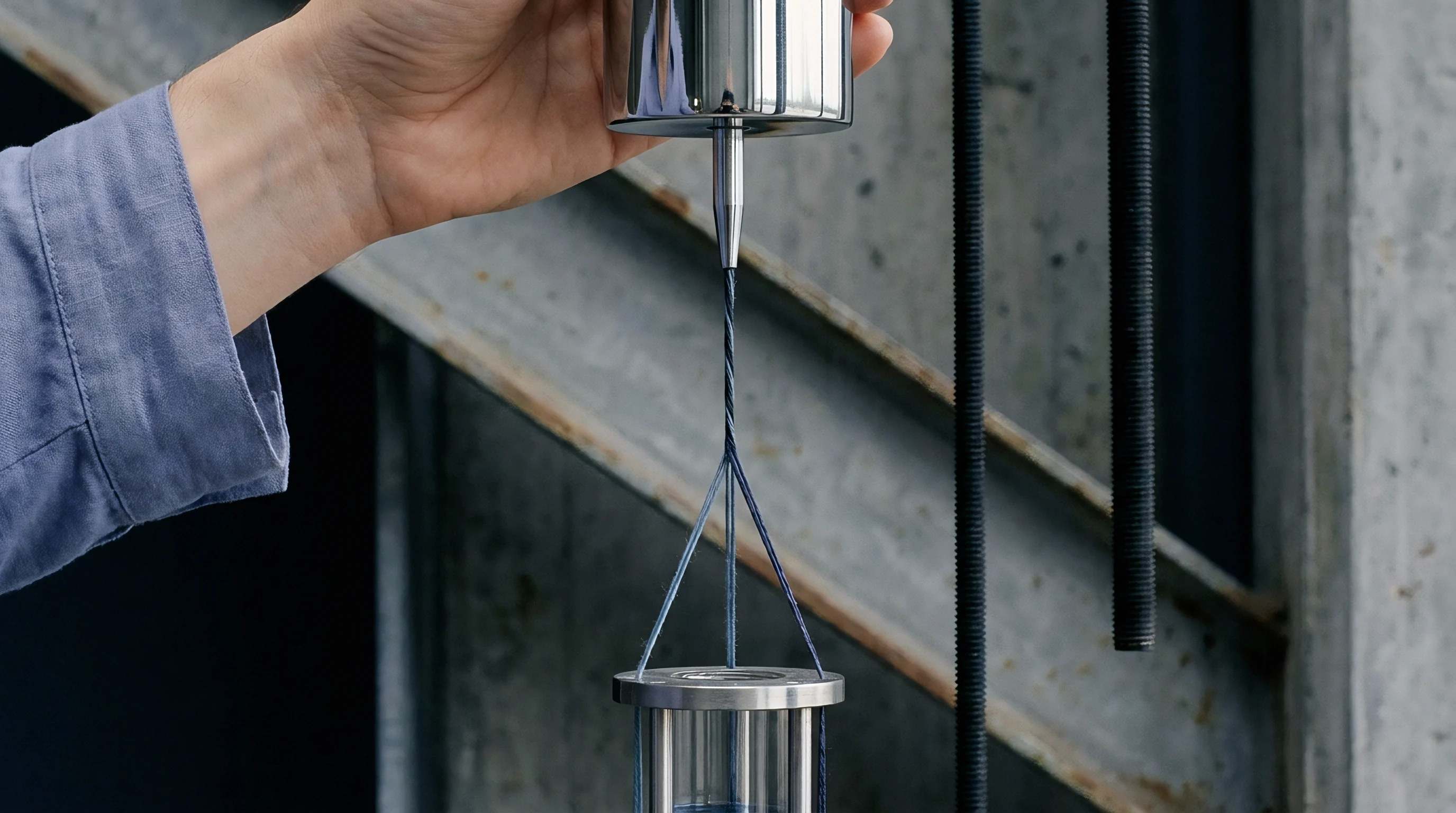
Single-fiber tensile testing executed according to ASTM C1557 demonstrates the quantitative loss of load-bearing capacity associated with elevated microfibril angles. Standard line flax elementary fibers with an MFA of nine degrees exhibit mean tensile tenacities ranging from forty-five to sixty-five centinewtons per tex, accompanied by an axial Young’s modulus exceeding fifty-five gigapascals. When the microfibril angle expands to sixteen degrees, single-fiber tenacity drops to twenty-two to thirty-two centinewtons per tex, and Young’s modulus collapses to thirty gigapascals.
Under tension, elementary fibers slip prematurely past one another.
The supporting pectin matrix fails before the cellulose chains break.
This strength loss follows classical anisotropic structural models, such as the Cox-Krenchel shear-lag theory adapted for plant cell walls. Axial modulus scales approximately with the fourth power of the cosine of the microfibril angle, so a small increase in orientation angle produces a disproportionately large decay in structural stiffness. Consequently, climate-affected flax lots cannot withstand the high mechanical tensions applied during industrial yarn preparation and wet spinning.

Bundle Mechanics and Inter-Fiber Slip Thresholds
In technical fiber bundles, tensile failure rarely occurs via the simultaneous breakage of all elementary fibers. Instead, failure initiates at localized weak points where microfibril misorientation is highest or where inter-fiber cohesion falters. Elevated microfibril angles increase the lateral strain ratio of the fiber under axial tension, an effect driven by Poisson’s ratio expansion in helical structures.
As the fiber elongates, it contracts laterally to a much greater extent than normal flax.
This pronounced lateral contraction breaks the adhesive bonds holding the middle lamella to adjacent elementary fibers, cracking it open long before the ultimate tensile capacity of the cellulose microfibrils is reached. Elementary fibers slip past one another prematurely, transforming what should be a coherent structural bundle into an unbonded group of sliding filaments. Inter-fiber slip thresholds drop by fifty percent in heat-damaged flax stock.
To qualify incoming line flax lots suspected of climate-induced structural damage, laboratory technicians carry out a rigorous physical bench qualification sequence:
- Sample selection of twenty intact long line flax slivers pulled at equal intervals across the master bale lot.
- Conditioning of test slivers for twenty-four hours at twenty degrees Celsius and sixty-five percent relative humidity per ISO 139 standards.
- Measurement of linear mass density in tex for each test specimen using an analytical micro-balance.
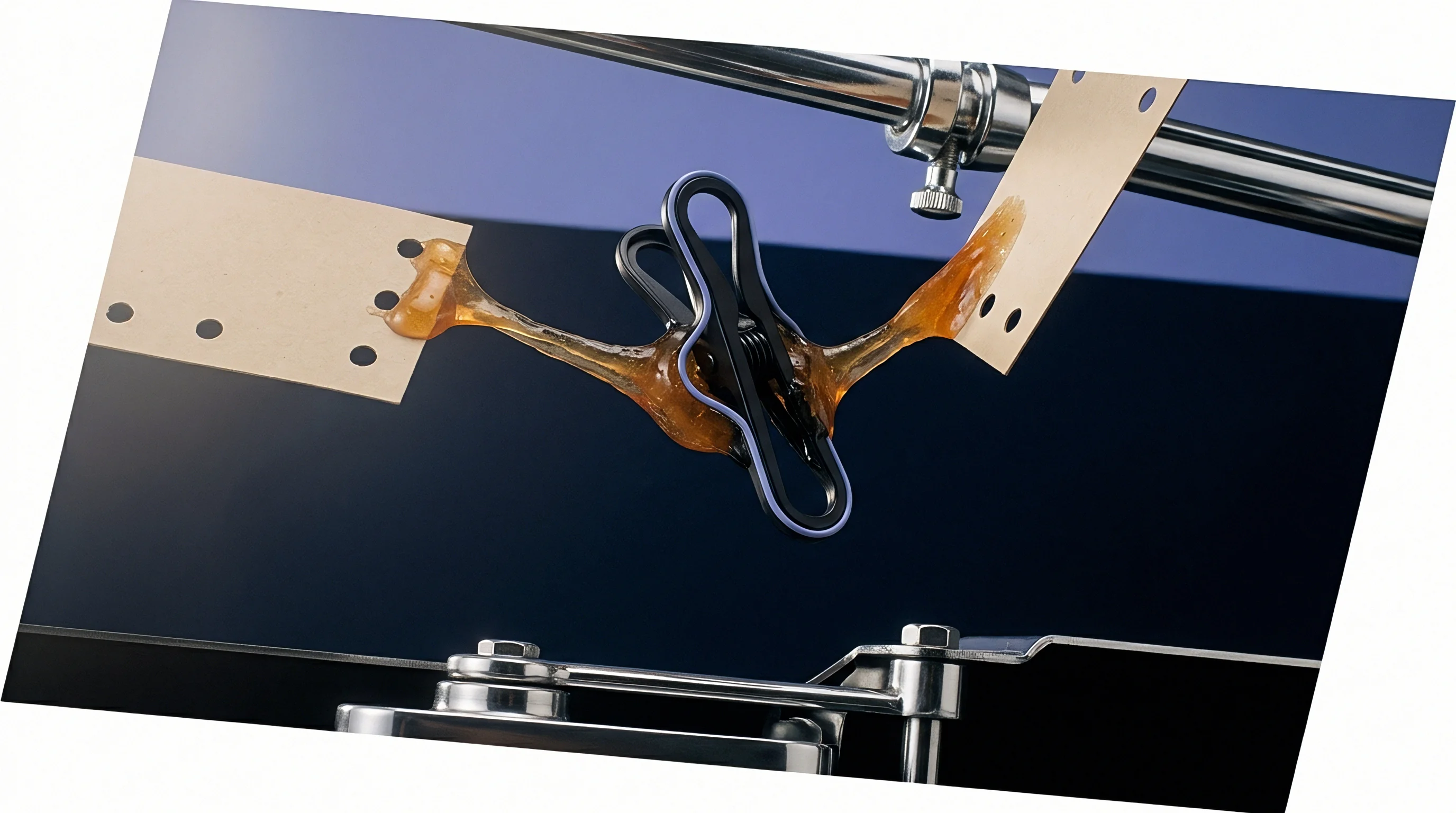
- Mounting single elementary fibers onto slotted cardboards using low-shrinkage epoxy resin with a gauge length set precisely to ten millimeters.
- Executing tensile testing on a universal testing frame at a constant crosshead speed of one millimeter per minute until complete fiber break.
- Calculating axial Young’s modulus across the linear viscoelastic strain region between zero point two percent and zero point five percent strain.
- Determining mean bundle tenacity and work-to-rupture values across fifty successful single-fiber breaks per lot.
Tenacity values dropping below thirty-five centinewtons per tex combined with work-to-rupture values exceeding zero point eight Joules per gram confirm severe structural orientation breakdown. When a spinning mill attempts to process such flax without altering drafting settings, the commercial result is severe yarn mass irregularity, extreme hairiness, and unacceptably high end-break rates on the spinning frame.
The financial consequence of accepting unvetted high-MFA line flax is clear: every ten percent drop in single-fiber tenacity below specification increases wet-spinning frame end breaks by three hundred percent, driving spinning room operating costs up by forty-two cents per kilogram of spun yarn.

Grist
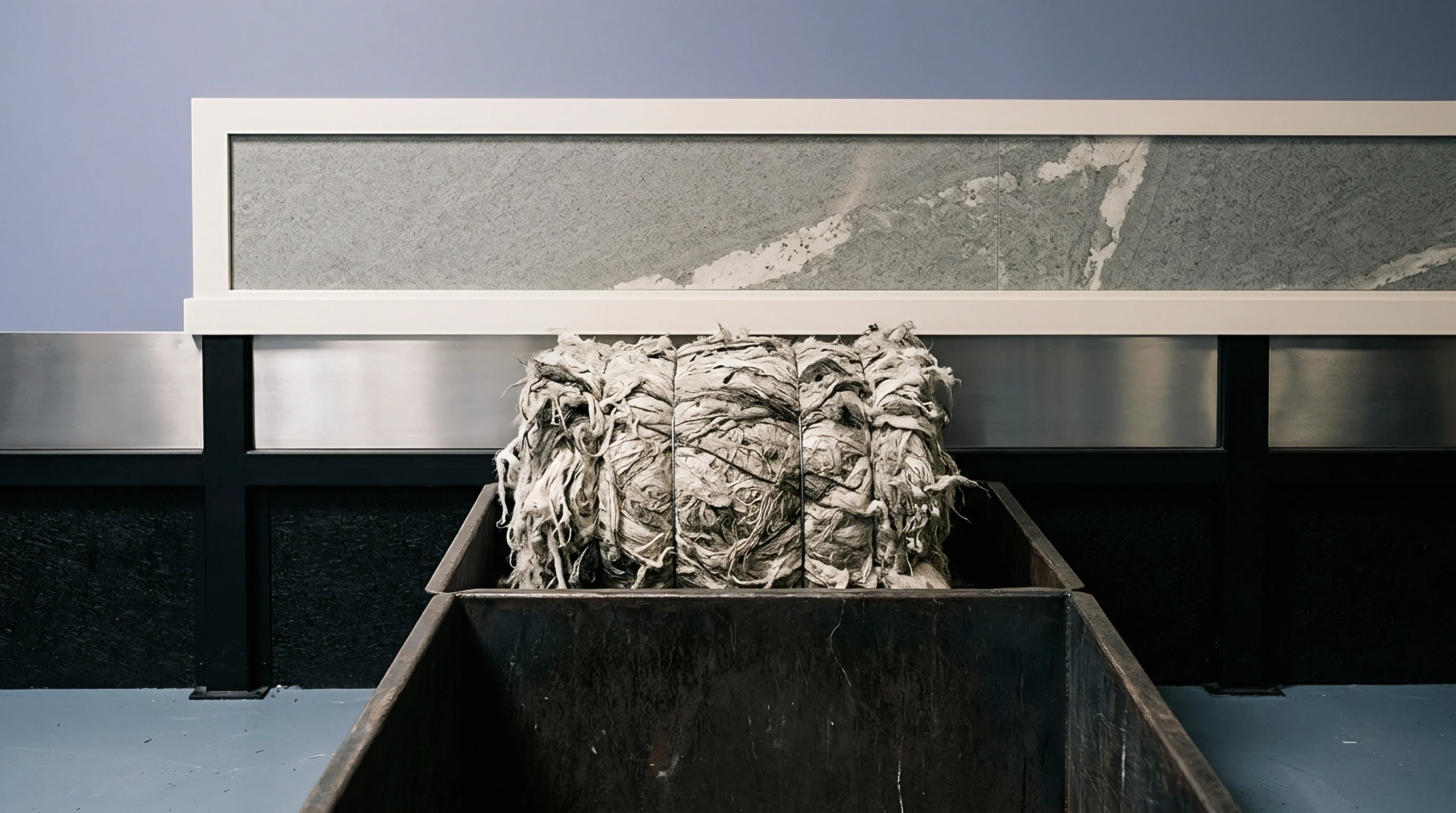
The transformation of scutched line flax into fine-count spun yarn relies entirely on the comb-and-draft process carried out in the hackling mill. Hackling cleans, straightens, and splits technical fiber bundles into uniform, fine slivers while removing short, knotted fibers as tow. Standard line flax with tight S2 microfibril angles possesses high flexural rigidity and longitudinal coherence, allowing hackling pins to split bundles along natural middle lamella divisions without snapping long fibers.
Hackling yields for premium line flax consistently reach sixty-four to sixty-eight percent long line fiber relative to incoming raw stock weight.
Climate-affected flax with wide microfibril angles behaves disastrously inside the hackling machine. The expanded microfibril helix lowers transverse shear strength and increases fiber brittleness under high-velocity mechanical impact. As hackling combs strike the fiber strands, misaligned elementary fibers fracture transversely across kink bands and luminal crease defects.
Instead of splitting cleanly into fine, parallel long-line slivers, the fibers snap into short fragments. Hackling yield collapses to forty-six to fifty-two percent long line fiber, while short tow generation swells proportionally.

Hackling Room Combing Yield and Tow Generation
The economic impact of reduced hackling yield spreads through the entire spinning cost structure. Scutched line flax purchased at three euros and eighty cents per kilogram yields less long line fiber when microfibril orientation is compromised, dramatically raising the effective raw material cost of the hackled sliver. The extra tow generated during processing commands a market value less than thirty percent of long line fiber, preventing the mill from recovering its purchasing expenditure.
| Raw Fiber MFA Category | Hackling Long Line Yield (%) | Effective Sliver Cost (€/kg) | Maximum Spinnable Count (Lea) | Wet Spinning End Breaks per 1,000 Spindle Hours |
|---|---|---|---|---|
| Optimal MFA (8.0° – 10.0°) | 67.4% | 5.64 | 60 Lea (Nm 100) | 18 |
| Moderate MFA Shift (10.1° – 13.0°) | 59.1% | 6.43 | 40 Lea (Nm 67) | 42 |
| Severe MFA Shift (13.1° – 16.0°) | 51.8% | 7.34 | 25 Lea (Nm 42) | 115 |
| Extreme MFA Shift (> 16.0°) | 44.2% | 8.60 | 14 Lea (Nm 23) | 280 |
As detailed in the yield table, severe microfibril angle expansion increases effective sliver cost by over thirty percent before the material even reaches a roving frame. The economic loss worsens because the resulting hackled sliver contains short, weak fibers that degrade downstream spinning performance.

Drafting Dynamics and Wet Spinning Trough Interactions
During fine-count wet spinning, roving passes through a hot water trough heated to sixty to seventy degrees Celsius prior to entering the drafting zone. This bath temporarily softens the pectin matrix in the middle lamella, allowing elementary fibers to draft smoothly past one another and align parallel to the yarn axis before twist is inserted. In healthy line flax, the high axial stiffness of the crystalline S2 layer allows the fiber to endure high draft ratios without breaking while the matrix is soft.
High-MFA fibers lose structural coherence inside the wet-spinning trough. Because misaligned crystalline microfibrils provide inadequate axial constraint when matrix pectins soften, hot water causes the S2 cell wall to swell laterally and lose its remaining tensile resistance. Under drafting tension, the roving splits untidily: rather than drafting fiber by fiber, entire bundle segments shear off together, forming dense slubs followed by thin, weak yarn places.
Standard wet-spinning trough temperatures of sixty-five degrees Celsius destroy drafting stability when applied to flax fibers carrying microfibril angles above fourteen degrees.
Spinners attempt to adjust machine parameters when handling climate-affected stock by employing specific mechanical adaptations:
- Trough temperature reduction drops the water temperature to forty-five degrees Celsius to limit matrix pectin softening and prevent catastrophic strand drafting collapse.
- Draft ratio reduction lowers total draft from twenty-four down to sixteen, sacrificing yarn fineness to preserve process continuity and prevent web breakage.
- Twist factor expansion increases the inserted twist metric multiplier by fifteen percent, increasing inter-fiber friction to compensate for lost individual fiber tenacity.
- Roller clamping pressure elevation increases nip pressure on the drafting rolls to prevent thick, un-split bundle slubs from slipping through without draft.
While these machine adaptations allow high-MFA flax to pass through the frame, they permanently limit the fine-count capability of the fiber lot. A lot specified to spin sixty Lea fine yarn achieves a maximum runnability limit of twenty-five Lea when microfibril angles expand to fifteen degrees. The spinner produces a coarse, heavy yarn from expensive line flax stock, destroying the profit margin of the order.
Standard purchase contracts incorporating the standard Bureau International pour la Standardisation des Fibres Artificielles clause permit buyers to reject line flax shipments or claim immediate price re-indexing whenever certified testing proves the maximum spinnable lea count drops more than fifteen percent below contracted targets due to structural fiber defects.

Audit
Managing the financial risks of climate-affected line flax requires a rigorous incoming inspection protocol that moves beyond traditional visual and hand-classing methods. Hand classing evaluates fiber length, color, softness, and retting state, but cannot detect subtle structural shifts in cell wall microfibril orientation. A lot may appear soft, well-retted, and clean while harbouring severe secondary wall disorientation that destroys wet-spinning performance.
Sourcing practices must establish analytical screening protocols directly linked to fiber physical chemistry before signing purchase contracts or releasing payment.
Birefringence screening paired with rapid automated WAXD testing provides a reliable, high-throughput gatekeeping mechanism. Sourcing offices can sample incoming bales, prepare standardized fiber cross-sections, and obtain precise microfibril angle and crystallinity data within two hours. Establishing strict technical cutoffs in master supply agreements prevents low-performing, heat-damaged flax lots from entering the spinning line.
Laboratory Screening and Birefringence Benchmarks
An effective laboratory verification protocol establishes mandatory acceptance thresholds for key structural parameters. The minimum acceptable Hermans orientation factor for fine-count line flax intended for forty Lea yarn and above sits at zero point nine zero. The corresponding mean microfibril angle must not exceed eleven point zero degrees, with an azimuthal peak FWHM under fifteen degrees.
Birefringence values must remain strictly above zero point zero five eight.
Standard laboratory testing reliably catches this microstructural shift.
Birefringence readings confirm the extent of internal structural decay.
When an incoming lot fails these structural benchmarks, the buyer possesses objective, non-negotiable data to initiate commercial re-grading. Rather than accepting the fiber as prime line flax, the shipment is re-classified into coarse tow or heavy-count blending stock. The purchase invoice re-indexes against prevailing commodity pricing for coarse fiber, protecting the buyer’s capital before material is released to the hackling floor.
Commercial Price Adjustments and Landed Yarn Costing
Calculating the true landed cost of yarn produced from climate-impacted line flax demands a full financial model that accounts for hackling yield decay, reduced frame efficiency, and lower market realization for coarse yarn counts. A raw fiber price discount that looks attractive on an offer sheet often fails to cover downstream operational losses incurred by processing structural defect fiber.
Consider a baseline scenario where prime line flax is purchased at four euros per kilogram, yielding sixty-five percent hackled line fiber and spinning successfully to fifty Lea yarn at an operational cost of one euro and twenty cents per kilogram. The raw material contribution to the finished yarn cost sits at six euros and fifteen cents per kilogram. When heat stress increases the microfibril angle to fifteen degrees, hackling yield drops to fifty percent, and maximum spinnable count drops to twenty-five Lea.
Even if the supplier offers a twenty percent raw material price discount, bringing raw fiber cost to three euros and twenty cents per kilogram, the reduced hackling yield immediately raises effective sliver cost to six euros and forty cents per kilogram. The coarse yarn sells at a lower market price, while higher end-breakage rates elevate frame operating costs to two euros per kilogram. Net production cost per kilogram of finished yarn expands by over twenty-two percent despite the initial discount on raw material.
As a result, the effective price per meter rises dramatically.
Buyers evaluate incoming lot offers by converting every structural microfibril metric into an equivalent landed yarn cost per woven meter before confirming mill production schedules. Purchase specification dossiers incorporate microfibril angle parameters directly, specifying maximum allowable azimuthal diffraction peak widths alongside standard moisture and staple length tolerances. Suppliers must submit certified WAXD diffraction reports issued by independent accredited laboratories for every twenty-metric-ton shipping lot.
When climate anomalies create widespread microfibril disorientation across traditional growing regions, purchasing operations shift sourcing allocations to alternative latitude bands or alter yarn construction formulas before mill floor efficiency suffers.