Cyclic Tensile Stress Decay in Wet Spun Flax Sized Yarns
Dynamic tension decay in sized wet spun flax yarns is minimized by controlling size penetration to 25 percent and keeping dynamic strain amplitudes below 1.2 percent.

Relaxation
Wet spun flax yarn has a hierarchical structure marked by high core crystallinity, long ultimate fibres bound in a pectinous middle lamella, and a steep fibrillar spiral angle to the yarn axis. Under cyclic tensile stress in high-speed weaving, it behaves viscoelastically rather than as a pure elastic body, combining time-dependent relaxation with irreversible structural shifts. Repeated stress peaks below static ultimate tensile strength cause micro-fibrillar slip in crystalline cellulosic domains and progressively rupture the inter-fibre matrix.
Sized wet spun linen loses peak tension rapidly over the first hundred cycles before settling into a logarithmic decay phase. Tracking this decay curve predicts warp end breaks, keeps shed geometry stable, and guards against dynamic tension loss over extended weaving runs.
Flax’s viscoelastic behavior grows out of interactions between crystalline cellulose microfibrils and the amorphous hemicellulose-pectin matrix. During wet spinning, technical flax fibres are drawn under water jets so bundles slip and align densely before twisting. This gives wet spun flax higher tenacity and lower ultimate elongation than dry spun yarn.
Under dynamic tension, that low compliance shifts strain directly to intermolecular hydrogen bonds in the amorphous regions. These bonds break during the loading half-cycle, and short dwell times on the unload prevent full elastic recovery, forcing them to re-form in displaced alignments. Microscopically, this accumulates permanent set, showing up macroscopically as yarn elongation and falling tension under fixed displacement boundaries.
Sizing alters this tension decay envelope by coating outer technical fibres and filling inter-fibre voids. A film of modified corn starch, polyvinyl alcohol, or carboxymethyl cellulose forms an external jacket that holds surface fibres and transfers shear across outer yarn layers. Under cyclic extension, however, the size film suffers fatigue and develops micro-cracks along shear planes.
As this shell degrades, load falls back onto the raw flax core, speeding up internal friction and structural breakdown. Stress decay rates track strain amplitude, cycle frequency, ambient humidity, and the glass transition temperature of the size recipe.
Flax yarns under dynamic strain amplitudes above 1.2 percent show exponential viscoelastic stress loss over the initial 200 tension cycles.
Weaving performance depends on the decay constant calculated from normalized tension-time curves under continuous cyclic movement. Air-jet and rapier shedding mechanisms at high loom speeds impose tension peaks above 2.5 centinewtons per tex at 400 to 700 cycles per minute. When yarn tension drops past a critical point, slack ends form in the warp, leading to shedding errors, mispicks, and frequent loom stops.
Controlling this decay takes a precise balance between yarn twist factors, size solids concentration, pickup percentage, and warp beam tension across both slasher and weaving shed.
Viscoelastic Strain Accommodation in Bast Fibre Architectures
The layout of elementary cells in technical flax bundles distributes dynamic strain unevenly. Individual cells, 20 to 40 millimetres long and 15 to 25 micrometres across, sit in a soft pectinaceous matrix. Tensile loads first pull against microfibrils spiraled at roughly 10 degrees to the fibre axis.
As this angle narrows under stress, the surrounding matrix undergoes heavy internal shear. Repeated cycling permanently displaces matrix material, cutting its ability to store elastic strain energy and forcing higher proportional loads onto brittle cell walls.
Moisture heavily influences this response. Flax is strongly hygroscopic, taking up to 12 percent moisture by weight under standard testing conditions. Water plasticizes the amorphous hemicellulose network, breaking secondary bonds and lowering the yield stress of the middle lamella.
High regain speeds up tension decay under cyclic stress, whereas dry conditions cause brittle cell wall fractures at lower cycle counts. Sizing must preserve an optimal moisture balance in the core while forming a cross-linked surface shell that resists humidity softening.

Sizing Film Fatigue and Inter-Fibre Shear Failure
Film formation around wet spun flax depends on controlled penetration depth. Total encapsulation with no core penetration leaves inner fibres free to slide, accelerating structural breakdown. Conversely, saturating the core produces a rigid, brittle composite that fails rapidly under flexural fatigue.
Dynamic testing shows that size formulations penetrating 20 to 30 percent of the yarn radius yield the lowest tension decay. This zone anchors outer technical fibres while keeping the core flexible enough to handle shedding strain without shattering the size coat.
High-viscosity modified starches blended with synthetic softeners improve film compliance under dynamic stress. Synthetic polymers like polyvinyl alcohol boost elongation, letting the size shell flex with the yarn as the shed opens and closes. If film cohesion fails, loose fluff builds up in the reed and harness assemblies, increasing local friction and accelerating stress decay.
| Yarn Count (Nm) | Size Type | Add-On Level (%) | Initial Tension (cN/tex) | Tension Decay at 1000 Cycles (%) | Residual Tenacity (cN/tex) |
|---|---|---|---|---|---|
| Nm 26 | Native Starch | 10.5 | 3.2 | 24.8 | 18.4 |
| Nm 26 | Modified Starch / PVA | 11.0 | 3.2 | 14.2 | 22.1 |
| Nm 39 | Modified Starch / PVA | 12.5 | 3.5 | 16.8 | 20.5 |
| Nm 52 | CMC / PVA Blend | 14.0 | 3.8 | 19.1 | 17.8 |
Decay measurements across yarn counts show that finer yarns lose a higher proportion of stress under identical strain. Finer yarns have fewer elementary fibres per cross-section, so individual fibre displacements hit overall strength harder than in coarse yarns. Consequently, sizing add-on rates must increase as yarn counts get finer to resist dynamic shed fatigue.
Sized wet spun flax shows distinct phases of modulus change during dynamic testing. An initial drop in stiffness marks micro-fracturing of the size shell, followed by a linear decay phase corresponding to inter-fibre slip in the core. Modern looms use tension sensor arrays on the backrest roller to track stress decay live, adjusting beam let-off automatically when warp tension strays outside target tolerances.
Ignoring cyclic relaxation results in poor cloth cover, uneven pick density, and weaker finished linen.
It remains unclear how fast middle-lamella pectins realign at shedding speeds above 800 cycles per minute.


Rheology
Sizing polymers on wet spun flax act as structural adhesives that must balance strength, flexibility, adhesion, and desizability. Solution rheology controls how the size penetrates the dense yarn structure in the size box. Because wet drafting uses high tension, wet spun linen is exceptionally compact, restricting capillary uptake compared to dry spun flax or ring spun cotton.
Keeping film application uniform across thousands of warp meters requires tight control of viscosity through temperature, solids concentration, and shear rate.
Modified starches ~ oxidized, esterified, and etherified ~ form the basis of industrial sizing blends. Unmodified native starches undergo thermal retrogradation, setting into brittle gels that crack under warp strain. Chemical modification lowers gelatinization temperatures, stabilizes viscosity against shear, and prevents retrogradation.
Blending these with polyvinyl alcohol adds flexible synthetic segments that cushion impact forces and slow stress decay in shed simulations.
Size box temperature governs polymer mobility and yarn wetting kinetics. Running between 85 and 95 degrees Celsius keeps viscosity low, helping displace air trapped between technical flax fibres. Below 80 degrees Celsius, viscosity climbs rapidly, leading to heavy surface coating, poor internal adhesion, yarn sticking on drying cylinders, and accelerated stress decay as brittle outer shells shatter during reed beat-up.
ISO 13934 testing shows that sized flax yarns losing over 18 percent dynamic tension lose up to one third of their abrasion resistance in the shed.
Waxes, softeners, and antistatic additives fine-tune film friction and mechanical behavior. Lubricants lower dynamic friction against drop wires, heddles, and reed blades. But excess lubricant lowers inter-fibre friction inside the core, causing early fibre slip under tension and actually accelerating stress decay.
Formulations generally keep lubricant under three percent of total dry solids weight.

Polymeric Film Adhesion and Rheological Viscosity Management
Structural stability under dynamic stress depends on the interface between sizing polymer and cellulosic flax. Bonding relies on hydrogen bonds between hydroxyl groups on cellulose chains and functional groups on the polymer backbone. Carboxymethyl cellulose adheres strongly to flax because its ionic carboxylate groups interact with the polar bast surface.
Strong adhesion prevents film delamination during rapid shedding, preserving reinforcement throughout warp processing.
Automated chemical dosing systems use rotational viscometers to maintain viscosity during sizing. Sizing mixtures are non-Newtonian and shear-thinning: as shear rises in the squeeze roll nip, viscosity drops, promoting even distribution across the yarn surface. Monitoring shear-dependent viscosity continuously prevents pickup variations when beam winding speeds change.
- Modified Starch Formulations yield high film strength and good biodegradability, but demand high cooking temperatures and tight retrogradation control to retain flexibility.
- Polyvinyl Alcohol Blends provide tough films with high elongation at break, resisting cyclic tension decay, though they increase effluent treatment loads during desizing.
- Carboxymethyl Cellulose Additives improve adhesive bonding to raw cellulose, lowering required add-on levels while keeping abrasion resistance high.
- Acrylic Co-Polymers form flexible, water-soluble films tailored for ultra-fine wet spun flax, penetrating without creating surface stiffness.
Moisture Transport Dynamics within Sized Flax Composites
Water evaporation on the drying cylinders fixes the distribution of polymer in and around the yarn. Rapid drying creates a steep moisture gradient, pulling size toward the surface and leaving the core unreinforced. Multi-zone drying ~ starting with moderate conductive heat before high-temperature cylinders ~ prevents migration defects, creating a consistent radial structure that endures cyclic tension without early cracking.
Re-moisturizing the warp sheet before beam winding restores equilibrium moisture content, stabilizing both fibre and size polymer. Dry flax is notoriously brittle; raising moisture to 8 to 10 percent before weaving restores micro-scale ductility, cutting stress decay and lowering warp breaks on the loom.
Sizing formulation balance determines performance; overly stiff polymers cause brittle surface shell failure under dynamic shedding strain.
Dynamics
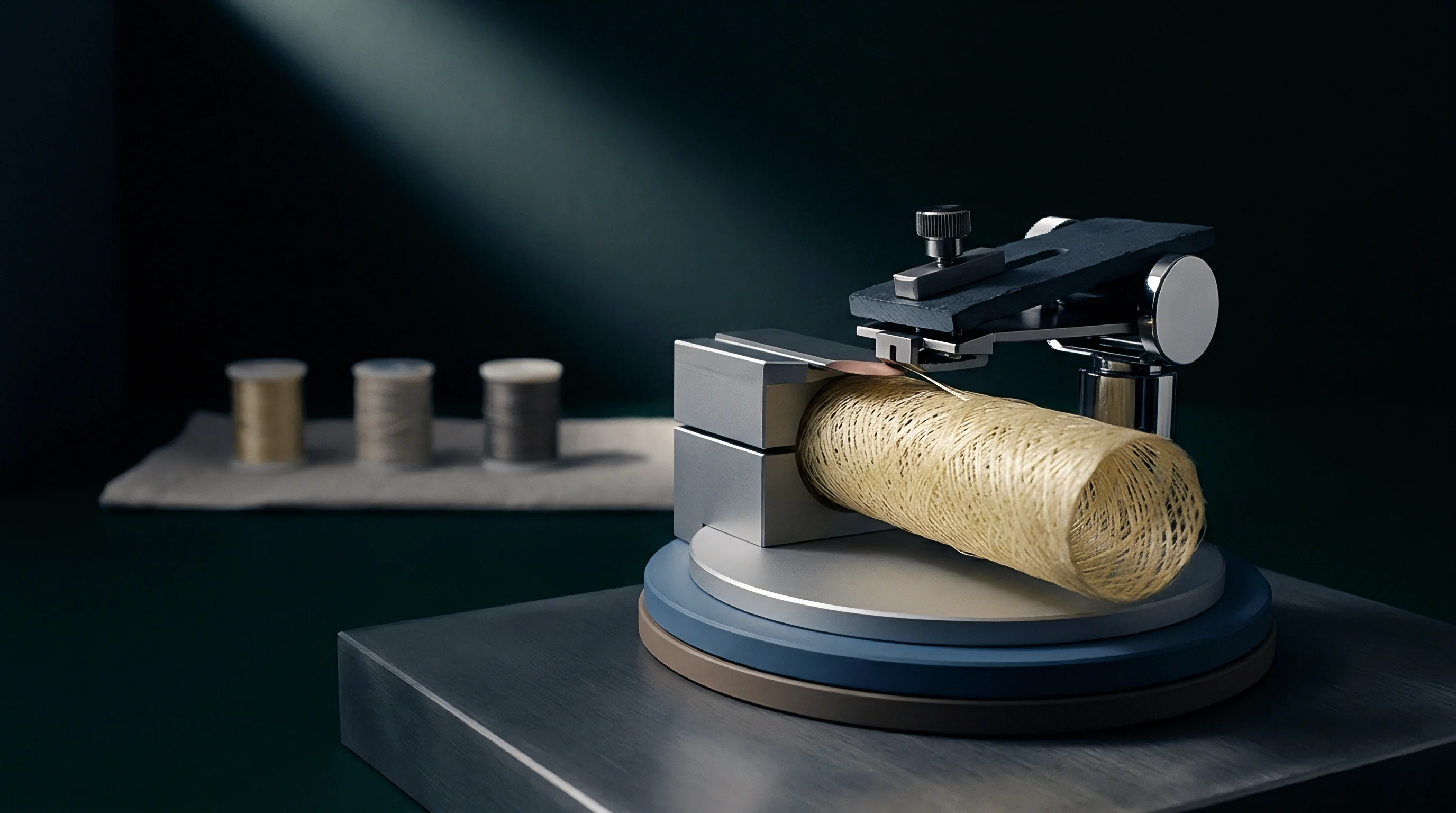
Shedding, beat-up, and warp let-off subject sized wet spun flax to complex cyclic stresses in the loom shed. On rapier and air-jet looms at high speeds, a warp end goes through 3,000 to 10,000 stress cycles between leaving the beam and reaching the cloth fell. Peak tension hits during shed opening, as geometric extension pulls warp threads apart, and during beat-up, when the reed drives filling yarn into the fell and sends shock waves back down the warp sheet.
Cycle amplitude and wave shape depend on shed geometry, harness timing, and backrest settings. Asymmetrical shedding ~ where top and bottom lines experience unequal tension ~ focuses fatigue on specific yarns, speeding local stress decay. Mechanical backrests with spring dampers or active electronic actuators absorb impact loads as the shed opens, smoothing tension spikes and reducing cumulative breakdown in the flax core.
Structural damage accumulates along the warp path. Between backrest roller and drop wires, initial strain shakes out loose crimp and micro-cracks the size film. As yarn passes through heddle eyes, friction against polished steel and repeated bending drive rapid inter-fibre shear.
Yarns with poor fatigue resistance break down severely here, forming fuzz balls, entangling warps, and dropping loom efficiency.
Warp tension logs show that active backrest damping reduces peak shedding stress spikes on wet spun flax by 22 percent compared to rigid backrests.
Linen weaving creates high beat-up resistance because wet spun flax compresses poorly and builds stiff fabrics. Dense constructions require heavy beat-up forces, sending compressive and tensile shock waves back through the warp. If stress decay softens the yarn’s dynamic modulus in the harness, beat-up causes excessive elongation, resulting in fell drift, reed marks, and uneven pick spacing.

Kinematic Tension Profiling across Shedding Cycles
High-speed strain gauge transducers map dynamic tension changes across the shedding cycle. Peak warp tension usually hits at 180 degrees of main shaft rotation, when the shed is wide open. Minimum tension drops near 0 degrees at shed cross-over.
Wet spun flax displays a distinct phase lag between geometric strain input and dynamic tension response ~ a trademark of non-linear viscoelastic relaxation.
Thousands of load-unload cycles cause structural hysteresis loops to drift. The strain axis shifts toward permanent elongation while peak tension at full shed opening decreases. Sizing needs to minimize this hysteresis drift, stabilizing yarn structure so static let-off settings stay accurate through the full beam.
- Warp Beam Let-Off Phase sets baseline static tension, requiring continuous torque adjustments as the beam diameter shrinks to keep strain input uniform.
- Backrest Roller Transition Zone dampens mechanical vibrations from harness motion, smoothing tension spikes before warps reach drop wires.
- Drop Wire and Heddle Passage subjects warps to simultaneous bending, abrasion, and tension peaks, testing size film toughness and smoothness.
- Shed Opening and Cross-over applies maximum dynamic strain, driving inter-fibre slip and triggering primary stress relaxation in the flax core.
- Reed Beat-up Peak Impact delivers transient axial compressive and tensile forces, governing fabric density stability and cloth fell position.

Inter-Fibre Friction and Structural Hysteresis under Dynamic Extension
Internal friction dictates how technical fibre bundles slide once sizing begins to fail. While high internal friction helps hold the yarn together, continuous shearing generates localized heat, accelerating thermal breakdown of natural waxes and synthetic size components. Controlled lubrication during sizing provides stress relief without encouraging uncontrolled slip.
Hysteresis loss per cycle measures energy lost to heat and structural damage. Calculating cumulative energy dissipation over extended cycling lets engineers predict yarn survival under aggressive loom speeds. Size recipes that dissipate energy without causing permanent dimensional change offer the best performance on high-speed looms.
Uncontrolled shedding amplitude combined with a rigid backrest quickly breaks down size films and drives warp strain drift.
Bench
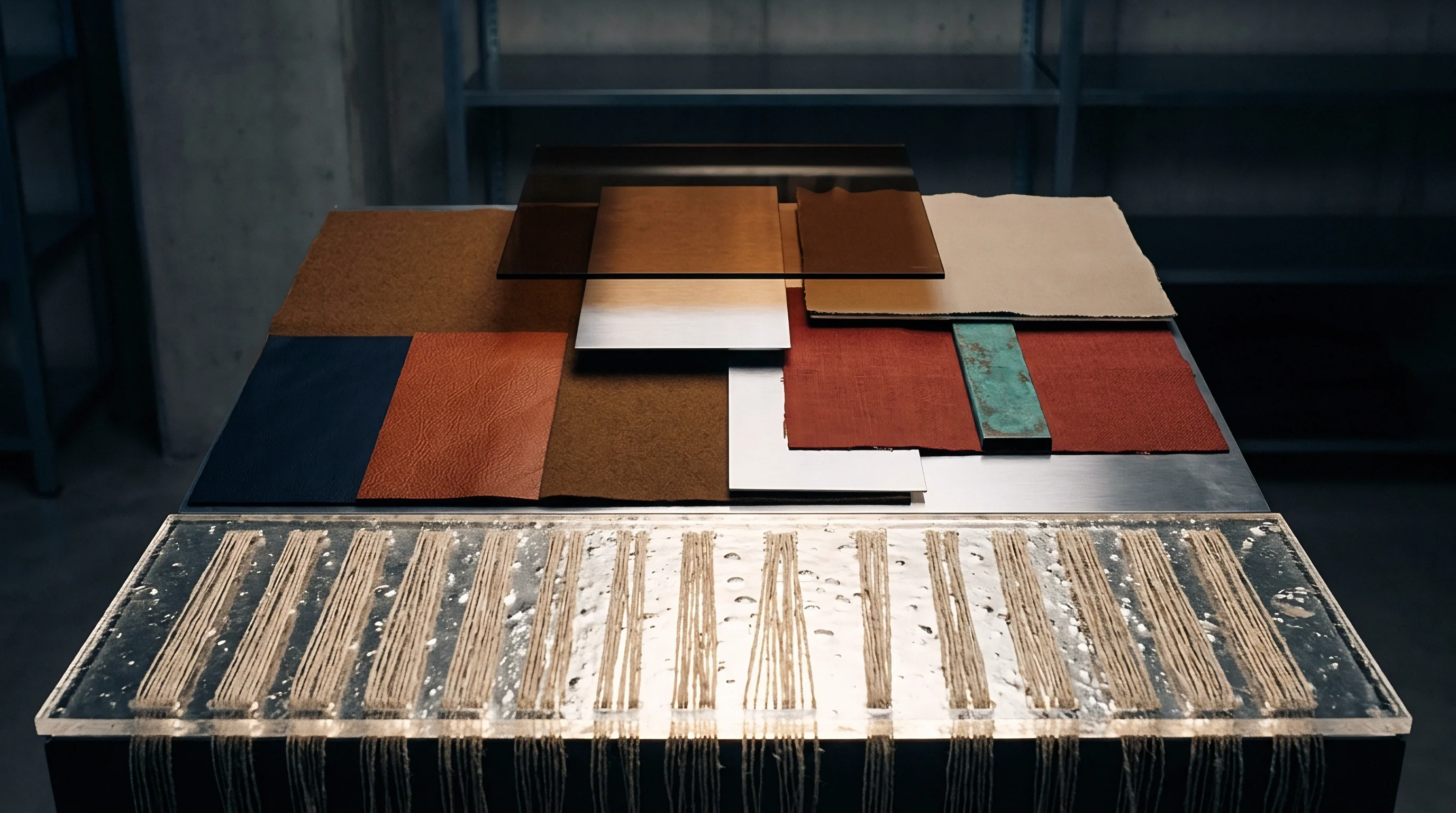
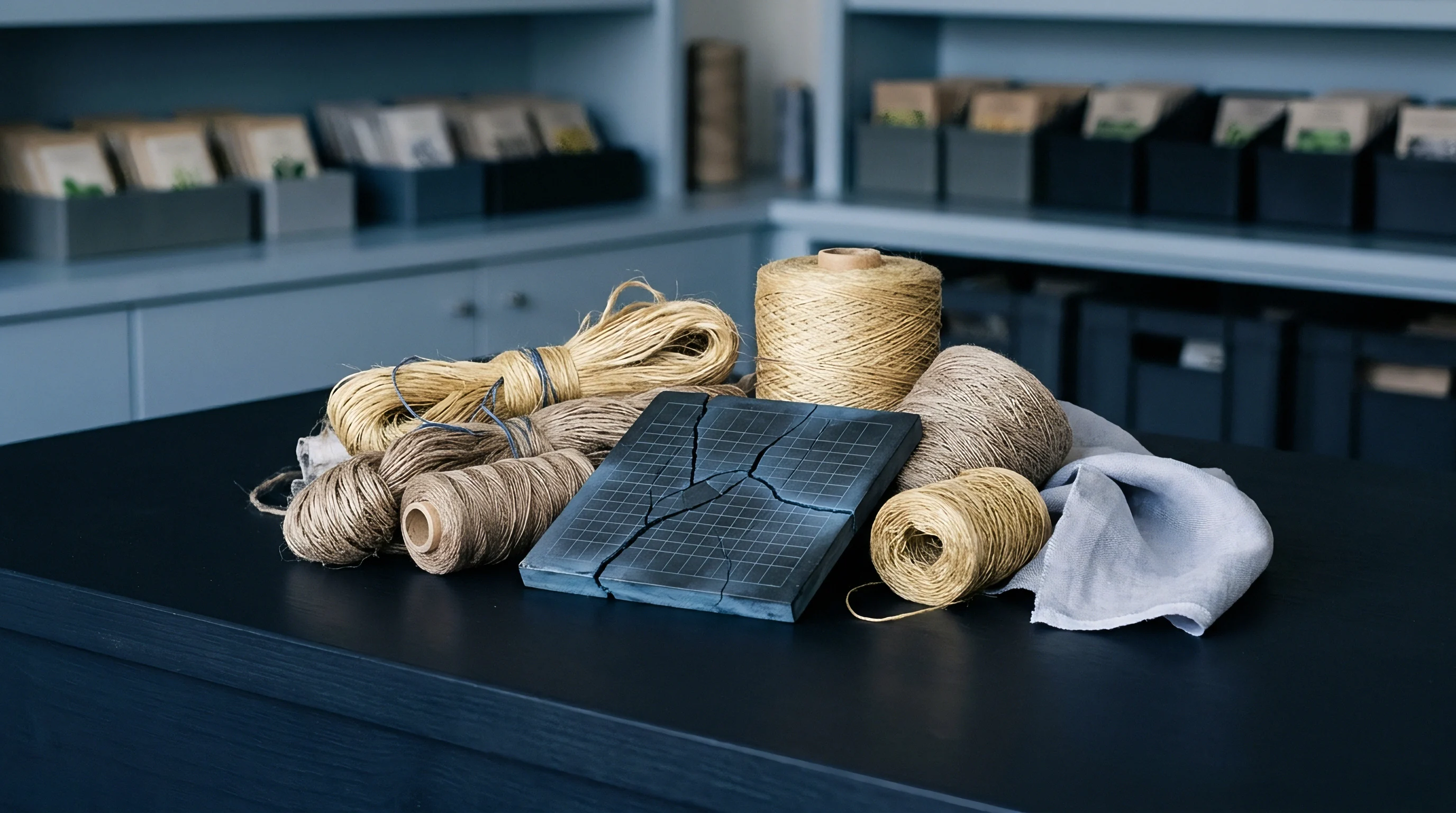
Testing cyclic stress decay in sized wet spun flax requires dynamic bench protocols that replicate loom conditions far better than static single-strand testing. Standard ISO 13934 break tests record ultimate force and elongation at break, but miss viscoelastic decay, size film fatigue thresholds, and accumulated permanent set. Evaluation requires dynamic mechanical analyzers or specialized cyclic extension testers that apply high-frequency sinusoidal strain while logging relaxation curves.
Standard test protocols require preconditioning samples at 20 degrees Celsius and 65 percent relative humidity for 24 hours. Testing parameters reflect real shedding conditions: a 500 millimetre gauge length, cyclic extension amplitudes from 0.8 to 2.0 percent, frequencies between 5 and 10 Hertz, and runs from 1,000 to 10,000 cycles. Tension sensors need sampling rates above 1,000 Hertz to capture transient tension peaks and force-displacement hysteresis loops during fast load reversals.
Dynamic bench tests yield initial peak tension, residual tension at set intervals, total permanent set, dynamic storage and loss moduli, and structural energy loss per cycle. Comparing these values across formulations, add-on levels, and yarn counts gives clear criteria for qualifying sizing recipes before committing to full beam runs.
Cap specifications keeping maximum dynamic stress decay under 15 percent at 5,000 cycles prevent warp tension instability in dense linen weaves.
Bench testing also evaluates post-fatigue residual strength. After cyclic loading, remaining strands are pulled to destruction to measure lost capacity. Yarns suffering severe dynamic stress decay show matching drops in residual tenacity due to micro-cracked size films and inter-fibre slip in the core.
Qualified recipes keep residual tenacity loss below ten percent after 5,000 standard cycles.
Dynamic Strain Testing Methods and Hysteresis Measurement
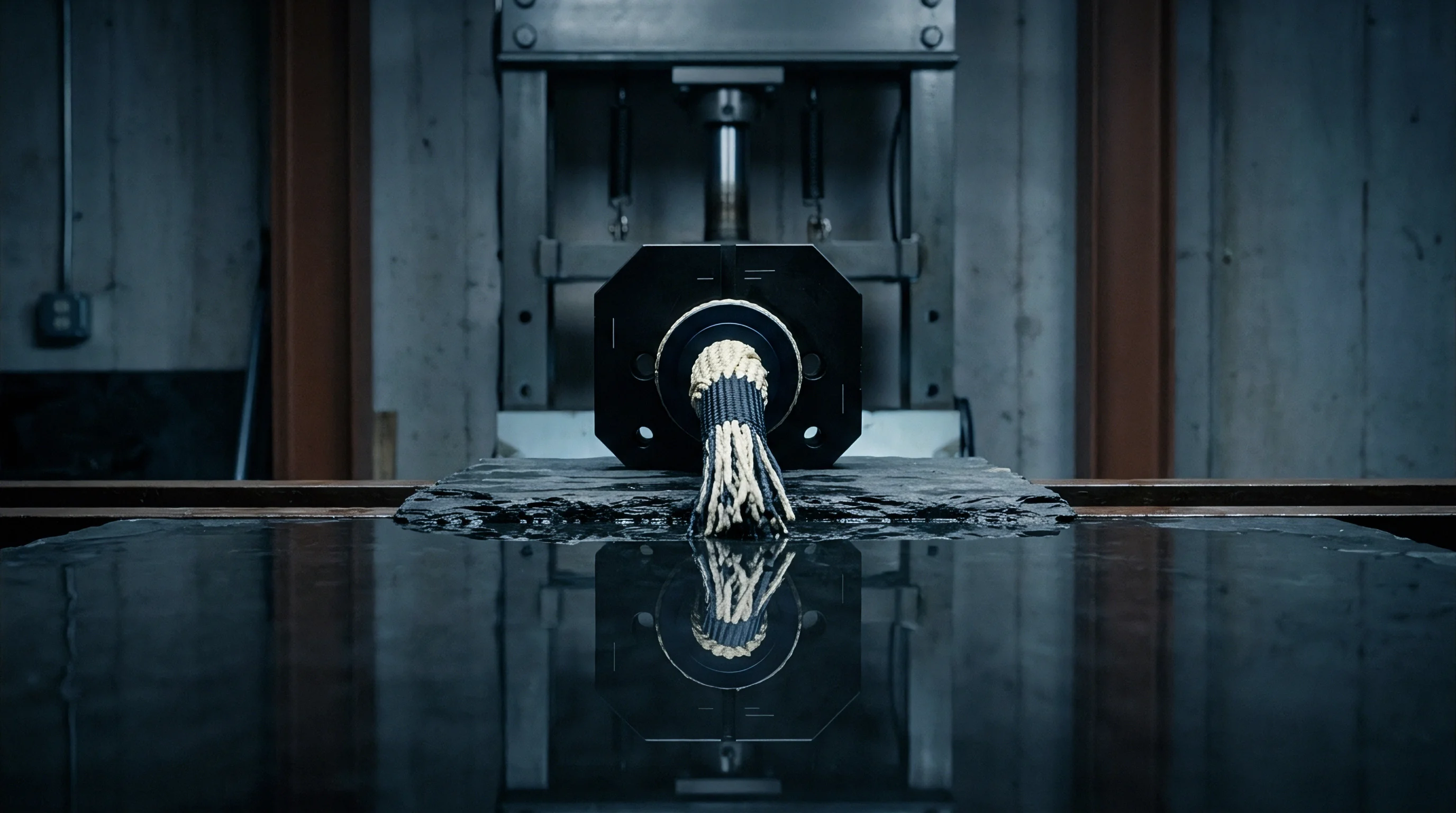
Dynamic mechanical analysis measures complex modulus under controlled thermal and strain conditions. The real component (storage modulus) reflects elastic energy stored during shed opening and returned on closure. The imaginary component (loss modulus) tracks energy dissipated through internal friction, size cracking, and viscoelastic flow.
Their ratio, tan delta, measures structural damping and internal fatigue.
Hysteresis loops are calculated by integrating the force-displacement area across individual cycles. Wide loops signal heavy energy loss, typical of poorly sized yarns suffering internal damage. Well-sized yarns stabilize quickly into narrow, consistent loops, confirming elastic recovery and durable film support.
| Standard Code | Scope and Subject | Key Measurement Parameter | Standard Test Condition |
|---|---|---|---|
| ISO 2062 | Single End Tensile Break | Breaking Force and Elongation | 20°C / 65% RH, 500mm gauge |
| ISO 13934-1 | Fabric Strip Tensile Strength | Maximum Force and Strip Extension | Standard atmosphere, constant rate |
| ASTM D2256 | Tensile Properties by Single-Strand | Tenacity, Initial Modulus | Option A, straight unknot strand |
| ISO 3374 | Mass per Unit Area Analysis | Fabric and Yarn Linear Density | Conditioned test specimens |
Correlating lab test data with shed-floor break rates establishes threshold limits for quality assurance. Laboratory metrics must prove reproducible across sample lots, ruling out variance from moisture shifts or improper jaw clamping during testing.
Microstructural Fatigue Diagnostics and Residual Strength Analysis
Scanning electron microscopy reveals how size films break down after dynamic testing. Micrographs show whether failure came from adhesive debonding at the fibre interface or cohesive shear fracture within the size itself. Cohesive failure suggests strong bonding but poor film ductility, calling for more plasticizer or synthetic polymer.
Adhesive failure points to improper size cooking, wrong application temperatures, or residual natural waxes on unbleached flax.
Structural fatigue resistance can be screened by measuring tension relaxation over a ten-minute dwell following 1,000 dynamic cycles. Force loss during static relaxation provides a quick indicator of long-term viscoelastic flow in the core bundle, letting lab technicians screen experimental blends without full-length test runs.
Dynamic bench testing sets quantitative baselines, taking guesswork out of size formulation and quality verification.

Qualification
Qualification protocols translate laboratory test data into operational shedding guarantees for commercial linen production. Relying solely on yarn count and static break sheets carries financial risk when ordering custom wet spun yarns for high-density weaves. A proper qualification framework sets strict acceptance limits for stress decay, size add-on stability, friction coefficients, and residual elongation.
Catching and rejecting deficient yarn beams before loom setup protects mill schedules and profit margins.
Qualification starts with incoming yarn verification. Samples drawn from creel bobbins across spinning lots undergo trial sizing on laboratory slashers. Sized yarn is evaluated for add-on percentage using oven-dry mass balance or chemical desizing.
Add-on variation must stay within plus or minus 0.8 percent across the warp sheet to maintain uniform tension during shedding.
Stress decay qualification subjects samples to 5,000 continuous extension cycles at 1.5 percent strain amplitude. Standard criteria require average dynamic tension decay to stay at or below 16.0 percent of initial peak tension, with post-test residual tenacity retaining at least 85 percent of original breaking strength. Fluff generation during abrasion testing must remain under 15 milligrams per 100 meters to avoid harness clogging.
Contracts setting explicit caps on dynamic stress decay resolve raw material liability disputes before beams reach the loom.
Purchasing contracts need to spell out exact test methods, preconditioning rules, strain profiles, and sampling sizes for lot acceptance. Vague claims about acceptable quality leave buyers exposed to excuses about crop variation or spinning lot differences. Writing legally binding technical criteria into purchasing agreements enforces accountability and establishes clear grounds for lot rejections or price adjustments.
Industrial Acceptance Thresholds for Sized Flax Batches
Establishing quality limits requires clear acceptable quality limits and lot tolerance defect thresholds for dynamic metrics. A typical protocol tests ten random bobbin samples per 1,000 kilogram spinning lot. If more than one sample exceeds maximum stress decay limits, the lot goes into quarantine for secondary auditing.
Repeated failures require immediate adjustments to size recipes or supplier disqualification.
Verification paperwork sent with qualified warp beams should include full process logs: size box temperature charts, squeeze roll pressures, drying cylinder surface temperatures, moisture regain percentages, and beam hardness profiles. Hardness must be uniform across the beam width; soft edges or central bulges create uneven path lengths, triggering localized tension spikes and rapid cyclic fatigue in the shed.
Warp qualification procedures must be formalized through structured inspection steps prior to releasing beams for production weaving:
- Raw Yarn Physical Verification checks yarn count uniformity, twist multiplier, static breaking force, and moisture regain against raw material purchase specifications.
- Laboratory Sizing Trial Execution applies candidate sizing formulations under controlled speed, temperature, and squeeze pressure conditions to achieve target add-on levels.
- Add-On and Penetration Audit measures size dry solids pickup via desizing extraction and checks cross-sectional penetration depth under optical microscopy.
- Dynamic Fatigue Bench Testing runs sample sets through 5,000 cyclic extension cycles, recording peak tension decay, hysteresis energy loss, and total permanent set.
- Abrasion and Dusting Resistance Measurement quantifies loose fiber shed rates and size film shedding under forced metallic abrasion contact.
- Dossier Sign-off and Shed Release certifies that warp lot parameters meet contractual specifications, authorizing full-scale beam production and loom loading.
Contractual Specification Clauses and Penalty Parameters
Linen purchasing agreements need explicit performance clauses linking yarn properties to financial remedies. These clauses set clear limits on stress decay and define penalties or replacement obligations if warp beams fail shed benchmarks. Clear technical thresholds prevent prolonged disputes when yarn defects cause excessive loom downtime.
Contracts should keep quality claims valid through the full weaving run of a qualified lot. If latent sizing defects ~ like uneven retrogradation or micro-gel contamination ~ appear mid-run, the supplier remains liable for documented loom downtime and damaged fabric credits. Clear terms protect mills from paying for poor yarn preparation.
Formal qualification turns subjective quality claims into verifiable metrics that safeguard production margins.
Arithmetic
Translating yarn performance and loom variables into landed fabric costs requires accounting for efficiency loss, warp breakage rates, and sizing expenses. Dynamic stress decay directly affects loom efficiency by driving up warp breaks and forcing speed reductions. Cutting tension decay by five percent can boost shed efficiency by several percentage points, noticeably shifting the economics of high-speed weaving runs.
Calculating true cost per meter requires factoring in yarn raw material, sizing chemicals, preparation labor, setup fees, and hourly machine rates. Loom capacity is bought in hours and sold in finished meters. If high tension decay forces a loom down from 600 picks per minute to 480 picks per minute to keep breaks manageable, cost per meter rises sharply because overhead accumulates per operating hour regardless of output.
Consider a comparison of two sizing strategies for a 100 percent wet spun linen fabric woven in a 2/2 twill. The fabric specifies Nm 39 warp and weft, a finished reed width of 180 centimetres, a warp density of 24 ends per centimetre, and a weft density of 20 picks per centimetre, totaling 4,320 warp ends across the reed. Loom operating cost is set at 28.50 EUR per hour, excluding raw materials.
Option A uses a basic native starch recipe costing 0.12 EUR per kilogram of size liquor. In laboratory tests, this formulation shows a dynamic stress decay rate of 22 percent. On the loom, high decay drives warp breaks up to 3.8 stops per hour and caps sustainable loom speed at 420 picks per minute.
Factoring in downtime to fix broken ends, overall shed efficiency drops to 74 percent.
Cost calculations confirm that premium size recipes reducing warp breaks by two stops per hour yield lower landed fabric costs despite higher chemical prices.
Option B uses a modified starch and PVA blend costing 0.38 EUR per kilogram of size liquor. This formulation limits stress decay to 13.5 percent, cutting warp breaks to 1.1 stops per hour and allowing stable running at 550 picks per minute. Improved stability and fewer stops bring overall shed efficiency up to 88 percent.
| Operational Variable | Option A (Native Starch) | Option B (Modified Blend) | Variance Impact |
|---|---|---|---|
| Loom Speed (PPM) | 420 | 550 | +130 PPM (+31%) |
| Shed Efficiency (%) | 74% | 88% | +14 Percentage Points |
| Actual Output (Meters/Hour) | 9.32 | 14.52 | +5.20 Meters/Hour |
| Loom Cost per Meter (EUR) | 3.06 | 1.96 | -1.10 EUR/Meter (-36%) |
| Size Chemical Cost per Meter (EUR) | 0.08 | 0.22 | +0.14 EUR/Meter |
| Net Landed Conversion Cost (EUR/M) | 3.14 | 2.18 | -0.96 EUR/Meter Savings |
Option B delivers a net saving of 0.96 EUR per woven meter despite tripling initial sizing chemical costs. Running faster with higher efficiency produces 5.2 additional meters of cloth per hour, spreading fixed loom overhead over more output. Investing in sizing chemistry that dampens stress decay yields substantial savings over long production runs.
Warp length heavily influences beam economics. Setting up the size box, threading drying cylinders, and running waste during beam changes incurs fixed costs around 450 EUR per run. Spreading that setup over a short 1,000-meter warp adds 0.45 EUR per meter to fabric cost, whereas a 5,000-meter warp lowers setup overhead to 0.09 EUR per meter.
Order volumes should align with beam capacity to optimize landed costs.
Mills that overlook the link between yarn performance and shed running costs overpay for loom hours and lose production volume.
Elevated metre prices are frequently attributed to flax fibre crop yield fluctuations rather than poor shed efficiency driven by substandard warp sizing.

Verification
Post-fabrication inspection and lab verification confirm whether woven linen meets physical and contractual quality standards. Even when warp sizing suppresses stress decay during weaving, cyclic mechanical fatigue can still surface in finished greige or dyed cloth. Verification auditing evaluates structural metrics, mass per unit area, dimensional stability, tensile and tear strength, and visual defect distribution against standard international protocols.
Visual inspection uses the standard four-point grading system under ASTM D5430. Inspectors check rolls on illuminated frames running at 8 to 15 meters per minute, assigning defect points based on fault length ~ including warp streaks, broken picks, reed marks, size spots, and floating ends. Total penalty points per 100 square meters must stay below agreed limits, typically 18 to 22 points for first-quality commercial linen.
Physical testing starts with mass per unit area under ISO 3801, weighing conditioned swatches to confirm finished weight against target specifications. Tensile testing under ISO 13934-1 measures maximum force and breaking elongation in warp and weft. Warps damaged by severe stress decay during weaving show reduced warp-way tensile strength and lower ultimate elongation, reflecting structural damage inflicted before beat-up.
ASTM D5430 four-point inspection audits establish clear non-conformance limits for landed greige linen shipments.
Dimensional stability in washing is tested under ISO 5077. Yarns woven under excessive warp tension store residual strain in the fabric. During wet finishing and desizing, this strain releases, causing warp shrinkage that can exceed eight to ten percent if finishing relaxation is inadequate.
Auditing flags high-shrinkage lots before cutting and sewing.

Post-Weave Physical Inspection and Four-Point Grading
Four-point grading assigns penalty points based on defect length: faults up to three inches get one point, three to six inches get two, six to nine inches get three, and over nine inches get four. Holes and tears automatically incur four points. Summing points across a roll determines whether fabric passes as first-quality or drops to second-quality stock.
Continuous warp streaks indicate uneven sizing or local tension shifts on the beam. These flaws ruin fabric appearance in solid-dyed apparel and home textiles, justifying price deductions under standard commercial agreements.

Tensile, Tear, and Dimensional Stability Standard Protocols
Tear strength under ISO 13937-2 (Elmendorf tear method) assesses yarn mobility in the weave matrix. Heavy stress decay damages surface fibres, restricting yarn movement and concentrating tear stress on fewer threads. Fabrics with damaged warps exhibit poor tear resistance, failing under lower loads than intact samples.
Color fastness and pilling tests round out post-weave verification. ISO 12945-2 Martindale testing checks that loose fibre ends protruding from damaged size films do not form pills under friction, protecting appearance over long use.
Omitting independent laboratory testing leaves buyers exposed to hidden structural damage in finished linen goods.

Ledger
Reconciling linen orders requires aligning technical compliance, inspection audits, landed costs, and contractual penalties within a single ledger. Final invoices should account for documented deductions covering quality defects, short shipments, delivery delays, and failed dynamic performance benchmarks. Clear documentation keeps procurement teams from paying for supplier efficiency losses or defective raw materials.
Purchasing terms require each delivered lot to include a complete compliance dossier: warp test reports, size add-on records, four-point visual scorecards, and third-party physical test results. Invoice payments stay frozen until this documentation passes audit review by textile engineers.
If testing reveals non-conforming parameters ~ such as high defect scores or weak warp tensile strength ~ agreed deduction schedules apply directly to final settlements. Penalty matrices tie discounts to defect severity: four-point scores 10 to 20 percent over limit incur a 5 percent price discount, while scores exceeding limits by over 30 percent give buyers full rejection rights at supplier expense.
Freight terms, tariff classifications, and currency hedging also shape landed costs. Woven flax falls under Harmonized System tariff codes with duty rates based on country of origin, fibre purity, and finishing processes. Verifying correct tariff codes on customs paperwork avoids unexpected duty charges at port entry.
Commercial Dispute Resolution and Claim Settlement Matrices
Resolving disputes over yarn failure requires evidence linking fabric defects directly to sizing or spinning errors. Independent laboratories use microscopic cross-sections and size residue analysis to determine whether warp breaks stemmed from poor size formulation, excessive stress decay, or improper loom settings. Clear technical evidence resolves liability quickly without litigation.
Claim schedules should ensure remedies cover direct fabric replacement plus secondary losses like dead freight, customs fees, and rescheduling penalties. Explicit agreements align financial risk with operational accountability, driving suppliers to maintain strict quality control from spinning through sizing and weaving.
Final payments release only when audit reports confirm delivered fabric meets all structural, mechanical, and commercial terms in the purchase agreement.
Clause 14.2 of standard purchase contracts puts unverified fabric lots lacking certified dynamic fatigue test dossiers on immediate invoice hold pending independent laboratory audit.