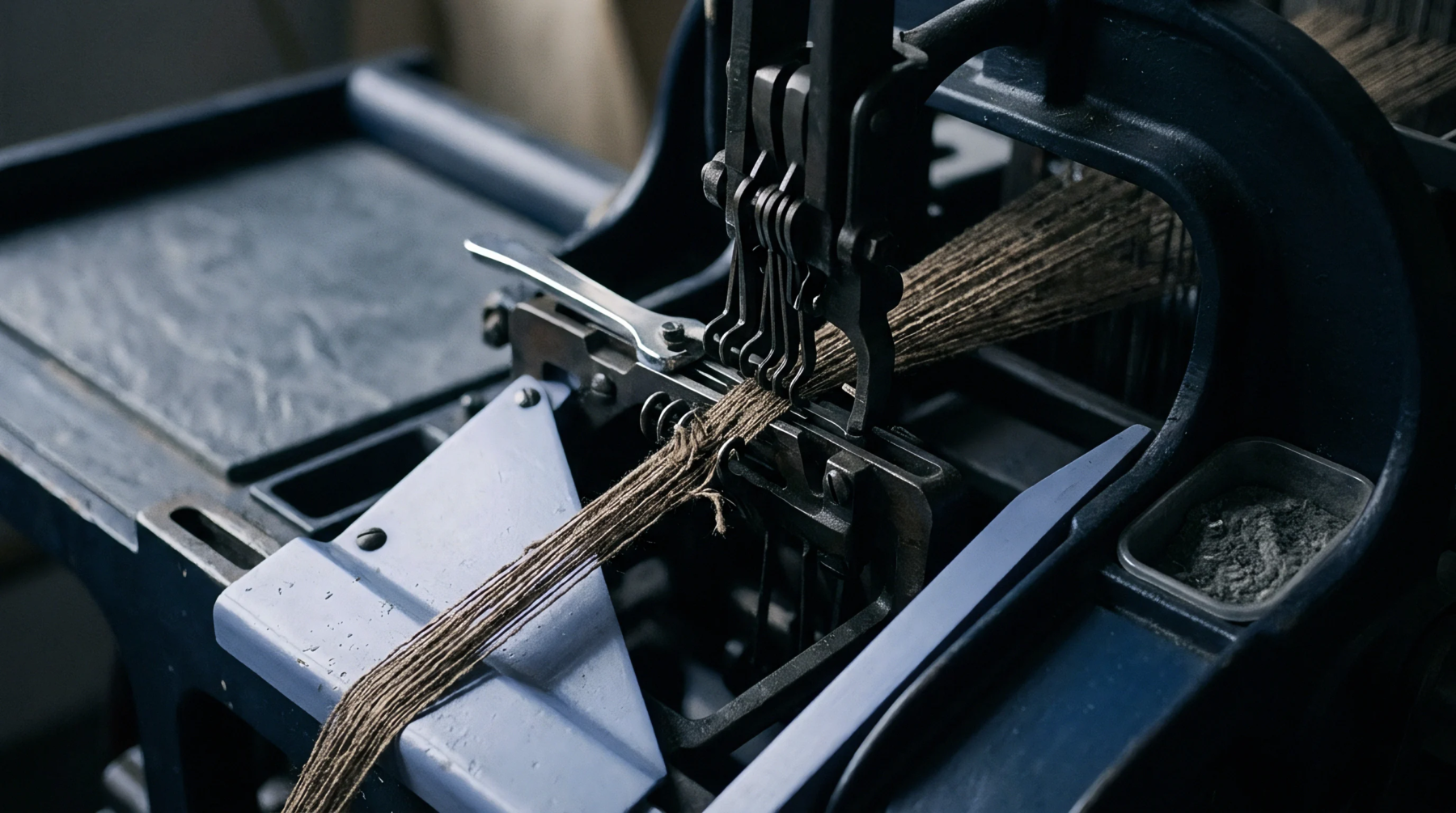
Drafting Force Kinetics and Tension Spikes from Bast Fiber Mass Variance
Sliver mass variance generates dynamic force spikes in drafting zones, driving end breaks, reducing frame efficiency, and elevating finished linen yarn costs.
Sliver mass variance generates dynamic force spikes in drafting zones, driving end breaks, reducing frame efficiency, and elevating finished linen yarn costs.

Raw flax grading requires correlating technical bundle fineness and retting pectin decay with hackling yields to establish wet spinning count limits.

Thermal pectin depolymerization degrades flax middle lamellae above 70°C, lowering bundle tenacity and forcing coarse count downgrades.

Controlling residual pectin to 1.8-2.4% maintains inter-fiber void fraction below 0.32, maximizing packing density and tensile strength in blended line yarns.

Hot water pectin dissolution in the wet-spinning trough cleaves coarse flax bundles to single cells, enabling fine lea counts and stable ring-frame drafting.

Cut-length gravimetric variance triggers drafting surges and spinning triangle tension snaps that double end breakage rates unless roller nip parameters adapt.

Evaluating wet-spun flax sliver linear density requires combining ten-metre cut-and-weigh gravimetric tests with conditioned capacitance spectrogram analysis.

Cellulose microfibril angle variance above 2.0 degrees reduces wet-spun flax tenacity by up to 18 percent due to uneven stress distribution in the S2 layer.
Expertise is a utility, not a secret. sentiention™ publishes its working knowledge as open reference: intelligence layer covering the materials it sources, the markets it enters, and the reference that serves both.