Verifying European Flax Transaction Certificates in Chinese Spinning Mills
Verifying European Flax certificates in Chinese mills requires matching TC batch weights against raw bale intake logs and wet-spinning combed sliver yields.


Gate
Physical intake controls at Chinese spinning mills determine whether a European Flax claim holds up long before yarn production ever begins. Sourcing teams receiving linen spun in Jiangsu, Zhejiang, or Shandong provinces routinely encounter paperwork that looks complete on paper while masking broken physical custody. The European Flax standard, administered by the Alliance for European Flax-Linen and Hemp, guarantees premium long-staple flax fibre grown in France, Belgium, and the Netherlands.
When raw scutcher flax or hackled tow leaves European decorticating plants, two documents govern its status: the Scope Certificate and the Transaction Certificate. A Scope Certificate confirms that a facility has the infrastructure and administrative procedures to process certified material. That certificate alone, however, does not prove that a specific shipment of raw flax entering a Shanghai container terminal consists of certified European fibre.
Verification requires confirming the Transaction Certificate issued for that specific consignment. Certifying bodies like Bureau Veritas, Control Union, or SGS issue these certificates with unique cryptographic reference numbers, net weight declarations, and seller-to-buyer transfer details. Chinese mills frequently submit their annual Scope Certificate during vendor onboarding while omitting the batch-specific Transaction Certificate for individual yarn orders.
The chain of custody breaks the moment uncertified flax bales mix with certified lots in the mill raw fibre store.

Scope Documents and Consignment Verification Portals
Authentication begins by logging into the digital portal of the certifying body named on the document. Each certificate carries a unique registration string matched to the holder’s official corporate registration in China. Entering the document code into the issuer portal pulls up its current validity status, approved activity scope, and certified facility addresses.
Audits regularly uncover cases where mills present active Scope Certificates belonging to parent entities or sister facilities while processing certified fibre in unaccredited satellite workshops. Cross-referencing the facility address on the mill intake bill of lading against the address on the Scope Certificate prevents this kind of transfer abuse.
Transaction Certificates require exact alignment with commercial invoice numbers, packing lists, and ocean bill of lading identifiers. A valid document explicitly states the net physical weight of the flax consignment, the crop harvest year, and the scutching mill of origin in Western Europe. When reviewing filings from Chinese spinning operations, inspectors check the status of both seller and receiver.
If certified fibre was purchased through an international commodity broker in Hong Kong or Singapore, a back-to-back Transaction Certificate must document every intermediate transfer. Gaps in the paper trail void the origin claim for all downstream yarn production.
| Document Type | Issuing Authority | Primary Data Points | Critical Discrepancy Risk |
|---|---|---|---|
| Scope Certificate | Accredited Certifier (e.g. Control Union, SGS) | Facility ID, valid dates, activity scope (spinning, dyeing) | Facility location mismatch between certificate and actual spinning shop |
| Transaction Certificate | Accredited Certifier via Alliance Portal | Consignment net weight, batch ID, seller/buyer entities, bill of lading | Declared weight exceeds physical bale store intake records |
| Import Customs Declaration | China Customs (GACC) | HS code (5301.10/21), gross/net mass, country of origin code (FR/BE/NL) | HS code misclassification hiding non-European raw fiber origin |
| Mill Intake Batch Card | Internal Spinning Mill Logistics | Bale numbers, raw fiber lot ID, moisture content, intake date | Internal lot consolidation merging certified and commodity bales |
Distinguishing Standard Scope from Transaction Validation
Confusing general facility accreditation with batch validation is a major vulnerability in global linen procurement. A spinning mill holding a valid Scope Certificate is authorized to process certified flax, but non-certified flax stocks often sit on adjacent racks in the same warehouse. Without a verified Transaction Certificate covering the exact raw fiber tonnage allocated to a specific yarn contract, certified status cannot attach to the finished yarn cones.
Sourcing teams review every transaction document against official certifier databases before issuing yarn purchase approvals.
Audit protocols require matching the serial numbers printed on physical flax bale ties with the lot records attached to the Transaction Certificate. Scutched flax arrives in pressed bales wrapped in polypropylene sheeting, secured by steel or plastic strapping. European decorticating plants mark each bale tag with barcodes carrying the farm group code, scutching lot number, and net weight.
When bales arrive at the Chinese mill intake dock, warehouse staff log these tags into the mill ERP system. Verification succeeds only when the physical tag numbers cataloged at intake match the lot listing on the seller’s Transaction Certificate byte for byte.
Intermediate trade delays frequently delay the delivery of Transaction Certificates, leading mills to offer internal intake receipts as temporary proof of origin.


Chain
Tracking European flax fibre from European ports to Chinese spinning centers demands complete alignment between shipping manifests and mill storage logs. Ocean freight transit of raw flax from ports like Antwerp or Le Havre to Shanghai or Qingdao takes between thirty-five and forty-five days. During transit, temperature fluctuations inside shipping containers generate condensation, altering the moisture content of packed flax bales.
China Customs clearance documentation provides an independent anchor that verifies origin before material enters domestic logistics networks.
Import customs entry sheets submitted to China Customs explicitly record the declared Harmonized System code alongside the country of origin. Raw scutched flax enters under HS code 5301.10 or 5301.21, while hackled long flax sliver falls under 5301.29. The declared origin code must show France (FR), Belgium (BE), or the Netherlands (NL).
If the customs filing lists non-preferential origin codes for Egypt, Russia, or domestic Chinese production from Heilongjiang or Xinjiang, the fibre fails European Flax qualification regardless of any paperwork presented by the supplier. Uncertified fiber carries serious financial risk.

Import Declarations and Bill of Lading Cross-Checks
Discrepancies between shipping documentation and internal mill receiving ledgers point to immediate contamination risks. Cross-checking the ocean bill of lading number against the Transaction Certificate confirms that the shipment declared at the port matches what actually arrived at the mill store. Port entry weighbridge receipts supply the definitive gross weight of the shipping container.
Subtracting the container tare weight gives the net wet weight of the raw flax bales upon arrival in China.
Customs declaration documents must list the European exporter identified on the Transaction Certificate as the shipper or vendor of record. If an intermediate trading company altered trade documents in transit, the buyer must demand the full chain of intermediate invoices. Inconsistent buyer names on port documents point to consignment splitting, where a single large shipment of European flax is split across multiple spinning mills.
In those cases, the sum of all downstream Transaction Certificates issued by intermediate buyers cannot exceed the original net weight stated on the primary export declaration from Europe.
Contractual agreements must mandate that every yarn consignment carries a dedicated Transaction Certificate matching the verified weight of the raw fibre lot.

Bale Store Intake and Physical Lot Marking
Once cleared through customs, raw flax containers move by truck to spinning facilities in textile hubs like Nantong, Jiaxing, or Zibo. Well-run mills operate segregated warehouse bays designated specifically for certified raw materials. Physical separation prevents uncertified flax from accidentally feeding into production lines assigned to European Flax yarn orders.
Auditors track the movement of long flax sliver from initial bale opening all the way to the final ring spinning frames.
Physical inspection of the raw fibre store focuses on bale identification tags and floor placement. Bales must remain stacked in distinct lot blocks tied to specific shipping containers and Transaction Certificates. Inspectors review intake logs to confirm that warehouse personnel log bale tag serial numbers immediately upon unloading.
It pays to check these lot numbers straight away.
- Bale Tag Serial Mismatch occurs when physical identification tags on stored bales do not match the lot numbers listed on the import declaration documents.
- Unsegregated Warehouse Storage leaves certified European flax bales stacked directly adjacent to unidentified commodity flax without physical barrier markers.
- Intake Ledger Omissions involve warehouse receiving logs that record gross consignment weights without recording individual bale tag numbers or certificate references.
- Container Seal Breaches occur when shipping container seal numbers recorded on port documents fail to match the seals cut at the mill unloading dock.
Standard purchase terms stipulate that the mill must maintain physical segregation and distinct lot numbering for all European Flax raw materials from intake through final yarn packaging, failing which the buyer reserves the right to reject the entire spun batch without commercial compensation.

Mass
Mass-balance calculations are the primary analytical tool for detecting certified fibre dilution during linen yarn manufacturing. Transforming raw scutched flax into fine spun yarn involves physical fibre losses at every mechanical stage. Scutched flax undergoes hackling to comb out short fibres and align long fibers into continuous slivers.
Long-staple hackling yields roughly 60% to 70% long flax sliver, generating 25% to 35% hackled tow as a co-product, alongside 5% to 8% unrecoverable comb dust and shive waste. Yield loss directly changes this balance.
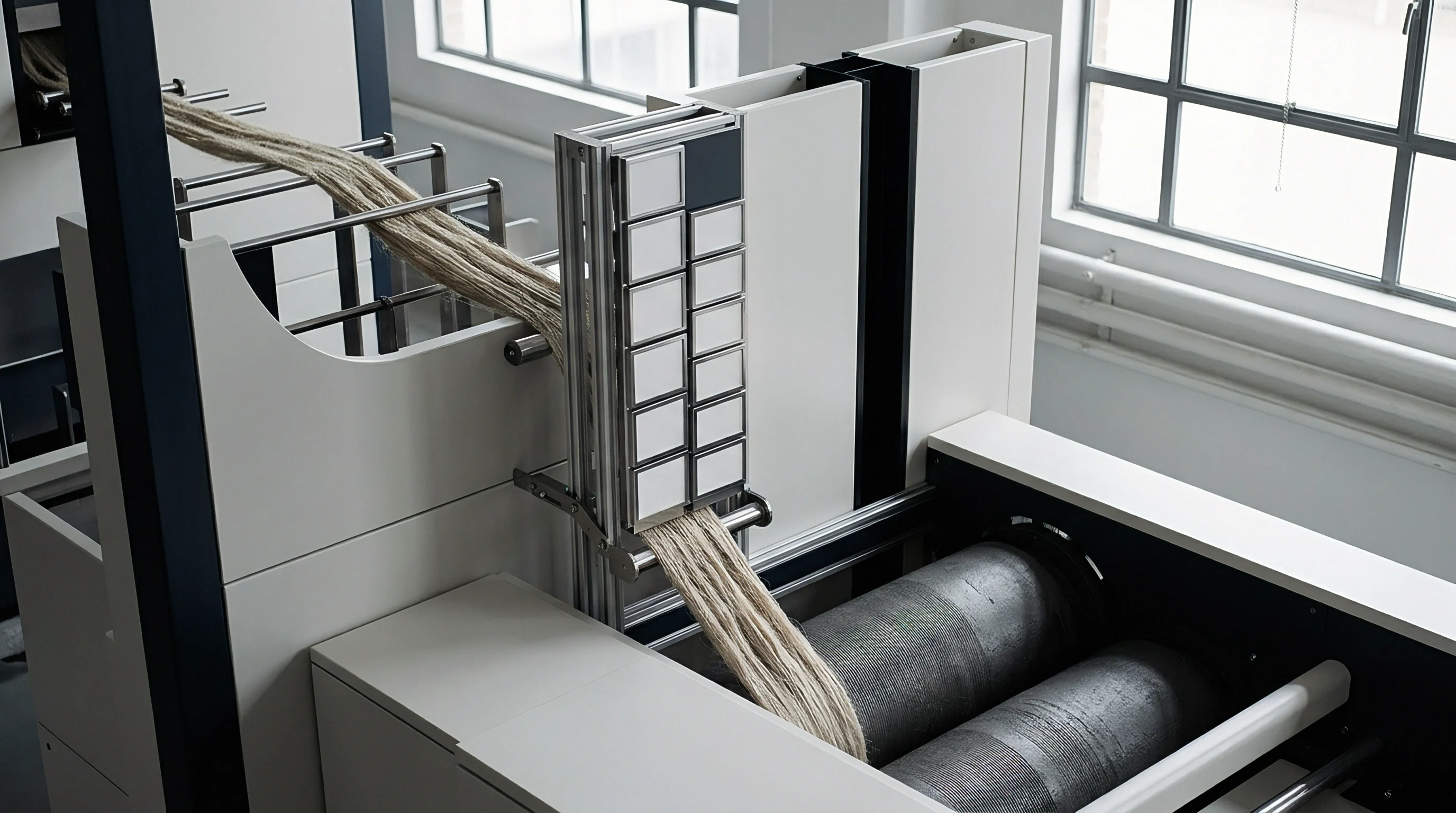
Spinning mills operating wet-spinning or dry-spinning systems process these intermediate slivers into finished yarn. Wet spinning, necessary for high-count fine linen yarns ranging from 14 Lea to 80 Lea (100 Nm to 14 Nm), requires passing slivers through hot water baths to soften pectin bonds before drafting and twisting. Mechanical drafting in wet spinning generates further fibre loss in bath sludge and yarn waste.
Reconciling input fibre tonnage against output yarn tonnage requires applying precise, process-specific conversion coefficients to catch unauthorized substitution.
Fiber Yield Ratios and Spinning Loss Coefficients
Calculating mass balance demands rigorous tracking of yield loss across every mechanical stage. A mill purchasing 10,000 kilograms of certified raw scutched flax cannot produce 10,000 kilograms of fine wet-spun linen yarn. Accounting for hackling efficiency, comb waste extraction, roving loss, and wet-spinning waste, 10,000 kilograms of raw European scutched flax yields between 5,200 and 6,100 kilograms of 100% pure European Flax long-staple wet-spun yarn.
If a mill issues Transaction Certificates claiming 8,500 kilograms of certified pure yarn from a 10,000 kilogram raw fibre input, uncertified tow or foreign flax was added during carding or sliver blending. Mass balance calculations leave no room for guesswork.
Dry spinning processes lower-count coarse yarns (3 Lea to 12 Lea) using hackled tow or short flax fibres. Dry spinning yield loss ranges between 8% and 15% of initial sliver weight. Combining long-staple raw materials with tow inputs changes the yield calculation.
Auditors must inspect the mill’s internal batch yield reports, known as mill batch cards, which record exact weights at raw fiber opening, carding, drawing, roving, ring spinning, and automatic winding. Any discrepancy here compounds downstream.
| Process Stage | Input Material Form | Average Yield (%) | Process Waste Type | Acceptable Loss Range (%) |
|---|---|---|---|---|
| Hackling & Combing | Raw Scutched Flax | 62.0 – 68.0 | Hackled Tow, Shive, Combing Dust | 32.0 – 38.0 |
| Drawing & Roving | Hackled Long Sliver | 94.0 – 96.5 | Sliver Ends, Roving Fly Waste | 3.5 – 6.0 |
| Wet Ring Spinning | Treated Flax Roving | 88.0 – 92.0 | Spinning Trough Sludge, Thread Breaks | 8.0 – 12.0 |
| Winding & Clearing | Spinning Bobbins | 97.5 – 98.5 | Yarn Knotter Cuts, Slub Clearings | 1.5 – 2.5 |
| Overall Conversion | Raw Fiber to Yarn Cone | 52.0 – 61.0 | Cumulative Solid & Liquid Losses | 39.0 – 48.0 |

Where Do Scope Certificates Fail during Mill Audits?
Audits frequently reveal structural failures in chain-of-custody tracking when mills run concurrent orders of certified and uncertified flax. The primary point of breakdown occurs during sliver preparation. Spinning mills maintain sliver storage cans between drawing frames.
When floor discipline slips, unlabelled sliver cans containing non-certified domestic Chinese flax enter the drawing line alongside European Flax sliver. This practice, known as sliver dilution, allows mills to stretch certified raw material stocks while producing yarn that passes basic physical testing but violates certified origin declarations.
Auditors must inspect the spinning floor logs directly. Verification protocols require unannounced floor checks during active production runs assigned to certified purchase orders. Auditors inspect sliver can identification cards, verify drawing frame blend settings, and count active spinning spindles assigned to the lot.
If the active spindle allocation demands an hourly sliver consumption rate exceeding the logged intake of certified sliver from the preparation room, non-certified material is actively supplementing the feed line.
Reconciling Moisture Content and Net Dry Weights
Commercial transactions for flax fibre and linen yarn operate under standardized moisture regain terms governed by ISO 2060 and ISO 6741. Flax is highly hygroscopic, absorbing up to 12% atmospheric moisture under standard climate conditions (20 degrees Celsius, 65% relative humidity). Official commercial weight calculations apply a standardized moisture regain allowance of 12.0% for raw flax and 12.0% for grey linen yarn.
Mill weighbridge intake records measure gross wet weight, whereas Transaction Certificates state official commercial weight adjusted for moisture content. Failing to account for moisture content introduces significant mass-balance errors. For instance, a raw flax container weighed during humid summer weather in Ningbo may register a gross weight 3% higher than its dry standard equivalent, even before accounting for expected fibre loss during hackling.
Reconciling mass balance requires drying laboratory samples to absolute oven-dry weight, determining actual moisture regain percentage, and converting all weight logs to official commercial mass before comparing raw material input to yarn output.
Processing 10,000 kilograms of raw European scutched flax yields a maximum of 6,100 kilograms of certified pure wet-spun yarn under standard moisture conditions.
As an operational guideline, when output yarn weight exceeds sixty-two percent of raw scutched fibre input weight on a commercial moisture-adjusted basis, certified material dilution has occurred.


Discrepancy
Discrepancies between certified raw material intake and commercial yarn delivery emerge through distinct fraud mechanisms. Spinning mills facing tight margins or raw material shortages employ substitution techniques to fulfill certified yarn orders. Understanding how these operational mechanisms work enables sourcing engineers to structure targeted audit procedures and technical screens, starting with the weighbridge records.
The most common non-compliance pattern involves cross-subsidizing certification numbers. A mill purchases a modest quantity of genuine European Flax to obtain valid Transaction Certificates, then uses those certificates to justify larger volumes of yarn produced from cheaper non-certified flax imported from non-European regions or sourced from domestic fields. Because certification databases track issued document weights, mills attempt to exploit processing loss margins or claim fictitious yield efficiencies to inflate output declarations.

Sliver Blending Techniques and Dilution Vulnerabilities
Mechanical blending of different flax origins occurs during sliver drafting or roving operations. By blending 50% European Flax sliver with 50% non-certified flax sliver on the draw frame, a mill produces yarn containing physical European flax content while cutting raw material costs significantly. Certified European long-staple flax commands a market price premium of $1.50 to $3.50 per kilogram over uncertified flax, making blending a lucrative way to boost margins per container load.
Detecting sliver dilution requires examining draw frame blend proportion sheets and roving frame weight cards. Physical testing of yarn samples via fiber length distribution analysis provides secondary confirmation. European long-staple flax exhibits a superior average staple length (often exceeding 500 millimeters post-hackling) compared to lower-grade short tow fibers (150 to 250 millimeters).
A sharp bi-modal fiber length distribution in yarn declared as pure long-staple European flax indicates contamination with short tow or secondary waste fibers.
| Operational Area | Observed Discrepancy | Root Cause Mechanism | Required Remedial Audit Step |
|---|---|---|---|
| Intake Warehouse | Bale tag serials missing from mill ERP | Bypassing inventory controls to introduce uncertified bales | Halt production; perform 100% physical bale tag reconciliation |
| Preparation Room | Unmarked sliver cans on drawing frames | Intentional mixing of certified and non-certified sliver | Sample sliver for fiber length distribution and cross-sectional testing |
| Spinning Floor | Spindle counts exceed batch sliver feed rate | Supplementary feeding of uncertified roving from unmonitored lines | Audit real-time floor machine allocation against job card sheets |
| Shipping Store | Yarn cone box weight exceeds verified TC allocation | Recycling TC reference numbers across multiple commercial orders | Cross-check buyer invoice volumes against total certifier TC logs |
Duplicate Certificate Usage across Multiple Consignments
Another prevalent compliance failure involves recycled Transaction Certificates. A spinning mill acquires a valid Transaction Certificate for a 20-metric-ton shipment of raw European flax, then submits copies of this single certificate to multiple international buyers, claiming it covers small yarn shipments of 5 tons each to six different customers. Total yarn declared against the certificate reaches 30 metric tons, representing over 50 metric tons of raw fiber equivalent and far exceeding the 20-ton input document.
Preventing duplicate certificate fraud requires tracking cumulative draw-downs against individual Transaction Certificates. Compliance mandates enforce physical lot segregation inside the mill bale storage areas. Modern certifier databases automatically register transaction volumes against master scope accounts, but delays in registration still allow fraudulent claims to circulate during active production windows.
Sourcing teams must demand direct certifier validation of the total allocated volume for every issued Transaction Certificate.
Re-using transaction reference numbers across multiple customer invoices represents the single most frequent documentary compliance failure in overseas yarn procurement.
Evaluating mill compliance requires an operational checklist that structures physical and documentary verification steps into a strict logical sequence.
- Verify Scope Certificate Status against the online registry of the accredited issuing body to confirm current validity dates and processing activity authorization.
- Authenticate Transaction Certificates by matching consignment net weights, seller identifiers, and cryptographic registration strings directly with the certifier database.
- Cross-Check Import Declarations to verify that China Customs documentation matches ocean bills of lading and confirms European country of origin codes.
- Inspect Physical Bale Stores to confirm tag serial numbers match intake ledgers and that certified stocks remain physically segregated from standard inventory.
- Calculate Mass Balance Ratios comparing raw material input weight against finished yarn output logs using standard moisture-adjusted conversion factors.
- Audit Production Machine Logs on drawing, roving, and ring spinning floors to verify that active spindle allocations match certified sliver feed rates.
- Reconcile Total Delivery Tonnage across all customer invoices generated against a single Transaction Certificate to prevent cumulative volume over-allocation.
When a mill fails to present verified raw material intake receipts matching the exact tonnage of a spun yarn batch, the buyer incurs total commercial liability for mislabeled products delivered to retail markets.


Compliance
Destination market legal requirements convert origin verification from a supply chain preference into a hard regulatory mandate. In the European Union, Regulation 1007/2011 governs textile fibre names and related labelling. Under this framework, labelling yarn or fabric as 100% Flax or Linen requires absolute fibre purity.
Claiming specific geographical provenance, such as European Flax, falls under strict commercial misrepresentation laws if non-certified or foreign flax fibres contaminate yarn spun in Chinese mills.
In the United States, the Federal Trade Commission enforces the Textile Fiber Products Identification Act (16 CFR Part 303), requiring accurate country-of-origin declarations for both fibre sourcing and manufacturing steps. A linen shirt sewn in Vietnam from fabric woven in South Korea using yarn spun in China from European flax requires precise origin disclosures at every stage. Misrepresenting origin exposes importers to customs fines, shipment seizures, and mandatory product recalls, making rigorous documentation essential for protecting the brand.

Destination Regulatory Frameworks and Labelling Claims
Importers often confuse European Flax certification with the Masters of Linen trademark. European Flax certifies raw fibre grown in France, Belgium, and the Netherlands, permitting downstream processing anywhere in the world, including Chinese spinning and weaving. Masters of Linen is a far stricter trademark requiring 100% European production at every single stage ~ from flax harvest through scutching, spinning, weaving, and finishing on European soil.
Linen yarn spun in Chinese mills can achieve European Flax certification, but it can never qualify for Masters of Linen status. Claiming Masters of Linen for yarn spun in Jiangsu constitutes immediate trademark infringement.
Customs enforcement agencies, including U.S. Customs and Border Protection under the Uyghur Forced Labor Prevention Act (UFLPA), actively scrutinize textile raw material inputs entering China. Flax supply chains originating in or routed through non-compliant regions face severe entry restrictions. Proving European Flax origin requires presenting a clean documentary chain that explicitly excludes high-risk raw material sources, making thorough verification mandatory for maintaining import compliance.

Analytical Isotope and DNA Testing Capabilities
Documentary audits are supported by scientific analytical methods that test physical yarn samples for geographical origin. Stable isotope ratio mass spectrometry measures natural isotope ratios of hydrogen, oxygen, carbon, and strontium embedded within flax cellulose fibres. Regional climate, rainfall composition, soil geology, and proximity to coastal waters dictate unique isotopic fingerprints in growing plants.
France and Belgium exhibit distinct isotopic signatures compared to domestic Chinese flax growing regions in Xinjiang or Heilongjiang, or alternative import sources like Russia and Egypt.
Isotope testing provides physical proof of raw material origin independent of paperwork. Sourcing programs collect baseline isotope profiles from certified European growing regions annually. When yarn samples drawn from Chinese spinning mills undergo isotope analysis, laboratory technicians compare the sample’s isotopic profile against established European baseline maps.
Any significant deviation in oxygen-18 or strontium-87 ratios indicates raw material substitution or blending with non-European flax stock.
DNA tracer technologies offer a second physical verification pathway. Certain certified fibre producers apply invisible, botanical DNA markers or micro-particle tracers to raw flax during scutching in Europe. These molecular markers adhere to cellulose fibres throughout mechanical hackling, drafting, wet spinning, and fabric finishing.
Field technicians extract molecular tags from yarn cones using portable polymerase chain reaction (PCR) analyzers. The absence of the expected molecular tag in a yarn batch declared as European Flax confirms a broken physical chain of custody.
Unannounced laboratory sampling combined with mass-balance reconciliation establishes a defensible origin file for customs compliance authorities.
Can stable isotope verification completely replace paper-based Transaction Certificates during routine customs audits?


Remedy
Commercial protection against provenance failure requires embedding explicit legal remedies and financial mechanisms into yarn purchasing agreements. Standard purchase orders that rely on generic quality clauses fail to allocate liability when certified claims collapse post-shipment. Contracts signed with Chinese spinning mills must integrate origin specifications directly into commercial pricing models and payment release terms.
Certified European Flax yarn carries a commercial price surcharge reflecting higher raw material costs and audit fees. Certified 14 Lea to 40 Lea wet-spun linen yarn commands a $0.80 to $2.20 per kilogram premium over conventional non-certified linen yarn of equivalent count and tensile strength. Sourcing teams paying this premium must protect their investment by linking final invoice settlement directly to verified document delivery and analytical testing clearance, rather than letting audit fees fall back on the buyer without recourse.

Contractual Origin Warranties and Penalty Structures
Purchase contracts should include dedicated origin warranty clauses specifying that all delivered yarn must derive exclusively from raw fibre lots covered by valid European Flax Transaction Certificates. The contract must stipulate that intermediate certificate validation is a mandatory precedent condition for invoice payment. If independent laboratory testing or certifier audits reveal uncertified fibre dilution, pre-agreed financial remedies should execute immediately.
Remedial clauses mandate that the mill replace non-compliant yarn batches at its sole expense, absorb all international freight charges, and reimburse the buyer for third-party laboratory testing fees. Contracts should also include indemnification provisions covering downstream commercial losses, such as customer chargebacks or customs enforcement penalties resulting from false origin declarations. Verifying every transaction certificate directly remains essential, as yarn blending dilutes certified content and moisture regain alters net dry weight calculations.
| Cost Element | Conventional Yarn ($/kg) | European Flax Certified ($/kg) | Variance / Premium ($/kg) | Commercial Purpose |
|---|---|---|---|---|
| Raw Flax Fiber Base | 4.20 | 6.10 | +1.90 | Premium paid for Western European long-staple flax crop |
| Spinning Conversion | 3.80 | 3.95 | +0.15 | Mill line cleaning, lot segregation, dedicated handling |
| Certifier Transaction Fee | 0.00 | 0.08 | +0.08 | Official issuing authority fee for Transaction Certificate |
| Independent Audit Reserve | 0.00 | 0.12 | +0.12 | Third-party mill audit and isotope testing reserve fund |
| Total Landed Yarn Cost | 8.00 | 10.25 | +2.25 | Full certified commercial price per kg (26 Lea Wet-Spun) |

Landed Cost Arithmetic for Certified Linen Yarn
Evaluating the true landed cost of certified linen yarn requires accounting for raw material surcharges, certification administrative fees, independent auditing overhead, and risk mitigation reserves. A comprehensive procurement model factors all of these elements into the target price per kilogram before finalizing mill purchase orders.
1. Determine the baseline conventional yarn price per kilogram for the target Lea count from regional spinning benchmarks.
2. Add the certified raw material differential calculated from current Western European scutching market quotes adjusted for spinning yield loss.
3. Incorporate the certifier transaction fee billed per issued certificate divided by the net batch tonnage.
4. Amortize annual third-party mill audit expenses and random sample isotope laboratory costs across total forecasted annual volume.
5. Calculate the final landed contract price and embed payment retention milestones tied to origin documentation verification.
Structuring purchase contracts around clear verification milestones shifts commercial risk back to the manufacturer. Sourcing programs that combine digital certificate authentication, physical warehouse checks, mass-balance yield calculations, and targeted isotope testing protect their brands against origin misrepresentation. Holding financial retentions until final Transaction Certificate release ensures Chinese spinning mills maintain complete chain-of-custody discipline across every production batch.