
Comb Array Staple Length Distribution Analysis for Hackling Yield Prediction
Comb array length analysis predicts hackling long-line yield, tow waste, and spinnable count limits to establish true landed cost per finished metre.
Comb array length analysis predicts hackling long-line yield, tow waste, and spinnable count limits to establish true landed cost per finished metre.

Commercial mass adjustment corrects delivered flax invoice weight by calculating bone-dry mass via oven drying and applying standard regain allowances.

Targeted enzymatic pectin digestion splits technical flax bundles to under 6 dtex, optimizing sliver cohesion for wet spinning yarn tenacities over 38 cN/tex.

Spectrophotometric galacturonic acid assays overestimate retting degree unless corrected for neutral sugar and phenolic background interference.

Hot ammonium oxalate extraction isolates calcium-bound middle lamella pectins to quantify sliver spinning limits and drafting cohesion.

Resolving gravimetric fineness disputes requires ISO 2370 extraction standards, n=50 bundle sample sizes, and contracted metric number tolerance bands.

Manual bundle sectioning isolates true flax fibre linear density by cutting mid-strick segments for gravimetric tex determination prior to spinning.
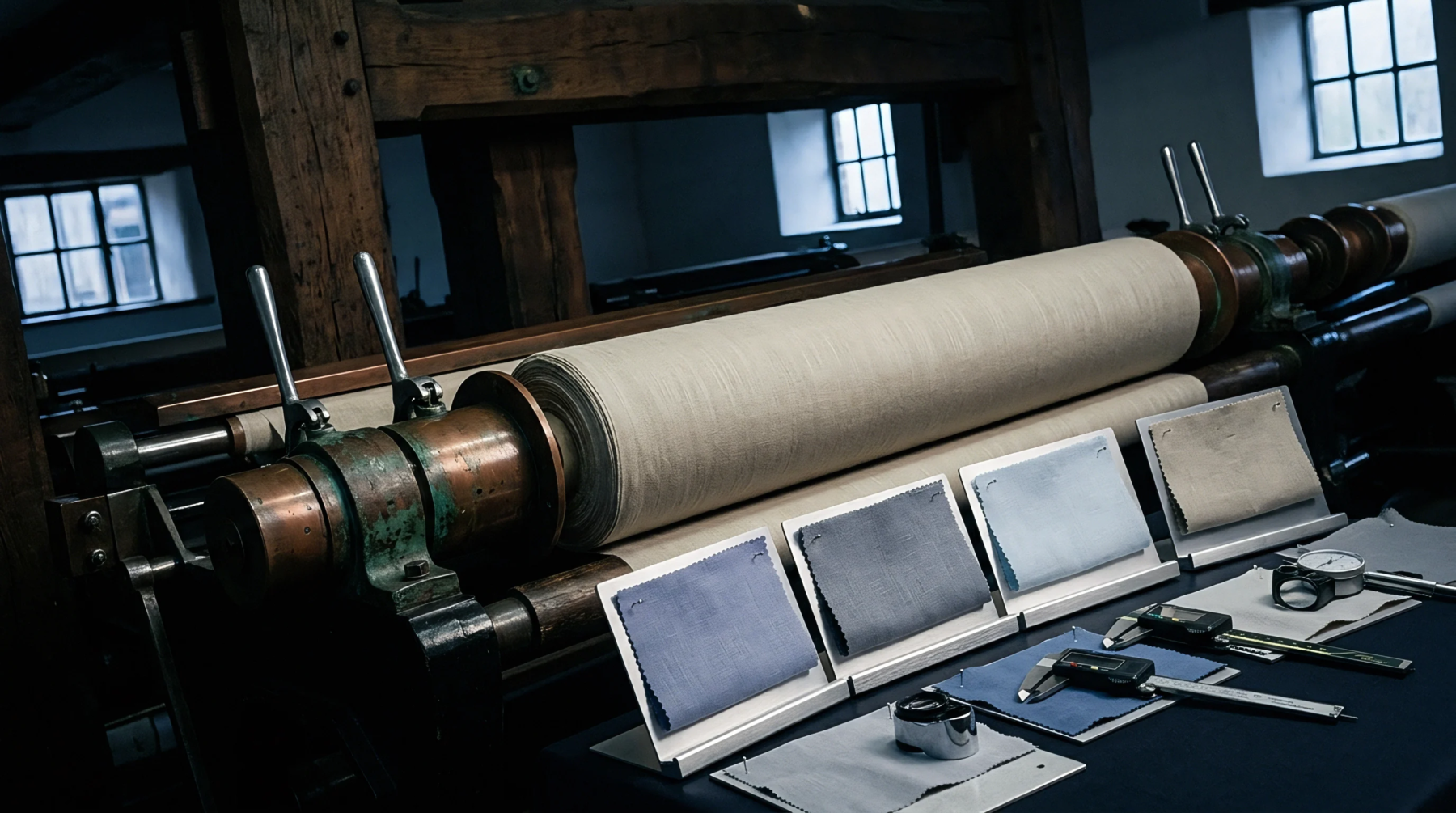
Airflow fineness measurement requires strict thermodynamic equilibrium and morphology calibration to avoid deceptive linear density readings in bast fiber trading.

Precise airflow porosimetry of unhackled dew-retted flax requires axial strick alignment, controlled 196 kPa compaction, and 12 percent regain normalization.

Low-pressure air permeability tests determine bast fiber fineness by measuring specific surface area across standardized compressed fiber plugs under ISO 2370.

Modeling elementary fiber cross-sectional variance predicts wet spinning end breaks by identifying localized cell wall stress concentrations under drafting tension.

Automated optical bundle metrics predict wet spinning draft resistance limits and eliminate spindle stoppages caused by coarse unseparated flax fibers.

Optical calibration using certified stage micrometers and telecentric lighting eliminates overlap bias, securing true linear density and hackling yield metrics.

Optical microscopy of resin-embedded cross sections determines true technical flax bundle widths, separating spinnable fine line from coarse drafting defects.
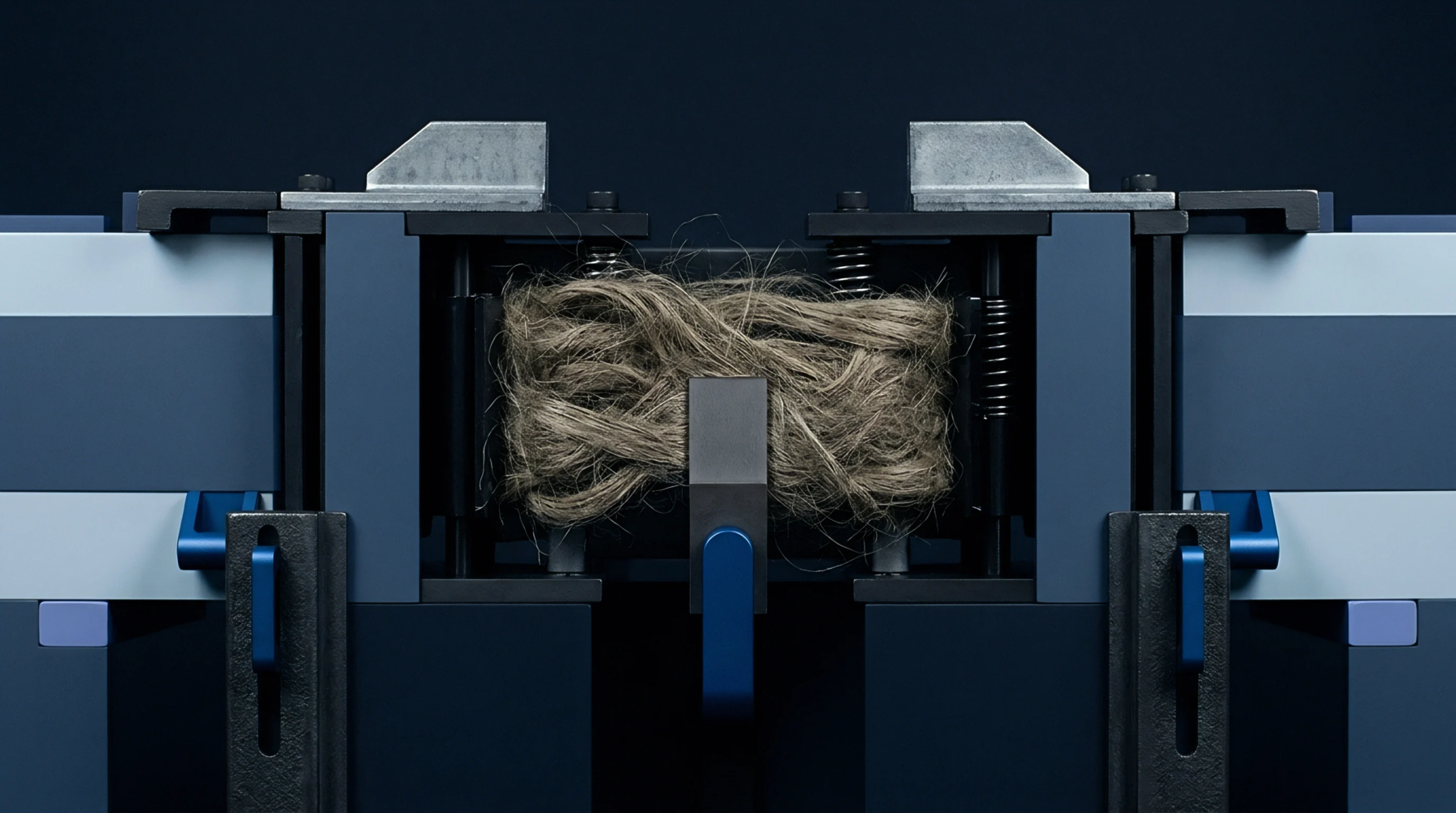
Targeted enzymatic cleavage of middle lamella homogalacturonan enables drafting down to elementary fibrils, yielding Nm 90 wet-spun flax yarns exceeding 38 cN/tex.

Selective pectin degradation paired with tuned hackling pin density maximizes fibre bundle separation while retaining staple length for fine wet spinning.

Mathematical transformation between bast fiber numerical and mass length requires power-law bundle scaling to prevent drafting failure and false yield valuation.

Cut length flax gravimetric linear density variance triggers tiered commercial debits based on wet spinning draft limits and yarn count yield loss.

Standard cut length gravimetric testing uses strict pretensioning, razor sectioning, and moisture regain corrections to establish spinnable tex accurately.

Low cohesion flax slivers collapse under high draft ratios, requiring reduced trough temperatures, higher roving twist, and tight ratch settings to hold count.

HPLC tracking of trough liquor sugar release limits hemicellulose hydrolysis, preserving flax bundle cohesion and yarn tenacity during high-speed wet spinning.

Comb sorter profiling establishes staple length distribution, short fibre content, and drafting bounds to guarantee target yarn counts and fabric yield.
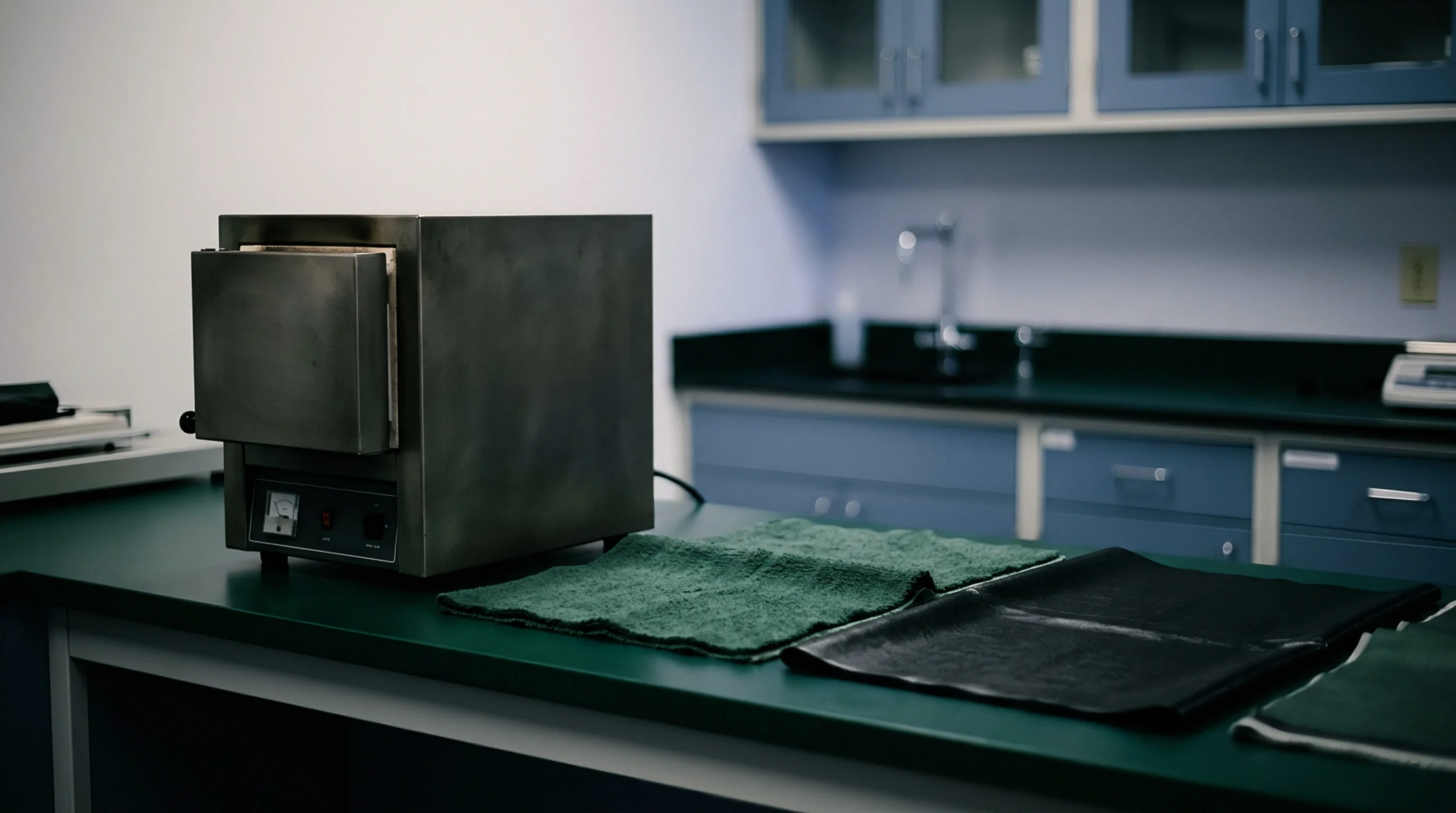
Airflow resistance converts to metric fibre count via specific surface area, establishing spinnable yarn count limits prior to spinning commitment.

Air permeability testing measures specific surface area to derive bast fibre linear density, requiring precise moisture conditioning and shive removal.

Flax fibre grading determines spinnable yarn count, where hackling yield and fibre fineness dictate wet-spinning efficiency and landed cost per metre.

Verify conditioned skein count, capacitive CVm evenness, and cone hardness against ISO tolerances to stop defective flax yarn before freight release.

Wet-spun flax yarn commands higher per-kilo pricing due to hackling loss, while dry-spun tow yarn offers cost efficiency for counts under twenty metric.

Trough water at 70°C hydrolyzes middle lamella pectins to permit inter-fibre slippage, enabling high mechanical drafts down to fine linear yarn counts.

Controlling residual pectin to 1.8-2.4% maintains inter-fiber void fraction below 0.32, maximizing packing density and tensile strength in blended line yarns.
Hot water pectin dissolution in the wet-spinning trough cleaves coarse flax bundles to single cells, enabling fine lea counts and stable ring-frame drafting.
Expertise is a utility, not a secret. sentiention™ publishes its working knowledge as open reference: intelligence layer covering the materials it sources, the markets it enters, and the reference that serves both.