Enzymatic Middle Lamella Pectin Cleavage Mechanics Governing High Count Wet Spun Flax Tenacity
Targeted enzymatic cleavage of middle lamella homogalacturonan enables drafting down to elementary fibrils, yielding Nm 90 wet-spun flax yarns exceeding 38 cN/tex.


Substrate
In unrefined long-staple flax, structural cohesion depends on the polysaccharide matrix filling the middle lamella between elementary fibres. Primary cell walls ~ cellulose microfibrils embedded in hemicellulosic xyloglucans ~ are held together by a binder rich in pectic substances. Within this zone, linear alpha-1,4-linked D-galacturonic acid residues build the homogalacturonan backbone that gives the matrix its integrity.
Before refining, a technical fibre bundle typically measures 40 to 100 micrometres across, and its strength reflects how dense and evenly distributed these pectin polymers are.
As the plant grows, homogalacturonan domains esterify to varying degrees. Unesterified carboxyl groups along the chain readily bind divalent cations ~ mostly calcium ~ to form rigid ionic junctions, long described by the egg-box model. These calcium-pectate complexes create high shear resistance between cell walls, locking individual elementary fibres in place during drafting.
Branched rhamnogalacturonan-I regions bearing galactan and arabinan side chains add structural complexity, creating steric hindrance that limits how easily added enzymes can reach cleavage sites.
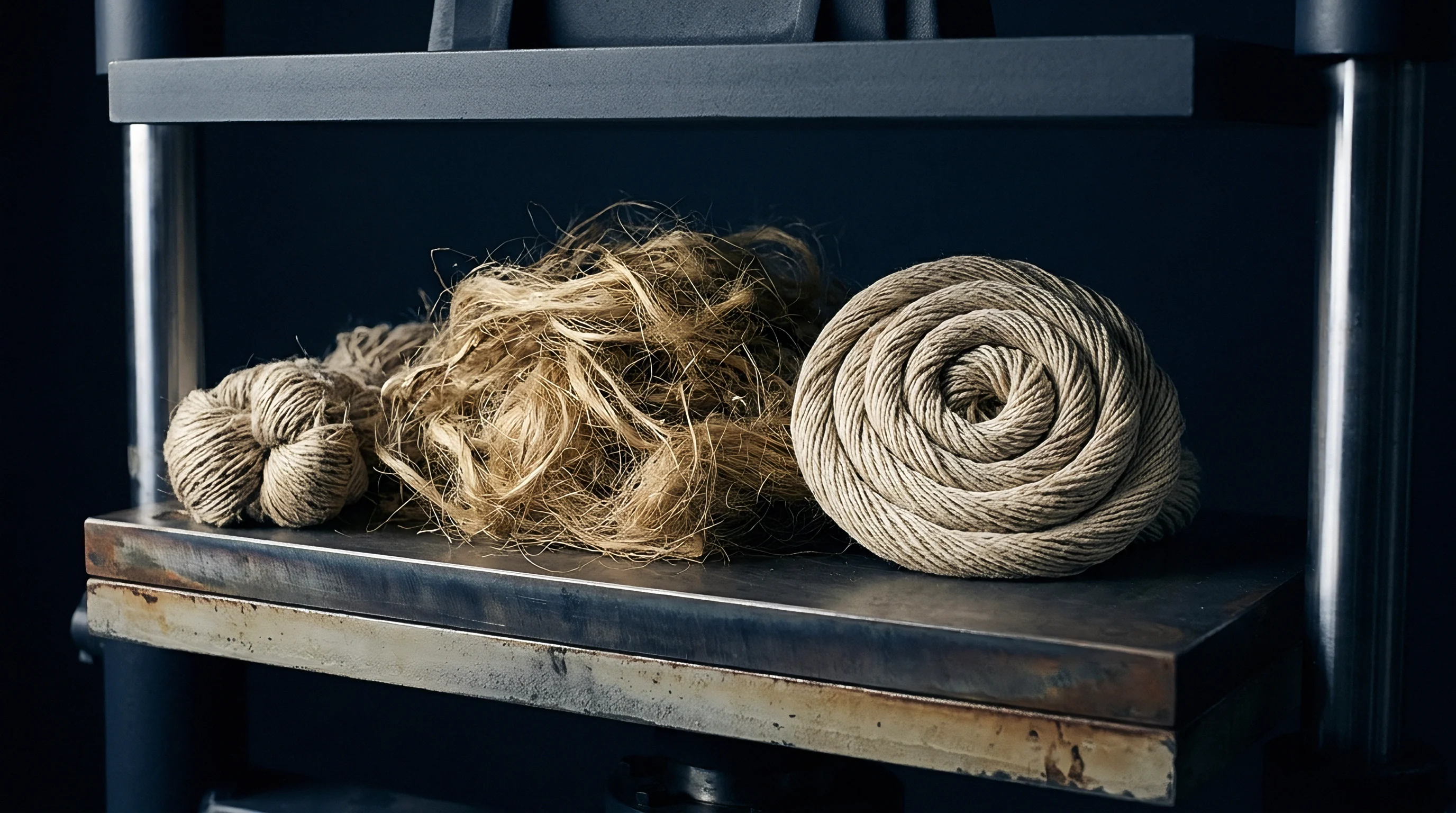
Biochemical Composition of Intercellular Pectin Matrix
Chemical profiling of dew-retted and water-retted long-staple flax reveals clear differences in middle lamella composition. Homogalacturonan makes up 60 to 70 percent of the pectic fraction in raw bast tissue, and rhamnogalacturonan-I accounts for another 20 to 30 percent. The degree of esterification among carboxyl groups dictates both matrix solubility and how easily enzymes can break it down.
High-ester pectins show esterification levels above 50 percent, while low-ester variants fall below that threshold, determining which catalytic route is needed for cleavage.
Calcium concentration in the middle lamella scales directly with the force needed to pull elementary fibres apart. Atomic absorption spectroscopy places calcium levels between 1.2 and 2.8 milligrams per gram of dry fibre in unrefined long-staple lines. Where calcium accumulates, the inter-fibre bond tightens, forcing drafting frames to pull harder and causing fibres to snap prematurely instead of sliding cleanly past each other.
| Polysaccharide Fraction | Structural Backbone | Degree of Esterification (%) | Primary Cleavage Enzyme | Targeted Linkage |
|---|---|---|---|---|
| Homogalacturonan (Low Ester) | alpha-1,4-D-galacturonic acid | 15 – 35 | Endo-polygalacturonase | alpha-1,4-glycosidic bond |
| Homogalacturonan (High Ester) | alpha-1,4-D-galacturonic acid | 55 – 75 | Pectin lyase | alpha-1,4-glycosidic bond (beta-elimination) |
| Rhamnogalacturonan-I | -alpha-L-Rha- -alpha-D-GalA | 10 – 40 | Endo-rhamnogalacturonase | alpha-1,2-rhamnosidic bond |
| Arabinan Side Chains | alpha-1,5-L-arabinofuranose | 0 | Endo-arabinase | alpha-1,5-arabinofuranosidic bond |

Esterification Gradients Dictating Cleavage Susceptibility
Esterification gradients along the bast strip govern how deeply enzyme baths penetrate during roving preparation. Natural endo-pectin methyl esterase action during field retting usually lowers esterification in the outer middle lamella. Deep within dense technical bundles, however, internal lamellae stay highly esterified, shielding their galacturonan backbones from basic hydrolysis.
When processing flax lines intended for high-count yarns above Nm 80, uniform esterification reduction becomes essential. Non-uniform esterification profiles lead to localized cleavage, producing a bimodal fibre fineness distribution where over-cleaved elementary fibres mix with coarse, intact technical bundles. Variable bundle coarseness stems from unmanaged pectin degradation during roving preparation, rather than unpredictable field retting weather alone.
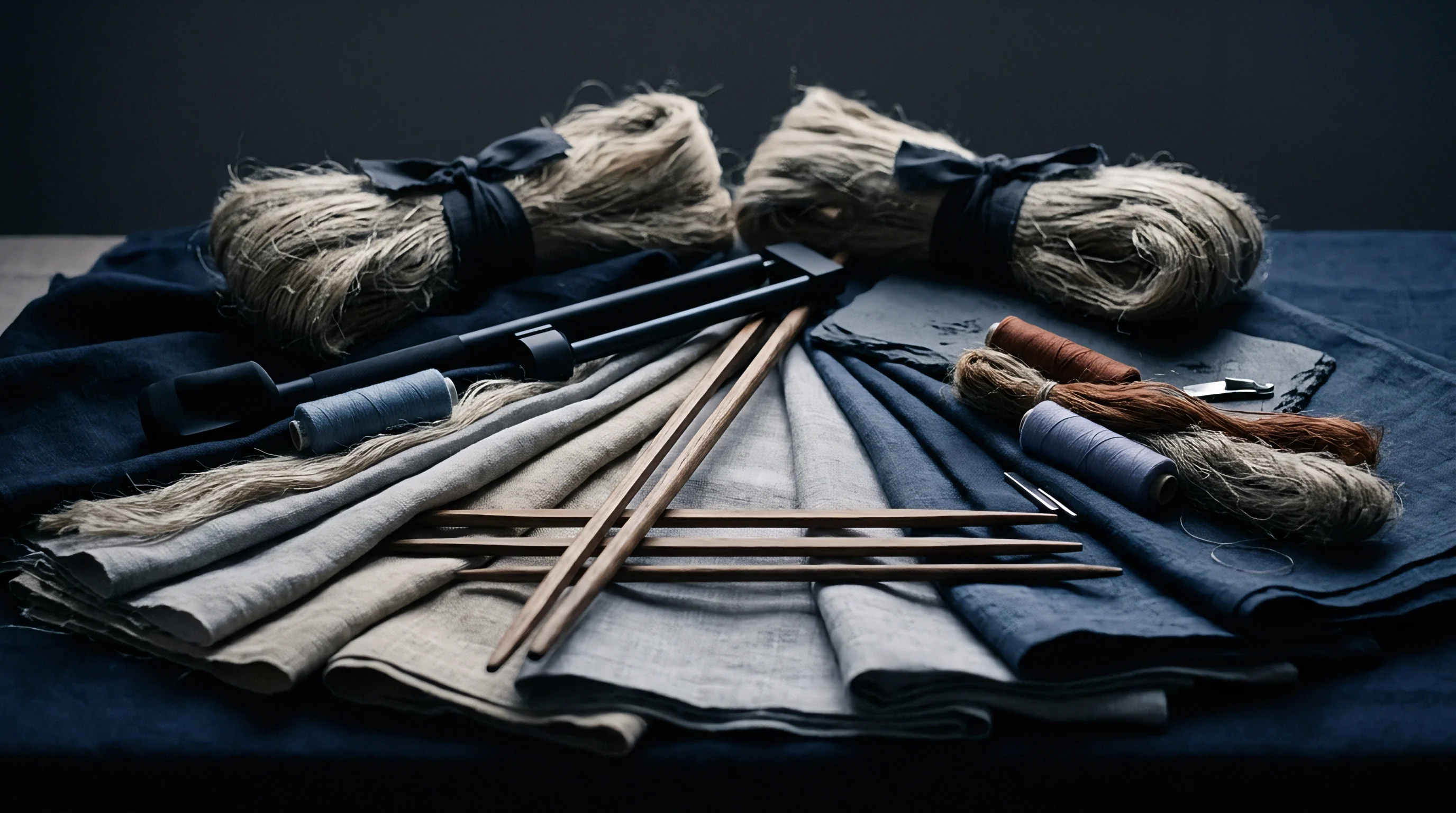

Cleavage
Pectin matrix depolymerization follows distinct catalytic pathways depending on the enzyme class used. Endo-polygalacturonases break internal alpha-1,4-glycosidic bonds in non-esterified homogalacturonan by nucleophilic substitution, using a water molecule to cleave the chain. This works best in acidic conditions between pH 4.0 and 5.5, quickly shortening the galacturonan backbone without requiring divalent cations.
Pectate lyases target those same alpha-1,4-glycosidic linkages through trans-elimination, leaving an unsaturated C4-C5 oligogalacturonide at the non-reducing end. This lyase route requires an alkaline pH between 8.0 and 10.0 and relies on millimolar concentrations of calcium ions. The calcium binds at the active site, stabilizing the carboxylate anion formed as C5 loses a proton.
Choosing between hydrolase and lyase pathways changes both the physical state of the remaining cell wall and the surface friction of the separated fibres.
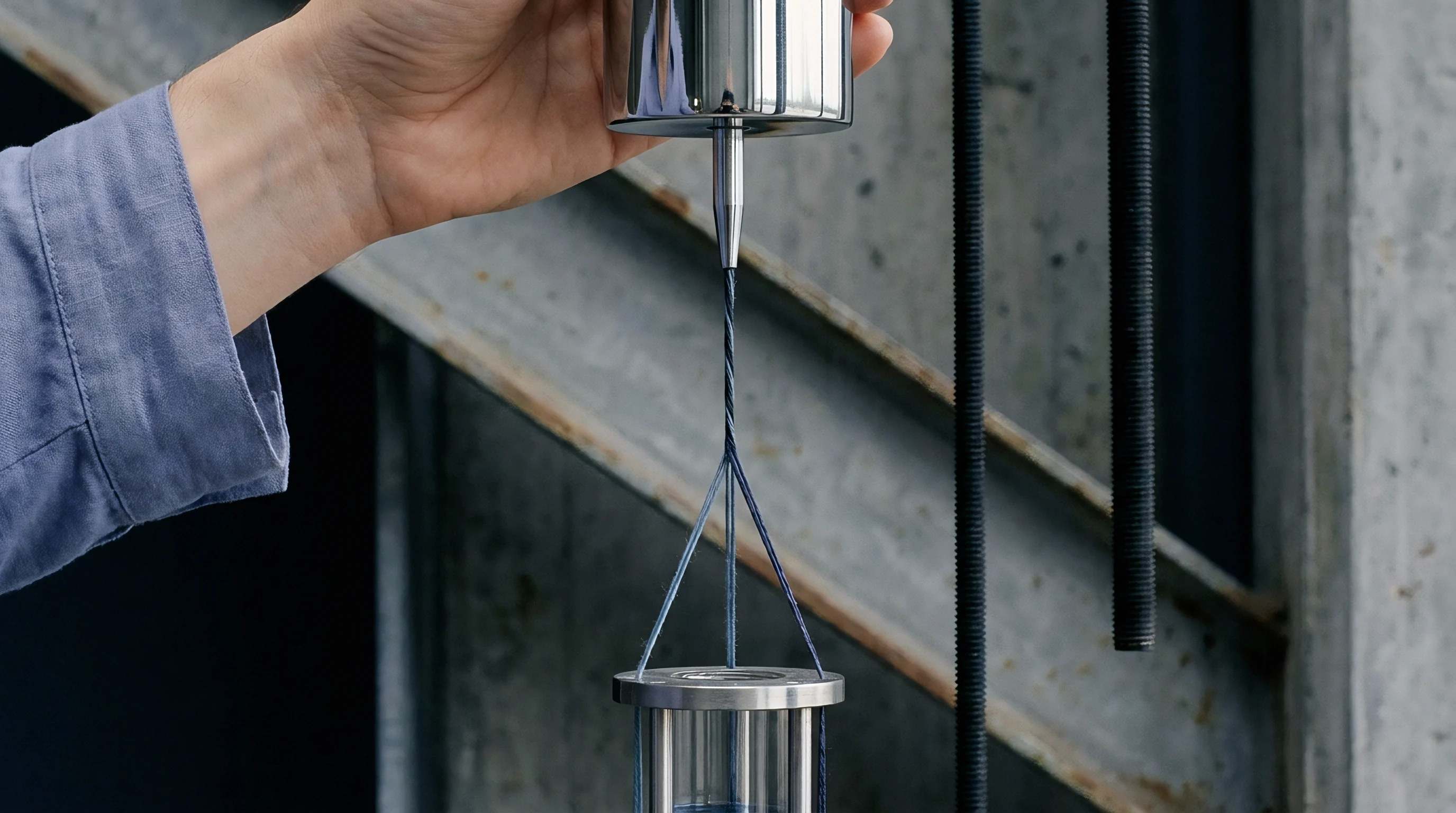
Enzymatic Hydrolysis Pathways across Homogalacturonan Chains
Endo-cleavage splits internal glycosidic bonds at random points along homogalacturonan, cutting chain length dramatically without releasing many free galacturonic acid monomers. Exo-cleavage enzymes trim terminal units one by one, slowly lowering viscosity at a higher substrate cost. For fine spinning, endo-acting enzymes are far more efficient, quickly breaking down the middle lamella while keeping dosage low and cycle times short.
In industrial roving baths, reaction rates depend heavily on how easily enzymes reach the substrate. Pectins tucked into cell corners restrict diffusion for globular enzymes larger than 40 kilodaltons. Adding a non-ionic surfactant during pre-wetting lowers interfacial tension, letting enzyme molecules move into spaces between technical bundles within 15 to 20 minutes at 45 degrees Celsius.
- Excessive Bath Temperature Thermal denaturation of fungal endo-polygalacturonase above 58 degrees Celsius halts glycosidic bond cleavage, leaving high molecular weight galacturonans intact and causing severe drafting resistance on the spinning frame.
- Sub-Optimal pH Control Drift above pH 6.0 in polygalacturonase treatment liquors reduces catalytic efficiency by more than 60 percent, leaving coarse technical bundles that jam frame friction pins during attenuation.
- Unsequenced Calcium Chelation Adding ethylenediaminetetraacetic acid prior to lyase inactivation removes essential catalytic cations, instantly arresting trans-elimination reactions and causing uneven bundle separation across the lot.
- Extended Incubation Dwell Treatment times exceeding 120 minutes allow incidental cellulase contaminants to hydrolyze primary cell wall cellulose, permanently destroying elementary fibre tensile strength and causing high spinning end breaks.
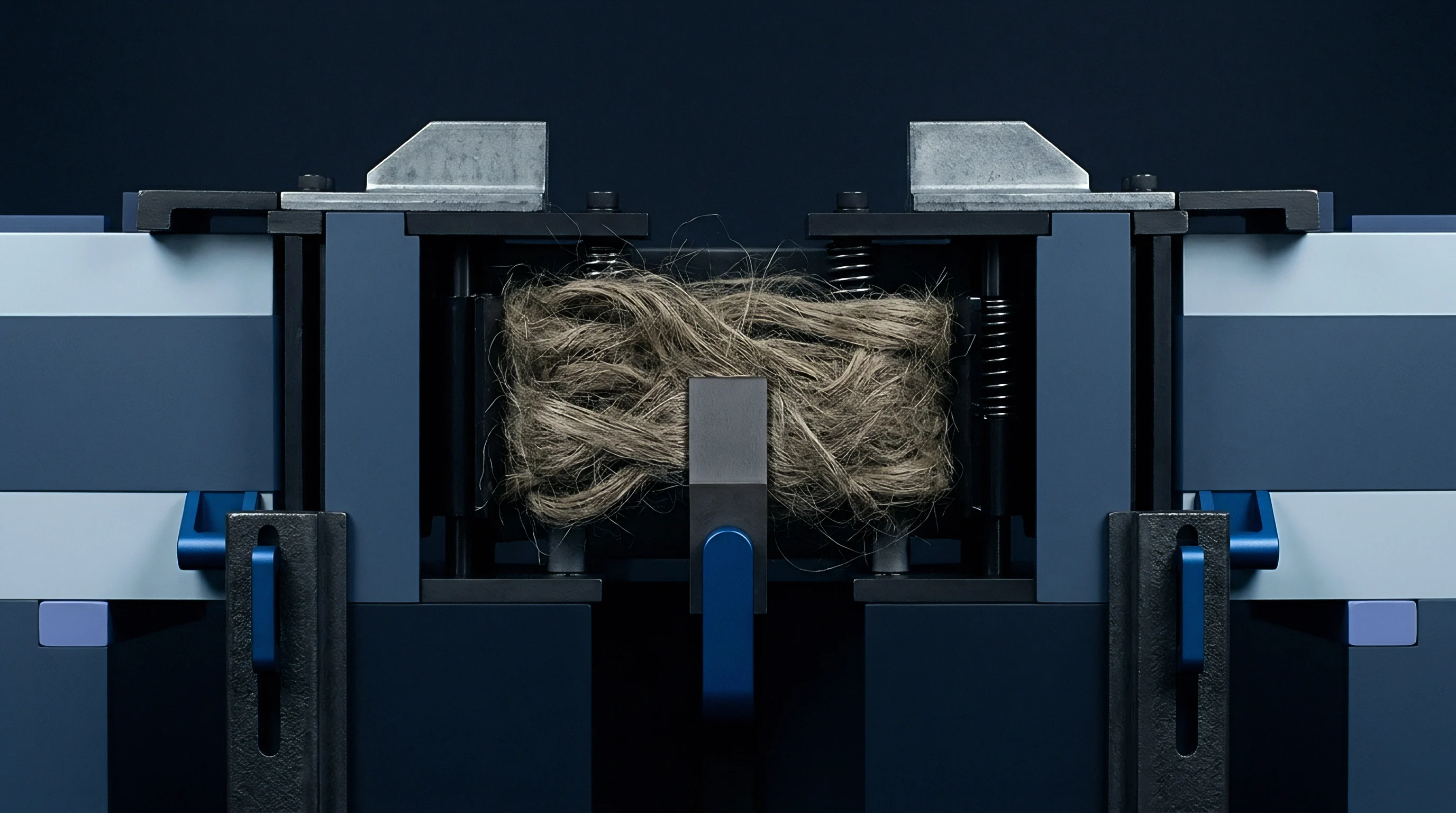
Divalent Cation Chelation Impacting Depolymerization Kinetics
Chelating agents like sodium hexametaphosphate or citric acid shift middle lamella equilibrium by binding cross-linking calcium. Stripping that calcium destabilizes the egg-box structures, opening homogalacturonan’s tertiary structure and exposing hidden glycosidic bonds to endo-polygalacturonases. Combining chelation with enzymatic cleavage accelerates depolymerization faster than either treatment alone.
High-performance processing balances chelation intensity against the risk of damaging cell walls during extraction. Maintaining acidic conditions in the enzyme liquor preserves alpha-cellulose core structures while stripping out non-cellulosic cross-links in the middle lamella.

Strand
Converting treated roving into ultra-fine yarn happens in the wet-spinning frame’s drafting zone after passing through a hot water trough. Maintained between 68 and 75 degrees Celsius, the bath dissolves short-chain oligogalacturonides left from enzyme treatment and softens any remaining pectin. Water lubrication then lowers inter-fibre friction as roving enters the drafting zone, letting elementary fibres slide smoothly past each other under tension.
The strength of the drawn fibre strand depends on breaking down technical bundles while leaving individual elementary fibres intact. These elementary fibres have linear densities of 1.2 to 2.2 decitex and mean lengths of 20 to 45 millimetres. Once enzymatic cleavage strips the middle lamella, drafting forces drop from 15 ~ 25 Newtons per gram down to 3.5 ~ 6.0 Newtons per gram, allowing draft ratios above 20 without snapping the strand.
Tensile testing per ISO 2062 reveals a mean tenacity peak of 38.5 cN/tex at 12 percent moisture regain when homogalacturonan esterification drops below 35 percent.
Mechanical Attenuation in Hot Water Wet Spinning Troughs
Inside the wet trough, drafting mechanics depend on hydrodynamic drag and capillary forces between fibres. As front rollers accelerate the leading edge of the stream, liquid menisci between adjacent fibrils generate lateral pressure. This holds the bundle together without needing heavy pectin binder, provided the elementary fibres retain enough surface friction.
Stripping the middle lamella completely leaves bare cellulose surfaces that lack cohesion once dry. Conversely, under-cleavage leaves bundles over 60 micrometres thick that cannot be drafted into fine counts like Nm 100 without high mass variation. Effective processing targets a mean bundle diameter of 15 to 22 micrometres, matching the requirements for fine spinning.
Why Does Residual Homogalacturonan Dictate Fine Count Spin Limits?
Residual homogalacturonan levels determine how many individual fibres sit in a yarn cross-section, which directly affects end breaks. An Nm 80 yarn (12.5 tex) contains roughly 60 to 80 elementary fibres in cross-section. If poor cleavage leaves coarse bundles of 10 to 15 bound fibres, that count drops to just 5 to 8 structural units.
Having so few independent units spikes mass variation, creating weak spots where tension easily exceeds strand strength.
Progressive cleavage increases the number of independent fibres passing through the draft zone, bringing the coefficient of mass variation (Uster CV%) down from 28 percent to 13.5 percent. A higher fibre count per cross-section distributes twist more evenly, converting elementary fibre tenacity into higher finished yarn strength.
Standard ISO 2370 compliance failure during fineness classification forfeits the buyer’s right to claim spinning break compensations.
| Cleavage State | Mean Bundle Diameter (um) | Peak Drafting Force (N/g) | Achievable Count (Nm) | Single-Yarn Tenacity (cN/tex) | Uster Mass CV (%) |
|---|---|---|---|---|---|
| Unrefined (Control) | 55.4 | 22.8 | Nm 30 | 21.2 | 24.5 |
| Partial Lyase Treatment | 32.1 | 11.4 | Nm 50 | 28.6 | 18.2 |
| Targeted Endo-Polygalacturonase | 18.5 | 4.8 | Nm 90 | 39.1 | 13.1 |
| Over-Degraded (Cellulase Contaminated) | 12.2 | 2.1 | Nm 100 (Unstable) | 16.4 | 22.8 |
| Notes: Tensile metrics determined in accordance with ISO 2062 using a gauge length of 500 mm at a constant rate of extension of 500 mm/min on conditioned samples at 20 degrees Celsius and 65 percent relative humidity. Single-fibre fineness measured via ISO 2370 airflow methods. | |||||
- Immerse sample roving packages in deionized water at 20 degrees Celsius for 30 minutes to establish uniform core hydration.
- Transfer roving to an buffered enzymatic bath containing 2.5 grams per litre endo-polygalacturonase at pH 4.8.
- Ramp treatment bath temperature to 48 degrees Celsius over 15 minutes while maintaining continuous liquor circulation.
- Hold liquor temperature at 48 degrees Celsius for 60 minutes under continuous pH monitoring.
- Raise bath temperature to 85 degrees Celsius for 10 minutes to thermally deactivate all residual enzyme proteins.
- Drain treatment bath and execute two warm rinses at 60 degrees Celsius followed by one cold rinse with deionized water.
- Extract excess liquor via centrifugal hydro-extraction to achieve a wet pickup target of 55 percent.
- Dry roving packages in a circulation oven at 65 degrees Celsius until reaching equilibrium moisture content of 10.5 percent.
Incomplete galacturonan cleavage forces drafting rollers to shear intact bundles, producing mass spikes, frequent breaks, and rejected lots.
Attenuation
Spinning frames require adjusted drafting settings to handle the altered friction of enzyme-treated roving. Ratch settings ~ the distance between drawing and delivery nips ~ must reflect the shorter mean fibre lengths produced when middle lamella bonds break down. Unrefined flax needs ratch distances between 75 and 90 millimetres so long technical bundles pass without pinching.
Treated roving made of separated elementary fibres requires a tighter ratch between 42 and 52 millimetres. If set too wide, short fibres float through the drafting zone without nip control, creating alternating thick and thin spots called drafting waves. Inserting brass control rods or friction pins in the wet trough restores boundary friction and stabilizes these floating fibres.
High degree of methoxyl esterification in raw flax middle lamella increases hot water bath dwell requirements during ring spinning.

Ratch Geometry and Friction Pin Positioning for Ultra-Fine Lines
Where control pins sit relative to the water level sets the roving’s entry angle into the drafting nip. Increasing the wrap angle over brass pins raises back tension, preventing twist from creeping into the main drafting zone. Keeping twist in the back zone stops the strand from slipping before it undergoes primary drafting.
Front roller nip pressure must stay elevated during enzyme-treated runs to prevent slippage at high draft ratios. Pneumatic loading systems applying 18 to 24 decanewtons per roller end maintain grip on wet, delicate fibre streams. Low nip pressure leads to localized speed drops, causing uneven twist distribution and a sharp loss in single-end tenacity.

Mass Variation and Single-End Breakage Dynamics
Mass variation measured over 1,000 metres shows how evenly pectin was removed across the roving package. Online capacitive monitors, such as Uster Tester systems, flag thick spots caused by uncleaved bundles. When a coarse bundle hits the traveler, spinning tension spikes instantly beyond the strand’s tensile limit, snapping the yarn.
Operational targets for ultra-fine wet spinning keep end breaks below 25 per 1,000 spindle hours. Meeting this target at delivery speeds above 18 metres per minute requires a coefficient of variation in fibre fineness below 18 percent across the roving. Contracts referencing ISO 2062 tensile standards with explicit cN/tex floors give buyers grounds to reject yarn spun from over-retted or degraded fibre.
Scale
The economics of enzymatic pectin cleavage hinge on balancing chemical treatment costs against market pricing for fine yarns. Scutched long-staple flax line suitable for fine spinning starts at 4.80 to 6.20 Euros per kilogram. Without enzyme treatment, commercial wet spinning tops out around Nm 60 (16.6 tex), producing yarn worth 18.00 to 22.00 Euros per kilogram depending on lustre and strength.
Adding endo-polygalacturonase during roving preparation costs about 0.85 to 1.35 Euros per kilogram in enzymes, buffers, and heat. The refined roving spins up to Nm 90 (11.1 tex) or Nm 100 (10.0 tex). Since Nm 90 yarn fetches 38.00 to 46.00 Euros per kilogram, gross margins expand significantly even after accounting for process costs and higher spinning waste.
Pectate lyase cleavage requires precise calcium ion activity to maintain enzymatic velocity without embrittling cellulosic primary walls.
Yarn Yield Arithmetic for Ultra-Fine Wet Spun Counts
Yield calculations track cumulative material losses through hackling, roving preparation, enzyme scouring, and spinning draft waste. Processing a 1,000-kilogram lot of scutched flax yields about 680 kilograms of dressed line, with 320 kilograms split off as tow. Roving prep and enzyme treatment then remove 4.5 to 6.5 percent of non-cellulosic mass as pectins and oligosaccharides dissolve.
Consider a 1,000-kilogram starting lot of scutched flax line processed into Nm 90 wet-spun yarn. Hackling yields 680 kilograms of grey roving. Enzymatic treatment cuts dry mass by 5.2 percent, leaving 644.6 kilograms of treated substrate.
Wet spinning at Nm 90 with an end-breakage rate of 22 breaks per 1,000 spindle hours creates 3.8 percent soft waste at the frame, resulting in 620.1 kilograms of packable yarn.
| Yarn Count (Nm) | Enzyme Cost (EUR/kg) | Scour Mass Loss (%) | Spinning Waste (%) | Final Yield per Tonne Raw (kg) | Yarn Value (EUR/kg) | Fabric Value per Linear Metre (EUR) |
|---|---|---|---|---|---|---|
| Nm 60 (Standard Water-Retted) | 0.00 | 1.8 | 2.1 | 653.8 | 20.50 | 8.40 |
| Nm 80 (Polygalacturonase Refined) | 0.95 | 4.8 | 3.2 | 631.2 | 32.00 | 12.80 |
| Nm 100 (Optimized Dual Enzyme) | 1.40 | 6.1 | 4.5 | 615.1 | 48.00 | 18.50 |
Fabric value calculations highlight the economic impact at the weaving mill. A plain weave linen fabric produced at 150 centimetres width with 24 threads per centimetre in warp and weft requires approximately 145 grams of yarn per linear metre. Using Nm 60 yarn, raw material yarn cost per metre stands at 2.97 Euros.
Converting to Nm 90 yarn at 97 grams per linear metre drops yarn weight per metre significantly, while fabric retail value increases due to high sheer hand and superior drape. Whether controlled enzymatic cleavage can completely replace hot water trough softening at industrial spinning speeds without sacrificing yarn tenacity remains an open operational question.