Airflow Porosimetry Calibration Parameters for Unhackled Dew-Retted Long Flax Bundles
Precise airflow porosimetry of unhackled dew-retted flax requires axial strick alignment, controlled 196 kPa compaction, and 12 percent regain normalization.


Permeability
Direct pneumatic measurement of unhackled long flax relies on laminar airflow through a porous plug of aligned technical fibre bundles. Inside the cylinder, flow regimes follow modified hydraulic radius assumptions that tie pressure loss directly to the envelope surface area of the stricks. Unlike cotton lint, unhackled dew-retted long flax bundles retain a composite cellular structure bound by residual pectinaceous middle lamellae, creating heterogeneous interstitial voids under standard pneumatic draw.
Airflow resistance measurements taken at 12.0 percent moisture content yield an empirical specific surface area of 0.285 square metres per gram for standard Dew-Retted Grade 4 long flax.
Wall-effect channeling distorts differential pressure readings whenever bundle alignment strays from the longitudinal axis of the sample chamber. To ensure axial orientation, operators dress raw flax stricks through a coarse comb before loading, preserving technical bundle continuity without stripping short fibre fractions. Standard testing chambers for long flax use an internal diameter of 25.4 millimetres and a fixed bed length of 50.0 millimetres, sized for bundle test masses calibrated to the specific density of dew-retted bast tissue.
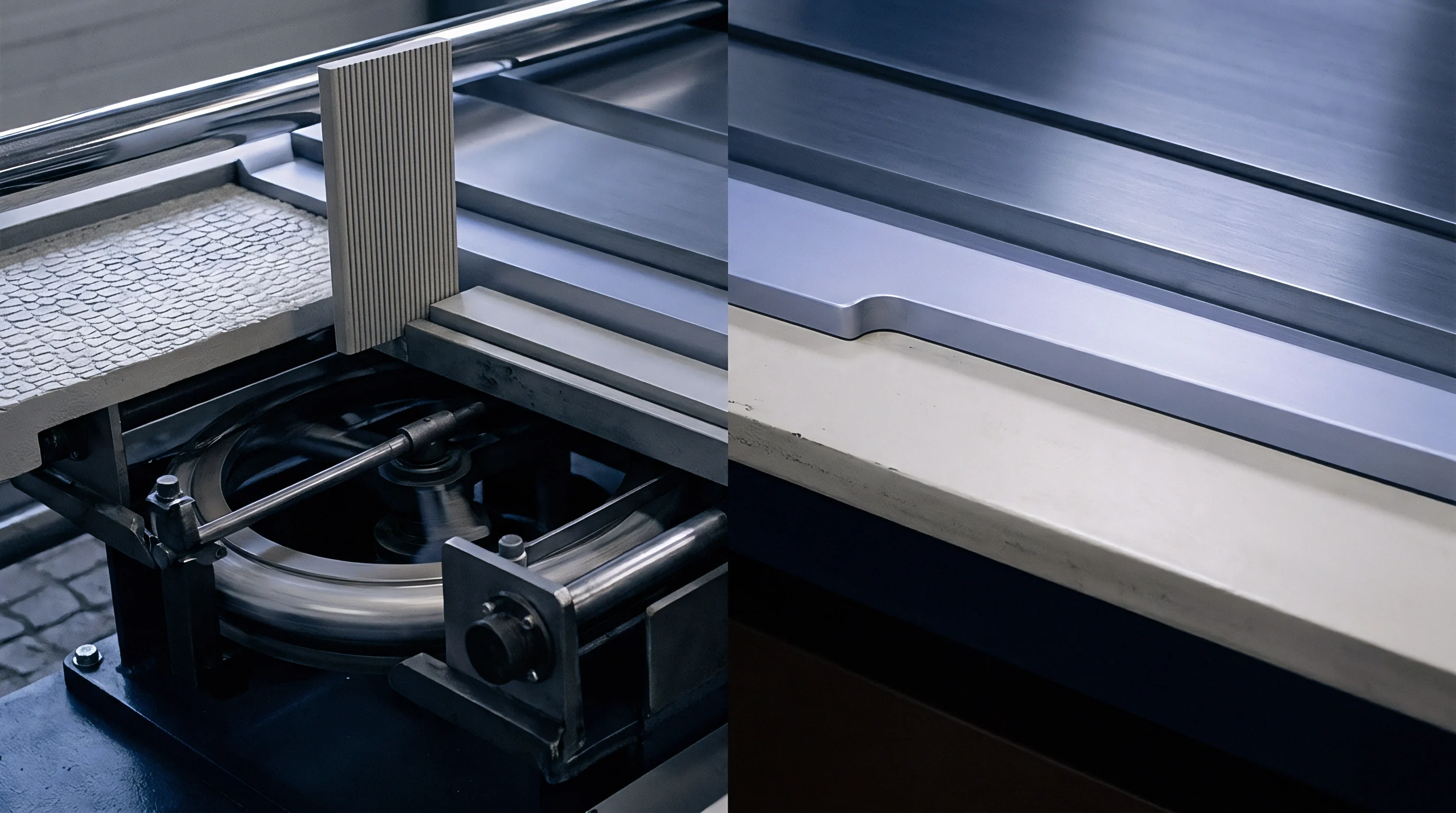
Fluid Dynamics across Heterogeneous Bast Plugs
Viscous losses through packed technical fibre beds obey the Kozeny-Carman relationship at Reynolds numbers below 0.15. Because dew-retting degrades parenchymatous outer tissues unevenly along the stem, the cross-sectional profile stays irregular, giving bast bundles dynamic hydraulic radii that depart significantly from ideal cylinders. Consequently, the shape factor k in the Kozeny equation increases from the standard 5.0 up to 6.12 for raw dew-retted bundles with intact cuticular plates.
| Bundle Grade Designation | Mean Linear Density (tex) | Kozeny Shape Factor (k) | Chamber Porosity (ε) | Specific Surface Area (m²/g) |
|---|---|---|---|---|
| Dew-Retted Line Flax Grade 3 | 3.80 to 4.50 | 6.45 | 0.620 | 0.215 |
| Dew-Retted Line Flax Grade 4 | 2.90 to 3.70 | 6.12 | 0.620 | 0.285 |
| Dew-Retted Line Flax Grade 5 | 2.10 to 2.80 | 5.85 | 0.620 | 0.360 |
| Dew-Retted Line Flax Grade 6 | 1.40 to 2.00 | 5.50 | 0.620 | 0.445 |
Instrument chambers operating under constant volumetric flow use differential pressure transducers with an operational range of 0 to 5.0 kilopascals. If airflow velocity exceeds linear limits, turbulent eddies develop across the boundaries of individual bast strands, artificially inflating the calculated specific surface area. Keeping pneumatic differential stability within plus or minus 0.5 percent requires dual-stage upstream pressure regulation and precise atmospheric venting.
- Volumetric Flow Rate stabilizes at 4.00 litres per minute under baseline barometric pressure of 101.3 kilopascals.
- Chamber Aspect Ratio maintains a length-to-diameter proportion of exactly 2.00 to balance pressure drop with perimeter bypass.
- Differential Pressure Transducer delivers 0.05 percent full-scale repeatability across standard ambient humidity ranges.
- Pneumatic Flow Restrictor prevents sudden velocity surges during initial plug compression cycles.
Under IWTO and CETELOR guidelines, raw flax fineness certificates must state the exact pneumatic pressure drop and chamber mass index applied during qualification. In European long flax supply contracts, standard arbitration clauses invalidate commercial price adjustments if porosimetry determinations leave out the baseline chamber shape factor.


Regain
Sorption kinetics in unhackled bast fibres cause substantial dimensional shifts across technical bundles. Cell walls absorb water vapour directly into non-crystalline cellulosic domains and residual hemicellulose matrices, expanding the transverse diameter of elementary fibres with little corresponding extension along their length. Between 45 percent and 85 percent relative humidity, transverse diameter grows by up to 22 percent, narrowing the interstitial airflow paths inside the porosimeter chamber.
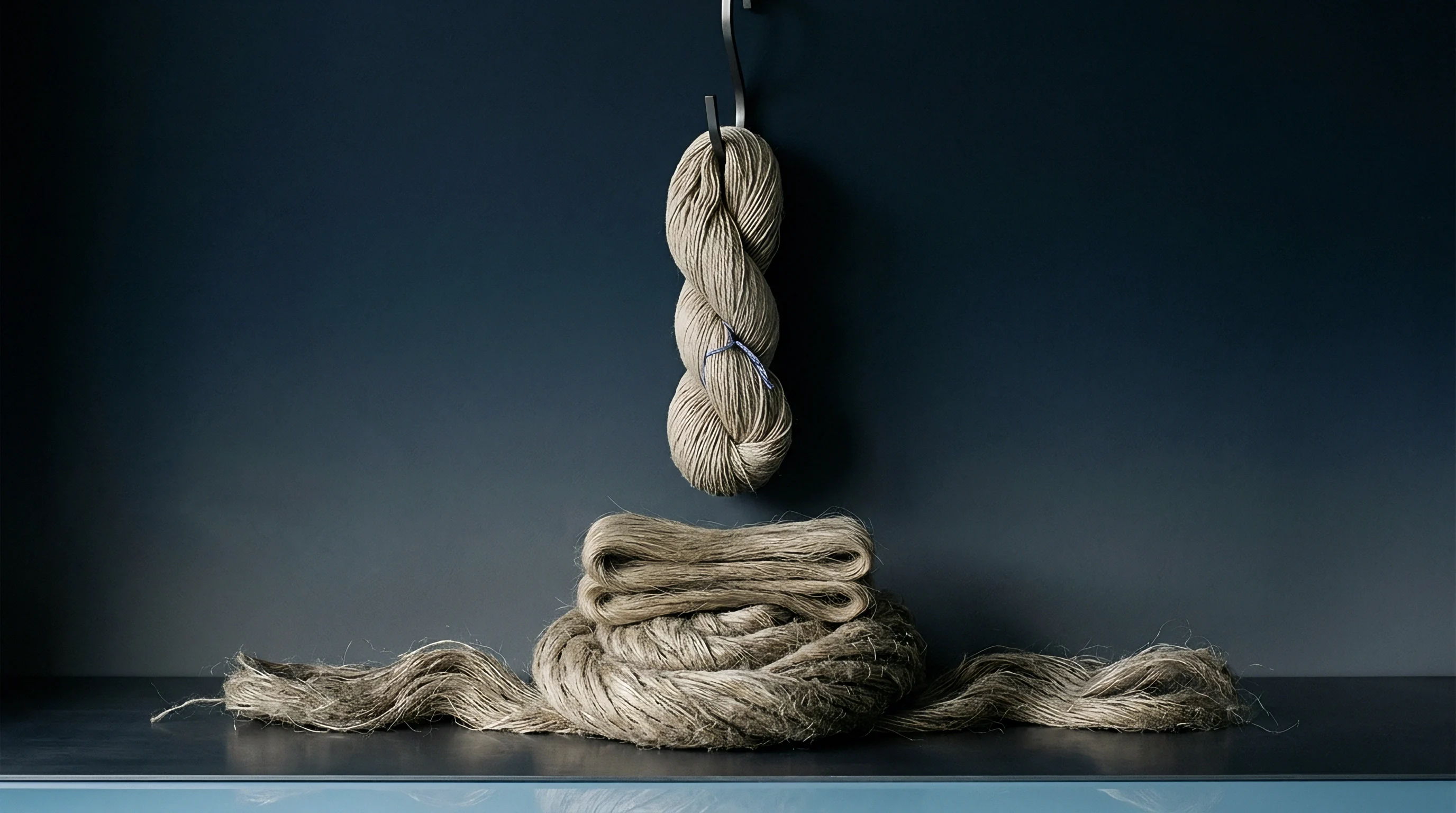
Which Porosity Correction Factor Governs Wet Swelling?
Hygroscopic expansion alters both the physical volume of the fibre mass and the shape factor controlling interstitial flow, so shifts in relative humidity alter measured air permeability regardless of actual bundle fineness. Testing unconditioned bundles straight from shipping containers produces artificially high differential pressure readings as swelling reduces void space. Conditioning samples to standard atmosphere under ISO 139 (20.0 degrees Celsius, 65.0 percent relative humidity) establishes the thermodynamic equilibrium required for reproducible fineness assays.
Testing under ISO 2370 without pre-conditioning invalidates commercial fineness claims during lot acceptance disputes.
Correction formulas scale measured differential pressure back to standard moisture regain benchmarks ~ typically 12.0 percent commercial regain for dew-retted line flax. For dew-retted stock, the empirical expansion coefficient alpha is 0.014 per percentage point of moisture regain variation from standard equilibrium.
- Dry the representative strick subsamples in a ventilated conditioning cabinet at 105 degrees Celsius until mass changes cease.
- Transfer dried bundles to an atmosphere maintained at 20.0 degrees Celsius and 65.0 percent relative humidity.
- Record package mass at fifteen-minute intervals until three successive measurements agree within 0.05 percent.
- Compute the operational moisture regain percentage directly before charging the porosimeter cylinder.
Under-retted flax lots retain hydrophobic cuticular waxes that slow moisture uptake during conditioning, whereas over-retted material equilibrates within two hours. Raw flax bundles can also swell during maritime transit regardless of mill conditioning protocols, affecting initial permeability scores upon arrival.

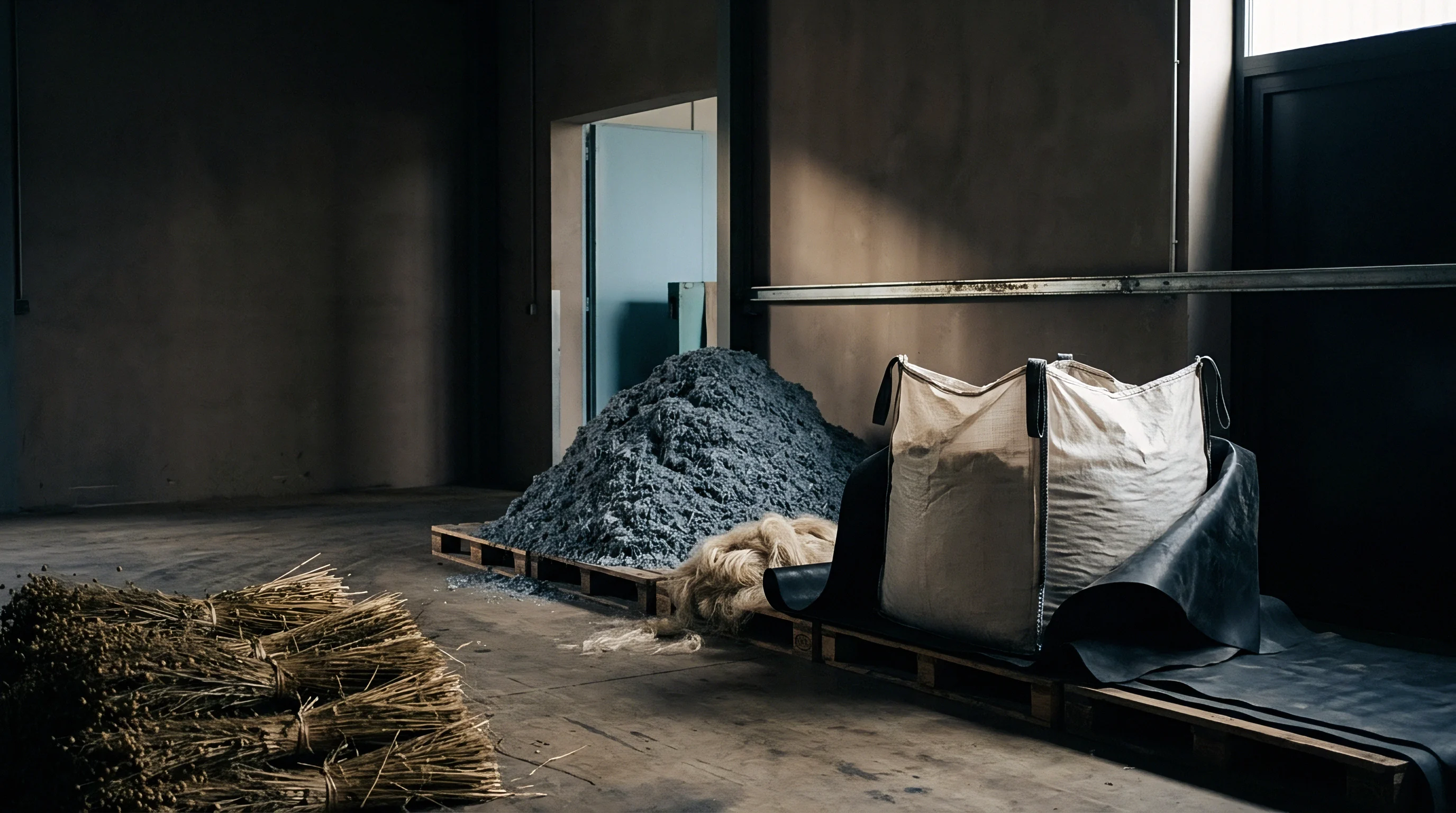
Compression
Mechanical compaction of long bast stricks inside the cylinder dictates the solid volume fraction of the fibrous bed. Because unhackled flax contains coarse technical bundles with bending stiffness four to six times higher than hackled line slivers, achieving uniform plug density requires controlled axial loading instead of manual packing. Insufficient compressive force leaves low-density zones that distort airflow through the specimen.
Coarse unhackled stricks pack unevenly, channeling the air stream along perimeter boundaries rather than through internal bundle voids.
Porosimeters designed for bast fibres use pneumatic or dead-weight pistons to exert a specific compaction pressure of 196.2 kilopascals (2.0 kilograms per square centimetre) on the bundle column. This force overcomes bundle curl and aligns flexed strands without fracturing elementary cell walls. Lower packing loads leave open inter-bundle macro-voids, invalidating the core assumptions of the Kozeny-Carman model.

Will Variable Shive Content Distort Linear Differential Pressure?
Woody core fragments left over from incomplete scutching alter the bulk density profile of the sample. Compared to bast filaments, shive pieces have low surface-to-volume ratios and act as geometric obstructions in the airstream. As a result, an unhackled dew-retted bundle lot carrying 3.5 percent residual shive by weight generates lower differential pressure than clean bast bundles with the same mean filament count.
| Applied Piston Load (kPa) | Plug Height (mm) | Bed Density (g/cm³) | Inter-Bundle Void Ratio | Pressure Drop ΔP (kPa) |
|---|---|---|---|---|
| 49.0 | 62.4 | 0.395 | 0.737 | 0.82 |
| 98.1 | 55.8 | 0.442 | 0.705 | 1.24 |
| 147.2 | 51.6 | 0.478 | 0.681 | 1.68 |
| 196.2 | 48.0 | 0.514 | 0.657 | 2.15 |
| 245.3 | 46.2 | 0.534 | 0.644 | 2.48 |
Calibrating the compression piston displacement transducer against certified steel gauge blocks eliminates volumetric calculation errors during routine testing. The compression stroke profile follows a defined deceleration curve, preventing air entrapment beneath the advancing piston face.
- Initial Strick Mass matches 5.000 grams weighed to an analytical tolerance of plus or minus 0.002 grams.
- Specimen Insertion Guide channels raw bundles without creating transverse bends or tangled knots.
- Piston Dwell Duration maintains maximum compression for thirty seconds before the pneumatic valve opens.
- Residual Shive Tare subtracts non-fibrous woody mass determined via secondary gravimetric fractionation.
A central physical challenge remains whether non-destructive acoustic resonance profiling can isolate shive volume fractions from true bast bundle fineness during rapid, high-throughput airflow evaluations.
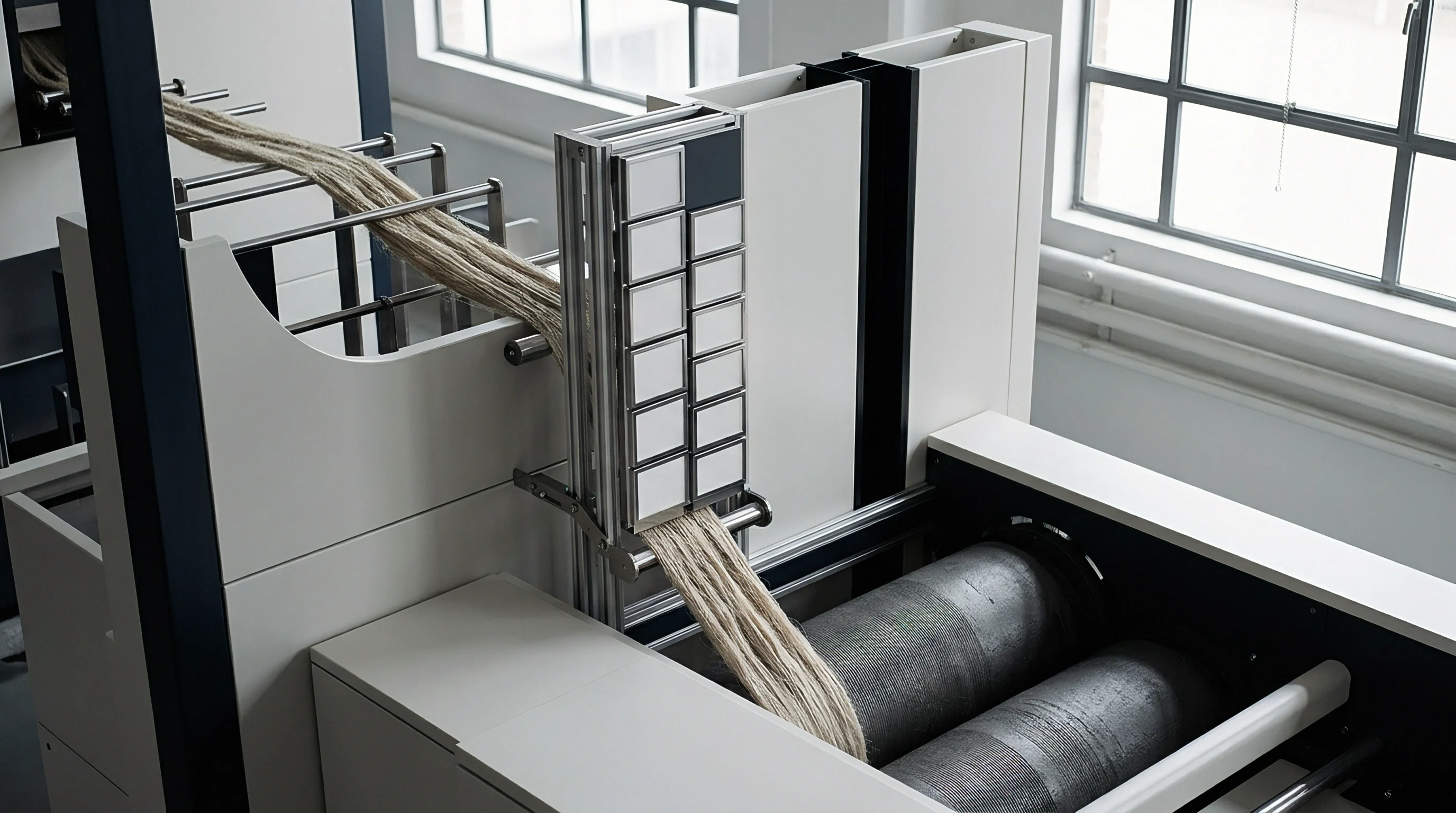
Allocation
Downstream spinning yields depend directly on the technical fineness measured by porosimetry. Unhackled dew-retted line flax lots testing above 3.5 tex linear density cannot support wet spinning counts beyond Nm 39 without excessive end breaks. By contrast, finer bundle lots measuring between 1.8 and 2.4 tex draw smoothly through wet-spinning draft zones, sustaining yarn counts of Nm 60 to Nm 80 at standard drafting speeds.
Residual cortical parenchyma adheres to dew-retted technical fibres, increasing apparent pneumatic resistance across the test cylinder.
Miscalibrated airflow instruments that underestimate raw bundle coarseness expose wet spinning mills to severe operational disruption. A lot misgraded by 0.5 tex forces the preparation room to increase hackling comb cycles, converting high-value line flax into low-margin tow at an average yield penalty of 6.5 percent per grade drop. The resulting yarn shows higher mass variance, lower tenacity, and frequent end breaks at the ring frame.
If bypass leaks develop, manometer fluid registers zero, while bale cores retain ambient heat during transport. Long flax fibre that enters the gill box with confirmed pneumatic fineness preserves its commercial value across every drafting passage.