Standard Cut Length Gravimetric Methods for Line Flax Linear Density Testing
Standard cut length gravimetric testing uses strict pretensioning, razor sectioning, and moisture regain corrections to establish spinnable tex accurately.


Specimen
Measuring line flax linear density accurately depends on extracting undamaged, parallel fibre bundles from scutched or hackled stricks before cutting the material. Technical flax fibres consist of multicellular ultimate cells held together by pectinaceous middle lamellae, creating continuous overlaps along the length of the strick. Sampling requires selecting representative stricks across a landed lot and isolating mid-piece bundles while avoiding root and tip ends where linear density naturally tapers.
Small sub-bundles are pulled manually using flat combs to strip away loose tow, unmapped shive, and broken fragments.
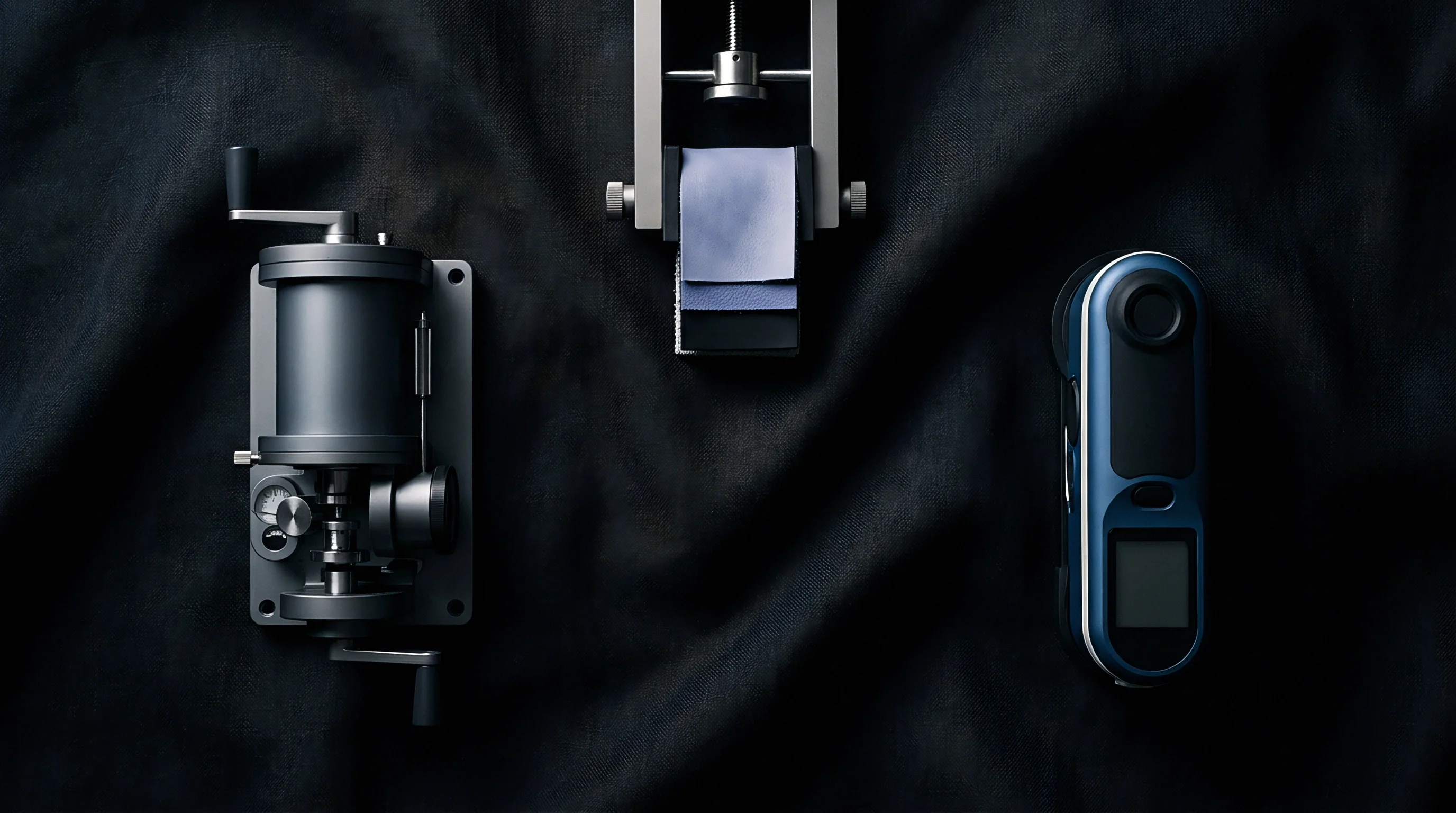
Parallel Fibre Alignment in Clamp Assembly
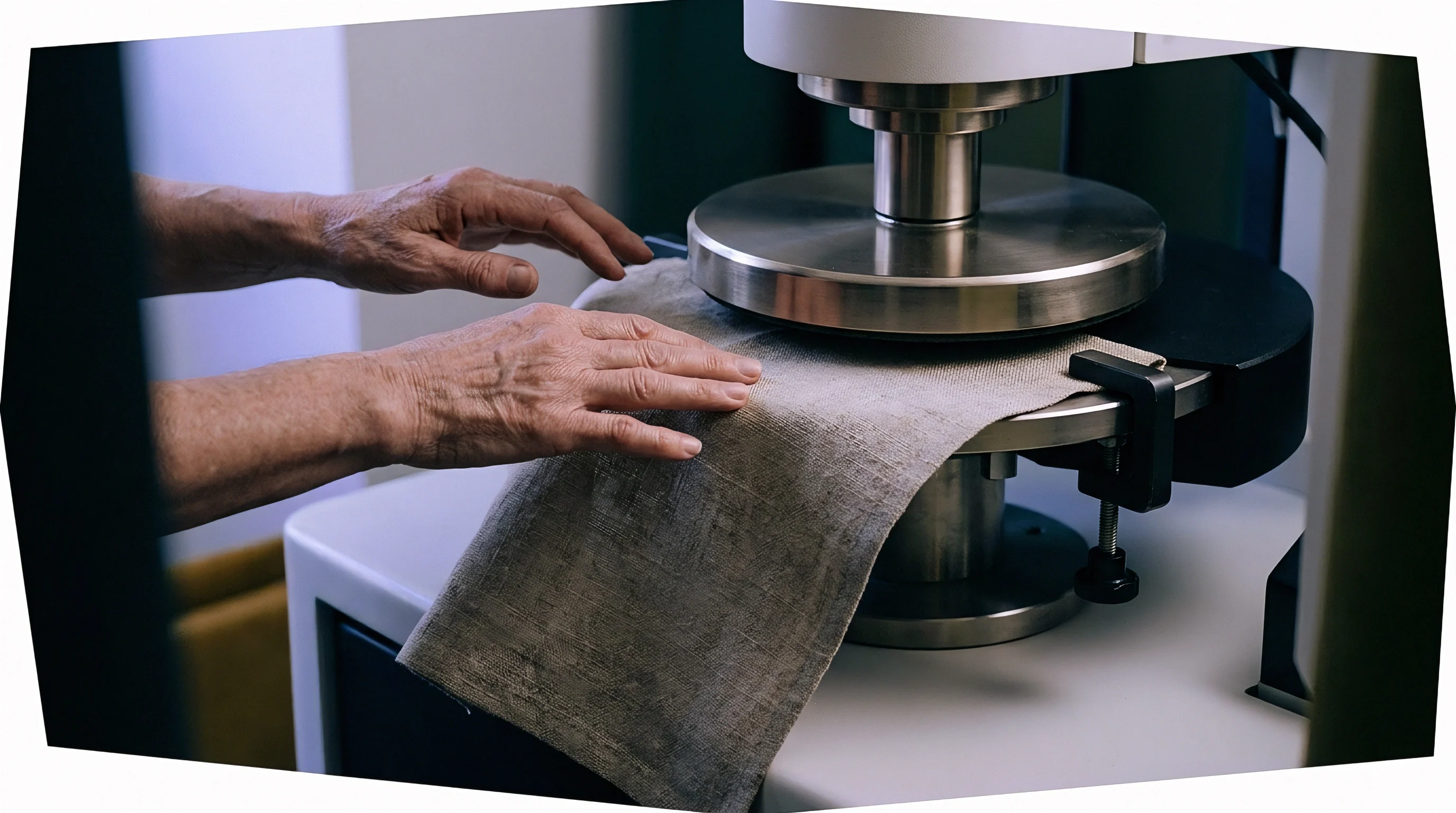
Mounting the extracted strand into a dedicated dual-clamp trimming jig anchors the raw material under controlled mechanical tension. Without uniform pre-tensioning set between 0.05 and 0.10 centinewtons per tex, individual flax filaments buckle inside the cutting zone, yielding inconsistent strand lengths upon trimming. Because manual clamping forces vary, a fixed-weight clamp delivers repeatable tensioning across operator shifts, eliminating slack that distorts the effective cut length.
Filaments are aligned along a linear axis using a velvet-lined mounting stage to prevent cross-over angles that inflate the mass of the trimmed midsection.
- Select five representative line flax stricks from distinct bales within the target inspection lot.
- Grasp each strick at its midpoint and comb out short unaligned fragments using a hand comb with two-millimeter pin spacing.
- Draw a sub-sample bundle weighing approximately 0.5 to 1.0 gram from the central core of the combed strick.
- Mount the sub-sample bundle into the double-bladed cutting jig under a fixed dead-weight pretension load of 50 grams.
- Tighten primary lock screws to secure the strand ends outside the primary gauge area.
- Lower the high-rigidity anvil plate onto the secured filament bed to hold individual ultimate fibres flat against the cutting groove.
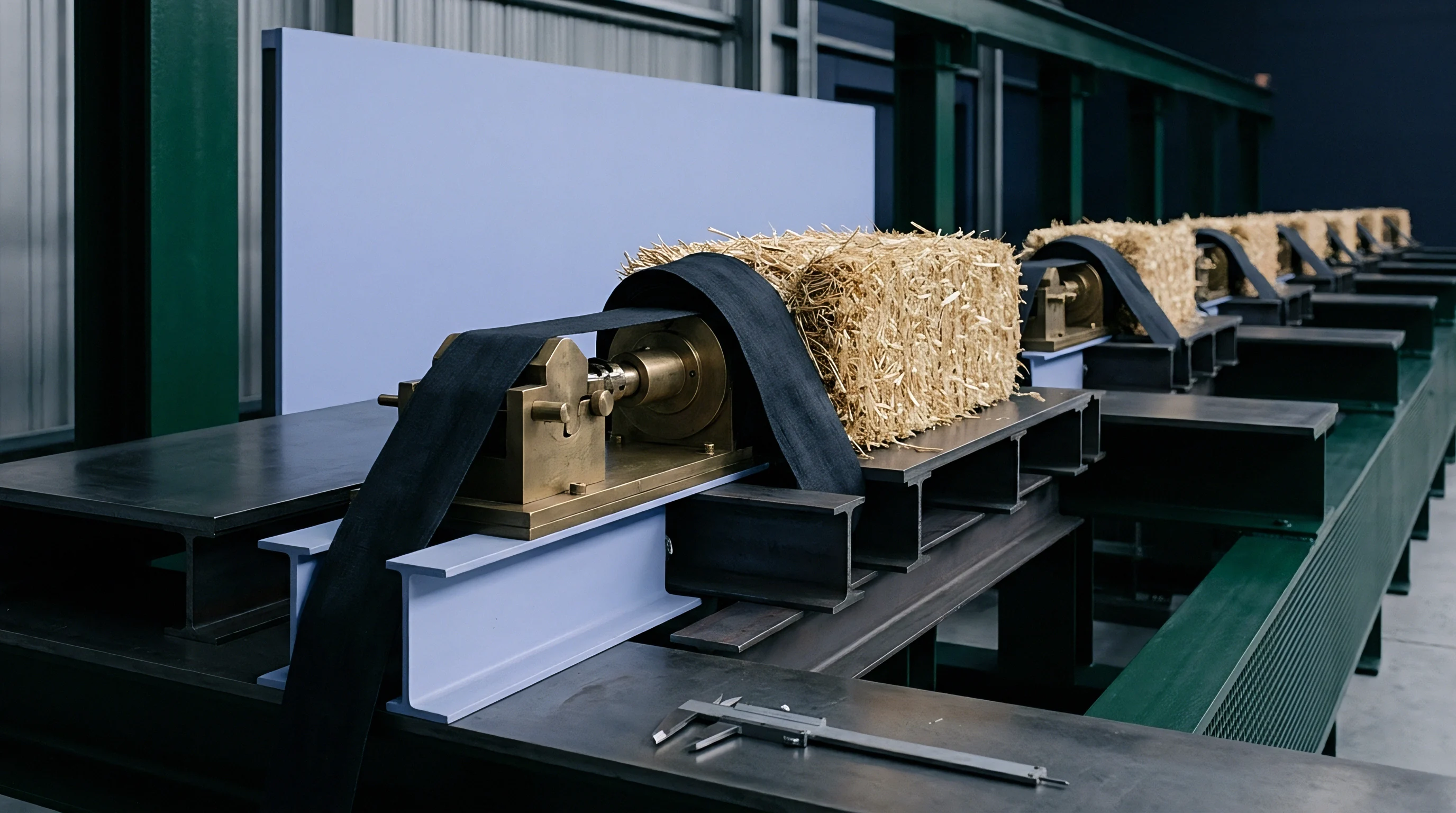
Razor Trimming Mechanics and Cut Edge Distortion
High-speed steel or carbide razor blades cut through the clamped bundle along fixed anvil slots set at known intervals. Standard specimen lengths are cut at precisely 10 millimeters, 20 millimeters, or 50 millimeters depending on the analytical protocol selected. Dull blades drag outer technical fibres instead of shearing them cleanly, pulling extra filament length from outside the cutting zone into the test bundle.
This shear deformation introduces a systematic positive mass bias, understating the actual fineness of the lot. Replacing razor blades every twenty cutting passes maintains edge squareness and prevents filament fraying.
Pretensioning flax strands prior to double-anvil trimming prevents filament curvature errors from corrupting cut length precision.
Following the cut, trimmed filaments are transferred to anti-static weigh boats using soft-tipped brass tweezers. Plastic tweezers produce electrostatic attraction, causing fine ultimate fibres to jump, separate, or cling to tool surfaces, leading to unrecorded specimen loss prior to gravimetric weighing. Misalignment during the sectioning sequence introduces length errors exceeding three percent, shifting the calculated linear density of a 1.5 tex fibre bundle into an incorrect quality grade.


Mass
Gravimetric linear density calculation combines precision mass determination with strict dimensional cut control. Expressed in tex (grams per 1,000 meters) or decitex (grams per 10,000 meters), the linear density of line flax reflects the average cross-sectional mass of the technical fibre bundle. Because flax is a hygroscopic bast fibre, raw mass readings vary directly with ambient moisture content.
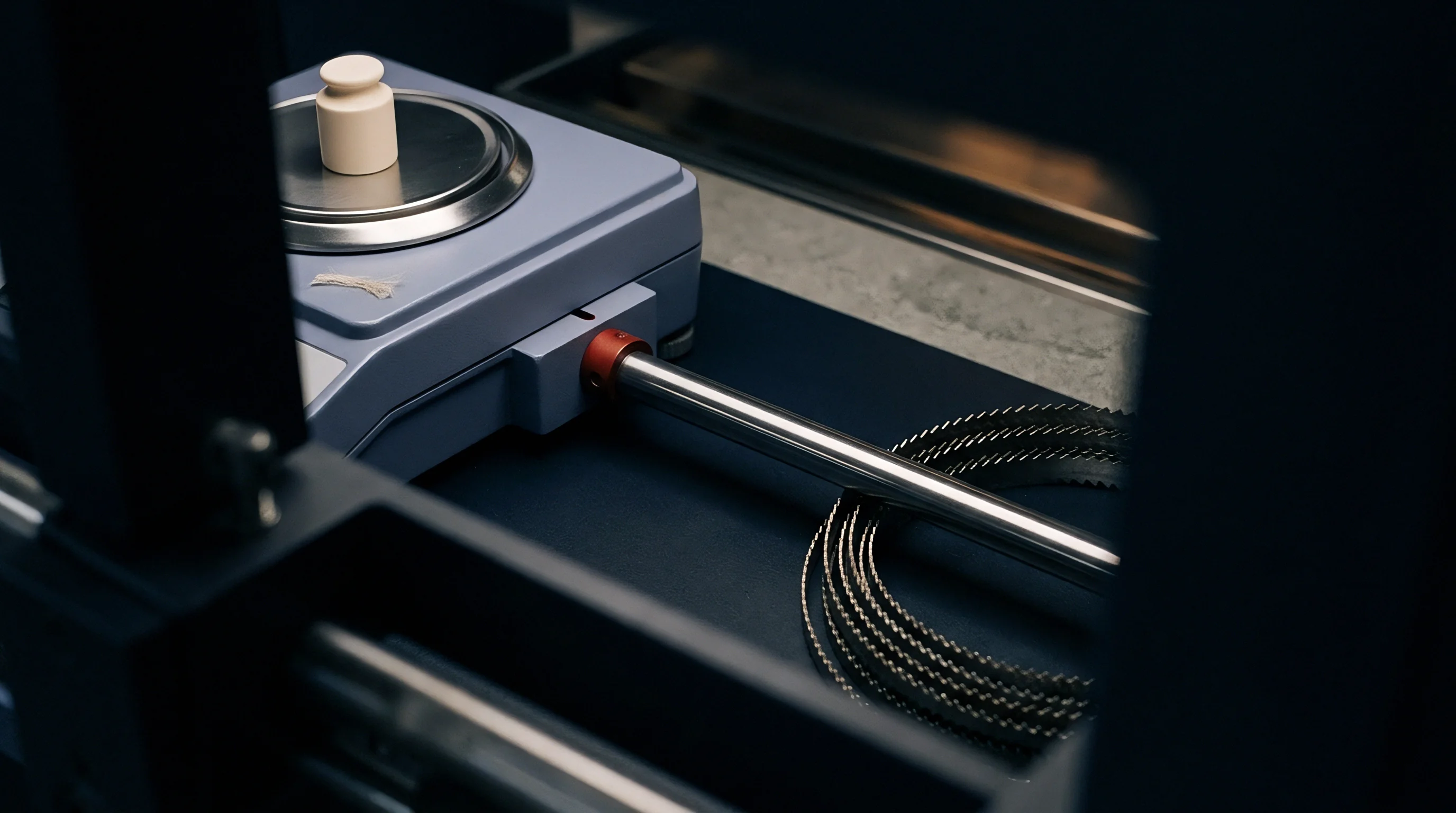
A microbalance with a sensitivity of 0.001 milligrams measures trimmed bundle specimens inside a climate-controlled enclosure held at 20 degrees Celsius and 65 percent relative humidity according to standard testing parameters.
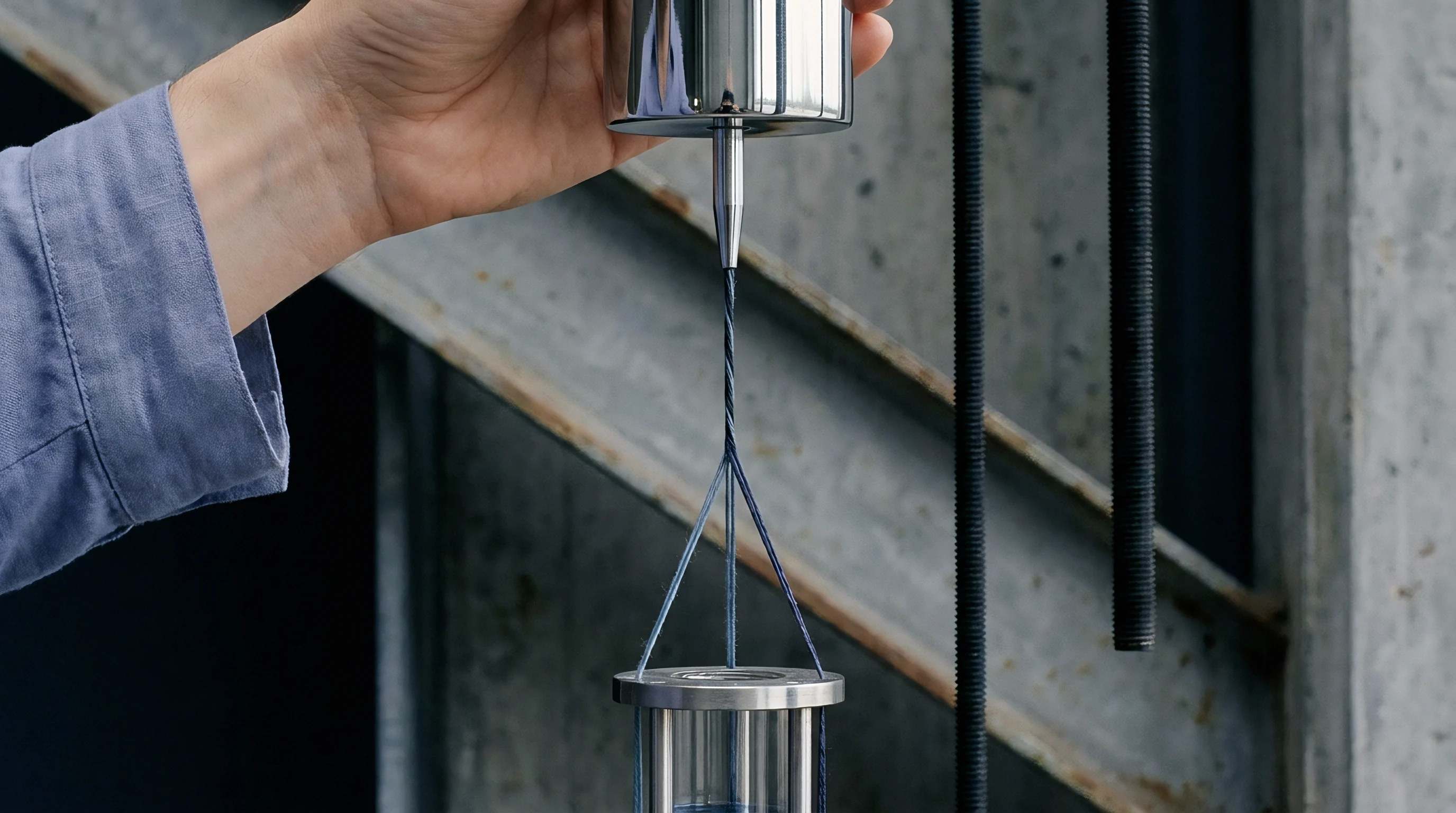
Oven Dry Weight and Moisture Equilibrium Corrections
Moisture regain in flax averages 12 percent under standard atmospheric conditions, but raw bales entering testing facilities often range between 8 and 15 percent moisture depending on transit conditions. Oven drying cut specimens at 105 degrees Celsius until mass stabilization yields the absolute dry mass, to which the official commercial moisture regain factor of 12 percent is applied mathematically. Alternatively, cut specimens condition inside the standard atmosphere for 24 hours until reaching equilibrium mass, avoiding the risk of ruining structural flax pectin through prolonged oven heat.
| Parameter Method | Cut Length (mm) | Bundle Mass Range (mg) | Balance Precision (mg) | Conditioning Requirement |
|---|---|---|---|---|
| ISO 2370 Standard Cut | 10.0 or 20.0 | 2.000 to 10.000 | 0.001 | 24h at 20C / 65% RH |
| ISO 1973 Mod Cut | 50.0 | 10.000 to 50.000 | 0.005 | 24h at 20C / 65% RH |
| Oven Dry Absolute | 20.0 | 1.500 to 8.000 | 0.001 | 105C to constant mass |
| Rapid Gravimetric Check | 100.0 | 20.000 to 100.000 | 0.010 | 4h rapid conditioning equilibrium |

Gravimetric Calculations for Tex and Decitex Determination
Non-cellulosic shive particles clinging to technical fibres add mass without contributing spinnable filament length, inflating the calculated tex figure. Manual inspection under ten-times magnification precedes weighing, where visible shive fragments are removed using fine needles. The basic mathematical relation converts total trimmed bundle mass and cumulative filament cut length into linear density.
Calculated gravimetric fineness across conditioned flax bundles determines the maximum spinnable count limit for high-speed wet spinning frames.
When evaluating a test sample comprising N cut filaments of uniform cut length L in millimeters, with a total conditioned mass M in milligrams, the linear density T in tex equals 1,000 multiplied by M, divided by the product of N and L. Decitex equals ten times the tex value. Testing twenty separate bundles per lot provides a statistically valid mean tex alongside the coefficient of variation across the sample population. Standard contract specifications under international flax trading rules cite ISO 6741 guidelines, specifying that commercial linear density calculations must incorporate official moisture allowances and non-combustible ash deductions before settling batch payment terms.


Template
Mechanical cutting templates establish the dimensional boundary that governs gravimetric precision. The accuracy of a 10 millimeter or 20 millimeter cutting block directly controls the linear density value derived at the balance. Machined steel templates feature precision-ground slots engineered to tolerances within 0.02 millimeters.
Template wear caused by abrasive residual silica on unwashed flax strands gradually widens anvil slots, resulting in actual cut lengths exceeding nominal specifications and systematically skewing calculated tex values downward.
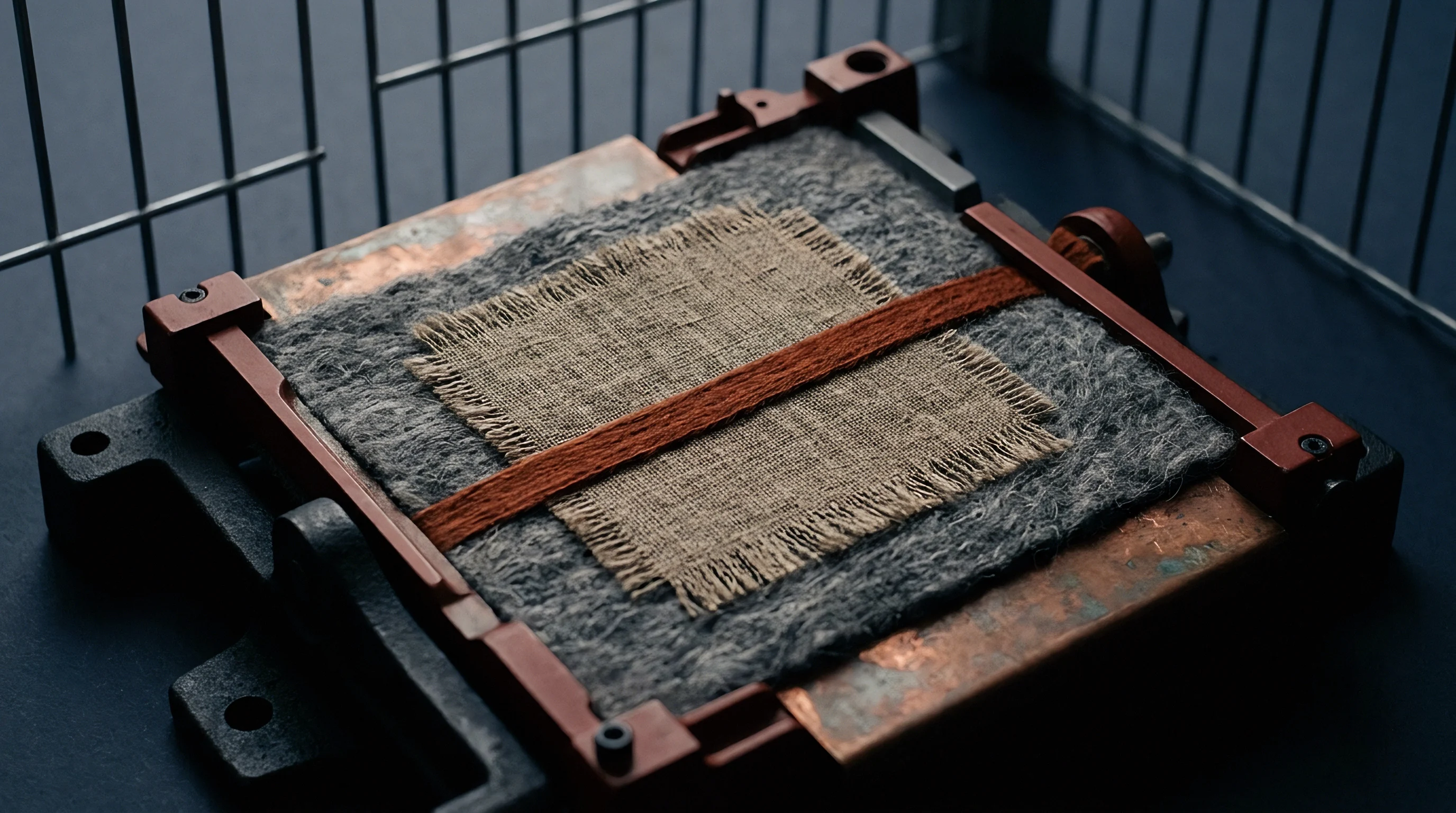
Edge Error Mechanics in Short Length Sectioning
When cutting bundle sections at short lengths, filaments trimmed at an oblique angle relative to their longitudinal axis distort the mass-to-length ratio. An oblique shear angle creates trapezoidal or bevelled filament ends rather than clean right-angle cylinders. On a 10 millimeter cut length, a 0.5 millimeter bevel error across filament ends represents a 5 percent dimensional discrepancy, whereas the same 0.5 millimeter bevel error on a 50 millimeter template represents only a 1 percent discrepancy.
- Anvil Slot Erosion widens the physical cutting boundary, producing specimen lengths that systematically exceed nominal calculations.
- Filament Shear Distortion causes bevelled cuts at bundle margins, altering the mass representation of short technical fibres.
- Specimen Taper Bias occurs when non-uniform ultimate fibre ends concentrate inside the cutting zone, over-representing fine tip zones.
- Clamping Deflection lets outer bundle filaments slip during blade penetration, yielding variable cut lengths within a single bundle.
- Cross-Sectional Crushing flattens tubular bast cell structures during sectioning, changing moisture absorption behavior during conditioning.

What Standard Specimen Length Settles Fineness Disputes?
Selecting 20 millimeters as the standard reference cut length balances edge error mitigation against specimen preparation efficiency. A 10 millimeter cut length permits rapid processing and requires smaller raw sample bundles, but demands balance sensitivity down to one microgram due to tiny sample masses. A 50 millimeter cut length reduces edge error significantly, but increases the probability of including naturally tapered filament tips and middle lamella cross-links, which overstates bundle coarseness relative to single ultimate fibre dimensions.
| Nominal Cut Length (mm) | Effective Length Tolerance (mm) | Max Edge Error Ratio (%) | Target Bundle Mass (mg) | Observed Tex Variance (%) |
|---|---|---|---|---|
| 10.0 | +/- 0.02 | 5.0 | 1.5 to 3.0 | 6.8 |
| 20.0 | +/- 0.02 | 2.5 | 3.0 to 6.0 | 3.2 |
| 50.0 | +/- 0.05 | 1.0 | 8.0 to 15.0 | 2.1 |
| 100.0 | +/- 0.10 | 0.5 | 20.0 to 40.0 | 4.5 |
Coarseness discrepancies are sometimes attributed to localized retting variations across crop yields, but this does not account for cutting tool calibration errors. Regular calibration of template slot distances using optical comparator micrometers verifies that gauge blocks meet operational specifications, preventing tooling degradation from distorting commercial linear density figures.

Variance
Line flax linear density varies across thousands of individual technical fibre bundles in a crop lot. Retting uniformity, hackling efficiency, and agronomic growing conditions create structural variation within the same parcel. Evaluating the coefficient of variation in gravimetric tex reveals whether a flax lot spins into fine, uniform yarns or causes frequent end breaks on wet spinning frames.
A wide variance indicates incomplete splitting of technical bundles during scutching and hackling.

Distribution Metrics and Outlier Screening in Hackling Bundles
Statistical screening identifies un-split technical bundles that corrupt average linear density calculations. A standard test run evaluates twenty bundle specimens extracted from different locations across five sample stricks. Individual bundle linear densities are plotted to generate a mean tex alongside the standard deviation.
Individual readings exceeding two standard deviations from the mean point to uncombed coarse strands or shive-laden filaments rather than true ultimate bundle fineness.
Un-split technical fibre bundles present in high-variance flax lots cause immediate end breaks at the drafting zone of wet spinning frames.
Standard statistical workflows discard identified outliers only when physical inspection confirms the presence of residual shive or mechanical damage on the cut filaments. Retaining valid high-tex readings accurately reflects lot heterogeneity, warning the mill technologist that drawing frame draft ratios require adjustment to prevent drafting waves.

Gravimetric Fineness Spread Impact on Drawing Cohesion
Inter-bundle fineness variation directly impacts sliver cohesion during drafting steps. When fine ultimate bundles (0.8 to 1.2 tex) are mixed with thick, un-split technical bundles (3.0 to 5.0 tex), drafting rolls exert uneven pressure across the sliver bed. Fine filaments slip freely while thick bundles absorb the nip pressure, creating thick-and-thin yarn defects known as slubs.
- Verify Sample Uniformity by calculating the coefficient of variation across twenty cut bundles, rejecting lots where variation exceeds twelve percent.
- Inspect Outlier Specimens under magnification to confirm whether elevated mass stems from fibre structure or un-removed shive particles.
- Correlate Tex Distribution with hackling room yield data to ensure technical bundle splitting matches target yarn count requirements.
- Adjust Gill Box Draft Ratios when processing high-variance lots to preserve sliver linear density stability prior to roving insertion.
Dynamic friction changes as fibre bundle fineness fluctuates across the drafting field. Managing variance requires establishing strict tolerance bands in sourcing specifications; a delivery offering an acceptable average linear density of 1.5 tex remains unspinnable into high-count yarn if its coefficient of variation exceeds fifteen percent. High-throughput spinning labs increasingly look to automated optical sorting combined with gravimetric cut calibration to eliminate manual bundle selection errors.


Tariff
Gravimetric fineness testing governs the commercial transaction value of line flax fibre parcels entering international trade. Raw scutched and hackled flax fibres ship under Harmonized System tariff classification 5301. The commercial price per kilogram scales directly with bundle fineness: long-staple line flax measuring below 1.5 tex commands premium pricing for fine wet-spun yarns up to 80 Metric Count (Nm), while coarse fibre exceeding 2.5 tex sells at a discount for dry-spun industrial yarns or heavy textiles.

Translating Linear Density into Spinnable Yarn Count Limits
Linear density dictates the minimum number of individual fibres required in a yarn cross-section to maintain tensile strength during spinning. A stable wet-spun yarn requires a minimum of 35 to 40 technical fibres in its cross-section. Selecting a 1.2 tex line flax permits spinning down to 60 Nm yarn (16.6 tex yarn linear density), whereas a 2.0 tex fibre parcel limits spinnable fineness to 35 Nm yarn (28.5 tex yarn linear density) before end breakage rates become economically unviable.
| Fibre Fineness Grade | Gravimetric Fineness (tex) | Max Practical Yarn Count (Nm) | Spinning Route | Base Material Value (USD/kg) |
|---|---|---|---|---|
| Ultra Fine Line | 0.8 to 1.2 | 60 to 100 | Warm Wet Spinning | 6.50 to 8.20 |
| Standard Fine Line | 1.2 to 1.6 | 40 to 60 | Standard Wet Spinning | 4.80 to 6.30 |
| Medium Tow / Line Blend | 1.6 to 2.2 | 20 to 35 | Modified Wet / Semi-Wet | 3.20 to 4.50 |
| Coarse Tow / Scutched Short | 2.2 to 3.5 | 8 to 18 | Dry Spinning | 1.80 to 2.90 |
Specification Clauses for Commercial Mass and Fineness Guarantees
Commercial purchase contracts reference gravimetric cut length test procedures as the binding arbitration standard for grade settlement. Sourcing agreements incorporate strict linear density tolerances tied to landed invoice values. If laboratory testing reveals a delivered lot averages 1.8 tex against a guaranteed specification of 1.4 tex, the buyer applies contractual price adjustment clauses or rejects the shipment entirely based on non-conformance.
Contractual linear density guarantees checked via cut length gravimetry determine final landed invoice adjustments prior to batch mill acceptance.
Contracts specify that mass determination relies on standard dry weight plus official regain allowances of 12 percent for line flax and 13 percent for flax tow. Moisture discrepancies identified upon opening sealed container shipments are adjusted using gravimetric oven-dry checks conducted on sample bundles taken immediately at unsealing. Fine fibre selection controls the finished fabric weight, lustre, hand feel, and ultimate price per linear meter on the retail market.
A fibre parcel bought coarse stays coarse through every mill process, and no amount of drafting corrects an un-split filament bed.