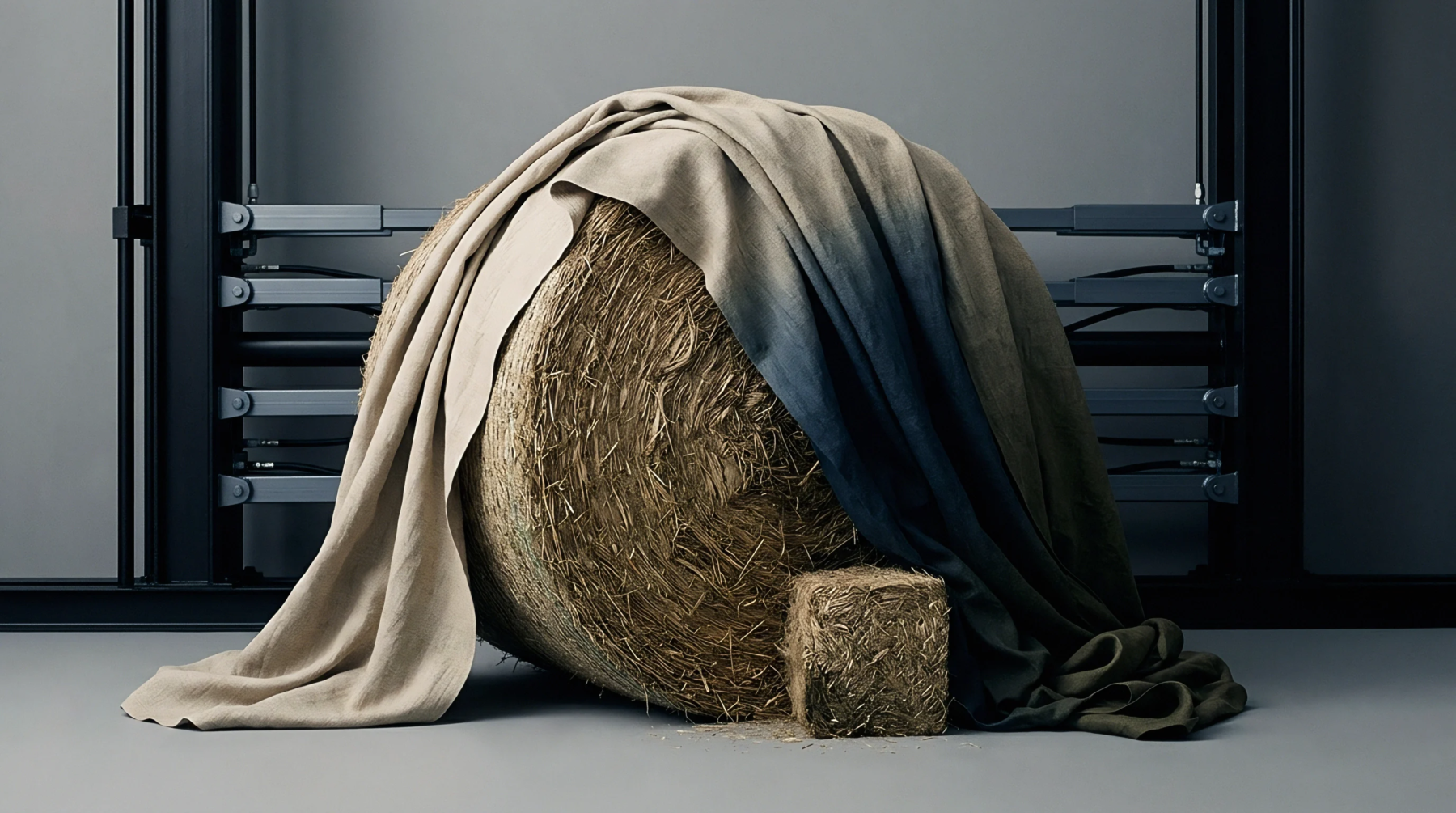
Biological Origin
Natural cellulosic sclerenchyma strands extracted from the phloem of the Linum usitatissimum plant form the structural raw material for linen textile manufacturing. Commercial flax fibre occurs as multi-cellular bundles bound together by pectin and lignin within the plant stem. Harvesting involves pulling mature stems from the ground to preserve full fibre length, followed by field retting to loosen pectin bonds.
Processing mills receive retted straw for mechanical separation of fibrous bundles from the woody core.
Mechanical Processing
Decortication and scutching separate usable long line strands from short tow and woody shives through mechanical beating and turbine scutching. Scutched line passes through hackling machines, where pinned combs align parallel filaments and remove remaining epidermal debris. Spinning preparation departments comb and draw these aligned strands into uniform silver for wet or dry spinning operations.
Industrial mill logs document processing yield percentages to monitor fibre loss across each mechanical preparation stage.
Quality Classification
Grading protocols categorize raw lots according to bundle length, tensile strength, color and fineness. High-grade long line yields fine, lustrous yarns suitable for high-end apparel weaving, whereas short tow supplies coarse yarn spinning. Intake inspection sheets record physical bundle test values prior to lot allocation in spinning schedules.