Correlating Automated Optical Image Analysis Bundle Metrics with Wet Spinning Draft Resistance Limits
Automated optical bundle metrics predict wet spinning draft resistance limits and eliminate spindle stoppages caused by coarse unseparated flax fibers.
Nip
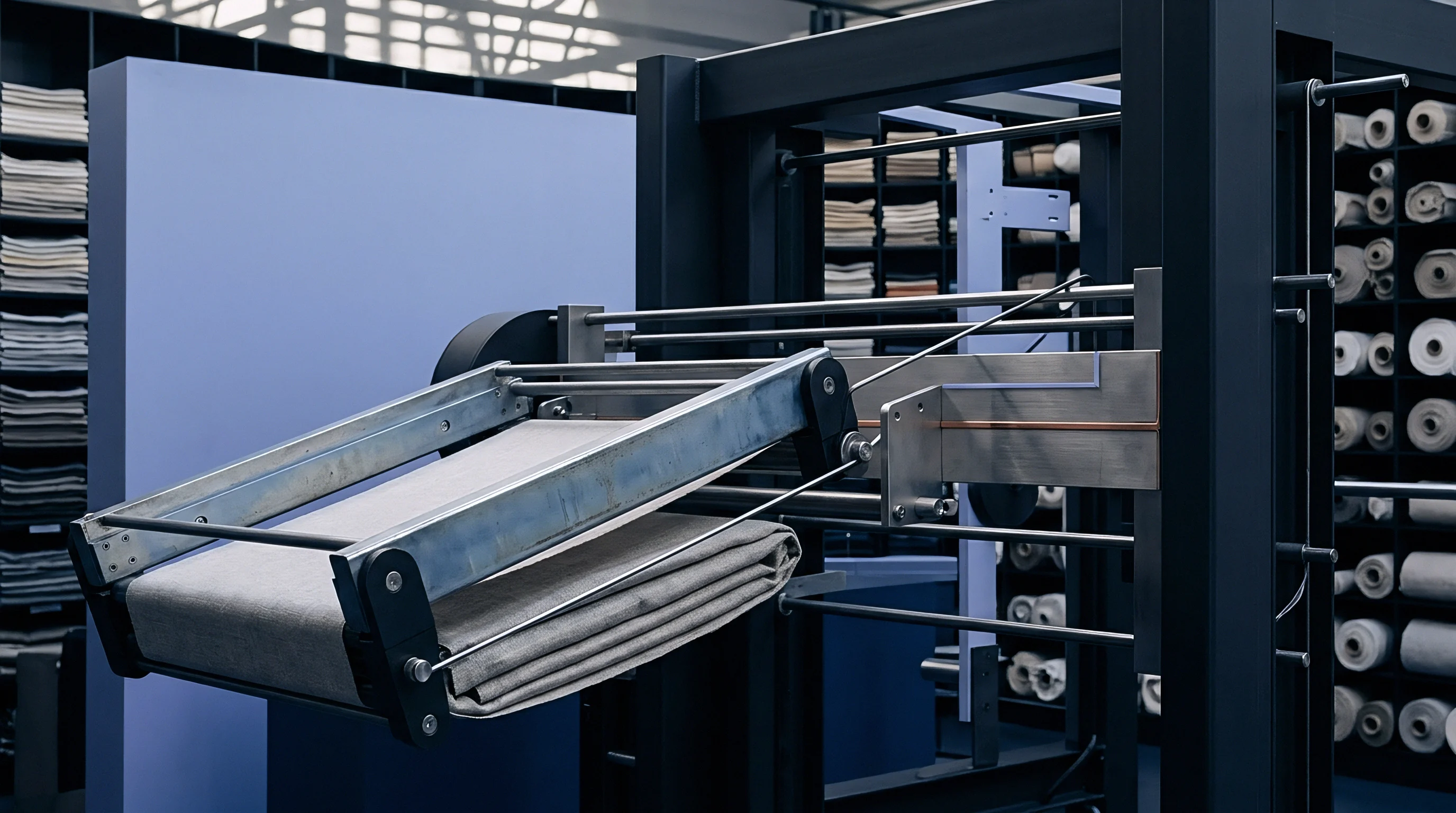
As flax rove passes between fluted steel rollers before wet drawing, it undergoes heavy compressive deformation. Soaking the material in water plasticizes the intercellular pectin matrix that binds elementary technical fibrils together. Under steady feed, the nip between the retaining roller and drawing pair controls how quickly bundles divide.
When thick bundles enter this nip, uneven pressure creates local shear spikes. Finer technical fibers slide smoothly past adjacent cells, while oversized bundles lock mechanically.
Inside an 80-degree Celsius wet trough at a draft ratio of 16, peak drafting tension scales from 1.2 centinewtons per tex on well-separated sliver up to 4.8 centinewtons per tex on under-retted composite bundles.
Direct measurements on wet-spinning frames show that drafting resistance spikes whenever the bundle diameter distribution widens. Bast fibers behave quite differently from single-cell seed hairs. Industrial wet spinning relies on breaking down gummy polygalacturonic acids and neutral polysaccharides during a quick pass through heated water.
If technical bundles remain too thick, water cannot penetrate the core before reaching the pinching line. The dry internal lamellae stay stiff and resist shear displacement, causing roller slippage that produces thick slubs. The drawing roller loses grip instantly.
Machine settings calibrated for uniform sliver wear out quickly when handling inconsistent bundle sizes. Heavy bundles jam the drafting zone. Applying excessive lateral pressure to stop slippage crushes fiber walls, destroying elementary bast structures and creating short waste.
Classers traditionally evaluate bundle cleavability with hand split tests, but commercial spinning lines depend on objective geometric data. Bundle width, perimeter regularity, and cross-sectional aspect ratio determine the exact clamping force needed to avoid drafting stalls.
Thick bundles require excessive clamping force, which accelerates wear on roller fluting without making yarn count any more regular.

Optics
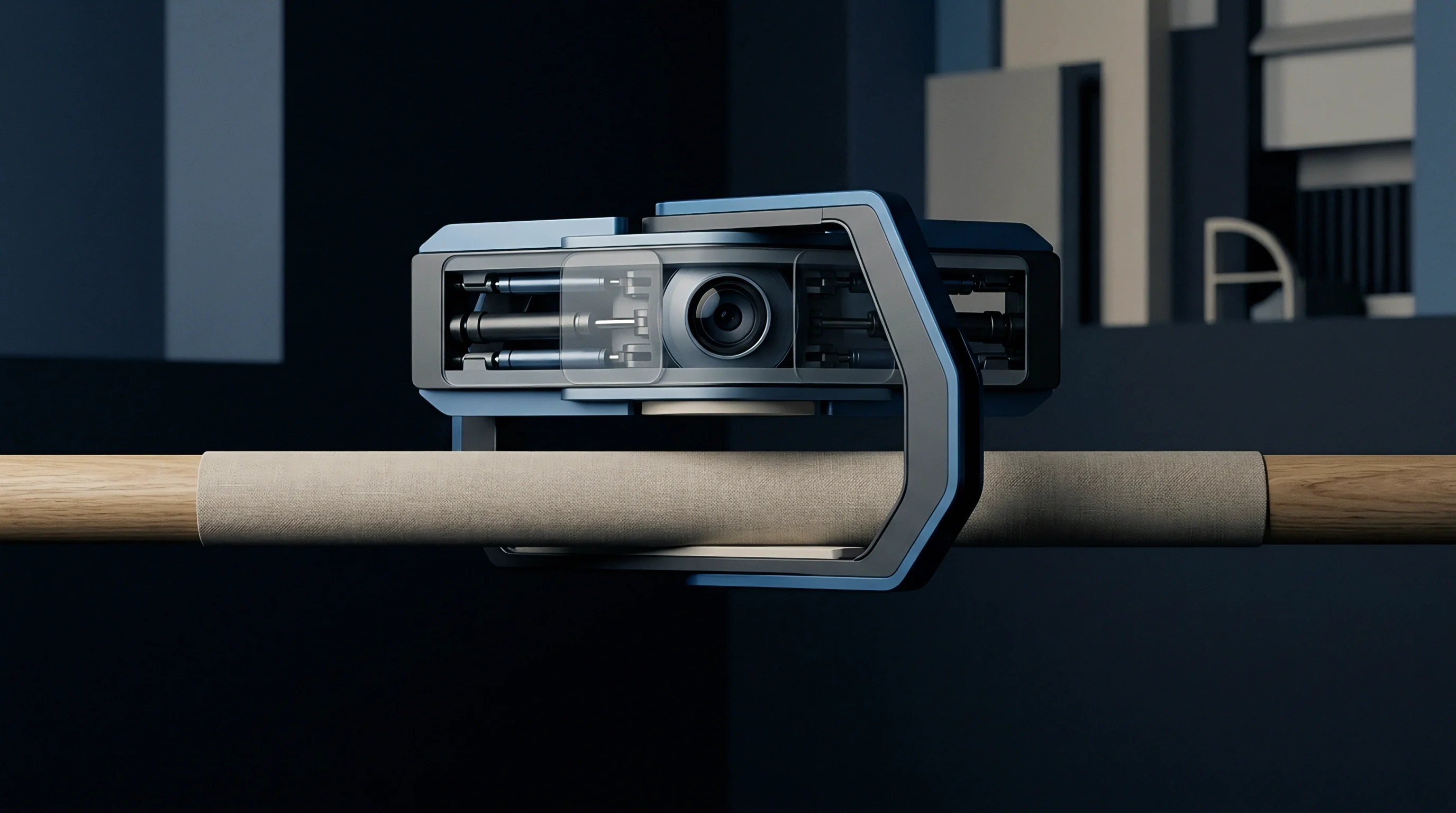
High-resolution digital sensors mounted above automated dispersion stages capture individual bundle profiles at line speeds above three meters per minute. Combined reflected and transmitted lighting isolates outer cell boundaries from background noise, calculating accurate area distributions across thousands of fiber segments within seconds. Traditional airflow methods give only a single aggregate surface value, hiding clustered or unseparated technical bundles.
Automated vision systems pinpoint the exact tail of the distribution where drafting jams begin.

Automated Image Acquisition Parameters
During sample preparation, calibrated pneumatic nozzles disperse clean, hackled sliver onto a glass plate. A telecentric lens maintains steady magnification across an eighty-millimeter field of view, preventing perspective distortion around the edges. Thresholding algorithms then binarize grayscale matrices to measure major axis lengths, minor axis widths, and overall bundle perimeters.
Optical cross sections also expose internal voids.
| Bundle Metric Category | Mean Major Axis (microns) | Area Aspect Ratio | Fiber Metric Number (Nm) | Drafting Risk Index |
|---|---|---|---|---|
| Fine Technical Line | 18.4 to 26.2 | 1.15 to 1.30 | 380 to 460 | Low (0.12) |
| Standard Dew-Retted Sliver | 28.5 to 39.1 | 1.32 to 1.55 | 260 to 340 | Moderate (0.34) |
| Coarse Scutched Tow | 42.0 to 58.7 | 1.58 to 1.95 | 160 to 220 | Elevated (0.68) |
| Under-Retted Bast Composite | 62.4 to 94.0 | 2.05 to 2.80 | 85 to 130 | Severe (0.95) |
Fineness figures given as metric numbers mask significant morphological variation when bundle division is incomplete. Vision systems spot outlier populations that standard gravimetric cut-and-weigh methods average out. Measuring bundle perimeter together with cross-sectional area highlights uneven pectin degradation along the length of the flax stem.
- Major axis diameter dictates the clearance needed between fluted roller teeth to prevent fiber crushing.
- Perimeter roughness factor indicates how much residual cortical tissue still adheres to the outer bast wall.
- Circularity coefficient measures how completely bundles have separated, with values near unity indicating isolated elementary cells.
- Equivalent circular diameter serves as a direct proxy for pneumatic drag and liquid saturation speed inside wet-spinning troughs.

Does Bundle Perimeter Predict Peak Drafting Force?
Transmitted light imaging captures variations in bundle outlines that track directly with mechanical sliding resistance. An irregular boundary profile points to jagged pectin bridges between adjacent cells. Once submerged, these projections catch on neighboring bundles and increase friction.
Smooth, thoroughly retted technical filaments show low boundary perimeter values and slide easily under moderate tension. Mill floors track breaker waste daily.
Sliver lots with identical mean metric numbers behave differently on spinning frames if their optical perimeter distributions differ. Automated image scanners express this variation as the bundle roughness coefficient. When this coefficient rises above 1.45, the fiber bundle needs twice the drafting force to start sliding.
Bale consignments containing high proportions of flattened, irregular bundles fail on high-speed wet drafting frames, even when sold as premium long-staple line flax.
Resistance
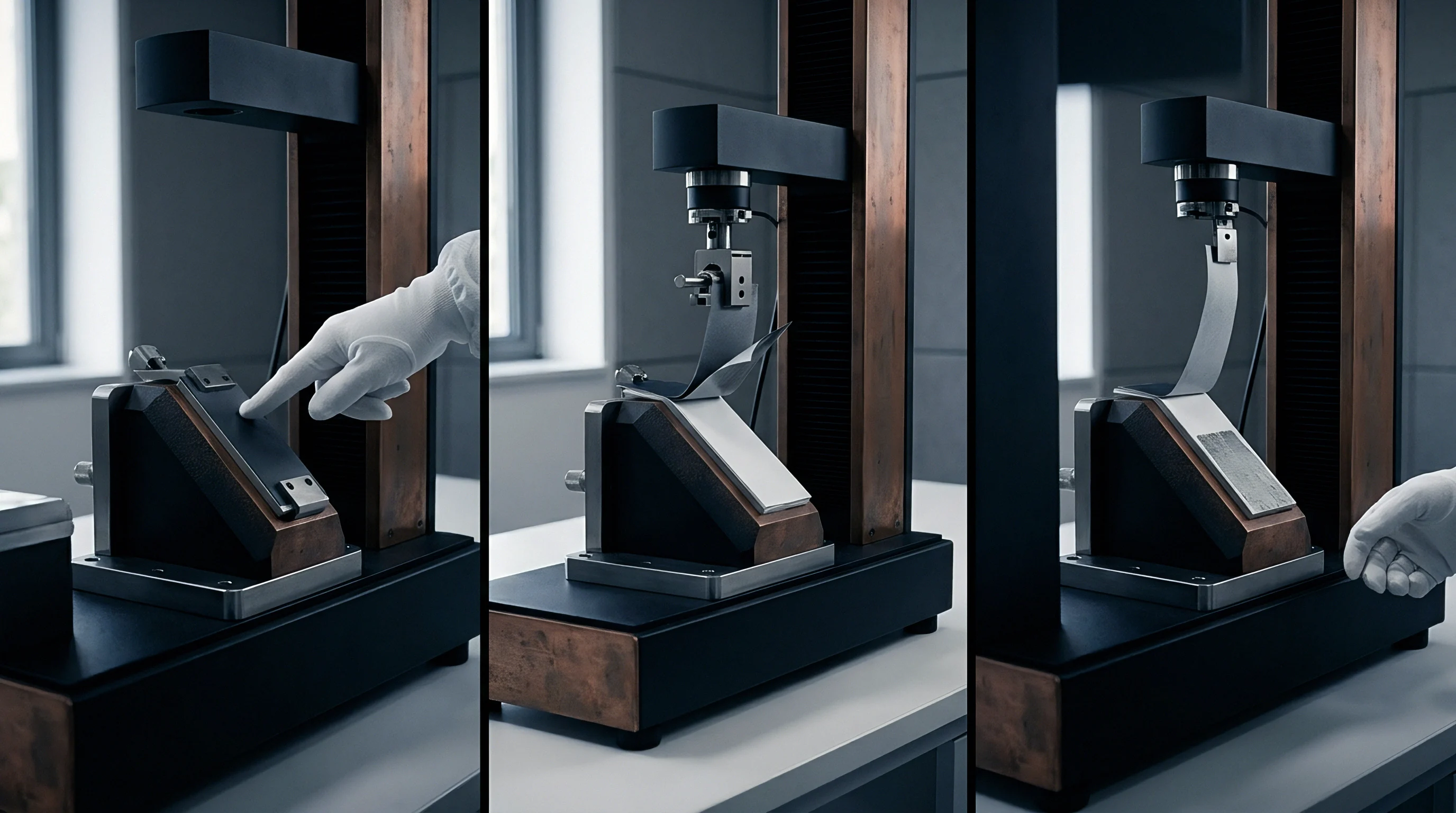
Water temperature inside spinning troughs changes how inter-fiber pectin binders behave. Heat speeds up the hydration and dissolution of rhamnogalacturonan complexes within the middle lamella of the bast bundle. At room temperature, these gummy matrices stay rigid and lock elementary filaments together.
Heating the bath to sixty or seventy degrees Celsius softens the binders, significantly lowering the peak extraction force. Cold water stiffens bast pectin gums.

Hydrothermal Cleavage of Middle Lamella Pectins
Heat in the trough lowers the energy required for shear-induced bundle division as fibers pass through the rollers. Roving strands move through sixty-five-degree water for three to five seconds before reaching the drafting nip. Short immersion times leave inner pectin binders hard, forcing the draft zone to cleave technical bundles through raw mechanical shear.
That physical fracture snaps elementary fibrils, leaving short fiber debris and weak yarn splices.
A ten-degree Celsius drop in trough temperature increases sliver sliding resistance by thirty-five percent across standard wet-spinning drafts.
Process water chemistry also shifts drafting resistance limits. Hard water rich in calcium ions forms cross-linked calcium pectate complexes that resist thermal breakdown. Softened water with few divalent cations lets pectins swell quickly.
Adding mild surfactants helps water penetrate thick bundles faster, reducing peak drafting loads.
| Trough Bath Temperature (C) | Drafting Ratio | Peak Resistance Force (cN/tex) | Mean Breakage Rate (Breaks/1000 Spindle Hr) | Sliver Cohesion Limit State |
|---|---|---|---|---|
| 45 | 12.0 | 3.85 | 42 | Excessive / Frame Stalling |
| 55 | 14.0 | 2.45 | 24 | Marginal Cohesion |
| 65 | 16.0 | 1.60 | 9 | Stable Operating Window |
| 75 | 18.0 | 1.15 | 6 | Optimal Attenuation |
| 85 | 20.0 | 0.95 | 14 | Thermal Over-Softening / Sliver Float |
| Test parameters: 850 tex line flax roving, draft zone length 75 mm, delivery speed 24 m/min, ISO 2060 conditioning. | ||||

Drafting Zone Sensor Topologies and Load Thresholds
Piezoelectric load cells installed on drawing roller bearing blocks capture dynamic force changes during commercial spinning runs. Force traces reveal high baseline levels broken by sharp spikes whenever coarse bundle groupings enter the draft field. Analyzing these real-time signals lets mills connect optical batch metrics directly to operational machine limits.
- Mounting piezoelectric transducers directly beneath bottom front roller journals captures instantaneous normal and axial force vectors without dampening machine frame harmonics.
- Conditioning bridge amplifier signals through a 500-hertz low-pass filter removes motor vibration while preserving transient bundle shear signatures.
- Establishing baseline drafting resistance for standard roving batches sets the operational zero point against which optical prediction algorithms evaluate incoming lots.
- Flagging force transients exceeding 3.5 centinewtons per tex automatically marks the roving creel position for sliver extraction and bundle re-characterization.
Pectin dissolves inside the hot bath. High drafting forces break roving strands. Excessive tension causes uneven attenuation, creating thin spots followed by thick, unattenuated slubs that trigger downstream winding clearers.
The drawing roller loses grip instantly.
Running a wet-spinning line past its draft resistance ceiling causes repeated spindle stoppages, faster roller apron wear, and severe yarn unevenness across the whole frame.
Threshold
Mathematical models connect optical bundle perimeter and area distributions to dynamic draft resistance limits on commercial ring frames. A bivariate distribution function combines equivalent bundle diameter with aspect ratio to calculate a unified drafting resistance index. Batches with broad right-hand tails in their area histograms cause early roving failures even when arithmetic means satisfy specification sheets.
Automated image analysis catches these problematic outliers before bobbins reach the spinning floor.
Quantitative Correlation Functions and Operating Envelopes
Regression analysis shows that drafting resistance follows a power-law relationship with the ninety-fifth percentile bundle diameter. Although mean diameter dictates nominal count spinnability, the widest five percent of bundles generates the peak mechanical loads that break roving strands. Adding bundle roundness to the predictive model refines tension estimates across draft ratios from ten to twenty-four.
When the ninety-fifth percentile bundle diameter exceeds 65 microns, drafting resistance pushes past the two-centinewton threshold at a draft ratio of 16.
Spinning trials demonstrate that fiber bundle length interacts with cross-sectional thickness during wet attenuation. Long, coarse bundles span the entire gap between back and front rollers. When both ends are gripped at once, attenuation stops, and the machine either breaks the fiber or stalls the spindle drive.
Shorter bundles slip through smoothly under identical bath temperatures.
| Bundle 95th Percentile (microns) | Max Spinnable Count (Nm) | Hackling Yield (%) | Yarn Breakage Cost Penalty ($/kg) | Finished Woven Fabric Price Delta ($/m) | |
|---|---|---|---|---|---|
| 32.0 | 60 | 58.5 | 0.00 | 0.00 | |
| 44.0 | 42 | 52.0 | 0.45 | 0.62 | |
| 58.0 | 28 | 46.2 | 1.15 | 1.48 | |
| 76.0 | 18 | 38.0 | 2.40 | 3.10 |
Finer line flax commands higher prices. Sliver mass variation ruins yarn count. Optical assessment before spinning allows mills to allocate coarse lots to heavy dry-spun yarns while reserving uniform, low-perimeter sliver for fine wet-spun apparel counts.
- Calculate the ninety-fifth percentile bundle diameter from a minimum sample of 5,000 optical particle measurements.
- Determine the mean bundle aspect ratio to establish cross-sectional eccentricity.
- Compare the calculated drafting risk index against the target wet-spinning draft ratio.
- Adjust trough temperature or decrease spinning speed if predicted resistance exceeds 2.2 centinewtons per tex.

Will Optical Fineness Outperform Airflow in Roving Mills?
Air permeability tests on compressed fiber plugs yield a single aggregate value for specific surface area. That bulk metric misses the occasional large-diameter bundle inclusion that causes machine blockages. Optical image analysis scans thousands of individual fiber profiles to construct full variance distributions, uncovering unseparated technical bundles.
Vision instruments isolate defect populations that pass through airflow testers unnoticed.
Processing trials confirm that lots with identical airflow Micronaire-equivalent readings perform differently during spinning when their optical distributions diverge. Automated image systems detect residual cortex fragments, unretted shive attachments, and fused fiber bundles. Excessive draft tension snaps wet sliver.
Optical metrics explain why certain roving lots run cleanly while others break constantly on the spinning frame.
Whether automated optical analysis can fully predict inter-fiber cohesion in chemically modified or enzyme-treated flax sliver without supplementary rheological shear testing remains an open question for spinning mills.
Ledger
Raw material purchasing contracts often rely on subjective classer assessments and generic metric numbers. Adding automated optical bundle metrics to contracts protects buyers from unexpected processing failures. Fiber shipments that deviate from agreed distribution limits drive up spinning room costs through spindle stoppages, heavy roller wear, and high waste at the hackling frame.
Mill Economics and Breakage Rate Pricing
Calculating the true landed cost of linen yarn requires accounting for spinning frame efficiency losses caused by poor fiber cleavability. A batch generating twenty-four spindle breaks per thousand spindle hours raises labor costs and lowers room throughput. Fiber lots certified under automated image specifications ensure stable draft zone performance, dropping end breakage rates to fewer than eight breaks per thousand spindle hours.
A three-percent increase in coarse bundle outliers raises finished linen fabric reject rates by two dollars and forty cents per linear meter.
Sliver procurement dossiers that include optical histograms allow precise cost modeling from fiber bale to finished fabric. Weaving mills reject yarn lots containing slubs caused by drafting stalls. Enforcing optical acceptance thresholds at bale opening keeps inferior raw material from reaching spinning and weaving lines.
Under international flax supply agreements governed by the Bureau International de la Récupération and the Confederation Europeenne du Lin et du Chanvre, raw fiber deliveries failing to meet specified optical bundle diameter distributions below the agreed ninety-fifth percentile limit allow the buyer to apply a direct price discount or reject the non-conforming lot before processing.