Non Cellulosic Residual Binding Thresholds for Controlling Inter Fiber Void Fraction in Blended Line Yarns
Controlling residual pectin to 1.8-2.4% maintains inter-fiber void fraction below 0.32, maximizing packing density and tensile strength in blended line yarns.
Pectin
Non-cellulosic biopolymers matrixed within the middle lamella regulate how individual elementary bast filaments release from composite technical fiber bundles during industrial processing. In untreated long-staple flax, complex structural polysaccharides account for roughly 4 to 8 percent of total dry fiber mass. High concentrations of polygalacturonic acid sequences bind adjacent cellular walls together through divalent calcium ion bridges, forming a rigid intercellular matrix.
When spinning long-staple line flax into blended fine-count yarns alongside combed cotton or synthetic staple fibers, the total concentration of these cementitious components governs the degree to which fiber strands subdivide inside drawing frames. Higher binder retention holds primary technical bundles intact at diameters between 40 and 100 micrometers, whereas controlled extraction reduces fiber assembly units down toward individual elementary filaments measuring 10 to 20 micrometers across.
Evaluating raw line stock across different retting origins establishes baseline chemical compositions before mechanically drafting sliver. Dew-retted flax harvested under humid temperate conditions often exhibits residual non-cellulosic binder fractions between 2.2 and 3.8 percent. Water-retted or enzymatically pretreated line fiber drops below 1.8 percent binder content when processed through controlled hot-water washes.
The proportion of unextracted intercellular cement determines the physical stiffness of individual fiber bundles, directly influencing how tightly adjacent fibers pack together under mechanical drafting rollers and spindle twist insertion.

Chemical Architecture of Bast Fiber Intercellular Cement
Structural polysaccharides within bast plants exist as complex branched polymer networks comprised predominantly of rhamnogalacturonan and homogalacturonan chains. These carboxylated carbohydrate polymers form stable hydrogels that encapsulate crystalline cellulose microfibrils inside the primary cell wall and middle lamella. Intercellular bonding strength depends on the molar ratio of esterified carboxyl groups to free acid groups along the pectin chain.
Highly esterified polyuronides resist ionic cross-linking with soil minerals, whereas unesterified chains bind calcium and magnesium ions into dense, water-insoluble salt complexes that reinforce bundle cohesion.
Hemicellulose polymers, consisting primarily of glucomannans and xyloglucans, interface directly with both the outer crystalline surface of cellulose microfibrils and the surrounding pectic gel. This interpenetrating network establishes mechanical shear strength across adjacent elementary cell walls. Extraction of these non-cellulosic constituents during scutched line preparation alters the flexural rigidity of the fiber bundle.
As non-cellulosic matrix mass drops, the mechanical force required to shear individual elementary fibers past one another decreases exponentially. This structural shift allows dense fiber groupings to separate into fine, flexible ribbon-like strands during drawing and roving operations.
Residual pectin contents exceeding 2.8 percent by mass retain inter-elementary bundle adhesion exceeding 14.2 centinewtons per tex, preventing sub-bundle division during wet drafting at 65 degrees Celsius.
Quantified Extraction Limits in Dew Retted Line Flax
Scutched line flax processed through mechanical hackling retains a significant fraction of its native middle lamella biopolymers. Hackling combs remove coarse short fibers, weed stems, and fragmented shive particles, but mechanical combing alone cannot sever the inter-cellular chemical bonds holding elementary filaments together. Chemical assays using hot ammonium oxalate or dilute sodium hydroxide solutions quantify the extracted mass of water-soluble polyuronides, providing direct metrics for fibre line preparation standards.
Excessive removal of intercellular polysaccharides degrades yarn structure by destroying fiber bundle continuity. If extraction protocols lower total non-cellulosic content below 0.9 percent by mass, elementary flax filaments separate completely into short 20 to 35 millimeter single cells. These short ultimate fibers lack sufficient length to span drafting zones on long-staple line spinning frames, leading to excessive fly generation, drafting roller wraps, and rapid yarn strength collapse.
Maintaining residual binder mass between 1.5 and 2.4 percent preserves long-staple bundle integrity while enabling sufficient axial splitting during wet drafting.
| Residual Pectin (wt %) | Residual Lignin (wt %) | Mean Elementary Bundle Diameter (µm) | Technical Fiber Linear Density (dtex) | Calculated Inter-Fiber Void Fraction | Yarn Tenacity (cN/tex) |
|---|---|---|---|---|---|
| 1.1 | 1.4 | 14.2 | 1.85 | 0.24 | 28.4 |
| 1.8 | 2.1 | 19.8 | 2.42 | 0.28 | 31.6 |
| 2.5 | 2.8 | 28.5 | 3.80 | 0.35 | 27.1 |
| 3.4 | 3.9 | 44.1 | 5.90 | 0.43 | 21.8 |
| 4.2 | 4.8 | 62.7 | 8.45 | 0.51 | 16.3 |

Lipophilic Wax and Residual Lignin Co Constituents
Non-polar surface compounds modify the wetting behavior and friction properties of bast fiber bundles. Plant waxes, composed of long-chain fatty acids, primary alcohols, and hydrocarbon esters, form a hydrophobic barrier over the outer surface of the technical fiber bundle. This wax layer reduces inter-fiber friction during dry drafting, allowing smooth slip between flax fibers and companion cotton staple fibers.
However, high wax retention blocks water penetration during wet-spinning, inhibiting the hydration and thermal softening of internal pectic hydrogels.
Lignin constituents located primarily in the outer cell corners and secondary cell wall structures add structural rigidity to the technical fiber strand. Unlike flexible pectic gels, cross-linked phenylpropanoid lignin networks resist thermal softening below 90 degrees Celsius. In dew-retted line flax, residual lignin content typically varies between 2.0 and 4.5 percent by dry weight.
High residual lignin locks elementary fibers into rigid structural units that refuse to flatten or deform under drawing roller pressure. Controlling the ratio of residual pectin to residual lignin ensures that the technical fiber bundle retains sufficient plasticity during spin line drafting without suffering complete structural disintegration.
Whether specific hot-water washing sequences can selectively remove galacturonan chains without stripping natural surface waxes remains a subject of active research across bast fiber processing facilities.

Porosity
Internal void distribution within a blended line yarn cross-section governs mechanical packing efficiency, fluid absorption rates, and overall yarn bulk density. When long-staple flax fibers join fine combed cotton or short-staple viscose inside a blended sliver, structural differences between constituent fiber geometries create localized void pockets. Flax technical fibers possess irregular, polygonal cross-sections with central lumen cavities, whereas companion fibers present circular, kidney-shaped, or multilobal profiles.
The empty spatial volume remaining between these consolidated fiber walls defines the inter-fiber void fraction of the finished yarn structure.
Yarn void fraction is quantified by comparing the total cross-sectional area bounded by the outer yarn perimeter against the solid surface area occupied by individual fiber cell walls. Gravimetric density measurement combined with high-resolution cross-sectional optical microscopy provides exact optical packing fractions. Unrefined flax technical fibers with high residual pectin contents resist cross-sectional flattening under twist tension.
This rigidity prevents adjacent fibers from nesting tightly together, leaving large open capillary channels that elevate total void volume inside the core of the yarn.

Inter Fiber Capillary Channels and Volume Fractions
Spatial arrangements of parallel fibers inside a twisted yarn core create continuous micro-capillary networks running along the yarn axis. The mean radius of these internal capillary channels scales directly with the outer boundary dimensions of the constituent fiber strands. When technical flax fibers remain un-split at bundle diameters of 40 to 60 micrometers, triangular and quadrangular spatial voids form at the junction points where three or more coarse fibers meet.
These large spatial voids increase total yarn porosity to values between 0.38 and 0.48.
Subdividing technical bundles into finer elementary units measuring 15 micrometers across alters inter-fiber pore geometry. Smaller fiber diameters decrease the mean hydraulic radius of individual capillary channels while increasing total internal surface area per unit yarn volume. Under constant ring-spinning twist multipliers, finer elementary fibers deform and nest into the spaces between companion fibers.
This nesting action compresses inter-fiber capillary channels, driving the total yarn void fraction down to controlled operating thresholds between 0.25 and 0.30.
Processing blended line sliver through high-draft spinning frames exposes distinct failure modes when inter-fiber void volume strays outside optimum operating bands.
- Capillary Void Collapse occurs when aggressive chemical scouring eliminates all non-cellulosic binder material, allowing individual elementary filaments to pack so tightly under twist that wet spinning liquor cannot penetrate the yarn core during drafting.
- Structural Void Inflation arises when unextracted residual pectin holds coarse technical bundles intact, forcing wide inter-fiber gaps that reduce total inter-fiber contact area across the yarn diameter.
- Localized Core Fluting develops during dry drafting of heterogeneous flax/polyester blends, where rigid flax bundles separate from elastomeric synthetic fibers, creating asymmetrical longitudinal air channels inside the roving strand.
- Slub Void Trapping emerges when un-split fiber nodes pass through drafting nip rollers without deforming, creating isolated regions of high porosity adjacent to dense fiber entanglements.

Structural Variations across Dry and Wet Blending Routes
Manufacturing blended line yarns via dry spinning routes yields fundamentally different cross-sectional void distributions compared to wet spinning routes. Dry ring spinning relies entirely on mechanical twist and fiber crimp to consolidate the fiber strand. Under dry conditions, residual non-cellulosic binders remain rigid, preventing primary technical bundles from deforming around companion fibers.
As a result, dry-spun blended line yarns display high overall bulk density, elevated hairiness, and inter-fiber void fractions consistently ranging from 0.36 to 0.46.
Wet spinning routes pass the blended roving through a heated water bath immediately prior to the drafting zone. Water temperatures maintained between 60 and 70 degrees Celsius hydrate residual pectin hydrogels within the middle lamella, plasticizing the intercellular binder network. This thermal softening allows drafting rollers to shear large technical fibers into flexible elementary strands while simultaneously squeezing trapped air out of the fiber assembly.
Subsequent ring-spinning twist consolidates the plasticized filaments into a dense, smooth yarn geometry with inter-fiber void fractions falling below 0.28.
Higher inter-fiber void volume in line blends reduces stress transfer across bundle boundaries during tensile loading.
Neglecting residual binder thresholds during roving preparation forces spinning mills to run elevated twist factors to maintain strand integrity, which increases yarn torque, reduces winding productivity, and increases electrical power consumption per kilogram of spun line yarn.

Splitting
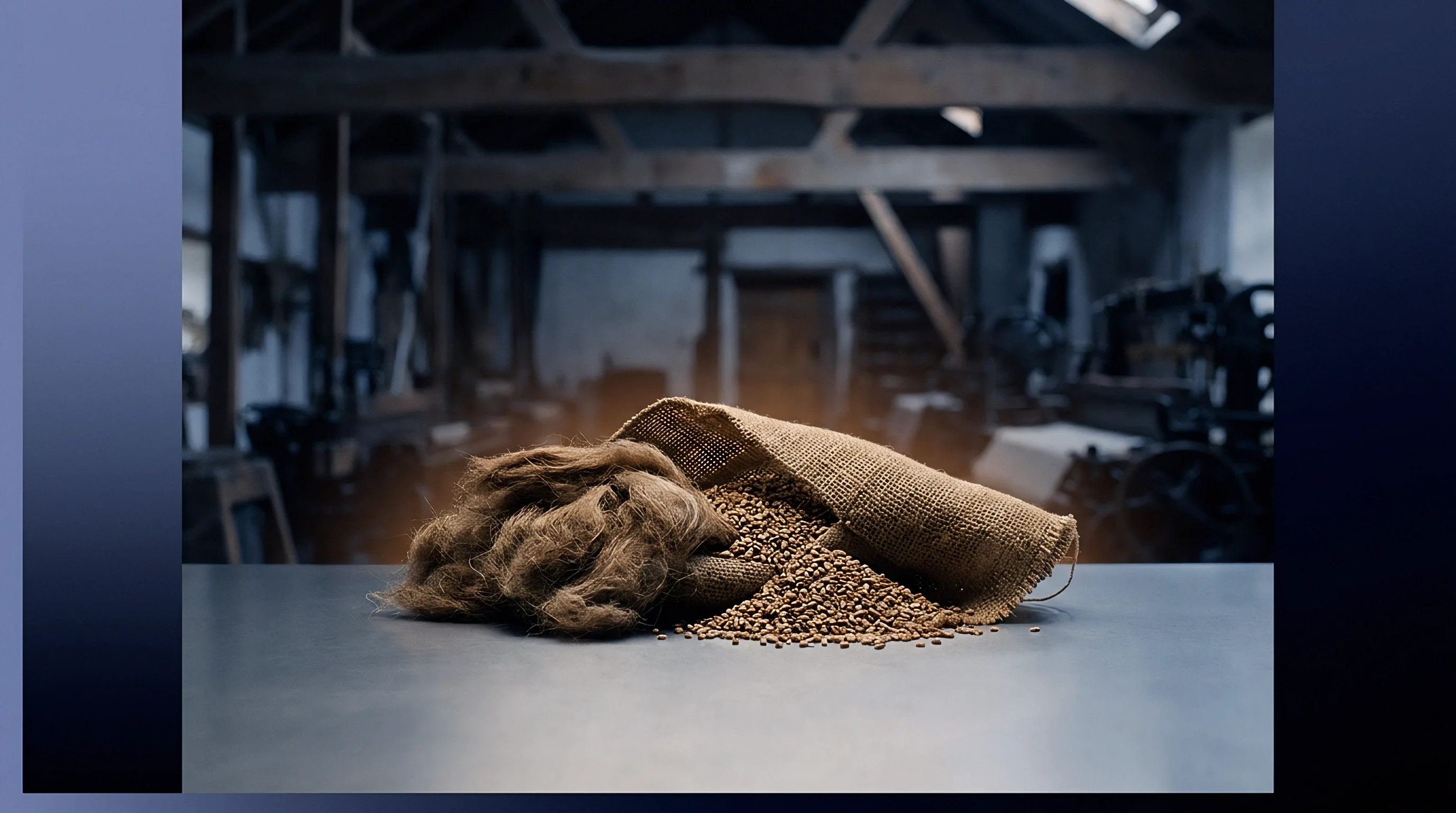
Division of coarse bast fiber assemblies into fine, uniform elementary filaments represents the core objective of line flax preparation. Scutched flax entering the hackling house consists of composite technical bundles bound together by pectin and hemicellulose networks. Hackling pins mechanically split these composite strands along weak structural planes, but mechanical action alone hits a sharp limit determined by the cohesive strength of the middle lamella.
Chemical and enzymatic treatments applied during sliver preparation lower this cohesion, enabling continuous axial division under drafting shear forces.
Tracking the linear density distribution of drawn sliver samples across successive drafting passages monitors bundle division efficiency. A shift in mean fiber linear density from 12 dtex down to 2.2 dtex indicates effective binder softening and successful sub-bundle division. If residual binder levels remain uniform, drafting tension distributes evenly across all fiber elements.
Variations in non-cellulosic content across a single bale create localized hard nodes that resist division, generating thick un-drafted slubs that cause end breaks at the spinning frame.

Does Residual Lignin Limit Bundle Division in Wet Drawing?
Extensive hydrophobic cross-linking within secondary cell walls elevates the mechanical force required to sever adjacent fiber cell walls. Lignin biopolymers act as rigid structural braces that resist hydrolytic cleavage under standard hot-water immersion conditions. While pectic gels soften readily at 65 degrees Celsius, aromatic lignin networks retain their structural elastic modulus up to 130 degrees Celsius.
High residual lignin content consequently establishes an absolute lower limit for technical fiber bundle diameter during hot-water drafting.
Blends combining line flax with combed cotton require fine, highly divided flax elements to ensure uniform fiber distribution across the yarn cross-section. If residual lignin fractions exceed 3.5 percent by mass, flax technical bundles remain thicker than 45 micrometers regardless of wet-spinning trough temperature. These coarse strands fail to interlock effectively with fine cotton fibers, leading to phase separation across the drafting zone and uneven yarn mass distribution.
Reducing lignin content through mild alkaline peroxide bleaching restores bundle flexibility, enabling complete filament division down to 18 micrometers.
Enzymatic and Alkaline Cleavage Protocols
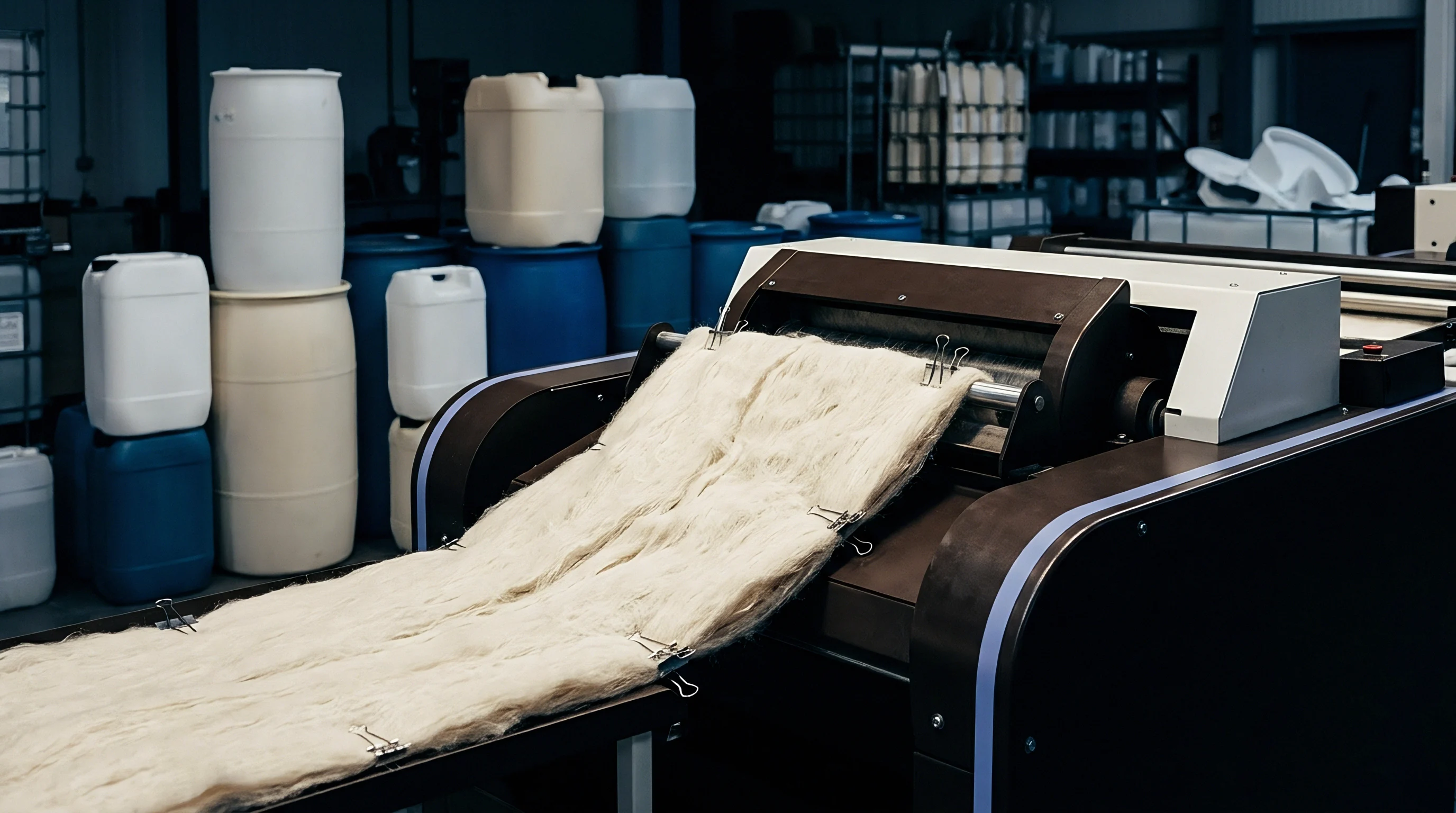
Targeted biochemical treatments selectively degrade middle lamella components without attacking the structural crystalline cellulose core of the elementary fiber. Pectin lyase and endo-polygalacturonase enzymes break down alpha-1,4-glycosidic linkages within homogalacturonan chains, converting insoluble pectic hydrogels into soluble short-chain oligosaccharides. Controlling treatment duration, solution pH, and liquor temperature allows process engineers to stop extraction at precise binder mass thresholds.
Alkaline extraction using low-concentration sodium hydroxide solutions provides a non-enzymatic alternative for binder removal. Mild saponification breaks ester bonds linking pectin molecules to cell wall proteins, while simultaneously swelling the intercellular matrix. Over-treatment with strong alkali must be avoided, as excessive swelling strips structural hemicelluloses from the primary cell wall, causing individual elementary fibers to lose their structural alignment and collapse into tangled, un-drawable fiber masses.
| Cleavage Method | Target Non-Cellulosic Binder (wt %) | Mean Splitting Force (cN/tex) | Mean Fiber Fineness (Nm) | Capillary Radius (µm) | Yarn Void Fraction |
|---|---|---|---|---|---|
| Standard Dew Retting | 3.8 | 18.5 | 2200 | 12.4 | 0.41 |
| Hot Water Scouring | 2.6 | 11.2 | 3400 | 8.1 | 0.33 |
| Pectinase Enzymatic Digestion | 1.8 | 6.4 | 4800 | 4.8 | 0.27 |
| Alkaline Peroxide Extraction | 1.2 | 3.1 | 5900 | 3.2 | 0.23 |
| Data measured on 100% long-staple line flax roving drawn at 65°C bath temperature. Fiber fineness tested per ISO 2370. Void fraction calculated via cross-sectional image analysis per ASTM D1444. | |||||
Variability in fiber splitting reflects both field retting conditions and the precise control of mill-floor chemical bath parameters.


Draft
Attenuating a thick blended roving into a fine fiber strand requires precise mechanical velocity differentials across successive drafting roller pairs. The total draft ratio applied across a spinning zone determines the linear density reduction from roving down to final yarn count. During drafting, individual fibers must slide smoothly past one another without disturbing the axial orientation of surrounding filaments.
Non-cellulosic residual binders dictate the static and kinetic friction coefficients operating at the interfaces between adjacent bast fibers and companion staple fibers.
Drafting nip pressure and roller gauge settings depend on the plasticized state of the incoming roving. In wet spinning of flax/cotton line blends, the liquid medium inside the drafting trough wets the fiber strand, initiating binder hydration before the roving enters the back drafting rollers. Inadequate liquid retention or brief bath residence times leave the core of coarse technical bundles dry and rigid.
Unhydrated core binders generate excessive frictional drag, causing roller slip, periodic mass variations, and severe thick-and-thin yarn defects.

Rheological Dynamics in the Wet Spinning Trough
Immersing long-staple flax roving into hot water induces rapid thermal and chemical swelling of residual pectic substances. Softened pectin acts as a natural hydrogel lubricant at low sliding velocities, reducing static friction and enabling smooth fiber movement upon initial roller nip engagement. As sliding velocity increases inside the main drafting zone, viscous hydrogel shear forces replace boundary friction.
The viscosity of this intercellular binder fluid drops rapidly with increasing temperature, making precise bath temperature regulation mandatory for maintaining uniform drafting tension.
Maintaining bath temperature at 68 degrees Celsius lowers fluid shear resistance without triggering thermal degradation of secondary fiber lubricants. If bath temperature drops below 52 degrees Celsius, pectin hydrogels remain in a high-viscosity semi-solid state, increasing drafting force requirements by up to 140 percent. This sudden friction rise causes drafting zone chatter, where fiber groups move in erratic, intermittent bunches rather than in a continuous, smooth flow.
Fine-tuning fluid chemistry with neutral wetting agents accelerates bath liquor penetration into dense line bundles, ensuring uniform binder plasticization throughout the roving core.
Correct adjustment of wet-spinning trough conditions follows a clear sequence on the mill floor.
- Fill the spinning trough with demineralized water and adjust non-ionic wetting agent concentration to 1.5 grams per liter.
- Heat the bath liquor to 65 degrees Celsius using closed steam coils, verifying temperature uniformity along the entire frame length with calibrated thermistors.
- Adjust roving immersion depth guides to ensure a minimum liquor contact time of 2.8 seconds at target delivery speeds.
- Set back-roller clamping pressure to 38 decaliters per millimeter of roller length to prevent strand slippage against plasticized fiber lubricants.
Roller Slip and Inter Fiber Friction Coefficients
Inter-fiber friction during drafting governs the degree of control exerted over floating fibers inside the drafting zone. In short-staple cotton drafting, top roller coving and aprons guide short fibers to prevent uncontrolled movement. In long-staple line spinning, top aprons are absent, relying instead on inter-fiber friction and controlled liquid drag to hold short companion fibers in check.
Residual non-cellulosic binders establish the baseline friction coefficient operating across the fiber matrix.
When residual pectin levels drop below 1.2 percent, the loss of natural hydrogel lubrication elevates dry boundary friction across elementary cellulose walls. High boundary friction causes individual fibers to catch and snatch during drafting, leading to localized strand drafting waves and catastrophic yarn end breaks. Conversely, excessive pectin retention above 3.5 percent generates surplus viscous gel that coats drafting rollers, attracting fly, causing roller wraps, and inducing slip across bottom steel fluted rollers.
Under ISO 2062 test parameters, yarn shipments exhibiting void fractions above 0.38 trigger automatic rejection due to localized cross-sectional thinning.
Roving with uniform binder distribution drafts smoothly at lower nip pressures, preserving top-roller elastomeric cots and extending maintenance grinding intervals on high-speed ring frames.

Tenacity
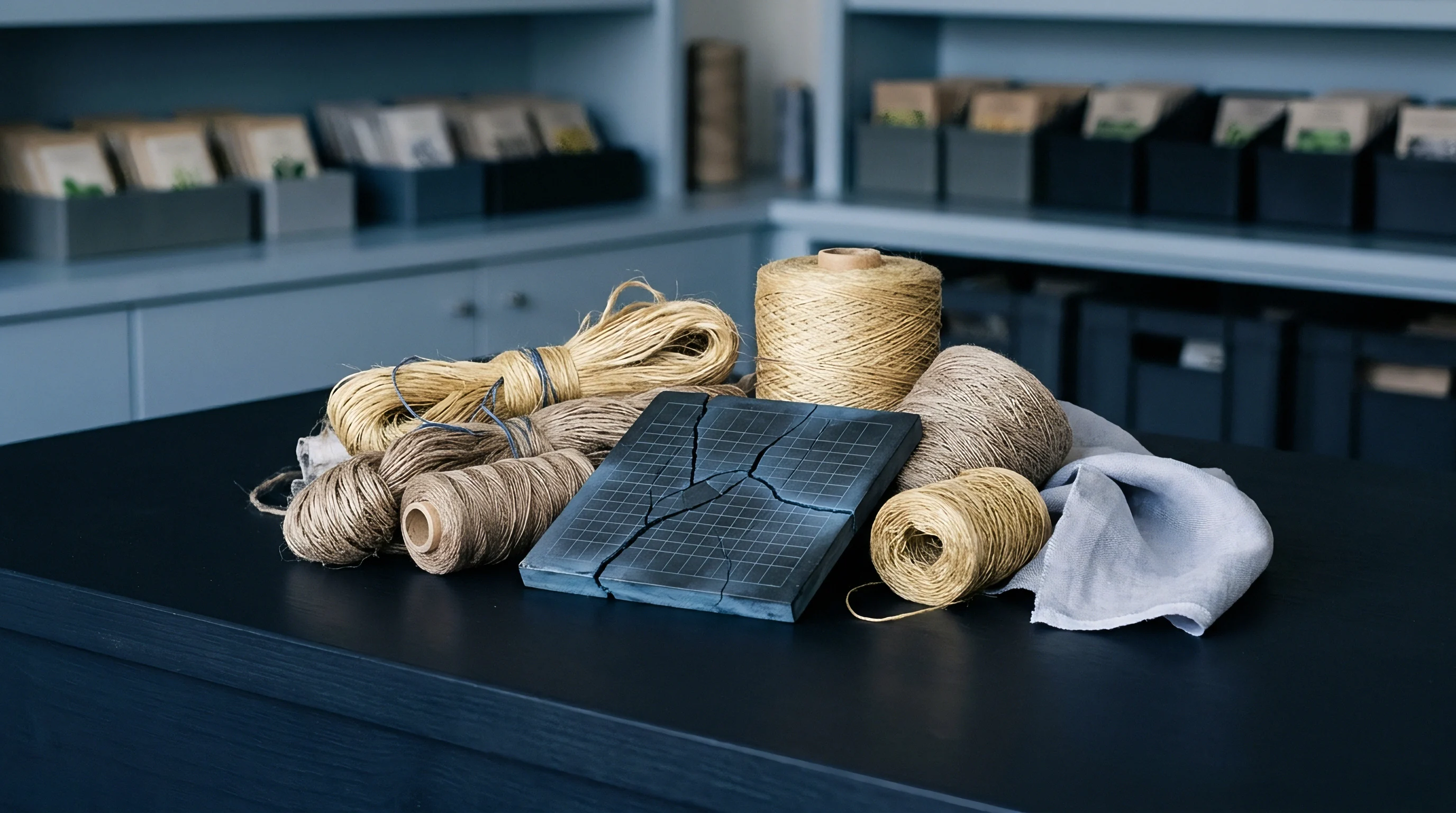
Tensile load-bearing capacity in blended line yarns depends on the efficient transfer of mechanical stress across individual fiber boundaries. When a twisted yarn suffers tensile elongation, applied axial forces resolve into radial compression vectors that force adjacent fibers into tight contact. The efficiency of stress transfer across these contact interfaces governs whether the yarn breaks due to individual fiber fracture or inter-fiber slip.
Controlling the residual non-cellulosic binder content regulates both the total contact surface area and the inter-fiber void fraction that dictates load distribution.
Single-strand tensile testing under ISO 2062 standards uses constant rate of extension instruments to capture tenacity, elongation at break, and initial modulus. Blended line yarns engineered with optimized void fractions between 0.26 and 0.30 exhibit elevated tenacity values relative to unrefined control yarns. Subdividing coarse technical bundles into elementary filaments multiplies the number of individual fiber contact points across the yarn cross-section, distributing tensile stress across a vastly greater aggregate surface area.
Stress Transfer Mechanisms across Elementary Boundaries
Mechanical shear transfer between overlapping fiber ends relies on high interfacial contact pressure and uniform inter-fiber packing. In yarns containing coarse, un-split flax bundles, wide capillary voids interrupt the continuum of the fiber matrix. Applied tensile loads concentrate stress along the edges of rigid, coarse technical fibers, triggering localized shear failure long before companion cotton or synthetic fibers reach their ultimate tensile elongation limit.
This premature shearing reduces total yarn conversion efficiency, yielding tenacities well below theoretical predictions.
Eliminating wide spatial voids through controlled pectin extraction converts discrete fiber bundles into a continuous, tightly packed matrix. Elementary flax filaments, exhibiting fineness values around 1.8 dtex, flex and align parallel to the yarn twist helix. Under axial tension, these fine filaments deform laterally, filling microscopic surface irregularities along adjacent fiber walls.
This structural nesting eliminates empty spatial voids, maximizing frictional shear transfer and forcing a higher percentage of fibers to bear tensile loads simultaneously.

Cross Sectional Packing and Twist Consolidation
Inserting mechanical twist into a drafted fiber assembly generates a parabolic radial pressure distribution, with maximum compressive stress concentrated at the yarn core. The degree to which radial pressure consolidates the fiber matrix depends directly on fiber flexural rigidity. Rigid technical fibers with high non-cellulosic residual content resist radial compression, retaining structural void channels even under high twist multipliers.
Flexible elementary fibers deform readily, allowing radial twist forces to squeeze inter-fiber void volume down to physical limits.
Excessive twist insertion degrades yarn production economics and alters fabric hand. To achieve target strength in yarns containing coarse flax bundles, spinning mills increase twist multipliers from 110 up to 145, slowing down front-roller delivery speeds and reducing frame productivity by 20 to 30 percent. Lowering residual non-cellulosic content softens line fiber bundles, enabling maximum yarn tenacity at standard twist multipliers between 95 and 105.
This optimization restores spinning frame productivity while maintaining superior yarn strength and softness.
Evaluating commercial yarn offers requires rigorous verification of non-cellulosic binder thresholds and physical yarn parameters prior to contract sign-off.
- Chemical Assay Dossier verifying residual pectin content between 1.5 and 2.2 percent by weight via hot ammonium oxalate extraction according to standardized laboratory procedures.
- Cross-Sectional Density Analysis confirming mean inter-fiber void fraction remains below 0.30 based on a minimum sample size of 50 optical microscopic cross-sections.
- Single-End Tenacity Metrics documenting minimum yarn breaking strength of 28.0 cN/tex with a coefficient of variation in tenacity not exceeding 8.5 percent over ten consecutive test packages.
- Thermal Bath Stability Report certifying that residual binder components will not leach out or deposit oligomers inside dyeing machinery during subsequent hot-water finishing cycles.
Capillary drag inside the spinning trough forces dissolved hemicellulose fragments to migrate into open void channels before thermal drying.
Incorporate the following clause into raw material procurement agreements: Material shipments exhibiting mean residual pectin levels above 2.5 percent by weight or yarn void fractions exceeding 0.34 shall be subject to full rejection or financial re-grading at the buyer’s sole discretion.

Ledger
Managing non-cellulosic residual thresholds alters the landed cost structure of blended line yarns by shifting total material yield, energy consumption, and mill waste factors. Scutched long-staple flax commands high commodity pricing per kilogram on international markets. Retaining a higher mass fraction of natural pectic binders increases raw fiber yield out of hackling and scouring stages, reducing short-term fiber raw material cost per kilo.
However, this initial saving is routinely wiped out by downstream processing losses, elevated end-breakage rates, reduced spinning frame speeds, and lower fabric conversion efficiency.
Calculating the true landed cost of blended line yarn requires tracking mass balances and conversion expenses from raw scutched flax bale opening straight through to cone winding. Over-extracting pectin to achieve ultra-fine bundle division reduces chemical scouring yields, turning valuable long-staple line fiber into low-value tow waste. Finding the exact financial optimum requires balancing raw fiber mass loss against gains achieved through higher spinning productivity, reduced twist requirements, and premium yarn market pricing.

Fibre Price Surpluses and Scutching Yield Trade Offs
Scutched line flax entering mill processing exhibits yield losses during mechanical hackling, drawing, and chemical pretreatment. Hackling yield measures the percentage of long, parallel line fiber retained after mechanical combing removes short, tangled tow fibers. Fibers with high residual pectin contents retain structural bundle integrity, achieving hackling line yields between 68 and 74 percent.
Aggressive retting or chemical pre-extraction degrades middle lamella cohesion prior to hackling, dropping line fiber yield down to 52 to 58 percent while increasing tow output.
Tow fiber sells on open markets at roughly 25 to 35 percent of the price realized for long line flax fiber. Processing 1,000 kilograms of scutched flax through an aggressive degumming sequence that drops line yield from 70 percent to 55 percent shifts 150 kilograms of high-value line stock into low-value tow waste. This yield reduction increases raw material input costs per kilogram of finished line sliver by approximately 18 to 22 percent.
Process economics dictate that binder removal must occur after hackling, concentrating chemical extraction operations on consolidated sliver or roving strands rather than raw un-hackled straw.

Landed Metre Costs for Nm 39 Blended Yarns
Converting fine-count blended line yarns into woven apparel fabrics requires evaluating costs on a per-finished-meter basis rather than simple weight metrics. Fine line yarns engineered with low void fractions permit the weaving of lighter, higher-density fabrics at reduced square-meter weights. A blended line yarn (Nm 39, 50/50 flax/cotton) produced under controlled binder extraction exhibits high packing density, enabling smooth high-speed weaving on air-jet looms at efficiency levels above 94 percent.
Unrefined flax blends containing coarse technical bundles generate elevated loom stop rates due to warp shed clinging and slub catchers. Every loom stop incurs direct labor cost and reduces weaving machine output, adding measurable overhead expenses per meter of woven grey cloth. Furthermore, high inter-fiber void fractions force fabrics to absorb excessive liquid chemical dyestuffs during wet finishing, driving up chemical consumption, thermal drying energy costs, and effluent treatment expenditures.
| Residual Pectin Threshold | Hackling & Scour Yield (%) | Spinning Delivery Speed (m/min) | Frame End-Breaks (per 1,000 spindle hours) | Yarn Mass Density (g/cm³) | Landed Cost per 1,000 m (USD) |
|---|---|---|---|---|---|
| 1.2 wt % (Over-Extracted) | 54.2 | 22.5 | 42 | 1.28 | 4.12 |
| 1.8 wt % (Optimized Fine) | 63.8 | 26.0 | 18 | 1.24 | 3.58 |
| 2.4 wt % (Optimized Standard) | 69.5 | 24.5 | 24 | 1.16 | 3.32 |
| 3.6 wt % (Under-Extracted) | 74.1 | 18.0 | 68 | 0.98 | 3.95 |
| Calculated based on landed scutched flax raw material cost of $4.85/kg, modal fiber at $2.10/kg, ring spinning frame electrical power at $0.12/kWh, and baseline loom operating costs. | |||||
A comprehensive cost model incorporates raw material yield loss, spinning frame speed, winding efficiency, wet finishing dye liquor uptake, and loom stop frequency. Optimizing non-cellulosic residual thresholds to 1.8 to 2.4 percent strikes the perfect balance, minimizing total landed yarn costs per thousand meters while delivering superior structural density and tensile performance in the finished textile product.