
Calibrating Dynamic Trough Hydrolysis to Prevent Draft Rupture in Fine Count Yarns
Calibrating wet spinning trough temperature and pH prevents pectin-induced draft rupture, lowering fine yarn end breaks and securing target tenor tenacity.
Calibrating wet spinning trough temperature and pH prevents pectin-induced draft rupture, lowering fine yarn end breaks and securing target tenor tenacity.
Flax wet bundle cohesion limits depend on pectin esterification, where levels between 38 and 48 percent optimize drafting resistance and yarn count.
Non-Gaussian fibre area variance and skewness depress wet spun yarn tenacity limits below Gaussian predictions by concentrating stress in local thin zones.
Exceeding 70 degrees Celsius in wet spinning troughs hydrolyzes middle lamella pectin excessively, dropping Nm 60 linen single yarn tenacity below 15 cN/tex.

Fine linen wet spinning demands trough water at 65 to 75 degrees Celsius with controlled surfactants to dissolve middle lamella pectins before the drafting nip.
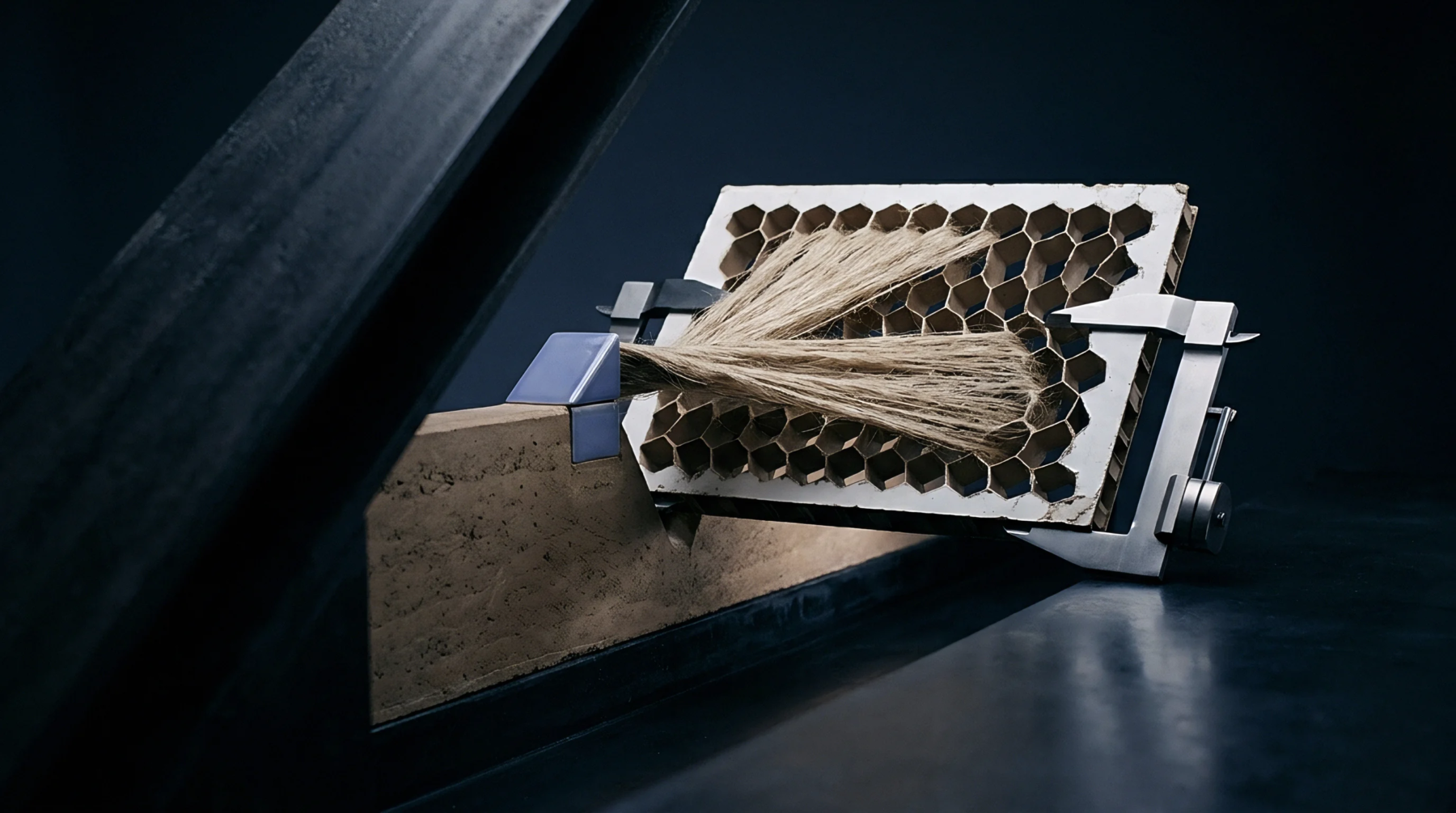
Manual comb sorting isolates true flax bundle length arrays, determining Upper Quartile Length and Short Fibre Content to set mill drafting ratches.

Dynamic optical rail control compensates for wet flax traveller friction in real time, suppressing tension spikes to lower fine count end breakage by over sixty percent.
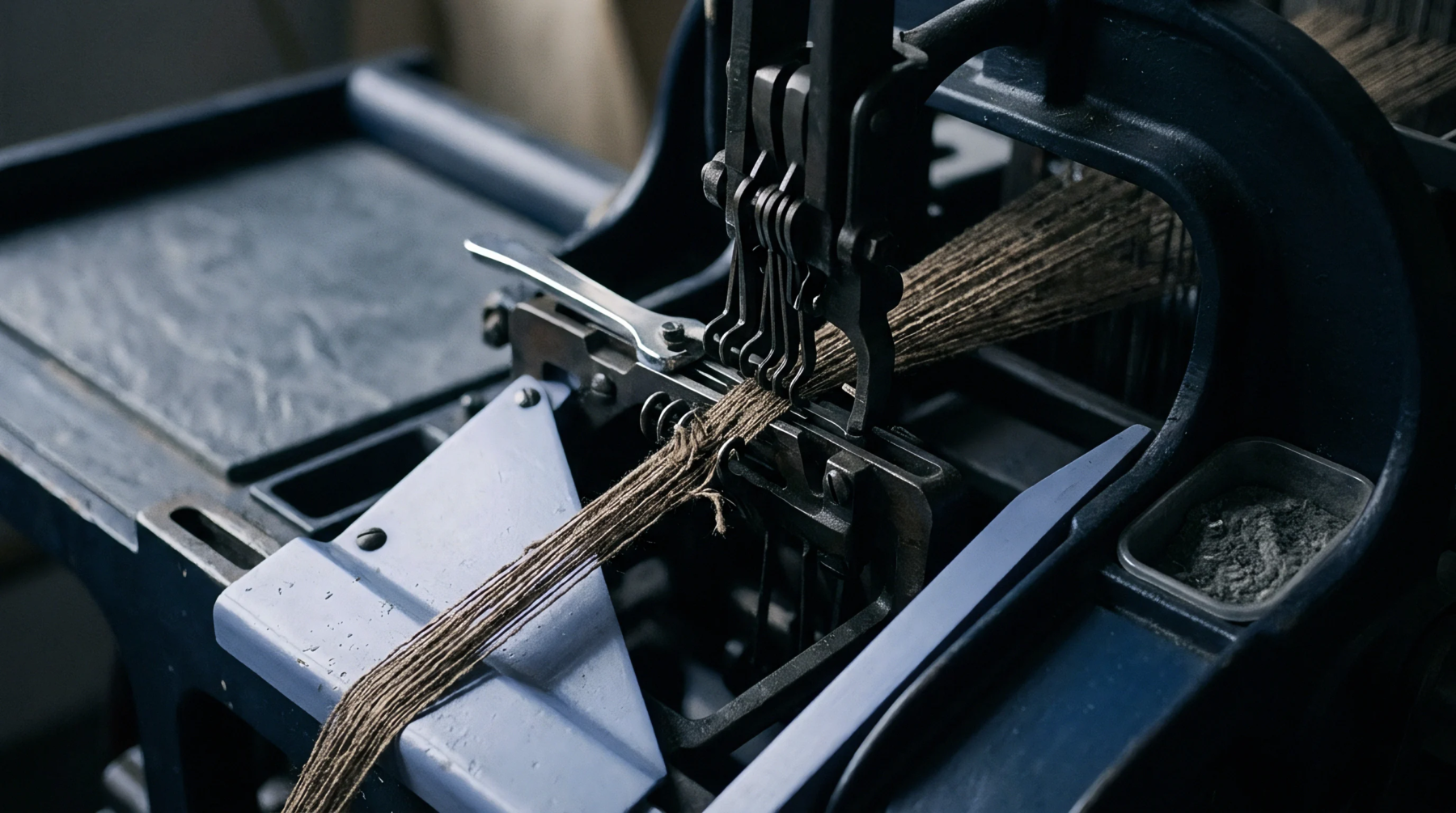
Sliver mass variance generates dynamic force spikes in drafting zones, driving end breaks, reducing frame efficiency, and elevating finished linen yarn costs.
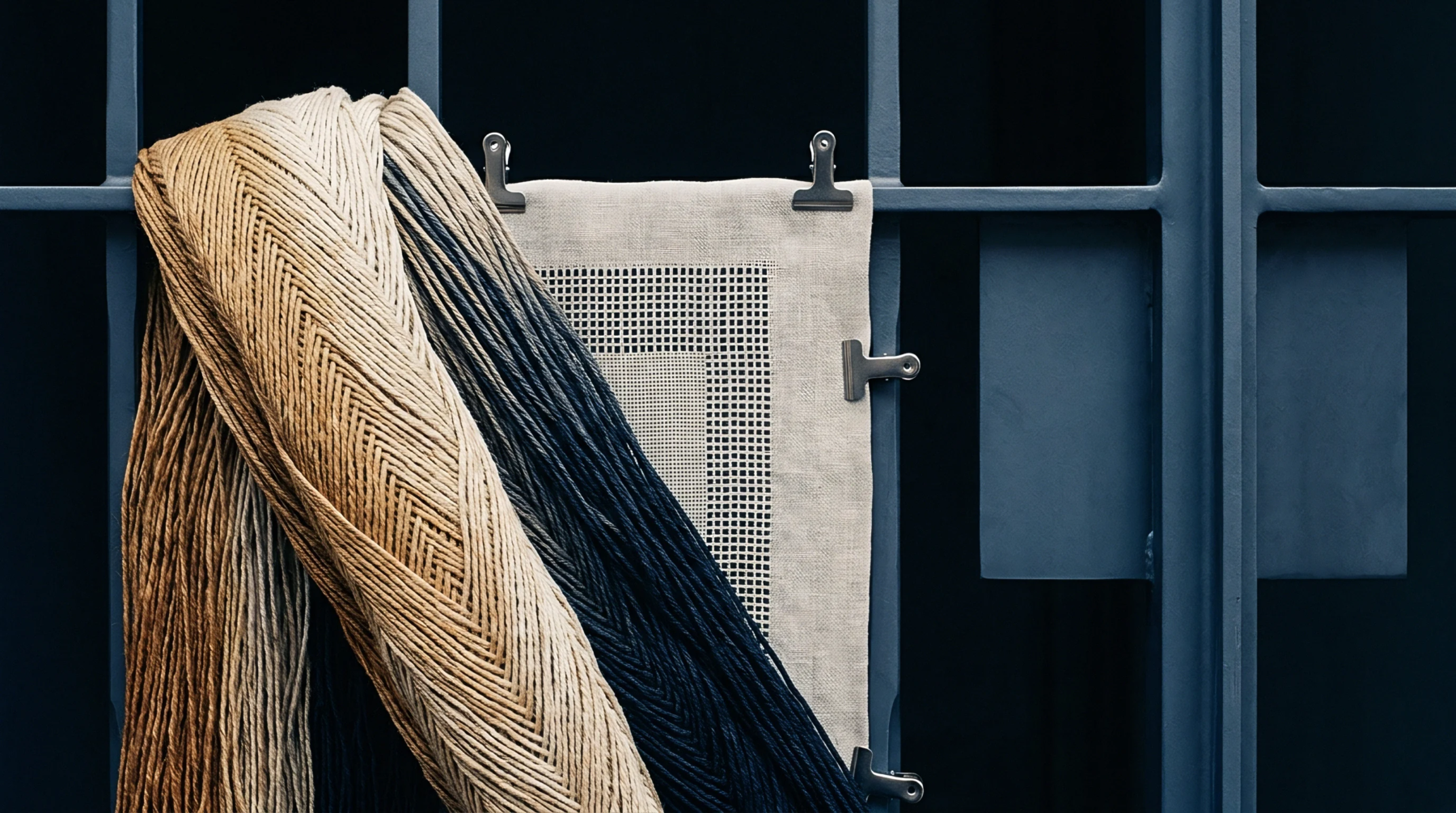
Spectrogram thresholds for flax sliver autolevelers must isolate the broad drafting wave from sharp mechanical chimneys, restricting draft corrections to wavelengths above two metres.
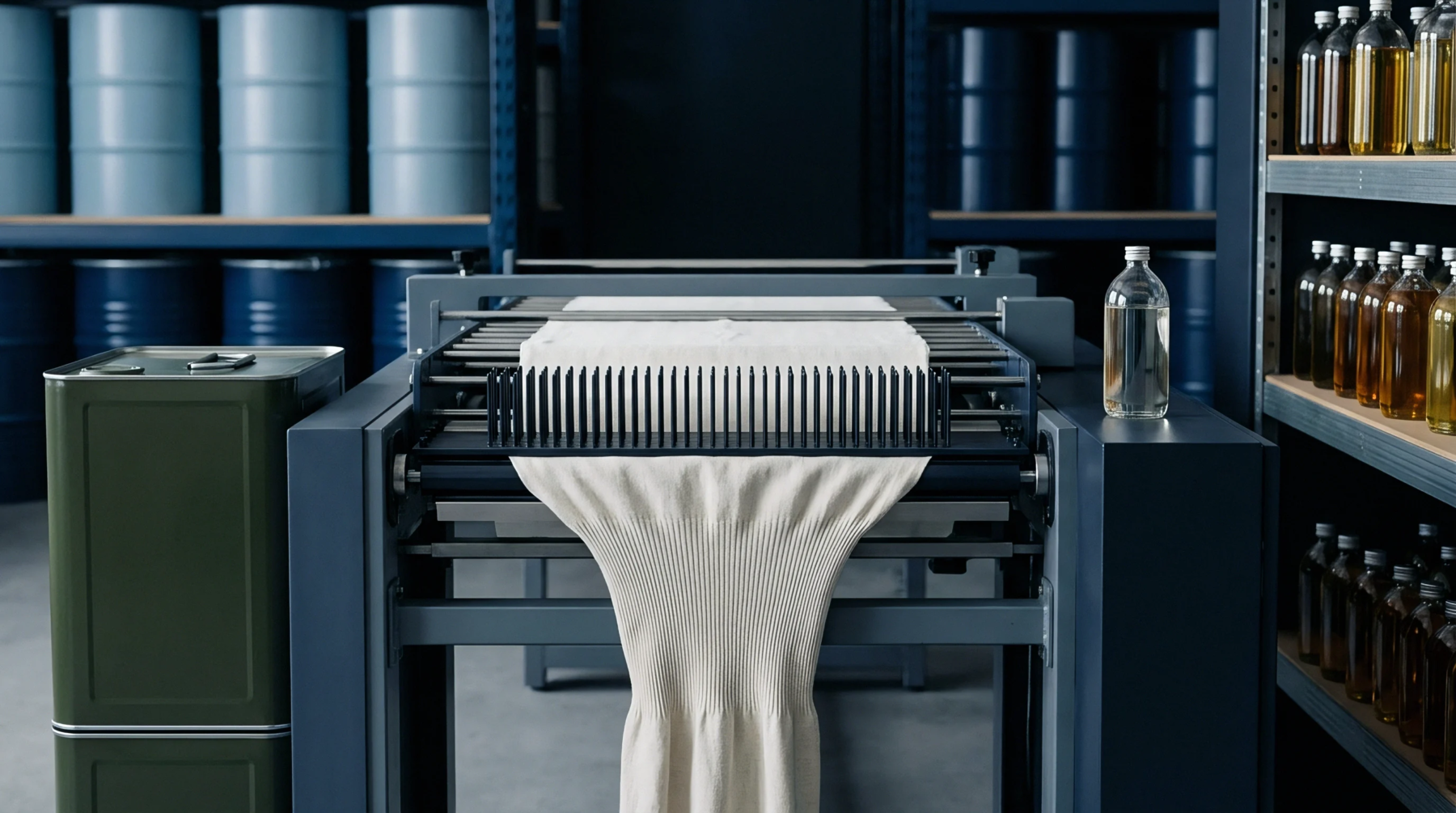
Optimal wet flax doubling balances three draw passages to keep sliver mass variation below three percent CV for fine yarns.
Scutched flax splitting efficiency directly dictates wet-spinning count limits by controlling the distribution of technical bundle diameters prior to roving draft.

Quantifying residual pectins below 1.2% and proteins below 0.75% via spectrophotometry and combustion prevents wet-spinning end breaks and secures high-count Nm yields.

Gravimetric linear density determination isolates conditioned cut fiber bundles on microbalances to establish precise tex and dtex spinnability limits for bast stock.
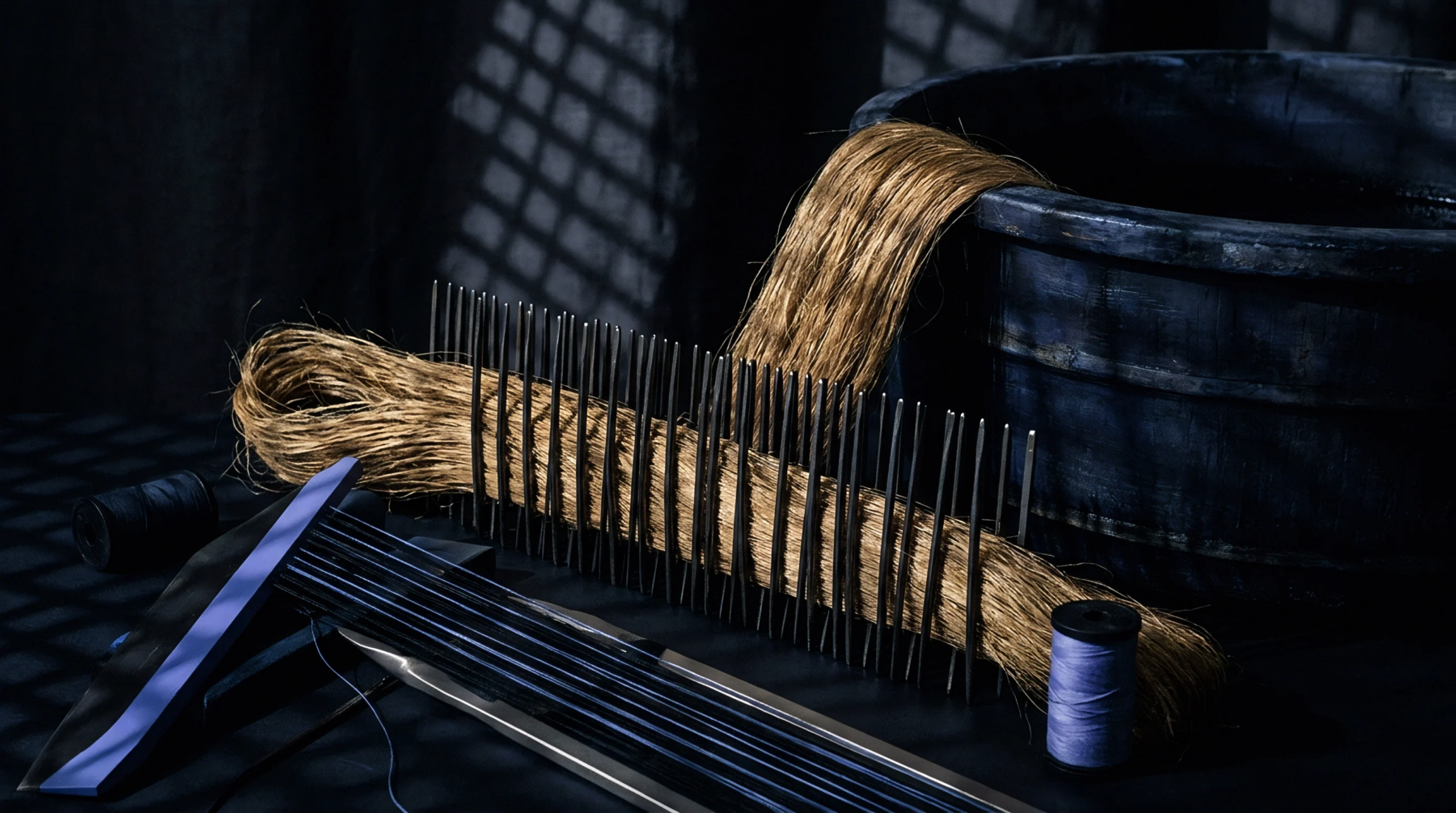
Generalized Maxwell Modeling quantifies speed-dependent warp tension spikes, allowing weavers to set loom parameters that minimize end breaks and starting marks.

Hackling yield directly establishes net fiber input costs, where a one percent yield gain lowers landed yarn expense by over two percent per finished meter.
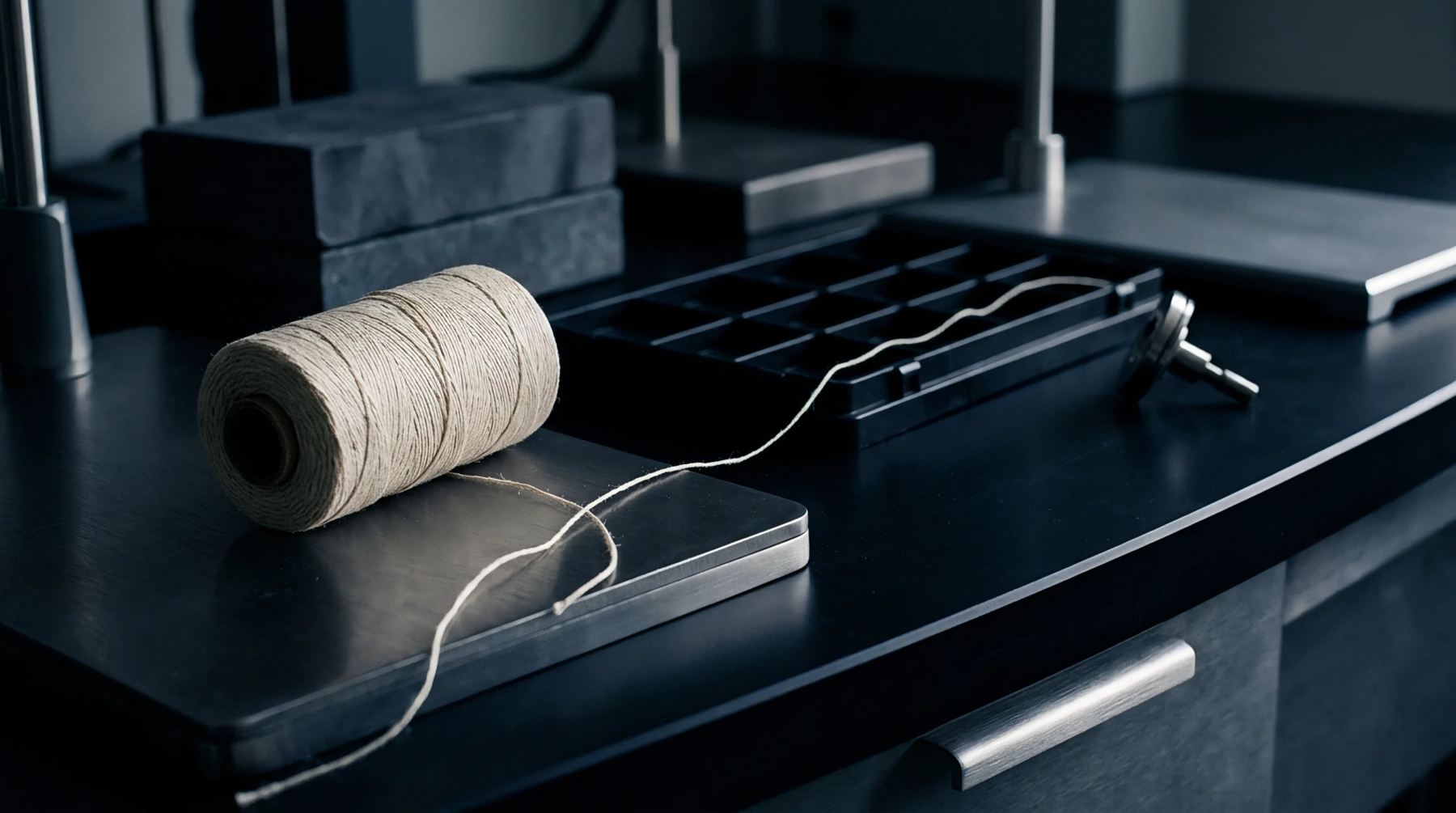
Maintaining residual pectin between 0.8% and 1.4% prevents roving draft collapse while enabling fibre attenuation in wet-spinning ultra-fine linen yarns.

Hot water trough temperatures between 68°C and 74°C plasticize middle lamella pectins, preventing microfibril rupture and securing fine yarn counts up to Nm 80.
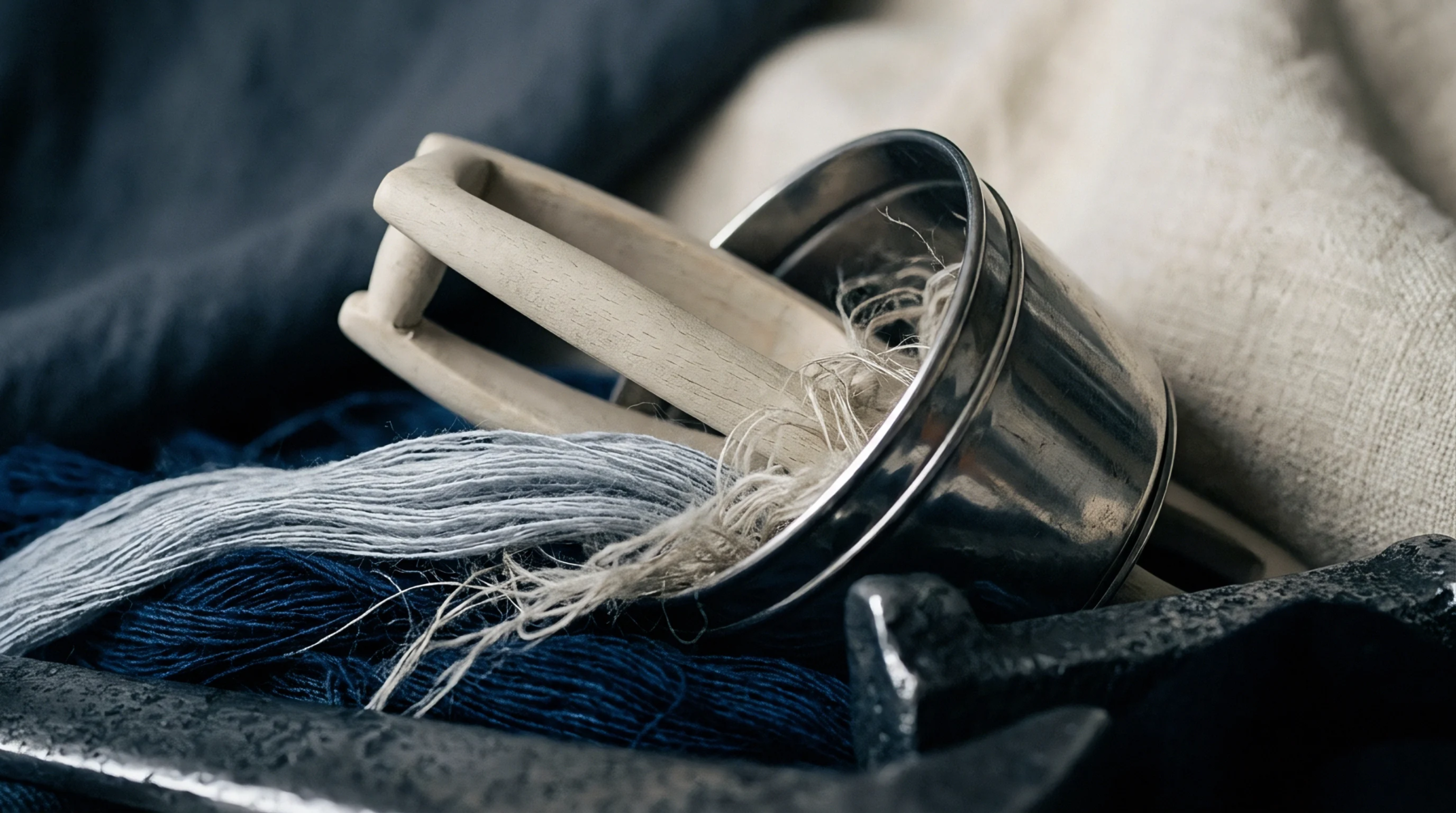
Fine wet-spun flax yarn tenacity depends on controlled pectin softening in the trough, allowing technical bundles to divide into fine elementary cells during draft.

Heat and drought lower flax middle lamella pectin shear strength, reducing hackling long-line yield and dropping wet-spinning count caps from Nm 39 to Nm 26.
Narrow crystallite orientation dispersion below 14 degrees FWHM maximizes wet spinning yields and fine count limit up to Nm 60 in long staple flax.

X-ray scattering and polarized Raman spectroscopy determine flax microfibril angles to project spinning performance and yarn tenacity.
Low S/G monomer ratios in flax middle lamella increase lignin cross-linking, elevating wet drafting force variability and driving yarn count instability.
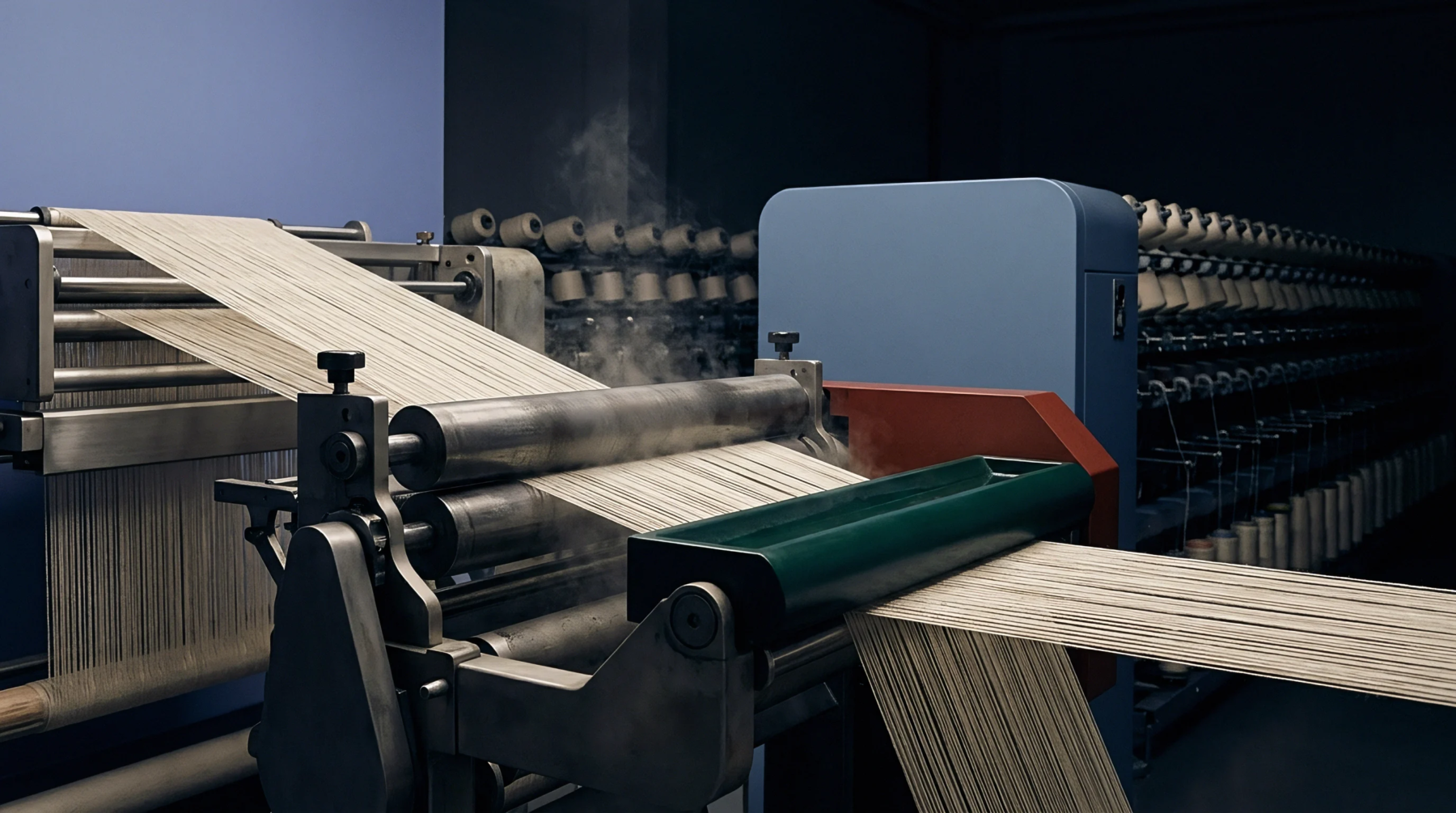
Microfibrillar thermal degradation reduces line flax tenacity, requiring adjusted gauge testing, lower wet-spinning temperatures, and recalibrated contract thresholds.

Dry spinning flax intake standards require strict bundle fineness under 2.2 tex, residual shive below 0.8 percent, and 11 percent target moisture regain.

Controlled pectin removal enables clean bundle cleavage, elevating metric fibre fineness above Nm 2000 while maintaining long line yield above 60 percent.
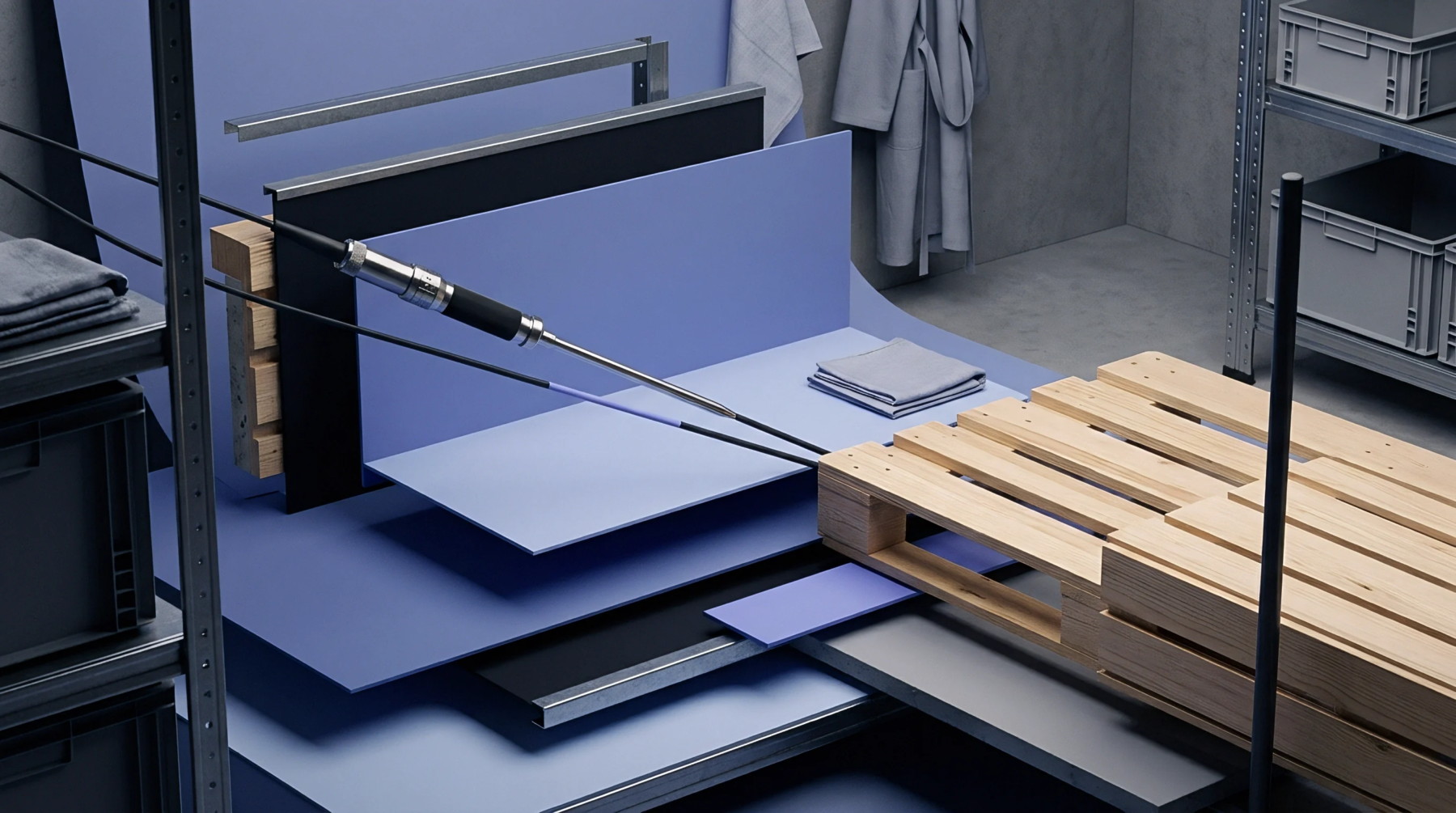
Residual pectin levels below 1.5 percent dictate successful wet spinning of fine flax yarns above Nm 40 without elevated end breakage rates.

Quantifying epicuticular wax mass fractions in dew-retted line flax bales isolates true fiber yield and optimizes wet-spinning boundary lubrication parameters.
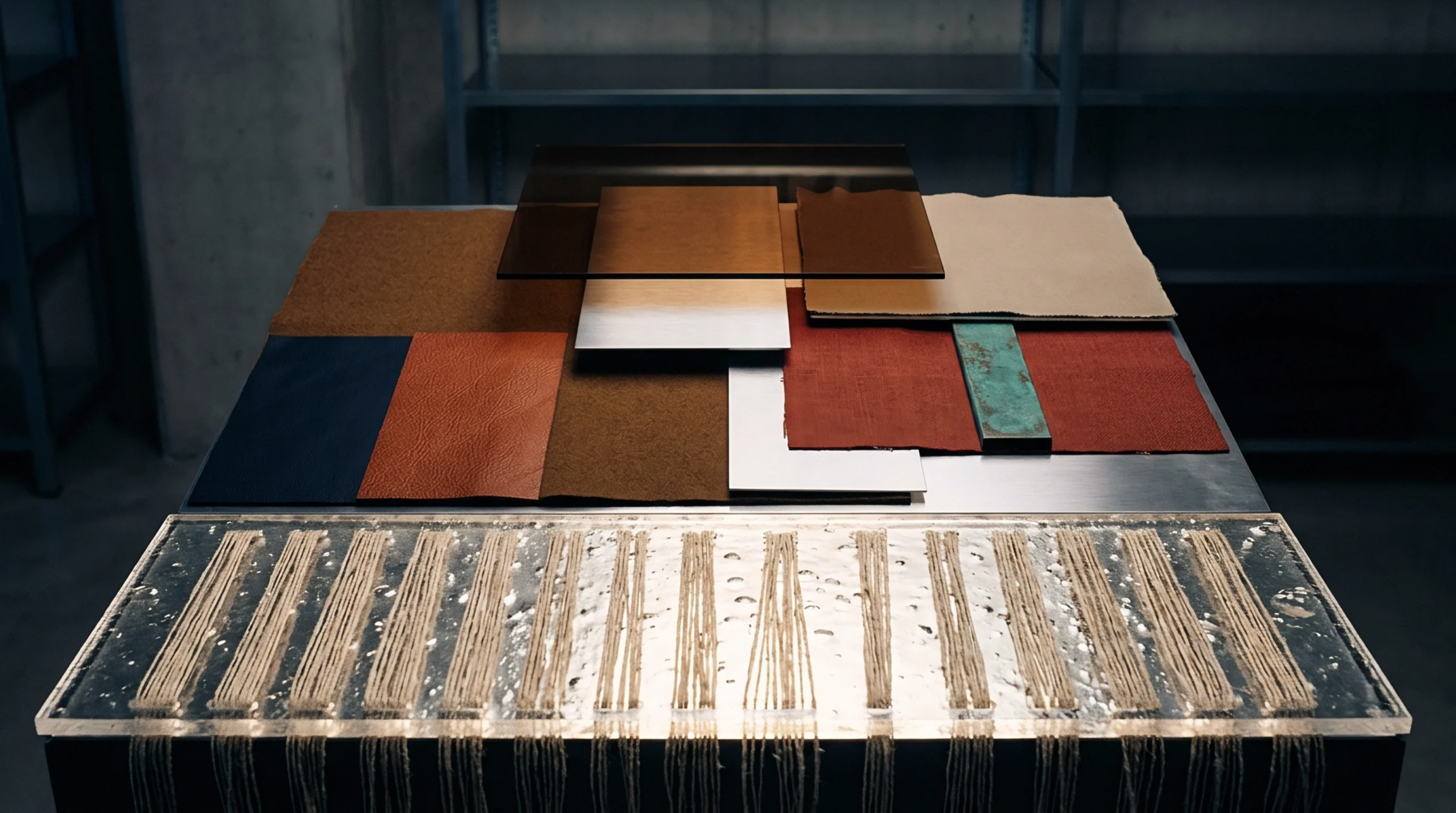
Wet-spun linen warps demand a minimum tenacity of 18.5 cN/tex with under 1.2% beaming stretch to maintain loom stop rates below 1.5 per 100,000 picks.

Resolving gravimetric fineness disputes requires ISO 2370 extraction standards, n=50 bundle sample sizes, and contracted metric number tolerance bands.
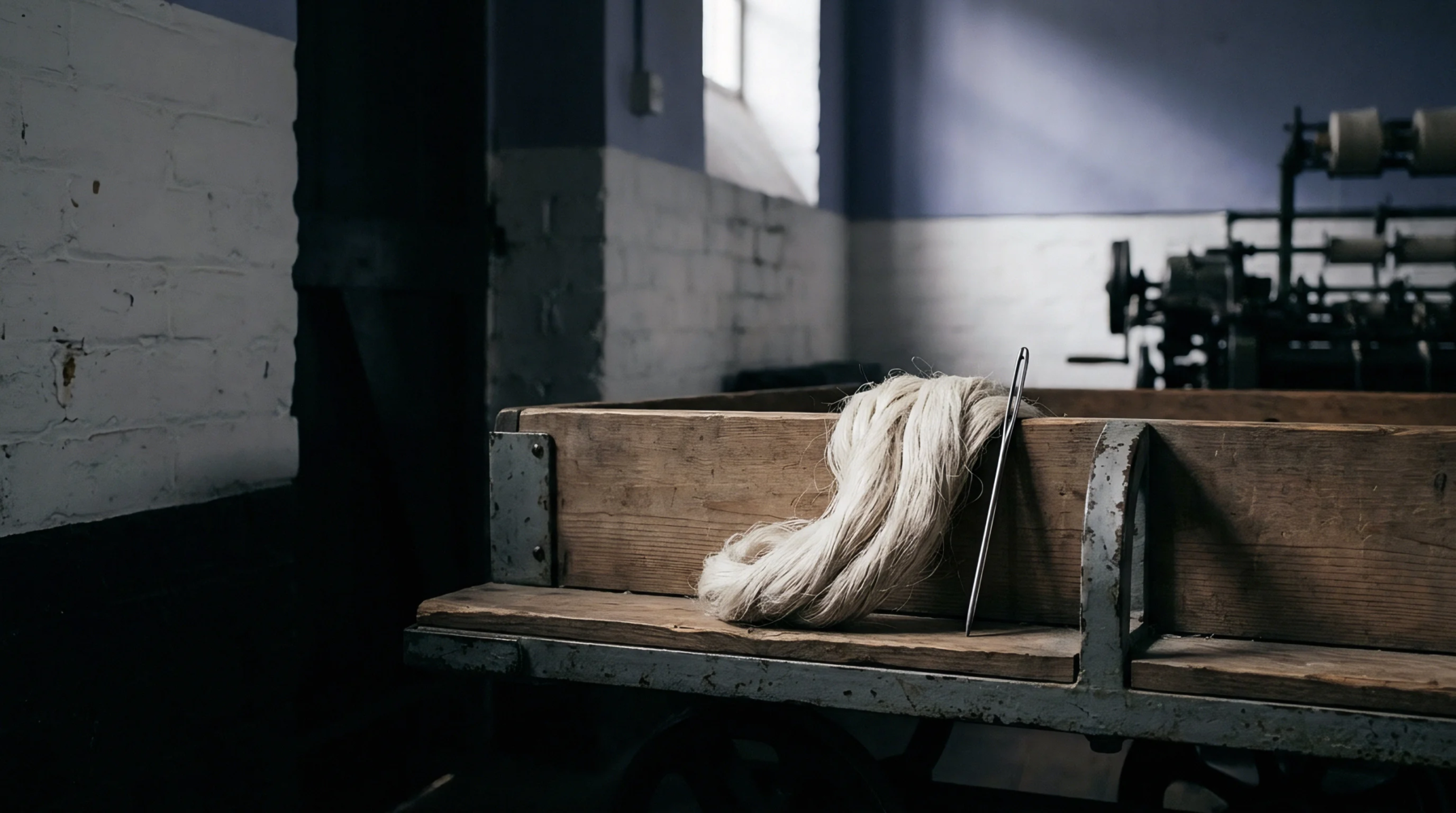
Optical microscopy of resin-embedded cross sections determines true technical flax bundle widths, separating spinnable fine line from coarse drafting defects.
Expertise is a utility, not a secret. sentiention™ publishes its working knowledge as open reference: intelligence layer covering the materials it sources, the markets it enters, and the reference that serves both.