Intermediate Assembly Form
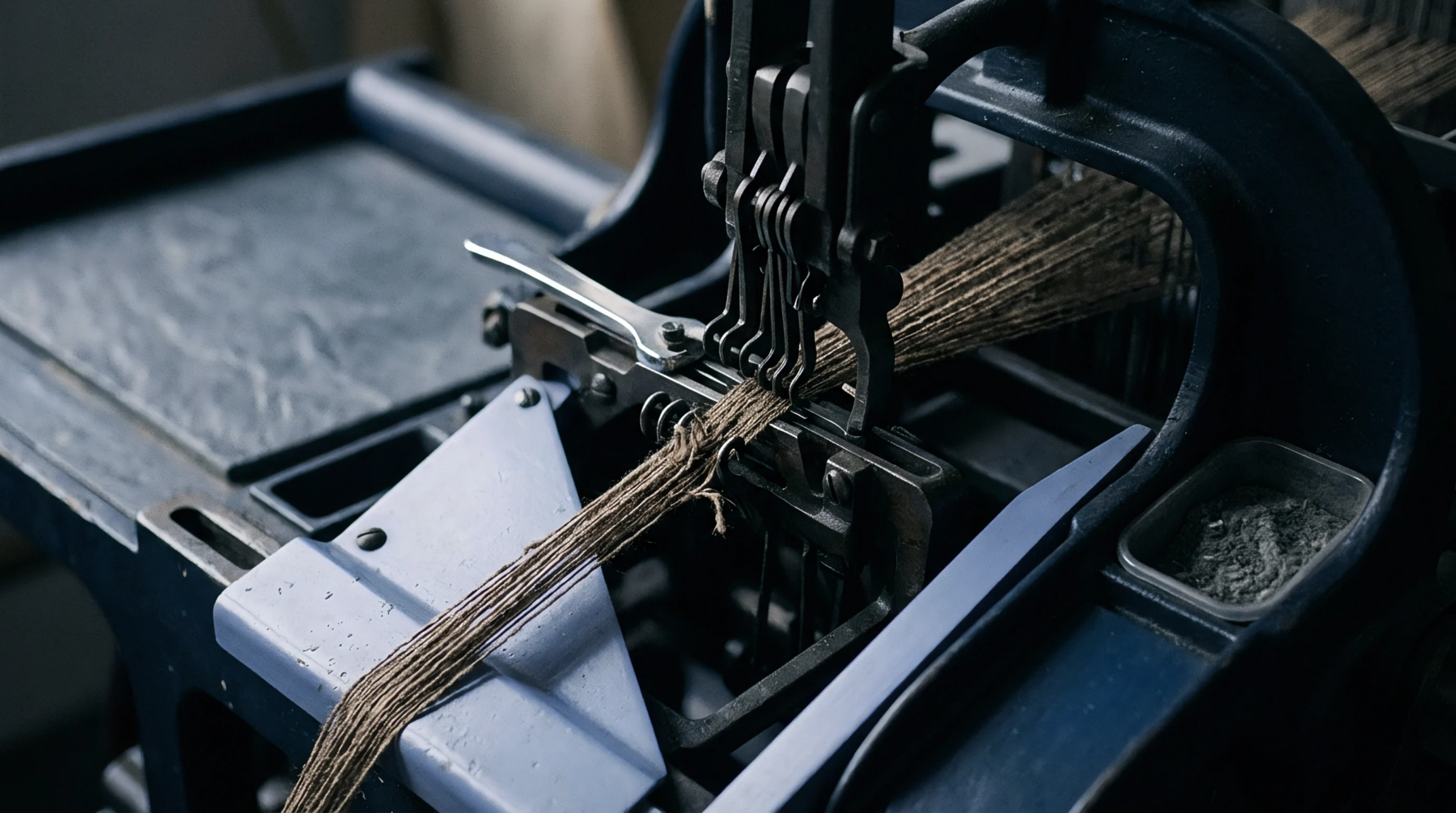
A continuous, untwisted ribbon of parallelized short-to-medium vegetable bundles constitutes the primary feedstock for intermediate bast wet spinning operations. Originating from the processing of scutching tow, combed tow sliver is formed on a dedicated intersecting gills drawing frame following rectilinear or circular mechanical combing. The combing phase extracts remaining shive fragments, dead knots and fibre remnants shorter than twenty millimeters.
Parallel alignment of bundles yields a cohesive structure held purely by inter-fibre frictional cohesion. The boundary of this product ends at the drafting and roving frame, where false or true insertion of twist transforms the sliver into roving packages.
Carding And Preparation Yield
Mechanical carding cylinders separate disordered tow bales into raw sliver webs before circular pin bars comb the strand. Feeding combed tow sliver into sequential intersecting faller boxes aligns bundle axes and reduces overall mass per unit length. Moisture addition during preparation stabilizes bundle cohesion, preventing fly generation in dry preparatory sheds.
Processing lines monitor sliver weight using inline mechanical horns, adjusting back-draft gear ratios to eliminate weight deviations between delivery cans. Roving frames subsequently accept these leveled strands, drawing down bundle counts per cross section prior to wet boiling and ring frame creeling.
Lot Verification Metric
Quality assessment relies on laboratory verification of linear density, mean bundle length and non-cellulosic residual content. Laboratory technicians record combed tow sliver parameters on internal production routing tickets, noting moisture regain and combing yield ratios. Cleanliness levels correspond directly to the percentage of residual woody shive retained after the combing pass.
Mill procurement contracts reject lots exhibiting excessive short-fibre fractions, because elevated short-fibre content triggers high fly losses in drafting zones and degrades final yarn tenacity. Deliveries passing yardage weight standards receive spinning clearance, directing the cans to roving frames targeted for standard apparel yarn counts.