Drafting Drive Element
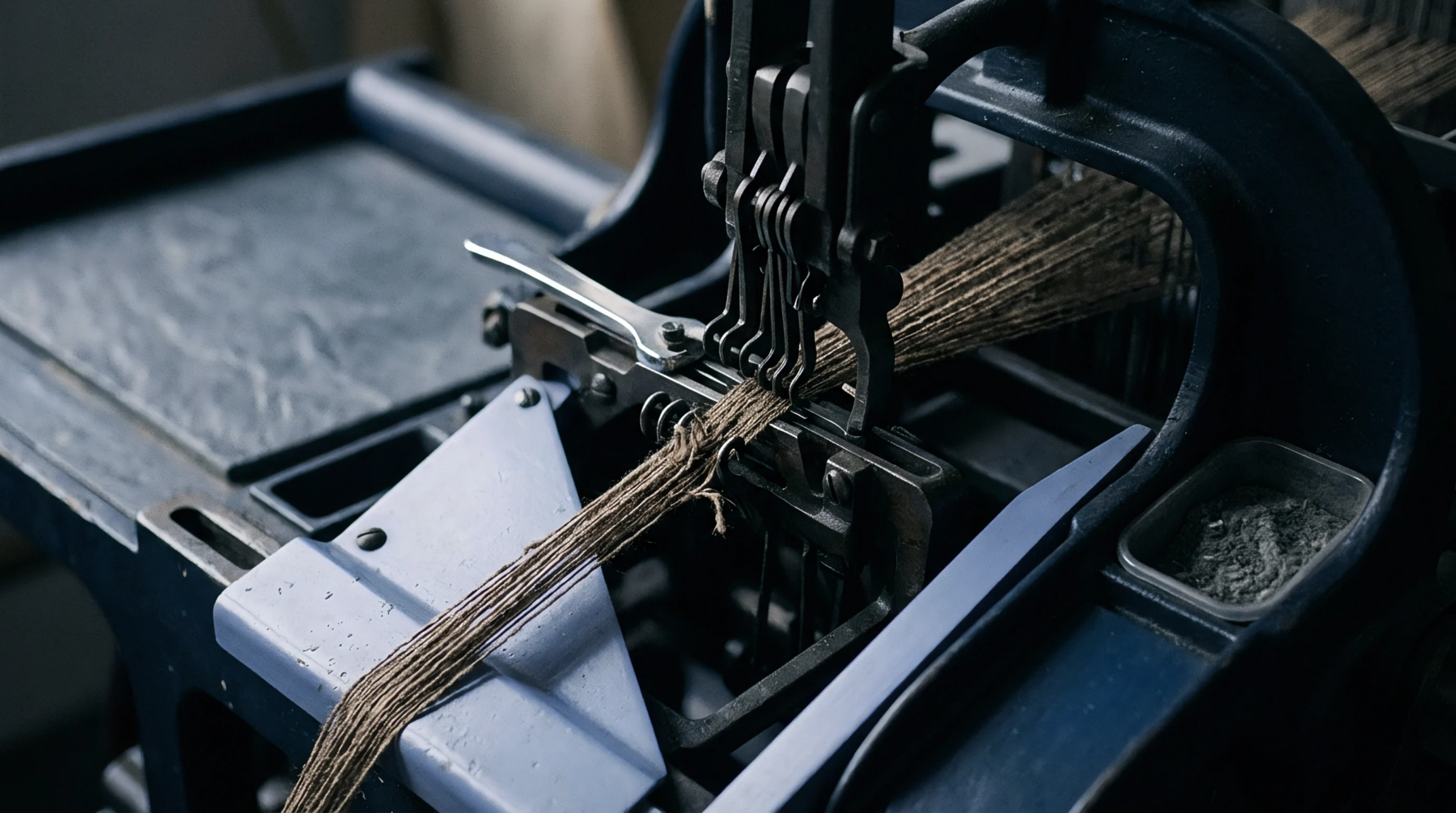
Positively driven metallic drafting cylinders feature machined axial serrations designed to grip fibrous assemblies and deliver steady rotational motion to advancing textile strands. A hardened steel fluted bottom roller works against a resilient, elastomeric top cot, creating an aggressive nip line that prevents slippage during strand attenuation. The component is integrated directly into drawframes, roving machines and wet spinning frames across mechanical textile plants.
Its grooved surface provides sufficient frictional traction to overcome inter-fiber cohesion within dense strands without severing individual filaments. The operational limit of the component depends on wear across the tooth profiles, as rounded flutes permit drafting slippage and generate drafting irregularities.
Mechanical Flax Attenuation
Industrial wet spinning frames depend on fluted cylinders to control tough, water-softened flax bundles under high mechanical drafting drafts. Machine alignment records document the runout tolerances and flute profiles of every fluted bottom roller installed along continuous spinning lines. Because flax fibers possess high tensile strength and natural bundle adhesion, the flutes must penetrate the wet fiber layer without shearing the cellulose structure.
Corroded, worn or misaligned flutes cause fluctuating slippage, which generates cyclical thickness defects termed drafting waves. Bottom rollers operate in continuous segmented lines driven by heavy gear trains; any pitch error or bearing eccentricity translates into yarn mass irregularities. Technicians clean flute troughs during scheduled maintenance shifts to clear accumulated pectins, fiber residues and mineral deposits.
Clean flute geometries maintain uniform fiber delivery speeds into the ring twisting zone, suppressing downstream loom stoppages during plain linen fabric weaving.
Wear Profiling Boundary
Long service lives under wet chemical environments eventually erode the sharp tooth profiles of hardened steel drafting cylinders. Contact with acidic hot water baths, abrasive bast bundles and constant clamping pressure gradually rounds the leading edges of each flute. Profile degradation reduces frictional grip, permitting tough flax bundles to slip under peak drafting tensions.
Grinding or re-fluting restores true cylinder geometry, but repeated machining reduces roller diameter below gear engagement limits. Mill quality controllers log runout tolerances and flute tooth depths during complete frame overhauls, rejecting rollers that fall outside dimensional tolerances. The fluted bottom roller must be replaced when flute crest erosion prevents uniform nip contact against mating elastomeric cots.